
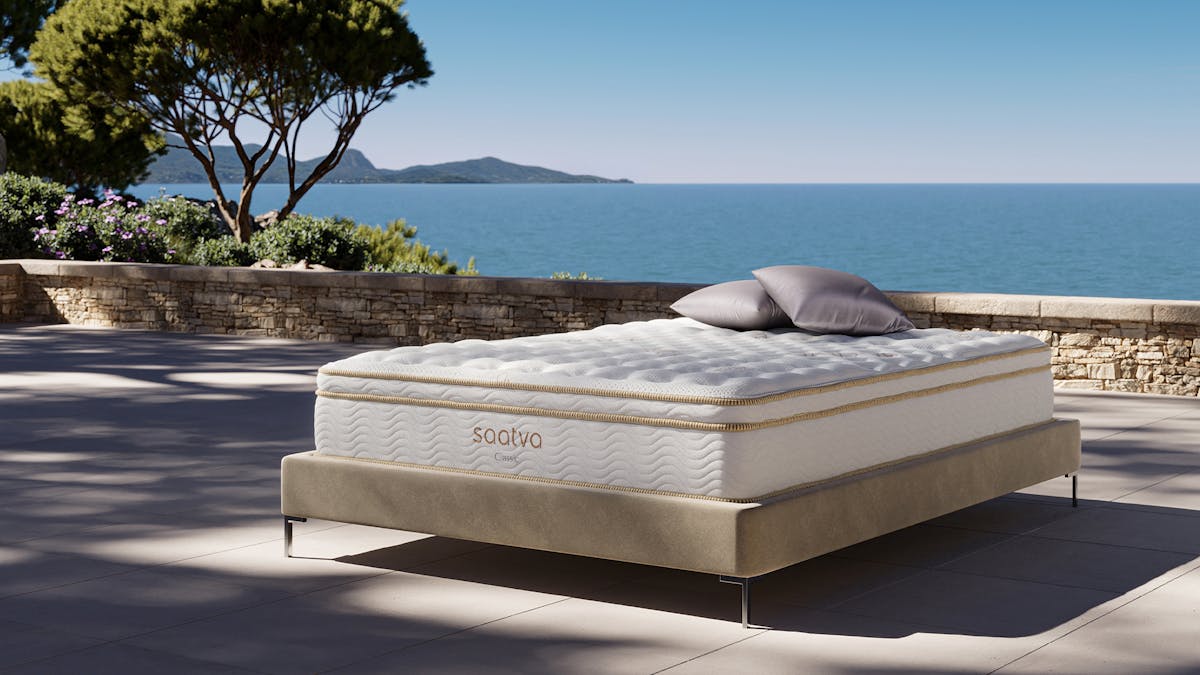
 by
by Our #1 recommendation for this topic
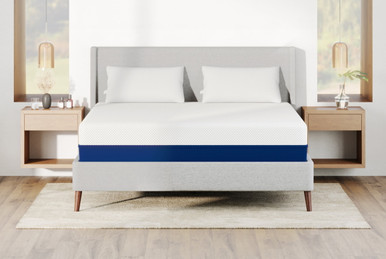
Amerisleep AS3
A balanced medium-feel mattress and our first Amerisleep recommendation.
Our #2 recommendation is the Amerisleep AS3. The AS3 hits the medium sweet spot and actively zones pressure across vulnerable body regions. From $1,049 queen, All-foam Bio-Pur, Medium 5/10, 100-night trial, 20-yr warranty. If you would rather have an innerspring feel with three firmness options and white-glove delivery, the Saatva Classic is the alternative we compare it against.
Amerisleep AS3
8.9/10
- HIVE 5-zone layer maps pressure specifically to shoulders, lumbar, and hips, reducing strain on healing tissue
- Medium firmness avoids both deep sinkage and the hardness that bruises sensitive areas
- Plant-based Bio-Pur foam sleeps cooler than standard memory foam, useful when healing tissue runs warm
- CertiPUR-US certified, made in the USA, 100-night risk-free trial
- Ships compressed in a box, not white-glove, which may require help unboxing if lifting is restricted
- Softer edge support than a coil hybrid, sit-to-stand less bench-like than the Saatva Classic
For those who prefer an all-foam feel at a lower price and have someone available to assist with setup, the AS3 hits the medium sweet spot and actively zones pressure across vulnerable body regions.
What makes a mattress right for postoperative recovery
Surgery creates two competing needs that most mattresses fail to satisfy at the same time. The body needs enough cushioning to prevent pressure buildup on healing tissue, surgical sites, and bruised areas. It also needs enough support to hold the spine and pelvis in a neutral position so that no single region compensates for poor alignment during the hours you spend lying still. A mattress that is too soft lets the hips and pelvis sink, which twists the lumbar spine and strains abdominal, hip, or back incisions. A mattress that is too firm creates pressure points at the shoulder, hip, and rib cage, which become painful against skin that is already sensitive from the procedure.
The other practical dimension is entry and exit. Most surgical discharge plans include a movement sequence for getting in and out of bed. A mattress with a reinforced edge perimeter acts like a stable bench, supporting the body during the controlled pivot from sitting to standing. A mattress that collapses at the edge requires more muscular compensation, which many procedures specifically restrict.
Adjustable base compatibility is the third dimension. Many recovery positions, from mild head elevation after a cardiac procedure to bent-knee positioning after knee replacement, are better achieved with a motorized base than with pillows alone.
| Feature | Recommended spec | Why it matters for recovery |
|---|---|---|
| Firmness | Medium to medium-firm (5-6/10) | Balances pressure relief and spinal support without forced compensation |
| Edge support | Reinforced perimeter coils or dense foam | Stable sit-to-stand surface; most post-op movement instructions rely on this |
| Adjustable base compatible | Yes | Head and leg elevation for many procedure-specific positions |
| Pressure zoning | Multi-zone (5-zone or more) | Reduces strain on shoulder, hip, and lumbar independently |
| Delivery type | White-glove preferred | No lifting, no unboxing, no wrestling with packaging during lifting restrictions |
| Trial length | 100 nights minimum | Recovery often runs 6-12 weeks; need time to evaluate through milestones |
Best mattresses for postoperative recovery (compared)
| Mattress | Type | Firmness | Edge support | Trial | Queen price |
|---|---|---|---|---|---|
| Saatva Classic | Dual-coil hybrid | Luxury Firm 6/10 | Excellent, reinforced perimeter | 365 nights | From $1,879 |
| Amerisleep AS3 | All-foam Bio-Pur | Medium 5/10 | Good, dense foam perimeter | 100 nights | From $1,049 |
| PlushBeds Botanical Bliss | Natural latex | Medium or firm | Good, natural latex perimeter | 100 nights | From $1,699 |
Saatva Classic
9.2/10
- Free white-glove delivery with in-room setup and old mattress removal, no lifting required after surgery
- Outstanding edge support (10/10 in lab testing), perimeter holds stable during sit-to-stand
- Dual-coil construction with reinforced lumbar zone pad keeps the lower back stable throughout recovery
- 365-night trial covers the full recovery arc and the adaptation months that follow
- Fiberglass-free (plant-based thistle pulp flame barrier), organic cotton cover
- $99 return fee during the trial period
- Higher price than foam alternatives
- Slightly more motion transfer than foam for sensitive sleepers
When lifting restrictions make box-in-a-box setup impractical, the Saatva Classic solves the problem before it starts. The reinforced perimeter edge makes sitting up and standing more controlled, the 365-night trial covers even a long recovery arc, and the white-glove delivery means no physical effort on arrival day.
PlushBeds Botanical Bliss
8.7/10
- GOLS-certified organic latex is inherently hypoallergenic and resistant to dust mites, beneficial for immunocompromised recovery
- Naturally cooler than foam, latex breathes well and reduces heat buildup on sensitive skin
- Buoyant support keeps the spine aligned without the deep sinkage of memory foam
- Customizable firmness layers for different recovery needs
- Heavier than foam, requires assistance to set up
- Higher price point than comparable foam options
For recovery patients who are immunocompromised or chemically sensitive, the Botanical Bliss provides a clean, chemical-free sleep surface with the buoyant support that helps with repositioning during the night.
Common mistakes in recovery mattress selection
Keeping a sagging mattress is the first and most common error. People assume a short recovery will pass on an old surface. It rarely does. A mattress with more than an inch of visible sag changes the body's nightly position in ways that aggravate surgical sites, extend inflammation, and fragment sleep. Fragmented sleep is one of the most documented obstacles to tissue healing.
Going too plush is the second mistake. Very soft surfaces feel comforting in the first minutes but require much more muscular effort to get up from, which directly contradicts the controlled low-effort sit-to-stand most surgical teams prescribe. Deep sinkage also allows rotational forces on the pelvis and spine when shifting position during the night.
Going too firm is the third mistake. An extra-firm mattress that prevents natural sinkage at the shoulder and hip creates sustained pressure on bony prominences. For someone who has had a hip, shoulder, or thoracic procedure, this sustained contact pressure on sensitive tissue is both painful and counterproductive to healing.
Ignoring delivery type is the fourth mistake. Compressed box mattresses require unrolling, positioning, and sometimes cutting plastic, all involving physical effort. Even a partner doing the setup introduces noise, disruption, and movement during a period when rest is prescribed. White-glove delivery solves this entirely, which is one of the strongest arguments for the Saatva Classic in a recovery context.
Sleep positioning and the mattress connection
Postoperative positioning depends on the procedure. Spinal and lumbar surgery typically benefits from back sleeping with knees slightly elevated, supported by a pillow or an adjustable base set to a gentle leg raise. Hip and knee replacement patients often need a pillow between the knees when on their side to prevent adduction past midline. Abdominal and cardiac surgery patients frequently need a degree of head elevation, which an adjustable base provides more consistently than stacked pillows.
The mattress interacts with all of these positions. A medium-firm surface with pressure zoning maintains spinal neutrality through all three of the primary recovery positions, which is why a zoned medium is the most versatile starting specification.
An adjustable bed frame extends the mattress's utility across the full recovery arc and pairs with both the Saatva Classic and the Amerisleep AS3.
How long does the mattress need to perform well
Most surgical discharge plans run 6 to 12 weeks for initial recovery, with full tissue healing taking 3 to 6 months for many procedures. This is why trial length matters more than for routine mattress shopping. A 30-day trial barely covers the initial phase. A 100-night trial (Amerisleep) covers the functional recovery window. A 365-night trial (Saatva) covers the full healing period including the adaptation months that follow.
If the pain has not improved within 4 to 6 weeks on an appropriate surface, the cause is likely clinical rather than mattress-related and warrants contact with the surgical team.
A mattress supports comfort and positioning during recovery. It does not substitute for the follow-up plan, position restrictions, or clinical guidance your surgical team has provided for your specific procedure. Persistent pain, fever, incision drainage, one-sided leg swelling, new numbness, or anything outside the expected recovery course requires prompt clinical contact.
Frequently asked questions
Should I buy a new mattress before surgery?
If your current mattress is sagging or unsuitable for the recovery positions you will need, replacing it before the procedure makes sense. Order with enough lead time for delivery and setup. White-glove delivery (Saatva Classic) is worth considering because it eliminates heavy lifting on the day the mattress arrives. Compressed foam options (Amerisleep AS3) need 24-48 hours to fully expand and can be set up by a helper before the patient returns home.
Is white-glove delivery worth paying for during recovery?
For most postoperative patients it removes a real logistical problem. Most surgical teams set lifting restrictions that last several weeks. White-glove delivery handles everything, including mattress removal. For those who have someone available to do the setup, a compressed foam mattress is a practical lower-cost alternative that ships without the white-glove surcharge.
What firmness is best after surgery?
Medium to medium-firm (5-6 out of 10) covers the widest range of procedures. Soft surfaces create deep sinkage that is difficult to exit and allows unwanted movement at surgical sites. Extra-firm surfaces create pressure on bony prominences and sensitive incision areas. Medium-firm balances these competing demands across most body types and procedure types.
Does an adjustable base help postoperative recovery?
Many people find head and leg elevation modes reduce strain during the early recovery weeks. Elevating the head before attempting to sit up reduces the muscular effort required. Elevating the legs reduces swelling in lower-limb procedures. Follow the specific position guidance your surgical team provided, since certain procedures favor or restrict particular angles.
Why does edge support matter after surgery?
Sit-to-stand from the side of the bed is one of the most physically demanding movements during early recovery. A reinforced mattress edge provides a stable, non-collapsing surface to push from, which reduces the muscular compensation most discharge instructions aim to minimize. The Saatva Classic rated 10/10 for edge support in lab tests, with only 2.25 inches of sitting sinkage, making it one of the strongest choices for this specific need.
This guide is part of our Best Mattress for Pain Relief hub, where you can compare all the top picks and narrow down your choice.
Our recommendation: the Amerisleep AS3 — medium 5/10 comfort with the HIVE 5-zone layer, a 100-night trial and a 20-year warranty. If you are still deciding, the trial period is what makes it low risk.
Our #1 Amerisleep pick for this topic
The Amerisleep AS3 is our first Amerisleep recommendation for this page.