
 by
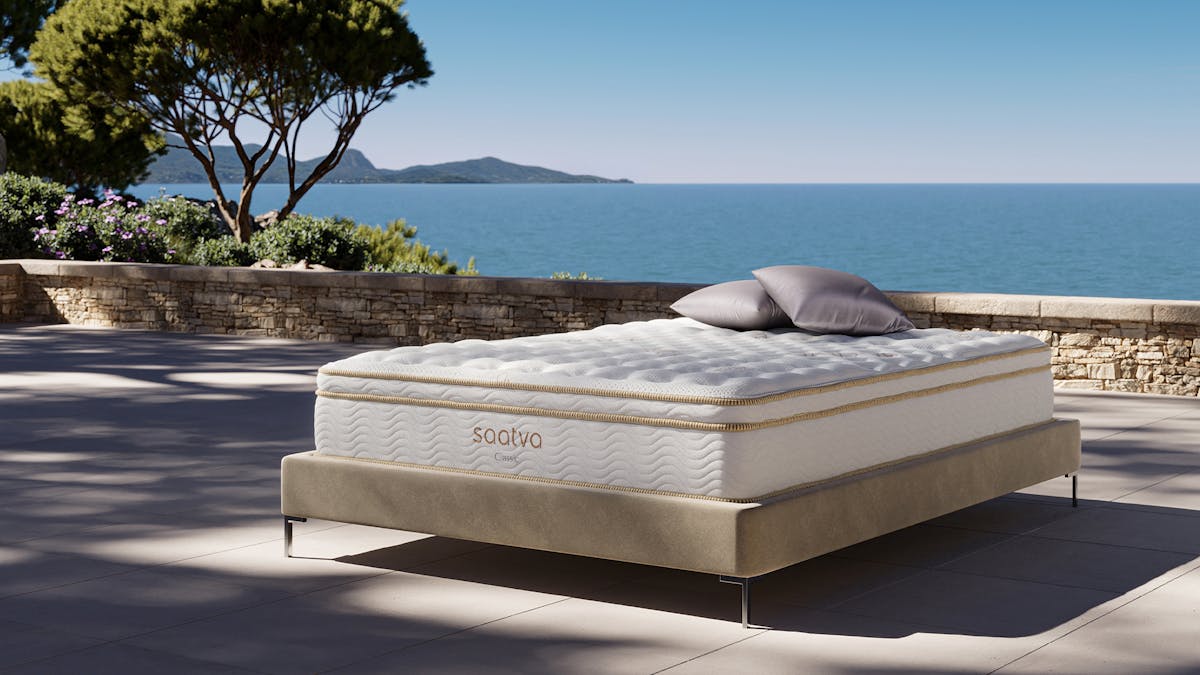
by The best mattress for restless leg syndrome is a responsive, cooling design that lets you reposition freely without resistance. Our top pick is the Saatva Classic: its dual-coil construction delivers maximum airflow so legs stay cool, and zero foam resistance means you can reposition freely without fighting the mattress. The Amerisleep AS3 is the best foam alternative for anyone who prefers a softer, all-foam feel.
Saatva Classic
9.4/10
- Dual-coil construction means zero foam resistance when shifting leg position, critical for RLS
- Outstanding airflow through the open coil system keeps legs cool, reducing a main RLS trigger
- Lumbar Zone Technology reinforces the lower back without creating pressure on the legs
- 365-night trial, lifetime warranty, free white-glove delivery and old mattress removal
- Higher motion transfer than all-foam options, relevant if a partner is a light sleeper
- $99 return fee if you use the trial
For heat-driven or movement-driven RLS, the Saatva Classic is the strongest mainstream option. Legs move freely with no foam drag, the organic cotton cover breathes well, and three firmness options let you dial in comfort without compromising airflow. The 365-night trial gives you a full year to confirm it works for your symptoms.
Why mattress choice matters for RLS
Restless leg syndrome is a neurological condition that creates an irresistible urge to move the legs, typically intensifying in the evening and at night. Two mattress factors directly affect how severe symptoms feel during sleep: responsiveness and temperature regulation.
Responsiveness matters because RLS patients reposition their legs constantly throughout the night. A mattress that pushes back slowly, the way dense traditional memory foam does, creates mechanical resistance each time you move. That resistance triggers the same discomfort you were trying to relieve by moving in the first place. A foam or coil surface that responds within one to two seconds, rather than the four to six seconds typical of slow-recovery memory foam, removes that obstacle.
Temperature matters because heat is one of the most consistent RLS triggers. Warm leg muscles show higher symptom frequency than cool ones in multiple observational studies. This makes the cooling properties of a mattress, specifically whether it vents heat away from the body or traps it, a clinically relevant consideration.
Pressure relief at the calves and thighs is a secondary factor. Heavy or restrictive sleep surfaces, including thick, sinking memory foam, increase the feeling of constraint in the lower body. A moderate amount of contouring, enough to relieve contact pressure but not so much that it creates a trapped sensation, hits the right balance.
Best mattresses for restless leg syndrome
| Mattress | Type | Firmness | RLS advantage | Trial | Queen |
|---|---|---|---|---|---|
| Saatva Classic | Dual-coil innerspring | Luxury Firm 6/10 | Maximum airflow, zero foam resistance, responsive coil layer | 365 nights | From $1,879 |
| Amerisleep AS3 | All-foam (Bio-Pur) | Medium 5/10 | Fast response, active heat dissipation via Refresh cover | 100 nights | From $1,049 |
Amerisleep AS3: best foam option for RLS
Amerisleep AS3
9.0/10
- Open-cell Bio-Pur foam responds immediately when you reposition, with no sinking resistance
- HIVE 5-zone layer relieves lower-body pressure without trapping the legs
- Refresh cover actively dissipates body heat, reducing a key RLS trigger
- CertiPUR-US certified, made in the USA, 100-night risk-free trial
- All-foam edges are softer than a coil hybrid
- Sleepers over 230 lb may prefer the AS5 Hybrid for added support
For RLS sleepers who prefer a foam feel, the AS3 is the right choice. Its Bio-Pur foam recovers quickly after each position change, avoiding the push-back sensation that can worsen the urge-to-move cycle. The Refresh cover handles the heat side of the equation, making this a capable foam alternative to the Saatva Classic.
What to avoid when shopping with RLS
Dense, slow-recovery memory foam is the main type to avoid. The high-viscosity foam that dominated the market in the 2010s takes four to seven seconds to recover after compression. When an RLS patient shifts leg position, the foam pushes back on the leg before releasing, which can intensify the uncomfortable sensation that triggered the movement.
Very firm surfaces create the opposite problem. Without any contouring, the calf and heel rest on a hard surface that concentrates pressure, which is a separate contributor to nighttime leg discomfort. The ideal range is medium to medium-firm (5 to 6.5 out of 10), firm enough to support the lower body without sinking, and responsive enough to release immediately when you reposition.
Electric blankets and mattress pads with active heating should be avoided. Even mild temperature increases at the leg surface can amplify RLS symptoms. If you run cold, a breathable layering system that keeps the torso warm without heating the legs is a more symptom-conscious approach.
Sleep strategies that work alongside the right mattress
The right mattress removes one variable; these habits address the others:
- Elevate slightly before bed. A wedge pillow under the calves keeps the legs at a gentle incline. Minor elevation improves venous return and reduces the pooling sensation that can trigger RLS episodes at rest.
- Warm bath two hours before bed. The temporary warmth followed by the body's natural cooling process signals sleep onset and can reduce symptom intensity. Timing matters: a bath immediately before bed keeps core temperature elevated, which works against you.
- Light calf stretches for five minutes. Gently working the calf muscles before lying down reduces the restlessness that worsens when the muscles are stationary.
- Avoid caffeine after noon. Caffeine heightens dopaminergic nerve sensitivity, the same pathway disrupted by RLS.
- Sleep position: side with knees slightly bent. A pillow between the knees keeps the hips and lower spine neutral and reduces mechanical tension on the sciatic nerve pathway that runs through the calf.
An adjustable bed frame is also worth considering for chronic RLS. Zero-gravity positioning tilts the legs very slightly above the heart, improving venous return during the night without requiring a pillow stack.
Frequently asked questions
Can a mattress make restless leg syndrome worse?
Yes. Dense slow-recovery memory foam creates resistance when you shift leg position, which can amplify the urge-to-move cycle. A mattress that retains heat adds a second aggravating factor. Switching to a responsive, cooler surface is one of the most practical non-medical changes an RLS patient can make.
Is memory foam or innerspring better for RLS?
Responsiveness matters more than material type. A plant-based open-cell foam (Amerisleep AS3) responds as quickly as most hybrids. A coil-based innerspring (Saatva Classic) has no foam resistance at all. Both are significantly better than dense traditional memory foam. Avoid any foam with a recovery time over three seconds.
What firmness is best for restless leg syndrome?
Medium to medium-firm (5 to 6.5 out of 10) is the best range. Soft beds allow the legs to sink too deeply, which creates a trapped sensation. Extra-firm beds concentrate pressure on the calves and heels without any contouring. The Saatva Classic's Luxury Firm at 6/10 and the AS3 at 5/10 both sit in the target range.
Does an adjustable base help with RLS?
For many people, yes. Elevating the leg section slightly improves venous return in the lower legs, which reduces the blood-pooling sensation that can trigger RLS. Zero-gravity positioning, available on most adjustable bases, achieves this automatically. Both the Saatva Classic and the AS3 are compatible with adjustable frames.
For restless leg syndrome, prioritise a responsive, cooling surface. The Saatva Classic delivers maximum airflow with its dual-coil construction and a full 365-night trial. The Amerisleep AS3 is the best foam alternative, with fast-responding Bio-Pur foam and an active heat-dissipating cover.
This guide is part of our Best Mattress for Pain Relief hub, where we compare all condition-specific picks in one place.