
 by
by The best mattress for van life is the Saatva Classic: the open-coil construction breathes significantly better than closed-cell foam in confined van interiors, the dual-coil lumbar zone holds up to full-time sleeping on imperfect DIY platforms, and the 365-night trial gives you all four seasons to confirm fit. For van builders who need a compressed box that fits through a cargo door, the Amerisleep AS3 is the strongest foam alternative.
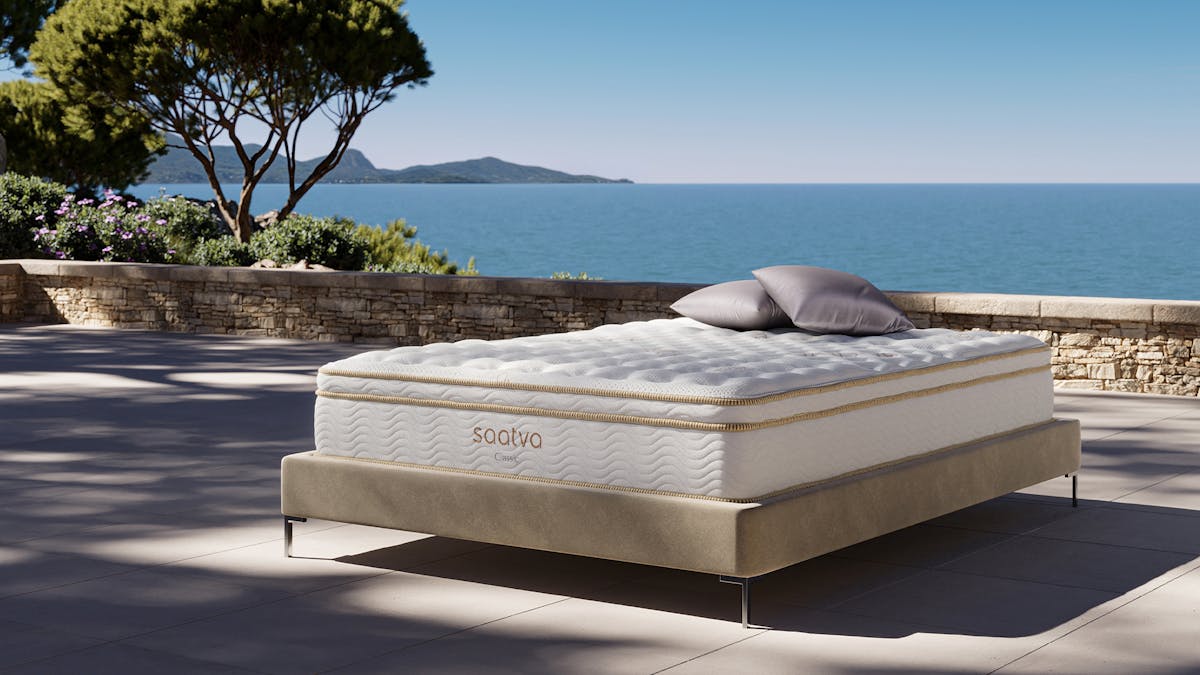
Saatva Classic
9.2/10
- Open-coil construction allows airflow through the mattress, critical in enclosed van spaces that trap heat and moisture
- Dual-coil system with reinforced lumbar zone pad handles full-time sleeping on uneven DIY platforms
- Three firmness options (Plush Soft / Luxury Firm / Firm) for any sleep position
- 365-night trial covers all four seasons in a van, longest in the industry
- Lifetime warranty, free white-glove delivery with old-mattress removal
- ~100 lb queen, ships full-size, not compressed, needs clear door access or must go in before walls are built
- $99 return fee applies during the trial window
- White-glove delivery not available in all areas, confirm coverage before ordering
Full-time van sleeping puts more stress on a mattress than a fixed bedroom: humidity, temperature swings, and a platform that flexes on the road. The Saatva Classic's open coil structure handles all three better than closed-cell foam, and the lumbar zone reinforcement holds alignment over months of daily use on a wooden platform that is never quite flat.
Why van life mattress selection is different
A standard bedroom mattress is designed for a fixed platform that never moves. Van life introduces three problems a standard mattress review won't mention:
- Non-standard dimensions. A Ford Transit build typically runs 72 x 53 inches. A high-roof Sprinter can fit a 73 x 48 inch layout depending on wheel well placement. A standard queen (60 x 80 inches) fits many builds, but measure your platform before ordering anything.
- Temperature swings. Van interiors can reach 90°F on a hot afternoon and drop below 40°F overnight. Materials with poor thermal regulation, traditional closed-cell memory foam especially, trap heat at night and stiffen in the cold. Innerspring and open-cell foam constructions breathe far better in this environment.
- Moisture accumulation. Breathing, cooking, and condensation off cold van walls generate steady humidity. Mattresses without vapor permeability develop mold on the underside within months. Airflow beneath the mattress (slats or a perforated platform) and breathable construction are both essential.
The Saatva Classic scores on all three: the open-coil construction circulates air through the mattress core rather than trapping it, the 11.5-inch or 14.5-inch profile fits a standard queen footprint that works for most full-size van builds, and the dual-coil structure handles the flex and imperfection of a van platform better than a foam-only design.
Best mattresses for van life
| Mattress | Type | Profile | Weight (queen) | Trial | Queen price |
|---|---|---|---|---|---|
| Saatva Classic | Innerspring hybrid | 11.5" or 14.5" | ~100 lb | 365 nights | From $1,879 |
| Amerisleep AS3 | All-foam (Bio-Pur) | 12" | ~60 lb | 100 nights | From $1,049 |
| Puffy Lux | Foam hybrid | 12" | ~80 lb | 101 nights | From $1,399 |
Amerisleep AS3
8.8/10
- Ships compressed in a box, fits through van doors and cargo areas without hassle
- Bio-Pur open-cell foam breathes better than standard memory foam, important in enclosed van spaces
- ~60 lb queen weight, lighter than most hybrids, manageable solo
- HIVE 5-zone support keeps spinal alignment on uneven DIY platforms
- CertiPUR-US certified, low VOC in a small enclosed space matters
- Standard queen is 60 x 80 inches, measure your platform before ordering
- Not designed to be cut to custom dimensions
- Softer edge support than a hybrid, keep this in mind on narrow platforms
The right pick when your van build is complete and the rear door is the only entry point. The AS3 ships compressed, ventilates better than traditional memory foam, and comes in at a manageable solo weight. Best for builds where loading a full-size innerspring is not practical.
Puffy Lux
8.4/10
- Ships compressed, fits through van cargo doors
- Climate-adaptive foam adjusts to temperature changes in van interiors
- Stain-resistant cover holds up to the messier side of van life
- 101-night trial, lifetime warranty
- ~80 lb queen, heavier than the AS3 for solo loading
- Motion isolation is very high, which some sleepers find disconnecting
A solid middle ground between the Saatva's coil breathability and the AS3's weight advantage. The climate-adaptive foam layer handles temperature shifts reasonably well, and the compressed box delivery makes it practical for finished builds.
Material guide for van use
Innerspring and hybrid (best thermal performance)
An open-coil or pocketed-coil construction allows air to move through the mattress core, which is the most important property for van use. The Saatva Classic's dual-coil system creates a natural chimney effect: warm air rises through the coil layers and exits rather than building up. In a van where ambient temperature can swing 50 degrees from afternoon to night, this passive ventilation matters more than any cooling gel layer in a foam mattress.
Open-cell foam (practical compressed-box choice)
Open-cell memory foam breathes better than traditional closed-cell construction. The Amerisleep AS3's Bio-Pur layer uses a plant-based open-cell formula that dissipates heat faster than standard memory foam. CertiPUR-US certification confirms low VOC output, which matters more in 80 square feet than in a house. The tradeoff is that foam, even open-cell, holds moisture more than coils, so platform ventilation underneath is non-negotiable.
Natural latex (premium option)
Natural latex resists moisture, maintains support across temperature extremes, and produces no VOC off-gassing. A 3-inch GOLS-certified natural latex topper over a firm foam base is the most space-efficient van life setup: the topper folds or rolls for daytime storage, and the firm base becomes seating. Avocado makes a quality 3-inch Dunlop latex topper if you go this route.
What to avoid
Traditional innerspring mattresses that ship full-size without compression are only practical if you build the platform around the mattress before finishing the van walls. Closed-cell foam traps heat and moisture. Any mattress over 10 inches thick becomes difficult to move in tight spaces and reduces headroom in standard-roof van builds.
Sizing and platform notes
Most van builds land in one of three sizing scenarios:
- Full queen (60 x 80 inches): fits high-roof Sprinter, Transit high-roof, and ProMaster 159" wheelbase builds with standard lengthwise orientation. Both the Saatva Classic and Amerisleep AS3 come in standard queen.
- Short queen (60 x 75 inches): common in RV and Sprinter builds where wheel wells eat into length. Several foam suppliers cut to order for $30 to $80.
- Custom cut: for narrow or unusually shaped platforms, a basic slab of 4-inch open-cell foam cut to exact dimensions costs around $150 to $250 and works well under a quality latex topper.
Always ventilate under the mattress. A platform of 1x4 slats spaced 1 to 2 inches apart prevents moisture accumulation on the underside. Solid plywood platforms are the fastest route to mold regardless of mattress type.
Frequently asked questions
What thickness mattress works best for van life?
4 to 8 inches is the practical range for most standard-roof builds. Under 4 inches lacks adequate support for full-time sleeping. Over 8 inches reduces headroom and makes loading difficult. The Saatva Classic at 11.5 inches and the Amerisleep AS3 at 12 inches both work well in high-roof builds where headroom allows.
Can I use a regular mattress in a van?
Yes, if it fits your platform and you plan for moisture management. Add a breathable mattress protector and ventilate underneath. The Saatva Classic ships full-size rather than compressed, so it needs to go in before the walls are finished or through a large rear opening. For completed builds with standard cargo doors, a compressed-box mattress like the AS3 is more practical.
How do I prevent mold under a van mattress?
Slat or perforated platform, breathable mattress cover, and a dehumidifier in humid climates. Innerspring and open-cell foam are both more resistant to moisture buildup than closed-cell foam. Never place any mattress directly on solid plywood without ventilation gaps.
Does van life use damage a mattress faster?
The temperature cycling and humidity are harder on foam than a stable indoor climate. A coil-based mattress like the Saatva Classic, with a lifetime warranty, is the most durable long-term choice for full-time van use. If you choose foam, a quality open-cell construction with a CertiPUR-US certification will outlast budget foam significantly in the same conditions.
For van life, the Saatva Classic is the strongest all-around choice: the open-coil construction breathes better in confined spaces, the lumbar zone holds up to full-time use, and the 365-night trial covers all four seasons. For builds where a compressed box is the only practical delivery option, the Amerisleep AS3 is the best foam alternative.
This guide is part of our Best Mattress by Use Case hub, compare all the top picks and narrow down your choice there.