
 by
by For camping, the right sleeping pad (R-value 2-4 for three-season use) is your primary tool on the trail. When you get home, your mattress matters. Our top pick for post-camping recovery is the Saatva Classic: dual-coil construction with a reinforced lumbar zone, three firmness options, 365-night trial, and free white-glove delivery. The Amerisleep AS3 is the best all-foam alternative for campers who prefer a quieter, compressed-box delivery.
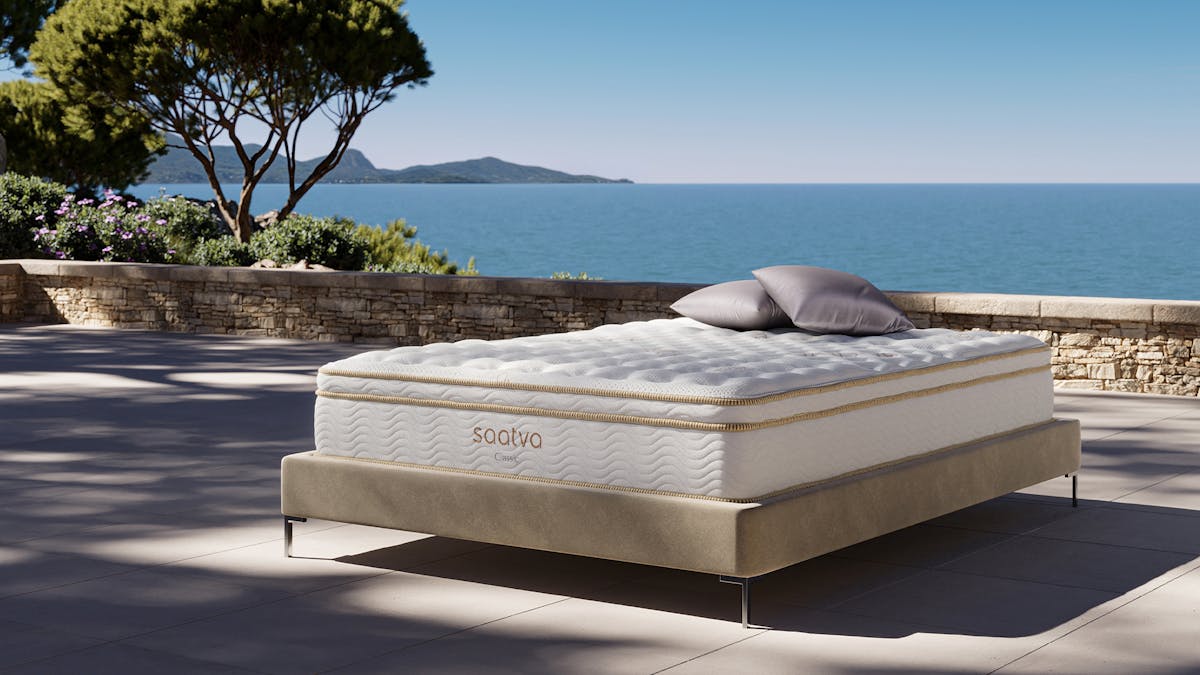
Saatva Classic
9.2/10
- Dual-coil construction with a reinforced lumbar zone pad, rebounds the spine after nights on hard ground
- Outstanding edge support and hotel-luxury feel that contrasts sharply with a sleeping pad
- Free white-glove delivery, setup and old-mattress removal included
- 365-night trial, lifetime warranty, three firmness levels (Plush Soft, Luxury Firm, Firm)
- Ships flat, not roll-packed, so requires white-glove delivery scheduling
- $99 return fee if you decide to return during the trial period
After nights on a sleeping pad, the Saatva Classic's dual-coil lumbar zone and Euro pillow-top restore spinal alignment better than almost any other home mattress. The responsive innerspring feel is a welcome contrast to firm ground, and the 365-night trial gives you enough time to confirm it works for your sleeping style.
Choosing the right sleeping pad
A sleeping pad is the most consequential piece of camping sleep gear. The two variables that matter most are R-value (thermal resistance) and thickness. R-value measures how well the pad insulates you from the ground. Cold ground steals heat 25 times faster than cold air, so ground insulation outperforms an extra sleeping bag layer every time.
R-value guide by season
| Season / Conditions | R-value needed | Notes |
|---|---|---|
| Summer (ground above 50F) | 1-2 | Lightweight inflatable pads work |
| Three-season / shoulder season | 2-4 | Most backcountry use cases |
| Winter camping | 4-6 | Required for below-freezing ground |
| Extreme cold / alpine | 6+ | Stack two pads if needed (R-values add) |
R-values are now standardized under ASTM F3340-18. Pads made after 2020 are directly comparable across brands. Older pads may have used inflated manufacturer figures.
Top backpacking sleeping pads
Therm-a-Rest NeoAir XLite NXT, R-value 4.5, 12 oz (regular), 2.5-inch thickness. The ultralight benchmark. Reflective ThermaCapture film creates an unmatched warmth-to-weight ratio. Mummy shape saves pack weight. Drawback: the internal film makes a crinkle noise some light sleepers find disruptive.
Sea to Summit Ether Light XT Insulated, R-value 3.2, 14.8 oz (regular), 4-inch thickness. Rectangular shape improves comfort for side sleepers. The extra inch of thickness delivers noticeable hip pressure relief over thinner pads.
NEMO Tensor Insulated, R-value 3.5, 15 oz (regular), 3-inch thickness. Quieter than the NeoAir, warmer than the Ether Light at similar weight. A strong all-rounder for three-season backpacking.
Car camping: comfort over weight
When you're driving to the site, weight is irrelevant. Thickness and stability matter. Self-inflating pads in the 3.5-4 inch range approach the feel of a firm mattress topper and hold up well for multi-night trips.
Therm-a-Rest MondoKing 3D, R-value 8, 4-inch self-inflating. The car-camping benchmark. Heavy at 6 lb but genuinely comfortable for restless sleepers. R-value 8 covers conditions down to the mid-teens Fahrenheit.
REI Co-op Camp Bed 3.5 Self-Inflating, R-value 3.5, 3.5-inch. Budget-friendly for three-season car camping. Wider dimensions help restless sleepers stay on the pad.
Glamping: air mattresses and cots
For established campsites with vehicle access, a quality air mattress or camp cot delivers real comfort. The SoundAsleep Dream Series (4-inch coil-beam construction) is the most consistent performer. Always pair an air mattress with a foam pad underneath. Air mattresses conduct cold from the ground even in summer conditions.
Your home mattress after camping
Camping sleep involves trade-offs no sleeping pad overcomes: limited spinal support, temperature swings, and surface hardness. After a multi-night trip, most campers need 1-2 nights on a quality home mattress to fully recover sleep quality. This is when a zoned, pressure-relieving mattress pays its way most clearly.
The Saatva Classic (dual-coil, reinforced lumbar zone, hotel-luxury feel) and Amerisleep AS3 (HIVE 5-zone, medium firm, all-foam) are both designed to restore alignment fast. A 100-plus night trial on either gives you real-world confidence before committing.
If you use an adjustable bed frame, zero-gravity positioning can further decompress the spine after days on hard ground, and pairs well with both recommendations above.
Top home mattresses for campers compared
| Mattress | Type | Firmness | Trial | Queen price |
|---|---|---|---|---|
| Saatva Classic | Innerspring hybrid | 3 options (Lux Firm ~6/10) | 365 nights | ~$1,395 |
| Amerisleep AS3 | All-foam (Bio-Pur) | Medium 5/10 | 100 nights | From $1,049 |
| Puffy Original | All-foam in-a-box | Medium ~6-7/10 | 101 nights | ~$1,499 |
Amerisleep AS3
8.8/10
- HIVE 5-zone support targets lumbar zone, great for recovering after nights on hard ground
- Bio-Pur plant-based open-cell foam relieves pressure without retaining heat
- Ships compressed in a box, easy setup without white-glove scheduling
- CertiPUR-US certified, made in the USA
- Softer edges than a coil hybrid
- Sleepers over 230 lb may prefer the AS5 Hybrid for more support
For campers who want an all-foam feel and easy box delivery, the AS3's medium HIVE zoning restores spinal alignment quickly after nights on hard ground. Strong motion isolation means a restless post-camping partner won't wake you.
Puffy
8.4/10
- Excellent pressure relief and motion isolation for post-camping recovery
- Lifetime warranty gives long-term confidence
- Ships compressed in a box for easy self-setup
- Runs slightly warm compared to hybrid options
- Less lumbar zoning than the Saatva or AS3
A solid all-foam option for campers who want good pressure relief at a mid-range price, with a lifetime warranty backing the investment.
Quick-compare: camping sleep vs home mattress needs
| Factor | Camping sleeping pad | Home mattress |
|---|---|---|
| Primary spec | R-value (insulation) | Firmness zone + pressure relief |
| Thickness sweet spot | 2.5-4 inches | 10-14 inches |
| Weight matters? | Yes (backpacking) | No |
| Trial period | Gear return policy | 100-365 nights |
| Top pick | Therm-a-Rest NeoAir XLite NXT | Saatva Classic |
For camping, R-value and pack weight drive pad selection. When you're home, reach for a mattress with zoned lumbar support. The Saatva Classic is the top pick for post-trail recovery on a 365-night trial; the Amerisleep AS3 is the best all-foam alternative on a 100-night trial.
Frequently asked questions
What R-value do I need for camping?
For summer camping with ground temperatures above 50F, R-value 1-2 is sufficient. Three-season camping needs R-value 2-4. Winter camping requires 4-6. R-values are additive, so stacking two pads works for extreme cold.
What is the best sleeping pad for backpacking?
The Therm-a-Rest NeoAir XLite NXT is the benchmark, R-value 4.5 at 12 oz for a regular. Side sleepers who want a wider pad often prefer the Sea to Summit Ether Light XT Insulated for its rectangular shape and 4-inch thickness.
Can I use an air mattress for camping?
Yes, for car camping and glamping. Air mattresses are too heavy for backpacking. Always add a foam pad underneath for ground insulation. Air mattresses transfer cold from the ground even in moderate temperatures.
What mattress is best for sleeping after camping?
A mattress with zoned support and pressure relief recovers spinal alignment fastest after nights on hard ground. The Saatva Classic (dual-coil lumbar zone, 365-night trial) and Amerisleep AS3 (HIVE 5-zone, 100-night trial) are the two most consistent picks.
How thick should a camping sleeping pad be?
For backpacking, 2.5-3 inches is adequate. For car camping, 3.5-4 inches reduces hip pressure for side sleepers. Thickness affects comfort but not warmth. R-value determines insulation, not thickness.
This guide is part of our Best Mattress by Use Case hub, compare all the top picks and narrow down your choice there.