
 by
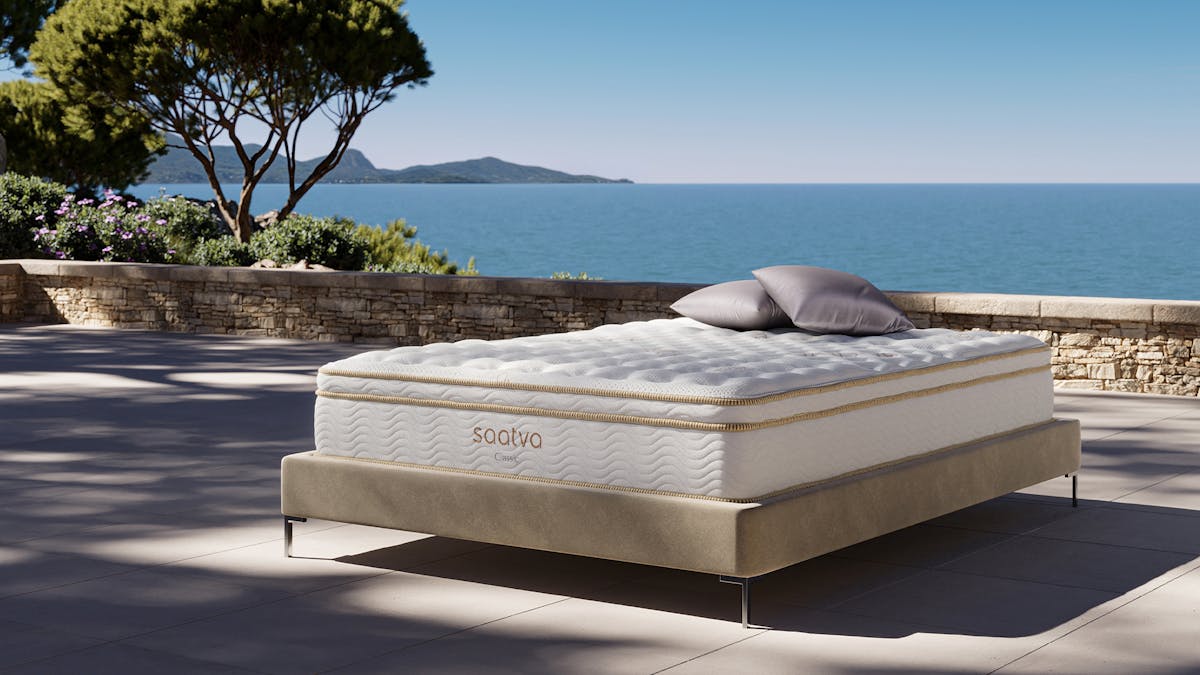
by Choose a foundation, not a box spring, for any mattress made in the past decade. Box springs were built for old-school innerspring coils and will cause a memory foam or hybrid mattress to sag. A solid wood slatted foundation with slats no more than 4 inches apart gives modern mattresses the flat, even support they need. If you are also shopping for a mattress, the Saatva Classic pairs with its own matched foundation and comes with free white-glove delivery.
Saatva Classic
9.2/10
- Ships with a matched slatted foundation option, so the support system is designed end-to-end
- Free white-glove delivery, setup, and old-mattress removal included
- Dual-coil construction with a reinforced lumbar zone pad
- 365-night trial and lifetime warranty
- Delivered flat, not compressed in a box
- $99 return fee applies during the trial window
The Saatva Classic is the mattress we recommend most often for people doing a foundation upgrade. Saatva's own foundation uses solid wood slats at 3-inch spacing, well inside the 4-inch warranty maximum, and the matched pair arrives in one white-glove delivery appointment.
Foundation vs box spring: what is the difference
A box spring is a fabric-covered frame with metal coils inside. It was designed in the mid-20th century to absorb impact and add bounce to traditional innerspring mattresses. The internal coils flex slightly with each compression, which made sense when mattresses were thinner and needed that extra give. Today, that flex is a liability. Modern memory foam and hybrid mattresses require flat, firm support from edge to edge, and a box spring's coils allow localized dipping that breaks down foam faster than normal use would.
A foundation (also called a platform foundation or wood foundation) is a rigid slatted frame with no springs. It supports the mattress evenly without any flex. Most mattress warranties issued after 2010 explicitly require a foundation or a platform bed with slats no wider than 3 to 4 inches apart. Using a box spring under a modern mattress voids most warranties.
Foundation vs box spring: side-by-side comparison
| Feature | Mattress Foundation | Box Spring |
|---|---|---|
| Internal structure | Solid wood slats, no springs | Metal coil frame inside fabric |
| Support type | Flat, firm, even | Flexible, bouncy |
| Works with memory foam | Yes | No (voids warranty) |
| Works with hybrid mattresses | Yes | No (causes premature sag) |
| Works with old innerspring (pre-2010) | Yes, may feel firmer | Yes, designed for it |
| Typical lifespan | 15 to 20 years | 8 to 12 years |
| Typical queen price | $200 to $450 | $130 to $260 |
| Repairability | Easy (annual bolt-tighten) | Not repairable once coils collapse |
| Profile options | 5-inch low or 9-inch standard | 8 to 9 inches, one profile |
| Compatible with adjustable base | No (adjustable base replaces it) | No |
When to use a foundation
Use a foundation if your mattress was made after 2010. That covers virtually every memory foam, latex, and hybrid mattress currently on the market. A wood slatted foundation holds the mattress flat, protects the foam core from deforming between slats, and keeps the warranty intact. The 9-inch standard profile fits most platform bed frames. If your frame already sits high off the floor, the 5-inch low-profile foundation keeps the total bed height reasonable without sacrificing support.
Slat spacing is the most overlooked spec. Check that slats sit no more than 4 inches apart. Wider gaps allow foam to press into the gap over time, which creates a ribbed texture through the mattress surface and gives manufacturers grounds to deny warranty claims. Quality foundations run slats at 3 inches.
When a box spring still makes sense
Box springs are appropriate in one situation: you have a traditional coil innerspring mattress made before 2010 and want to preserve its original feel. Those mattresses were engineered with a coil base in mind, and swapping to a rigid foundation can make the bed feel stiffer than intended. Outside of that, a box spring is the wrong call. They are heavy, cannot be repaired once a coil collapses, and will damage any modern mattress placed on top.
Foundation types explained
Standard 9-inch wood foundation: The most common choice. Solid wood slats, fabric cover, and slat spacing around 3 inches on quality models. Works with all modern mattresses and gives a finished look on open-frame beds. Queen price range $200 to $450.
Low-profile 5-inch foundation: Same internal construction, four inches shorter. The right choice when your frame plus a standard foundation plus your mattress would push the sleeping surface above 30 to 32 inches. Queen price range $200 to $400.
Metal grid foundation: A rectangular platform with steel slats. Less expensive at $150 to $300 for a queen, but prone to squeaking at joint contact points after a year or two. Fine for warranty compliance, but not the long-term choice.
Adjustable base: This is not a foundation. An adjustable base replaces the foundation entirely. Do not buy both. If you want head-and-foot elevation for reading, reflux management, or sleep apnea, the adjustable base is the support system, and the mattress lays directly on top.
Foundation care and maintenance
Wood foundations need minimal upkeep. Tighten the corner bolts once a year, especially after any move. Check the bed frame center support leg annually on queen and king beds, since a bent or missing center leg is the most common cause of foundation failure. Metal grid models can develop squeaks at the slat joints after about 18 months; a small amount of silicone spray at the contact points fixes this in minutes. Vacuum under the foundation twice a year. The dark enclosed space collects dust mites at a rate second only to the mattress itself.
Saatva Classic
9.2/10
The matched Saatva foundation and Classic mattress arrive together in one white-glove delivery, fully assembled. For anyone upgrading both the mattress and its base at once, this is the cleanest setup available. Includes a 365-night trial and a lifetime warranty.
Frequently asked questions
Can I put a memory foam mattress on a box spring?
No. Memory foam needs flat, even support. Box spring coils flex under load and create localized dips in the foam within a few months. Most memory foam warranties explicitly exclude damage caused by box spring use. Replace it with a slatted wood foundation before laying any memory foam or hybrid mattress on top.
Do I need a foundation if my bed frame already has slats?
Only if those slats are spaced more than 4 inches apart. Modern platform bed frames typically have slats at 2 to 3 inches, which meets warranty requirements without a separate foundation. Measure the gap first. Older wooden frames often have 6-inch slat spacing and need a foundation placed on top to protect the mattress.
How tall will my bed be with a standard foundation?
Add all three heights: frame height, foundation height, and mattress height. A typical bed frame sits 6 to 8 inches off the floor. Add a 9-inch standard foundation and a 12-inch mattress and the sleeping surface lands around 27 to 29 inches. If that is too high, a 5-inch low-profile foundation drops the total by 4 inches.
Will a foundation work on an adjustable base?
No. An adjustable base replaces the foundation. The base itself flexes the mattress, so placing a rigid foundation underneath defeats the purpose and prevents the head and foot from raising. Order a split adjustable base if you have a king or queen and want each side to move independently.
How long does a foundation last?
A quality wood slatted foundation lasts 15 to 20 years with annual bolt-tightening. Metal grid models last 10 to 15 years before squeaking becomes persistent. Box springs fail at 8 to 12 years when a coil collapses and cannot be repaired. Replace any foundation if slats visibly bow under mattress weight.
Is a foundation the same thing as a box spring?
No, though many stores use the terms interchangeably. A foundation is a rigid slatted wood frame with no springs. A box spring contains metal coils inside a fabric-covered frame. For any mattress made after 2010, you want a foundation. The coil flex in a box spring does active damage to modern foam and hybrid mattresses over time.