
 by
by A too-soft mattress is the most common complaint after the first few weeks with a new mattress -- and the most fixable. Before you initiate a return or spend another $1,000, there are six legitimate interventions worth trying in order of cost and effectiveness.
This guide is the action companion to our mattress-too-soft diagnostic overview. If you haven't done the basic diagnosis yet, start there. If you've confirmed the mattress is genuinely too soft (not just new-mattress adjustment), keep reading.
Saatva Classic — Firm
Our top-rated pick for balanced support and comfort. 365-night trial, free white-glove delivery, and a lifetime warranty.
Check Current Price & Trial →The 6 Fixes, Ranked by Effectiveness
1. Firm Mattress Topper -- Best Overall Fix
Effectiveness: 8/10 | Cost: $80-$250
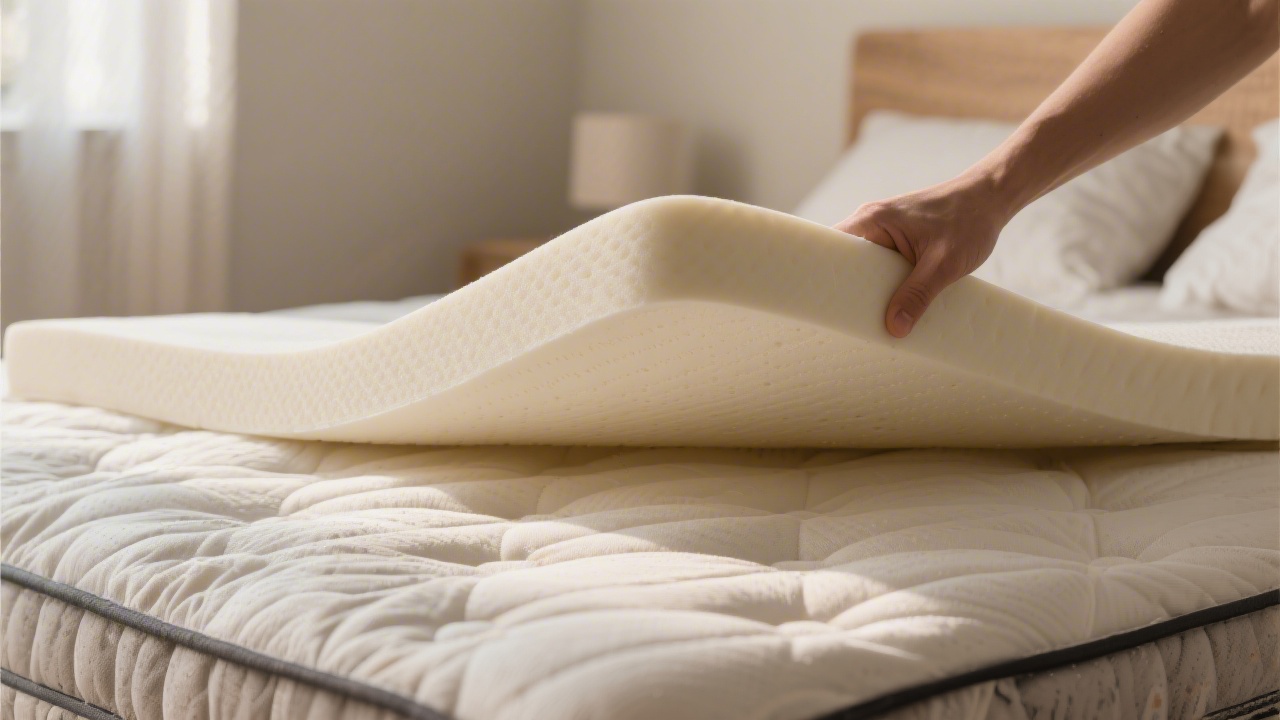
A firm latex or high-density memory foam topper (ILD 35+, 2 inches thick) sits on top of your mattress and immediately changes the sleep surface. This is the most reliable fix that doesn't require moving furniture or voiding warranties.
What to buy: Look for latex toppers labeled "firm" with an ILD (Indentation Load Deflection) of 35 or higher. Dunlop latex is denser and firmer than Talalay for the same thickness. Avoid memory foam toppers -- they feel soft initially and soften further with body heat.
Limitation: Works best when the mattress has surface softness, not structural sagging. If there's a visible body impression deeper than 1 inch, a topper adds firmness on a collapsed foundation -- which doesn't solve the underlying problem.
2. Check and Replace the Foundation
Effectiveness: 7/10 | Cost: $0-$400
The most overlooked cause of unexpected mattress softness is the foundation. A worn box spring with broken internal coils, or slats spaced more than 3 inches apart, can make any mattress feel 30-40% softer than it should.
Check your current support: press down in the center of your foundation without a mattress on it. If you feel flex or bounce, the foundation is contributing to the soft feel. See our guide on foundation vs. box spring vs. platform bed for replacement options at every price point.
A solid platform base or bunkie board costs $80-$150 and adds immediate firmness to any mattress setup. For slatted beds, ensure slats are no more than 2.75 inches apart.
3. Plywood Board Between Mattress and Foundation
Effectiveness: 6/10 | Cost: $30-$60
A 3/4-inch plywood board cut to match your mattress dimensions eliminates foundation flex. Cut to size at any hardware store; sanding the edges and applying a moisture barrier is worth the extra step.
Note: This fix reduces ventilation under the mattress, which can trap moisture over time. It's a good short-term fix or bridge solution, not a permanent one. Check for moisture buildup monthly.
4. Rotate the Mattress 180 Degrees
Effectiveness: 4/10 | Cost: $0
Rotating moves body impressions from the center/shoulder zone to the foot area, where they receive less pressure. This helps if the softness is localized -- if you've been sleeping in the same position on the same half of the mattress for months.
This does not help if the mattress is uniformly soft, if it's only a few weeks old, or if there's structural sagging. Most modern mattresses have a no-flip design, so don't flip it -- rotate head-to-foot only.
5. Move the Mattress to the Floor
Effectiveness: 5/10 | Cost: $0
Placing the mattress directly on a hard floor eliminates all foundation flex and gives you the firmest possible base. This is a useful diagnostic step: if the mattress feels significantly firmer on the floor, your foundation is the problem. If it feels the same, the mattress itself is too soft.
Not a permanent solution -- floors restrict airflow and trap moisture under the mattress.
6. Use Your Trial Period
Effectiveness: 10/10 if it's the wrong mattress | Cost: $0
If you've tried two or more fixes and the mattress is still too soft after 45+ days, you have the wrong mattress. Most mattress companies offer 100-night or longer trials for exactly this reason. Saatva offers 365 nights -- which means you have enough time to properly evaluate any adjustment strategy before committing to a return.
Document issues as you go: photographs of any sagging, written notes on sleep quality and pain. This documentation supports warranty claims and smooth trial period returns. Our guide on how to use your mattress trial period walks through the full process.
Cost vs. Effectiveness Comparison
| Fix | Cost | Effectiveness | Time to Feel Difference |
|---|---|---|---|
| Firm topper | $80-$250 | 8/10 | Night 1 |
| Foundation replacement | $80-$400 | 7/10 | Night 1 |
| Plywood board | $30-$60 | 6/10 | Night 1 |
| Floor test | $0 | 5/10 (diagnostic) | Night 1 |
| Rotation | $0 | 4/10 | 1-2 weeks |
| Use trial/return | $0 | 10/10 (correct mattress) | After exchange |
When Fixes Won't Work
Some softness problems can't be fixed. Replace the mattress when:
- Visible sagging deeper than 1 inch under body weight
- The mattress is 7+ years old and coils are compressing
- You wake with specific pain patterns -- lower back pain that resolves after an hour of being upright is the clearest signal of a mattress that's too soft
- Two or more fixes have been tried for 30+ days without improvement
Saatva Classic — Firm
Our top-rated pick for balanced support and comfort. 365-night trial, free white-glove delivery, and a lifetime warranty.
Check Current Price & Trial →Our Top Mattress Pick
If you are looking for a mattress that addresses these concerns, the Saatva Classic is our most-recommended option. It combines excellent lumbar support with multiple firmness levels, a 365-night trial, and free white-glove delivery including old mattress removal.
Frequently Asked Questions
Does a mattress topper fix a mattress that's too soft?
A firm topper (latex or high-density foam, 2 inches, ILD 35+) can noticeably increase surface firmness, though it can't fix sagging coils or a collapsed base layer. Effectiveness rating: 7/10 for most sleepers.
Can a plywood board under my mattress make it firmer?
Yes. A 3/4-inch plywood board cut to mattress dimensions placed between the mattress and foundation adds meaningful firmness by eliminating flex. Cost: $30-60. Effectiveness: 6/10. Doesn't help if the mattress itself is sagging.
How long should I wait before deciding my mattress is too soft?
30 days is the minimum break-in period for most mattresses. Memory foam especially feels different after the first 2-3 weeks. If it's still too soft after 45 days, it's not going to firm up further.
Does rotating a mattress help if it's too soft?
Rotating 180 degrees helps if the softness is localized to one area (your usual sleeping spot). If the whole surface is uniformly soft, rotation won't help.
When should I just replace a too-soft mattress?
Replace when: (1) the mattress is 7+ years old, (2) there's visible sagging over 1 inch, (3) you've tried 2+ fixes without improvement, or (4) you're waking up with lower back pain that improves once you're out of bed.