
 by
by Quick answer: Verify the student price against the best public checkout total. My recommended above-budget upgrade is the Saatva Classic, but a cost-capped buyer should choose the best qualifying lower-priced bed instead.
- MattressNut’s 2026 college guide reports that compressed-in-a-box delivery is now universal across the brands it assessed.
- The same guide reports that Twin XL sizing is standardized across brands.
- It also says the price gap between budget and mid-range beds has narrowed enough to make a modest upgrade worth considering.
Updated July 2026 · Reviewed for accuracy
A mattress student discount earns my attention only if the final checkout total beats the best public offer on a bed that suits the room and sleeper. I don’t judge value from the promotional badge alone. I judge eligibility, construction disclosure, delivery, return terms, and the amount actually due.
For students working within a hard spending cap, price discipline comes first. A premium bed can still be considered, but it has to be labeled honestly as an above-budget upgrade rather than presented as the value choice.
Compare the checkout total, not the headline saving
The final amount due is the only price I’d use for comparison. A large-looking reduction means little if another public offer produces a lower total for the same mattress, size, delivery arrangement, and return terms.
MyBestMattress’s 2026 roundup collects student offers from different mattress companies. That establishes that dedicated programs exist, but it doesn’t establish that every offer works the same way or beats the seller’s public pricing. Each current policy needs its own check.
Build equivalent comparisons. Select the same model and size, then account for every charge and included service shown in each cart. If one route includes an accessory you don’t need, don’t treat its stated value as cash saved.
The Nut’s price check
- Confirm that you meet the stated eligibility rules.
- Compare the student route with the current public offer.
- Use the delivered checkout total, not the promotional headline.
- Read the return and cancellation terms before assigning value to the saving.
- Ignore extras that you wouldn’t otherwise purchase.
I’d also separate immediate cost from payment structure. If financing is offered, a smaller periodic payment doesn’t automatically mean a cheaper purchase. Compare the total payable under the current terms with the amount required for a direct purchase.
This method is deliberately unexciting. That’s the point. A clean, like-for-like comparison prevents a promotional label from making the decision for you.
Read the eligibility rules before choosing a bed
The eligibility line decides whether an advertised saving belongs in your budget at all. Before narrowing down mattresses, confirm who the seller currently recognizes as a student, what proof it requests, and whether the offer covers the model and size you want.
Don’t assume that successful verification answers every question. The offer could still have product restrictions, timing conditions, or rules governing how it interacts with public pricing. Treat each of those as something to confirm in the current terms rather than something to guess.
| What to verify | Why it matters | My approach |
|---|---|---|
| Student eligibility | An offer has no value if you can’t qualify under its current terms. | Verify eligibility before building the budget around it. |
| Offer interaction | The student route and public route may produce different carts. | Compare each route independently. |
| Model and size coverage | Broad promotional wording doesn’t confirm coverage for your exact choice. | Use an identical configuration in every comparison. |
| Delivery and returns | These terms affect both convenience and potential cost. | Read them before paying, not after setup. |
Keep housing rules separate from seller eligibility. A mattress can qualify for an offer while still being unsuitable for the supplied frame, room, access route, or residence policy. Confirm those practical limits first.
I’d abandon an offer if its terms remain unclear and the uncertainty could break the budget. A smaller, transparent saving is easier to value than a larger headline attached to unanswered conditions.
Construction still decides whether the price is good
MattressNut’s 2026 college guide says the gap between budget and mid-range pricing has narrowed enough that spending a little more can make sense. I read that as permission to compare build quality, not permission to ignore a firm price cap.
EachNight says its college guide weighs comfort, support, durability, and value while considering feel, construction, and user reviews. That’s a sensible framework. A low checkout total is only half the value calculation if the materials and layer design remain vague.
I look for a clear layer map first. For foam, useful disclosure includes material type and density where the manufacturer publishes it. For a coil design, I want the support layout, coil information, and edge construction explained rather than hidden behind broad comfort language.
Construction evidence worth checking
- A complete layer order, including the cover and support core.
- Specific material descriptions rather than proprietary names alone.
- Foam density or coil details where those specifications are published.
- Information about edge construction and how the layers are held together.
- Care instructions that fit the way the mattress will actually be used.
If key specifications aren’t published, I mark long-term durability as uncertain. I don’t automatically call the mattress poor, but I also won’t let a discount fill the evidence gap.
This is where a modest upgrade can be rational. The extra spending should buy clearer construction, a more suitable feel, or terms that reduce ownership risk. If it buys only a more polished promotion, keep the money.
Match the purchase to real student housing
Twin XL sizing is standardized across brands, according to MattressNut’s 2026 college guide. That makes comparison easier, but it doesn’t confirm which size a particular residence, frame, or room accepts. Check the actual space and housing requirements before ordering.
The same guide reports that compressed-in-a-box delivery is now universal across the brands it assessed. Even so, never infer a specific mattress’s delivery method from a market trend. Confirm the current delivery, setup, packaging, and return process for the exact bed under consideration.
Tom’s Guide organizes its college recommendations around different sleep styles, while MattressClarity says its selections are tailored from the shopper’s answers. Both approaches point to the same practical lesson: the person using the mattress matters more than the student label attached to the sale.
| Student situation | What I’d prioritize | What to verify |
|---|---|---|
| Furnished residence | Compatibility before comfort upgrades | Whether a replacement mattress is permitted and which size fits |
| Off-campus room | Fit, support, access, and moving practicality | Doorways, stairs, frame support, and delivery conditions |
| Shared bed | A feel acceptable to both sleepers | Motion response, usable edge, and combined support needs |
| Frequent moves | Manageable ownership and clear handling guidance | Weight, packaging limits, care instructions, and moving access |
Sleeping position deserves the same attention. Rather than treating a firmness label as universal, compare the manufacturer’s stated feel with your preferred position, body support needs, and tolerance for sink or surface response.
My rule: verify the room before the size, the sleeper before the feel, and the terms before the discount. A deal that fails any of those checks isn’t a useful deal.
The premium alternative has to clear a higher bar
The Saatva Classic belongs in this comparison only as an above-budget upgrade, not as the automatic answer for a cost-capped student. I wouldn’t assume that student-only pricing applies. Check the current official price and offer before deciding whether it belongs on your shortlist.
Don’t infer its delivered cost, construction details, trial conditions, warranty terms, or eligibility from general mattress guides. Confirm each item through the manufacturer’s current official pages, then compare that complete package with the lower-priced options available to you.
A premium upgrade earns consideration only if the additional cost is manageable without weakening the rest of the student budget. It should also solve a real need, such as better-documented construction, a more suitable support design, or ownership terms you genuinely value.
The above-budget upgrade test
- Does it remain affordable after the complete delivered cost is known?
- Are the construction details clearer than those of the lower-priced choice?
- Does the design address a specific comfort or support preference?
- Are the current delivery and return terms acceptable for the housing situation?
- Would you still choose it without the promotional framing?
If the answer to the affordability question is no, stop there. A higher-end option doesn’t become a student value simply because it carries a temporary offer or can be divided into smaller payments.
If the answers remain positive, compare it as a long-term purchase rather than pretending it competes in the same budget bracket. That keeps the recommendation honest and the spending decision grounded.
My final decision rule for paying less
A strict spending cap should eliminate every mattress above it before brand preference enters the discussion. Start with our guide to discount mattress prices for broader price context, then compare only beds that meet your space, support, and construction requirements.
If you qualify through military service as well as student status, evaluate those routes separately. Our military discount guide for a national mattress retailer explains another eligibility-based route, but the same checkout-total rule applies.
Use this order before paying
- Set a firm maximum for the complete purchase.
- Confirm the room, frame, access, and housing rules.
- Choose the construction and feel that suit the sleeper.
- Verify student eligibility for the exact mattress configuration.
- Build matching student and public-offer carts.
- Compare delivered totals and current payment terms.
- Read the delivery, cancellation, return, and warranty language.
- Choose the lowest acceptable total, not the loudest promotion.
My verdict is simple. Use student status as one pricing route, not as proof of value. The winning mattress is the affordable one that fits the space, meets the sleeper’s needs, discloses enough construction to judge, and carries terms you understand.
If a premium upgrade clears those tests without breaking the cap, it can be worth considering. If it doesn’t, walk away. The best saving is the money you don’t spend on an unsuitable bed.
ONE OPTION WORTH COMPARING
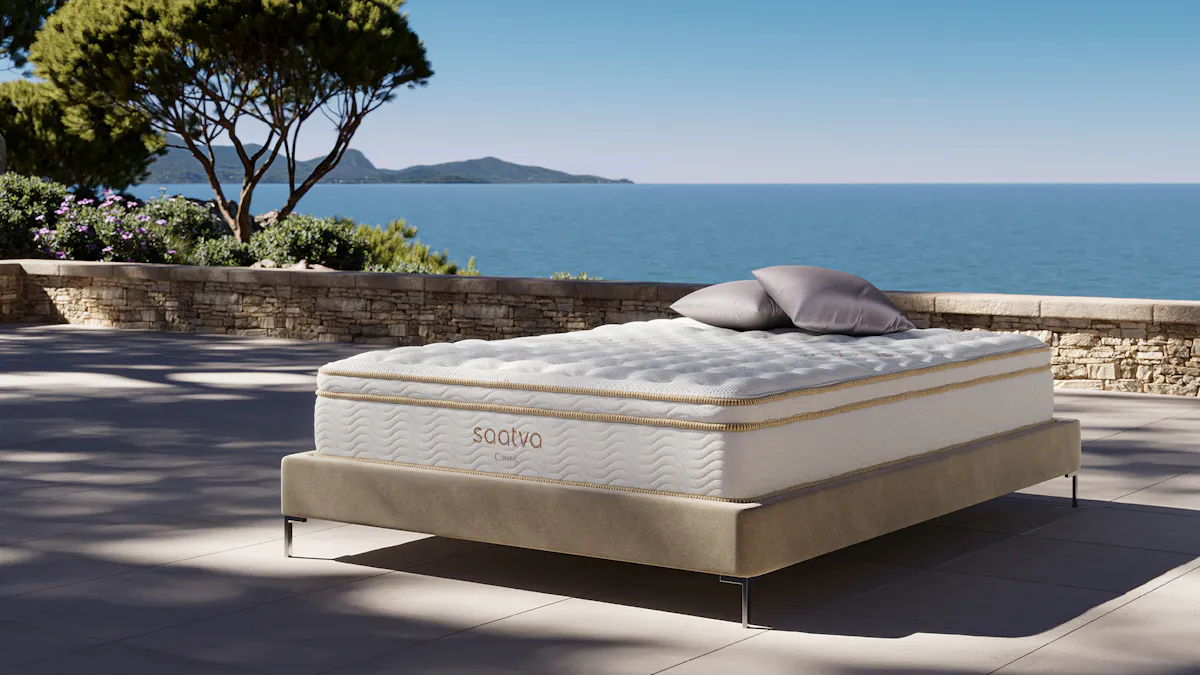
Shopping as well as reading? Here is one current option worth comparing: the Saatva Classic. Check today’s price, sizing and return terms on the official product page before you order.
Saatva Classic
- 365-night home trial and lifetime warranty, per saatva.com
- Handcrafted in the USA, free white-glove delivery
- Flexible financing available
FAQ
Do mattress companies offer student pricing?
Yes, dedicated programs exist. MyBestMattress’s 2026 roundup lists student offers from different mattress companies, but that doesn’t make any particular offer universal or current forever. Confirm eligibility and terms through the seller before relying on the saving.
Is a student offer always cheaper than a public sale?
Don’t assume it is. Build identical carts through the student and public routes, then compare the delivered totals, included items, and return conditions. The better deal is the lower acceptable total, regardless of its label.
What mattress size is suitable for a college student?
MattressNut’s 2026 college guide reports that Twin XL sizing is standardized across brands. The correct choice still depends on the supplied frame, available room, and housing rules, so verify the permitted size before ordering.
Should a student simply buy the cheapest mattress?
Not automatically. MattressNut’s college guide says the gap between budget and mid-range pricing has narrowed, while EachNight’s guide evaluates construction alongside comfort, support, durability, and value. I’d choose the lowest-priced bed that passes those practical and material checks.
What should I verify before completing the purchase?
Confirm eligibility, exact model coverage, delivered cost, payment terms, construction disclosure, delivery arrangements, returns, and warranty language. Also make sure the mattress fits the room and approved frame. If a material term remains unclear, resolve it before treating the offer as a saving.