
 by
by Quick answer: I’d recommend the Sealy Kelburn II only to shoppers who want a cushion-firm hybrid and can verify the exact model, condition, and seller terms. Skip it if full component disclosure is essential.
- GoodBed lists the mattress at 13.5" tall.
- Ashley HomeStore identifies encased coils and memory foam in its construction.
- Mattresses Official lists the Sealy Performance Hybrid Kelburn II at $567.00.
Updated July 2026 · Reviewed for accuracy
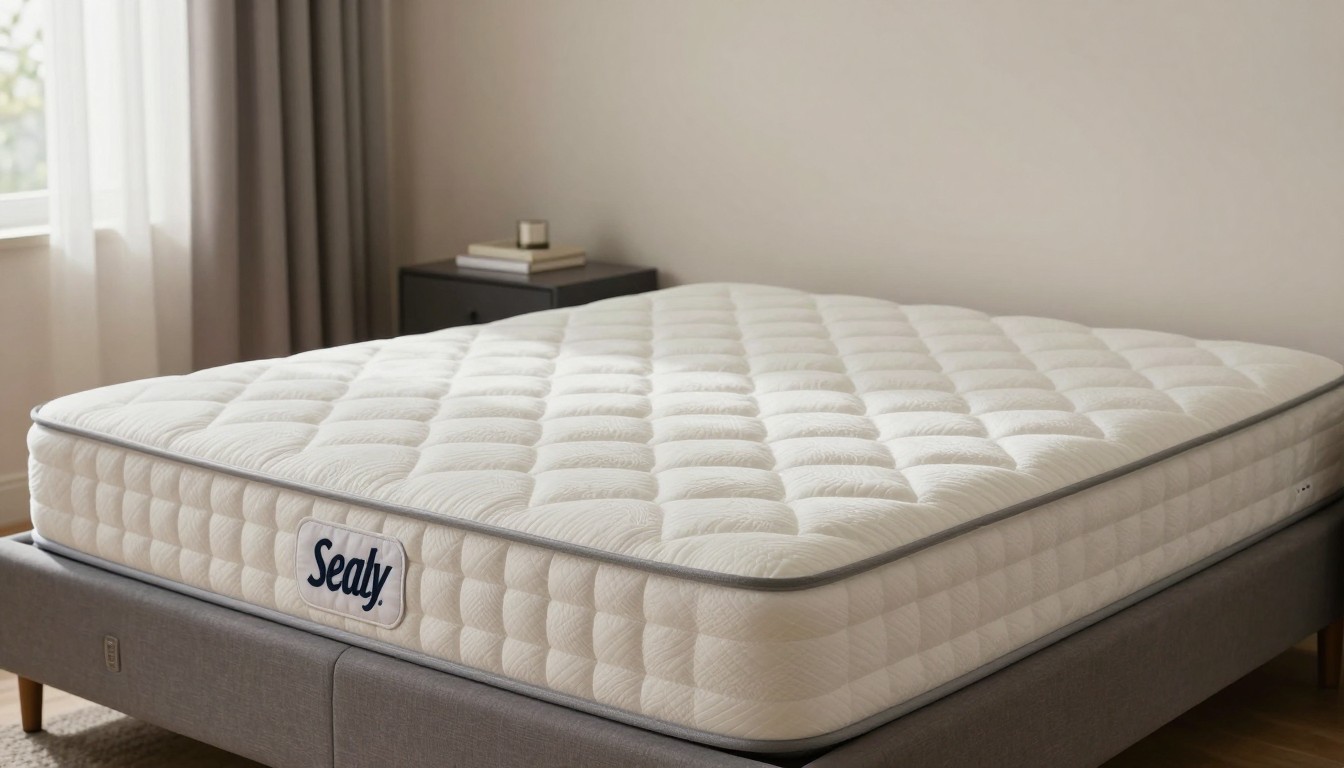
The Sealy Kelburn 2 is styled as the Kelburn II by GoodBed, Ashley HomeStore, and other retailers. I see a credible hybrid concept here, but not a fully documented mattress: the sources identify coils, memory foam, and the overall height without disclosing the specifications that tell me most about durability.
That doesn’t make the Kelburn II a bad purchase. It means the exact listing matters as much as the familiar Sealy name, especially when older models and retailer-specific descriptions can remain in circulation.
What the Sealy Kelburn II actually is
GoodBed identifies the Sealy Posturepedic Performance Kelburn II as a Cushion Firm model. A Home Furniture Plus Bedding listing calls the Kelburn II a Medium mattress instead. That discrepancy is the first detail I’d resolve before paying, because those labels may reflect retailer terminology or a genuinely different comfort version.
The underlying concept is clearer. Ashley HomeStore describes a hybrid mattress that combines encased coils with memory foam. This puts the Kelburn II between a traditional spring mattress and an all-foam design: the coil unit supplies most of the structural response, while the foam layers are intended to add contouring at the surface.
Model identity deserves extra attention with Sealy. Mattress Nerd notes that Sealy mattresses from past years can be sold alongside current models and that some retailers describe particular versions as exclusive. A matching brand name or similar comfort label therefore isn’t enough to prove that two listings contain the same mattress.
My model-checking rule
- Match the full model name, not just “Kelburn” or “Sealy Hybrid.”
- Confirm whether the comfort label says Cushion Firm or Medium.
- Ask the seller to identify the condition and included components in writing.
- Keep the invoice and photograph the product label after delivery.
GoodBed hosts owner ratings for the Kelburn II and lets shoppers filter that feedback by body weight, sleep position, and preferences. That can help you locate relevant experiences, but the existence of owner feedback isn’t evidence that the overall verdict is favorable. Consumer Reports also maintains a review page for the model, although its cited description doesn’t disclose a finding that would support a specific performance claim here.
My takeaway is simple: treat “Sealy Kelburn 2” as the starting point of the search, not the complete product identification. The Roman-numeral name, comfort designation, seller, and product label should all agree.
Construction and materials: credible basics, missing detail
GoodBed lists the Kelburn II at 13.5" tall. That is a substantial profile, but height alone says little about quality. A tall mattress can contain durable components or generous amounts of lower-density comfort material; the layer specifications decide which interpretation is fair.
Ashley HomeStore says the construction combines encased coils with memory foam. Another retailer description names Sealy Immersion Advanced Memory Foam with Chill and markets that material as more breathable with a cool-to-the-touch surface. Those details establish the broad design, but they don’t reveal how much of each material is used.
The most consequential omissions are foam density and coil gauge. The cited GoodBed, Ashley HomeStore, and retailer descriptions don’t state either specification. They also don’t disclose a coil count, a detailed layer-by-layer breakdown, or the construction of any perimeter reinforcement.
| Detail | What is documented | Why it matters |
|---|---|---|
| Overall profile | GoodBed lists 13.5". | Useful for checking frame, sheet, and bedroom compatibility, but not a durability grade. |
| Support core | Ashley HomeStore identifies encased coils. | Confirms a hybrid structure, but coil gauge and count remain unstated. |
| Comfort material | Ashley HomeStore identifies memory foam. | Supports a contouring design, but density and layer depth remain unknown. |
| Surface treatment | A retailer names Sealy Immersion Advanced Memory Foam with Chill. | Suggests an emphasis on initial surface cooling, not proven overnight temperature control. |
The hybrid layout gives the Kelburn II good bones on paper. Encased coils and memory foam are a sensible combination for shoppers who don’t want either the rigid feel associated with simpler spring beds or the deeper, slower response that some foam-heavy mattresses produce. The undisclosed component specifications keep me from translating that layout into a confident lifespan estimate.
Construction verdict: The design is easy to understand, but the durability story isn’t. I wouldn’t use the 13.5" height or the “hybrid” label as a substitute for foam-density and coil-gauge information.
Feel and sleeper fit depend on the exact label
Two comfort descriptions appear in retailer material: GoodBed uses Cushion Firm, while Home Furniture Plus Bedding uses Medium. I wouldn’t silently combine those terms. A shopper expecting a distinctly firm surface could react very differently from someone looking for noticeable cushioning and moderate sink.
The named memory foam suggests some contouring at the top, while the encased coil unit points toward a more responsive base. That should create a mixed foam-and-spring character rather than an all-foam sensation, but the cited descriptions don’t establish how deeply a sleeper will sink or how quickly the surface will recover after movement.
Side sleepers should focus on the comfort layer, not the word “hybrid.” A Cushion Firm surface may appeal to someone who dislikes deep cradling, yet the missing foam depth and density prevent a reliable pressure-relief judgment. Anyone sensitive at the shoulder or hip should verify the exact comfort version rather than assuming the model name guarantees enough cushioning.
| Sleeper or use case | Why the design may fit | Reason to pause |
|---|---|---|
| Back sleepers | The foam-and-coil layout may provide contouring without an entirely foam-based support core. | The published descriptions don’t quantify sink or support response. |
| Side sleepers | Memory foam is present in the comfort construction, according to Ashley HomeStore. | Foam depth and density aren’t stated, so pressure relief can’t be predicted confidently. |
| Stomach sleepers | The Cushion Firm description on GoodBed may interest sleepers who avoid a plush surface. | The Medium label used by another retailer creates uncertainty about the exact feel. |
| Combination sleepers | The coil-based construction may feel more responsive than a foam-only core. | No cited response or ease-of-movement measurement is available. |
GoodBed’s review filters are useful here because they let shoppers narrow owner feedback by sleep position, body weight, and preference. I’d use those filters to find comparable sleepers, then read the substance of their comments rather than relying on an isolated rating.
For couples with different preferences, the naming ambiguity becomes more consequential. If one sleeper expects Cushion Firm and the other expects Medium, both may be responding to legitimate retailer descriptions. Confirming the exact label before delivery is the cleanest way to avoid that mismatch.
Cooling, motion and edge support need cautious expectations
The clearest cooling claim comes from a retailer description of Sealy Immersion Advanced Memory Foam with Chill. That seller markets the material as more breathable and cool to the touch. I’d read this as a surface-material claim, not proof that the mattress maintains a particular sleeping temperature through the night.
A cool initial touch and sustained heat management aren’t the same performance question. The encased-coil construction leaves the Kelburn II with a different internal structure from a solid foam core, but no cited thermal measurement establishes how the complete mattress behaves under a sleeping body, bedding, and room conditions.
Motion control is similarly plausible but unproven. Memory foam can contribute a slower, more absorbing surface response, while a coil support unit adds spring action. The encased format gives a reasonable construction basis for localized response, yet none of the named sources supplies a motion-isolation result for this model.
What I would and wouldn’t assume
- Cooling: A retailer documents a cool-to-the-touch material claim. That isn’t an overnight cooling score.
- Motion: The mix of memory foam and encased coils could balance absorption and rebound. No cited result confirms the balance.
- Edges: The descriptions don’t identify a perimeter system, so strong edge support shouldn’t be assumed.
- Noise: No named source reports a sound assessment for the model.
Edge performance is the largest blank spot in this group. Encased coils describe the support format, but they don’t tell us whether the outer rows are reinforced or whether a separate foam perimeter is present. That matters to anyone who sleeps close to the side or regularly sits on the edge.
I apply the same restraint to odor and material recovery after unpacking. The cited listings identify memory foam but don’t report an unpacking assessment or a verified odor duration. A generic expectation about foam isn’t a product-specific finding.
Price, availability and the checks that matter
Mattresses Official lists the Sealy Performance Hybrid Kelburn II at $567.00. That is a documented seller price, not a universal market value. The sensible comparison is the current, exact offer in front of you, including the mattress condition, what the sale includes, and the policies attached to that seller.
Availability deserves scrutiny because Mattress Nerd says Sealy models from past years can remain on sale beside current options. It also notes that retailers may describe certain Sealy models as exclusive. Those practices don’t make a listing illegitimate, but they can make direct comparison harder than the shared brand name suggests.
Before buying, I’d ask whether the mattress is factory-new, clearance stock, a floor model, a customer return, or previously owned. I’d also obtain the seller’s delivery, exchange, return, and warranty terms in writing. None of those policies should be inferred from Sealy branding alone.
Seller questions worth asking
- What exact model name and comfort label will appear on the delivered mattress?
- Does the listing cover the mattress alone or a set?
- What is the product’s condition, and has it been displayed or previously delivered?
- Who administers the warranty, and what documentation will be provided?
- What happens if the delivered label doesn’t match the listing?
If manufacturing context influences your decision, our guide to where Sealy mattresses are made explains the broader brand question. Keep that separate from model verification, since a brand-level answer can’t establish the exact origin or construction of the Kelburn II being offered by a particular seller.
Model names also shouldn’t be blended across related retail lines. Our overview of the Sleepy’s by Sealy Skye Hybrid mattress is a separate product discussion, not evidence about the Kelburn II. That distinction matters whenever similar brand and hybrid terminology appears in search results.
The value case is strongest when the seller can resolve all of these questions. If the listing matches the documented 13.5" profile, clearly identifies the comfort version, and comes with acceptable written terms, the Kelburn II has a straightforward hybrid proposition. If the seller can’t confirm basic identity or condition, a low-looking price doesn’t repair the information gap.
My final Sealy Kelburn 2 verdict
The 13.5" height documented by GoodBed, the encased coils identified by Ashley HomeStore, and the named memory foam create a credible foundation. The mattress has good bones. The problem is that foam density, coil gauge, detailed edge construction, and a consistent firmness label aren’t established by the cited descriptions.
Reasons to consider it
- Ashley HomeStore documents a recognizable memory-foam-and-coil hybrid design.
- GoodBed provides a clear overall height and a Cushion Firm designation.
- A retailer identifies Sealy’s Chill-branded memory foam at the surface.
- GoodBed offers owner-feedback filters for finding more relevant experiences.
Reasons to skip it
- The cited sellers don’t use one consistent firmness description.
- Foam density and coil gauge aren’t disclosed in the named descriptions.
- Edge, motion, and overnight cooling performance remain unquantified.
- Older and retailer-specific Sealy listings can complicate model comparison, according to Mattress Nerd.
I’d consider the Kelburn II for a shopper who wants a responsive hybrid, prefers a surface described somewhere between Medium and Cushion Firm, and can inspect the exact listing carefully. I’d skip it for anyone who needs a plush feel, documented component grades, or strong evidence about cooling, motion isolation, and edge support before buying.
My verdict is conditionally positive. I wouldn’t reject this mattress because the published specification sheet is thin, but I also wouldn’t buy it by name alone. Confirm the label, comfort version, condition, and seller policies first. If those details remain vague, walk away from the uncertainty rather than trying to fill the gaps with assumptions.
ONE VERIFIED ALTERNATIVE
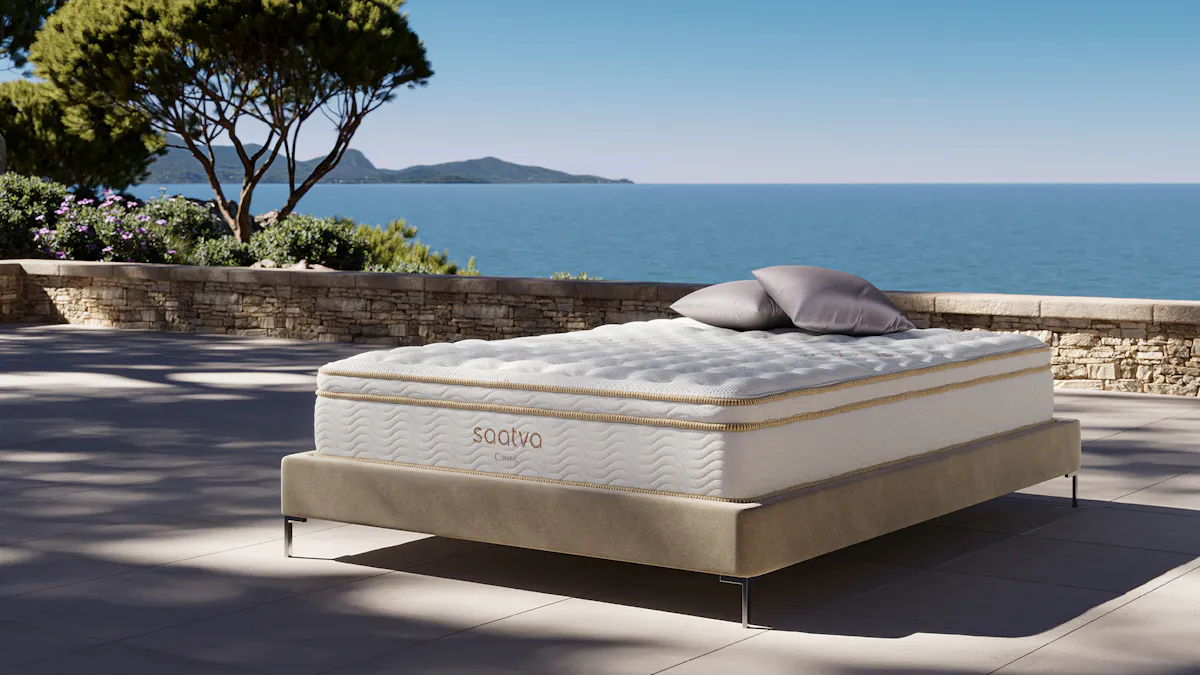
Not quite the right fit? The Saatva Classic is worth a look as an alternative. Check today’s price, sizing and return terms on the official product page before you order.
Saatva Classic
- 365-night home trial and lifetime warranty, per saatva.com
- Handcrafted in the USA, free white-glove delivery
- Flexible financing available
FAQ
Is the Sealy Kelburn 2 the same as the Kelburn II?
GoodBed, Ashley HomeStore, and the other cited retailers style the model as Kelburn II. “Kelburn 2” appears to be a search-friendly rendering, but the full name and comfort label on the seller’s documentation should still be checked before purchase.
Is the Sealy Kelburn II firm or medium?
GoodBed describes it as Cushion Firm, while Home Furniture Plus Bedding uses Medium. Because the cited descriptions don’t explain that difference, I wouldn’t assume those labels are interchangeable or that every retailer carries an identical comfort version.
What is inside the Sealy Kelburn II?
Ashley HomeStore says it combines encased coils with memory foam. Another retailer names Sealy Immersion Advanced Memory Foam with Chill, but the cited descriptions don’t provide foam density, coil gauge, or a complete layer breakdown.
Does the Sealy Kelburn II sleep cool?
A retailer markets its Chill-branded memory foam as breathable and cool to the touch. That supports an initial surface-cooling claim, but no cited thermal result establishes how the complete mattress handles heat through the night.
Is the Sealy Kelburn II worth buying?
Mattresses Official lists it at $567.00, and the documented coil-and-memory-foam construction gives it a reasonable hybrid foundation. It is worth considering only after the seller confirms the exact comfort version, condition, included components, and written purchase protections.