
 by
by Mattress Weight Limit: What Happens If You Exceed It?
Every mattress has a weight capacity — a maximum load beyond which the support structure degrades faster than intended. Most standard mattresses are designed for 250–350 lbs per sleeping side. Exceeding this threshold doesn’t cause immediate failure; it accelerates the deterioration process, voiding your warranty and reducing the effective lifespan by years.
Our Pick
Saatva HD
Top-rated by our testing team. White-glove delivery included.
What Mattress Weight Limits Actually Mean
A mattress weight limit is not an engineering maximum load — it is a durability threshold. It represents the weight at which the manufacturer can guarantee the mattress will maintain performance (support, firmness, structural integrity) through the intended lifespan, typically 10 years.
Above the stated limit, the foam compresses faster, coil temper weakens sooner, and edge support degrades more rapidly. The mattress still works; it just wears out in 5–6 years instead of 10–12.
Weight Limits by Mattress Type
| Mattress Type | Typical Limit (per side) | Notes |
|---|---|---|
| Standard Memory Foam | 250–300 lbs | Foam compresses without resilience under sustained heavy load |
| Standard Innerspring | 250–300 lbs | Coil gauge is the determining factor |
| Hybrid (standard) | 300–350 lbs | Coil base handles weight better than foam-only |
| Latex | 300–350 lbs | Natural resilience resists permanent compression |
| Heavy-Duty Mattresses | 500–1,000 lbs (total) | Reinforced coils, denser foam, firmer edge support |
| Saatva HD | 500 lbs per side | Designed specifically for heavier sleepers, 15-gauge coils |
What Happens When You Exceed the Weight Limit
Accelerated Sagging
Foam layers (polyfoam, memory foam) have a property called indentation load deflection (ILD). Under sustained loads exceeding design parameters, foam cells collapse faster than they can recover. The result is permanent body impressions — the visible dips that indicate a mattress needs replacement. Our guide on mattress sagging covers how to measure and address this issue.
Reduced Spinal Support
A sagging mattress pushes the hips up rather than cradling them, reversing the intended neutral spine alignment. This is especially problematic for side sleepers, where misalignment creates lateral stress on the lumbar spine through the full sleep period.
Warranty Voidance
Most mattress warranties explicitly list weight limits and void coverage if the mattress is used beyond its rated capacity. A 1.5-inch body impression that would normally qualify for a warranty claim may be denied if the sleeper weight exceeds the stated limit. Always check the specific weight rating before purchasing.
Edge Support Failure
Edges are typically reinforced but still use the same coil and foam system as the center. Heavier sleepers who sit on the edge regularly — to get in and out of bed — will see edge compression and rollout risk earlier when the mattress is operated above its weight rating.
Mattresses Built for Heavier Sleepers
If your weight approaches or exceeds standard mattress limits, several design features indicate a genuinely heavy-duty mattress:
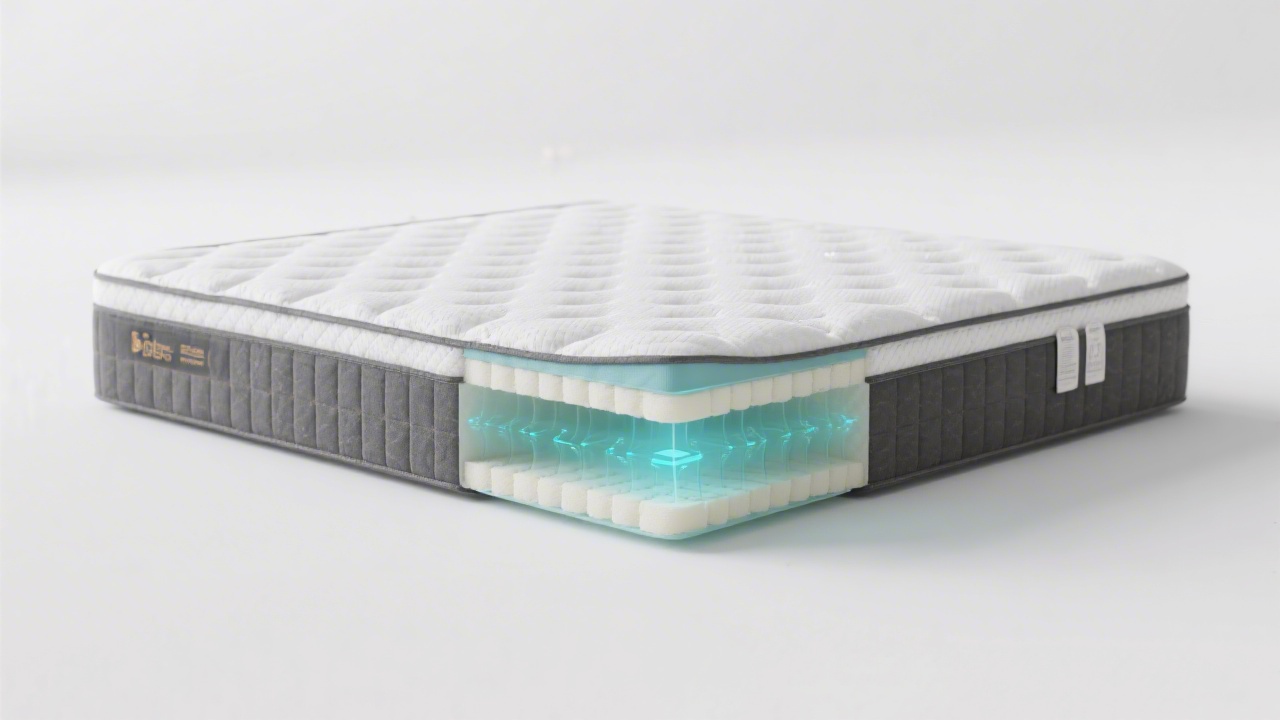
- Lower coil gauge: 14 or 15-gauge steel is stiffer than the standard 16-18 gauge. Saatva HD uses 15-gauge tempered coils vs. 13-gauge in the Saatva Classic.
- Higher-density foam: Comfort layers should use foam at 1.8+ lb/ft³ density. Under 1.5 lb/ft³ foam breaks down quickly under heavy loads.
- Reinforced edge support: Look for dual-tempered coil perimeters or foam encasement rated for sitting loads.
- Foundation compatibility: Heavy mattresses need solid foundations or platform beds with center support legs.
The Saatva HD is specifically designed for sleepers up to 500 lbs per side, with a thicker Euro pillow-top and more robust coil construction than the Classic. See also our best mattress for heavy people recommendations.
Our Pick
Saatva HD
Top-rated by our testing team. White-glove delivery included.
Frequently Asked Questions
What is the average mattress weight limit?
The average mattress weight limit for a standard model is 250–300 lbs per sleeping side, or 500–600 lbs total for a queen or king. This applies to most memory foam, innerspring, and hybrid mattresses in the $800–$1,500 price range. Budget mattresses often have lower limits (200–250 lbs), while premium and heavy-duty models may support 500 lbs per side.
Does exceeding the weight limit break the mattress immediately?
No. Exceeding the weight limit accelerates degradation rather than causing immediate structural failure. A mattress may perform acceptably for 2–4 years above its weight rating before sagging becomes noticeable and the warranty is effectively exhausted.
How do I find my mattress’s weight limit?
Check the product page on the manufacturer’s website, the product tag sewn into the mattress, or the warranty documentation. If not listed explicitly, contact the manufacturer directly. Weight limits are sometimes listed as “total capacity” (all sleepers combined) rather than per side.
Can I reinforce a standard mattress for heavy use?
A firmer foundation can reduce sagging in the center but cannot increase the mattress’s own structural limits. Replacing a standard box spring with a solid platform or adding a bunkie board provides better weight distribution, but the foam and coil limits remain the same. The correct solution for a heavier sleeper is a mattress rated for the actual load.
What is the weight limit for a king-size mattress?
King mattresses have the same per-side weight limit as queen models of the same construction — typically 250–350 lbs per side, or 500–700 lbs total. The wider width provides more sleeping area but does not increase the structural capacity of the foam or coil system per unit of area.