
 by
by Quick answer: The MLILY kids mattress line is a slim all-foam option built for bunks, trundles and daybeds, and it earns its place when clearance is the constraint. Buy it if you need a low-profile foam bed and the listing names its layers. Skip it if you want a thick, spring-based bed a child will grow into for a decade.
- MLILY's mattress category lists a 5 Inch and a 7 Inch option, per mlilyfoammattress.com.
- Pricing on that same MLILY category page runs $99.99 and $159.99 depending on the model.
- MLILY's own FAQ page references both 10-Year and 2-Year warranty terms, so coverage is model-dependent.
Updated July 2026 · Reviewed for accuracy
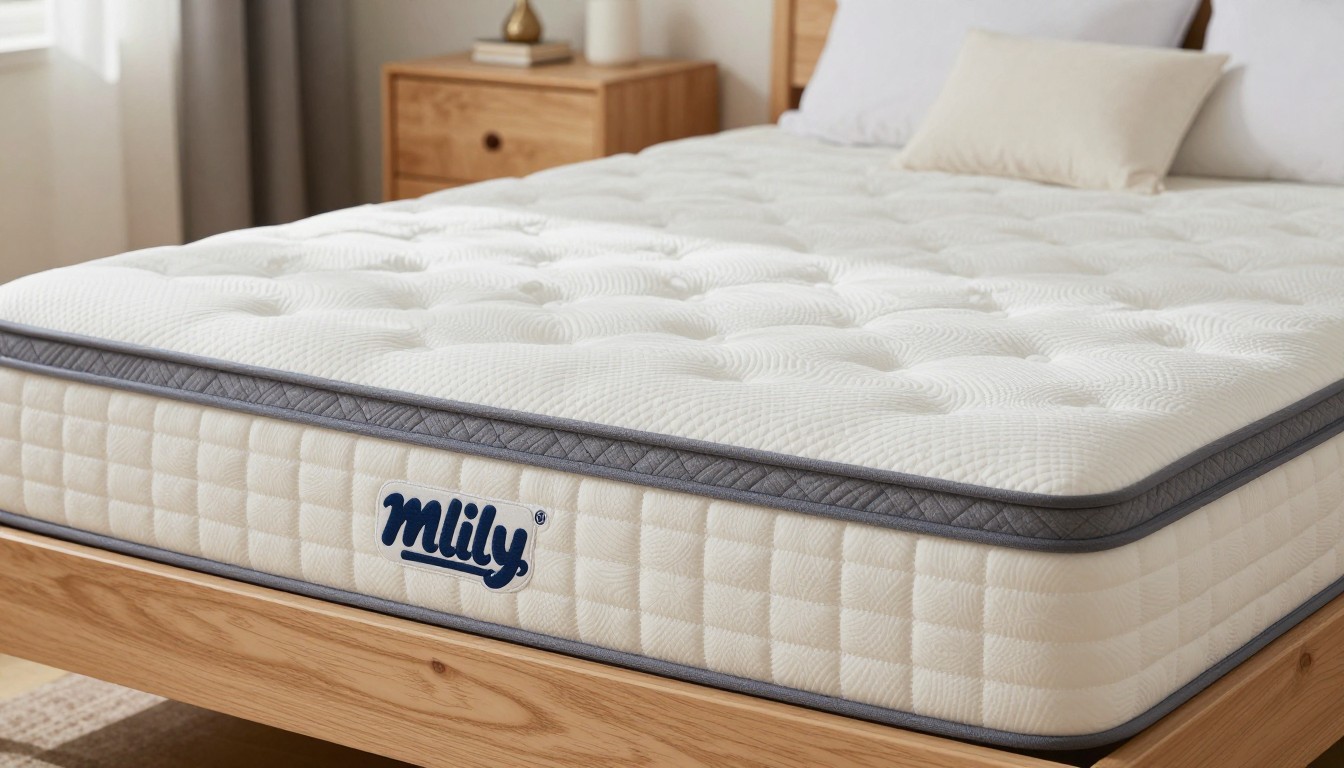
An MLILY kids mattress is a low-profile foam bed, and that single design decision drives everything else about it. Two heights are published on MLILY's mattress category page, a 5 Inch and a 7 Inch, at $99.99 and $159.99 respectively per mlilyfoammattress.com. Those two numbers tell you more about this product than any firmness slogan will.
Here is why. At five inches, there is almost no room for a layered build. You get a thin comfort surface over a support core, and the core has to do nearly all the work. At seven inches, the designer finally has enough depth to give the comfort layer its own job. That is a real difference in how the bed will behave in year three, not a marketing tier.
MLILY Kids Mattress: My Straight Answer
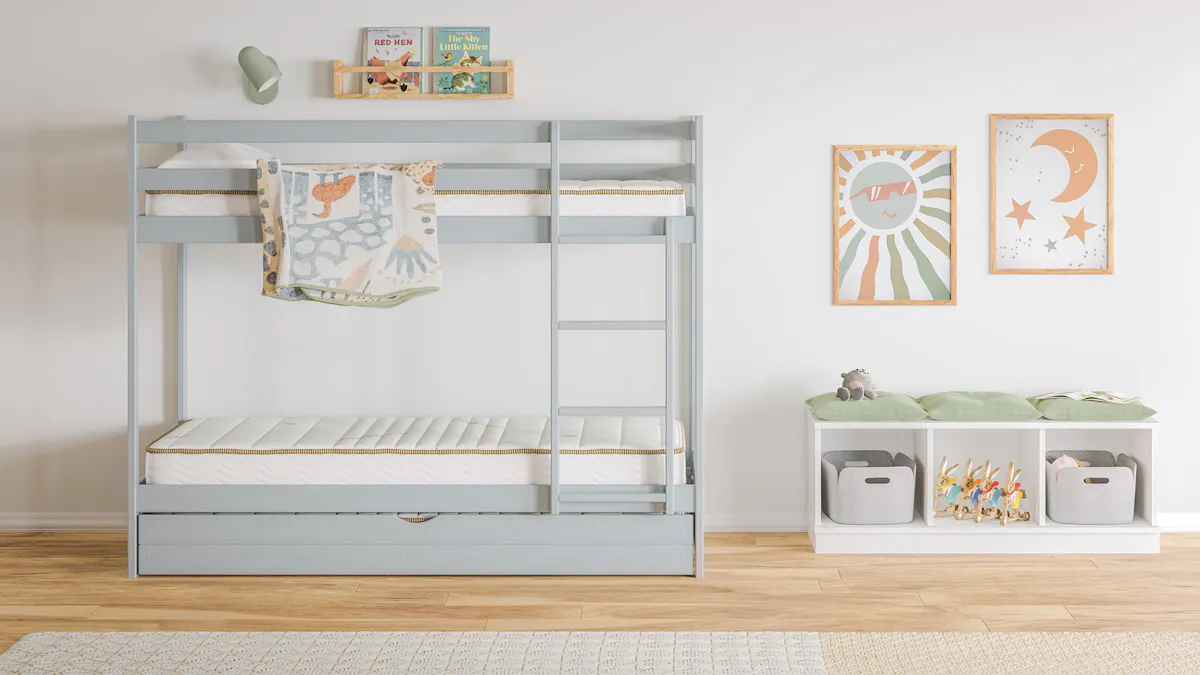
I rate the MLILY kids mattress as a competent space solution rather than a long-haul bed. The 5 Inch version is the one I would put in a bunk or a trundle, because bunk frames publish a maximum mattress height for guardrail safety and a five-inch bed almost never fights that limit. The 7 Inch version is the one I would put on a standard youth platform or a daybed where nothing overhead constrains you.
Foam at this thickness has a known behavior curve. The support core carries the sleeper directly, because there is not enough material above it to distribute load the way a ten-inch bed does. For a child under roughly grade-school weight, that is fine. As the sleeper gets heavier, a five-inch all-foam core starts showing the classic signs: a visible sleep depression at the hip line and a softer feel at the center than at the head and foot.
The Nut's take: Thickness is not a quality score, it is a construction budget. Five inches gives the engineer very little to spend. Seven inches buys a real comfort layer. Pick the height your frame demands first, then judge the foam.
Price supports that read. At $99.99 for the thinner model and $159.99 for the thicker one, per MLILY's mattress category page, this is entry-level foam pricing. I do not treat that as a knock. A trundle that gets used twelve nights a year does not need a premium build. A bed that a nine-year-old sleeps on every night for four years is a different ask, and that is where I would push toward the 7 Inch or step outside the line entirely.
Construction: What Foam at This Height Actually Does
MLILY's kid-oriented descriptions point toward memory foam and gel memory foam, according to the brand's product listings. Memory foam is a material family, not a build. What decides durability is density in the support core, and that figure is rarely published at this price point from any brand.
So I read the build indirectly. In a five-inch all-foam mattress, the geometry is usually a thin viscoelastic top over a polyfoam base, with the base taking the majority of the height. That base is the entire structural story. If it is a low-density polyfoam, it will compress at the load points first, and you will feel it as a dip rather than a loss of firmness. In a seven-inch build, the extra two inches almost always go into the core rather than the comfort layer, which is actually the better allocation for a growing sleeper.
Gel appears in some of MLILY's kid-mattress descriptions, according to the brand's listings. Gel-infused foam changes the surface's initial heat capacity more than its steady-state temperature. On a thin mattress that effect is modest anyway, because there is less foam mass to trap warmth in the first place. Slim beds are usually the cooler ones by default, and that is a genuine advantage here.
What the listing has to tell you before I would order
- Which height you are buying, and whether it clears the bunk or trundle frame's published maximum.
- The foam type in each layer, not just the headline material.
- Whether the cover is removable and how it is meant to be cleaned.
- The CertiPUR-US status displayed on that exact model's page.
- The return window and the warranty attached to that specific selling channel.
Some MLILY listings mention CertiPUR-US certification, according to the brand and marketplace descriptions for this category. Treat it as a model-level checkpoint. Foam certification programs apply to specific formulations, so the badge has to appear on the page for the mattress in your cart, not on a sibling product in the same catalog.
The same logic governs covers. Some regional MLILY kid-focused listings describe removable or washable covers, according to MLILY Australia catalog descriptions. That does not carry across to every U.S. listing. On a kids bed, a washable cover is a real quality-of-life feature, and it is worth confirming rather than assuming.
If cleanup drives your decision, treat the mattress and the protection layer as separate purchases. My guide to a waterproof mattress for kids explains why a washable cover and a true protector solve different problems. A cover handles surface spills. A protector is what keeps liquid out of the foam, and foam is not something you can dry out once it is soaked.
Feel, Support, and Why "Medium Firm" Means Little Here
MLILY kids listings commonly use medium-firm positioning, according to the category descriptions. On a five-inch bed, that label is nearly meaningless, because a large share of what the sleeper feels is the foundation underneath. Put the same mattress on a solid platform and on a slatted bunk deck with three-inch gaps and you get two different beds.
That is my main practical caution with the MLILY kids mattress. Thin foam telegraphs the surface below it. If your bunk deck has wide slats, the sleeper will feel them as ridges within a few months of use, and no amount of memory foam at this height will hide that. A solid deck or a bunkie board fixes it, and it costs less than replacing the mattress.
Memory foam also responds slowly by nature. A child who changes position often will feel the surface hold onto the previous shape briefly. Most kids do not notice or care. A restless sleeper who kicks the covers off and rotates all night may find a faster-responding surface easier to move on.
| Question | What I'd look for | Why it matters |
|---|---|---|
| Which height, 5 or 7 inch? | The frame's published mattress-height limit | Bunk guardrails are engineered around a maximum, and a taller bed defeats them. |
| Will it feel stable? | Support-core depth and the deck below it | Thin foam transmits slat gaps straight through to the sleeper. |
| Will care be manageable? | Cover removability plus a separate protector | Foam cannot be washed, so the defense has to sit above it. |
For families drawn to natural materials, this is a different category from the beds in my guide to an organic mattress for kids. MLILY's kids line is petrochemical foam with a certification program attached, and that is a legitimate choice, just not the same one.
Motion, Edges, and Real-World Durability
All-foam construction absorbs movement well, and thin all-foam absorbs it even better in one narrow sense: there is no spring unit to transmit anything. For a bunk or trundle, that means a child rolling over will not telegraph across the surface. If a parent sits on the edge for a bedtime story, though, the story changes.
Edge support is the structural weak point of every thin foam mattress, and the MLILY kids models are not exempt. There is no perimeter reinforcement possible in five inches of foam, so the border compresses fully under adult weight and you sit low. That is physics, not a defect. Plan around it rather than expecting a firm perch.
Practical reality: On a slim foam bed, the two things that actually end its service life are perimeter breakdown from adults sitting on the edge and a compression valley at the hips. Both show up faster on the 5 Inch than the 7 Inch, because there is less material to spread the load.
Longevity here is a function of sleeper weight and use frequency more than anything else. A light child on a guest trundle can get years out of the 5 Inch. A heavier pre-teen sleeping nightly will reach the point where the core no longer rebounds, and once foam takes a set, it does not come back.
Warranty and Buying Channel Need Extra Attention
MLILY's FAQ page references both 10-Year and 2-Year warranty terms. Those are very different commitments, and the shorter one is what I would expect on an entry-priced kids model. Read the coverage language for the exact model and purchase route before you commit, because a warranty that is silent on sleep depressions is not doing much for you on a foam bed anyway.
Channel matters as much as coverage. A mattress sold directly by MLILY and a similarly named one sold through a third-party marketplace seller can carry different return handling and warranty administration. Save the listing page and the policy page at the moment you order. On marketplace purchases, listings get edited and the version you agreed to disappears.
For more MLILY-specific shopping context, see our MLILY kids mattress store guide. The exact product page still governs the final details.
Who an MLILY Kids Mattress Suits
Buy it if you need a slim foam bed for a bunk, trundle, daybed or floor setup, your sleeper is a lighter child, and clearance is a genuine constraint. At $99.99 and $159.99 per MLILY's mattress category page, the line is priced for exactly that role and does it without pretense.
Choose the 5 Inch when the frame's guardrail height leaves you no room. Choose the 7 Inch when you have the clearance, because the extra depth goes into the support core and that is where the years live. If you are furnishing a guest trundle that sees occasional use, the thinner model is genuinely the smarter buy, and spending more would be spending on capability you will not use.
Skip it if the bed is a primary, every-night mattress for a growing pre-teen, or if the deck underneath is widely slatted and you are not willing to add a solid board. Those are the two situations where a thin foam bed disappoints people, and both are predictable before you order. Buyers who want a more clearly documented youth-specific build can also look at the Saatva Bunk Trundle Youth as a comparison point.
My buying rule: Match the height to the frame before you judge the foam. A five-inch bed that clears the guardrail beats a better mattress that does not fit.
My Final Take
The MLILY kids mattress does one job and does it honestly: it puts a foam sleeping surface into a space that cannot accept a full-height bed. The 5 Inch and 7 Inch options published by MLILY, at $99.99 and $159.99 per the brand's mattress category page, are priced in line with what they are.
My reservations are structural, not brand-related. Thin foam means limited edge support, sensitivity to the deck beneath it, and a durability ceiling tied to sleeper weight. Confirm the layer description, the cover care instructions, the certification status on that model's page, and which of MLILY's two warranty terms applies to your purchase.
Measured verdict: a sensible, well-priced fit for bunks, trundles and tight-clearance rooms, and the wrong tool for a child's primary bed over the long run.
ONE VERIFIED ALTERNATIVE
Not quite the right fit? The Saatva Bunk Trundle Youth is worth a look as an alternative. Check today’s price, sizing and return terms on the official product page before you order.
Saatva Bunk Trundle Youth
- Buyers who want a more clearly documented youth-specific build can also look at the Saatva Bunk Trundle Youth as a comparison point
FAQ
Is an MLILY kids mattress suitable for a bunk bed?
Yes, and it is arguably the best use for one. Bunk frames publish a maximum mattress height so the guardrail stays effective, and MLILY's category pages show 5 Inch and 7 Inch options per mlilyfoammattress.com. The 5 Inch clears nearly any bunk limit. Check the frame maker's stated maximum before ordering the taller one.
Are MLILY kids mattresses made with memory foam?
MLILY's kid-oriented listings commonly describe memory foam or gel memory foam construction, according to the brand's product descriptions. The layer arrangement varies by model, and on a thin bed the support core underneath the memory foam is what determines how the mattress holds up.
What warranty comes with an MLILY kids mattress?
MLILY's FAQ page references both 10-Year and 2-Year warranty terms. Verify which one is assigned to the specific model and selling channel you are buying through, and read what the policy says about sleep depressions, since that is the failure mode that matters on foam.
Should I choose the 5 Inch or 7 Inch MLILY option?
Let the frame decide first. MLILY's mattress category lists both at $99.99 and $159.99 per mlilyfoammattress.com. The 5 Inch suits tight-clearance bunks and trundles. The 7 Inch is the better pick anywhere you have the headroom, because the extra depth goes into the support core and extends useful life.
Do all MLILY kids mattresses have washable covers?
No. Some regional MLILY kid-focused catalog descriptions mention removable or washable covers, according to MLILY Australia listings, but that does not carry across every listing. Confirm the cover and care instructions on the exact model, and pair it with a protector regardless, because foam itself cannot be washed.