
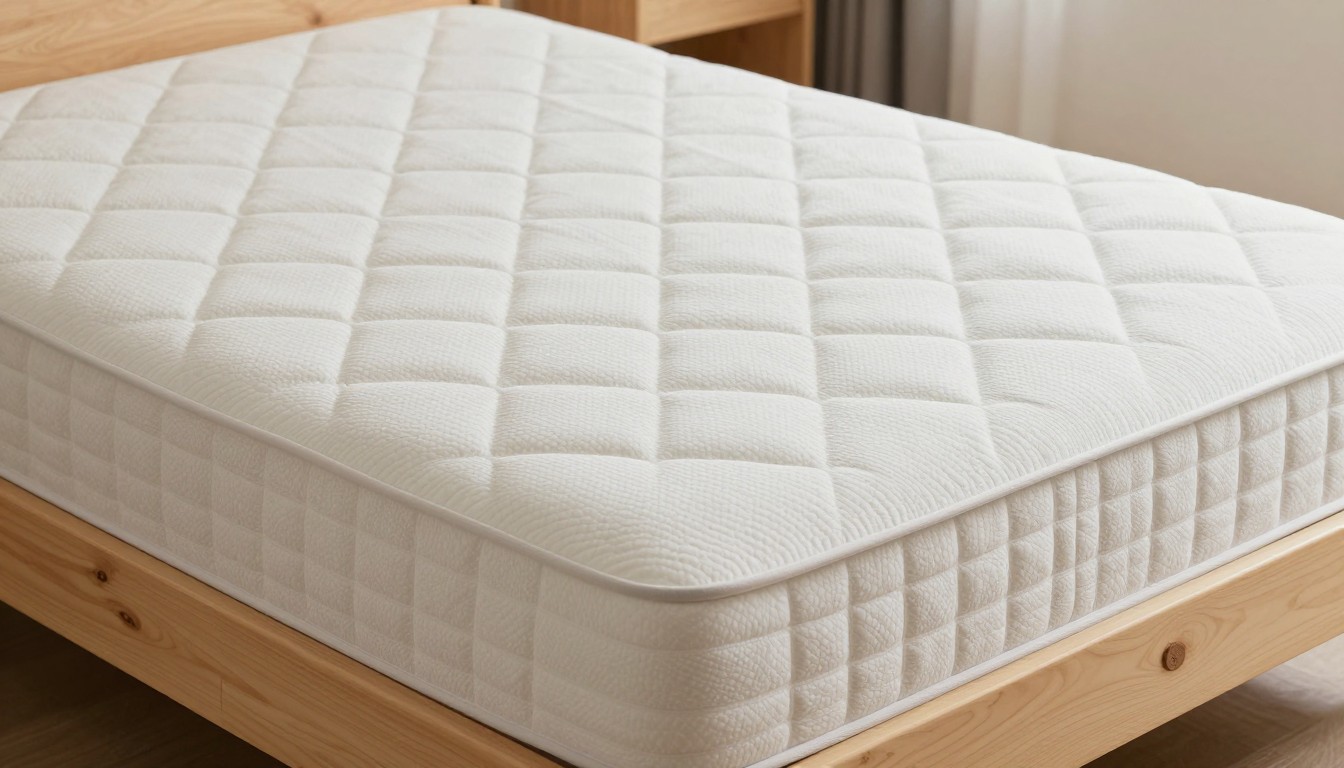
 by
by Quick answer: Buy Birch if you want a latex-over-coils mattress with wool and organic cotton at the surface, and if a springy, easy-to-move-on feel sounds better than sinking in. Skip it if you want a deep memory-foam cradle or the quietest possible surface for a restless partner.
- Birch builds its core mattresses around natural latex, wool, organic cotton, and pocketed coils, per the manufacturer's materials pages.
- The Birch Natural, Luxe Natural, and Elite Natural are hybrids, not all-foam beds, so they behave like coil mattresses at the core.
- Birch states its core models leave out polyurethane foam and fiberglass.
- Birch pricing runs from $1,249 to $2,499 depending on model and size, according to the brand listings compiled at mattressinusa.com.
Updated July 2026 · Reviewed for accuracy
Birch is a materials purchase before it is a comfort purchase. You are paying for latex instead of polyfoam, wool instead of a synthetic fire barrier, and a wrapped-coil core instead of a foam base. That is a defensible reason to spend more, but only if you actually want what those materials do.
What they do is push back. Latex recovers fast, coils recover fast, and the combination gives you a surface that lifts rather than swallows. Sleepers who hate the stuck-in-place sensation of dense memory foam usually like this. Sleepers who bought a foam bed specifically for that hug tend to find Birch too alert.
Birch Living Mattress at a Glance
The construction idea across the range is consistent: latex in the comfort layer, individually wrapped coils underneath, wool and organic cotton at the surface. What changes between models is how much padding sits between you and the coils, according to Birch's own model descriptions.
| Model | What Birch highlights | Best fit |
|---|---|---|
| Birch Natural | Latex, wool, organic cotton, and pocketed coils, according to Birch. | The most direct version of the natural-hybrid concept. |
| Birch Luxe Natural | A plusher Euro-style top and added contouring, per Birch's model description. | Side sleepers who find the base design too assertive at the shoulder. |
| Birch Elite Natural | Additional layers and targeted support features, according to Birch. | Buyers who want the more elaborate build in the range. |
"Birch mattress" is not one feel, and that matters more than most brand pages admit. The Natural and the Luxe Natural are different beds sharing a materials story. Choosing between them on the word "natural" is how people end up disappointed by a mattress that was technically what they ordered.
If you are cross-shopping inside the range, my review of the Birch mattress goes deeper on the base model, and my look at the Birch mattress for heavier people covers the support questions that get more urgent above average body weight.
Construction Is the Real Argument for Birch
Latex is the defining material. Birch describes its latex as GOLS-certified and pairs it with organic cotton and natural wool. The certification tells you about sourcing, not feel. The feel comes from latex's elasticity: it compresses under load and springs back almost immediately, which is why a latex hybrid lets you roll over without first climbing out of a divot.
Durability is where latex earns its price. Natural latex is one of the more resilient foam-type materials in bedding, and it does not soften the way low-density polyfoam does after a few years of nightly compression. That is the long-game case for Birch, and it is the reason I take the no-polyurethane claim seriously rather than treating it as marketing.
Under the comfort layers sit pocketed coils, per Birch's product descriptions. Wrapped coils are encased individually instead of laced into one connected grid, so they flex more locally and leave open channels through the support core. One thing Birch does not publish prominently is coil gauge or coil count by size. If you are a heavier sleeper or a stomach sleeper who needs a firm base, ask customer service for those figures before ordering rather than assuming.
The material takeaway: Birch is not imitating a memory-foam bed. Latex plus coils points toward lift, fast recovery, and a surface that stays where you left it. That is an advantage for combination sleepers and a genuine drawback for anyone chasing a pronounced cradle.
Wool is doing structural work here too, not just adding a line to the spec sheet. Birch identifies natural wool in its build, and wool is used in natural mattresses as a loft and moisture-management fiber, and commonly as the fire barrier that lets a brand skip chemical treatments. Between the wool, the cotton cover, and the airflow through a coil core, Birch's cooling story is passive by design rather than dependent on a gel or phase-change gimmick.
Birch also states that its core models contain no polyurethane foam and no fiberglass. For a lot of shoppers, that single sentence is the reason they are on this page. I would still open the materials disclosure for the exact model and size in your cart, because component sourcing changes and the version you buy is the only one that counts.
Feel: Supportive First, Plush Only on the Luxe
Birch positions its core models around a medium-firm feel, and the architecture backs that up. A resilient latex layer starts resisting sooner than memory foam does, and wrapped coils reinforce that buoyancy instead of damping it.
The Birch Natural suits sleepers who want to lie on a mattress rather than in it. Back sleepers and combination sleepers usually want that easy repositioning. Firmness perception stays personal, though: body weight, hip-to-shoulder ratio, your foundation, and even a thick mattress protector all shift where a medium-firm bed lands for you.
The Luxe Natural is the answer for people who want a gentler first impression, with Birch describing its Euro-style top as adding plushness and pressure relief. Worth framing honestly: extra surface padding changes the first two inches, it does not convert a latex-and-coil bed into a slow, deeply contouring foam mattress. Buy the Luxe because you want Birch's materials with more cushion on top, not because "plush" appears in the copy.
Choose by construction, not by adjective.
- Birch Natural, if you want the firmer, more traditional hybrid direction.
- Birch Luxe Natural, if the standard build sounds too assertive under your shoulder or hip.
- Neither, if your priority is a deeply enveloping memory-foam sensation.
Cooling, Motion, and Edges
The cooling argument starts with airflow, not with a cooling technology. Per Birch's materials descriptions, you get a breathable organic cotton cover, wool fibers, latex, and a pocketed-coil core, and each layer contributes differently: cotton at the surface, wool managing moisture, latex more open than dense slow foam, coils leaving space for air to move under you.
That is a credible passive design. It is not a promise that you will sleep cool, because a warm room, heavy bedding, and personal heat sensitivity still dominate. What you can reasonably expect is that heat has more escape routes than it does in a thick all-foam mattress.
Motion isolation is the honest weak spot. Wrapped coils respond more independently than a connected innerspring, which helps, but latex carries more bounce than memory foam, which hurts. Net result: Birch should transmit less movement than a cheap open-coil bed and more than a foam-heavy one. If your partner is awake at 2 a.m. and you are not, weigh that carefully.
Edge support depends on the coil unit, not on the wool and cotton up top. Birch uses pocketed coils per the manufacturer, which gives the perimeter real structure, but I would not assume every natural hybrid holds a firm edge when you sit to put on shoes. Verified owner reviews for the specific model are more useful here than any general claim about hybrids.
What Birch Costs
Birch pricing spans roughly $1,249 to $2,499 across models and sizes, according to the brand listings compiled at mattressinusa.com. That range covers the gap between the base Natural in a smaller size and the more layered configurations in a king.
Treat any published price, including that one, as a starting point rather than a checkout total. Sizes, seasonal promotions, and bundled accessories all move the number, so the official product page is the only reliable source for what you will actually pay today. The same goes for trial and return terms, which are set by the brand and can change without much notice.
Birch Versus the Saatva Latex Hybrid
The obvious cross-shop is the Saatva Latex Hybrid, because it targets the same buyer: someone who wants latex responsiveness over a coil core instead of a foam-dominant build. Both are hybrids with latex comfort layers, so the decision is less about category and more about surface feel and the ownership terms each brand publishes.
| Consideration | Birch Living Mattress | Saatva Latex Hybrid |
|---|---|---|
| Core concept | Natural latex, wool, cotton, and pocketed coils, according to Birch. | A latex-and-coil hybrid, according to Saatva. |
| Model choice | Three builds, from the direct Natural to the plusher Luxe Natural. | A single latex hybrid configuration, per Saatva's product page. |
| Where to verify terms | Birch's own trial, return, and warranty pages before checkout. | Saatva's stated trial, warranty, and financing details on its site. |
If you want to compare the builds side by side: Saatva publishes its layer breakdown and stated ownership terms on the product page, which makes a direct spec comparison against Birch's materials disclosure straightforward.
Neither bed wins this on materials alone, because the material category is the same. Birch gives you a choice of three surface feels inside one construction philosophy, which is genuinely useful if you already know you need more or less cushion. Saatva gives you one configuration plus the financing and coverage framework it advertises, which matters more if budgeting and long-term protection are what is holding you back.
My practical call: Pick Birch if the three-model range and the no-polyfoam, no-fiberglass materials statement are what you are buying. Check the alternative if published ownership terms carry more weight for you than model choice.
Who Should Buy Birch, and Who Should Pass
Buy Birch if latex, wool, organic cotton, and pocketed coils describe what you actually want in a bed. The construction is well matched to sleepers who want quick response, airflow through a coil core, and a build that leaves out polyurethane foam in its core materials, according to Birch.
It also belongs on the shortlist for anyone who has already settled on the natural-hybrid category and now needs to pick a firmness direction. Having the Natural and the Luxe Natural under one materials umbrella is a real advantage over brands that offer a single take-it-or-leave-it feel.
Pass if you want an all-foam hug, or if minimizing partner disturbance is your top requirement. Latex resilience is the point of this mattress, and resilience and motion absorption pull in opposite directions. Pass as well if you need published coil specifications up front and the brand cannot supply them for your size.
My Verdict on the Birch Living Mattress
Birch is a coherent natural hybrid, and the coherence is what I like about it. Latex for resilience and long-term recovery, wool and cotton at the surface, wrapped coils for support and airflow. Nothing in that stack is there to hit a price point, which is unusual in this category and largely explains the $1,249 to $2,499 range reported by the brand listings at mattressinusa.com.
The limits are equally specific. This is not a pressure-relief specialist, it is not the quietest bed for couples, and the model you choose changes the experience more than the shared materials story suggests. Do not let the word "natural" stand in for deciding how much surface softness you need.
Still comparing latex hybrids? Reading two layer breakdowns next to each other beats reading two marketing pages. Birch's materials disclosure and Saatva's product specs both list what is actually inside.
For another angle on hybrid construction and firmness choices, see my coverage of the Scott Living mattress and the Scott Living Jasper Firm mattress.
ONE VERIFIED ALTERNATIVE
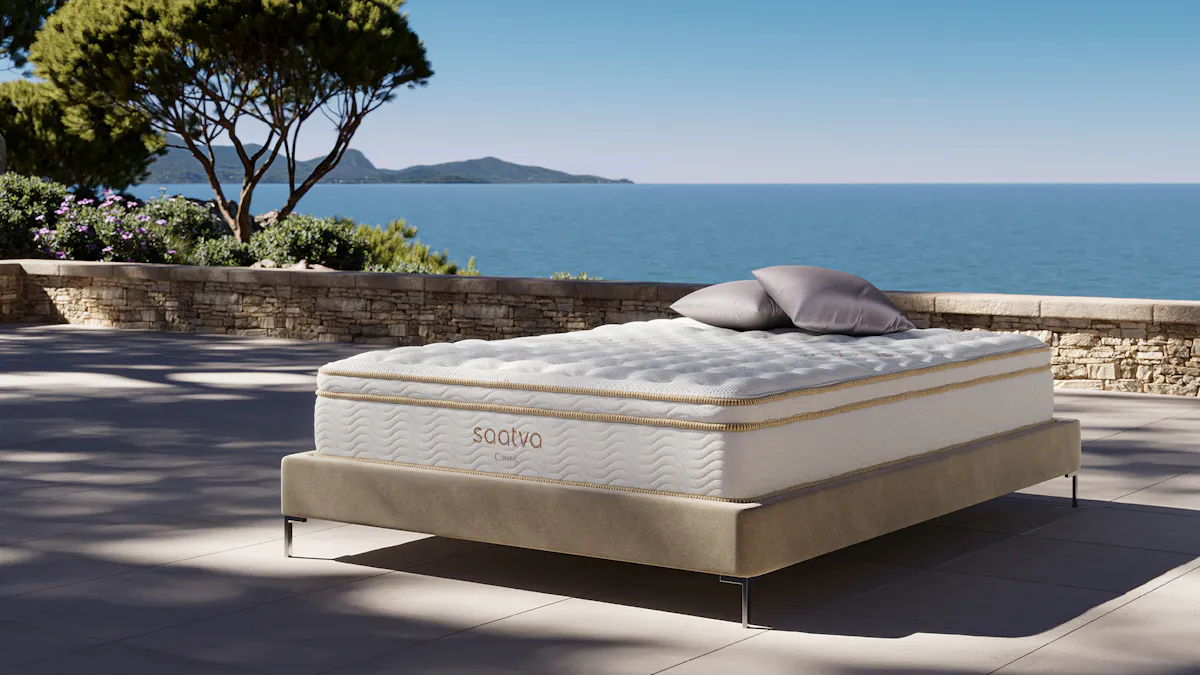
Not quite the right fit? The Saatva Classic is worth a look as an alternative. Check today’s price, sizing and return terms on the official product page before you order.
Saatva Classic
- 365-night home trial and lifetime warranty, per saatva.com
- Handcrafted in the USA, free white-glove delivery
- Flexible financing available
FAQ
Is the Birch Living mattress organic?
Birch markets its mattresses with GOLS-certified latex, organic cotton, and natural wool, according to its product materials information. "Organic" applies to specific components rather than the whole assembled mattress, so confirm which certifications cover which layers on the exact model before you buy.
Does a Birch mattress contain fiberglass?
Birch states that its core mattress models use neither fiberglass nor polyurethane foam, with wool serving the fire-barrier role that fiberglass fills in cheaper beds. If this is a non-negotiable requirement, read the current materials disclosure for the specific model you intend to order.
Is Birch good for hot sleepers?
The cotton cover, wool, latex, and pocketed-coil core give heat more paths out than a thick all-foam bed does, which Birch presents as a breathable construction. That helps, but it does not offset a warm room, heavy bedding, or high personal heat sensitivity.
What is the difference between Birch Natural and Luxe Natural?
The Natural is the direct latex-and-coil build. Birch says the Luxe Natural adds a plush Euro-style top for extra contouring and pressure relief, which makes it the better pick for side sleepers or anyone who wants more cushion before reaching the support layers.
How much does a Birch mattress cost?
Birch models are listed between $1,249 and $2,499 depending on model and size, according to the brand listings compiled at mattressinusa.com. Check the official product page for your size before ordering, since seasonal promotions and bundles change the final total.