
 by
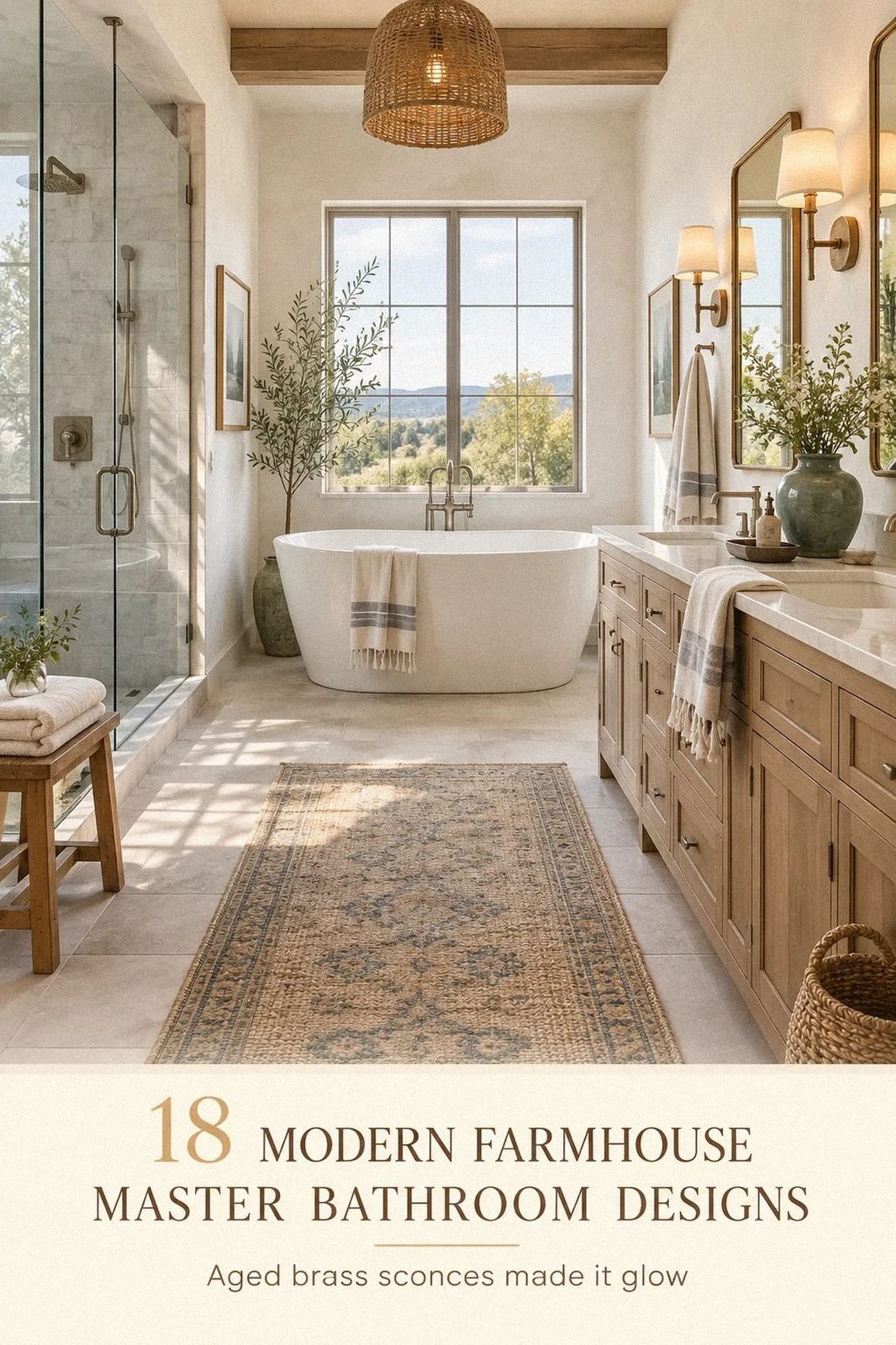
by I finished this modern farmhouse master bathroom makeover for about $200 to $1,200, depending on how much you change. Mine started with builder beige, shiny chrome, and one lonely bulb. I kept the plumbing, softened the hard surfaces, and made the room feel warm, elegant, and lived-in. The biggest surprise? Paint did most of the work.
Here's what it looked like before
The photo tells this part better than I can. The bathroom had the full starter-home package: pale beige walls, a square oak vanity, cold overhead light, and a mirror that seemed determined to make the room feel smaller. Nothing was broken, but nothing felt intentional either.
I didn't want a full renovation. You know the kind, the one that starts with a faucet and ends with a tile contractor in your hallway.
I needed a makeover I could finish without moving plumbing, replacing the shower, or giving up the room for weeks. That limitation became useful because it forced me to make the visible details count.
- Paint the walls in a warm white bathroom design
- Layer linen and Turkish cotton beside the tub
- Choose natural tones over a gray farmhouse palette
- Could your vanity carry the whole room?
- Mix the Two-Wood Rule for a darker master bath
- Hang the Three-Height Light Stack
- Frame the mirror with aged bronze
- Float a small stool under the vanity
- Swap chrome for brushed brass
- Build the Three-Texture Counter
- Anchor the floor with a washable runner
- Add the Warm White Tile Shift
- Paint the ceiling for a quiet, earthy mood
- What makes the shower feel more luxurious?
- Frame the tub with rustic restraint
- Use one bold wall instead of busy wallpaper
- Mix the contemporary classic bathroom details
- Finish with the Lived-In Layer
1Paint the walls in a warm white bathroom design
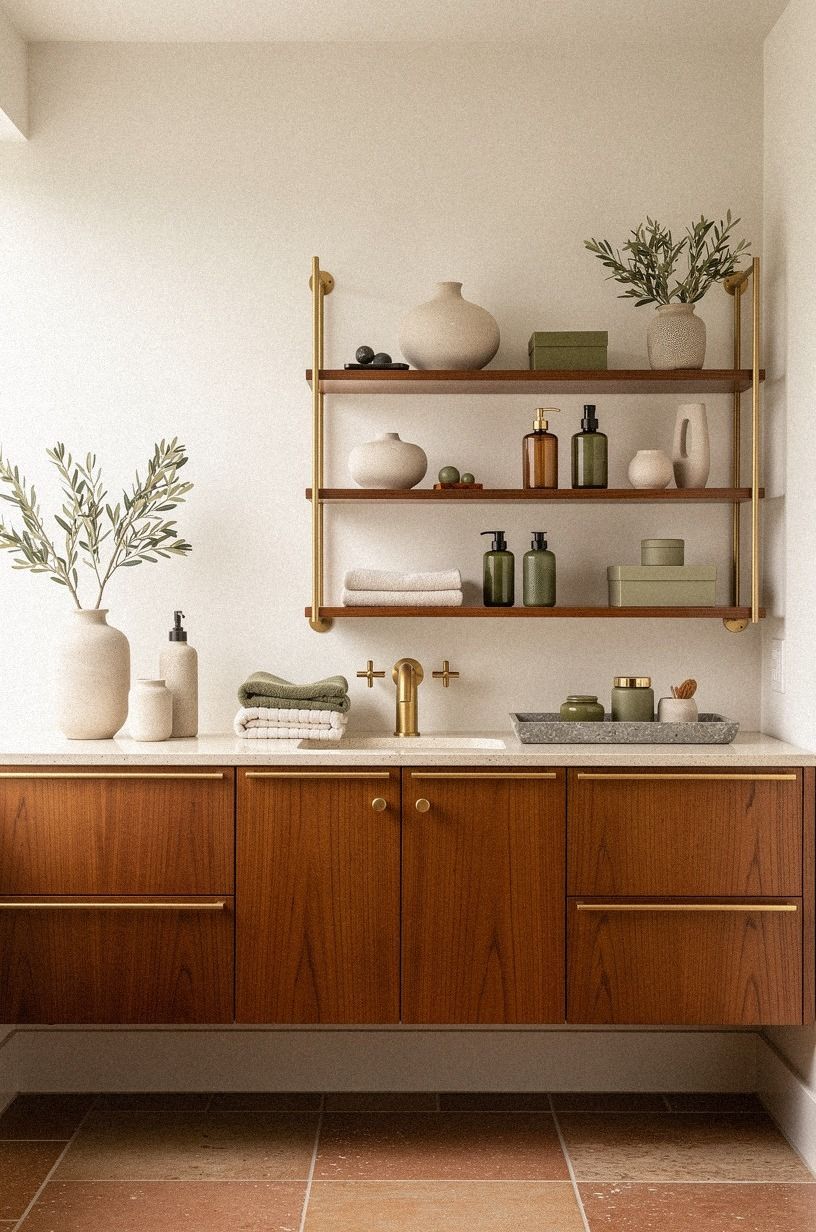
I started with the walls because the old beige made every surface look yellow. Benjamin Moore Chestertown Buff HC-9 gave me a soft, earthy base without turning the bathroom sugary. You’ll want to test the color beside your mirror and shower tile first, because bathroom light can make a gentle paint look much brighter before breakfast.
The first coat looked flat, so I added a second and waited until the next morning before judging it. I’d skip stark white here.
It reflects every blue cast from the bulb and makes your towels look gray. A warm wall color gave your eye somewhere calm to land, and the room felt more elegant before I changed anything else.
2Layer linen and Turkish cotton beside the tub
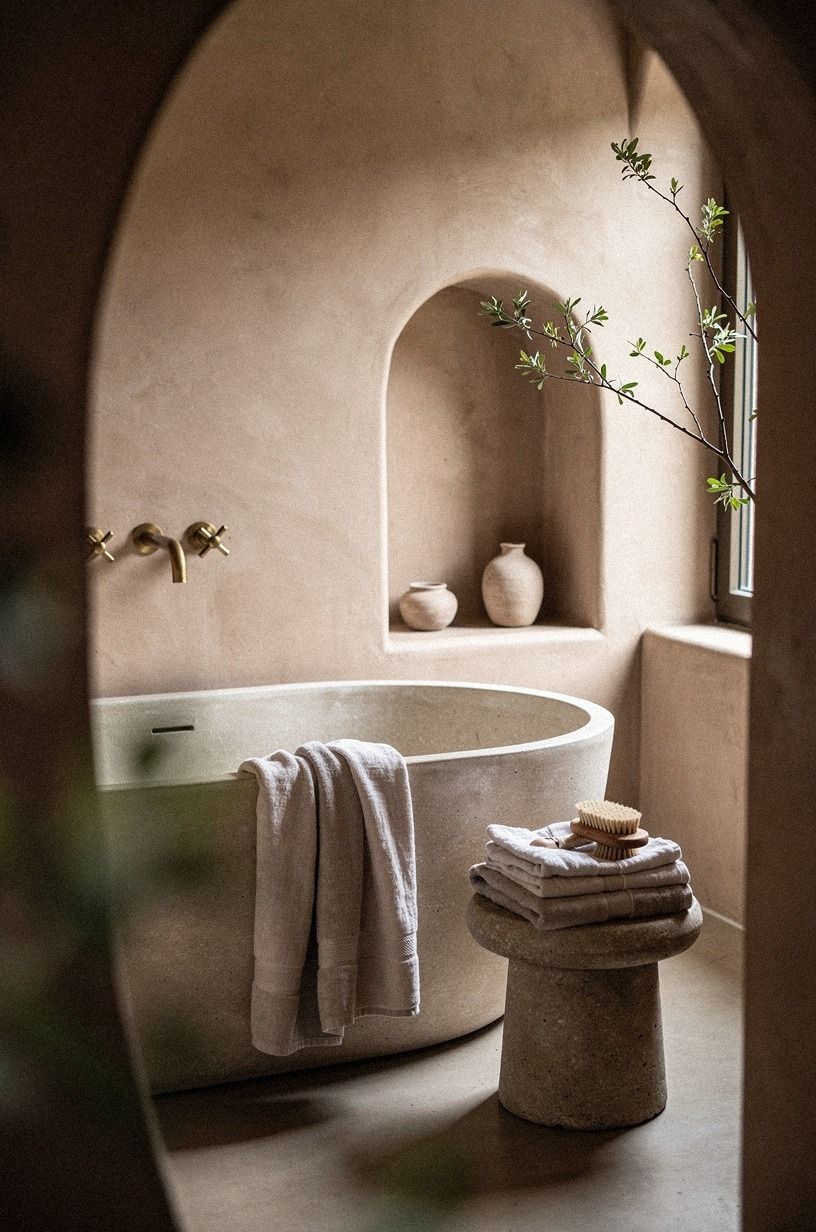
The old room had one thin white bath mat and a towel bar that looked forgotten.
3Choose natural tones over a gray farmhouse palette
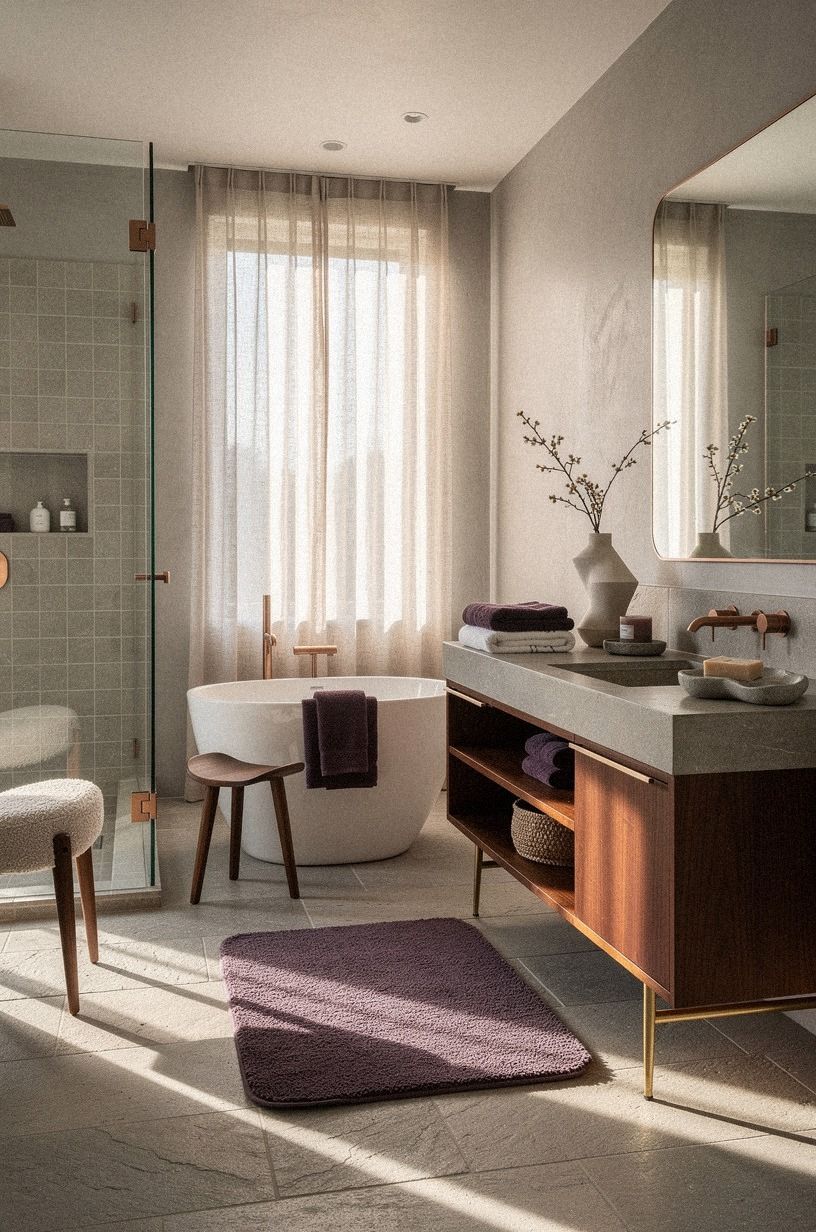
Gray seemed like the safe choice, but I’d skip it for this room. It fought the warm oak vanity and made the white fixtures look blue.
Instead, I used cream, clay, muted green, and dark brown, then repeated those shades in the towels and artwork. You’ll get more depth from four quiet colors than from twelve unrelated accessories.
I tested Sherwin-Williams Sea Salt SW 6204 on the wall behind the vanity before choosing the buff tone for the whole room. Sea Salt was calming, but it looked cooler beside my floor.
Your light may behave differently, so place samples at eye level and check them at morning, afternoon, and evening. The winning palette should still feel inviting when only the vanity light is on.
4Could your vanity carry the whole room?
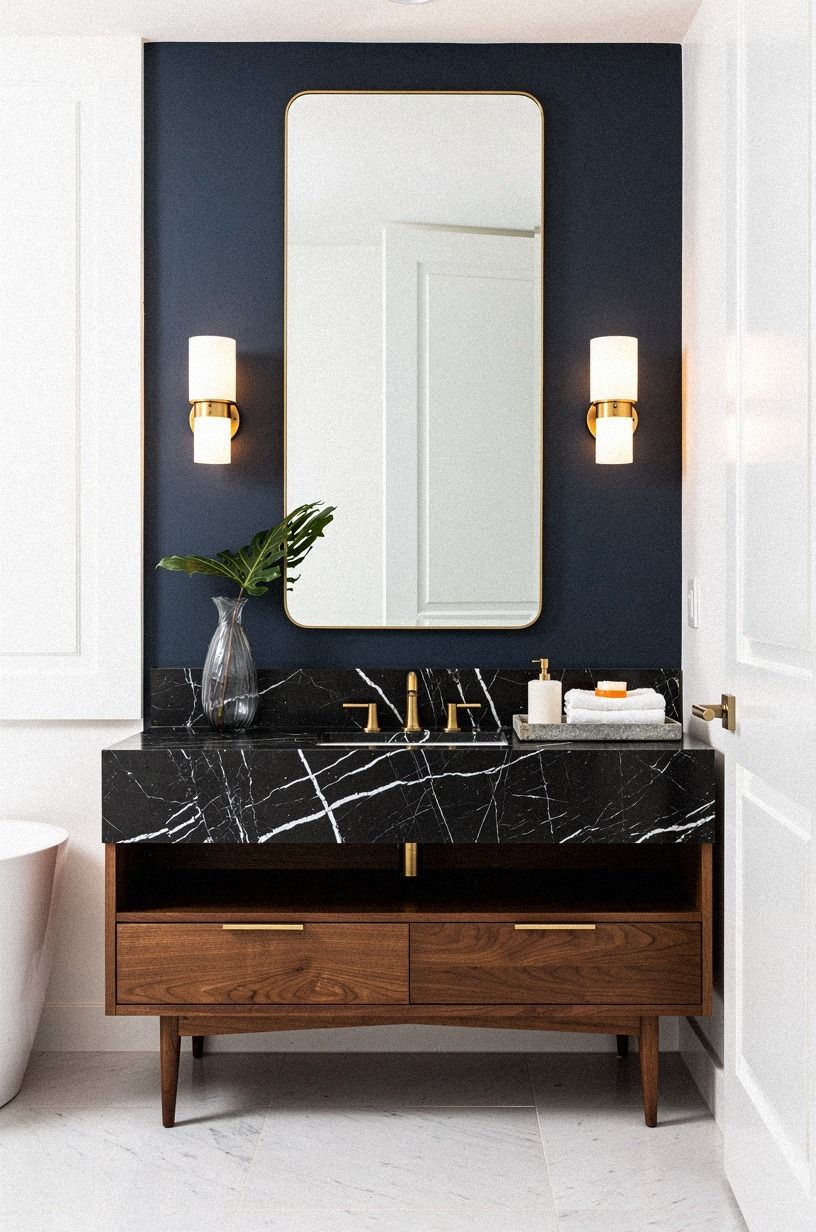
Yes, if you give it contrast. My square oak vanity had good bones, but its orange finish pulled too much attention.
I used a darker stain on the lower cabinet and kept the counter light, creating the dark wood master bath feeling I wanted without buying a new piece. You’ll want to clean and lightly sand your cabinet before touching the finish.
I considered an IKEA HEMNES vanity, but replacing mine would have added work without solving the layout. The cabinet stayed, and I changed the pulls to aged bronze. That small swap made the drawers feel more substantial.
If your vanity is cramped, keep the counter mostly clear and place one tray near the sink, not five little objects scattered around your morning routine.
5Mix the Two-Wood Rule for a darker master bath
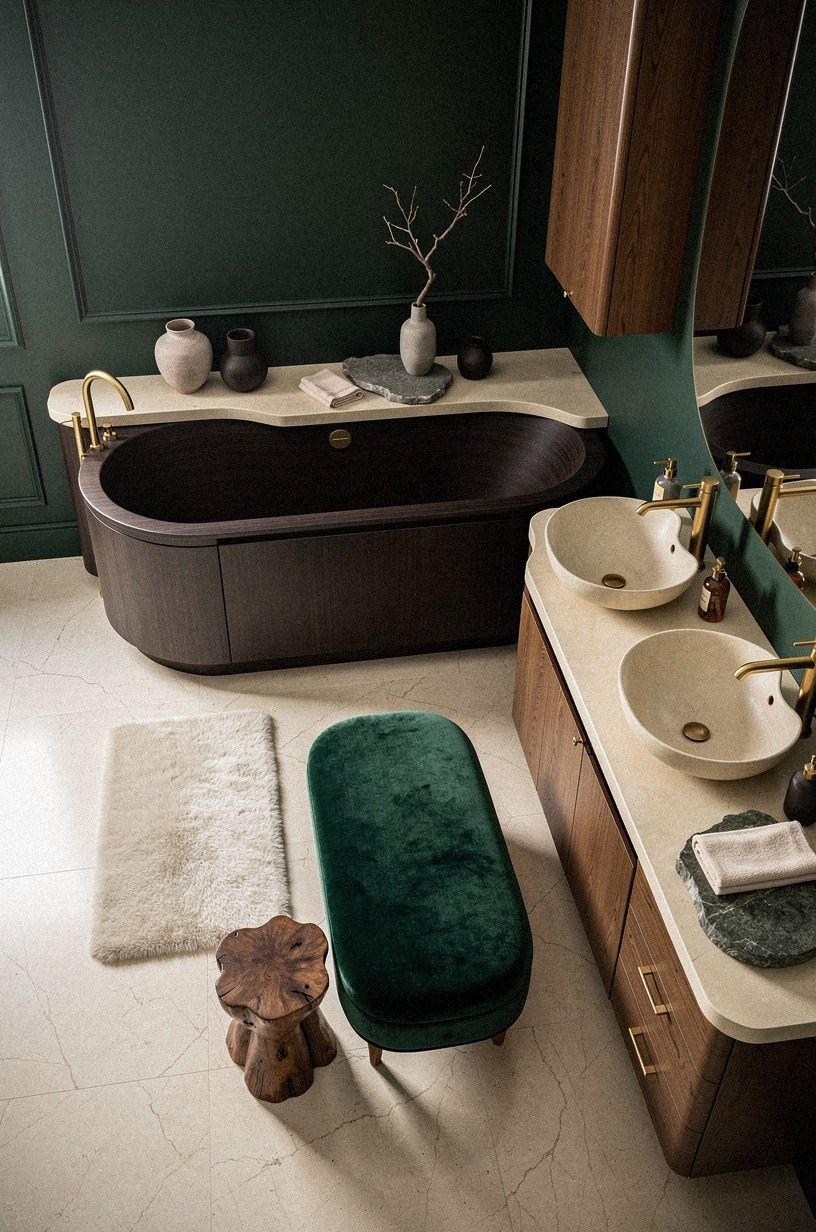
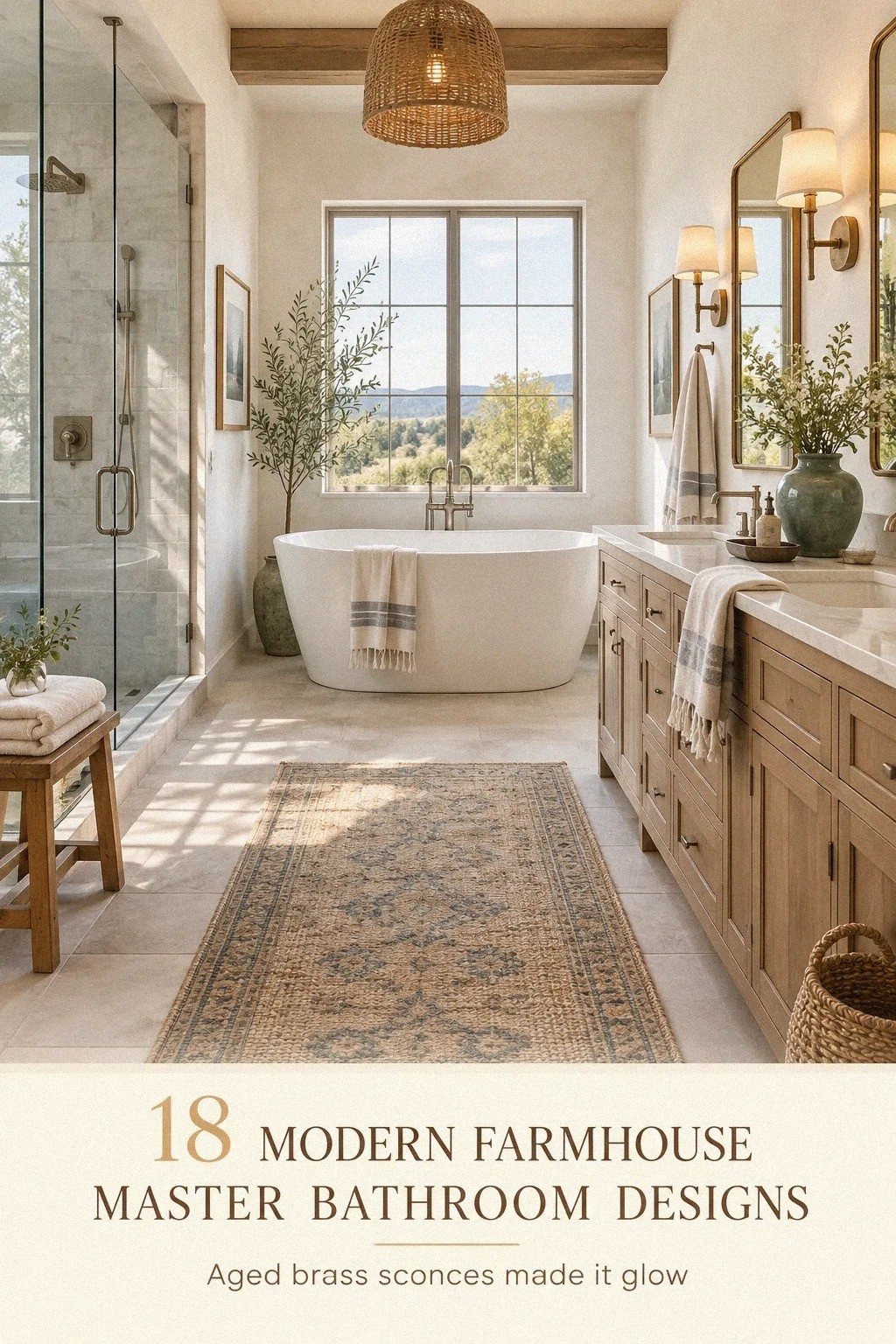
My first instinct was to match every wood tone. That would’ve made the room look staged, so I used the Two-Wood Rule: one warm oak element and one deeper walnut or stained-brown element. The vanity supplied the first; a narrow walnut stool supplied the second.
You’ll get a richer room when the woods relate without becoming identical.
The stool is useful for folded towels, but it also gives your eye a lower resting point. I’d avoid pale pine beside orange oak because the contrast can look accidental.
Instead, choose a piece with visible grain and a matte finish. This organic modern travertine bathroom guide gave me the idea to repeat natural grain near stone and ceramic surfaces.
6Hang the Three-Height Light Stack
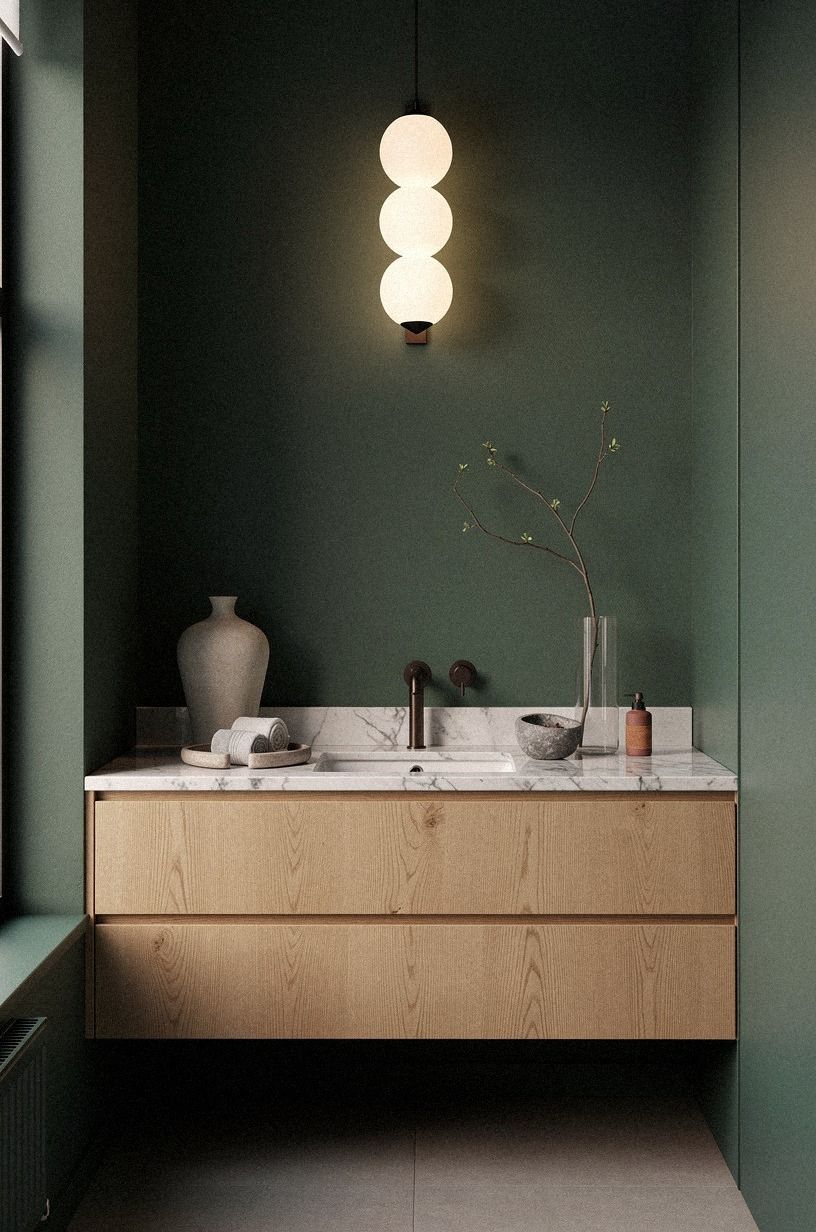
The overhead fixture made my face look tired and the room feel clinical. I added a three-height light stack: the ceiling fixture, two sconces, and a low candle-like glow near the tub. You’ll want every bulb to stay warm and dimmable, because harsh light can undo an otherwise peaceful bathroom in seconds.
I chose unlacquered brass sconces with simple linen shades and placed them beside the mirror. The brass will develop a softer patina over time, which suits the modern farmhouse direction.
My mistake was installing the mirror before measuring the sconce projection. If you’re planning this, mark the fixture depth with painter’s tape first.
It’s less glamorous, but it saves you from bumping your elbow every morning.
7Frame the mirror with aged bronze
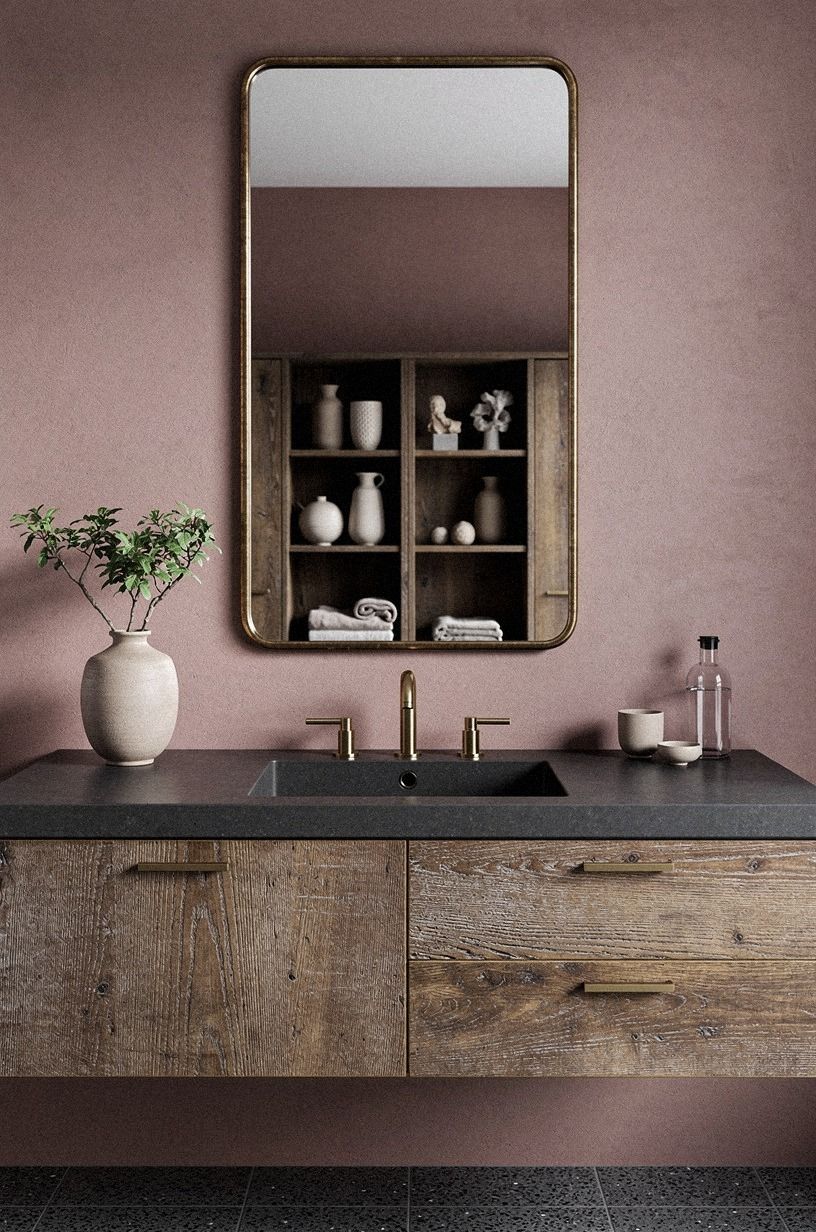
The frameless mirror was practical, but it disappeared into the wall. I replaced it with a thin aged bronze mirror frame that echoed the cabinet hardware and added a quiet, refined edge. You’ll want to keep the frame narrow if your vanity is compact, because a thick frame can make the wall feel crowded.
I nearly chose matte black, and honestly, it would’ve worked. But black looked too sharp beside the warm buff paint and oak.
Bronze softened the contrast and made the mirror feel connected to the rest of your room. For another direction, this modern luxury master bathroom design guide helped me see how a darker metal can still feel light when the surrounding materials stay restrained.
8Float a small stool under the vanity
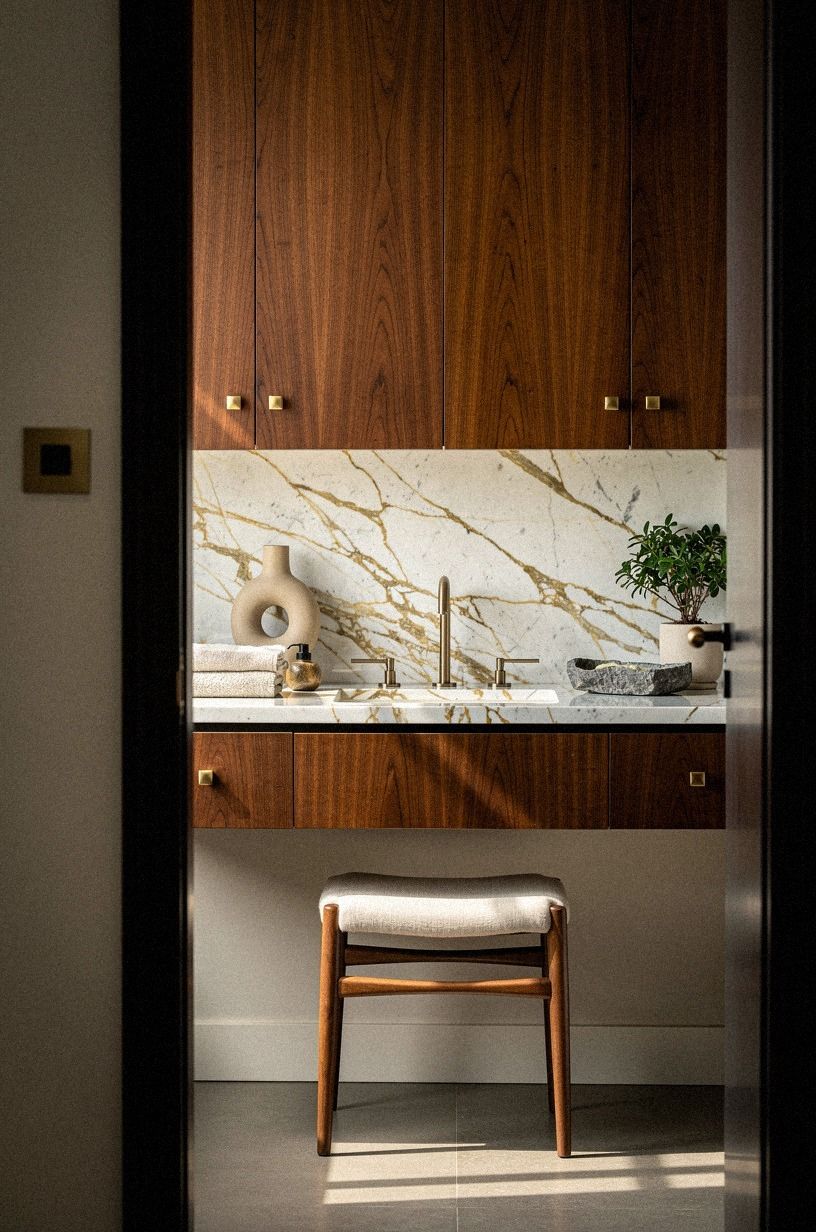
A stool makes the room feel lived-in, but a bulky one blocks the floor and creates a cleaning headache. I chose a solid white oak stool with rounded legs and pushed it beneath the vanity when it wasn’t in use. You’ll still see the wood, but your walking path stays open.
The stool became the place for a folded towel, a book, or a basket of extra soap. That matters because your bathroom needs storage that doesn’t look like storage.
I’d avoid a glossy lacquered seat here; water spots show immediately. A matte finish gives you a forgiving surface and catches the warm light without turning the corner flashy.
9Swap chrome for brushed brass
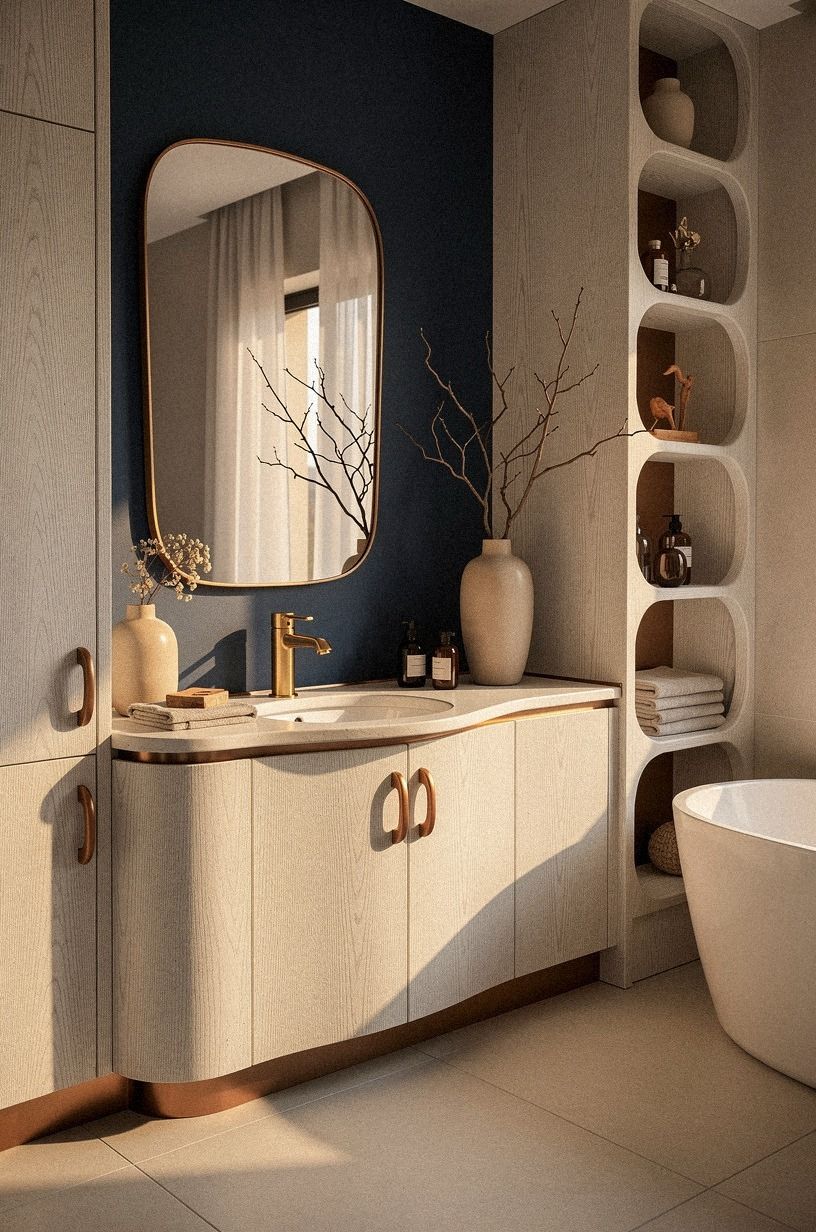
Chrome was the coldest detail in my bathroom, even though it was technically clean. I changed the faucet, cabinet pulls, and towel hooks to brushed brass, but I kept the shower hardware because replacing it would have meant more cost and more mess. You don’t need every metal to match exactly if the finishes share a warm temperature.
The new faucet cost falls within the typical $120-$450 range for a brushed brass faucet in the US, depending on the style and brand. I’d choose a simple bridge shape over a fussy traditional one. Your bathroom will feel contemporary classic when the silhouette stays clean and the finish carries the warmth.
10Build the Three-Texture Counter
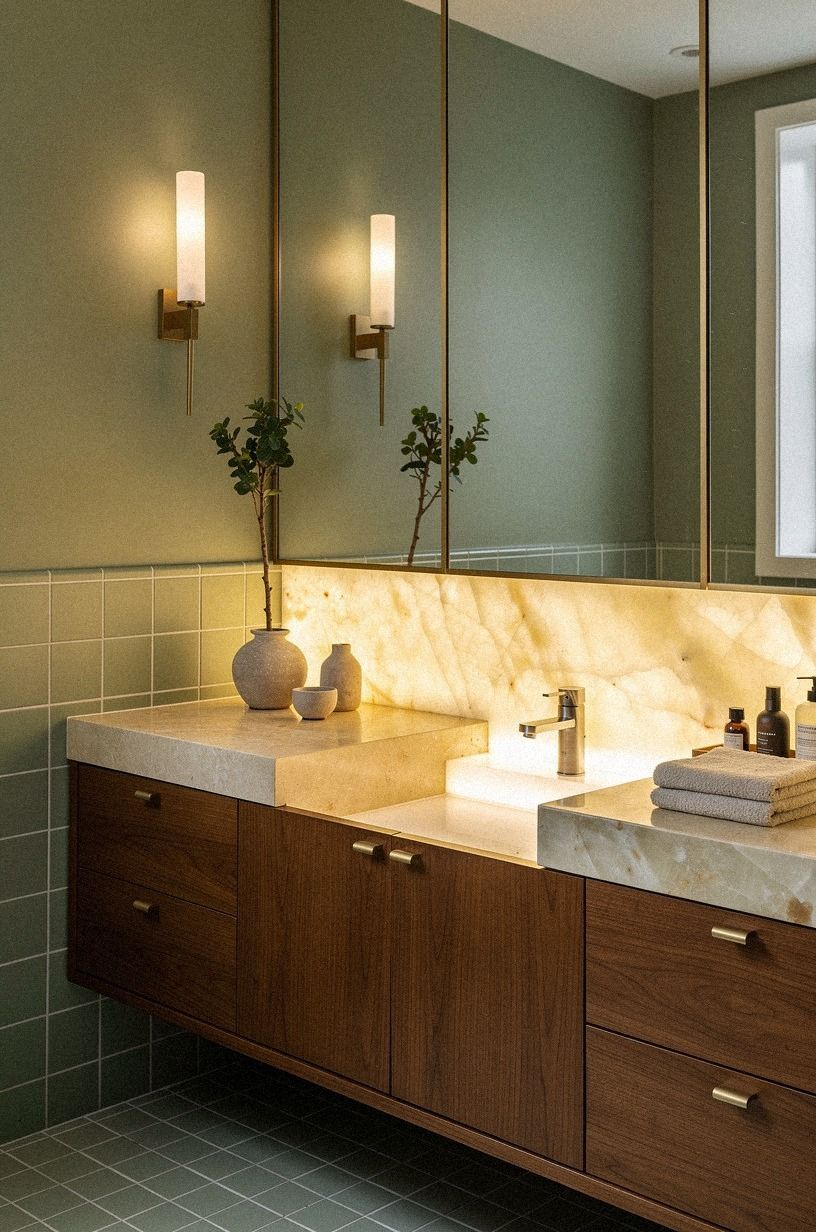
The vanity counter looked empty and shiny, so I built a three-texture counter: honed stone, ribbed ceramic, and woven fiber.
11Anchor the floor with a washable runner
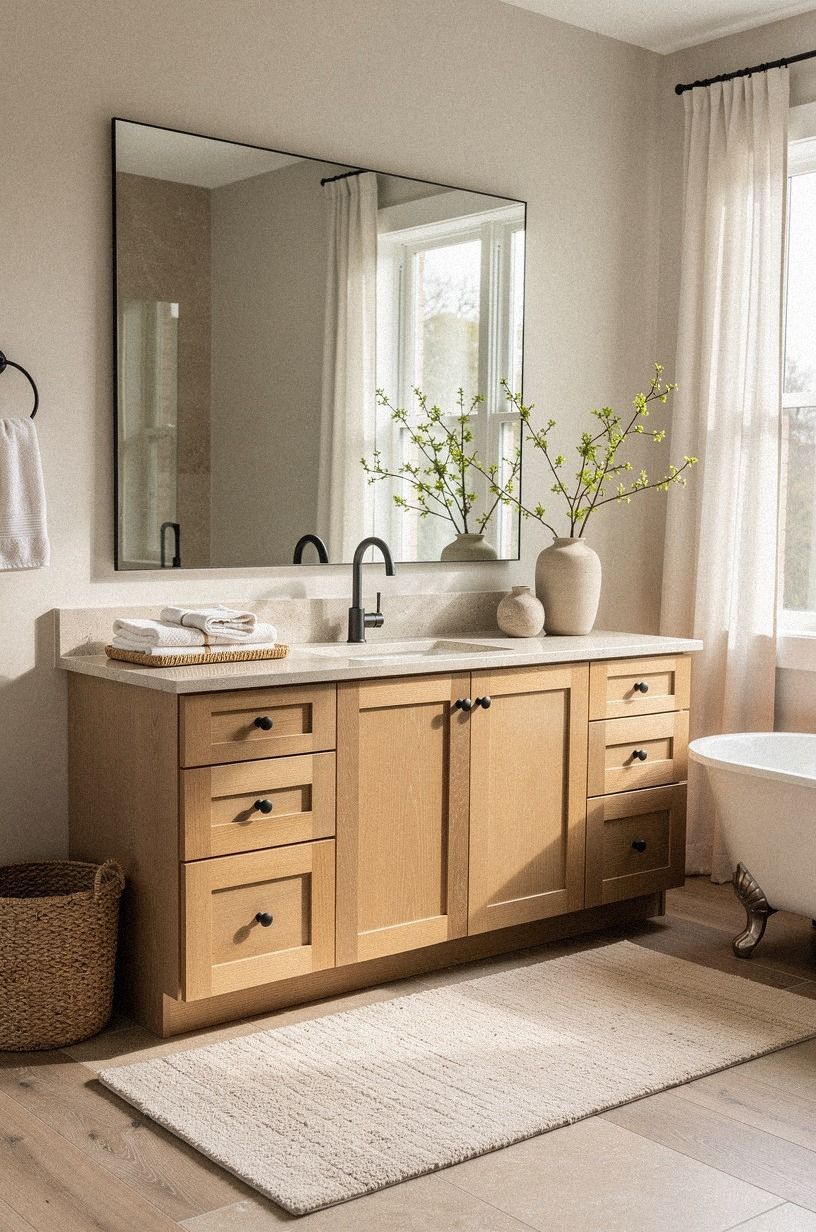
The floor needed softness, but a large rug would have crowded the toilet clearance and vanity doors. I used a narrow washable runner with faded rust, cream, and brown. You’ll want to measure the open walking path first, especially if your toilet needs the standard 21 inches of clearance in front.
The runner changed the room more than I expected. Its pattern hid water marks, and the muted terracotta made the wall color look warmer.
I’d avoid high-pile rugs in a bathroom because they hold moisture and make the floor harder to clean. A low, flat weave gives you comfort without turning the space into a laundry project.
12Add the Warm White Tile Shift
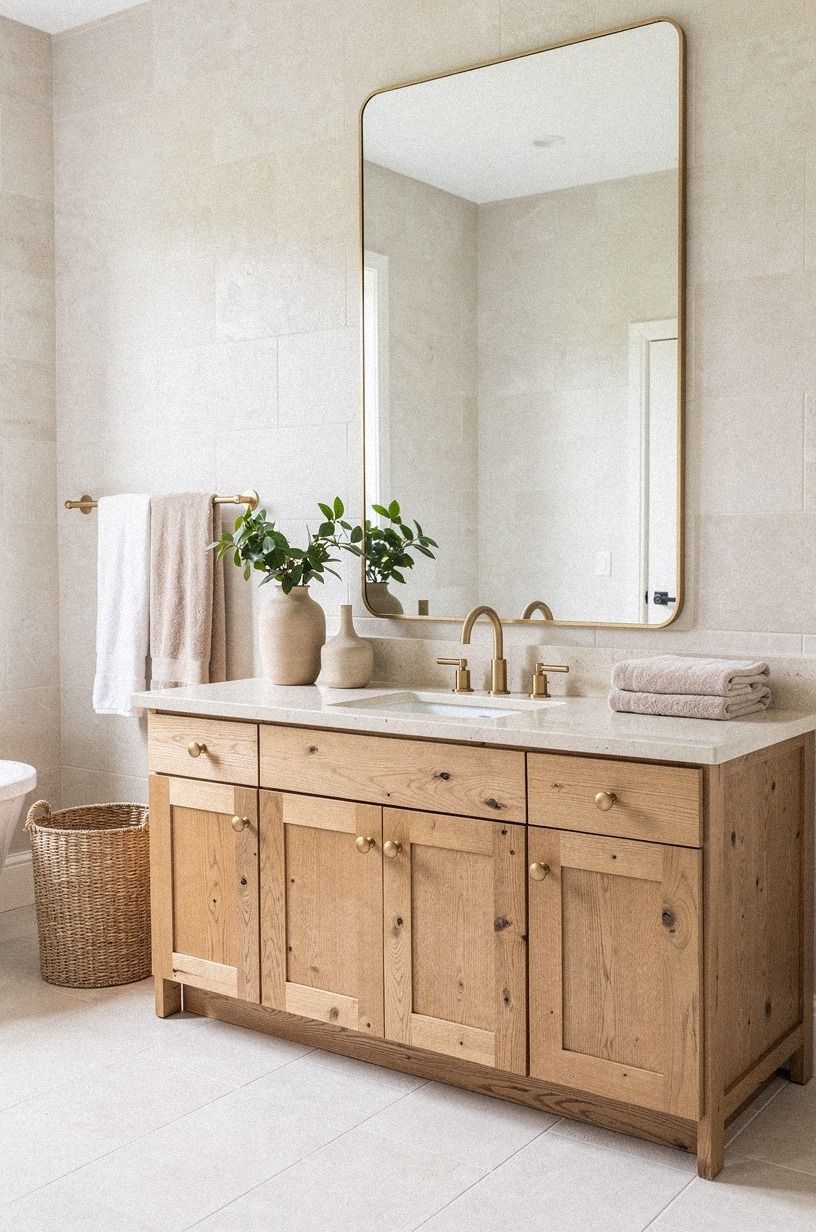
I didn’t replace my tile, but I changed how it read. A warm white grout refresh and a few handmade-look accessories gave the existing surface a cleaner line. If you’re choosing new tile, hand-glazed white zellige brings gentle variation, though the typical cost can reach $15-$35 per square foot.
Subway tile is less expensive, often around $2-$10 per square foot, and it can still feel charming when the grout tone is warm. I’d skip bright white grout with cream walls because the contrast looks busy. Your goal is a soft field behind the vanity, not a grid that demands attention every time you enter.
13Paint the ceiling for a quiet, earthy mood
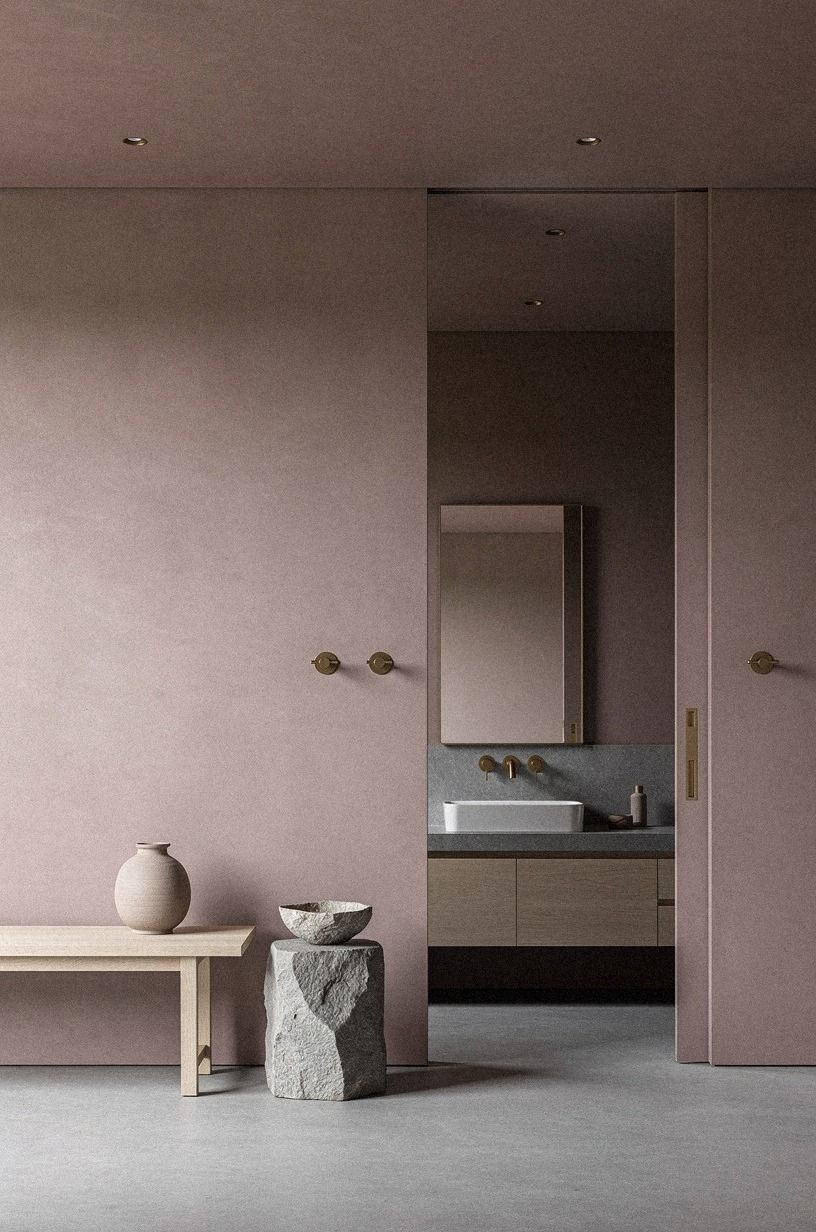
The ceiling was plain white, and it made the walls stop too abruptly. I carried the wall color slightly upward and painted the trim in a softer version of the same family. You’ll want to use a bathroom-rated finish and keep the change subtle, especially if your ceiling is low.
I tested Farrow & Ball Hague Blue No.30 on a small ceiling section because I wanted a moodier option. It was gorgeous at night but too dramatic in my room during the day.
I’d reserve Hague Blue for a powder room or a vanity wall unless your bathroom gets strong natural light. The lighter ceiling made my space feel more peaceful and less boxed in.
14What makes the shower feel more luxurious?
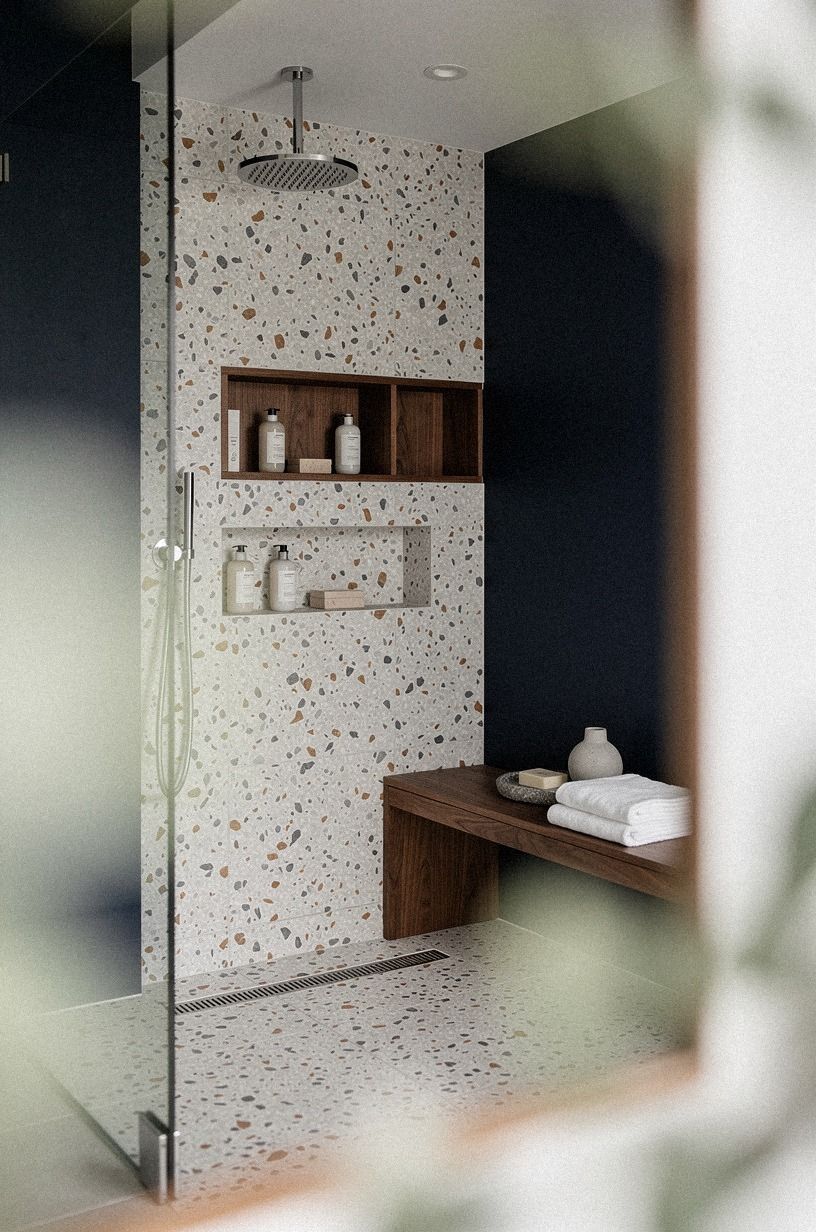
A comfortable shower starts with proportion, not expensive bottles. The standard minimum for a comfortable shower is 36 by 36 inches, so you’ll want to protect that clear footprint before adding a bench, basket, or decorative ladder. My shower stayed simple, but I moved the products into one woven teak shower caddy.
I also added a cotton bath sheet and a small eucalyptus bundle outside the spray zone. The scent is gentle, not overpowering.
You’ll get more of a spa feeling from clean sightlines and dry towels than from a dozen products. If plaster interests you, this guide to Venetian plaster bathroom ideas shows how a continuous surface can create that same calm effect.
15Frame the tub with rustic restraint
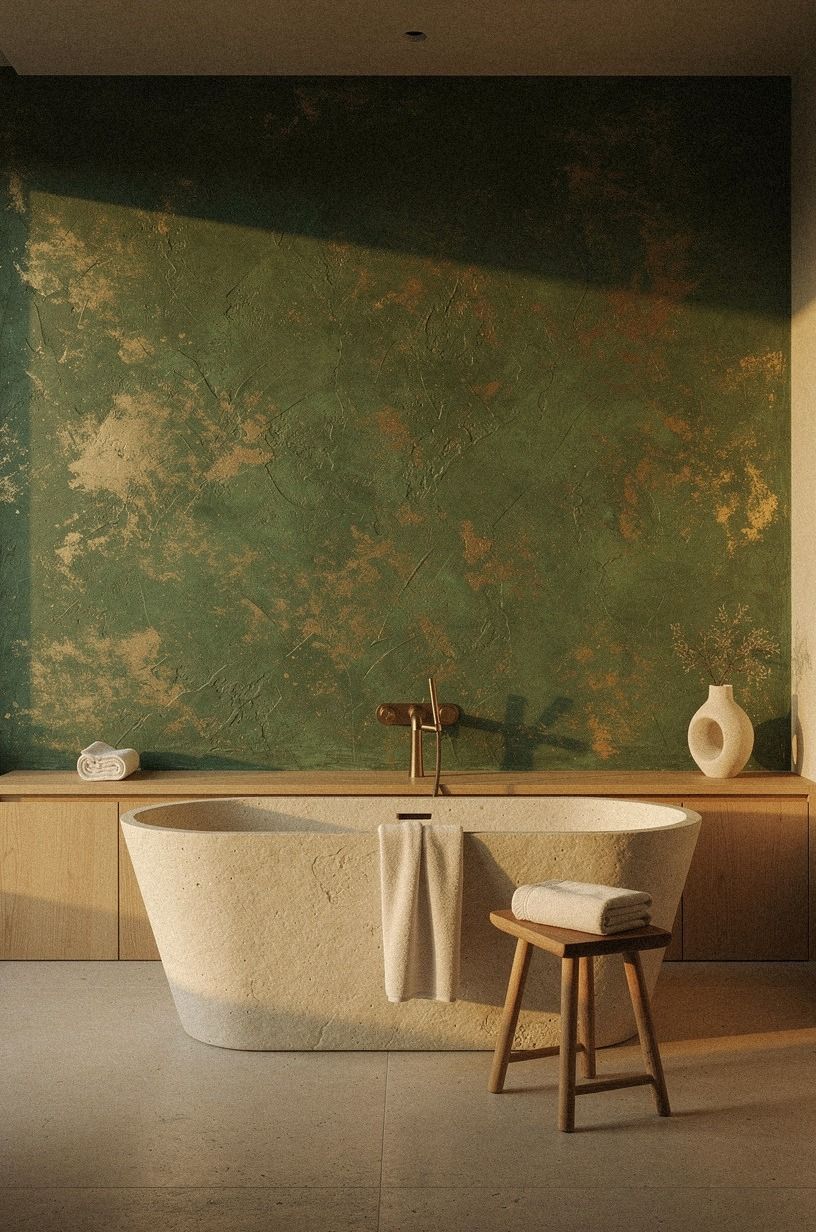
The tub corner looked like an afterthought, so I gave it one strong element instead of a collection of décor. A cerused white oak bath tray now holds a folded towel and a small ceramic cup. You’ll want to keep anything wooden away from standing water, then wipe it after use so the grain stays healthy.
I considered a large ladder, baskets, and a framed print together, but that would’ve made the corner feel busy. The tray was enough. For a smaller bathroom, this rustic bathtub tray idea guide helped me choose a practical shape that still looked warm.
The room feels more intimate now, not decorated for a photograph.
16Use one bold wall instead of busy wallpaper
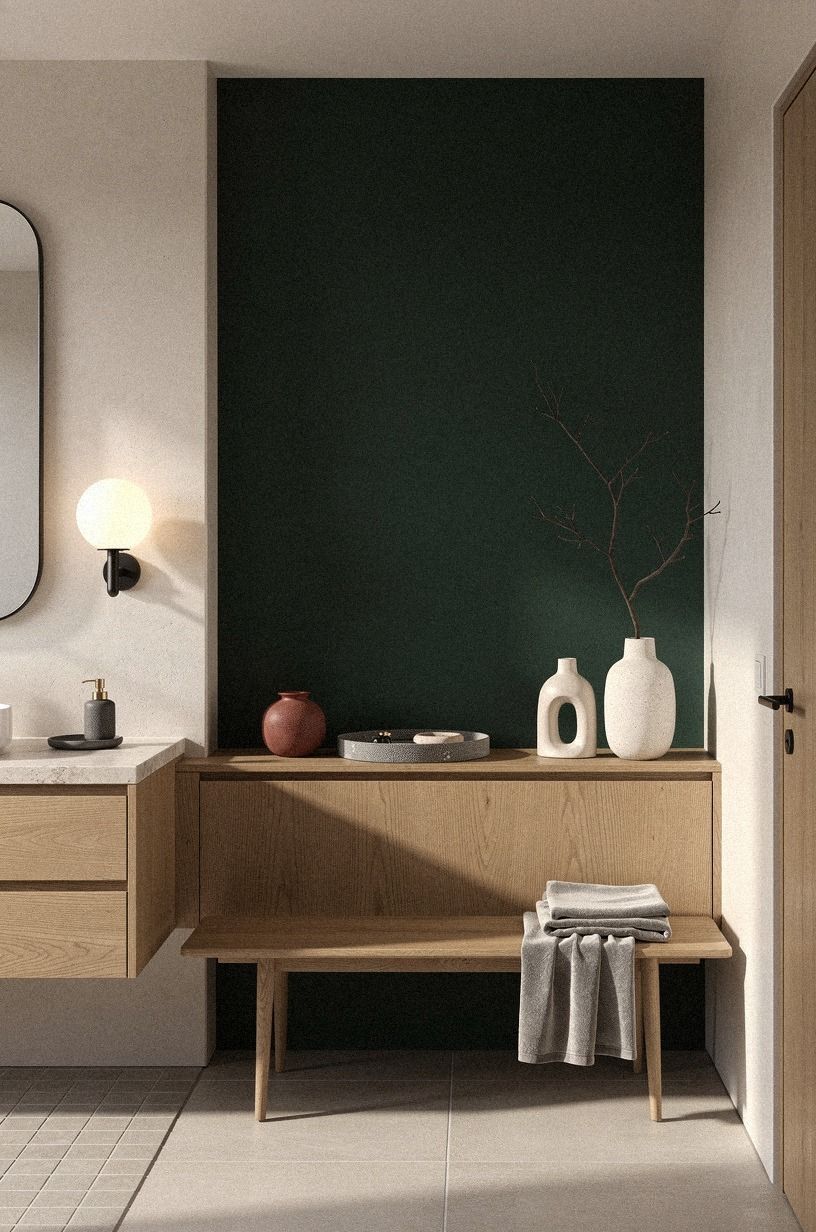
I wanted pattern, but full wallpaper felt risky beside the tile.
17Mix the contemporary classic bathroom details
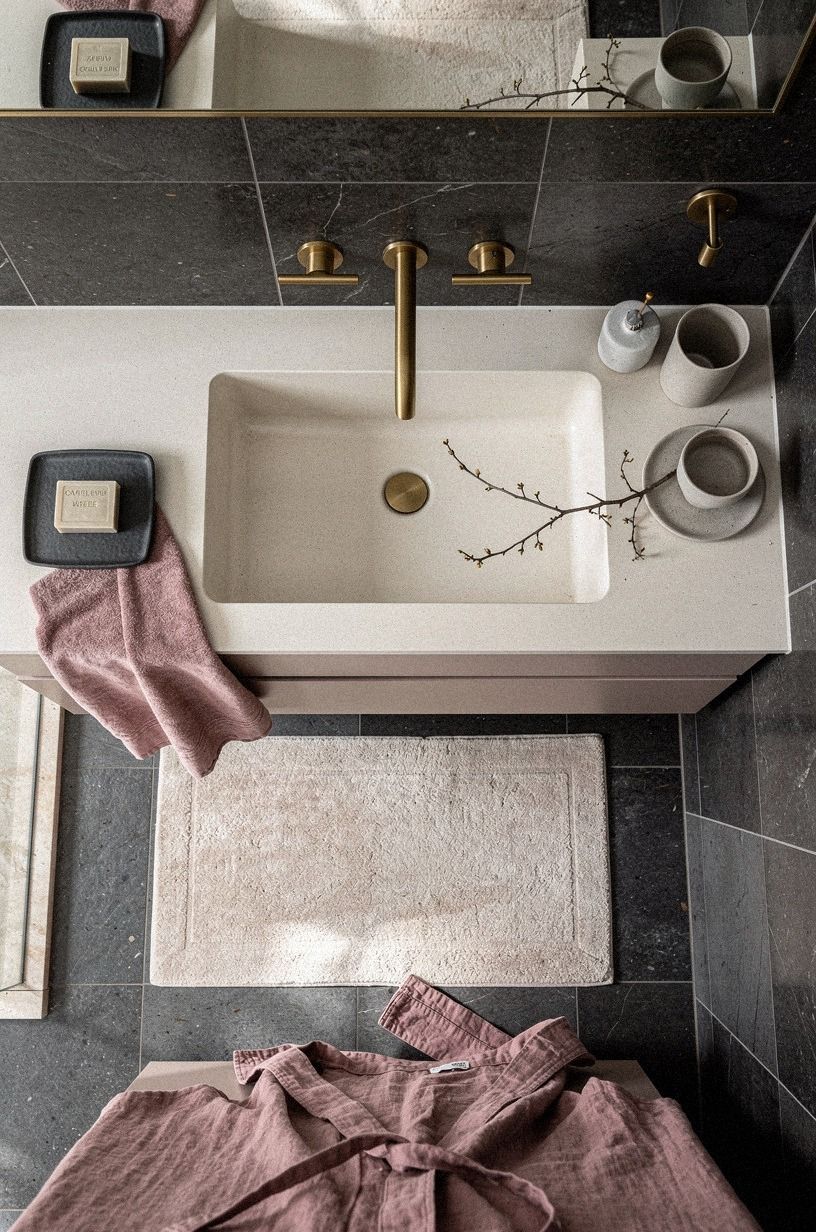
The room needed a little polish, so I added one marble element without turning the bathroom formal. A marble top can run about $50-$100 per square foot in typical US pricing, which is why I used a small honed marble shelf instead of replacing the vanity counter. You’ll want to keep the stone matte if you prefer a relaxed look.
The shelf holds a candle and a small dish, not every item you own. I paired it with a simple oak frame and a linen shade.
That mix gave me the contemporary classic bathroom feeling I wanted: clean lines, natural material, and no visual shouting. Your room can feel elegant without losing the marks of daily life.
18Finish with the Lived-In Layer
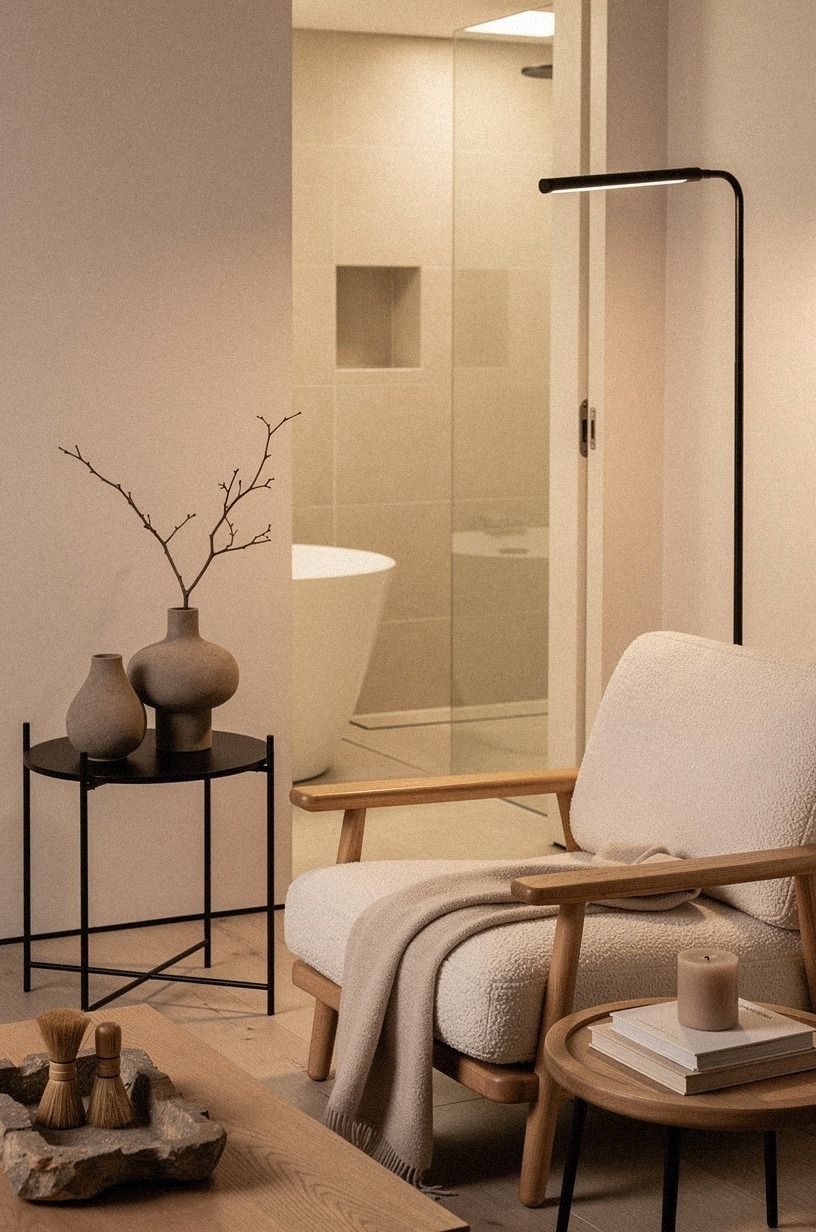
The final layer was personal. I added a small landscape print, a ceramic cup from a local market, and a sage mohair velvet stool cushion that catches the afternoon light. You’ll want one or two objects with a story, because a room made entirely from matching purchases can feel strangely anonymous.
I left one wall almost empty. That was difficult for me, but the open space made the warm materials easier to notice.
And yes, I still keep toothpaste on the counter some mornings! A lived-in bathroom isn’t messy by default; it simply has evidence that someone uses it.
That balance is what made the makeover feel comforting instead of staged.
How much it cost
I kept the plumbing, tub, toilet, and main tile, so I stayed inside the budget tier rather than moving into a full renovation. The typical US ranges below are useful planning markers, not a promise that every bathroom will land at the same number.
My choices were paint, a mirror frame, towels, a runner, hardware, and lighting. You can spend nothing on the artwork if you already have a print or photograph that works. I’d put your first dollars toward lighting and the wall color, then decide whether the faucet or mirror still bothers you.
Why I’d Keep This Makeover Small
I used to think a master bathroom makeover needed a new vanity, new tile, and a contractor’s schedule. After living with this room, I don’t believe that anymore. The expensive work matters when the layout fails, the shower leaks, or the plumbing needs attention.
If your room functions well, the emotional change can come from light, texture, and the surfaces you touch every day.
My first mistake was shopping for accessories before deciding on the palette. I bought a black metal basket that looked fine online but felt harsh against the warm wall. It sat in the corner for three months before I admitted it was wrong.
That little failure taught me to choose the room’s temperature first, then bring in objects that support it.
I also learned that modern farmhouse style works best when you remove one expected detail. I kept the oak, but I avoided signs, distressed lettering, and excessive white.
I used brass, linen, stone, and darker paint instead. The result feels more sophisticated because it doesn’t announce a theme from the doorway.
And the budget constraint helped. You’ll make better choices when you can’t replace everything.
I had to ask whether each item improved storage, comfort, light, or mood. If it did none of those jobs, it stayed out.
That rule kept the room inviting, calming, and honest, which is exactly what I wanted when I first walked in with a towel over my shoulder.
The Questions Worth Answering First
What is the best Modern Farmhouse Master Bathroom Ideas for Cozy Elegance for a small bathroom?
Warm paint and a slim IKEA HEMNES vanity are strong choices because they keep the room useful without adding visual weight. Choose a wall color with warm undertones, a narrow mirror, and one woven textile. Your small bathroom will feel more open when the counter and floor stay mostly clear.
Where can I buy Modern Farmhouse Master Bathroom Ideas for Cozy Elegance pieces on a budget?
Look at IKEA, Wayfair, and Target for simple vanities, towels, mirrors, and lighting. You can also check Facebook Marketplace or a local thrift shop for wood stools and frames. Your best finds may need fresh paint, but that’s often less expensive than buying a matching set.
How much does a Modern Farmhouse Master Bathroom Ideas for Cozy Elegance makeover cost?
A cosmetic makeover typically fits the $200-$1,200 budget range, depending on paint, lighting, the faucet, and textiles. Free changes include rearranging your counter, editing décor, and washing existing towels. You don’t need to replace plumbing or tile to make the room feel warmer.
Can I create a Modern Farmhouse Master Bathroom Ideas for Cozy Elegance on a budget?
Yes, and you can start with paint, secondhand wood, and better lighting. Use leftover wall paint, move a stool from another room, and switch only the cabinet pulls. Your existing towels may work once you remove clutter and add one warm woven mat.
Is a Modern Farmhouse Master Bathroom Ideas for Cozy Elegance worth it in a small space?
Yes, because a small room gives every choice more impact. Use a light warm wall color, keep the vanity height within the standard 32-36 inches, and protect the 21-inch toilet clearance. Your space will feel comfortable when storage stays vertical and the floor remains open.
Is Modern Farmhouse Master Bathroom Ideas for Cozy Elegance a good idea for a rental?
Yes. Use removable hooks, a tension rod, peel-and-stick accents, and a framed mirror that leans safely against the wall. You can also change textiles and cabinet hardware without permanent damage.
Your rental bathroom will gain warmth through texture, lighting, and color instead of construction.
Where I’d Start First
If I had to pick one, I’d start with the wall color. A cold room makes every towel and wood tone work harder than it should, while the right warm shade lets simple pieces look intentional. Pin this makeover for later and test your paint beside the mirror before buying anything else.