
 by
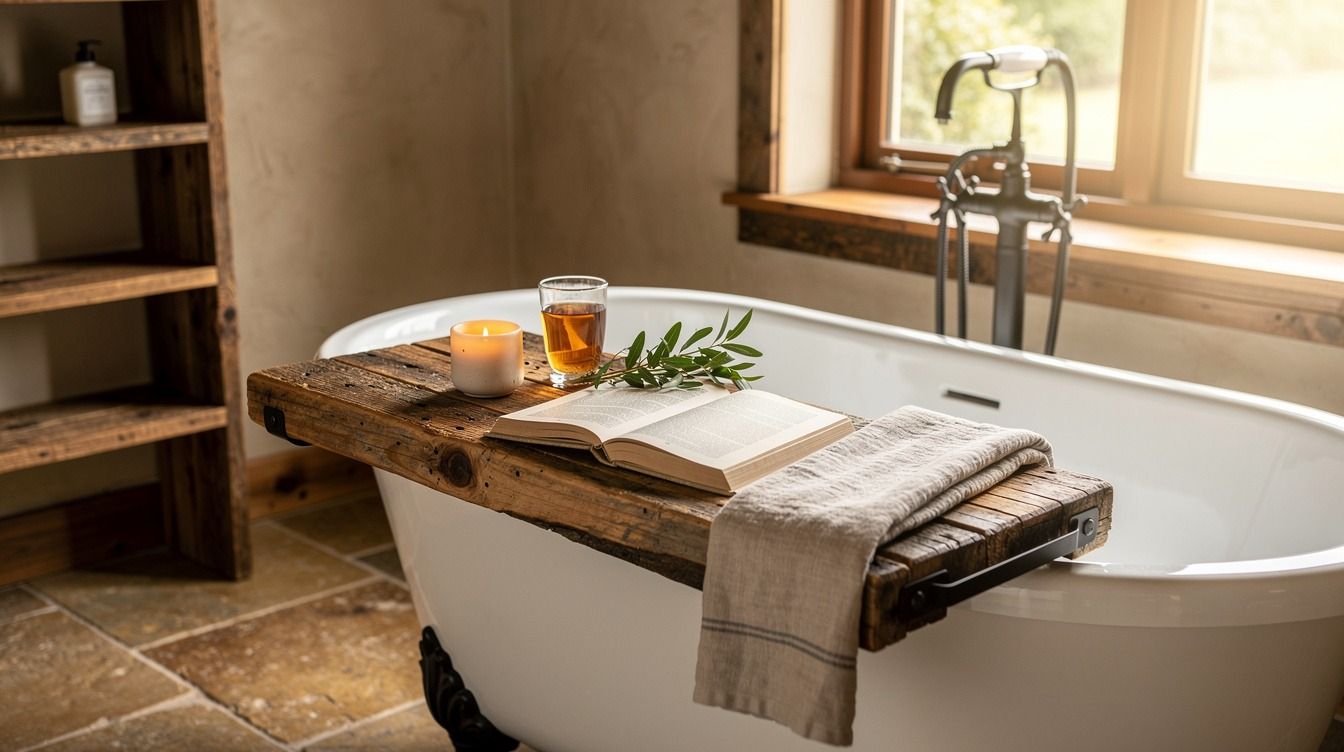
by The short answer: a rustic bathtub tray is the cheapest way to make a bathroom feel like a spa, usually under $60. I ignored mine for years and wondered why the room felt cold no matter how many towels I bought. Turns out the tray is where the warmth lives. These 18 ideas are the ones I'd actually use.
- Start With Reclaimed Wood, Not New Pine
- Float a Live-Edge Slab Across the Tub
- Wood Over Wire, Every Time
- Build the Three-Height Glow
- Make the Two-Wood Rule Your DIY Starting Point
- Layer Linen Under Everything
- Should Your Tray Match Your Vanity?
- Anchor the Zone With a Small Stool
- Carve Out a Book and Glass Notch
- Swap Chrome for Aged Brass Nearby
- Use a Vintage Cutting Board Instead
- Stack Rolled Turkish Towels on One End
- Follow the One-Third Rule
- Hang a Rustic Caddy Off the Tub Edge
- Warm the Walls Behind the Tray
- Add One Dried Stem, Not a Bouquet
- Price the Tray, Not the Whole Room
- Edit Down to the Minimal Version
1Start With Reclaimed Wood, Not New Pine
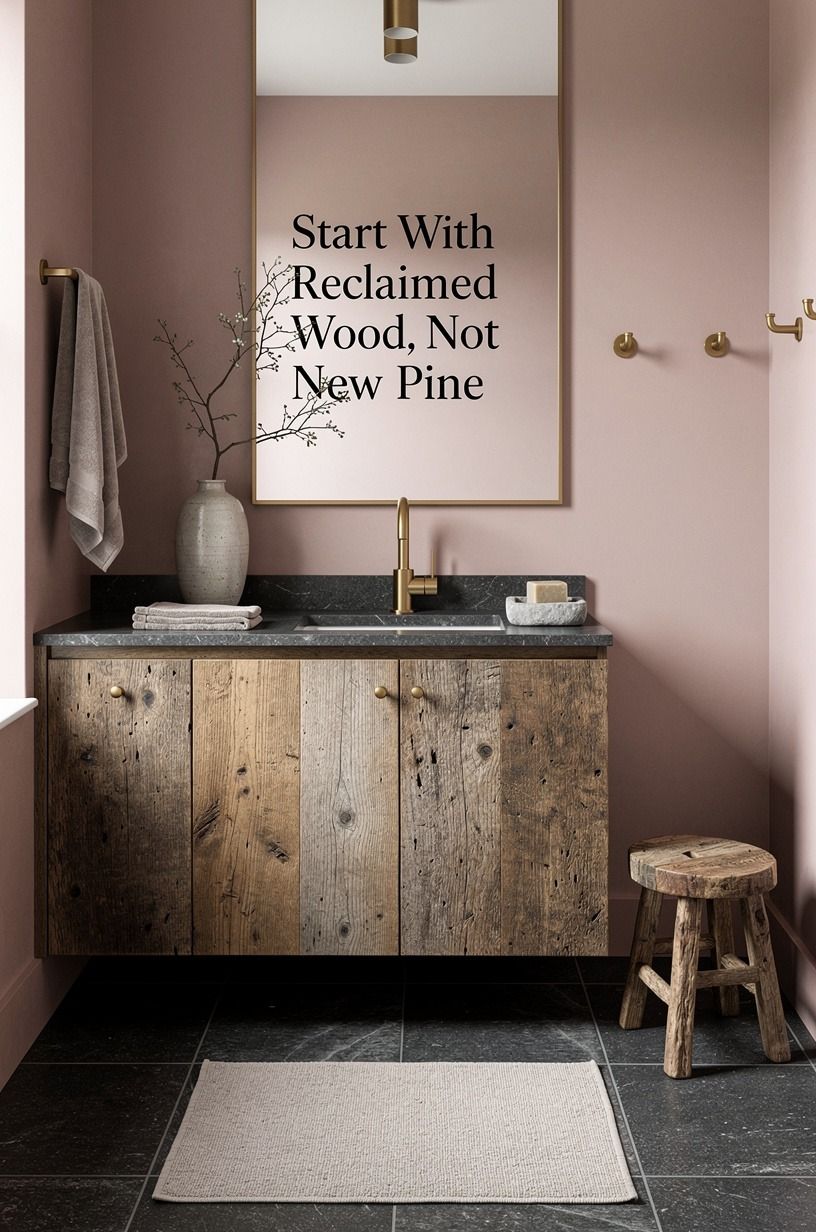
Reclaimed wood has the patina new boards fake badly. A single plank of reclaimed barn wood, sanded smooth and sealed, carries more warmth than anything you'll find in a big-box aisle, especially against dusty rose walls and charcoal tile with unlacquered brass brackets that deepen in color month by month. Old nail holes and saw marks are the point.
New pine works if you stain it dark, but I'd skip the orange-toned stains. They read "1987 cabin rental" every single time!
Ask for offcuts at a local lumberyard. You'll often pay less than $20.
Typical cost by tier (US averages):
2Float a Live-Edge Slab Across the Tub
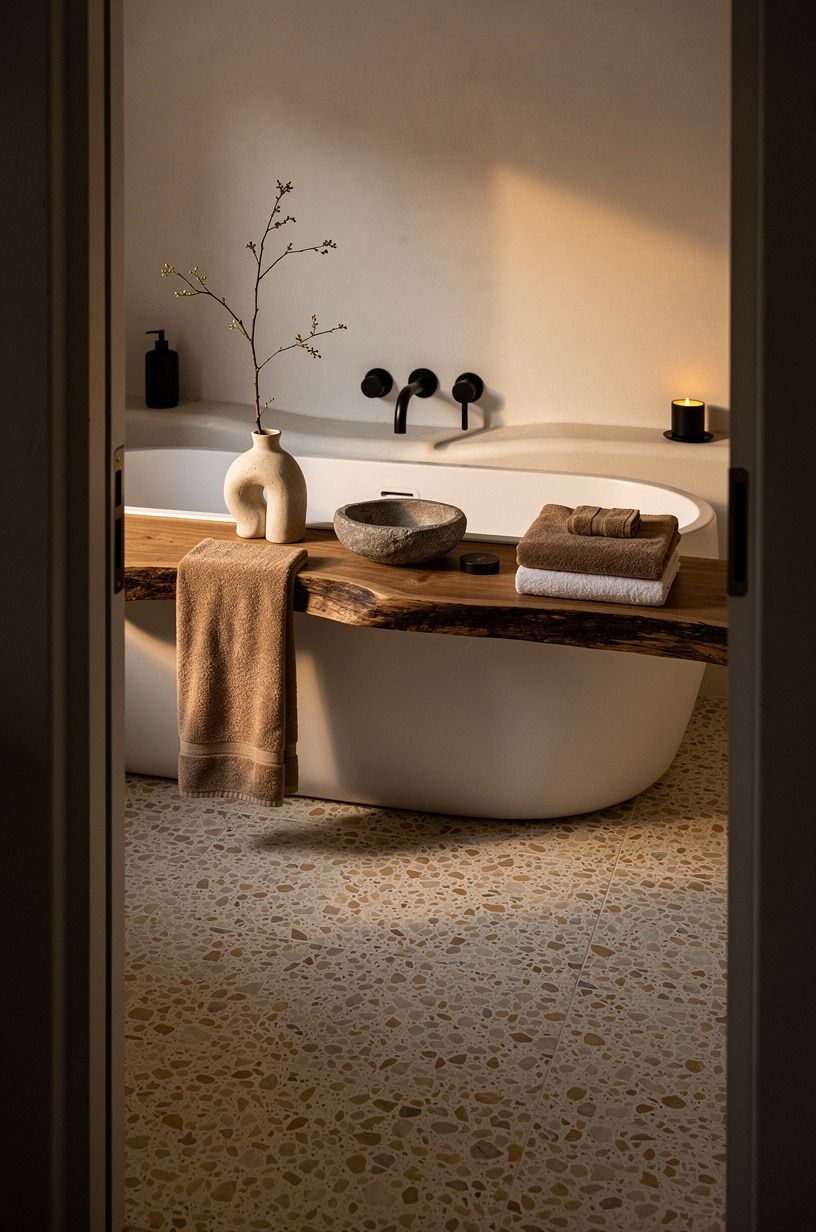
A live-edge walnut slab laid flat across a standard 60x30 inch tub is the strongest single move on this list. The wavy natural edge against oversized-chip terrazzo in warm white with camel and black flecks is the contrast your eye wants.
Seal it with food-grade mineral oil or a marine varnish, because raw walnut will drink bathwater and warp within a month. I learned that the annoying way. Measure your tub's outer width first.
You want 2 to 3 inches of overhang per side.
3Wood Over Wire, Every Time
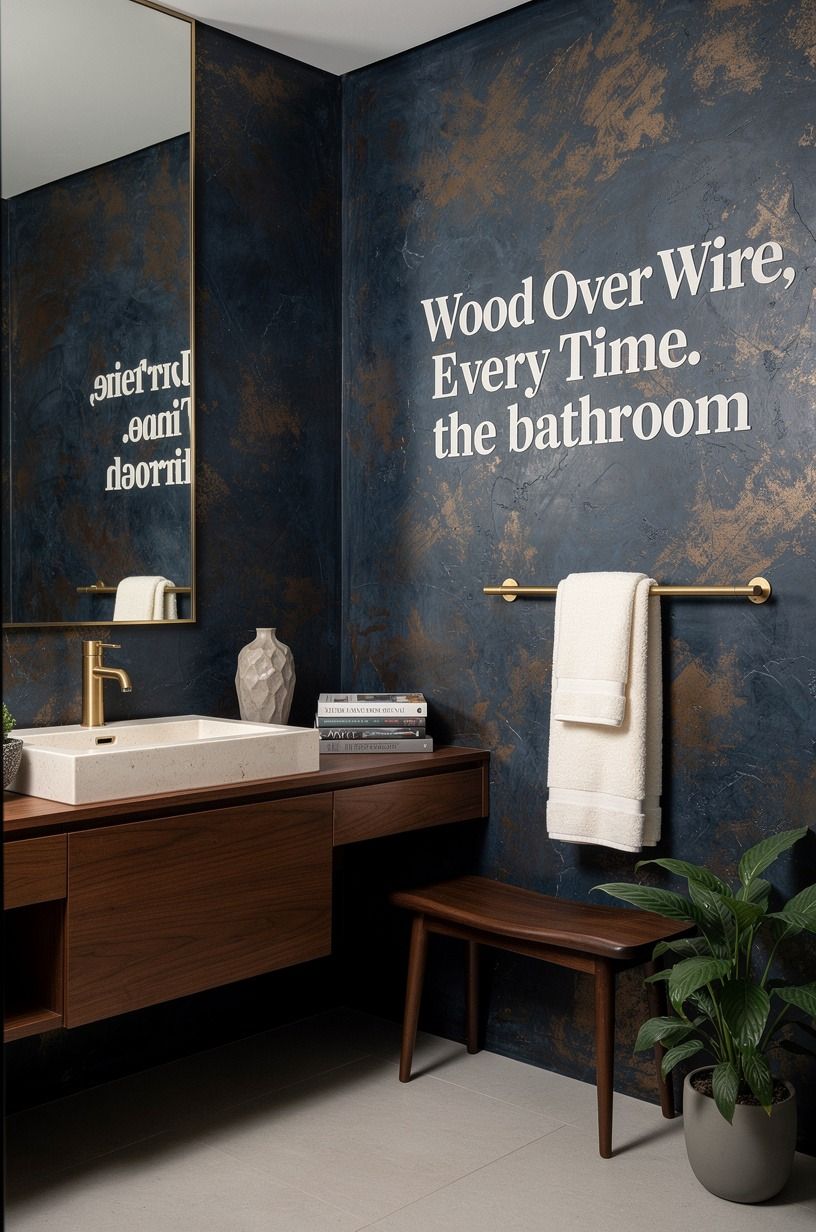
Here's a contrast worth stating plainly: a wooden tray beats a chrome extendable rack in a cozy bathroom, and it isn't close. Wire racks are practical, sure, but they read hotel gym. If you already own one, don't toss it.
Wrap the center bar in jute twine and set a small wood bath board on top, and against hand-troweled Venetian plaster in midnight blue with copper and ivory accents, even that basic setup warms up fast. If you're buying fresh, spend the $40 to $80 on solid wood instead.
4Build the Three-Height Glow
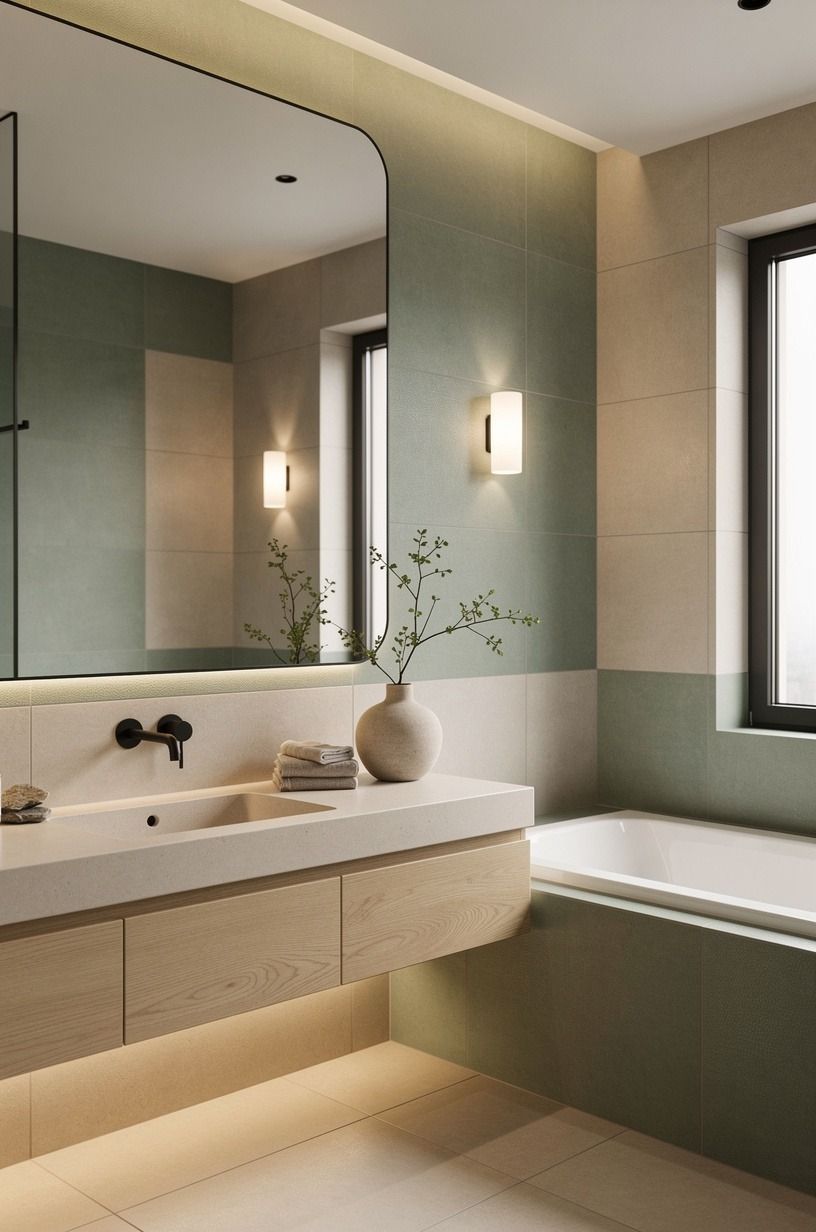
Candles on a flat tray look like a countdown to a wax spill. Stagger three heights instead: a sage green taper, a warm cream pillar, and one low votive in a textured shagreen holder set right on the natural wood.
5Make the Two-Wood Rule Your DIY Starting Point
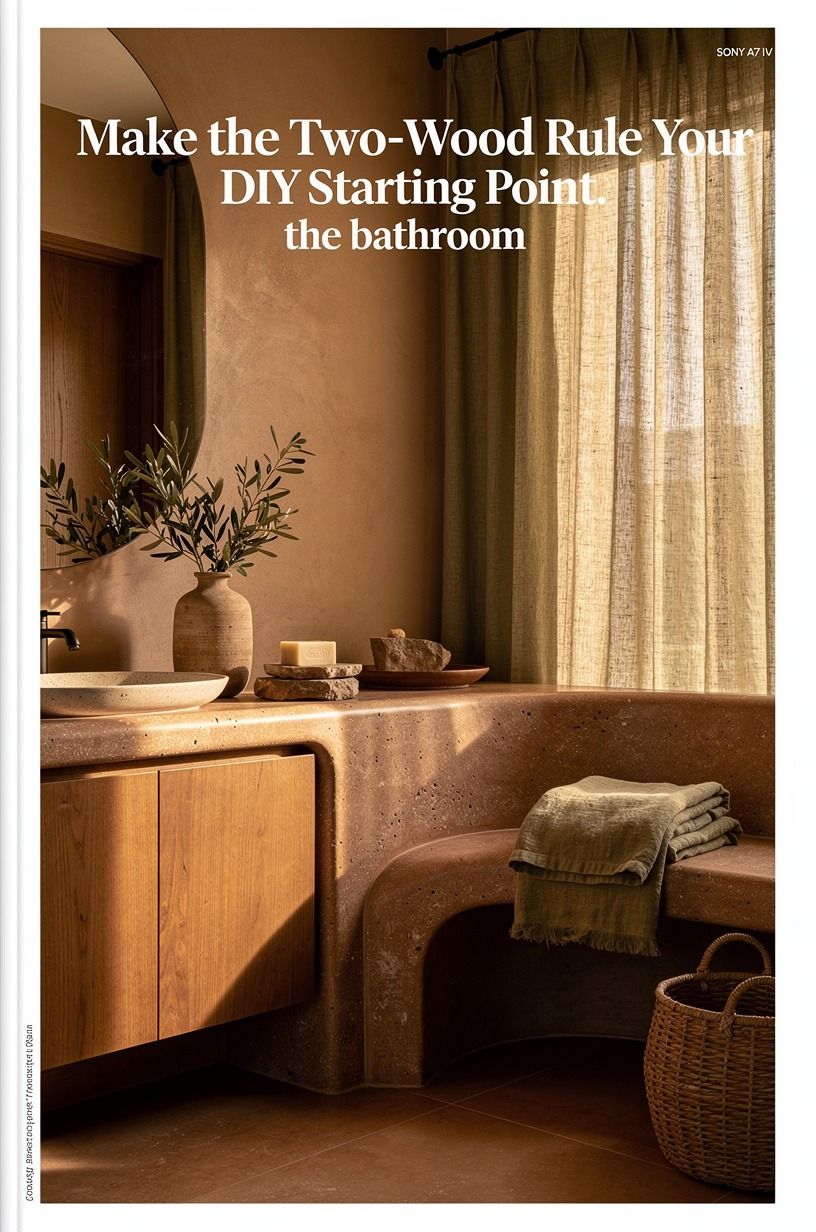
The Two-Wood Rule: your tray should be one tone away from your vanity or floor, never the same and never three away. Same looks flat, three looks accidental.
If you're building your own, a weekend project with a 1x8 oak board, two cleats, and tung oil runs about $30 in materials, and a washed Belgian linen runner in olive or terracotta underneath finishes it against a stone floor. My DIY bathtub tray weekend build walks the whole thing.
You'll finish it in one afternoon, and you'll keep it for a decade.
6Layer Linen Under Everything
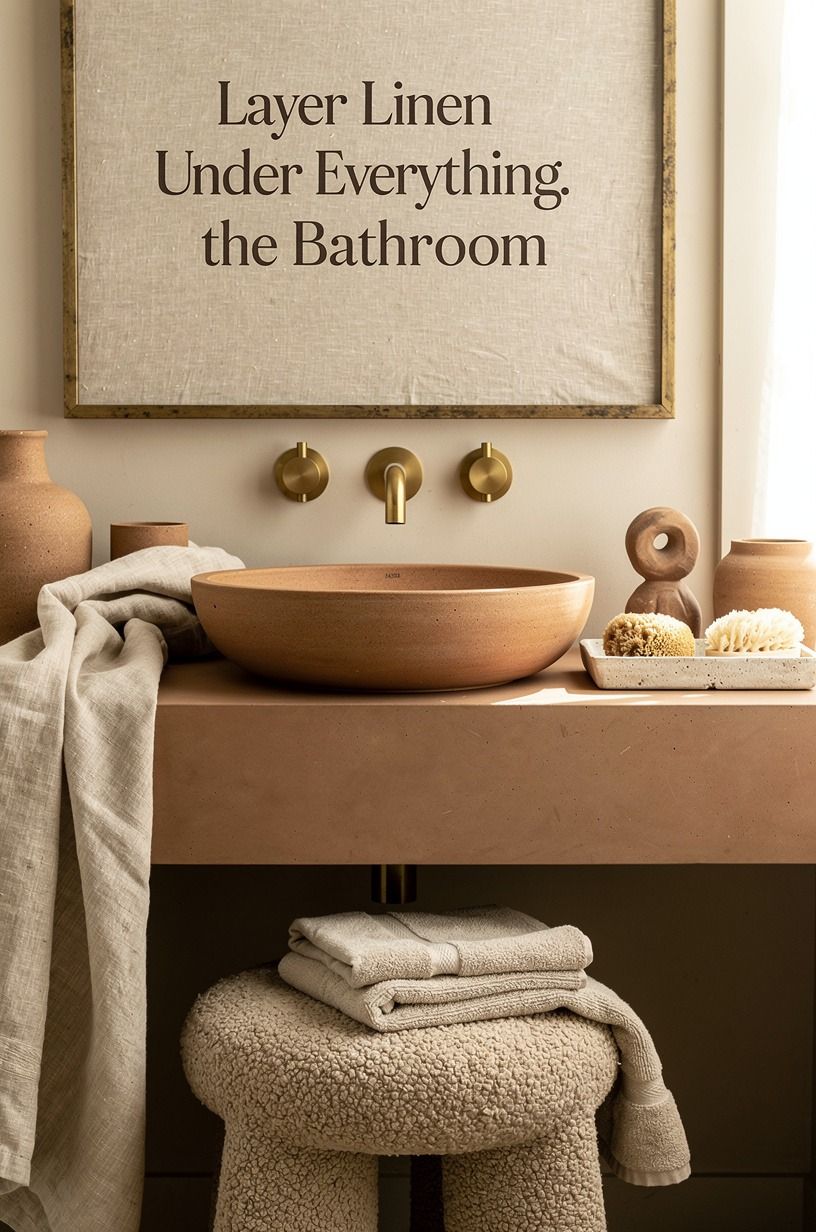
A folded square of washed linen with a nubby, almost bouclé weave under your candle and glass does two jobs: it catches drips, and it softens all that hard wood visually. Clay or a faded stripe, never bright white.
White reads laundry room. I keep a stack of three by the tub next to an aged brass candlestick and rotate them weekly, because damp linen gets musty fast in a steamy bathroom.
It costs maybe $12 for a set. Small move, big texture payoff.
7Should Your Tray Match Your Vanity?
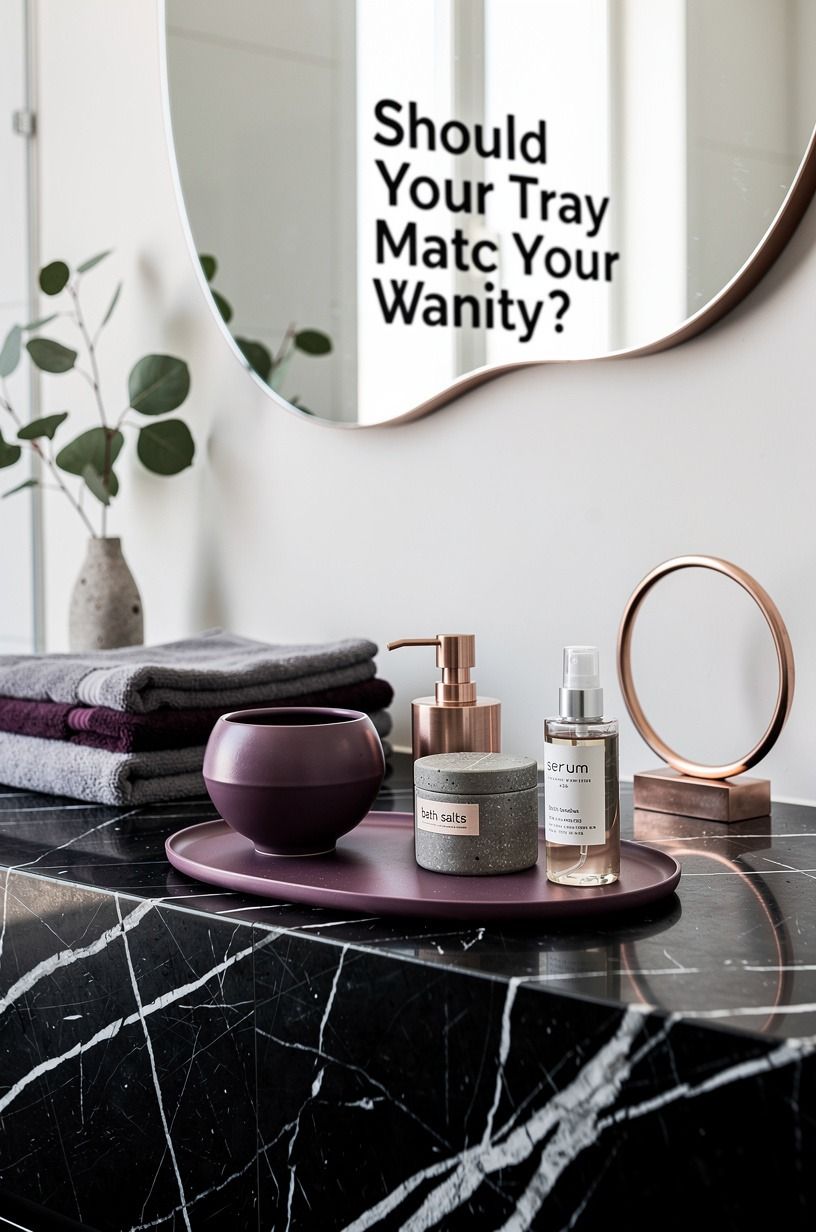
No, and I'd argue against it. Matching finishes is the instinct that makes bathrooms feel like a furniture showroom.
If your vanity is grey and cool-toned, go darker and richer on the tray, something like Nero Marquina marble, black with white veining, against plum walls and rose gold fixtures. If your vanity is painted, warm medium wood wins. The tray should look collected, like it found its way to the tub.
You want a guest to ask where it came from, not which set it belongs to.
8Anchor the Zone With a Small Stool
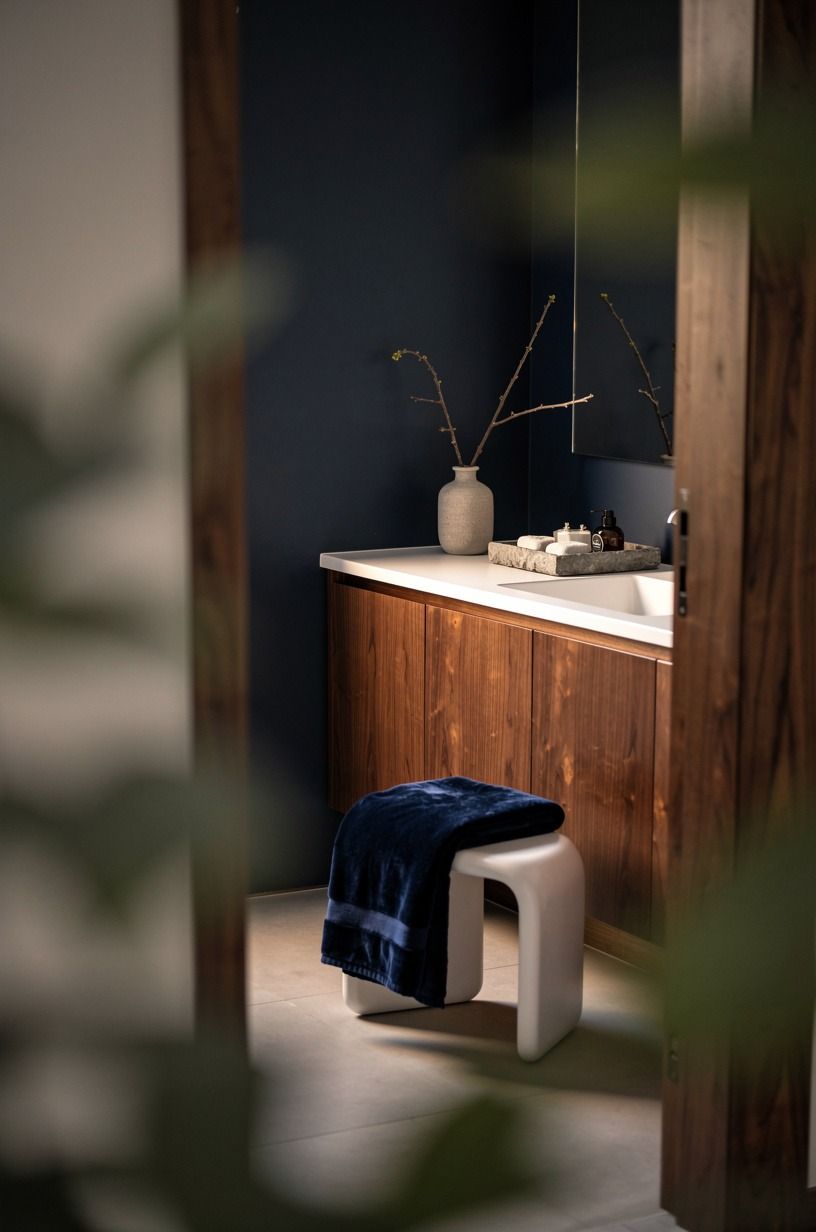
A tray alone can look like it's floating in space. A small stool with deep-pile velvet cushioning and walnut legs next to the tub grounds the whole arrangement and gives you overflow space for the book and the towel that won't fit on the tray.
Against navy and white it reads intentional, and the velvet holds up fine if you keep it off the splash zone. Keep the stool under 18 inches tall so it doesn't crowd the sightline to the tub.
9Carve Out a Book and Glass Notch
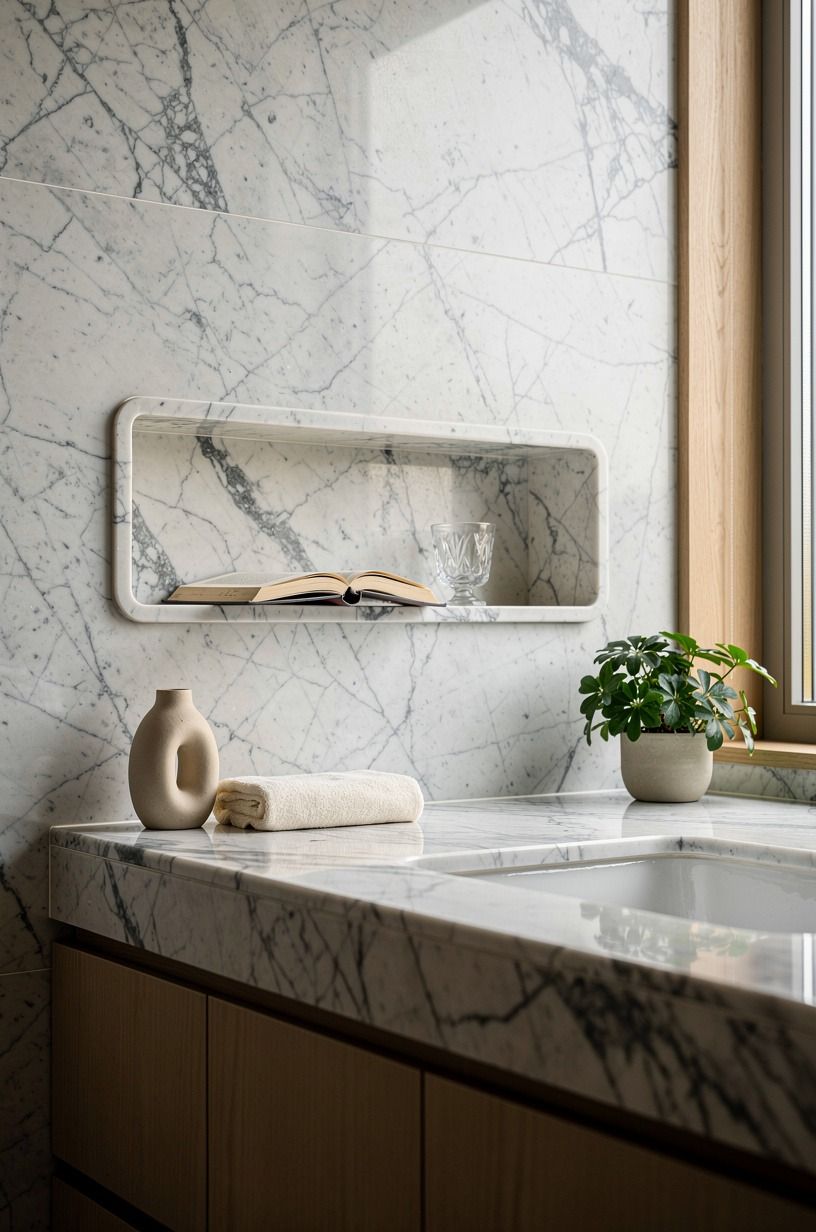
If you read in the bath, a Carrara marble tray with subtle grey veining, routed with a book rest and a wine glass notch, is worth the upgrade. Emerald walls, a gold-rimmed glass, a cream towel, and the stone carries the whole scene.
10Swap Chrome for Aged Brass Nearby
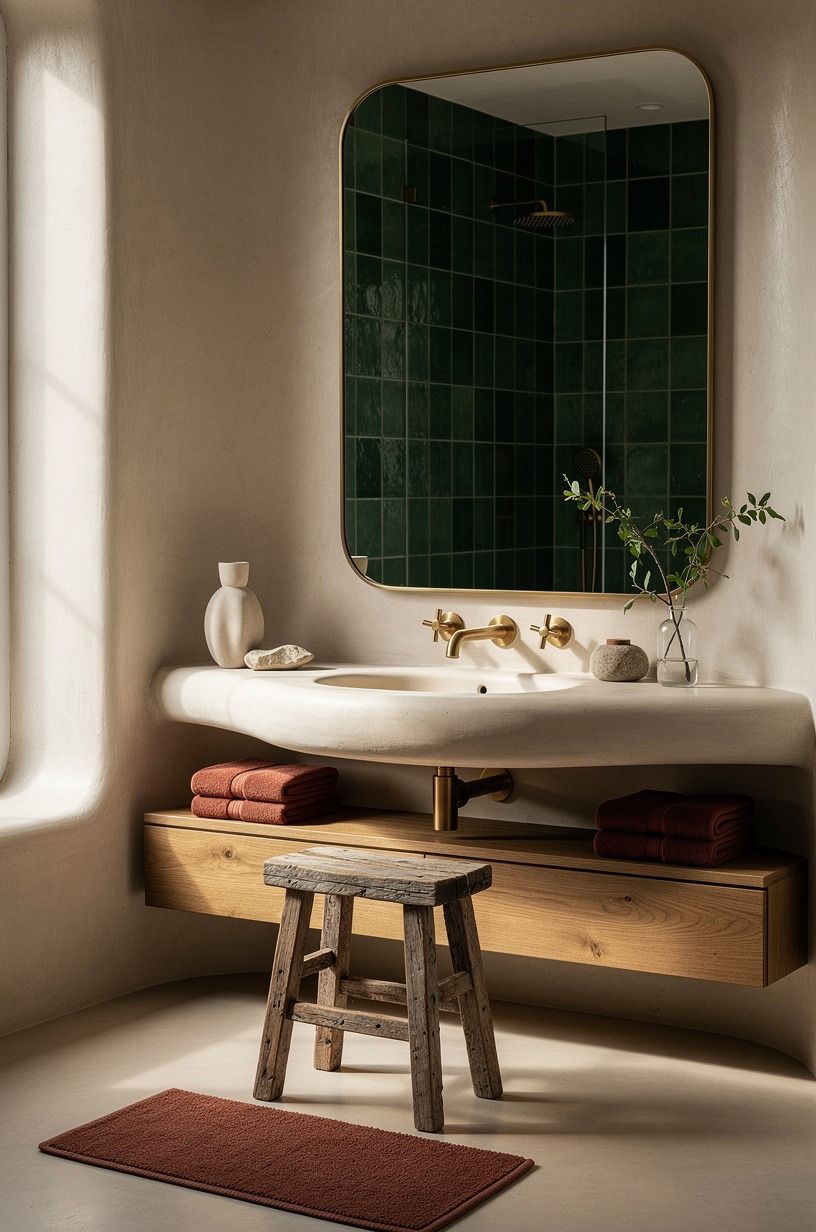
You don't need to re-plumb anything. Swap the small stuff: a reclaimed weathered teak soap dish, an unlacquered brass tumbler, a little tray hook for your robe.
Warm wood and warm metal against forest green walls with rust and natural oak nearby is what makes the corner feel intentional instead of assembled. Chrome next to rustic wood reads as two bathrooms arguing with each other.
Unlacquered brass will develop a soft patina within months, and honestly, that's the finish I prefer. It looks like it earned its place.
11Use a Vintage Cutting Board Instead
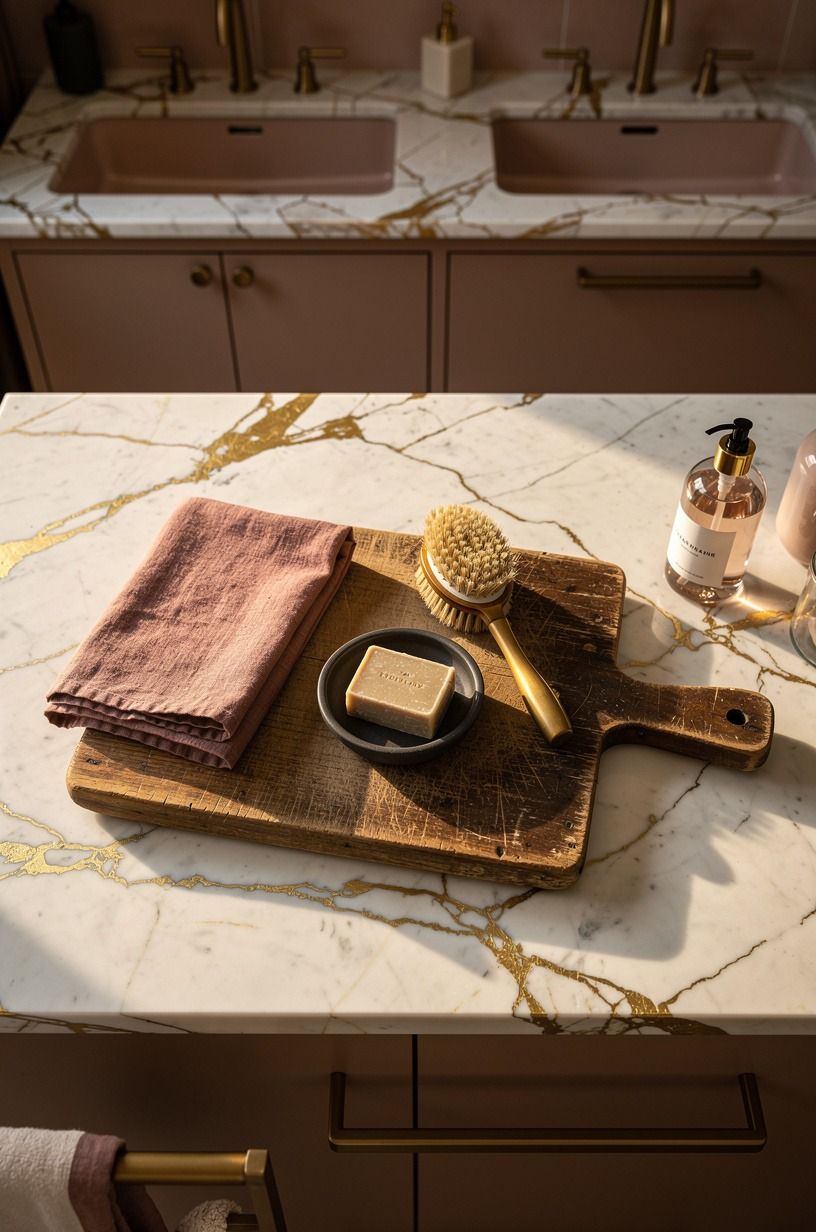
This is my favorite budget move on the whole list. A thick vintage marble pastry slab, Calacatta with soft gold veining, from a thrift store or Facebook Marketplace, usually $15 to $40, fits a standard tub if you pick one over 28 inches long. The veining and worn edges give you instant age that no new product fakes well, and against dusty rose walls and charcoal tile with brass fixtures it looks like it cost ten times that.
Wipe it dry after every bath. And check the underside for cracks before you trust it with your phone.
12Stack Rolled Turkish Towels on One End
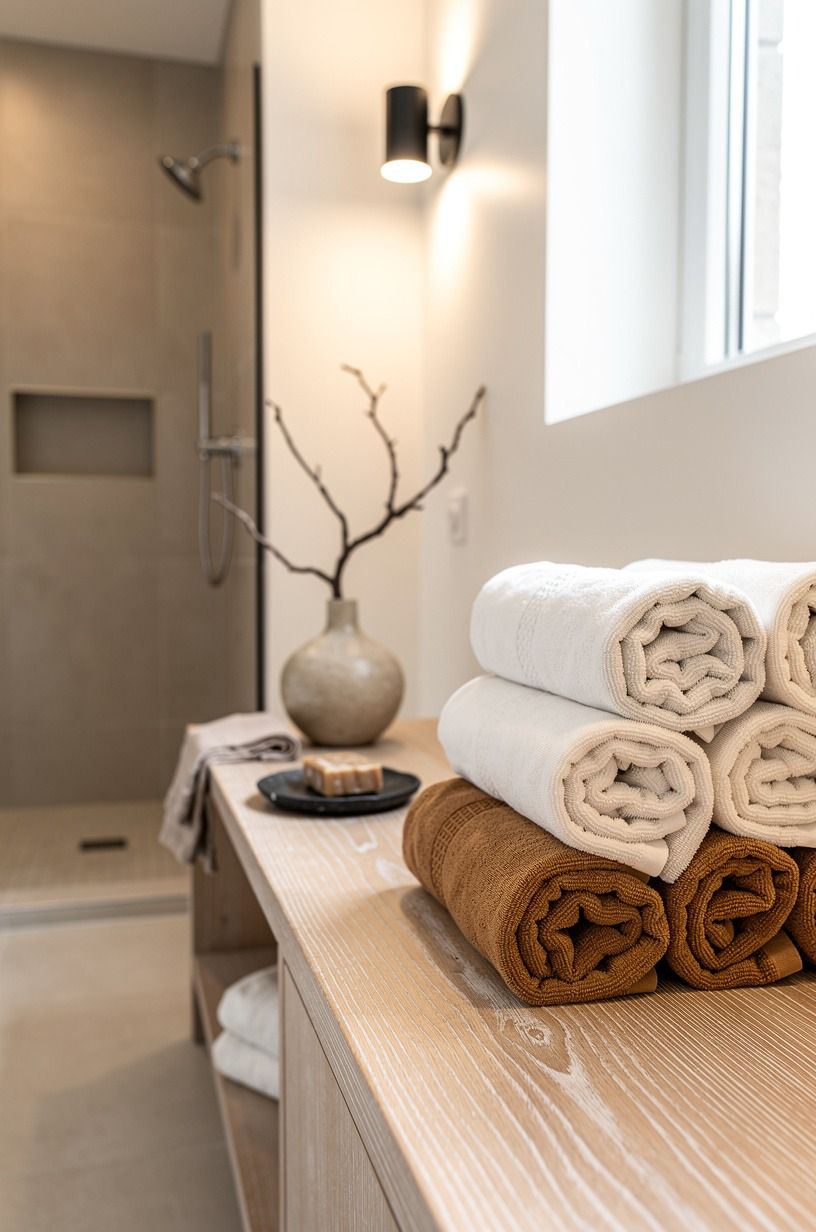
A rolled stack of 600gsm Turkish cotton towels at the dry end of a cerused white oak tray does what a towel bar can't: it puts softness in your sightline while you soak. Two hand towels and one washcloth, rolled tight, slightly offset.
Warm white or camel, not hotel white, with one black accent nearby for contrast. If your bathroom skews minimal, my piece on minimalist bathtub tray decor for small bathrooms shows how to do this with half the objects.
Wash them weekly. Damp cotton sours fast.
13Follow the One-Third Rule
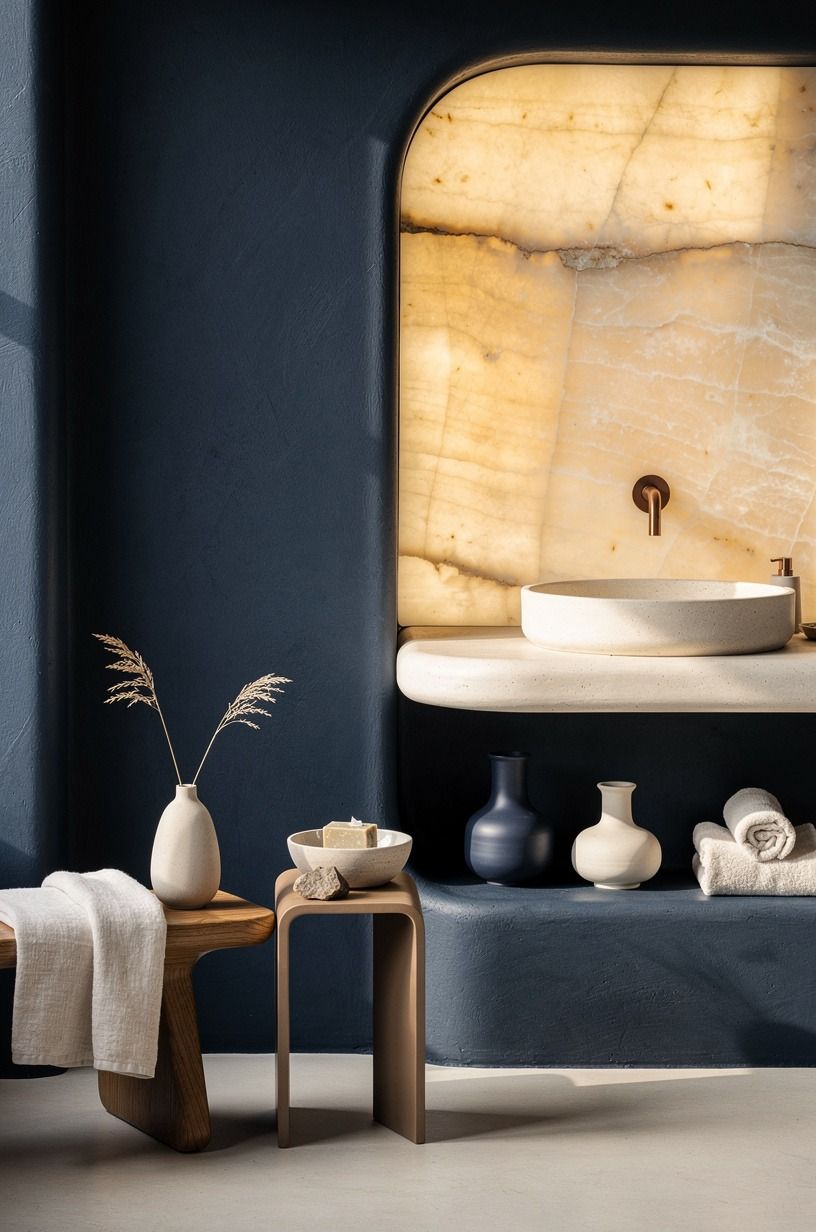
The One-Third Rule keeps a tray from becoming clutter on a stick: fill one third of the surface, leave one third bare, and use the last third for whatever you're actually using that night. On a translucent onyx tray glowing against midnight blue walls, with one copper candle and an ivory linen square, empty surface is what makes the objects look chosen.
Most people fill the whole tray, and it starts reading like a store display. You'll notice the difference the first time you leave real bare space.
It feels calmer. Full stop.
14Hang a Rustic Caddy Off the Tub Edge
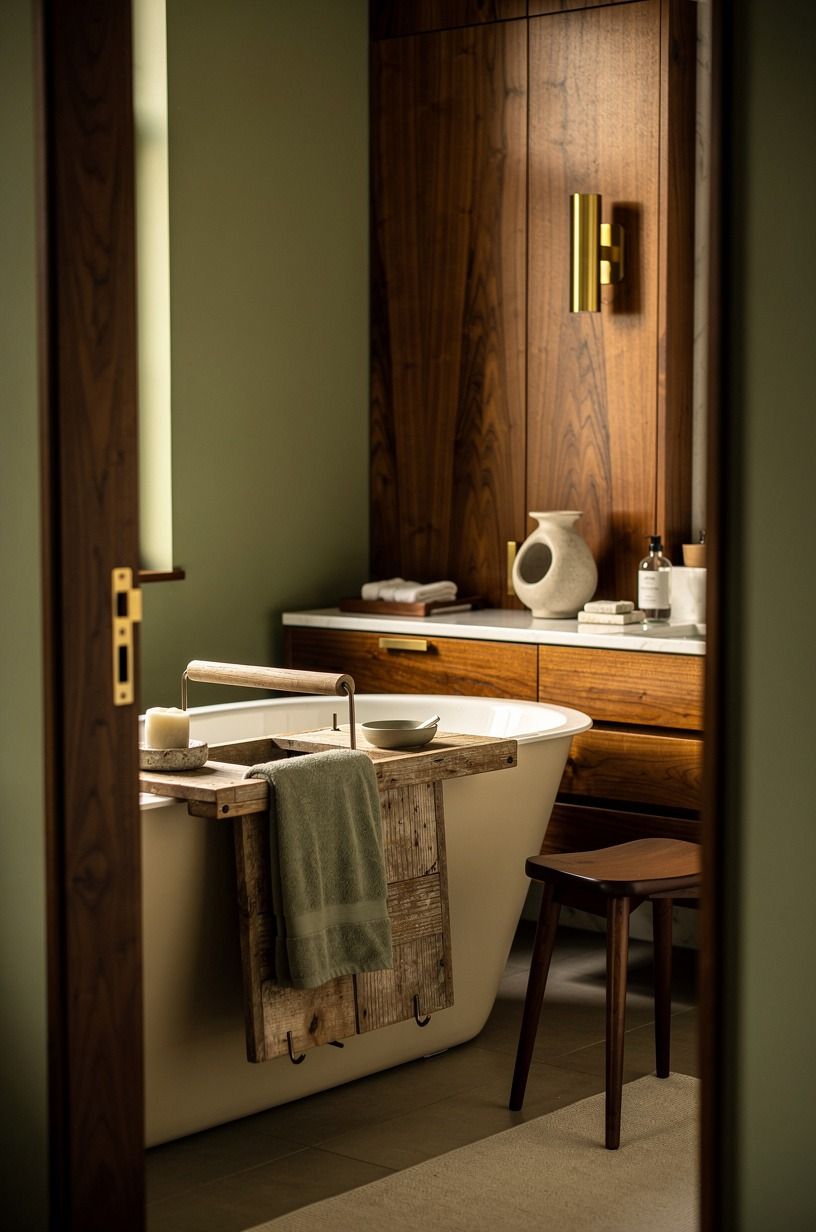
If your tub rim is narrow, a book-matched walnut hanging caddy that drapes over the edge gives you tray energy without needing the full width. It's also renter-friendly, since nothing mounts or drills.
Pair it with a small pothos in a cream stoneware pot on the floor below against sage green walls and the whole corner softens. Pothos loves bathroom humidity, so it basically thrives on neglect.
I'd skip eucalyptus in the shower for this spot. The caddy earns the visual weight better.
15Warm the Walls Behind the Tray
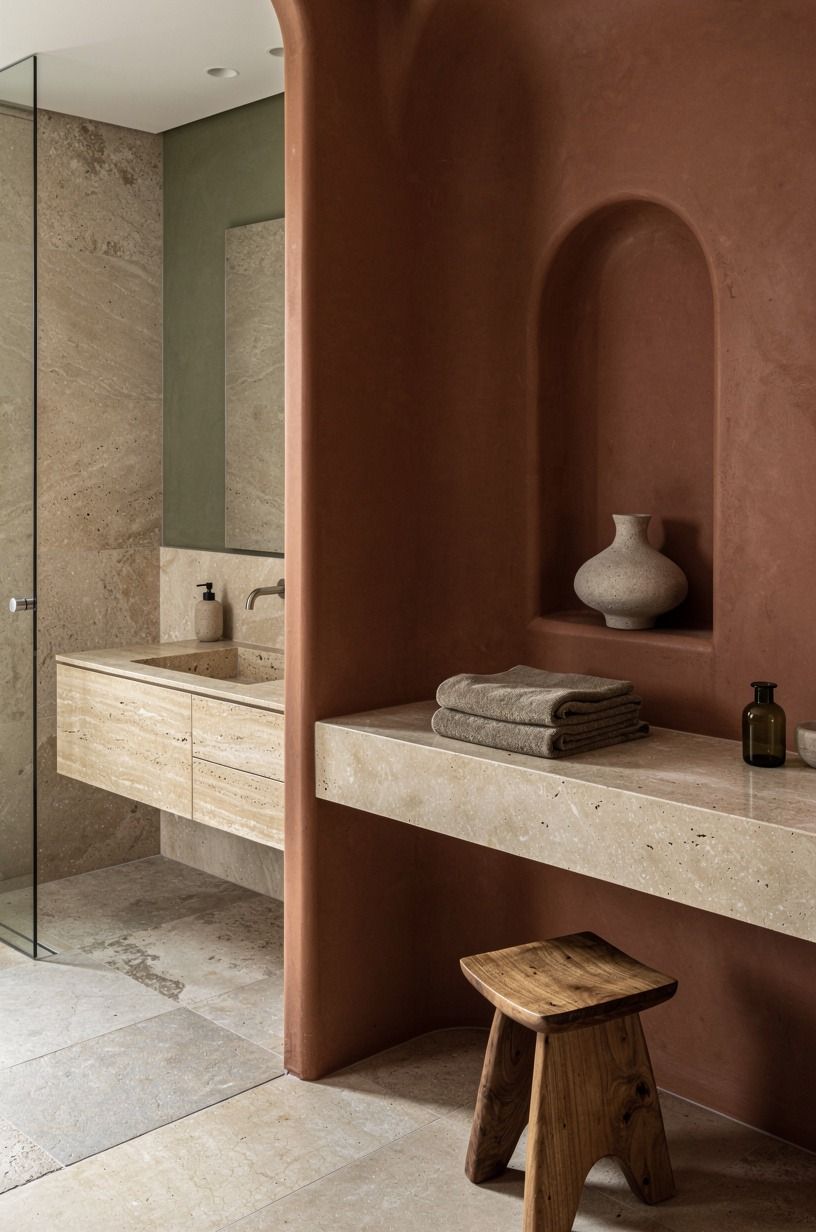
A rustic tray against cold blue-gray paint is a fight the tray loses. The walls set the temperature of the whole scene, and warm travertine tones are the friendliest backdrop: terracotta, stone, olive.
Sherwin-Williams Redend Point (SW 9081) is the warm blush-clay pick that flatters wood, and Benjamin Moore Chestertown Buff (HC-9) leans golden if your room gets northern light. One gallon, one Saturday, about $50 to $70.
If you're drawn to something moodier, the walls in my zellige tile bathroom ideas piece show how glossy handmade tile reflects candlelight.
16Add One Dried Stem, Not a Bouquet
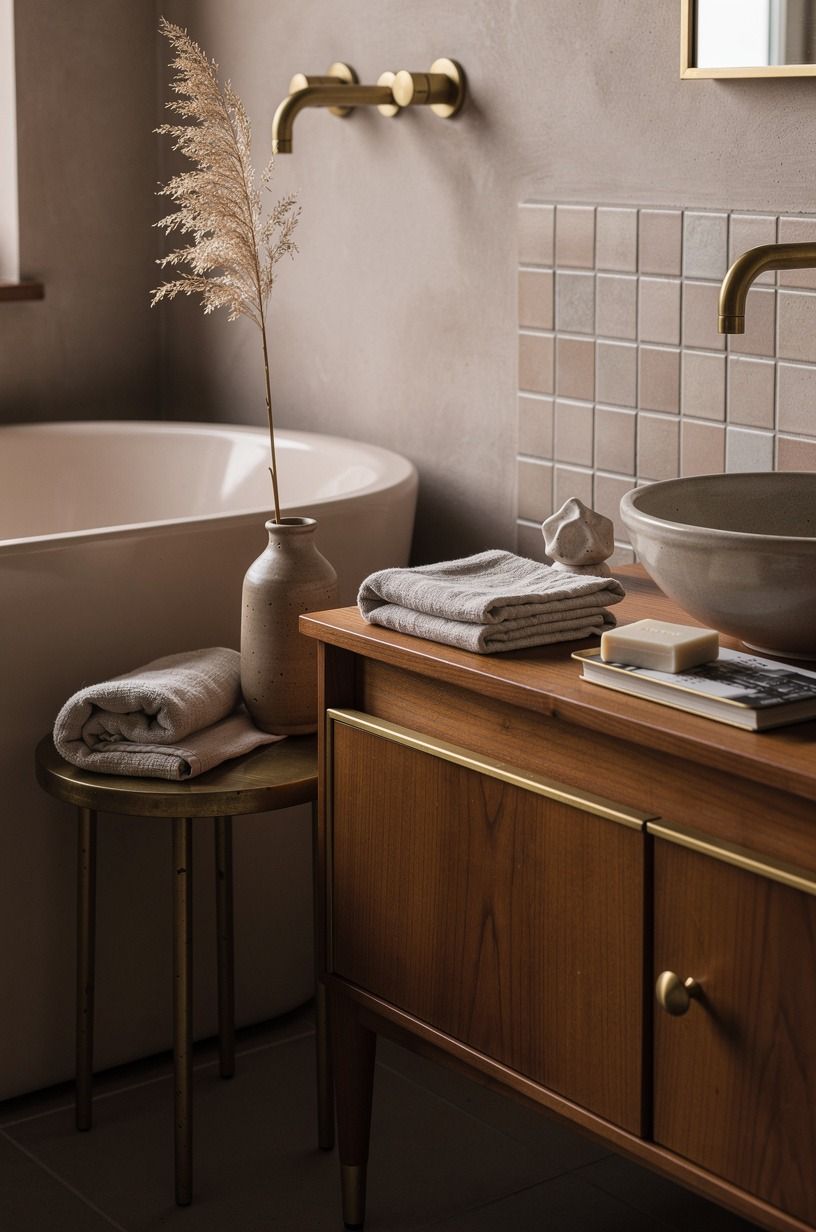
A single stem of dried pampas grass or bunny tails in a small unlacquered brass bud vase is enough, and the metal warms to a soft patina within weeks, right alongside the clay and linen tones around it. A full bouquet on a bathtub tray is a spill waiting to happen, and fresh flowers wilt weirdly fast in steam.
Dried stems hold their shape for months and cost about $8 a bunch. Keep the vase under 6 inches tall so it doesn't block the candlelight. This is the detail people screenshot, and it's the cheapest one here.
Funny how that works.
17Price the Tray, Not the Whole Room
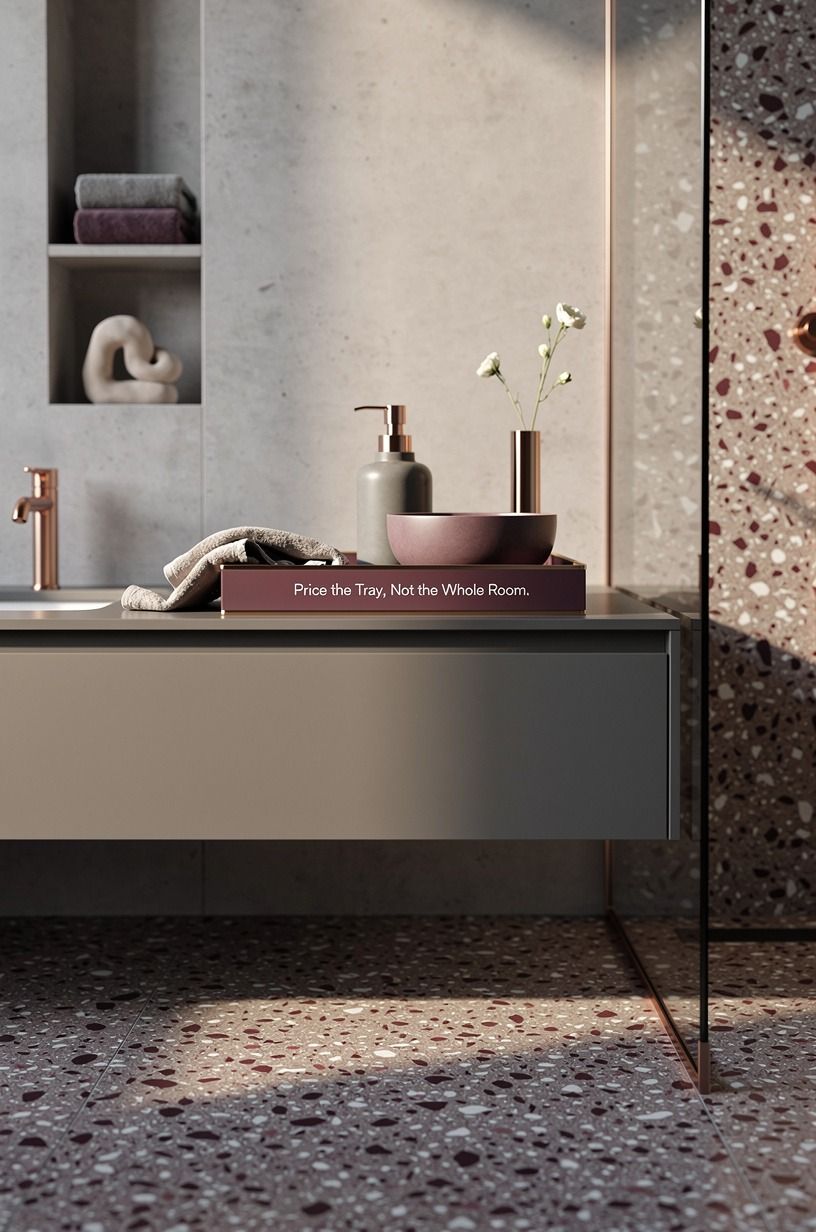
You don't need a renovation budget to get this look, not even against plum walls and oversized-chip terrazzo floors. The tray is the smallest line item in the room and does the most visual work.
18Edit Down to the Minimal Version
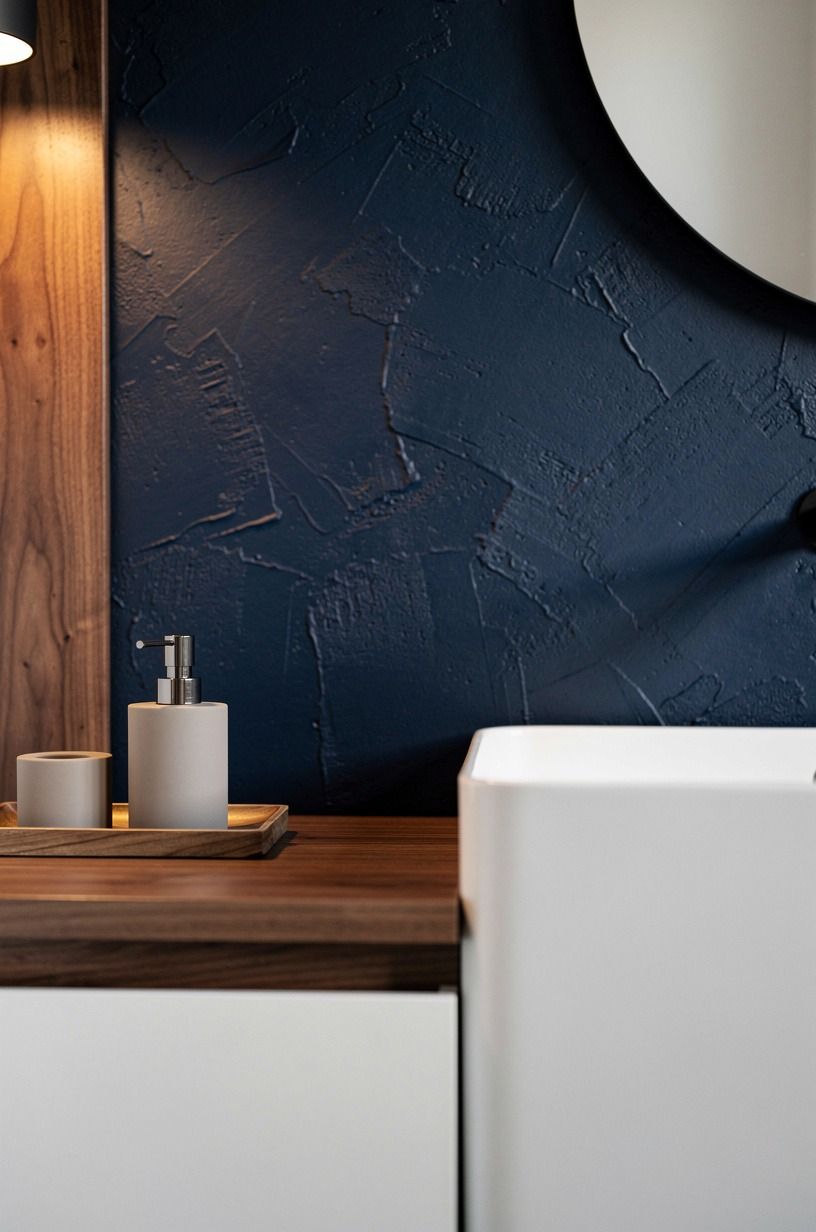
The last idea is subtraction. Once your tray is styled, take one thing off. Then look again the next night and take one more if it still feels busy.
The rustic look dies from abundance faster than from neglect. A bare walnut slab against navy Venetian plaster, one candle, one folded white linen square.
That's the version I come back to in my own bathroom, and it beats my styled attempts most nights. Restraint reads as confidence.
Overstuffed reads as trying, and your eye knows the difference instantly.
Why a $50 Tray Beats a $5,000 Renovation (Most Nights)
I've gone back and forth on this for years, and I've landed somewhere unfashionable: most bathrooms don't need more tile. They need a focal point with warmth in it. Tile is permanent and cold.
A wooden tray is neither, and that's exactly its strength. It gives the room a center of gravity you can change on a whim.
Here's my honest mistake. I once spent a weekend repainting a bathroom vanity because I was convinced the vanity was the problem.
New color, new knobs, the works. The room felt exactly the same afterward.
Two weeks later I put a beat-up oak board across the tub with a candle on it, and the room finally felt like somewhere I'd want to sit for an hour. The vanity was never the issue.
The tub had nothing warm near it, and your eye goes to the tub first in almost every bathroom layout.
The decision framework I use now is simple. Before any bathroom spend over $100, I ask: does this add warmth, texture, or light at eye level from the tub?
If the answer is no, it waits. A Calacatta Gold marble vanity top is beautiful, but you don't see it while you're soaking.
You see the tray, the candles, the wall behind them. Spend there first.
There's also a practical argument nobody mentions. A tray moves with you.
Renters can take it. Sellers can stage with it. It survives trend cycles because warm wood at bath height has read as "spa" for thirty years and will for thirty more. If you want the permanent version of this warmth, materials like the ones in my piece on limestone in a neutral bathroom or the soft walls from these Venetian plaster bathroom ideas get you there.
But start with the tray. Sixty bucks and a Saturday.
It's the highest-return object in the whole room.
The Questions I Get Asked Most
What is the best rustic bathtub tray for a small bathroom?
A narrow solid acacia tray without extending arms is your best pick, since bulky extendable models visually shrink a small room. Look for one under 32 inches long with raised edges. The IKEA bamboo bath lines are a solid cheap test before you commit to a heavier wood.
Where can I buy rustic bathtub tray pieces on a budget?
Start with Target, Wayfair, and Etsy for new trays in the $30 to $80 range, then check Facebook Marketplace and thrift stores for vintage bread boards and barn wood offcuts under $15. The secondhand route usually gets you better wood for less money.
How much does a cozy rustic bathroom refresh cost?
A tray plus candles, linen, and one towel stack runs about $100 to $300 total. A wider cosmetic refresh with paint, a mirror, and textiles typically lands at $200 to $1,200 in the US. Rearranging what you already own costs nothing and often does half the work.
Can I create this look on a budget?
Yes, and it's one of the cheapest rooms to warm up. Zero cost: pull a wood cutting board from your kitchen, roll towels you already own, move a candle from the living room. Under $20, a thrifted board and mineral oil gets you most of the look.
Is a bathtub tray worth it in a small space?
Worth it, and small bathrooms benefit most. A tray gives a tight room one intentional focal point, which makes everything else feel calmer. Keep the styling to the One-Third Rule so it doesn't crowd, and choose a tray that lifts off easily for cleaning.
Is a rustic tray a good idea for a rental?
Yes, because nothing installs. A tray, a peel-and-stick robe hook, and a tension rod for a linen curtain are all removable swaps with zero damage. You take the whole look with you when the lease ends, which no tile job will ever do.
The One I'd Buy First
If I had to pick one, I'd start with the live-edge walnut slab. Warmth doesn't layer onto a cold room; the tray sets it, and the candles and linen build on top. Pin this for later, and try the DIY bathtub tray build this weekend.