
 by
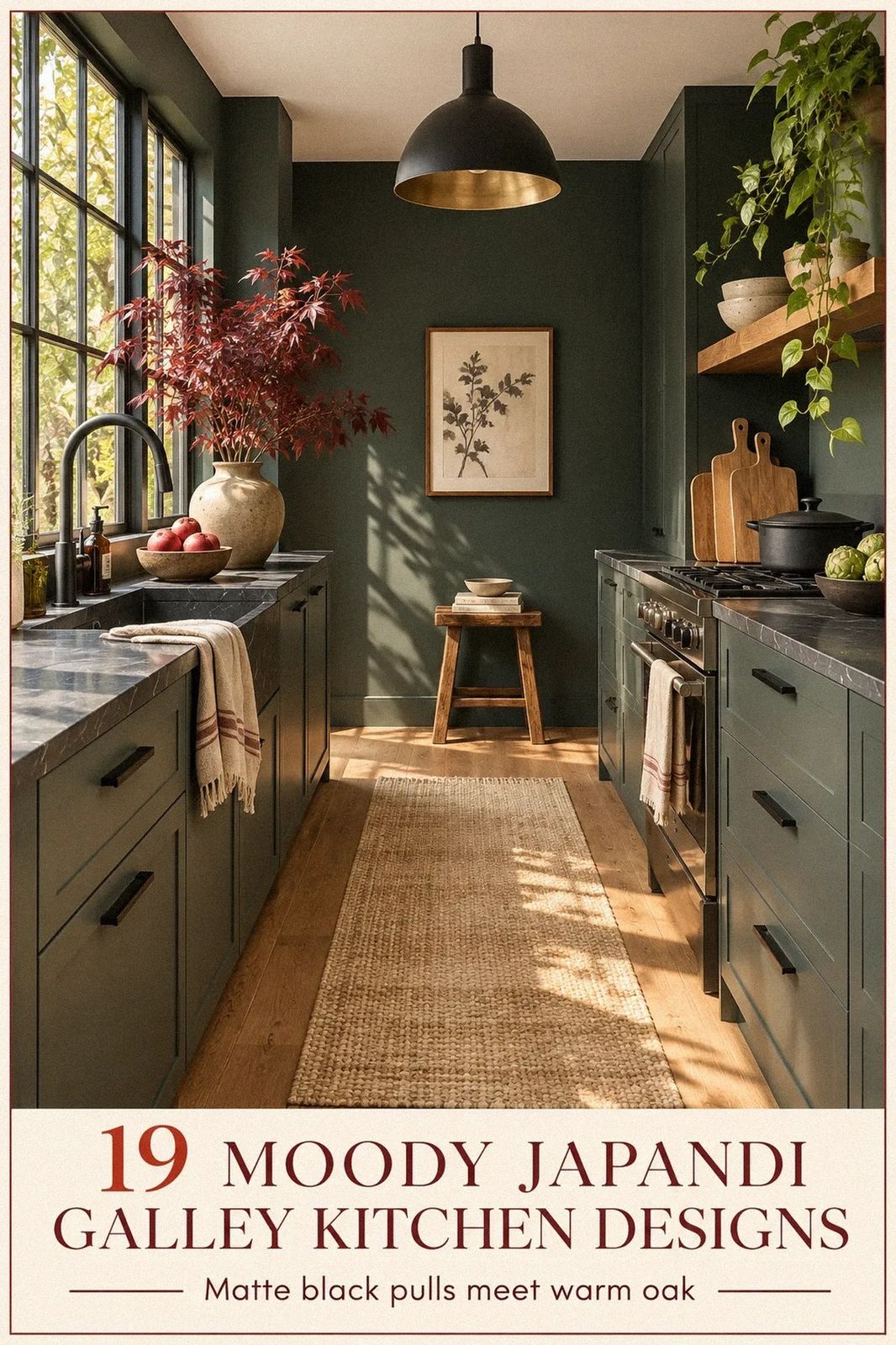
Moody Japandi galley kitchen ideas work best when dark color meets pale wood, soft light, and clear walking space. I learned that after painting a narrow kitchen too black and watching it feel cramped by 3pm. You don't need a full renovation. You need warmer contrast, useful storage, and fewer competing finishes.
- Paint one run Farrow & Ball Studio Green
- Can the Two-Wood Rule keep the room calm?
- Swap upper cabinets for open shelves
- What makes a wabi-sabi backsplash work?
- Build the Three-Height Light Stack
- Let a runner anchor the galley
- Let Benjamin Moore White Dove frame the sink
- Map the narrow work triangle
- Why use one reflective surface?
- Hang a rail for everyday tools
- Let Evergreen Fog soften the cabinet line
- Replace a bulky island with a work table
- Give the ceiling a warm companion color
- How should linen frame a small window?
- Choose oak over painted maple
- Let one sculptural pendant carry the room
- Style the counter with three useful objects
- Keep the Three-Color Pantry Palette
- Finish with a quiet coffee corner
1Paint one run Farrow & Ball Studio Green
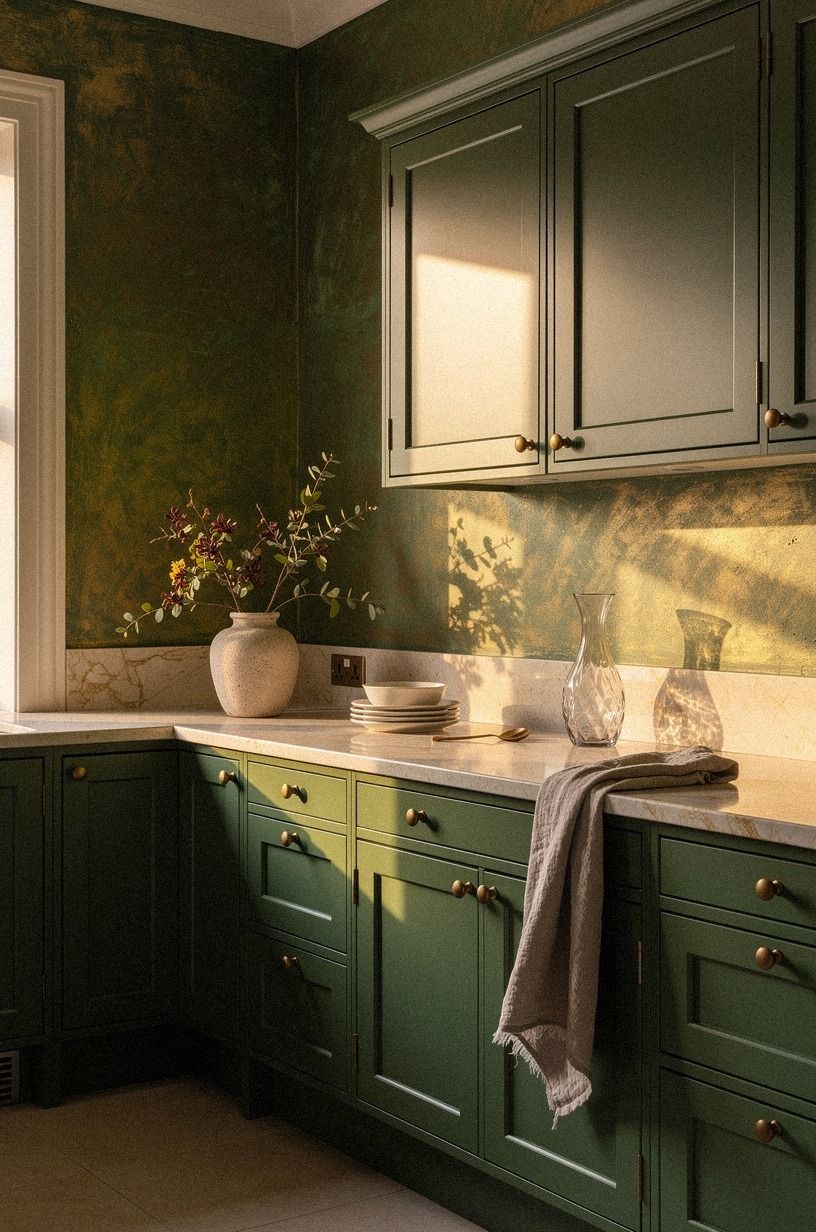
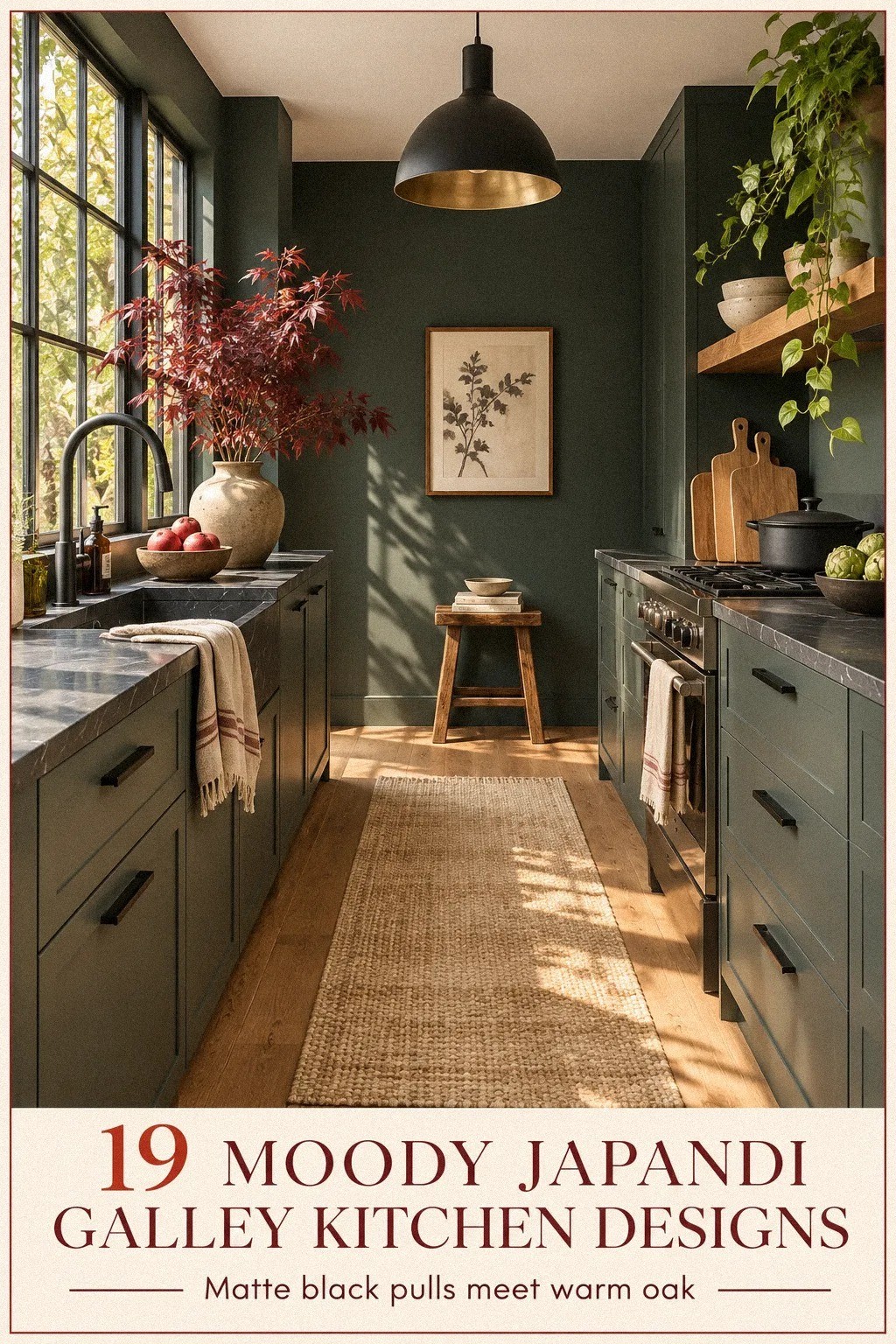
A black Japandi kitchen doesn't need black cabinets on both sides. Paint one cabinet run Farrow & Ball Studio Green No. 93, then keep the opposite wall lighter so your eye has somewhere to rest.
The green looks almost charcoal in evening light, but its earthy undertone keeps the galley from feeling severe. If you're working with oak fronts, paint the lower cabinets and leave the uppers natural.
I’d skip painting every surface the same dark shade. It can flatten a narrow room, especially if your ceiling is low.
Use hand-applied Venetian plaster on the lighter wall, a 36-inch counter height, and one warm globe above the sink. For more dark kitchen direction, browse these dark oak kitchen ideas for a moody dramatic look.
You'll get depth without losing the grain that makes Japandi feel alive.
A single dark run also gives you a clear starting point. Once the cabinets are painted, choose the runner, hardware, and wall color in response to that decision. That's the whole trick!
2Can the Two-Wood Rule keep the room calm?
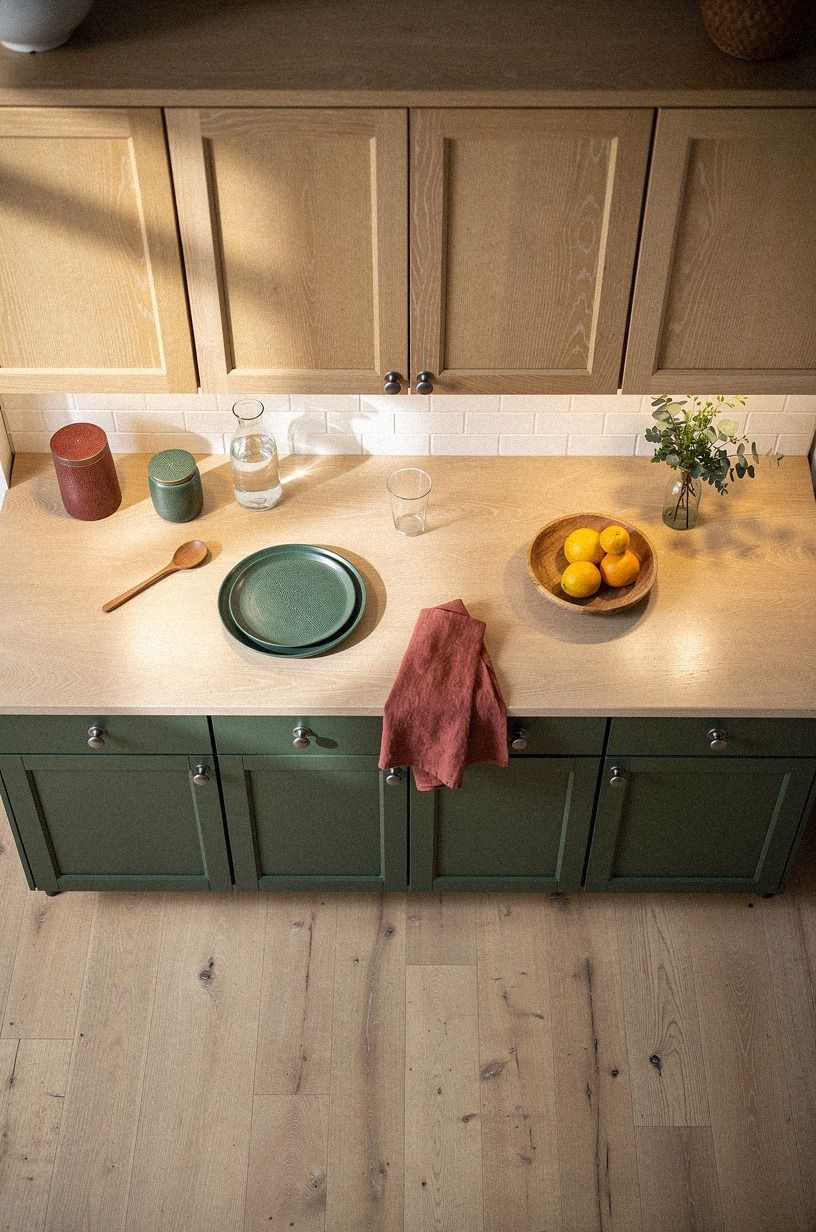
The Two-Wood Rule keeps your Japandi black kitchen from looking like a showroom display.
3Swap upper cabinets for open shelves
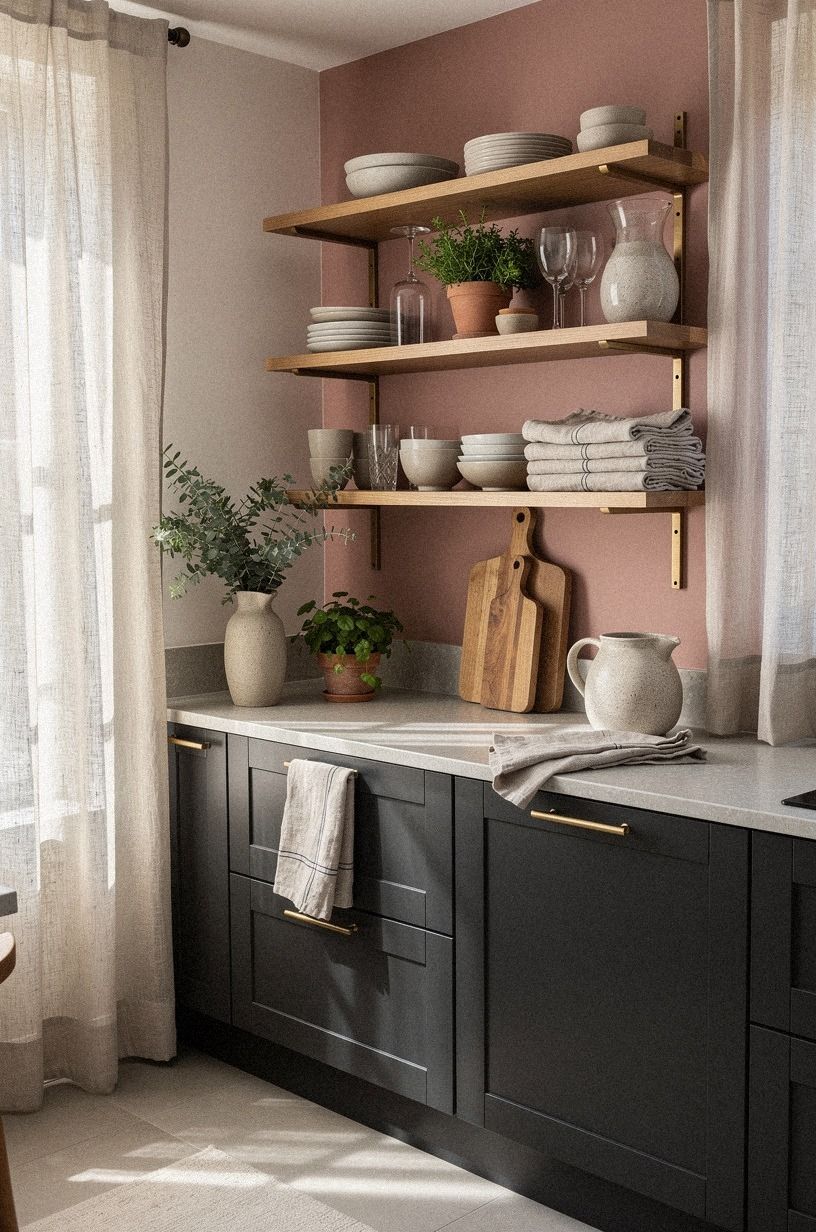
Open shelving gives a dark kitchen apartment layout a little breathing room, but only if you edit what sits on it. I’d install two shelves on one wall, not shelves everywhere. Unlacquered brass brackets, warm oak boards, and a folded piece of washed Belgian linen will look intentional.
Twenty mismatched pieces will look like clutter with better lighting.
Keep the lowest shelf at least 18 inches above the counter because that's the standard backsplash gap between a work surface and upper cabinets. Your everyday plates can live there, while less attractive appliances stay behind a cabinet door. I made the mistake of putting a kettle on an open shelf, and the cord became the first thing anyone saw.
If you're tempted by more storage, these dark moody farmhouse kitchen ideas show how wood and shadow can work together. You can also borrow the restrained shelving approach from these dark oak kitchen ideas for a moody dramatic look. The shelves should make the room feel lighter, not give you another place to collect things.
4What makes a wabi-sabi backsplash work?
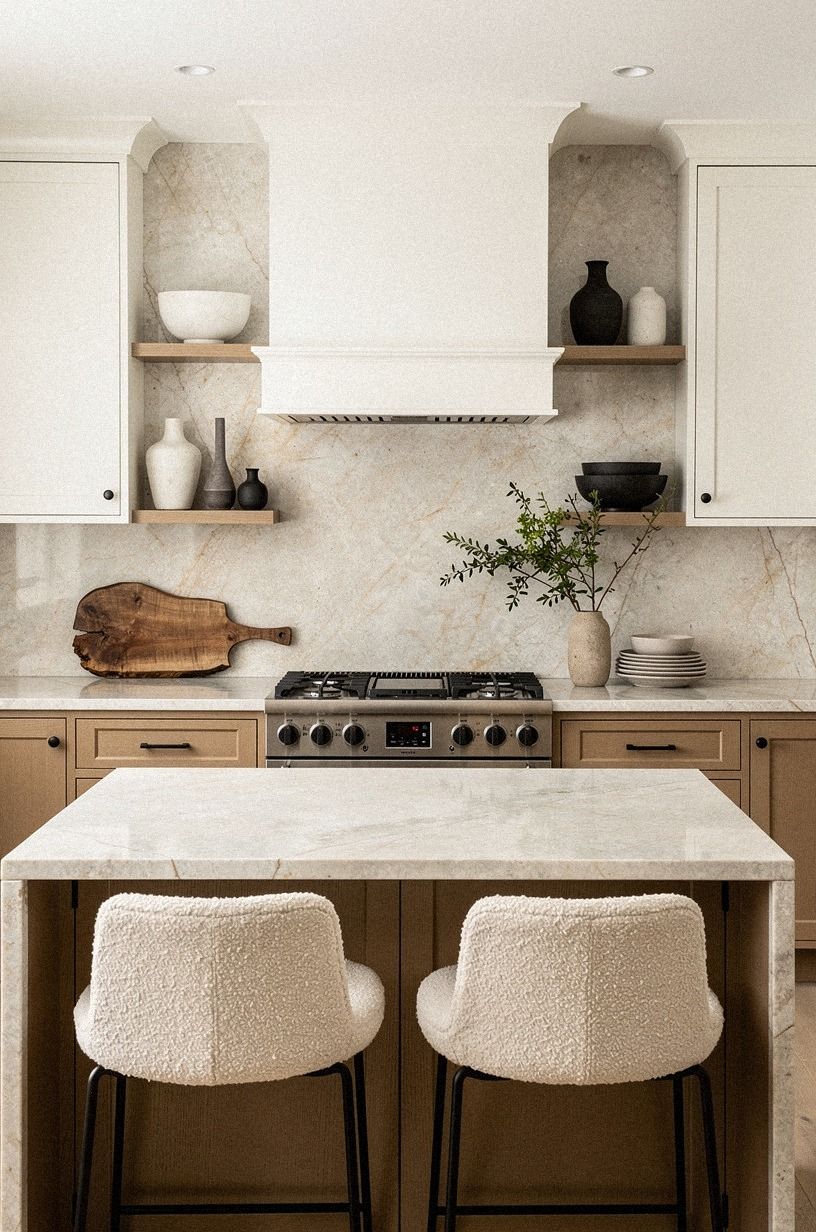
A wabi-sabi kitchen backsplash should show variation, because perfect repetition fights the relaxed side of Japandi.
5Build the Three-Height Light Stack
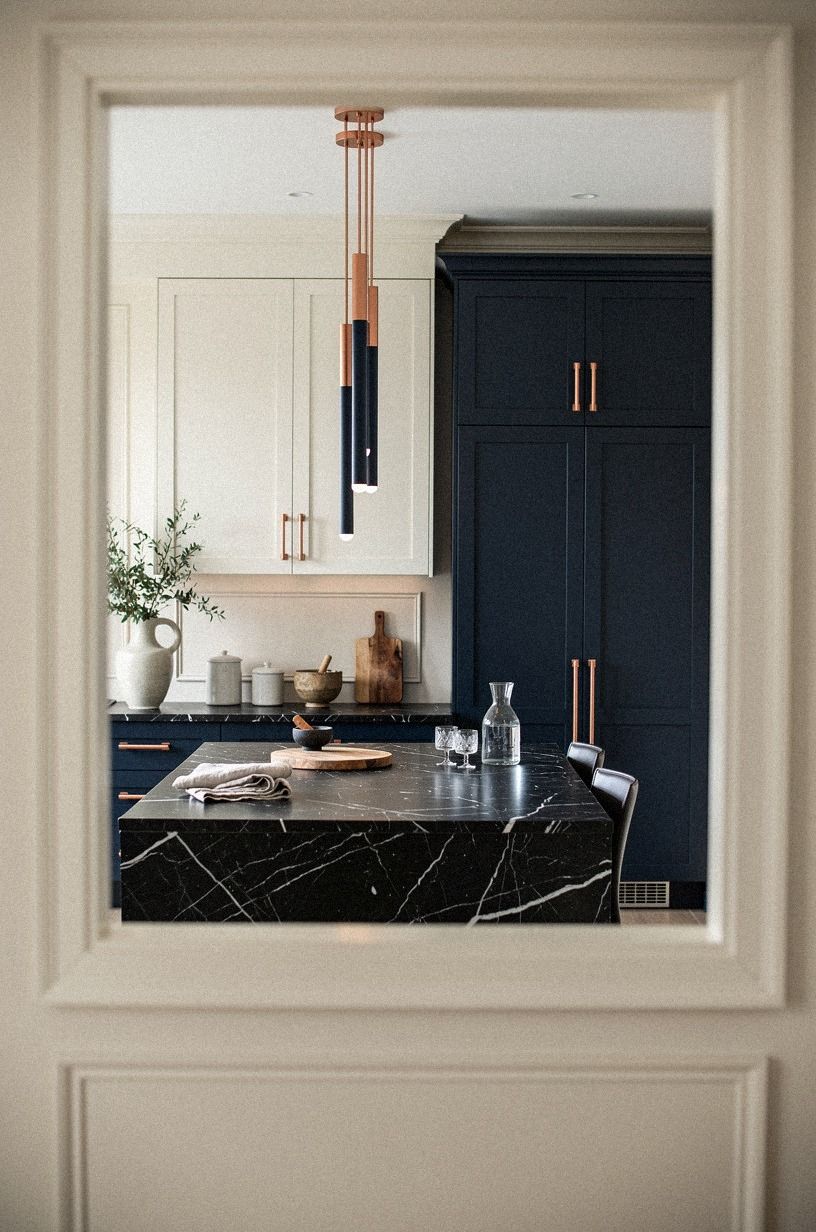
The Three-Height Light Stack uses ceiling light, counter light, and a low glow to keep your moody Japandi galley kitchen warm after sunset. Start with dimmable overhead lighting, then add 2700K LED strips under the upper cabinets and one small lamp on a safe counter corner. You'll notice the room feels softer because the light comes from several levels.
Don't rely on one pendant in the center. It creates a bright island of light while the cabinet faces disappear.
If you're styling a rental, use a plug-in picture light or a rechargeable lamp with a hidden cable channel. I’d choose a warm ivory shade over clear glass, with a Nero Marquina black marble accent nearby, because it diffuses glare across dark paint.
For more ideas, save these warm kitchen decor ideas for cold days and these dark moody cottage kitchen ideas. That layered glow makes a narrow room feel inviting. It changes the kitchen completely!
6Let a runner anchor the galley
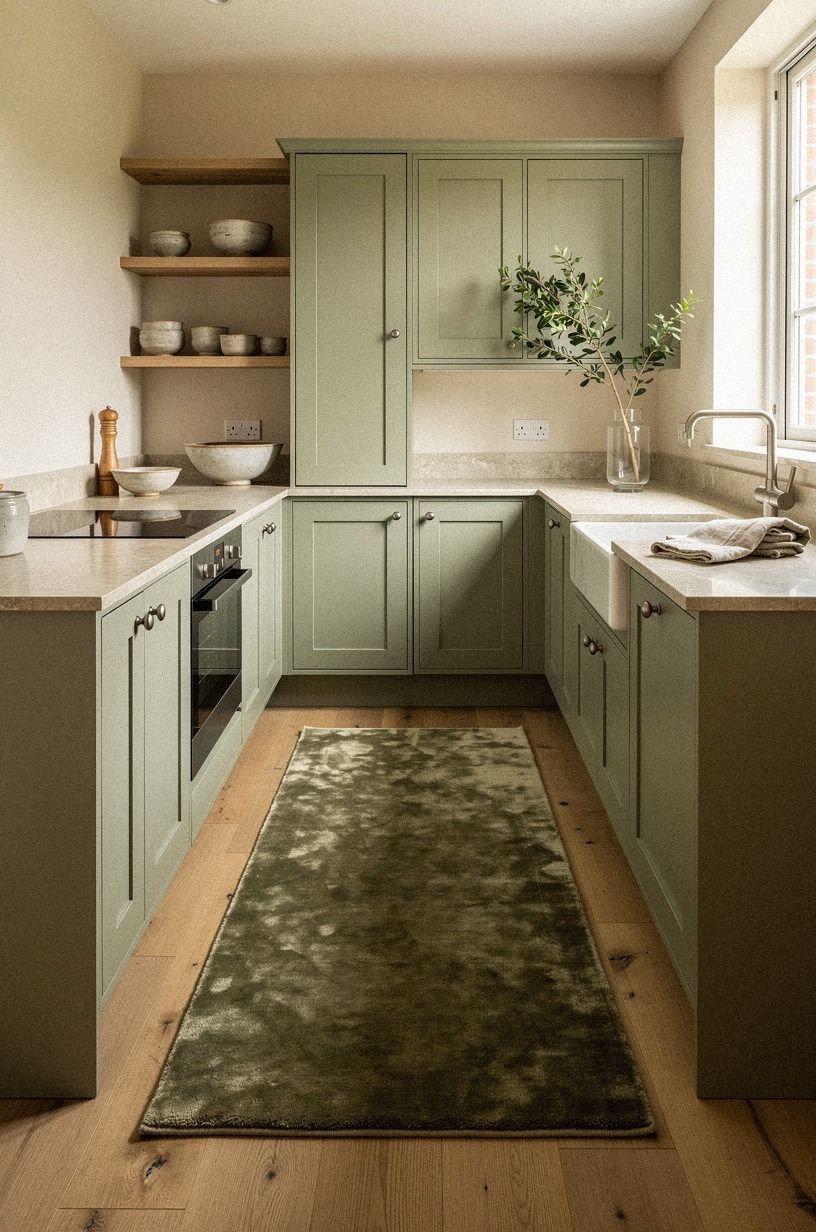
A runner gives your dark kitchen apartment a visual center, but the wrong size can make the floor feel chopped up.
7Let Benjamin Moore White Dove frame the sink
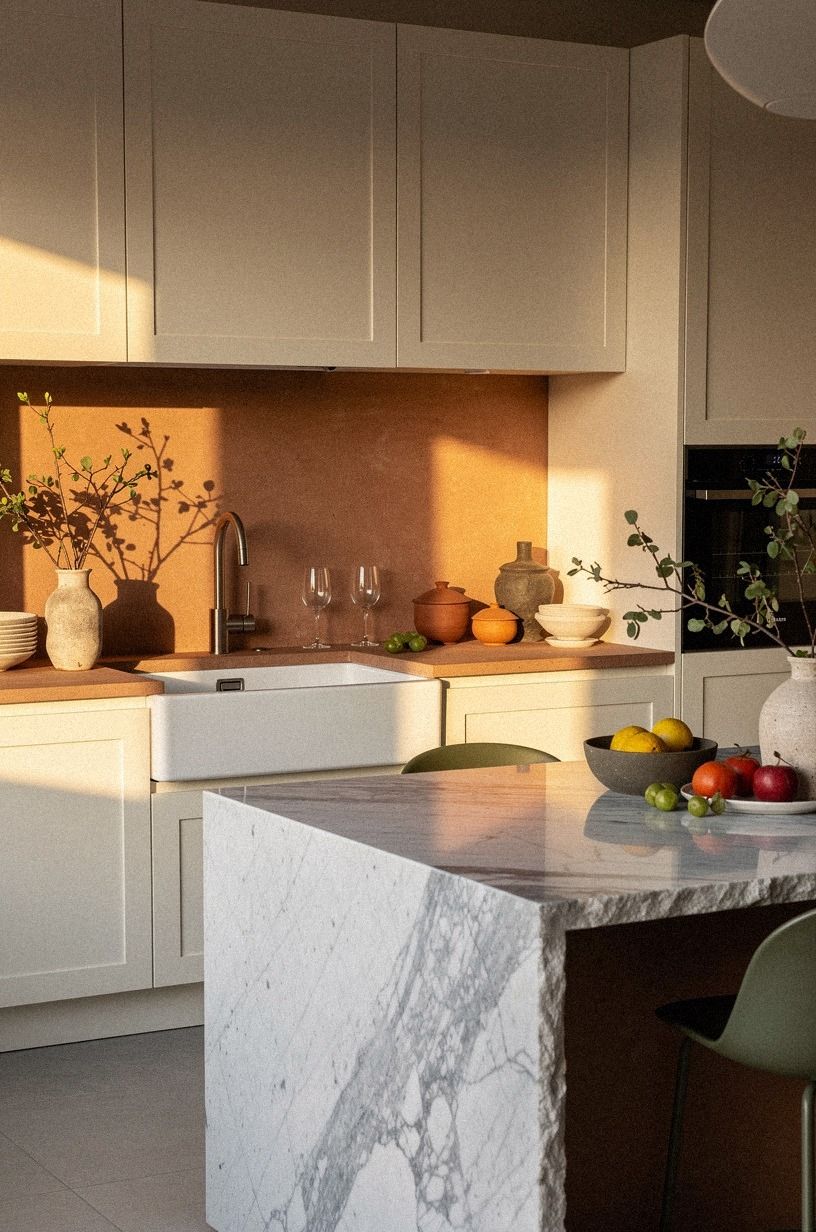
A sink wall gives you one of the easiest places to add personality. Pair Benjamin Moore White Dove OC-17 on the wall with a deep green cabinet run and a Carrara marble counter with subtle grey veining. The pale paint reflects daylight around the sink, while the darker base keeps the kitchen grounded.
I’d skip a shiny chrome faucet if your goal is quiet warmth. It can look cold beside walnut and glazed tile.
A matte black bridge faucet works well, but only if you already have black elsewhere. Your best finish is the one repeated on two or three small details, such as a shelf bracket and cabinet knob.
For another strong color direction, see these dark moody cottage kitchen ideas and these dark moody farmhouse kitchen ideas. You can keep the sink area bright without turning it into a separate style.
8Map the narrow work triangle
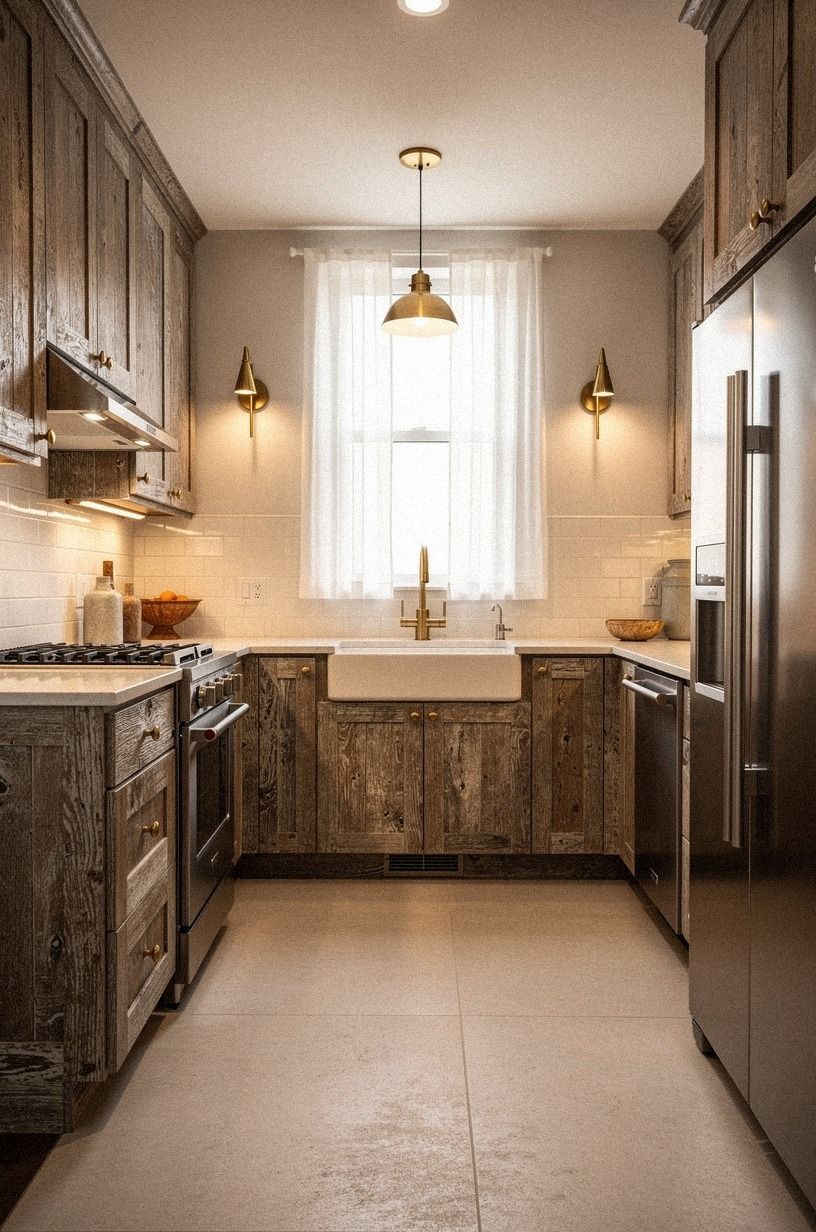
A galley kitchen works when the refrigerator, sink, and cooktop form a short, logical route. Keep the most-used tools between those points, then store occasional items higher or farther away. Reclaimed weathered teak storage can help at the end of the room, but it shouldn't block your prep zone or turn the walkway into a storage aisle.
You'll want at least 42 to 48 inches of clearance around any island or movable worktable. In a truly narrow room, a slim rolling cart may serve you better than fixed cabinetry. I’d rather see one useful 16-inch cart than a bulky island you have to squeeze around.
Measure with cabinet doors open, because your kitchen has to work while you're cooking, unloading, and turning around. A beautiful layout that fails during the dinner rush isn't a useful layout.
9Why use one reflective surface?
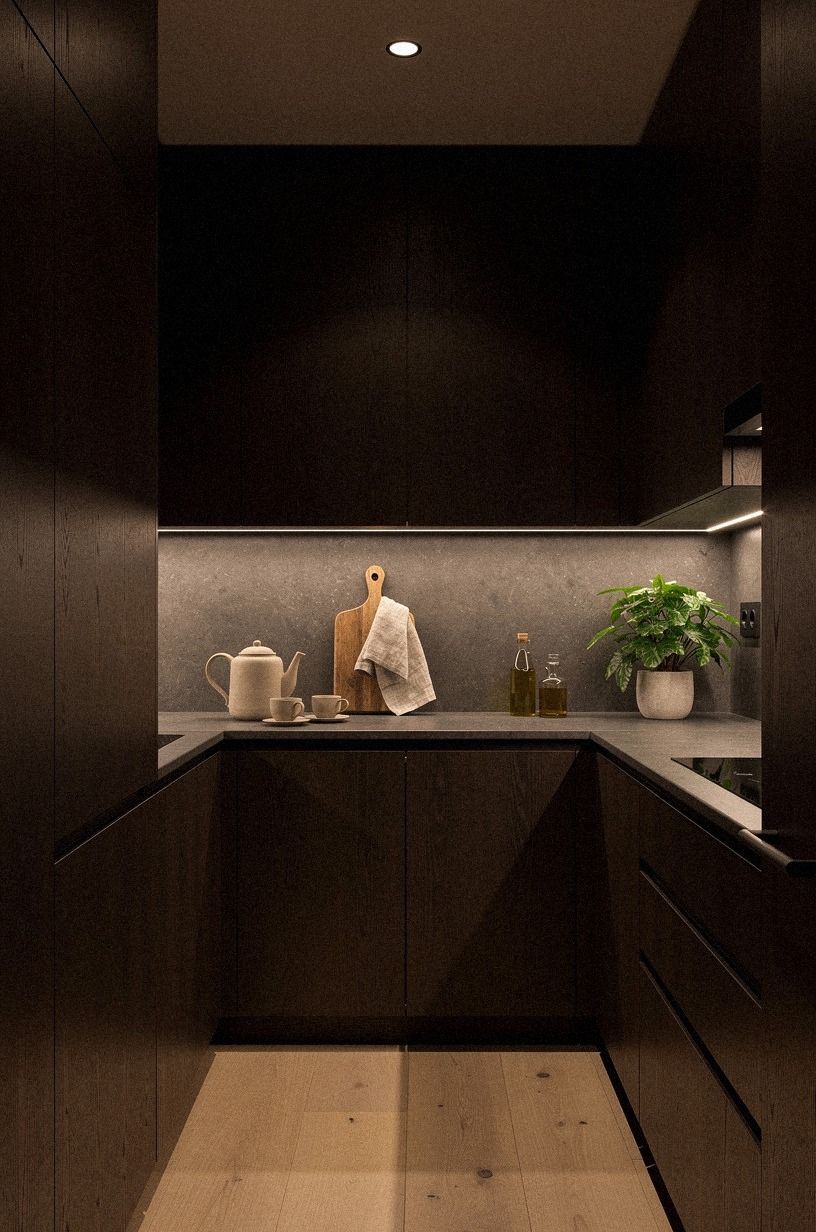
Matte cabinets absorb light, so a single reflective finish keeps your black Japandi kitchen from becoming visually heavy.
10Hang a rail for everyday tools
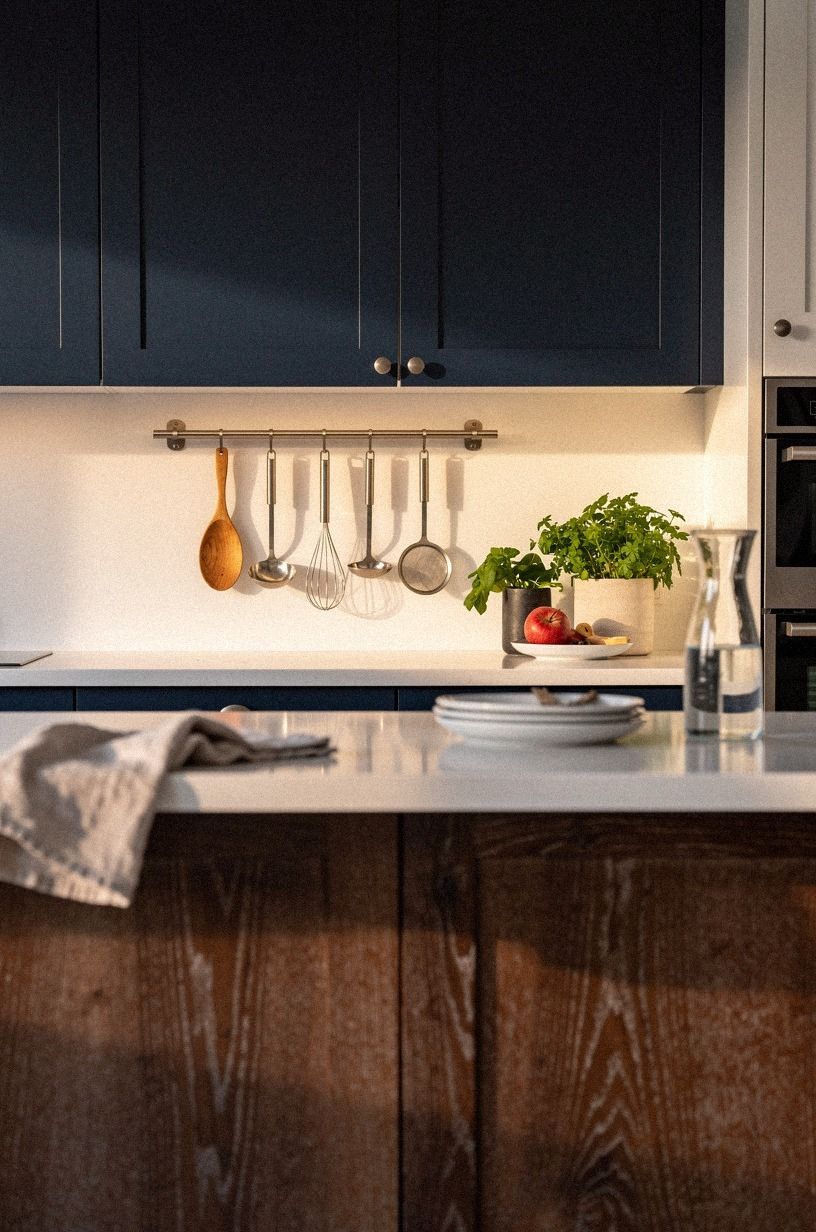
A wall rail can make your galley feel organized without adding another cabinet block. Use cerused white oak with aged bronze hooks, then hang only the tools you reach for every day: one ladle, a wooden spoon, kitchen shears, and a small colander. Your hands can grab what they need, and the counter stays clearer for chopping.
I’d keep the rail on the prep side, away from steam and grease if possible. You'll need enough wall depth for handles without making the passage feel tight. A 24-inch rail is often enough for a small kitchen, though you should measure your own wall before buying anything.
Add one small herb pot beneath it, but don't turn the rail into a display of every utensil you own. The useful pieces should look like part of the room, not a shop wall.
11Let Evergreen Fog soften the cabinet line
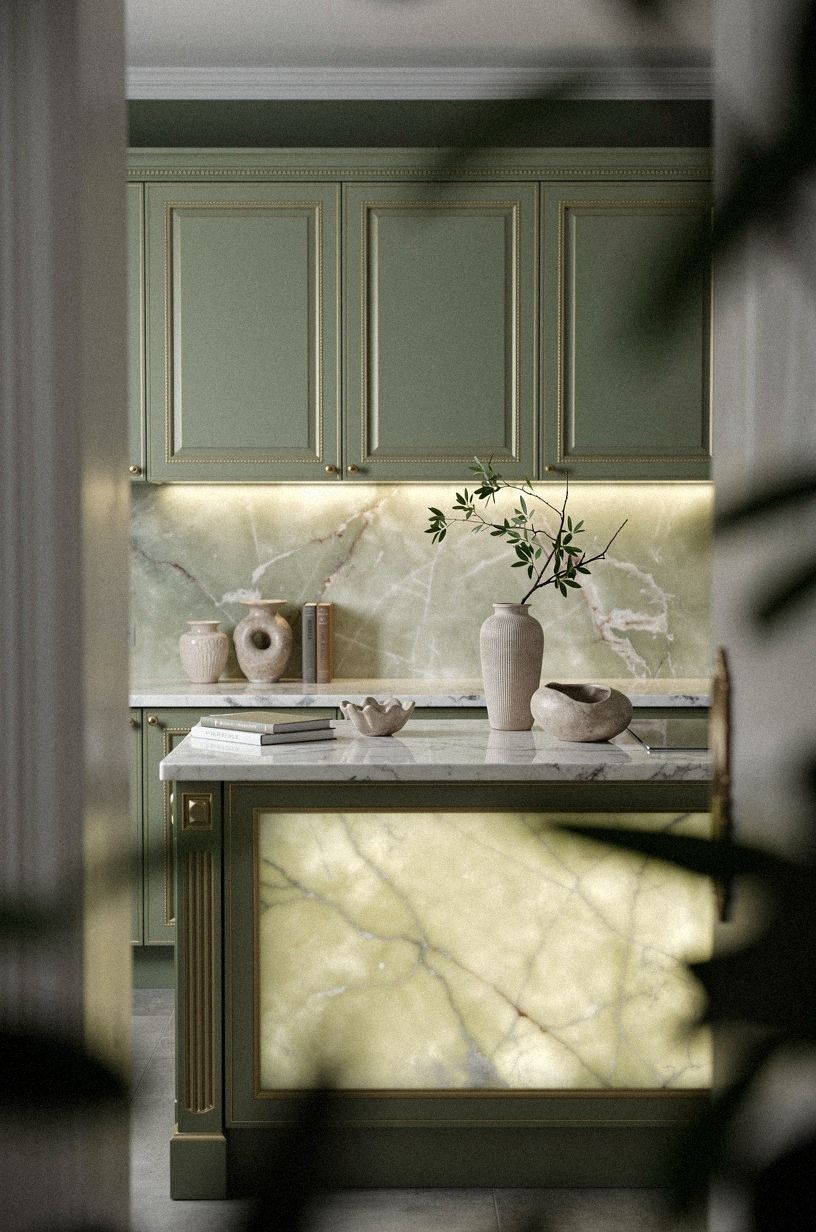
The Low-Contrast Cabinet move makes a dark kitchen apartment feel taller by keeping cabinet, wall, and counter values close together. Pair Sherwin-Williams Evergreen Fog SW 9130 with a warm gray-beige wall and a backlit translucent onyx surface. The edges recede, so the room reads as one calm volume instead of several competing rectangles.
You'll want a stronger contrast near the floor or ceiling so the space doesn't look washed out. A walnut toe-kick or dark runner can do that job. I’d avoid bright white walls beside deep green cabinets unless your room gets strong daylight all day.
That contrast can feel crisp at noon and harsh at breakfast. For softer examples, browse these dark and moody bedroom ideas and borrow their color balance. You can also compare the wood-to-paint relationship with these dark oak kitchen ideas for a moody dramatic look.
12Replace a bulky island with a work table
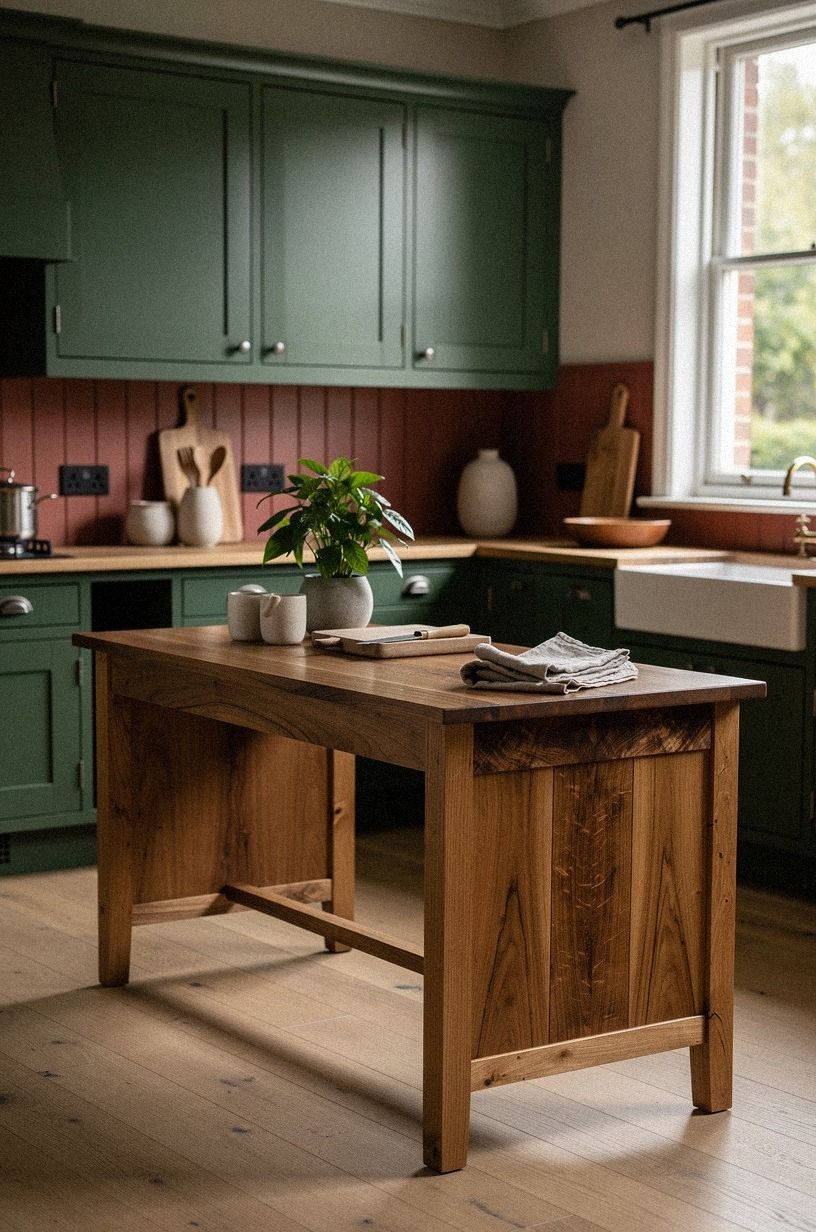
A freestanding work table gives you prep space without permanently narrowing the room. Choose a book-matched walnut work table and tan leather stools only if you have enough clearance, then keep the table shallow enough for cabinet doors to open behind you. Your kitchen should still allow two people to pass without a sideways shuffle.
I’d choose a 24- to 30-inch-deep table over a full island in most galley layouts. The furniture will feel lighter, and you can move it when you're hosting. If your passage is tight, skip seating and use the table as a landing zone for groceries.
You'll gain flexibility without committing to a remodel that changes every cabinet line. A simple table can also move into another room later, which makes it easier to justify than a permanent island.
13Give the ceiling a warm companion color
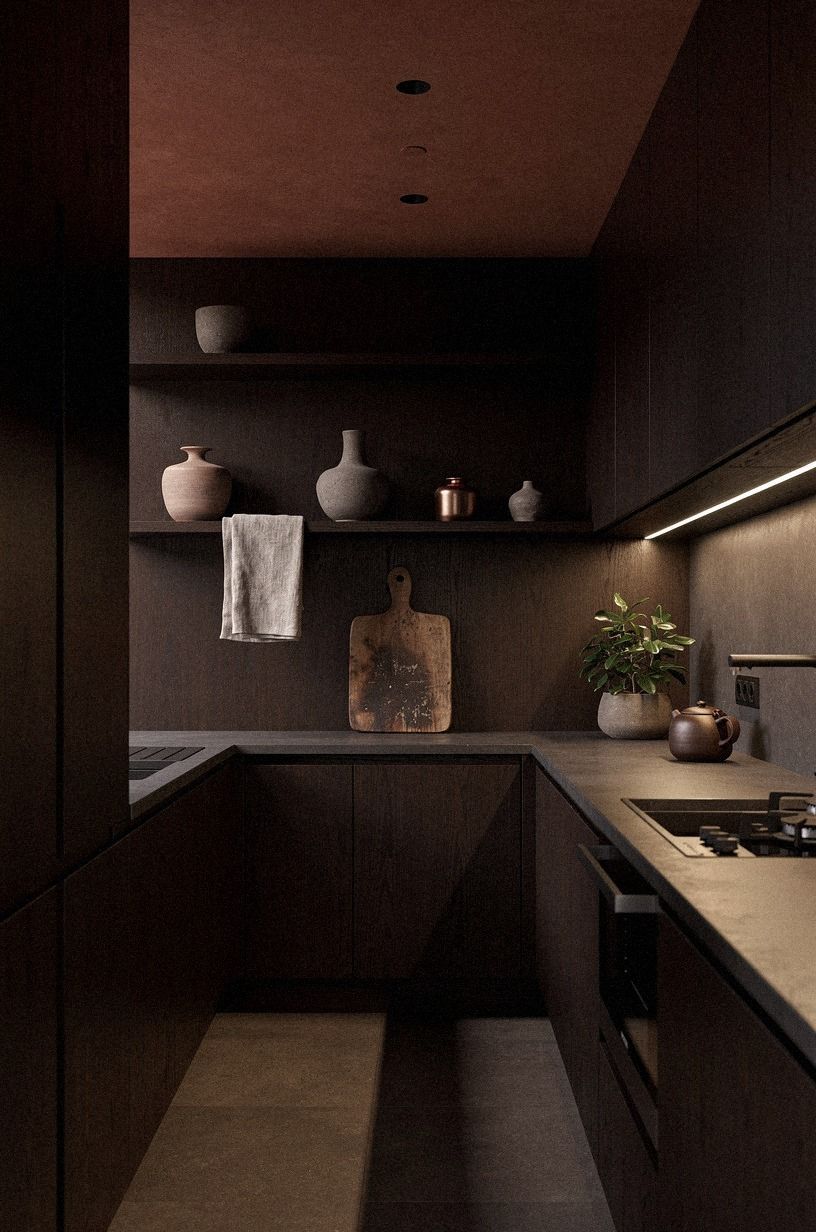
A warm ceiling can make a moody Japandi galley kitchen feel sheltered instead of closed in. Try a warm travertine tone above darker cabinets, especially if your ceiling receives indirect northern light. The stone tone softens the transition between wall and ceiling, and it won't look as stark as bright white under warm bulbs.
You'll want to test a sample at morning, noon, and night because dark kitchens change dramatically across the day. I’d skip a cool gray ceiling. It can pull green paint toward blue and make natural wood look dull.
Paint the trim in the same family if you want the room to feel taller. And if you're working around old cabinets, a ceiling refresh can carry more visual weight than new knobs.
14How should linen frame a small window?
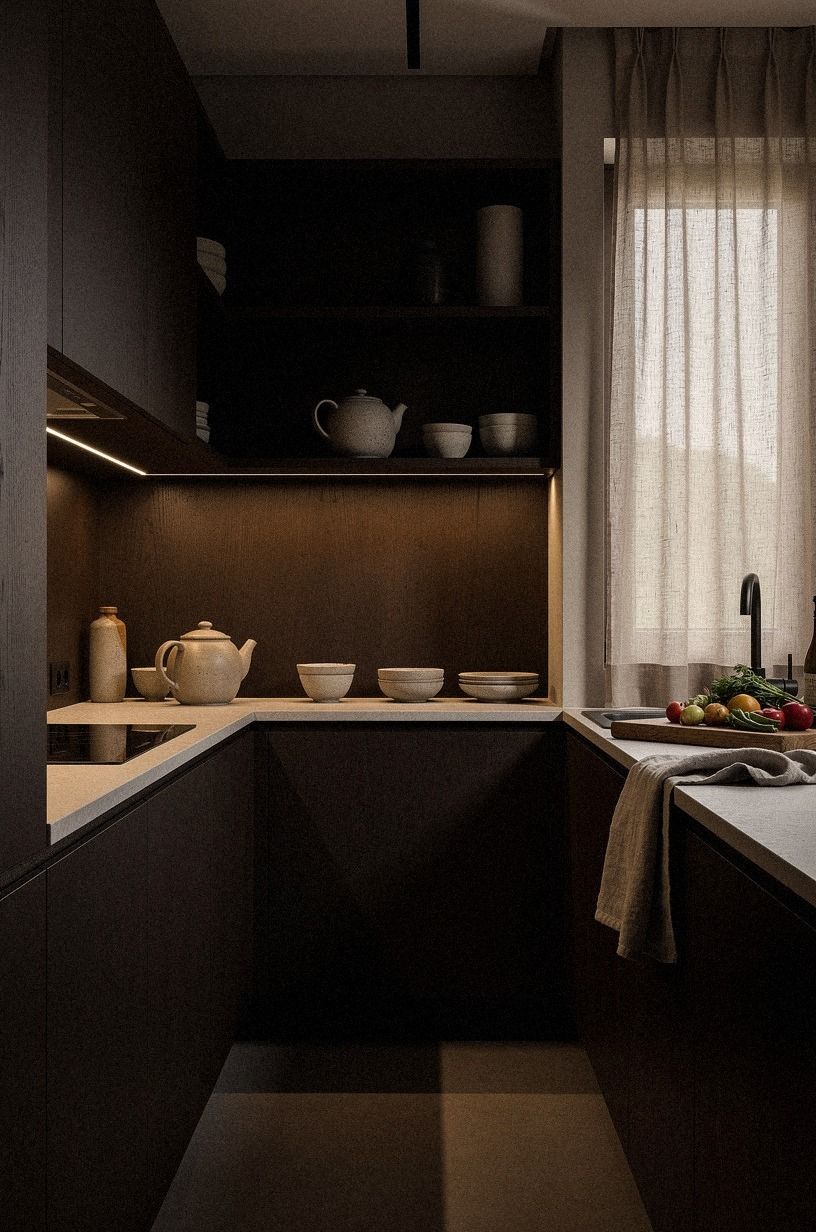
A small window deserves softness, especially when the cabinets around it are dark.
15Choose oak over painted maple
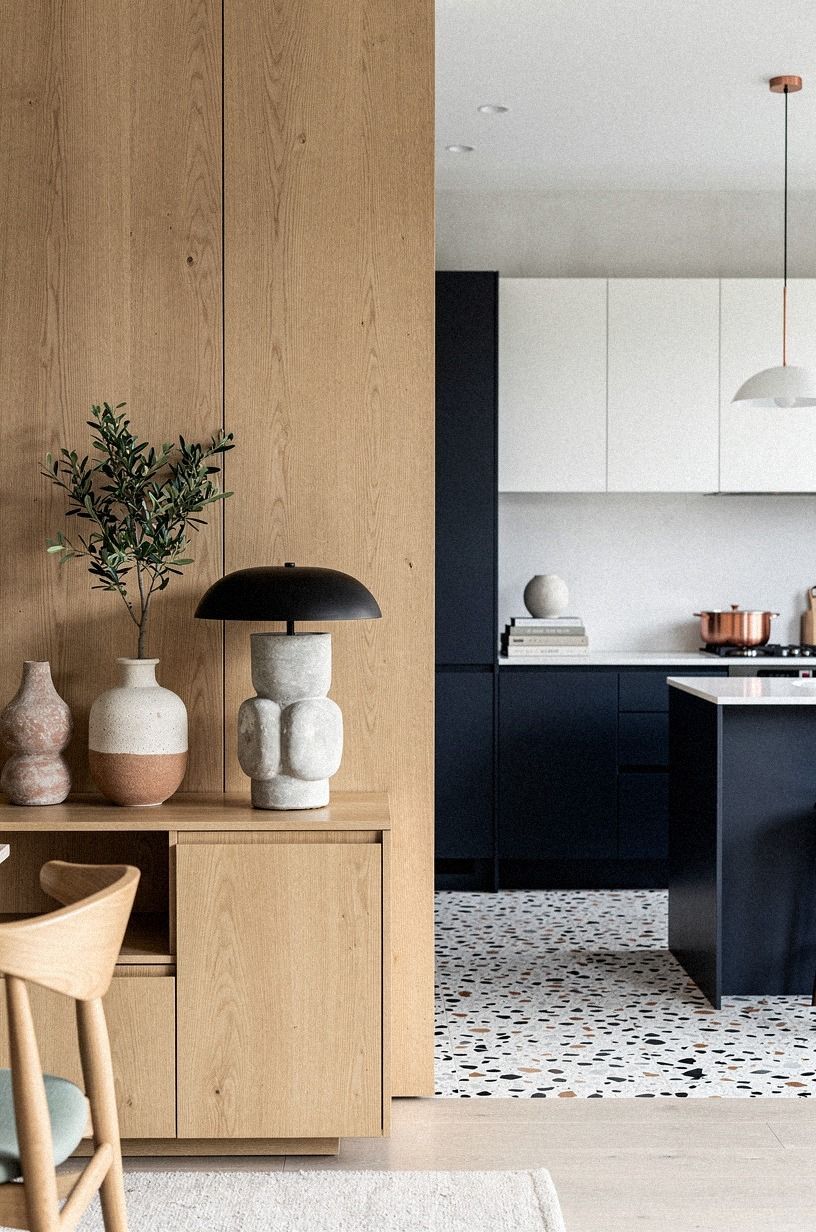
Oak over painted maple is my favorite contrast for a warm, dark Japandi kitchen. The grain gives your eye something natural to follow, while darker painted cabinets provide weight. Try white oak slab fronts with a water-based matte finish, then use the paint on the opposite run or lower cabinets.
I’d avoid a faux wood print with a repetitive grain. It often looks flat beside handmade tile and oversized-chip terrazzo. You'll want to inspect samples in your own kitchen because oak can shift yellow under warm bulbs.
A light neutral stain keeps it calm. If your budget is limited, replace only the drawer fronts or add an oak shelf at the end of the run. Small areas of real grain can change the whole composition.
16Let one sculptural pendant carry the room
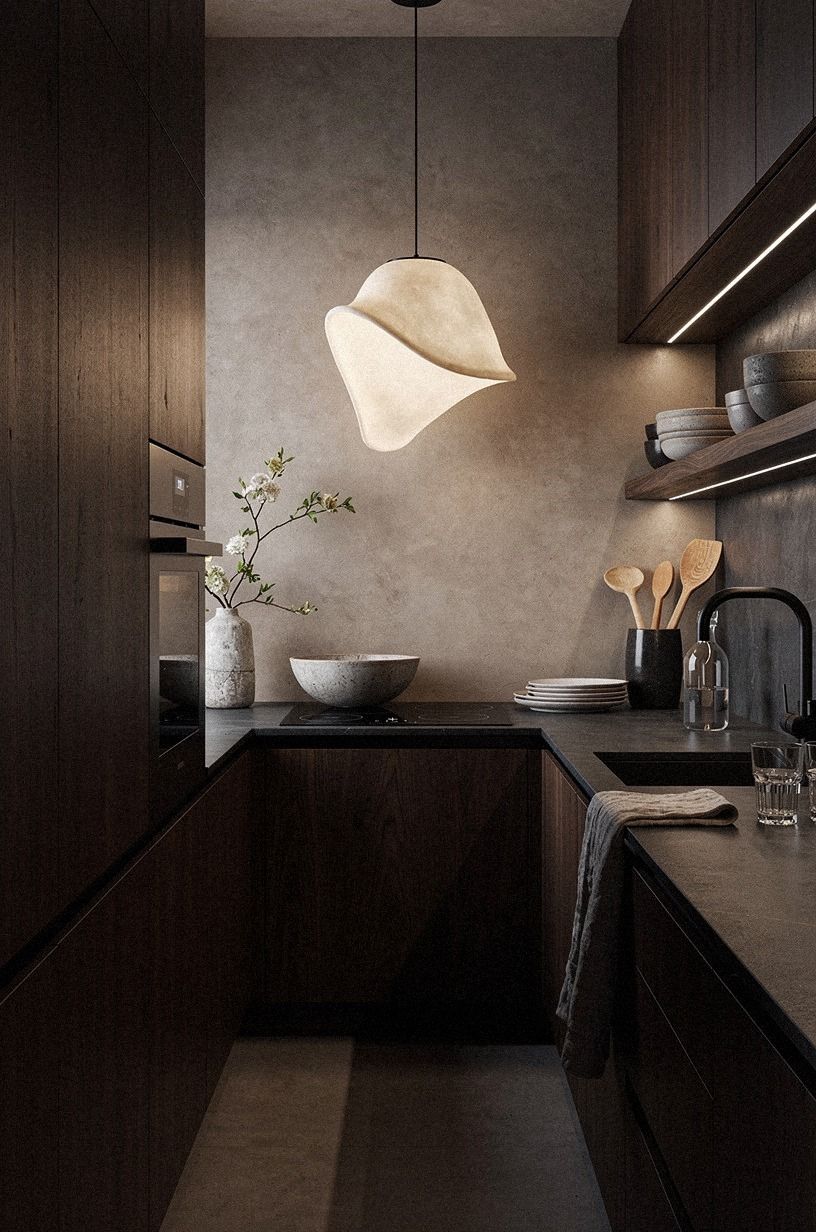
A single pendant can give your galley a strong focal point without filling the ceiling with fixtures. Choose a rice-paper lantern or a softly pleated linen shade against hand-applied Venetian plaster, then hang it where it lights the work zone without interrupting the sightline. Your fixture should feel like furniture overhead, not a bright task lamp.
I’d skip a cluster of three pendants in a narrow kitchen. They'll compete with upper cabinets and make the room feel crowded. One large, gentle shape has more presence and fewer visual interruptions.
If you're renting, use a plug-in pendant kit and hide the cord along the ceiling edge. For more low-light inspiration, these moody maximalist bedroom ideas show how one fixture can hold a darker palette together. You can also borrow the warm fixture logic from these warm kitchen decor ideas for cold days.
17Style the counter with three useful objects
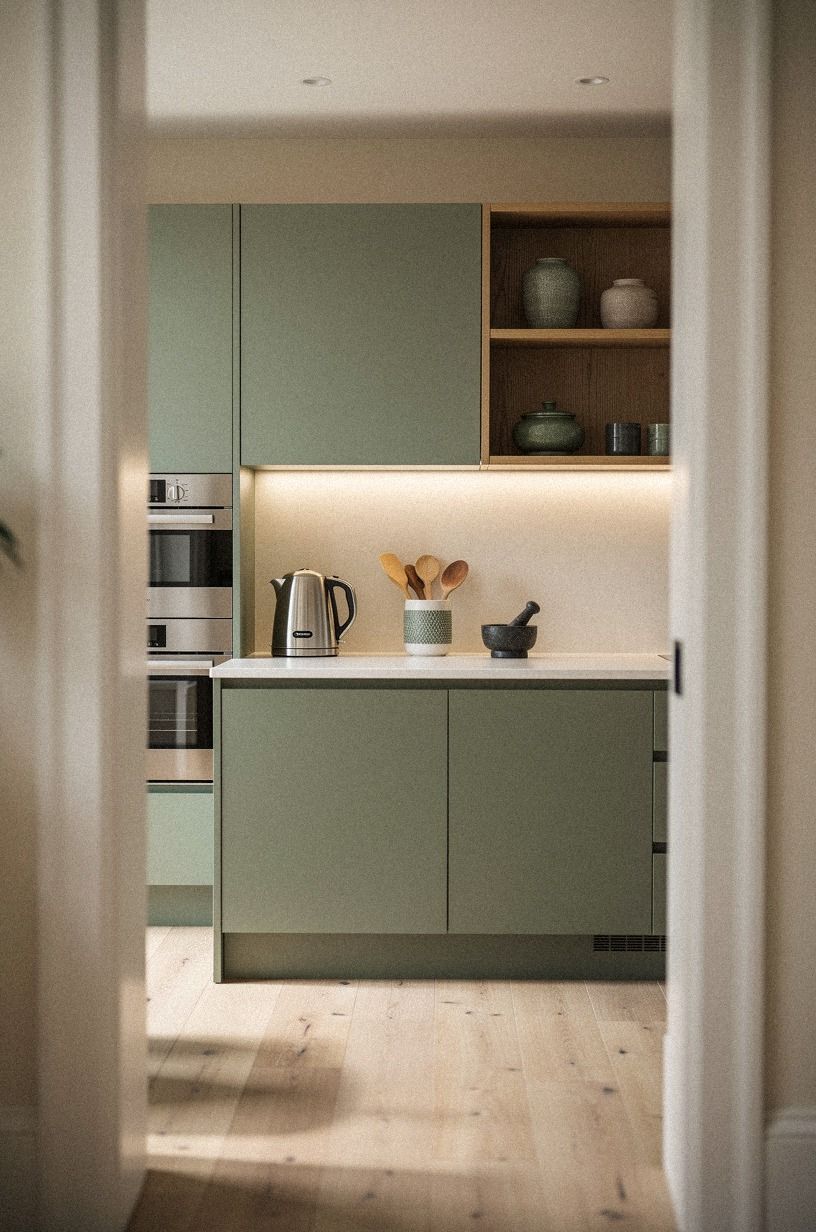
Counter styling works best when every object earns its space.
18Keep the Three-Color Pantry Palette
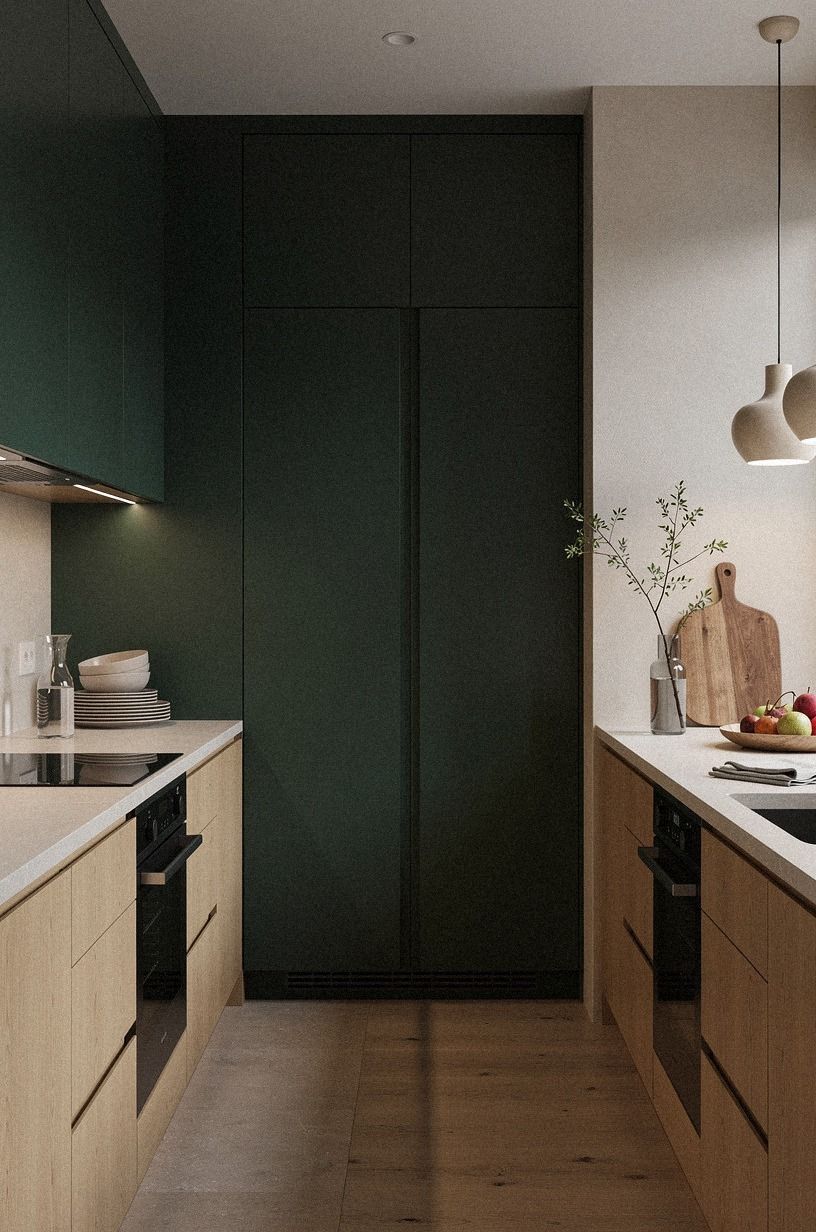
The Three-Color Pantry Palette gives a dark kitchen apartment an easy styling framework. Keep your visible objects within three families: cream, tobacco, and deep green. Washed Belgian linen towels can add softness, while terracotta bowls and dark wood boards bring the earthy middle tones your kitchen needs.
You don't have to replace everything at once. Start with towels, one bowl, and a small runner, then live with the palette for a week. I’d skip bright red, blue, and white accents unless they already belong to your home.
They can break the calm line between the two cabinet runs. If you're unsure which pieces to keep visible, place everything on the counter, then remove half. Your eye will tell you what matters.
For more restrained color mixing, compare these dark moody farmhouse kitchen ideas with these dark moody cottage kitchen ideas.
19Finish with a quiet coffee corner
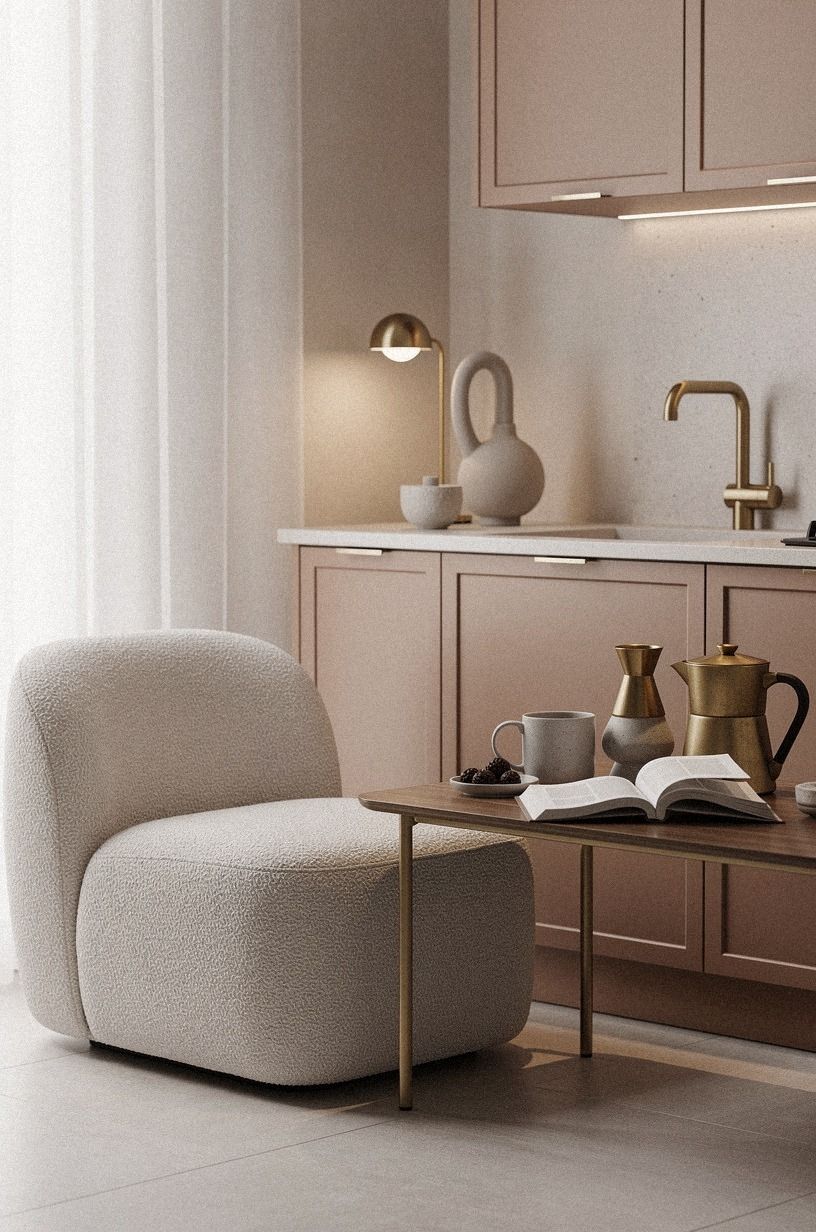
A coffee corner gives your moody Japandi galley kitchen a daily ritual and a clear stopping point.
What This Style Gets Right in 2026
Moody Japandi kitchens are having a moment because people want rooms that feel quieter and more personal than bright, blank interiors. The look combines deep paint, pale timber, handmade surfaces, and fewer visible objects. You'll see more Farrow & Ball Studio Green, Benjamin Moore White Dove, and Sherwin-Williams Evergreen Fog because those colors shift with daylight instead of sitting flat on the wall.
The budget matters too. A cosmetic kitchen update can stay focused if you repaint, change hardware, improve lighting, and add one textured surface.
The typical US ranges below are useful planning markers, not promises. You'll want to price your own room before choosing stone, cabinetry, or new appliances.
The Honest Cost of Materials
A dark kitchen doesn't have to mean an expensive kitchen. Laminate countertop typically runs $10 to $40 per square foot, while quartz commonly lands around $60 to $120 per square foot. A zellige backsplash can cost $15 to $35 per square foot, and repainted Shaker fronts often run $150 to $400 per door.
I’d put your money into the surface you touch and the light you use every day. A good faucet, durable paint, and warm under-cabinet lighting will change the room more than a costly decorative slab. If you're replacing cabinets, check whether the existing boxes are sound before ordering new ones.
You may only need new fronts, which can save your budget for the details you'll see constantly. For additional color and material direction, these dark moody farmhouse kitchen ideas show how a restrained palette can still feel rich.
Why I’d Keep the Dark Side Small
I've painted kitchens in every direction, and the ones I return to have one clear visual anchor. My first dark galley had charcoal cabinets on both sides, black hardware, and a dark stone counter. It looked dramatic in the morning.
By late afternoon, the room felt like a tunnel, and I kept turning on every light before dinner.
That mistake taught me to treat dark color as weight, not wallpaper. Your kitchen needs a pale surface, a reflective point, or open breathing room to balance it. I’d rather see one deep cabinet run with oak shelves than an entire room painted nearly black.
The darker side should pull you in, while the lighter side gives your eye a place to pause. If you're choosing between a full renovation and a smaller refresh, start with the part that changes how you use the room. Paint, lighting, and storage often give you more daily value than a decorative upgrade.
If your budget only covers one visible change, choose the wall color carefully because every wood, metal, and textile will sit beside it. That's where the atmosphere starts.
The Questions Worth Answering First
What is the best approach for a small Moody Japandi Galley Kitchen?
The best approach is one dark cabinet run, pale oak, and warm layered lighting. IKEA KALLAX birch-effect storage can add useful open shelving, while an Article stool gives you seating without a heavy island. Keep the palette limited so your small kitchen feels calm and intentional.
Where can I buy Moody Japandi kitchen pieces on a budget?
Look at IKEA, Wayfair, and Target for basic storage, lighting, and textiles. Facebook Marketplace and local thrift shops can provide wood stools, ceramic bowls, and framed art for less. Start with one useful piece, then build slowly around the colors already in your kitchen.
How much does a Moody Japandi kitchen makeover cost?
A cosmetic update usually falls around $300 to $1,500 for paint, hardware, and a peel-and-stick backsplash. A larger refresh can reach $3,000 to $12,000. You can spend nothing by editing your counters, moving furniture, and changing the lighting temperature.
Can I create this look on a budget?
Yes, and you can start with three low-cost moves: paint one cabinet run, swap cool bulbs for warm bulbs, and group your existing wood and ceramic pieces. A warmer light source often changes the mood faster than new decor. Add a runner only after the layout feels clear.
Is a dark Japandi kitchen worth it in a small space?
Yes, because a small kitchen benefits from a limited palette and repeated materials. Keep one side visually quiet, use open shelving sparingly, and protect a 36-inch counter height for comfortable prep. You'll get more impact from clear sightlines than from adding more furniture.
Is this style a good idea for a rental?
Yes. Use removable cabinet pulls, peel-and-stick backsplash panels, tension-rod café curtains, and plug-in lighting. Removable wallpaper can add color behind a coffee corner, while a freestanding shelf gives you storage without drilling.
Test every adhesive in a hidden spot before committing.
Where I’d Start First
If I had to pick one, I’d start with Farrow & Ball Studio Green on one cabinet run. It gives pale oak and warm light something to push against, while the opposite side keeps the galley open.
Paint that wall first, then let every other choice answer it. Save this kitchen for your next refresh.