
 by
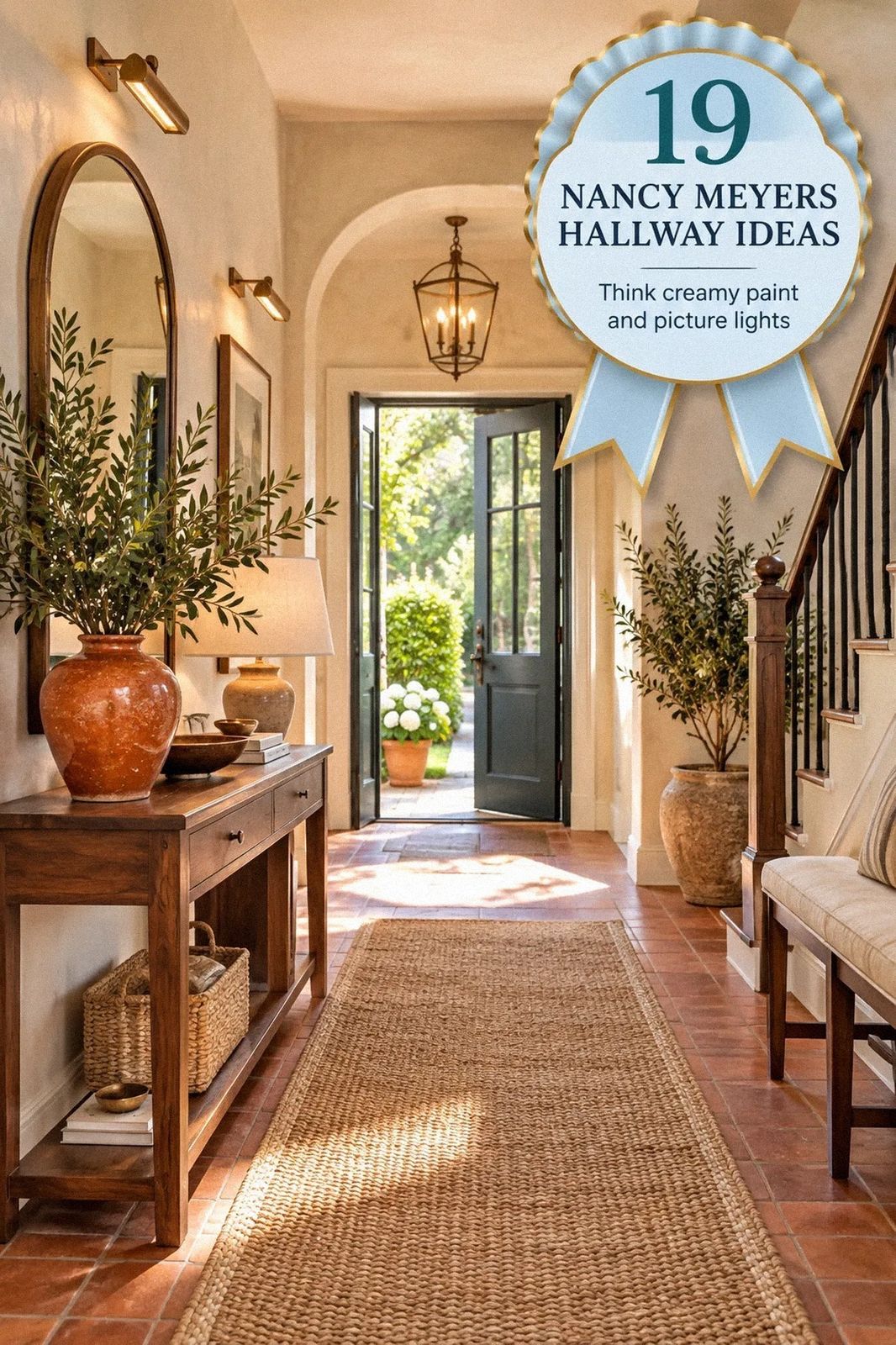
by Nancy Meyers hallway ideas work best when the pass-through feels collected, not decorated in one afternoon. I learned that after pushing a console too close to the wall and losing the walking space. You need warmth, light, and breathing room, even in a narrow front entrance inside. These ideas make that balance easier!
- Layer a hallway table with a mirror
- Float an oak console for a warmer front entrance inside
- Hang the Three-Height Light Stack
- Paint the walls in Benjamin Moore Kendall Charcoal
- Build a pass-through budget before you shop
- Frame a gallery wall with breathing room
- Swap a bulky bench for an Article Sven seat
- Anchor the floor with a properly sized runner
- Layer a hallway table with a mirror
- Float an oak console for a warmer front entrance inside
- Hang the Three-Height Light Stack
- Paint the walls in Benjamin Moore Kendall Charcoal
- Build a pass-through budget before you shop
- Frame a gallery wall with breathing room
- Swap a bulky bench for an Article Sven seat
- Anchor the floor with a properly sized runner
- Choose oak over lacquer for the Two-Wood Rule
- Mix a quiet vignette with one useful object
- Paint the trim warmer than the walls
- Hang hooks at the 60-inch mark
- Use Sherwin-Williams Naval for a deliberate color hit
- Build the Three-Frame Story
- Style a dream home design moment with a basket
- Turn an awkward corner into a reading pause
- Contrast open shelving with closed storage
- What makes a small pass-through feel gallery-worthy?
- Instead of matching everything, repeat one finish
1Layer a hallway table with a mirror
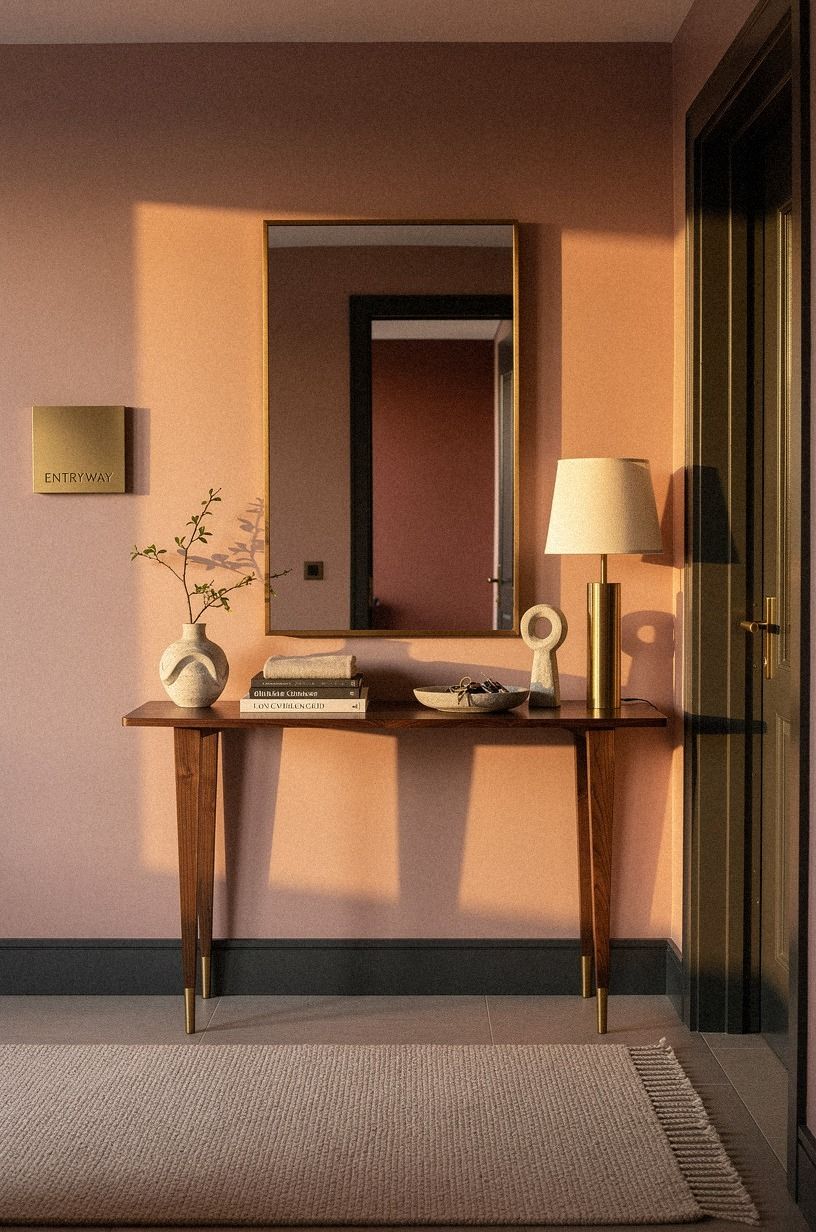
A hallway table with a mirror gives your pass-through a reason to pause. Choose a console between 30 and 34 inches high, then center the mirror around 57 inches from the floor so you can check your coat without craning your neck. I prefer a slim book-matched walnut table with one drawer because it feels useful, not staged.
Try a book-matched walnut console with a shallow ceramic bowl, a small lamp, and one framed photograph. If you're working with only 30 inches of clearance, keep the table under 12 inches deep.
And don't fill every inch. The empty wall around the mirror is what makes the vignette feel airy and refined.
A generously sized mirror can also borrow the gentle proportions found in these Nancy Meyers living room ideas. You want the hallway to feel connected to the rooms beyond it, not like a separate decorating experiment.
Typical cost by tier (US averages):
2Float an oak console for a warmer front entrance inside
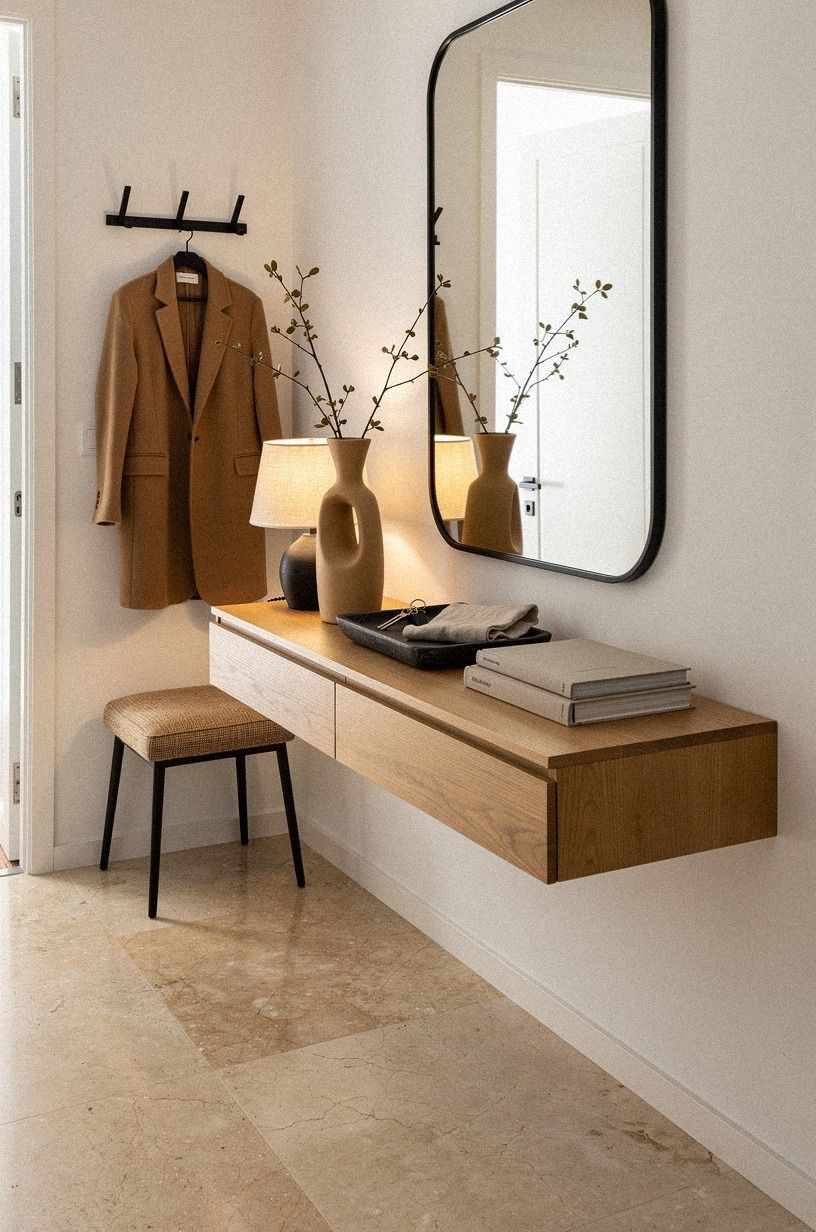
A floating console in warm travertine keeps the floor visible, which makes a narrow hallway seem wider than it is.
3Hang the Three-Height Light Stack
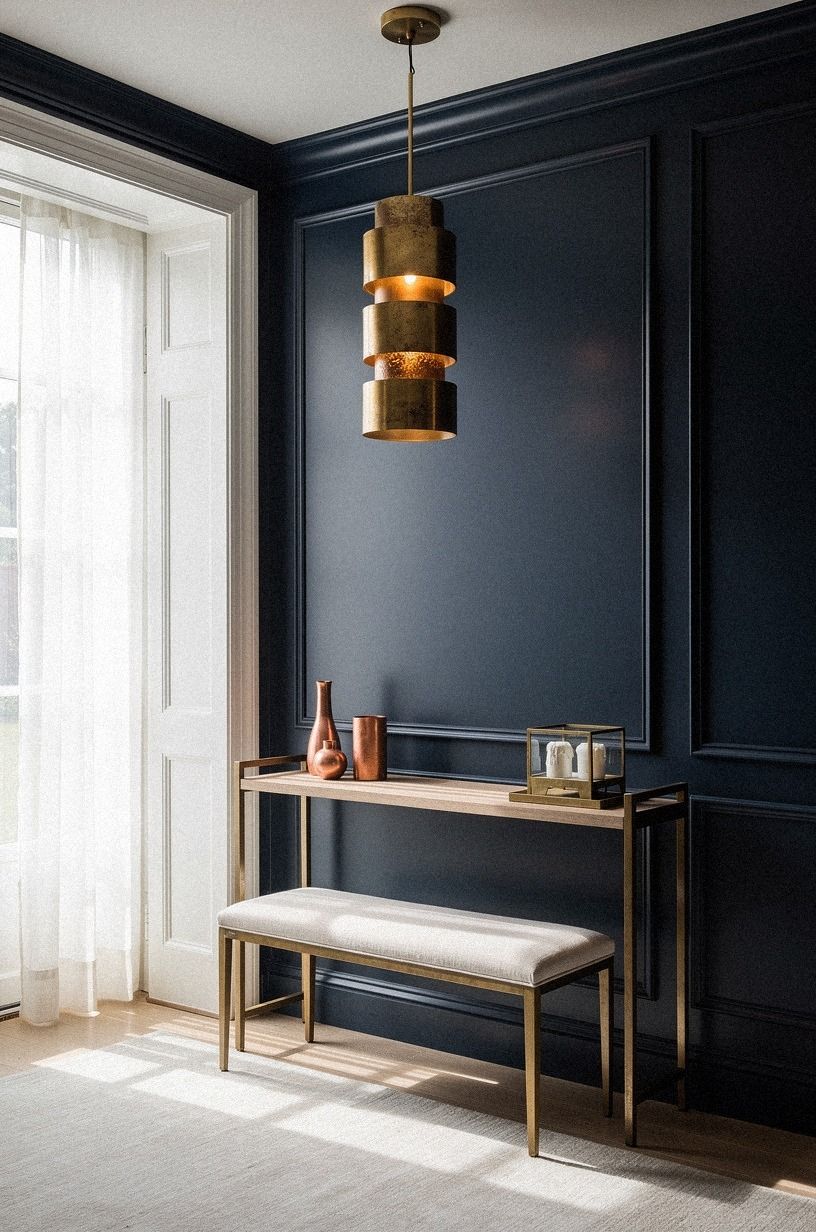
The Three-Height Light Stack is my favorite way to keep a hallway from feeling like a tunnel. Use a ceiling fixture overhead, a table lamp at console height, and a small picture light near eye level. Each glow should land in a different zone, so your eye travels instead of stopping at one harsh bulb.
An unlacquered brass lamp base throws a pool of amber across the table, while a wall sconce catches the edge of a frame. You don't need expensive wiring if you use a rechargeable picture light.
I tested a cool white bulb once, and it made the hallway look like a clinic. Choose warm bulbs, then dim the overhead source after sunset.
The room will feel calming and intimate!
If you love a quieter, more bookish atmosphere, borrow the warm lighting logic from these Nancy Meyers home office ideas. Your hallway can have that same welcoming glow without becoming overly dramatic.
4Paint the walls in Benjamin Moore Kendall Charcoal
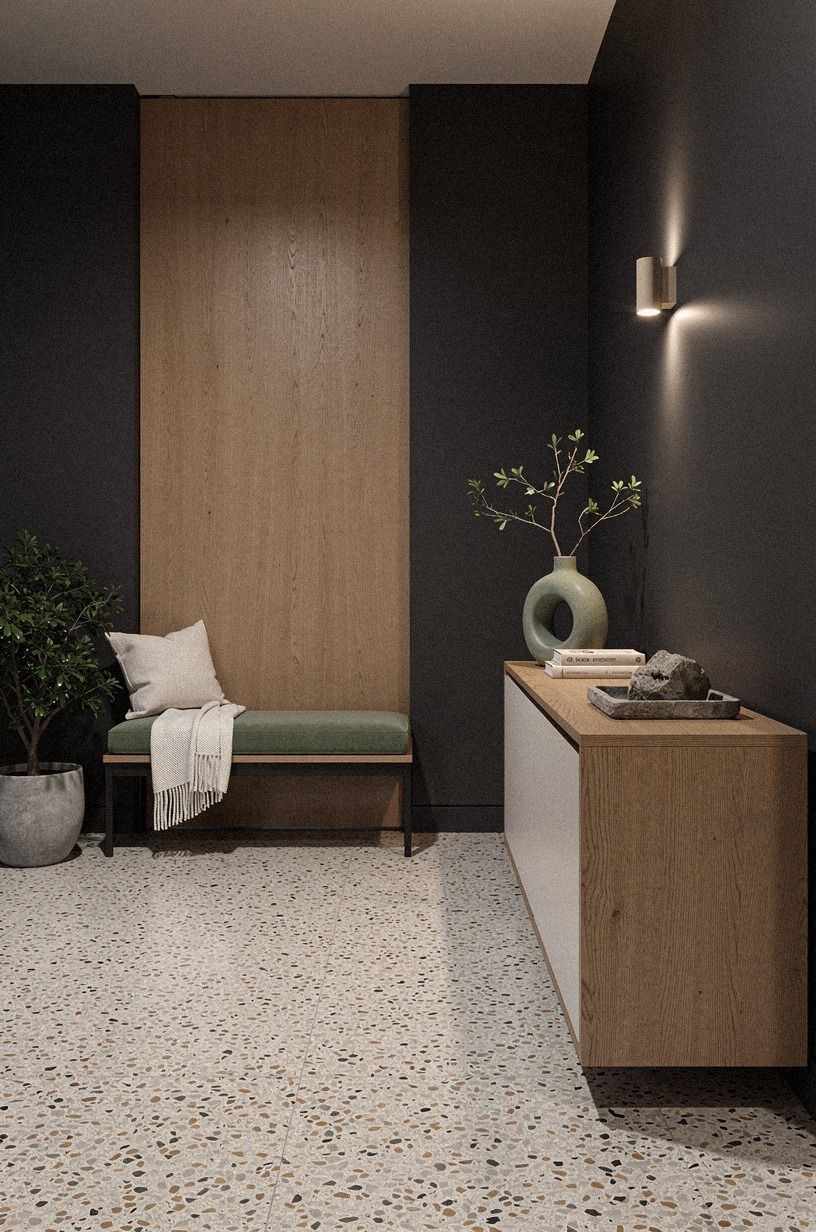
A soft sage green gives a pass-through enough depth to feel intentional without turning it gloomy. It works especially well beside warm cream trim, natural wood, and oversized-chip terrazzo. If your hallway has little natural light, test the paint on two walls first because the color shifts noticeably from morning to evening.
I'd skip a flat black here. It absorbs the hallway's limited light and makes every corner look tighter.
A low-sheen sage paint has more softness, especially beside warm cream surfaces and natural wood. And if you're nervous about a darker hallway, paint the ceiling a warm cream to keep the upper plane bright and quiet.
The same restrained contrast can work beside the pale cabinetry described in these Nancy Meyers kitchen ideas. You want the transition to feel deliberate, not jarring. A muted green hallway can be moody, sophisticated, and surprisingly inviting when the adjoining rooms give it enough light.
5Build a pass-through budget before you shop
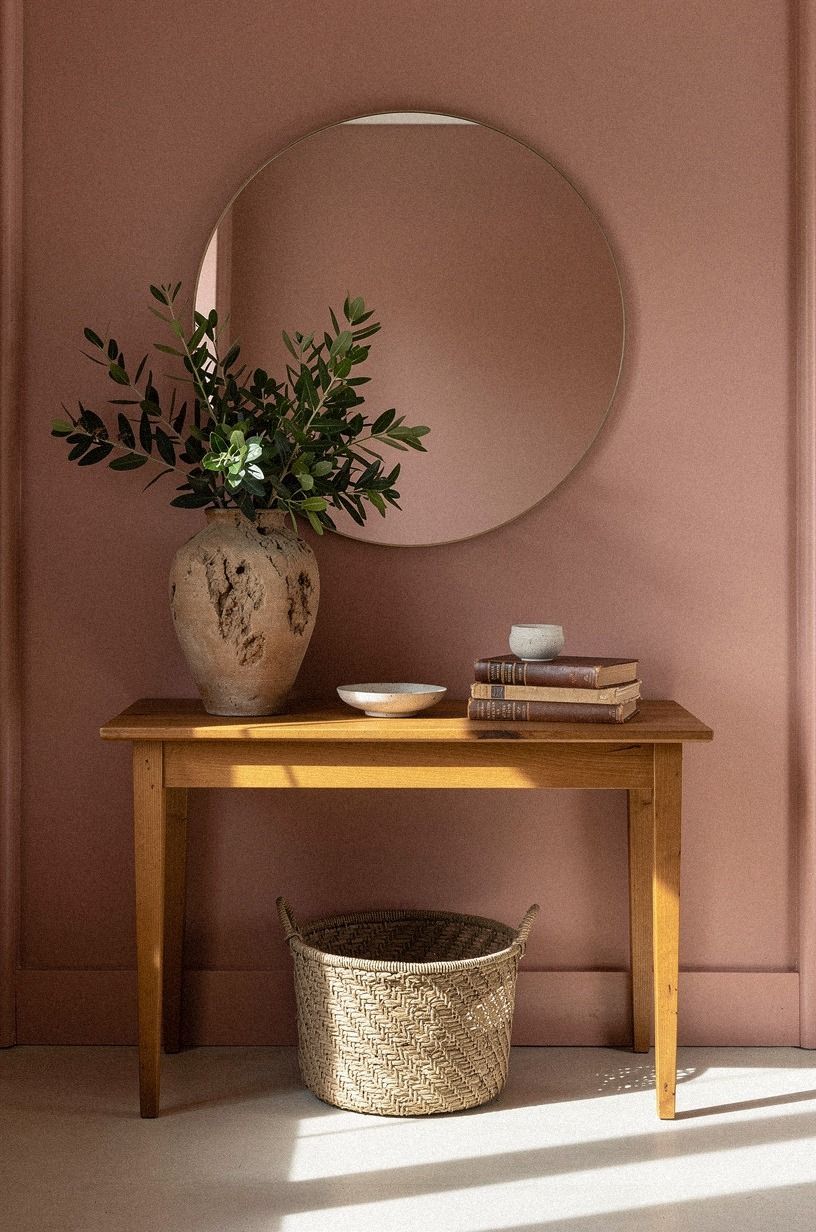
Your hallway can feel collected without requiring a full renovation, but you should decide which layer deserves the money. Hand-applied Venetian plaster can be the splurge, while paint, hooks, and a simple runner keep the rest manageable.
6Frame a gallery wall with breathing room
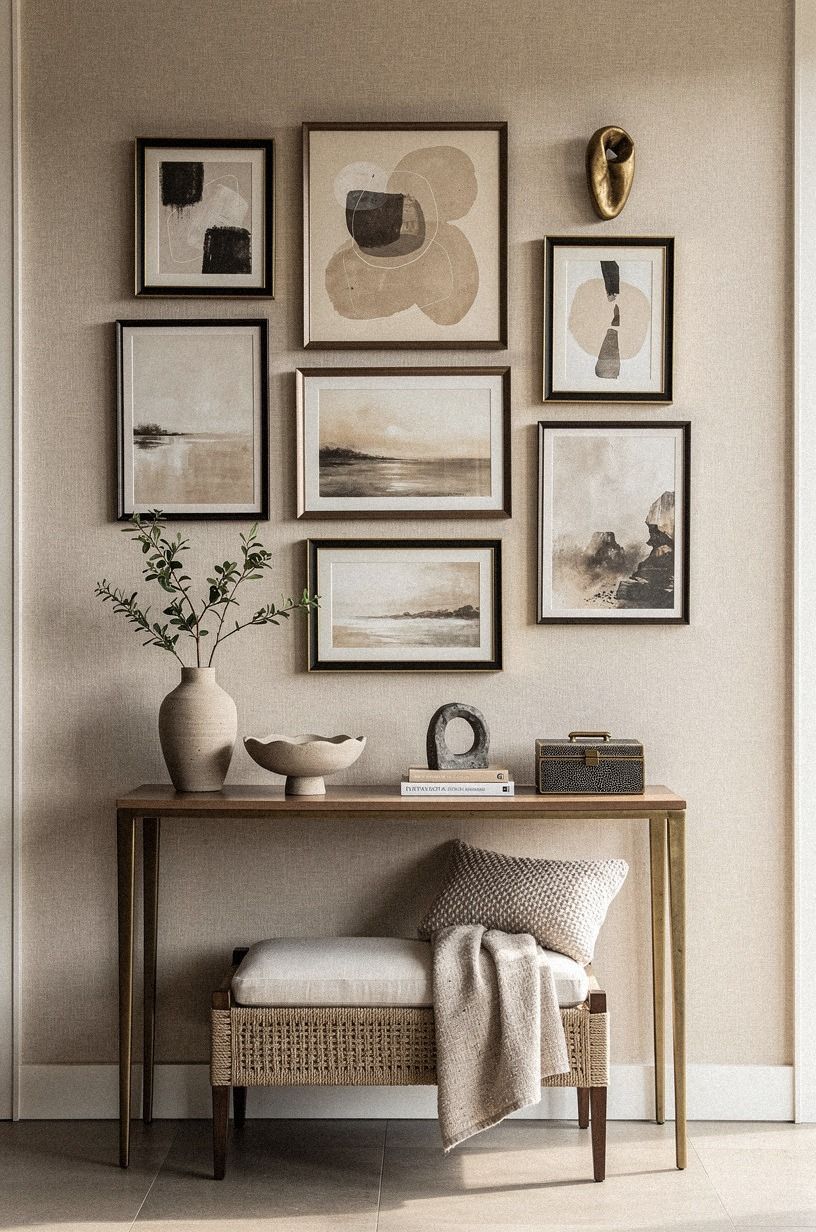
A gallery wall works in a hallway when the frames have a clear rhythm. Keep the center of the arrangement near 57 inches from the floor, then leave about 3 inches between frames. You can mix family photographs, botanical studies, and small landscapes, but repeat one finish so the group doesn't become noisy.
My favorite combination uses aged brass frames with linen mats, warm clay tones, and one small shagreen accent. I'd avoid making every frame identical because the result can feel like a hotel corridor. Lay the arrangement on kraft paper first, trace each frame, and tape the paper to the wall.
You'll see the balance before you make a dozen holes.
For more collected wall styling, borrow the quieter proportions from these Nancy Meyers living room ideas. You can make the arrangement personal with very little expense. A flea-market print, an old family photograph, and one beautiful frame may feel more memorable than a matching set.
7Swap a bulky bench for an Article Sven seat
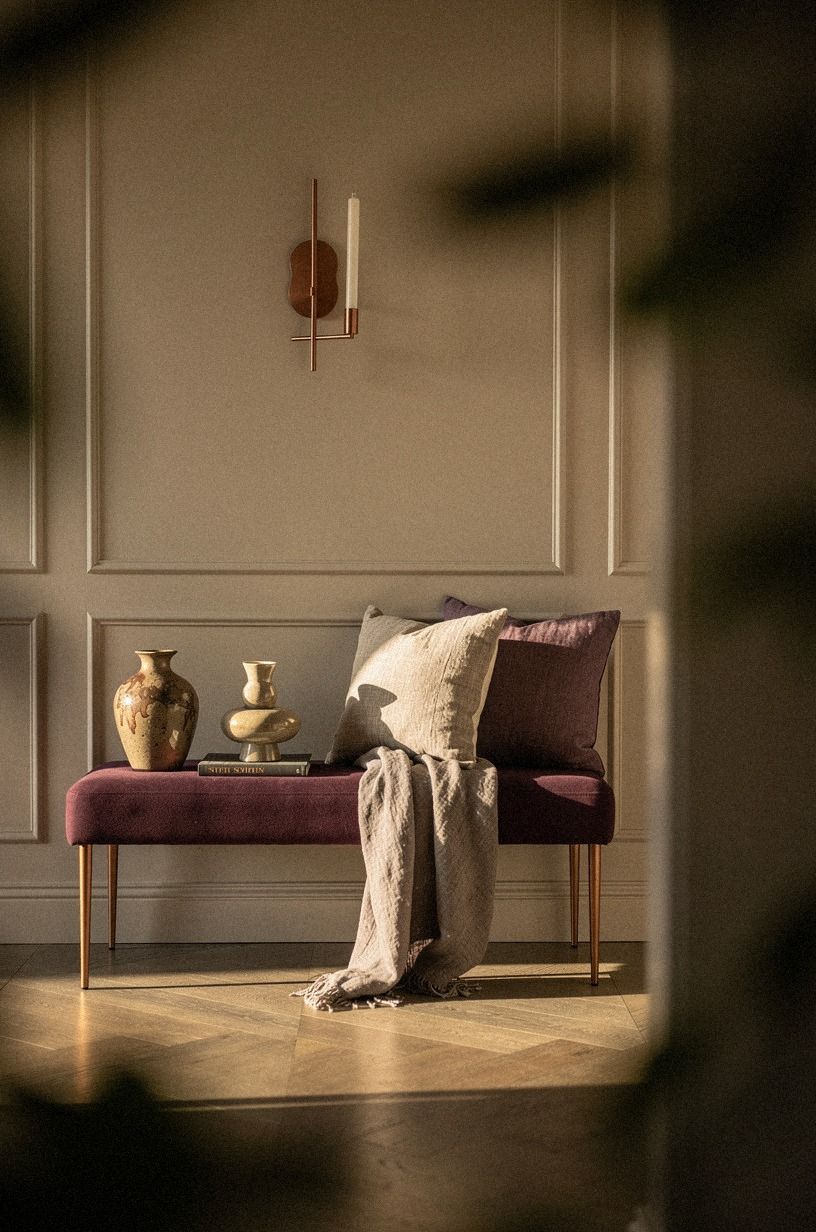
A bench can make a pass-through feel welcoming, but only if it doesn't steal the walking lane.
Choose a compact seat upholstered in washed Belgian linen when you want softness without visual bulk. Keep the plum, grey, and rose-gold palette edited, with one cushion or metal detail doing the work. If the passage is tight, measure the seat depth before you fall for the shape.
8Anchor the floor with a properly sized runner
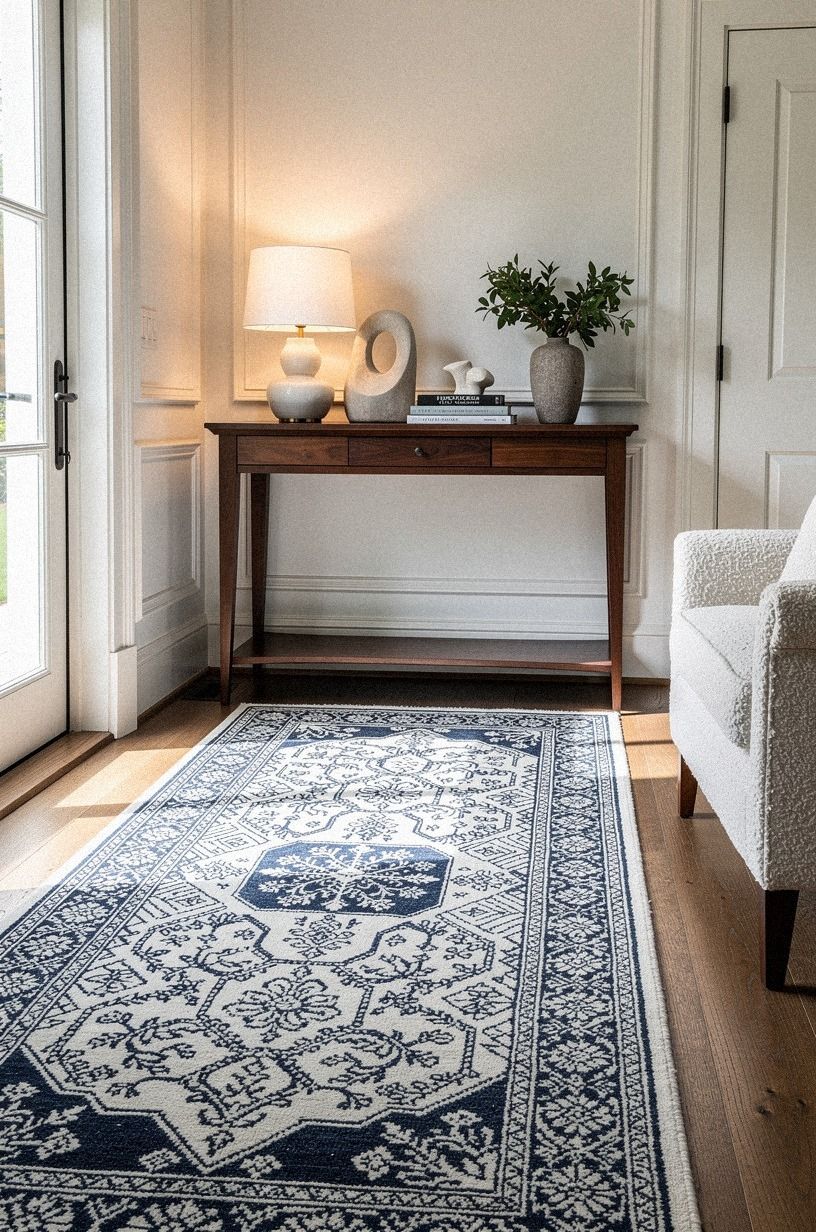
A runner should make the hallway feel softer without looking wedged into it. Leave 2 to 3 inches from each wall, and keep the ends clear of doors that need to open fully. A faded pattern is more forgiving than a solid pale rug, especially if your hallway gets muddy shoes and dog traffic.
I’d choose a low-profile organic bouclé runner in navy and white rather than a fluffy pile. The compact surface lets doors move and gives footsteps a gentle hush. If you're styling a long pass-through, resist the urge to buy the longest possible rug.
A little exposed flooring at each end makes the passage feel finished, not crowded.
A runner can be the most inviting layer in the space because it changes how the hallway feels underfoot. Look for a design with a slightly faded, timeworn pattern. It will make the entrance feel relaxed and forgiving instead of overly precious.
9Choose oak over lacquer for the Two-Wood Rule
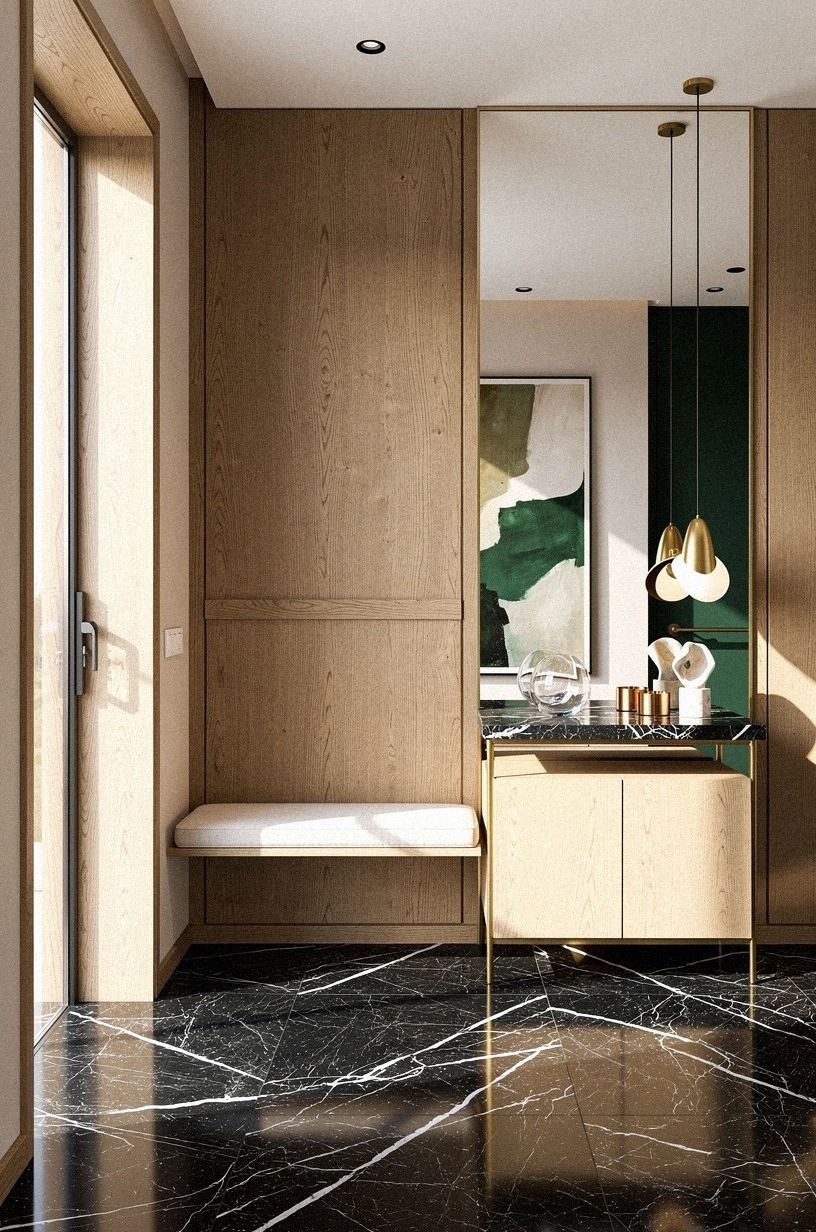
The Two-Wood Rule keeps a hallway from looking like a furniture showroom. Use one dominant wood, such as white oak flooring, then add a second wood in a smaller dose, perhaps walnut in a frame or stool. More than two strong grain colors can make the narrow space feel restless.
A Nero Marquina marble picture ledge with white veining against pale oak brings contrast without drama. I’d skip reddish cherry here because it fights the warm neutral palette and can turn orange under evening bulbs.
If you're buying a new console, compare the sample beside your floor at noon and after dark. The right wood should feel quiet in both lights, not merely attractive in a store.
This is also why the soft oak-and-cream palette in these Nancy Meyers kitchen ideas feels so enduring. You don't need every finish to match. You need the materials to speak the same gentle language.
10Mix a quiet vignette with one useful object
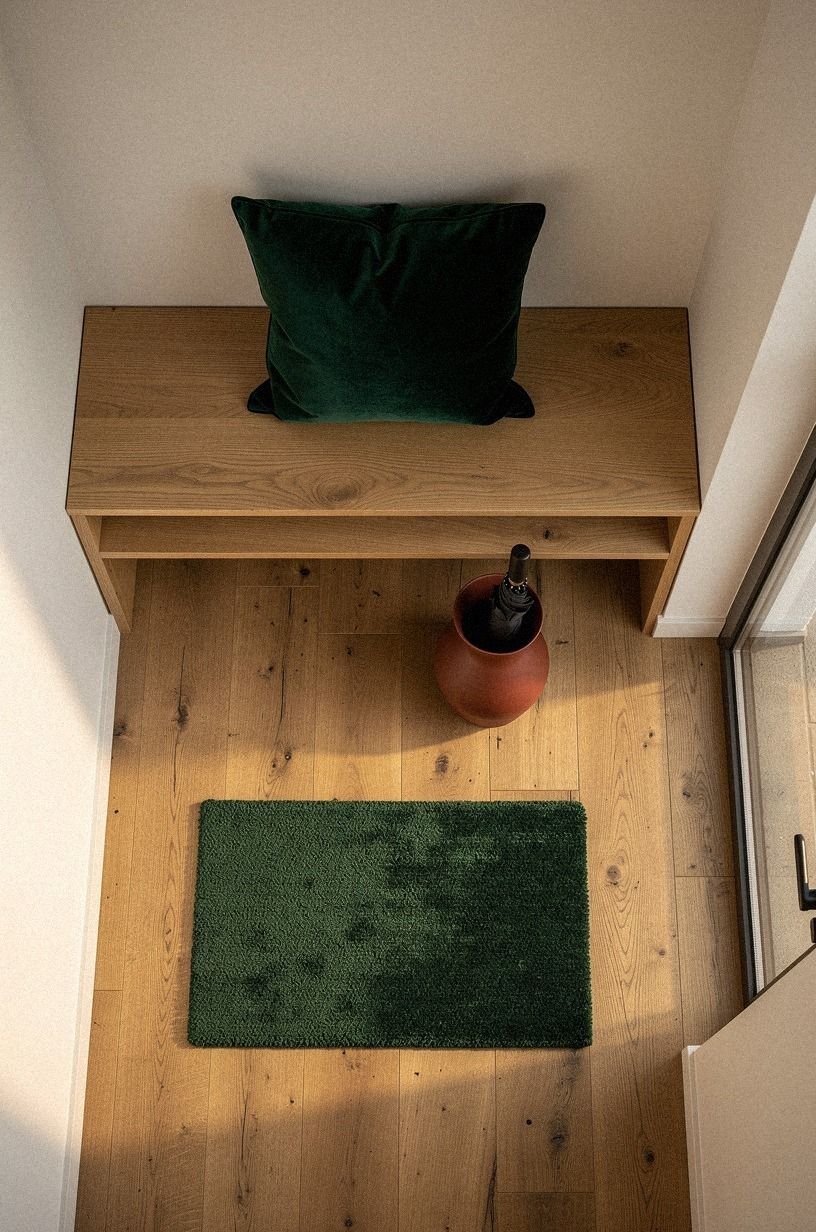
A vignette works best when it includes something you use. Add one deep-pile mohair velvet cushion to a nearby seat, then keep the rest of the surface practical.
11Paint the trim warmer than the walls
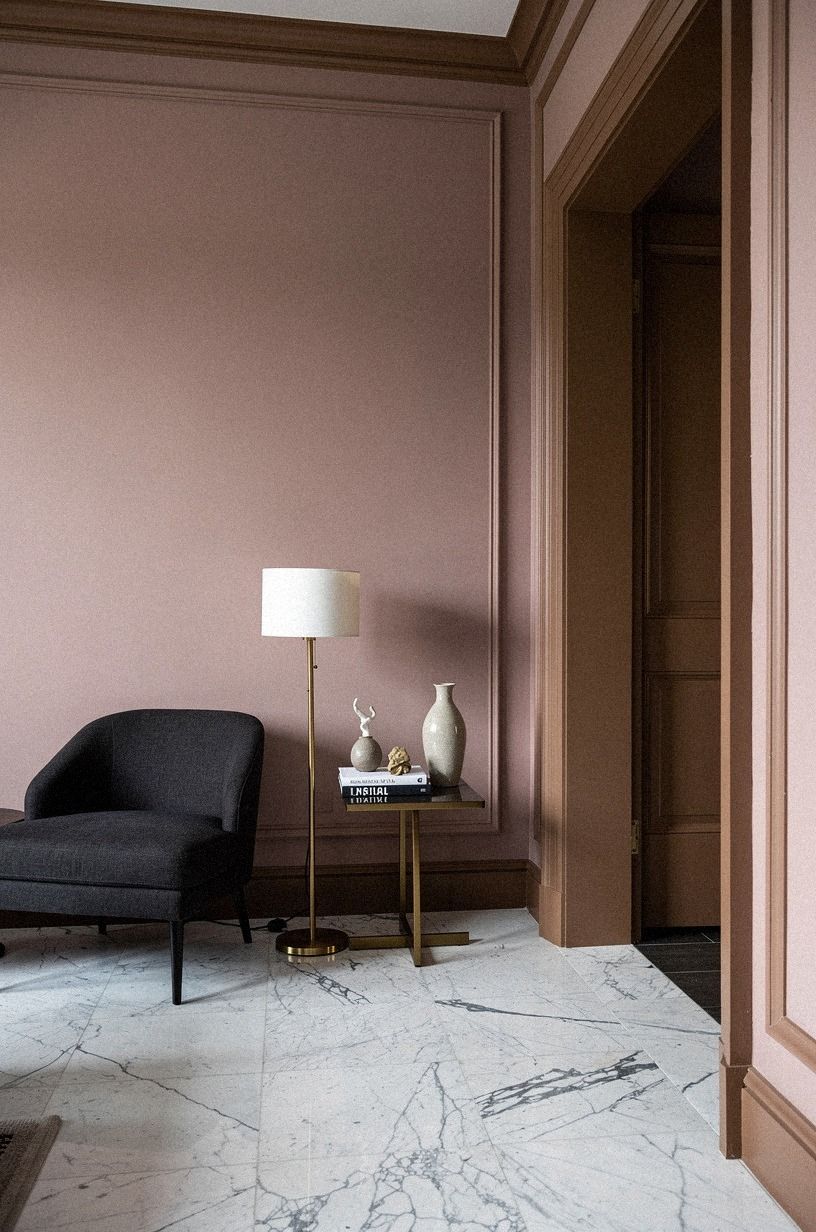
Nancy Meyers rooms rarely rely on stark white trim beside every color. A warmer trim shade can make the hallway feel older, softer, and more connected to the adjoining rooms. Pair Benjamin Moore White Dove with cream walls, or use it on the trim beside Farrow & Ball Railings No. 31 for a gentle contrast.
A Carrara marble accent can bring quiet movement to the trim or threshold, with subtle grey veining that works beside warmer paint. Semi-gloss is practical around door casings, though eggshell may be better on broad walls. And yes, matching every door to the trim can be lovely, but I’d keep the hardware consistent instead.
Unlacquered brass gives the eye a repeated detail without adding another color block.
If your kitchen opens directly into the hallway, repeat the warmer trim logic from these Nancy Meyers kitchen ideas. You’ll get a more graceful transition between spaces. The result can feel gentle, established, and surprisingly rich.
12Hang hooks at the 60-inch mark
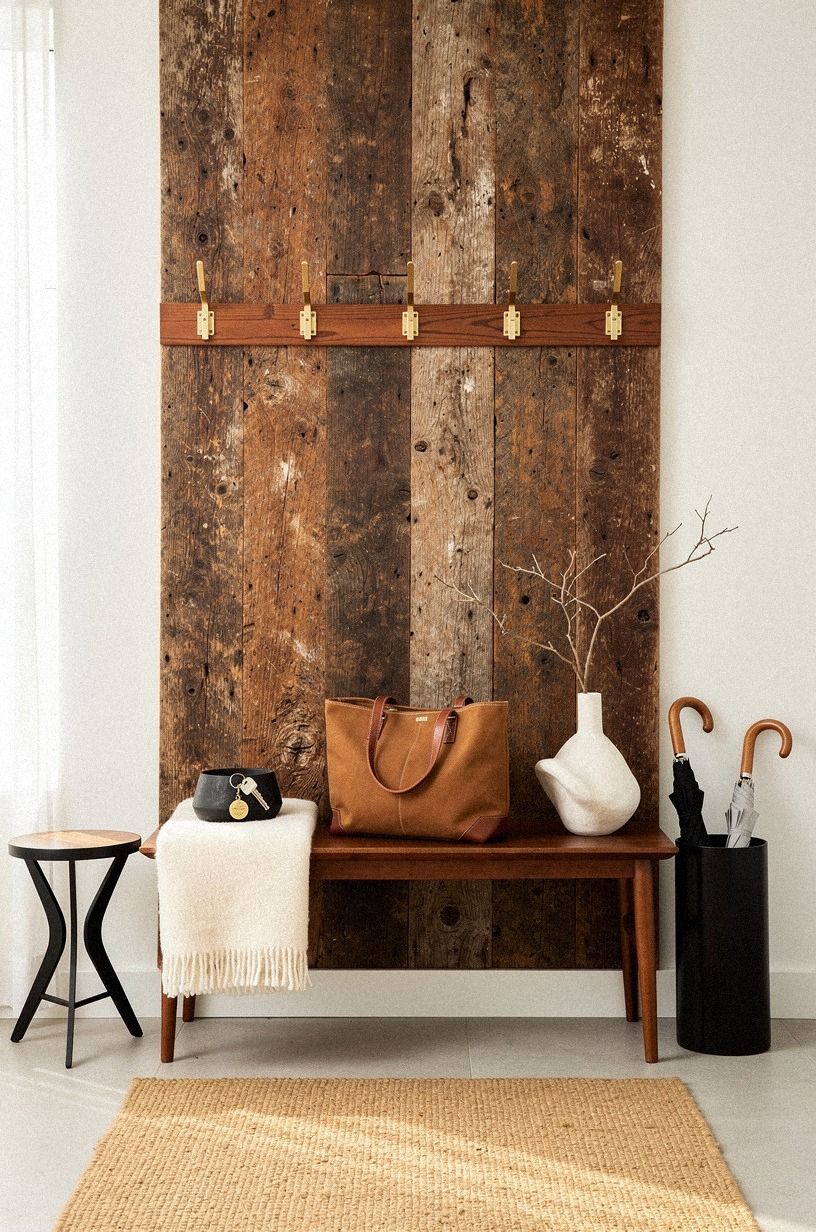
Hooks become useful when they're placed for real people, not an imaginary showroom. Mount the center of your hooks between 60 and 66 inches from the floor, then add a lower row only if children use the entrance. Keep at least 6 inches between hooks so coats don't form one bulky mass.
Choose reclaimed weathered teak hooks with a broad backplate because tiny hooks disappear beneath winter coats. If you're renting, use removable hooks in a matching dark wood tone and keep the weight conservative. I’d avoid a long rail of twelve hooks unless your family needs all twelve.
Four well-spaced hooks look calmer, and your hallway won't announce every jacket at once.
A soft storage approach pairs well with these Nancy Meyers laundry room ideas, especially if your hallway leads toward utility space. You can keep the entrance organized without making it feel like a mudroom. That distinction matters.
13Use Sherwin-Williams Naval for a deliberate color hit
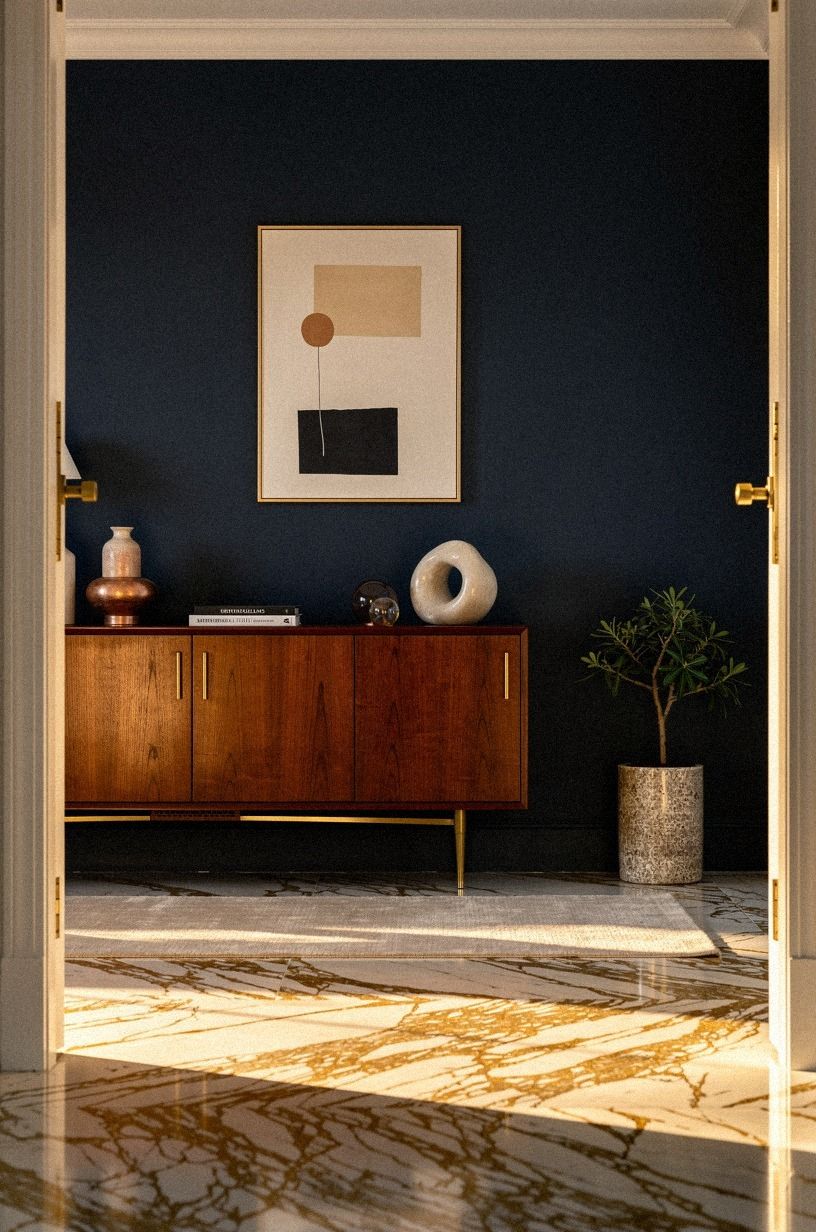
Sherwin-Williams Naval SW 6244 is a strong choice when you want the hallway to feel moody, polished, and grounded. Pair the midnight blue with copper and ivory, then let a small Calacatta marble accent with gold veining supply the brighter note.
14Build the Three-Frame Story
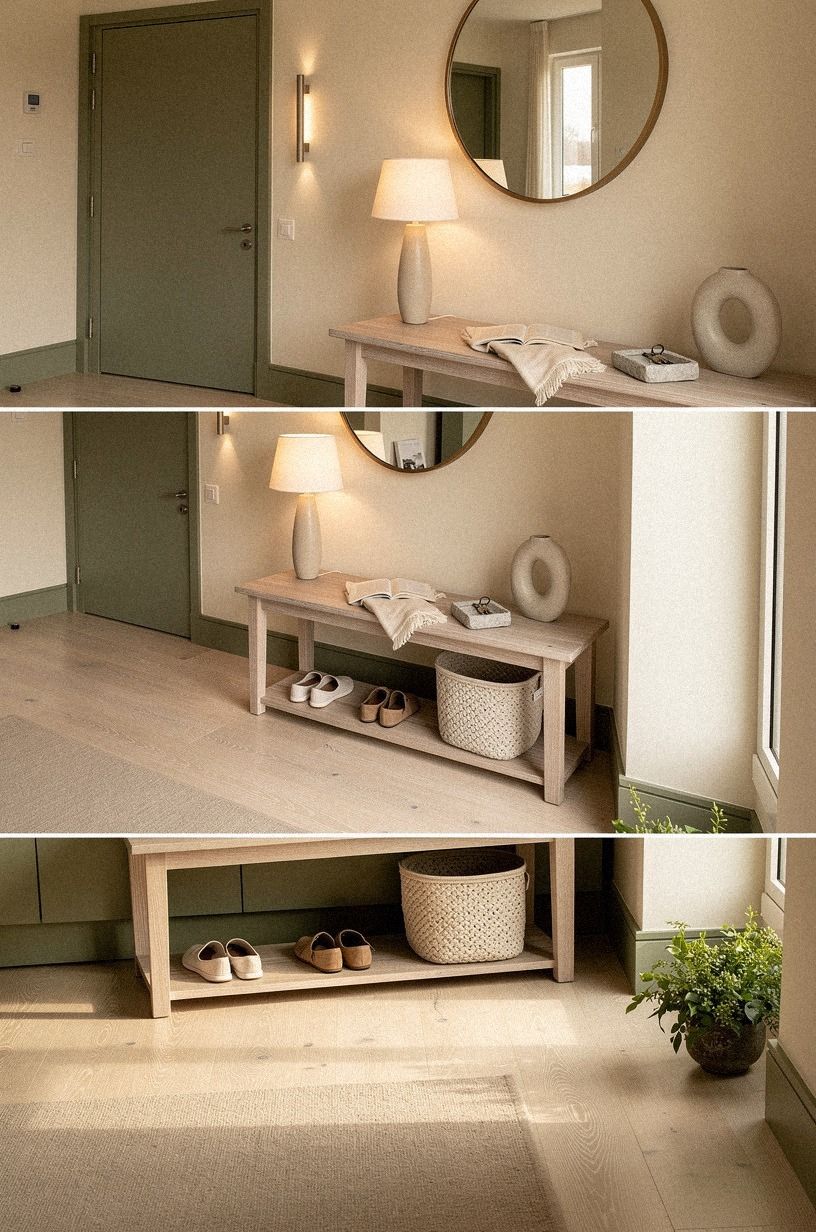
The Three-Frame Story gives a hallway a narrative without making it feel like a formal gallery. Start with one large landscape, add a smaller portrait, and finish with a botanical or architectural print.
Keep their colors related, but let the subjects differ. That contrast feels personal.
Use cerused white oak frames with warm ivory paper rather than bright white stock. The pale wood can connect the art to a console or woven basket.
I’d avoid three unrelated abstract canvases in a narrow pass-through because they often create visual stops instead of a steady rhythm. If you're using family photos, print them in the same muted finish so the wall feels gathered.
The approach works beautifully beside a sitting room, especially when the art shares one subtle color with the upholstery. These Nancy Meyers living room ideas use a similar balance of softness and structure. You want your eye to move naturally from one frame to the next.
15Style a dream home design moment with a basket
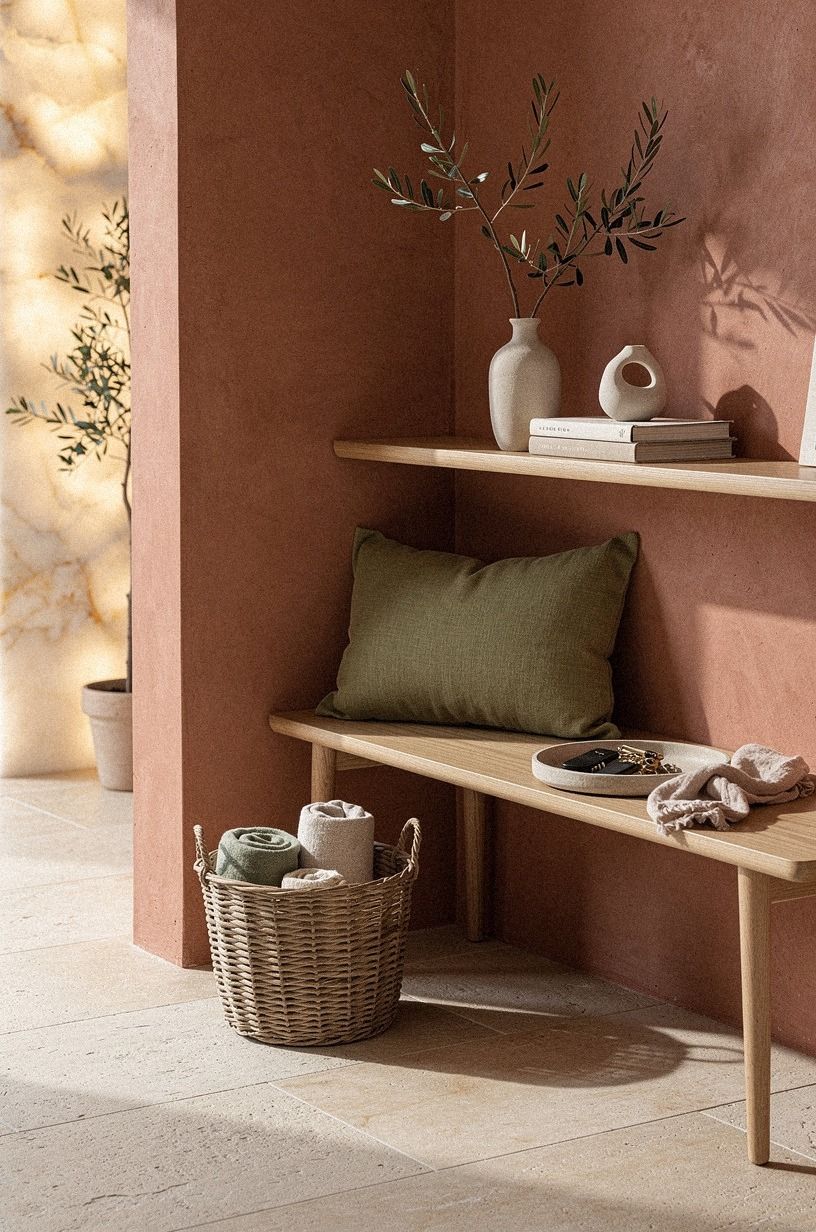
Storage can look gentle when you choose a basket with a real job. Place one beneath the console for slippers, scarves, or the things you carry upstairs. Keep the opening visible enough that you'll use it, but don't let the basket become a drop zone for every object in the house.
A backlit translucent onyx container adds a warm glow beside painted walls. For a darker hallway, choose a simple lidded version so the material doesn't compete with your art.
I’d skip plastic bins here unless they stay completely hidden. You don't need costly cabinetry to make the front entrance inside work better.
You need one container that matches the mess you actually make.
If your family tends to leave laundry near the entry, the functional details in these Nancy Meyers laundry room ideas may give you a more realistic storage plan. A beautiful basket only helps when it fits your habits.
16Turn an awkward corner into a reading pause
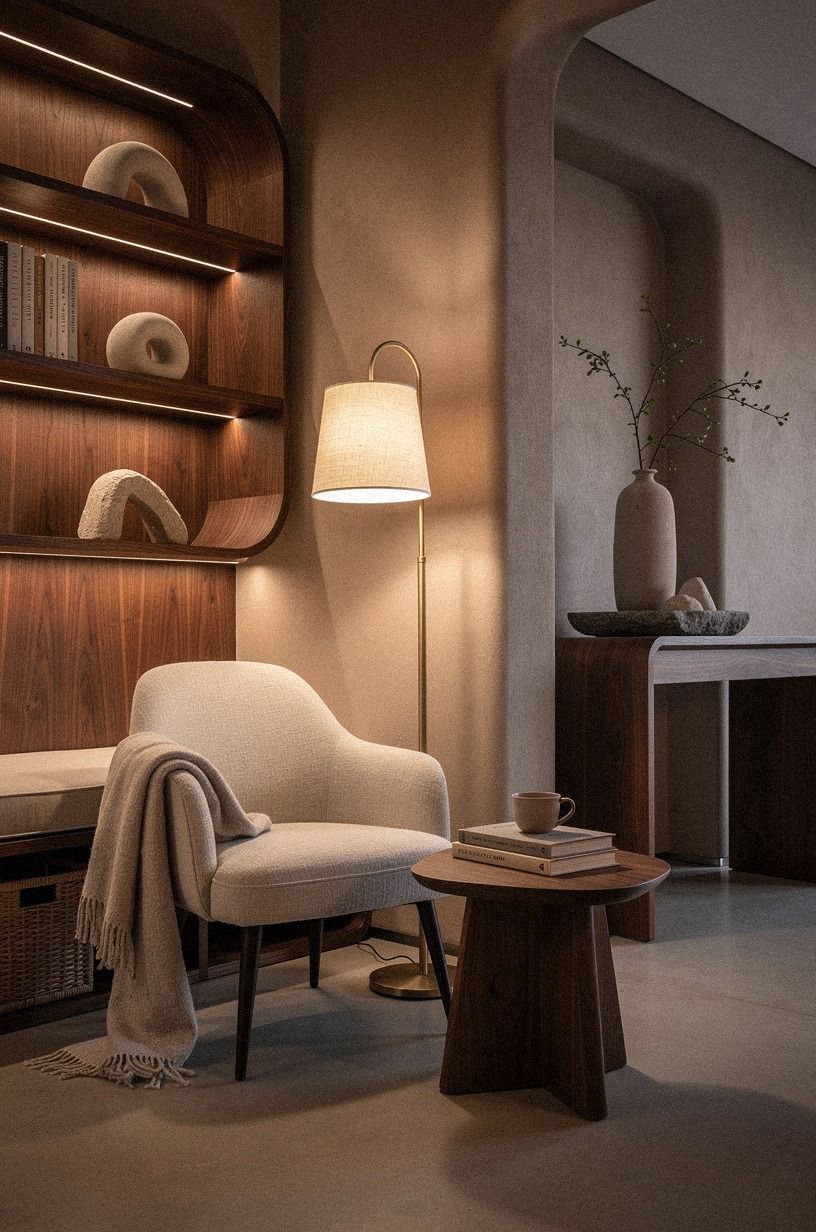
If your hallway widens at one end, give that pocket a small purpose. A narrow chair, a wall light, and a tiny side table can create a reading pause without pretending the space is a full sitting room. The best version feels accidental, as if someone always leaves a book there.
Choose a book-matched walnut chair or side table only when you have enough clearance to walk past it comfortably. A chair that forces your shoulder sideways isn't charming, no matter how soft the fabric feels.
I’d use an Article chair or a compact Target Threshold piece, then add one linen cushion. And if the corner is too tight, use a stool instead.
Your floor plan gets the final vote.
The mood can be especially lovely when the corner borrows the calm, creative feeling of these Nancy Meyers home office ideas. Give yourself a little light, one comfortable surface, and a reason to linger. You don't need a complete sitting area.
17Contrast open shelving with closed storage
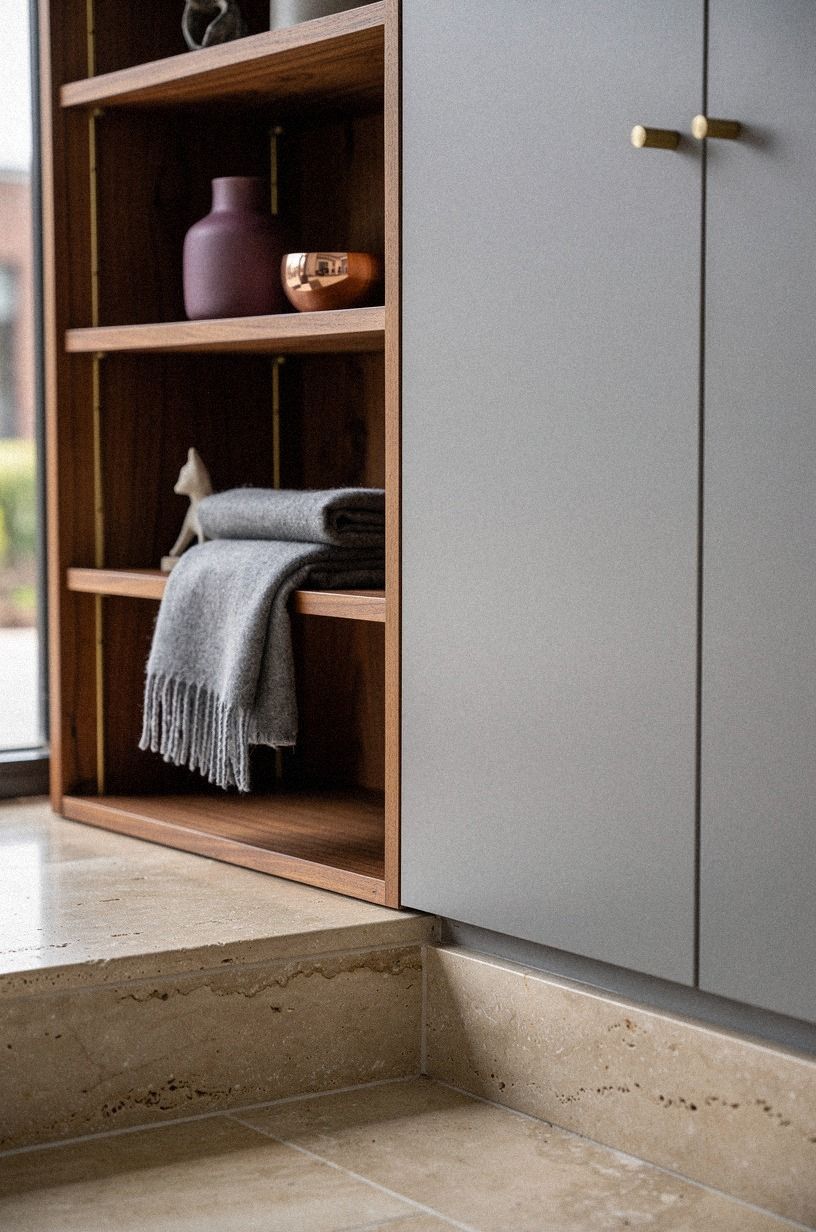
Open shelving shows the objects that give your home character, while closed storage hides the daily evidence of living. In a hallway, you usually need both. Use one open shelf for a framed photo and one cabinet or basket for gloves, mail, and chargers.
A warm travertine cabinet adds substance without the visual heaviness of solid doors. Keep the shelf styling spare, because every object sits close to eye level in a narrow passage.
If you're choosing between a tall open bookcase and a low cabinet, I’d choose the low cabinet for most homes. It won't interrupt sight lines, and it gives you a surface for a lamp or seasonal branch.
That mix of display and concealment also works near the utility zones in these Nancy Meyers laundry room ideas. Your hallway can show personality while still hiding the things that make everyday life look untidy.
18What makes a small pass-through feel gallery-worthy?
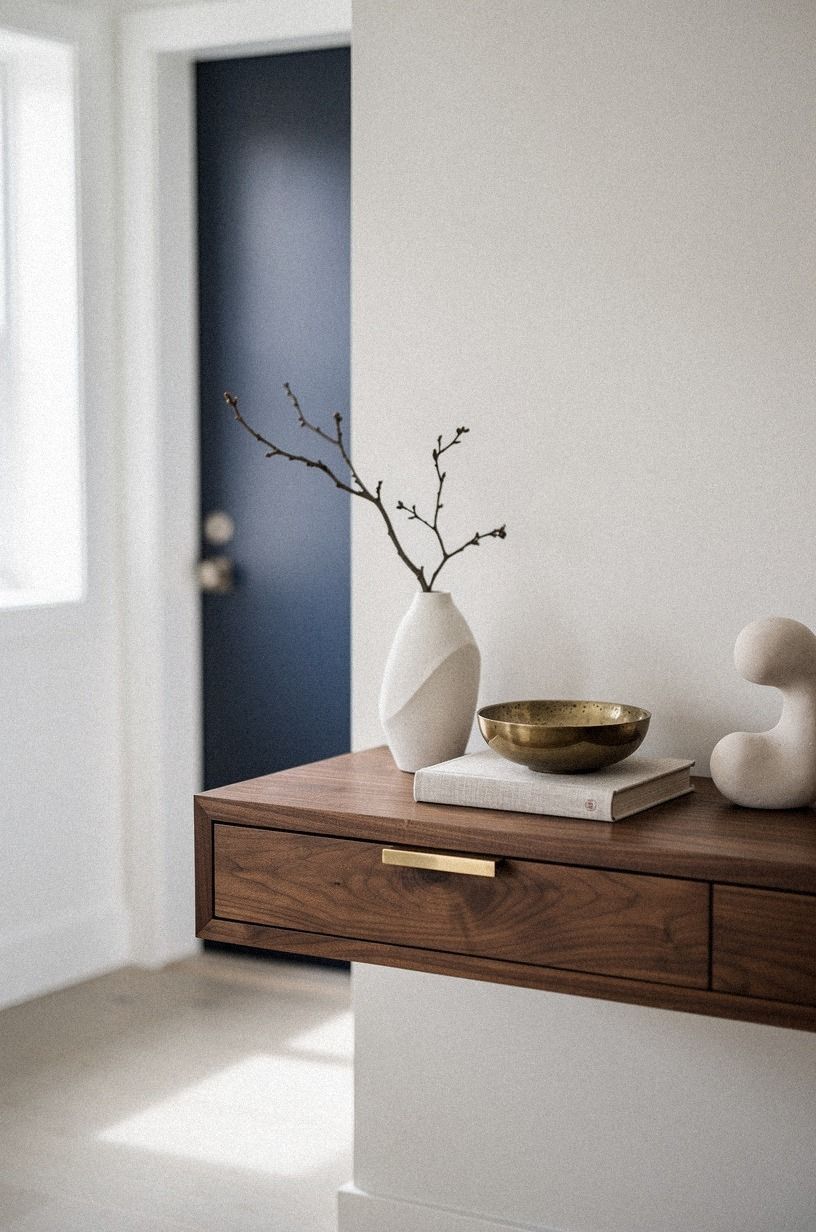
The answer is proportion before decoration. Keep the console shallow, the mirror centered, and the artwork large enough to read while you walk.
A small hallway doesn't need miniature objects everywhere. One confident piece often looks more sophisticated than seven tiny ones.
Try a large artwork panel with an unlacquered brass border above a 30-inch console, then repeat one color from the piece in the runner. Why should a pass-through work harder than a living room?
It shouldn't. Give your eye one clear destination and let the surrounding wall remain quiet.
If you're still unsure, study the transitions from the hallway into nearby rooms and repeat one material, such as oak or aged brass.
For a related palette, see these Nancy Meyers kitchen ideas. The same principle applies there: fewer, stronger decisions create a more memorable room. You want the passage to feel edited, luminous, and easy to live with.
19Instead of matching everything, repeat one finish
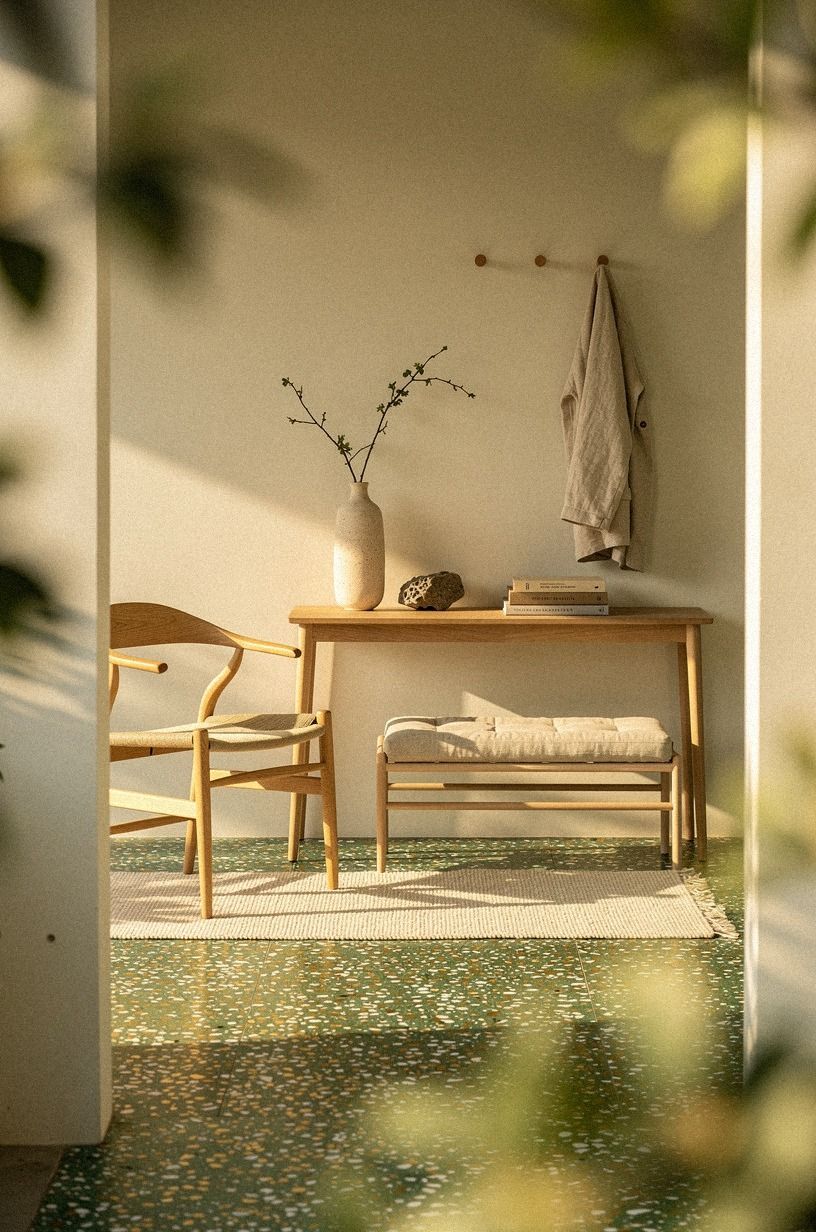
A hallway feels designed when one finish appears three times. Repeat brass in the hooks, lamp base, and frame edge, or repeat oak in the console, picture ledge, and bench. The objects don't need to match.
They need a quiet thread.
Use oversized-chip terrazzo as a small architectural accent when your home has darker floors and warm cream walls. It looks softer than polished brass and hides fingerprints better when paired with practical hardware. I’d avoid buying a complete matching entryway set because the result can feel temporary.
Choose pieces from different sources, then let one repeated finish do the connecting. You'll get a more lived-in, sophisticated hallway with less shopping.
If you want to see how repeated materials create continuity, compare the finish choices in these Nancy Meyers living room ideas. A consistent detail can make the whole house feel more graceful without making every room identical.
Why this hallway style still works
I keep coming back to Nancy Meyers hallways because they understand the difference between warmth and clutter. The best examples aren't packed with objects. They have a generous mirror, a practical place for keys, a runner that softens footsteps, and enough empty wall to let the house breathe.
That restraint is harder to achieve than it looks.
I've made the predictable mistakes. I bought a narrow mirror because it was inexpensive, then watched it disappear above the console.
I chose a pale runner that showed every mark by the second week. I also painted a hallway dark without testing the ceiling, and the whole passage felt lower than it was.
None of those choices ruined the room, but each one taught me to measure before I shop.
The surrounding rooms matter, too. A pass-through isn't a miniature living room.
It’s a connector between rooms, so its materials should borrow from both sides. If the kitchen has white oak, bring a little oak into the hallway.
If the living room has old brass, repeat that finish on the hooks. This is where a house begins to feel composed instead of decorated room by room.
My strongest opinion is that you should spend on the things your body notices: the light, the floor under your feet, and the ease of moving through the space. A budget mirror can work.
A cheap bulb that makes your walls blue is much harder to forgive. Start with the physical experience, then add the pretty layer.
The hallway will feel inviting because it functions well, not because it has more accessories.
If your home needs a broader reset, these Nancy Meyers home office ideas show how a few warm materials can make a practical room feel soulful. You can apply the same thinking here. Let the hallway be useful first, then let it become beautiful.
What People Always Want to Know
What is the best Nancy Meyers hallway idea for a small entryway?
A shallow console with a centered mirror is the strongest starting point. Choose an IKEA KALLAX piece or a slim walnut table, then keep the surface light with one bowl and one lamp. The clear walking lane matters more than extra decor, so measure before you buy.
Where can I buy Nancy Meyers hallway pieces on a budget?
Look at IKEA, Wayfair, and Target for consoles, mirrors, hooks, and runners. Facebook Marketplace and local thrift shops can provide older wood pieces with better character. I’d compare dimensions carefully, because a bargain is not useful if it blocks your door or narrows the passage.
How much does a Nancy Meyers hallway makeover cost?
A typical update can cost about $150 to $600 for paint, hooks, a mirror, basket, and runner. A mid-range setup with a console, bench, lighting, and storage often runs $1,000 to $3,500. Rearranging art and using what you own costs nothing, and that’s often where I’d begin.
Can I create this look on a budget?
Yes, and you can start with three low-cost moves: rearrange existing art, paint one wall, and group your everyday items in a basket. A used mirror or secondhand console can provide more character than a new matching set. Your labor is the biggest free resource!
Is this style worth it in a small space?
Yes, because a small hallway benefits from clear proportions and repeated materials. Use a shallow console, a mirror centered near 57 inches, and a runner with 2 to 3 inches of floor showing on each side. The room will feel calmer because every piece has a job.
Is this a good idea for a rental?
Yes. Use removable hooks, a tension-mounted picture ledge, peel-and-stick paintable wallpaper, and a freestanding console.
Choose a rechargeable picture light instead of hardwiring. You can create the warm, collected feeling without permanent changes, and you can take the useful pieces with you later.
Where I'd Start First
If I had to pick one, I'd start with the mirror. A generously sized frame gives a narrow hallway depth, catches daylight, and makes every later choice easier.
Pin the mirror idea for later, then browse these Nancy Meyers home office ideas for more warm wood inspiration. If you want to connect the hallway to a larger renovation, these Nancy Meyers kitchen ideas are a useful next stop.