
 by
by A Nancy Meyers home office can start at the typical $200 to $800 budget tier, and mine began with a desk I already owned and a room I’d avoided for months. It felt cold. I painted, rearranged, and let the books take over, and now it’s where I want to sit after dinner.
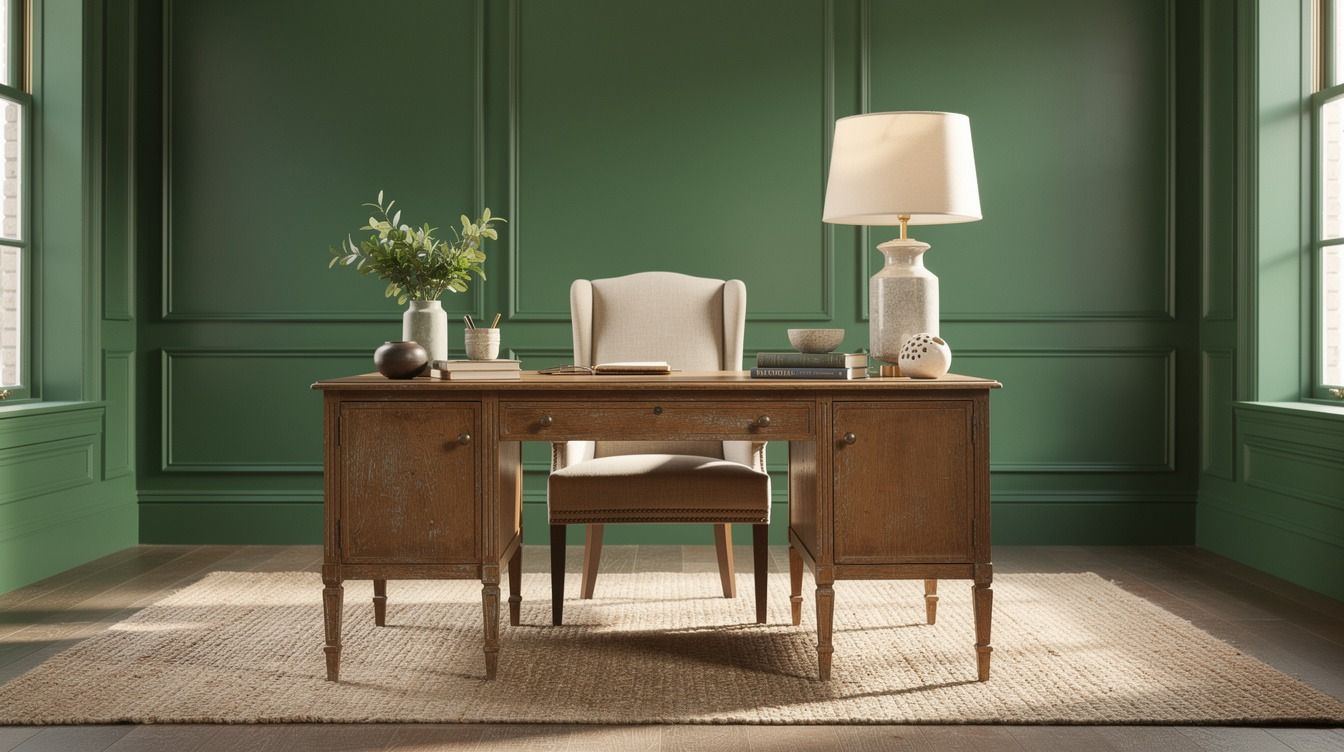
- Paint the walls with the Green Smoke Rule
- Float your desk toward the light
- Build the Two-Wood Rule around your chair
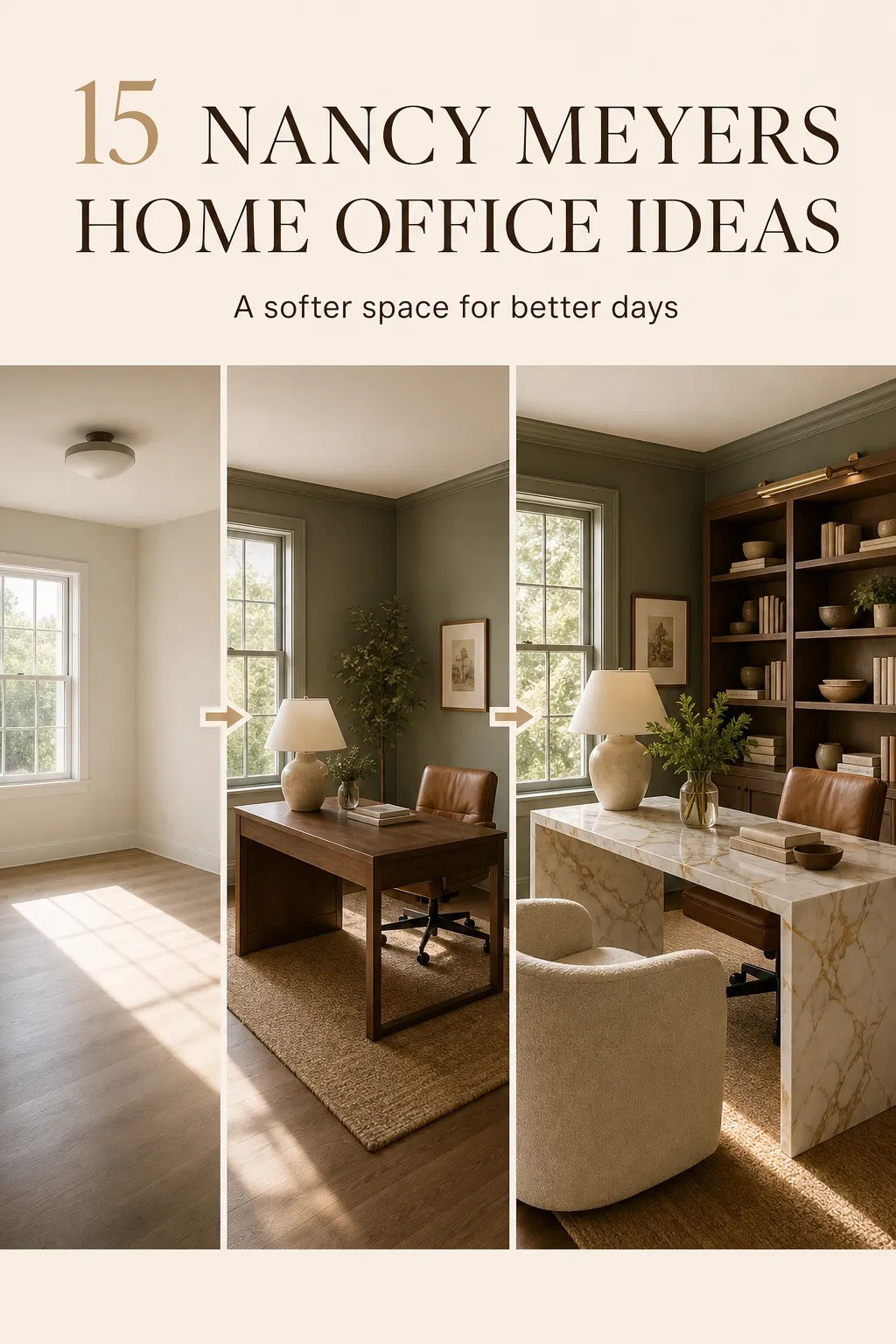
Here's what it looked like before
Before, it had the full 2005 starter-home package: beige walls, one ceiling fixture, a black laminate desk shoved into a corner, and a printer that seemed to collect every loose receipt in the house. I’d walk in with coffee, see the mess, and decide the sofa was a better place to work.
The room wasn’t ugly, exactly. It was blank in the most discouraging way. A narrow window gave me one strip of daylight, but the old faux-wood blinds chopped it into harsh little bars.
I didn’t need a dramatic renovation. I needed a room that made writing feel like an occasion, even if I was answering emails in sweatpants.
- Paint the walls with the Green Smoke Rule
- Float your desk toward the light
- Build the Two-Wood Rule around your chair
- Layer a Belgian flax curtain at the window
- Swap the overhead glare for three light heights
- Why does a skirted table work better than drawers?
- Hang shelves 12 to 16 inches above the desk
- Choose a chair that looks lived-in from every angle
- Let books make the room look like yours
- Frame the desk with a gallery that isn’t too precious
- Add a rug before buying another cabinet
- Mix open storage with one hidden mess zone
- Put a reading lamp where you’ll avoid scrolling
- Use Iron Ore only where the room needs weight
- Finish with the things you reach for every day
1Paint the walls with the Green Smoke Rule
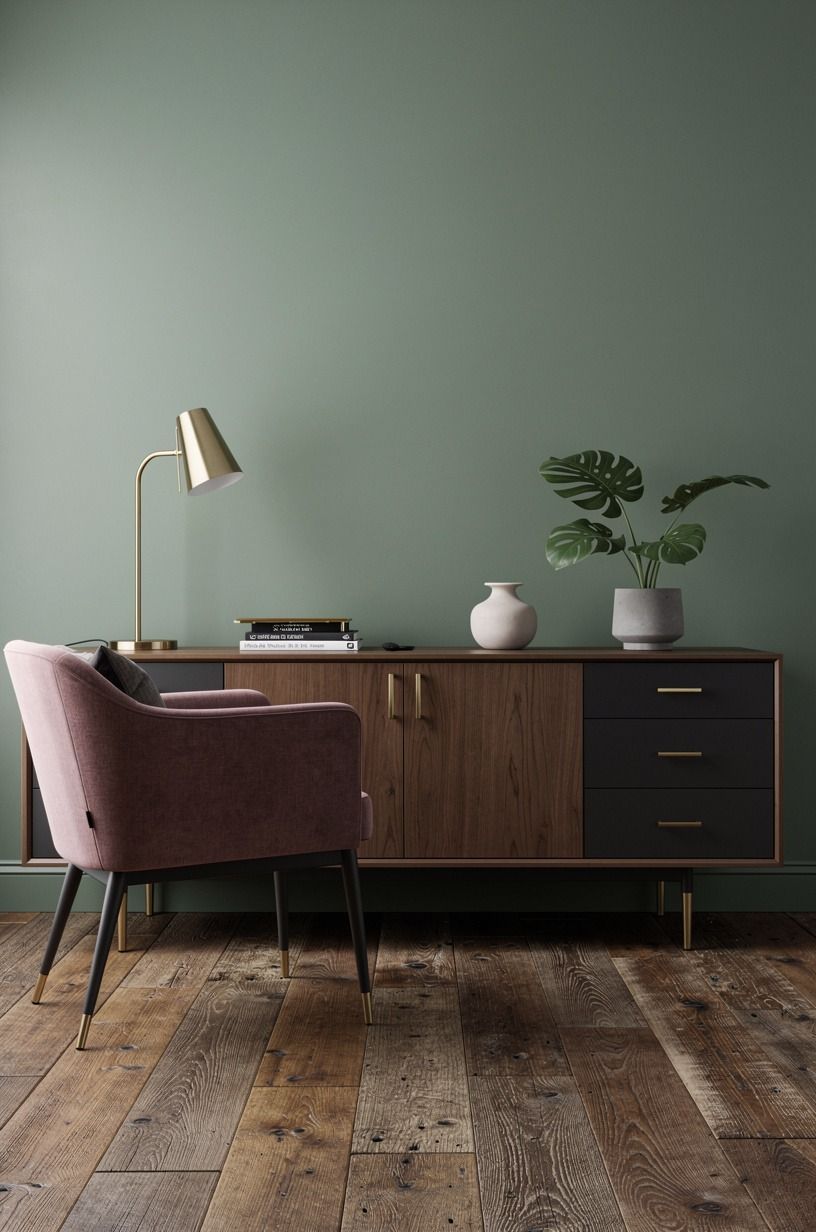
I chose a dusty rose wall color because I wanted the room to feel soft at breakfast and moody by late afternoon. It sits beautifully with charcoal accents, reclaimed weathered teak, and brass instead of fighting them the way a bright sage can beside white paper and a laptop screen.
The color changed with the window, and that’s the point. In morning light, it read gentle and faded; at night, it held the warm glow from my brass lamp. You don’t need to paint every room this way, but your office can handle a little atmosphere.
I painted the trim in Benjamin Moore White Dove OC-17 to keep the rose from swallowing the room. Two paint colors, one small office, huge difference!
2Float your desk toward the light
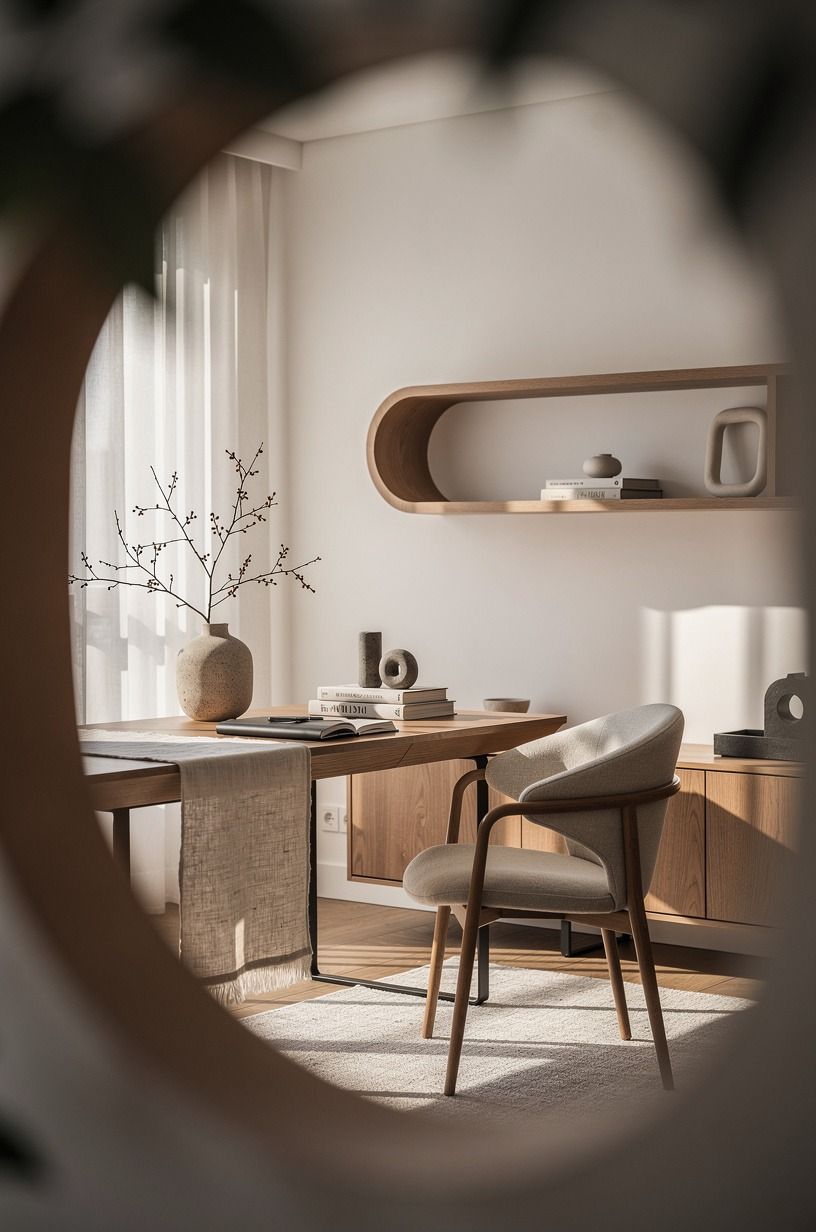
Moving the desk away from the wall felt backwards at first. But placing it perpendicular to the window gave me a view without putting glare directly on the screen.
I softened the work surface with washed Belgian linen in warm white and camel, then kept the black accents restrained. You’ll want the desk top at 29 to 30 inches high, especially if you’re sitting for a long stretch.
I left 42 inches behind the chair, which stopped the room from feeling like a furniture obstacle course. That clearance matters more than a larger desk, honestly. Your chair needs room to roll back without hitting a bookcase every single time.
For a smaller home office Nancy Meyers look, I’d rather see a narrow desk centered with intention than a giant executive desk crammed against drywall. Less impressive on paper. Much better in real life.
3Build the Two-Wood Rule around your chair
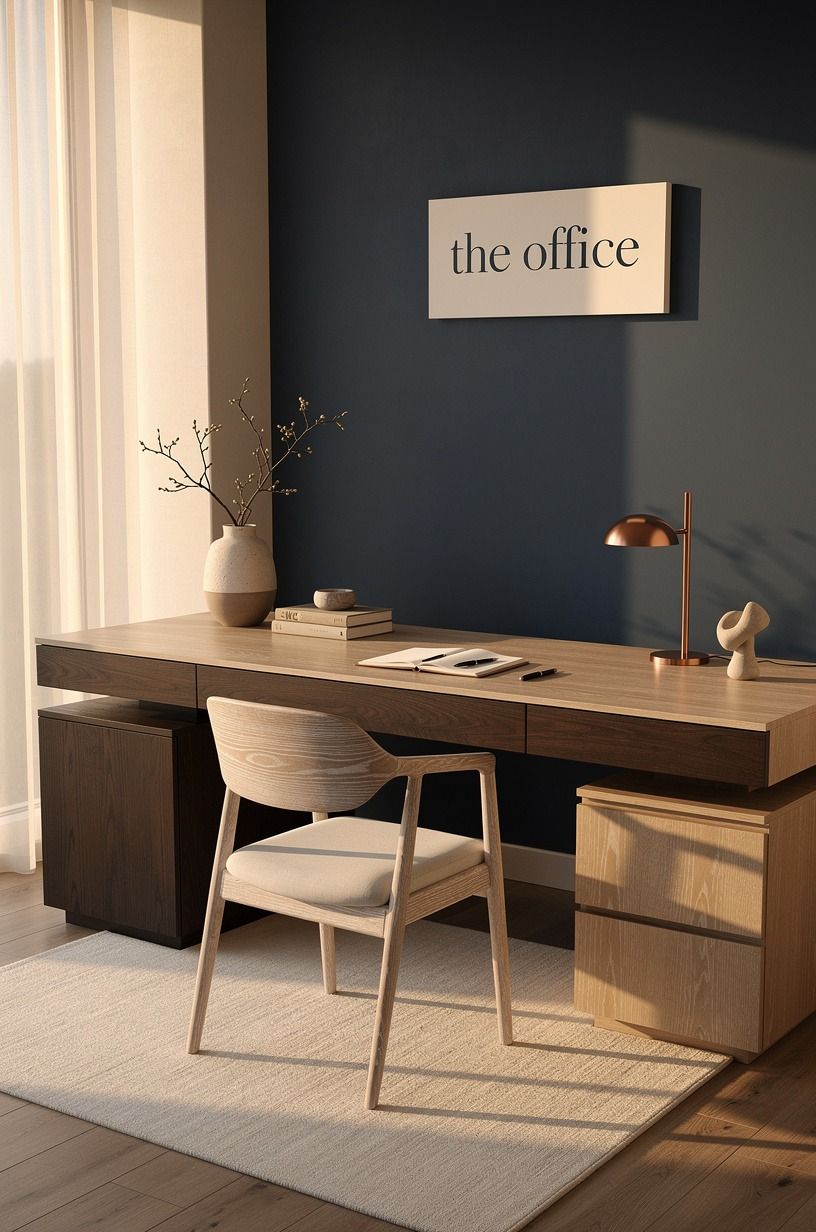
The first version had pale wood everywhere. Desk, frame, shelf, floor, chair legs.
It looked like a showroom that forgot people lived there. I kept the cerused white oak near the desk, then brought in midnight blue, copper, and ivory around the chair and stopped at two wood tones.
You can use this rule in your country chic office, too: one pale wood, one deeper wood, then let fabric soften the gap. Your eye gets contrast without feeling bounced around. I learned this after buying a third mismatched wood stool, and yes, it went straight back.
The room became more inviting once the darker notes appeared in small places. A frame.
A pencil cup. The edge of a vintage tray.
Enough.
4Layer a Belgian flax curtain at the window
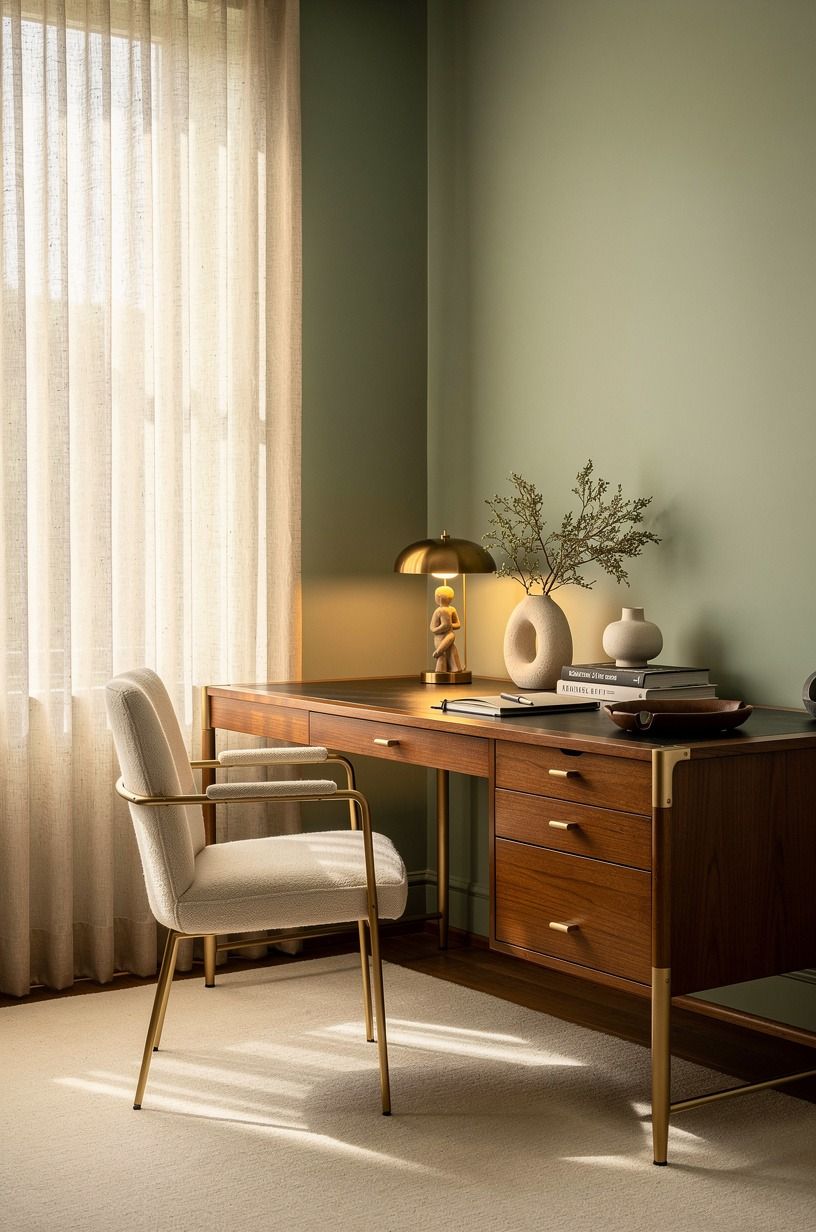
I installed a tension rod and hung soft sage-green and warm-cream panels at the window. You can do this without drilling, which makes it a rental-friendly move, and your window will look taller if you mount the rod close to the ceiling.
The fabric filters the hard noon sun instead of blocking it. That’s better than heavy blackout curtains in an office, unless you enjoy writing in a cave. I don’t.
My panels cost less than replacing the blinds, and they made the room feel instantly more peaceful. Natural wood and small shagreen accents kept the softness from becoming too sweet.
And the slight rumple is important. Ironed-to-death linen has no charm.
If you’re drawn to the same soft window treatment, these breakfast nook curtain ideas use the same relaxed logic in a smaller footprint.
5Swap the overhead glare for three light heights
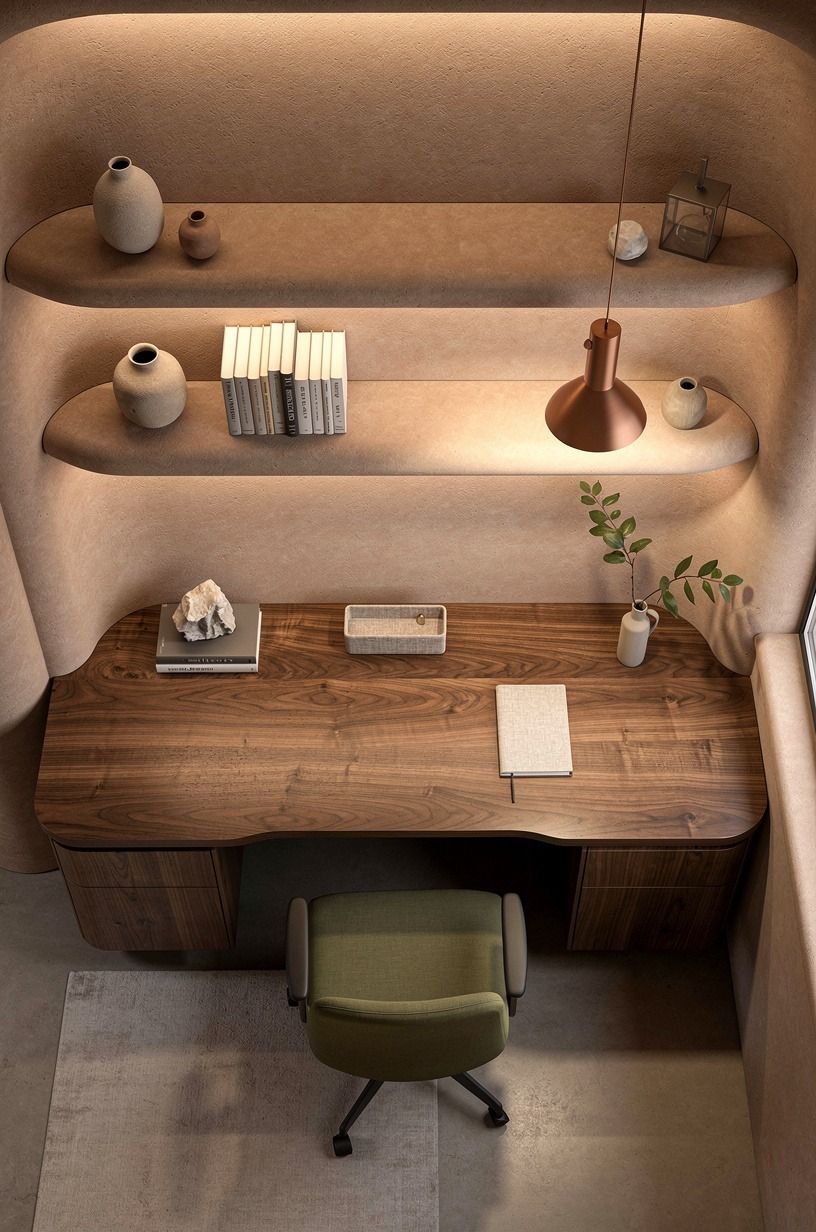
The ceiling light stayed, but I stopped relying on it. My Three-Height Light Stack has a desk lamp, a reading sconce, and one low lamp on the bookcase. You need all three if your workday spills into the evening.
I chose an aged bronze pharmacy lamp for the desk, then added a plug-in sconce beside the reading chair. Terracotta, stone, and olive kept the light feeling earthy, while book-matched walnut gave the room a little depth.
A reading sconce typically costs $80 to $300, and this is where I’d spend before buying another decorative object. The lamp throws a pool of amber right onto the paper, not across your whole face. Much kinder.
6Why does a skirted table work better than drawers?
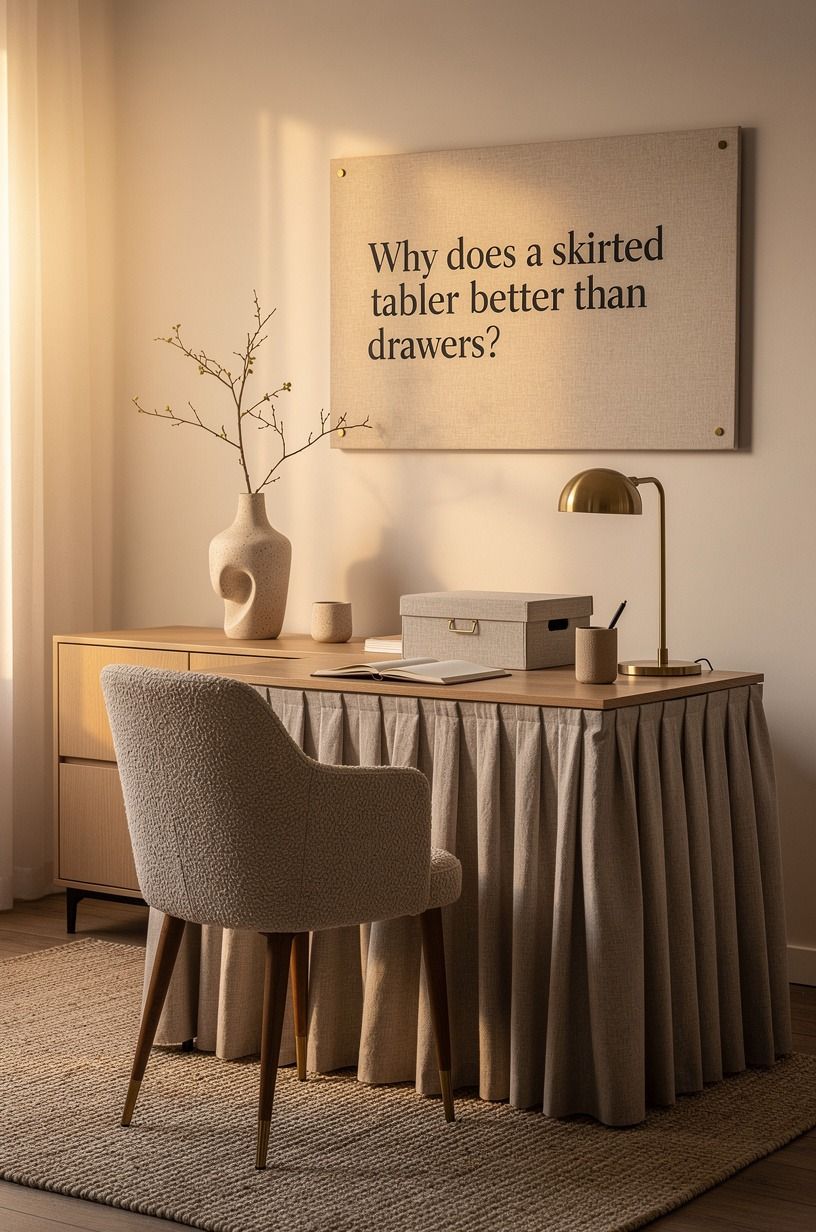
Because drawers invite clutter to become permanent. I used a small round side table with an organic bouclé skirt beside my chair, and you can hide a charger, notebook stack, or printer paper underneath without adding another hard-edged storage piece.
The skirt also breaks up all the furniture legs. Your vintage style office needs one softer silhouette, particularly if the desk and bookcase are both boxy.
I’d skip a pleated polyester skirt, though. It looks stiff by the second week.
Mine holds a mug, a lamp, and whatever book I’m pretending I’ll finish. Clay, linen, and aged brass make that little bit of mess feel like it belongs there.
7Hang shelves 12 to 16 inches above the desk
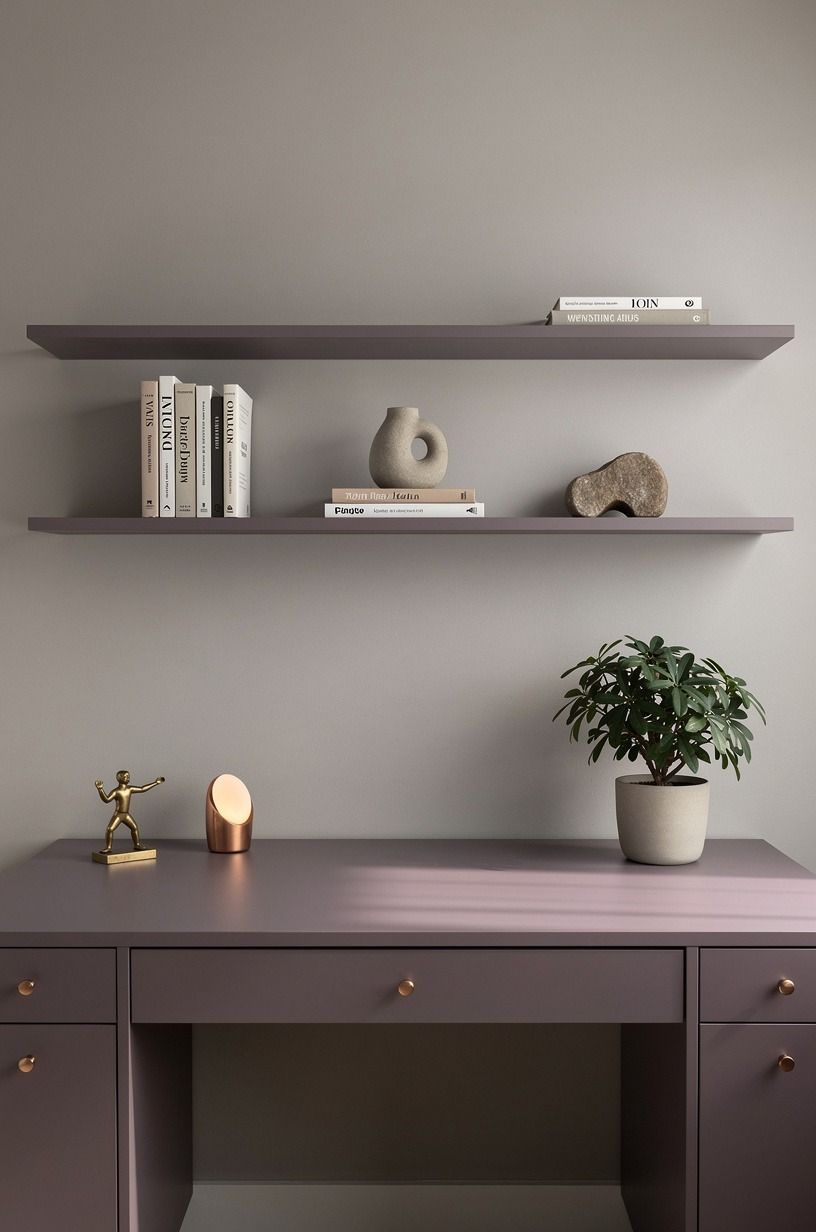
I made the mistake of hanging shelves too high once. They looked fine from the doorway, but I couldn’t reach a notebook without standing up. This time, I set the first shelf 12 to 16 inches above the desk, where you can grab a reference book while staying seated.
Your shelf should be useful before it’s decorative. A shallow 24-inch-deep desk needs breathing room above it, so I used slim shelves and left a quiet strip of plum-painted wall between each level.
Books with worn cloth covers. A framed postcard.
One rose-gold pencil cup. The unlacquered brass nearby will develop a gentle patina, which keeps the arrangement from feeling too new.
For more wall-based storage that doesn’t crowd your feet, browse these moody green home office ideas.
8Choose a chair that looks lived-in from every angle
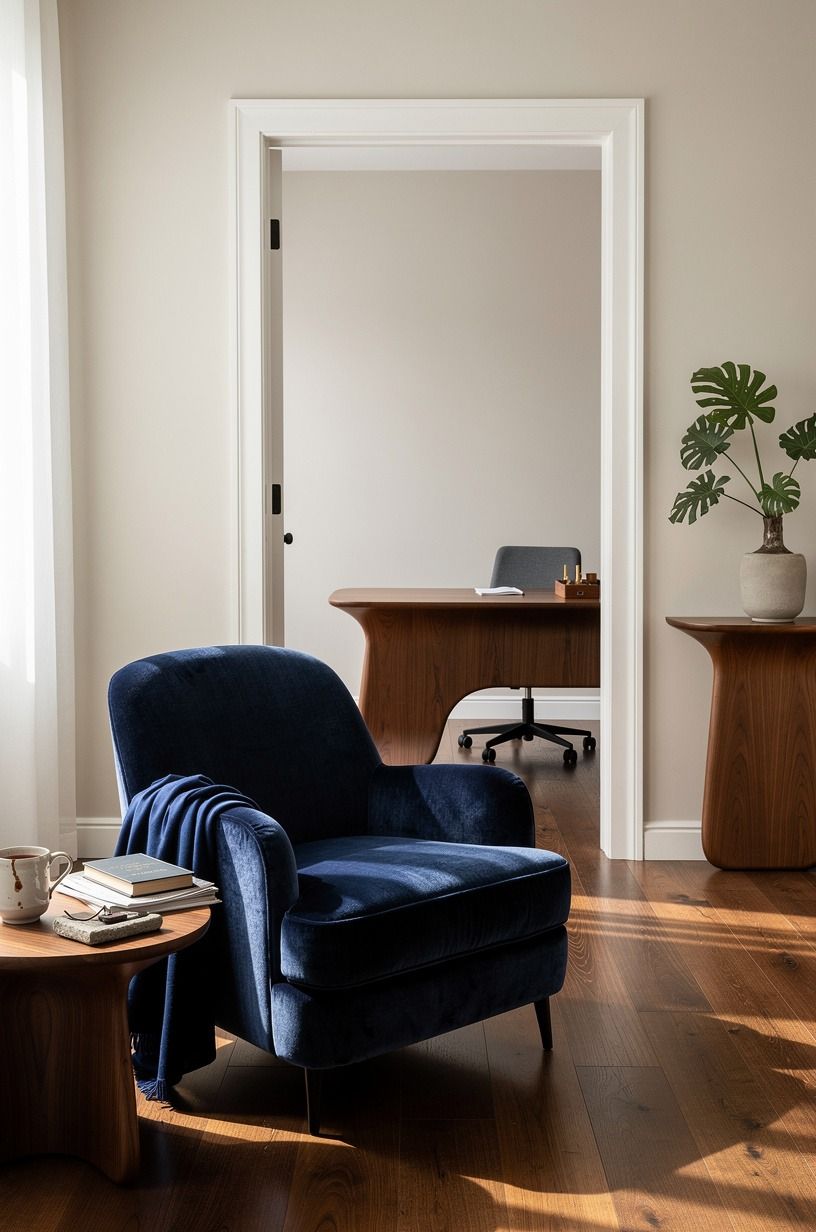
I went back and forth on the chair because ergonomic office chairs can be ugly, and pretty dining chairs can make your back complain by 2 p.m.
A deep-pile mohair velvet chair in navy, white, and walnut tones gave me the softness I wanted without making the room feel precious. Choose one you can actually settle into with a book, a blanket, or a long stretch of work.
9Let books make the room look like yours
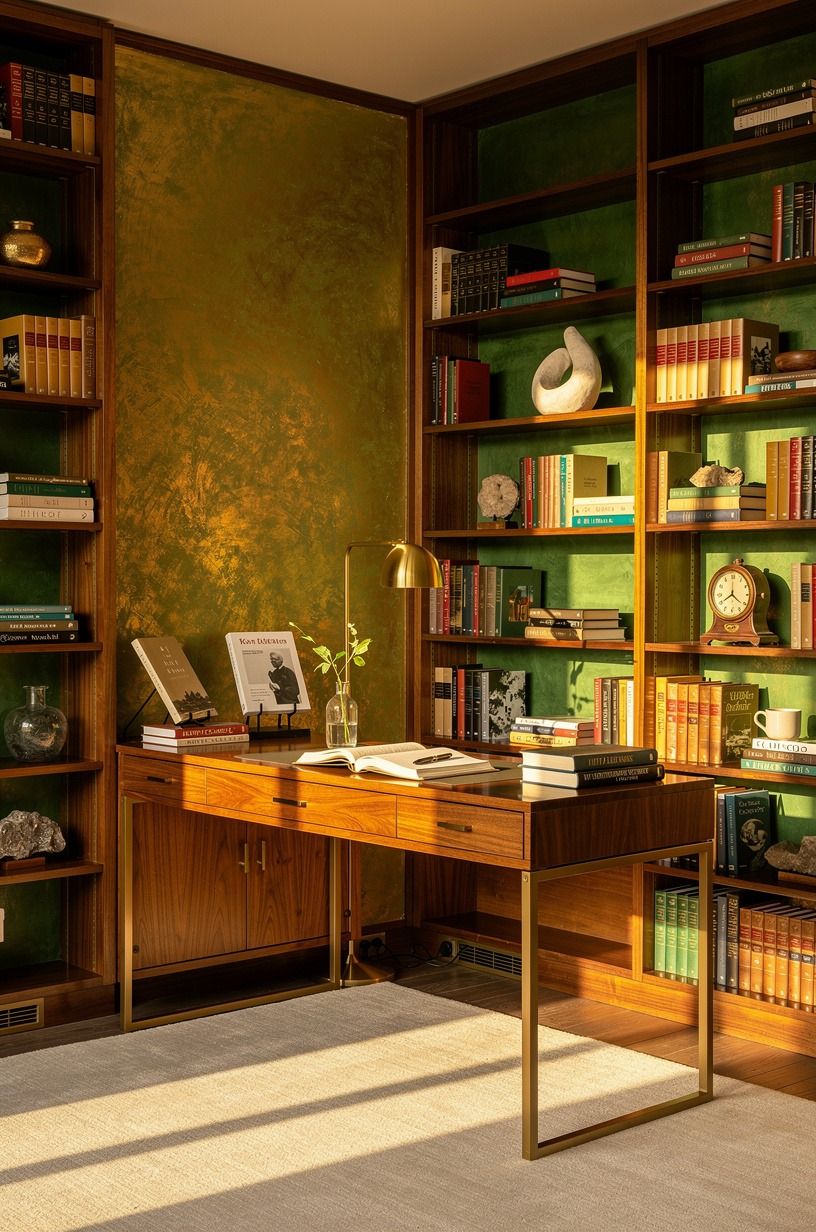
A Nancy Meyers room without books feels suspiciously unfinished to me. I didn’t arrange mine by color because that’s a fast route to making your shelves look staged. Instead, I grouped novels, cookbooks, old magazines, and a few reference books by rough height.
You can stack some horizontally and let the spines stay imperfect. Your office shouldn’t look like a library display that nobody is allowed to touch. I slipped in vintage brass bookends and left one leaning stack near the edge.
But don’t fill every shelf. Emerald, gold, and cream look especially rich against hand-applied Venetian plaster, while empty space gives worn paper, faded cloth jackets, and little objects somewhere to breathe.
10Frame the desk with a gallery that isn’t too precious
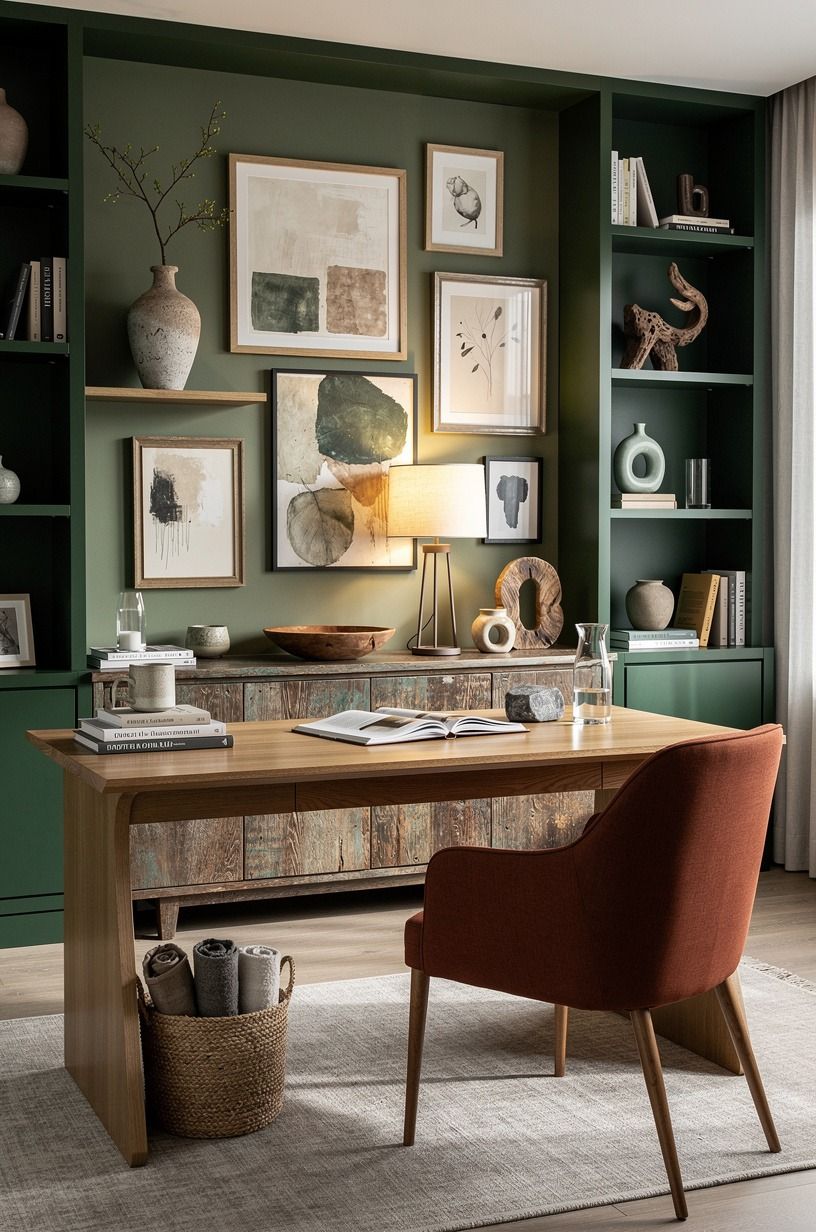
I used family snapshots, a museum postcard, one pencil drawing, and a thrifted landscape in antique gold frames. Your gallery wall doesn’t need a story anyone else understands, but it should make you pause for half a second when you look up.
The arrangement started on the floor. Then I moved two frames farther apart than I thought I should, and it stopped feeling fussy. Forest green, rust, and natural oak gave the wall warmth, while reclaimed weathered teak kept the collection from feeling too polished.
A small frame near the desk can hold a recipe, a handwritten note, or a photograph from a trip. The room gets more comforting when it carries evidence of your life.
The same collected approach works beyond the office, especially in these Nancy Meyers living room ideas.
11Add a rug before buying another cabinet
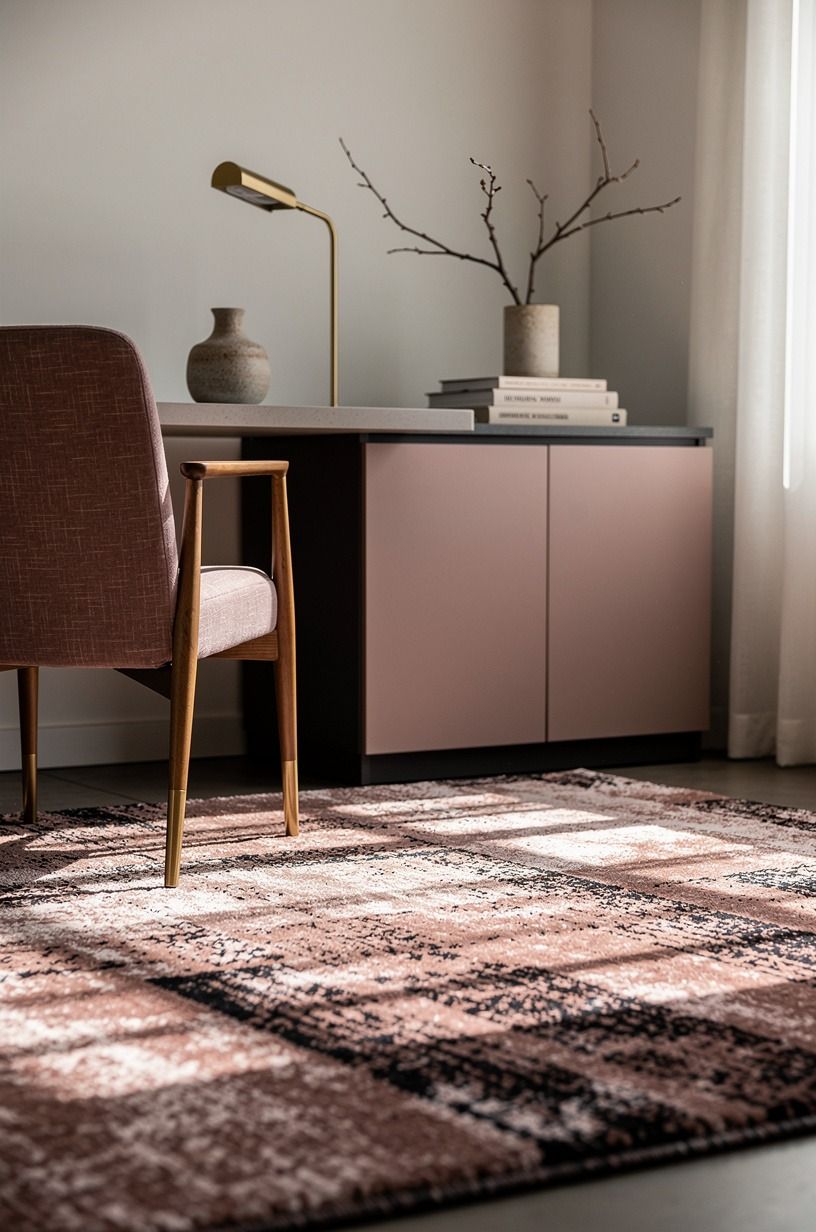
I almost bought a storage cabinet first. Then I put down an 8x10 dusty-rose, charcoal, and brass rug, and the office finally had a center. You’ll feel the change under your chair wheels and bare feet before you notice it visually.
A rug also quiets a small office. The room used to echo during calls, which made it feel sparse no matter how many books I added. Reclaimed weathered teak and the darker rug tones gave the room weight without making it gloomy.
Your rug doesn’t need to match the curtains. It needs to anchor the desk, chair, and reading spot into one warm little territory.
12Mix open storage with one hidden mess zone
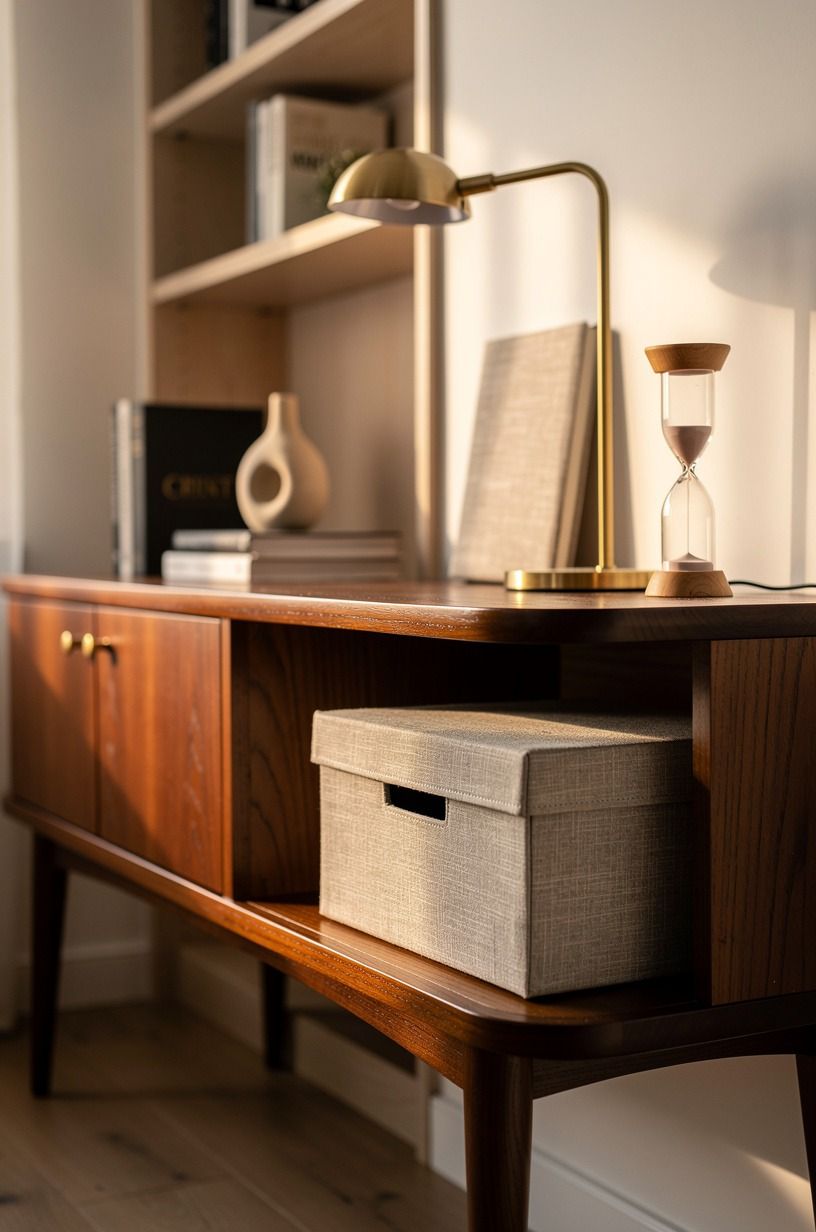
Open shelves are lovely until you need somewhere to put cables, tax papers, and the charger that belongs to nothing anyone recognizes. I used an IKEA KALLAX birch-effect unit with two closed inserts at the bottom, then left the upper cubes open for books and baskets.
You can keep the pretty objects visible and the boring stuff out of sight. Warm white, camel, and black accents make the balance feel believable rather than theatrical, especially beside cerused white oak. I’d avoid filling every cube with matching fabric bins, since the pattern starts to feel rigid.
My hidden zone is not glamorous. Labels, extra cords, the stapler, a very old planner. Still, it keeps the desktop clear, and that’s worth more than another vase.
13Put a reading lamp where you’ll avoid scrolling
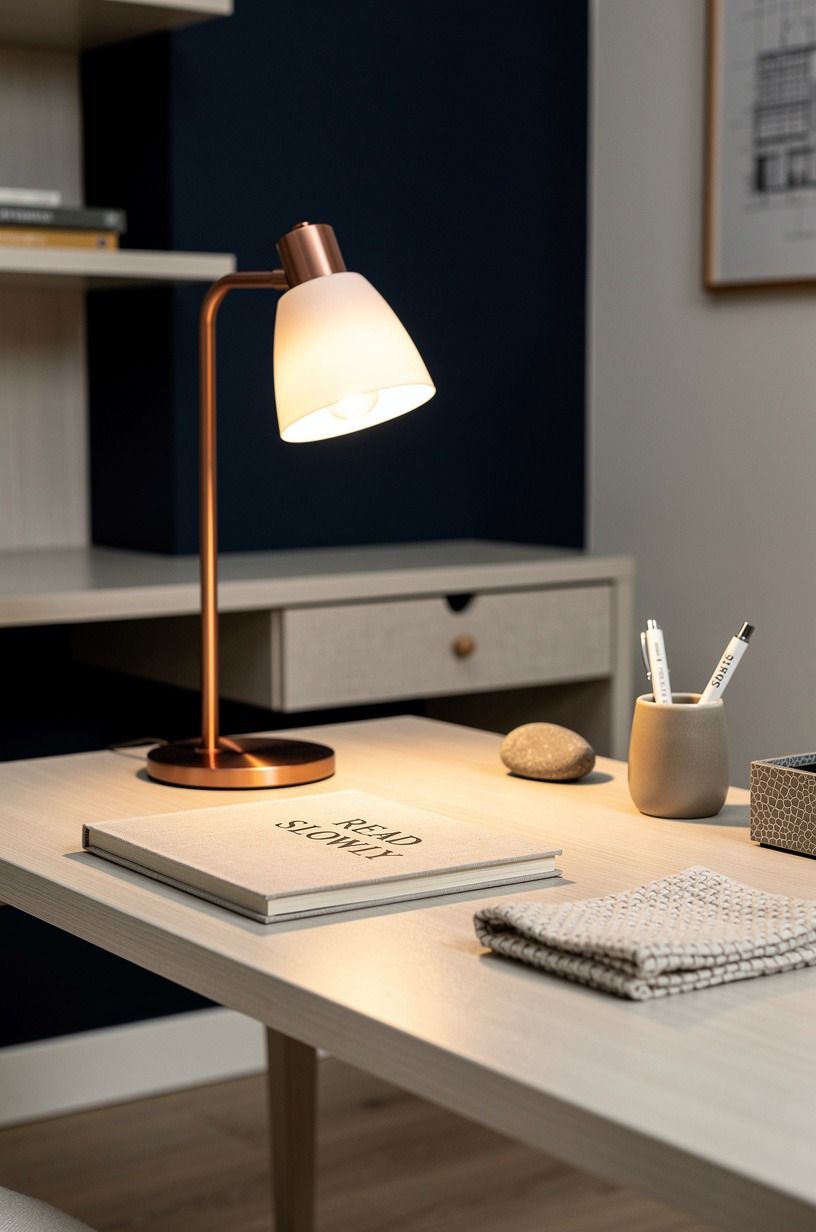
This was the emotional turning point. I placed a reading lamp beside the chair, added a small stack of books, and suddenly I had somewhere to sit that wasn’t my desk or the sofa.
You can create a reading corner even in a modest office if you give it one job. No laptop stand.
No rolling cart. Just a chair, light, and a place for tea.
What else do you need after a long day?
Midnight blue, copper, and ivory made the corner feel settled, while a small shagreen accent added texture without clutter. And yes, I’ve started reading there instead of scrolling. Miraculous!
14Use Iron Ore only where the room needs weight
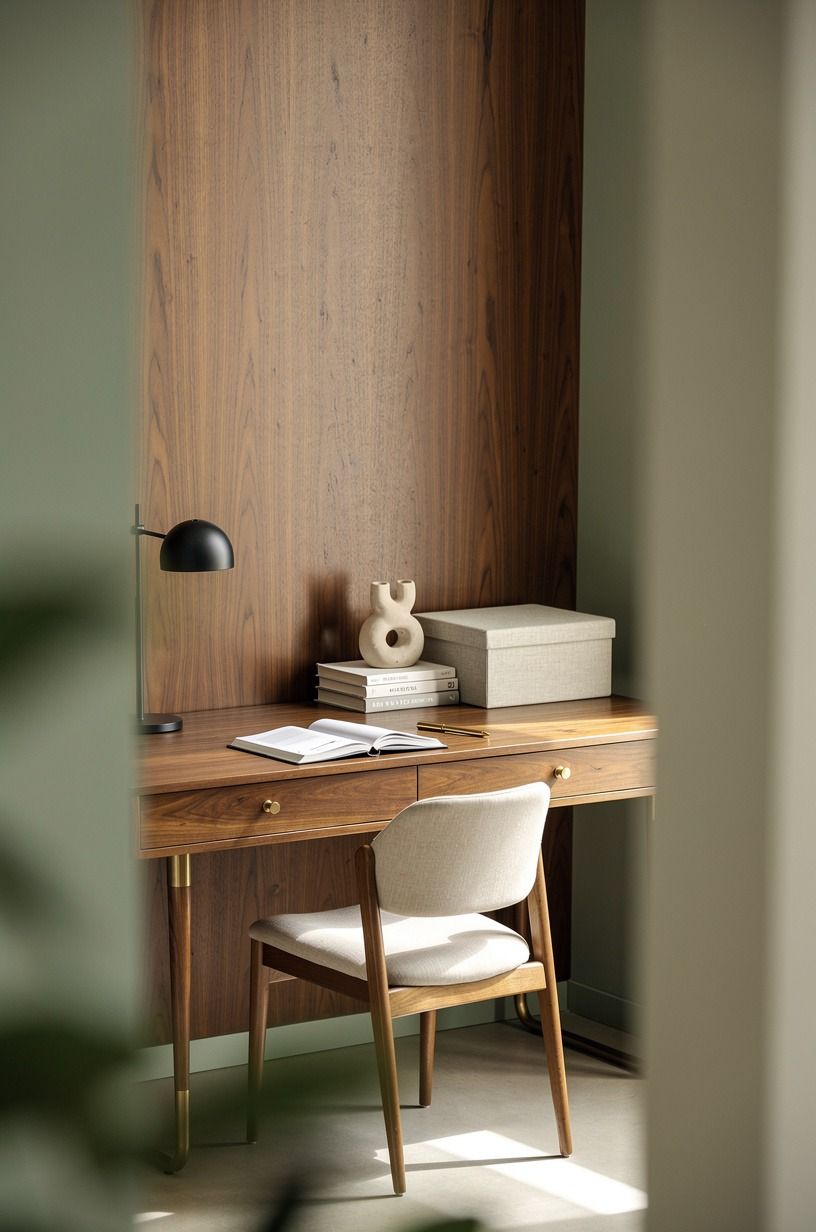
I painted the back of the bookcase in Sherwin-Williams Iron Ore SW 7069, not the entire room. You can use a dark paint in a home office without making it gloomy, but it needs a clear boundary.
The nearly black charcoal made the books and brass pop, while sage green, warm cream, and natural wood kept the rest of the room gentle. Book-matched walnut added another darker note without taking over.
A dark bookcase back gives your eye a place to land. It also makes inexpensive shelves look more deliberate, which is a very satisfying return for one afternoon of paint.
For another version of this color story, these moody green home office ideas show why deep walls need warm lighting beside them.
15Finish with the things you reach for every day
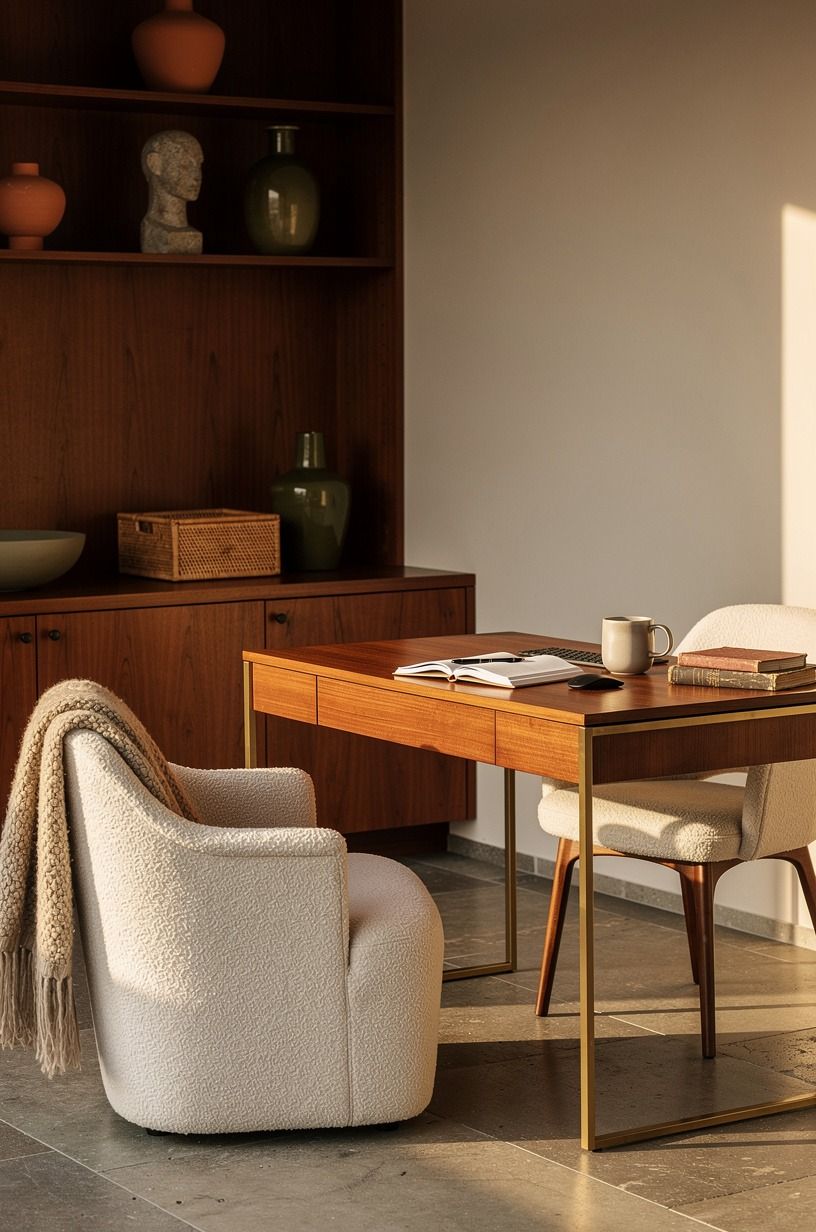
The last layer wasn’t decorative, really. It was useful things chosen with a little care: a leather-bound weekly planner, a ceramic mug, an organic bouclé catchall, and a small bowl for paper clips.
You should see the objects you use, not hide every trace of work. That’s how the room stays lived-in instead of becoming a space you’re scared to disturb. I kept one woven basket under the desk for files, because I’m not pretending paperwork vanished.
Terracotta, stone, and olive made the final layer feel warm without adding visual noise. My final edit was removing half the accessories I’d gathered. The room became more refined once the desktop had space for an elbow, a notebook, and a real cup of coffee.
How much it cost
My room landed in the budget tier because I kept the existing desk, did the painting myself, and used secondhand frames. You can spend much more on custom millwork, but you don’t need it for a charming, functional study.
My biggest paid choices were the window panels, the aged bronze lamp, and the rug. I saved by keeping the desk, shopping local thrift stores for frames, and using a tension rod instead of custom hardware.
If your office needs a desk, chair, and bookcase all at once, the mid-range estimate is more realistic. But if you already have a workable desk, $200 to $800 can change the whole feeling of the room.
Why this look feels better than a styled office
I think Nancy Meyers interiors are having a moment because people are tired of rooms that look good only in theory. We work at home, eat at home, read at home, and sometimes sit in the same chair for eight hours. Your office has to hold real life, not just a color palette.
I’ve tried the ultra-minimal version. It feels clean, but it made me feel like I was borrowing someone else’s workspace.
The rooms I return to have friction in them: a stack of books, a lamp with a slightly crooked shade, an old frame beside something new. Not chaos.
Evidence.
The design rule underneath all this is simple: let function look human. Your desk should have a clear working surface, but it shouldn’t look sterile. Your storage should contain the ugly stuff, but it shouldn’t erase every personal object.
Your lighting should help you see, but it should also make 7 p.m. feel different from 10 a.m.
That’s why I don’t love buying a full matching office collection. You get convenience, sure, but you lose the slow accumulation that makes a room feel honest.
A dark bookcase beside pale linen. Oak beside walnut.
A proper chair beside an old landscape painting. Those tiny disagreements are where the warmth lives.
And there’s an economic side, too. I’d put money into the chair, the rug, and the lighting before custom cabinetry.
Built-ins are lovely, but a $2,000 to $8,000 custom bookcase won’t rescue harsh lighting or a desk that gives you nowhere to put your legs. Start with how your body uses the room.
Then make it pretty.
The Questions Worth Answering First
What is the best Nancy Meyers home office look for a small office?
The best small-office version is a narrow desk, one upholstered reading chair, and vertical shelves. IKEA KALLAX birch-effect storage gives you useful height without adding bulk, while linen curtains soften the edges.
- A 24-inch-deep desk - One warm task lamp - A framed wall above the desk
You can borrow more scale ideas from these Nancy Meyers bedroom ideas.
Where can I buy Nancy Meyers home office pieces on a budget?
Start with IKEA HEMNES, Target Threshold, Wayfair, and your local thrift store. Secondhand frames and lamps are often better than new ones because their finish already has some character.
- Facebook Marketplace desks - Thrifted brass frames - Target linen-look panels
You’ll get further by mixing sources than by ordering one matching set.
How much does a Nancy Meyers home office makeover cost?
A basic makeover costs about $200 to $800 if you paint, add shelves, improve task lighting, and reuse furniture. Keeping your desk is the biggest free saving, while a chair and rug raise the total quickly.
- Paint and supplies - Tension-rod curtains - Secondhand art
You can make a meaningful change without touching the walls permanently.
Can I create a Nancy Meyers home office on a budget?
Yes, and your cheapest moves are often the most convincing. Books, framed paper, and softer light make a plain office feel lived-in without requiring a major purchase.
- Rearranged furniture - Borrowed books - A thrifted lamp shade
But don’t spend on tiny decor before your chair and lighting work properly.
Is a Nancy Meyers home office worth it in a small space?
Yes, it’s especially worth it in a small space because each useful layer does double duty. A reading chair can soften the office while giving you a spot away from the desk.
- Desk near daylight - Shelves above eye level - One concealed storage zone
The smaller room forces you to choose well, which usually makes it more peaceful.
Is a Nancy Meyers home office a good idea for a rental?
Yes, because you can get the feeling without permanent work. Removable changes carry most of the mood, from tension-rod curtains to plug-in sconces and peel-and-stick bookcase backs.
- Removable wallpaper - Plug-in lighting - Leaning art
For more low-commitment fabric ideas, see these kitchen cabinet curtain ideas.
Where I’d Start First
If I had to pick one, I’d start with the lighting. You can’t make a room feel welcoming under one harsh ceiling bulb, no matter how many books you stack. Pin the three-light approach for later, then let your office earn its evening mood.