
 by
by Nectar wins for budget shoppers who want a full-year trial and solid memory foam under $1,000. Tempurpedic wins for premium buyers who want the deepest foam contour and a 10+ year durability record, and can stomach a short 90-night trial. If you want something that beats both on trial length, warranty, and delivery perks, the Saatva Classic is worth a look before you commit to either.
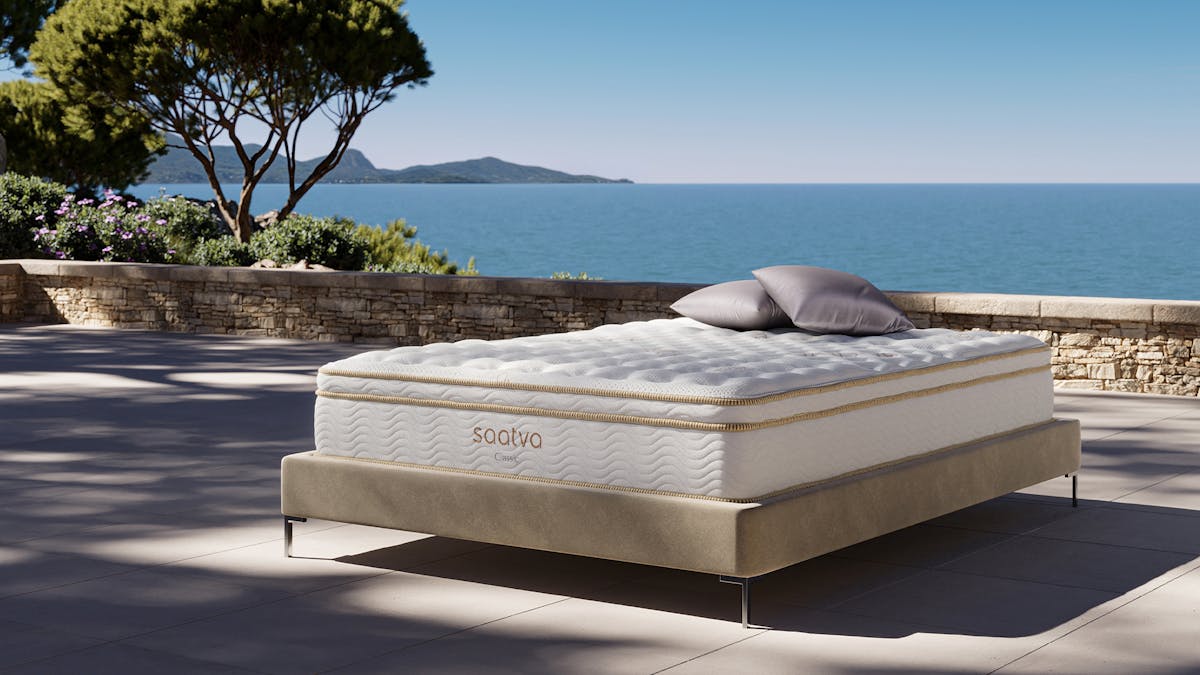
Saatva Classic
9.2/10
- 365-night home trial — matches Nectar, triples Tempurpedic's 90 nights
- Lifetime warranty beats both (Nectar's Forever terms cap at year 10, Tempurpedic is 10 years flat)
- Free white-glove delivery and old mattress removal included — both competitors charge extra
- Dual-coil innerspring with lumbar zone pad, more responsive than all-foam beds
- Three firmness levels (Plush Soft, Luxury Firm, Firm) and two heights
- Ships flat, not compressed — needs a delivery window, not a drop-on-porch box
- $99 return processing fee if you decide to return during the trial
- Innerspring feel is different from the deep foam hug of Nectar or Tempurpedic
For the buyer who is shopping Nectar vs Tempurpedic and wants the longest trial, a true Lifetime warranty, and free setup included, the Saatva Classic covers most of the bases both competitors fall short on, at a price that lands well below any Tempurpedic model worth buying.
Nectar Overview
Nectar is the budget memory foam brand that popularized the 365-night trial. The current lineup runs from the Classic Memory Foam (around $699 queen, 12 inches, medium-firm) through the Classic Hybrid, Premier, and Luxe tiers up to roughly $1,500 queen. Every model uses a gel-infused comfort layer over a high-density polyfoam core, with a CertiPUR-US certified foam stack and a quilted cover. The trial is 365 nights for every model, which is one of the longest in the industry. The Forever Warranty covers manufacturing defects and excessive sagging, though after year 10 Nectar may charge for shipping or handling on replacements.
Nectar's main strengths: price-to-trial ratio, solid motion isolation, and a classic foam hug that suits side sleepers and couples. The entry Classic can show wear faster under heavier sleepers, and all-foam construction means weaker edge support than a hybrid. Returns during the trial require Nectar to arrange pickup, which works smoothly in most urban markets.
Tempurpedic Overview
Tempurpedic built the premium memory foam category in 1992, using NASA-developed pressure-relief foam. The 2026 lineup spans six collections: Cloud (~$1,999 queen, entry all-foam), Adapt 2.0 (~$2,199-$2,499), ProAdapt (~$3,399), LuxeAdapt (~$4,299), ProBreeze (~$4,399), and LuxeBreeze (~$5,599). Hybrid variants with pocketed coils are available on several lines. The Breeze models use phase-change materials and multi-layer cooling covers to actively pull heat away. Every Tempurpedic uses proprietary TEMPUR material, a high-density slow-response foam that no competitor has licensed.
Tempurpedic's main strengths: the deepest slow-contour feel in the category, best-in-class motion isolation, and proven durability — owner reports consistently reach 12-15 years. The 90-night trial and 10-year limited warranty are its weakest policy points. White-glove delivery is available but not always free, depending on the model and region.
Side-by-Side Spec Comparison
| Feature | Nectar | Tempurpedic | Saatva Classic |
|---|---|---|---|
| Type | All-foam (memory foam) | Memory foam, hybrid options | Innerspring hybrid (coil-on-coil) |
| Firmness options | Medium-firm only | Soft / Medium / Firm by model | Plush Soft / Luxury Firm / Firm |
| Trial period | 365 nights | 90 nights | 365 nights |
| Warranty | Forever (terms shift at year 10) | 10 years limited | Lifetime |
| Queen price range | ~$699 to $1,500 | ~$1,999 to $5,599 | ~$1,995 |
| Free white-glove delivery | No (paid) | No (varies by model) | Yes — always included |
| Old mattress removal | Not offered | Not offered | Free |
| Motion isolation | Excellent | Best in class | Very good |
| Edge support | Weak (all-foam) | Weak on all-foam, good on hybrids | Strong (reinforced border rod) |
| Cooling | Moderate (gel-infused) | Strong on Breeze line, moderate on standard | Good (organic cotton cover, coil airflow) |
Performance Differences That Matter
Pressure relief and contouring
Tempurpedic wins on raw contouring. The proprietary TEMPUR material on a LuxeAdapt or ProAdapt holds the body in a way no Nectar model matches. Nectar delivers solid pressure relief at one-third the price, which is exactly the trade buyers are making. The Saatva Classic feels more responsive than either foam bed, which suits back and stomach sleepers more than side sleepers who want deep foam hug.
Motion isolation
Both Nectar and Tempurpedic score at the top of the category for motion isolation. All-foam construction absorbs motion at the source. Saatva's individually wrapped coils are not as dead-quiet as the foam beds but are better than traditional open coils.
Cooling
The standard Nectar Classic and standard Tempurpedic Adapt run roughly even on heat retention — both trap more warmth than hybrid beds at the same firmness. The Tempurpedic ProBreeze and LuxeBreeze lines use phase-change covers and are measurably cooler, but at $4,000-$5,500 queen you are paying a serious premium for that feature. The Saatva Classic breathes better than either entry-level foam bed due to coil airflow and an organic cotton cover.
Durability
Tempurpedic wins long-term. TEMPUR foam holds up 12-15 years under normal use, and the brand has the track record to prove it. Nectar Premier and Luxe models reach 10+ years according to owner data; the entry Classic shows comfort layer wear sooner on heavier sleepers. Saatva's coil-on-coil build is rated 12-15+ years, backed by the Lifetime warranty.
Off-gassing
Tempurpedic Adapt line has a stronger initial smell that can take 3-5 days to clear. Nectar typically clears in 24-48 hours. Saatva, with a CertiPUR-US foam layer and a cotton-tufted cover, has minimal off-gassing that usually dissipates within hours of setup.
Who Should Pick Nectar
- Budget-conscious buyers who want memory foam feel under $1,000 for a queen
- Side sleepers who want a deeper foam hug without spending $3,000
- Couples who need excellent motion isolation on a budget
- Anyone who needs a full year to decide — the 365-night trial is the longest in the budget-to-mid segment
Who Should Pick Tempurpedic
- Chronic pain sleepers who need the deepest slow-contour pressure relief available
- Long-term buyers planning to keep the mattress 12+ years
- Hot sleepers with a real budget who want the ProBreeze or LuxeBreeze cooling tech
- Buyers who have tried Tempurpedic before and know they love the feel — the 90-night trial is short, so confidence in the brand matters
Pricing and Value
Nectar is one-third to one-quarter the price of Tempurpedic across comparable tiers. The entry gap is $699 (Nectar Classic) versus $1,999 (Tempurpedic Cloud) — a $1,300 difference for beds that deliver a similar all-foam feel. At the premium end, Nectar Luxe at around $1,500 queen versus Tempurpedic LuxeAdapt at $4,299 is a nearly $2,800 gap.
On a per-night cost over the usable life of the bed, Nectar Classic runs well under $0.25 per night over 8-10 years. Tempurpedic Cloud at $1,999 over 14 years still lands around $0.40 per night. The Saatva Classic at $1,995 backed by a Lifetime warranty has the most favorable long-term value math of the three.
Both Nectar and Tempurpedic run regular holiday promos with $200-$500 off plus pillow or sheet bundles. Saatva also runs periodic sales and includes white-glove delivery and removal in the base price regardless of promo timing.
Frequently Asked Questions
Is Tempurpedic worth twice the price of Nectar?
For buyers who genuinely need the deepest foam contour and plan to keep the bed 12+ years, yes. For buyers who want solid memory foam pressure relief under $1,000, Nectar covers most of the experience. The third option to check before spending $2,000-$5,000 on Tempurpedic is the Saatva Classic at $1,995, which adds an innerspring feel, Lifetime warranty, free setup, and a 365-night trial.
Which has the longer trial, Nectar or Tempurpedic?
Nectar: 365 nights. Tempurpedic: 90 nights. The 275-night gap is one of the biggest in the industry. If trial length matters to you, Nectar and Saatva (also 365 nights) both leave Tempurpedic well behind.
Are Nectar and Tempurpedic good for couples?
Both are excellent for motion isolation, which is the main couple concern. Tempurpedic edges out for absolute zero-transfer performance. Nectar delivers 90-95% of the same result at a fraction of the price. Saatva's individually wrapped coils perform well for couples without the full foam hug.
Do Nectar or Tempurpedic mattresses off-gas?
Tempurpedic Adapt and ProAdapt lines have a noticeable initial smell that typically takes 3-5 days to fully clear. Nectar clears in 24-48 hours. Both are CertiPUR-US certified, meaning VOC levels are within safe limits; the smell is temporary and not a health concern.
Which lasts longer, Nectar or Tempurpedic?
Tempurpedic wins on documented longevity — 12 to 15 years is consistently reported. Nectar Premier and Luxe models reach 10+ years; the entry Classic shows wear sooner under heavier sleepers. Saatva's coil-on-coil build, backed by a Lifetime warranty, targets the same 12-15+ year range.