
 by
by Nolah wins for side sleepers who run hot, thanks to AirFoam that contours without the heat trap of traditional memory foam. Nectar wins for budget-first buyers who want the longest trial (365 nights) and classic slow-foam feel. Neither brand is a partner of MattressNut, so our honest recommendation sits above both: the Saatva Classic out-specs the entire category on trial, warranty, and delivery for roughly the same price as the high-end Nolah models.
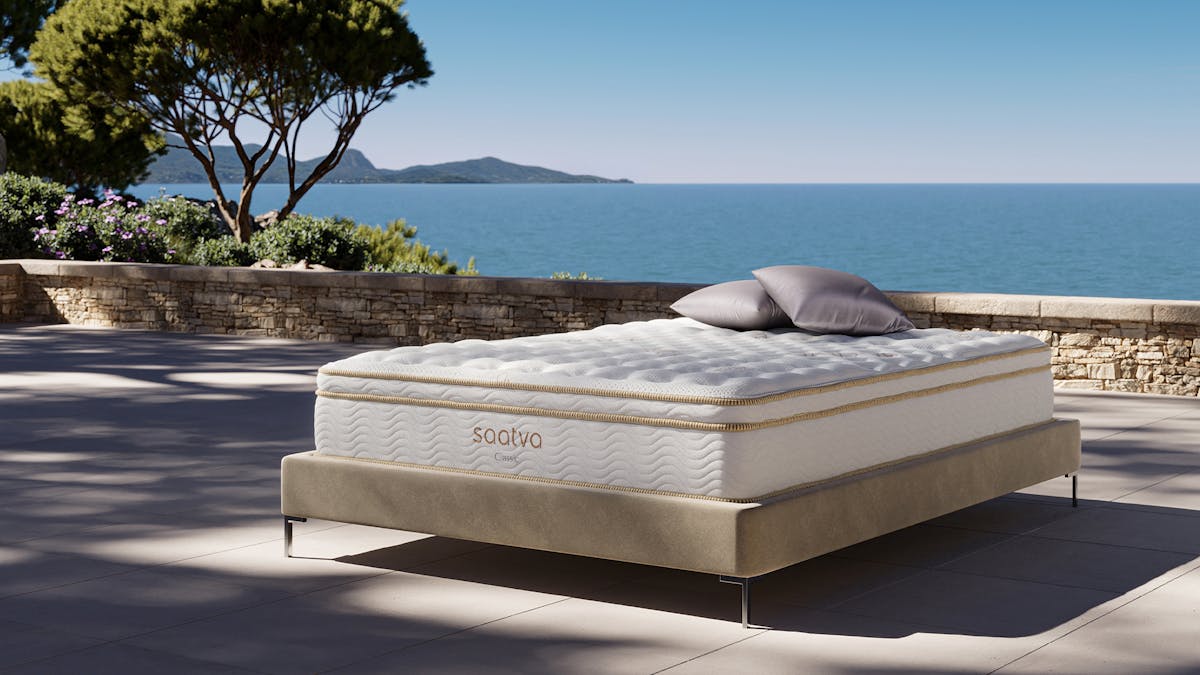
Saatva Classic
9.2/10
- Free white-glove delivery, setup, and old-mattress removal, which both Nolah and Nectar charge extra for
- 365-night trial matches Nectar and nearly triples Nolah's 120 nights
- Dual-coil construction with a lumbar zone pad, three firmness options, and two heights
- Lifetime warranty, no fine print erosion after year 10
- Innerspring airflow sleeps cooler than any all-foam design
- $99 return fee during the trial window
- Ships flat (not compressed), so delivery requires someone home
- At $1,995 queen, it costs more than Nectar's entire lineup
If you're in this price bracket, the Saatva Classic resets the comparison entirely. You get the same 365-night safety net as Nectar, a true lifetime warranty with no year-10 degrade, free white-glove setup that the others charge for, and coil-on-coil construction that runs cooler than any foam bed.
Nolah vs Nectar: who wins
Nolah and Nectar are both all-foam beds priced for value shoppers, but they aim at different sleepers. Nolah's AirFoam technology delivers memory-foam-grade pressure relief with better heat dissipation and more bounce. Nectar's traditional memory foam is slower-responding, offers deeper motion isolation, and starts at a lower price point. The 365-night trial is Nectar's single biggest selling point. Nolah counters with better cooling and edge support on its higher-tier models.
Neither brand is an affiliate partner of MattressNut, so there is no commercial reason to favor one over the other. The Saatva Classic above is our commercial recommendation in this category, and the rest of this page gives you a straight Nolah vs Nectar breakdown.
Nolah overview
Nolah Sleep launched in 2018 around one idea: pressure relief without heat retention. The core product is AirFoam, a proprietary foam with microscopic air pockets designed to dissipate heat faster than gel-infused memory foam. The lineup runs from the Original 10-inch (around $999 queen) up to the Signature 12-inch and Evolution 15-inch, plus a Natural latex hybrid. Trial is 120 nights with a $99 pickup fee on returns. Warranty is lifetime on most models. White-glove delivery is available as a paid add-on. Nolah donates to wildlife conservation per mattress sold.
Owner feedback is strong for side sleeper pressure relief and for sleeping cooler than memory foam. Some owners note initial firmness on the Original that softens over the first few weeks. Heavier sleepers, particularly those over 230 lb, tend to prefer the Evolution for its firmer HDMax foam base.
Nectar overview
Nectar is owned by Resident Home and has dominated the budget memory-foam segment since 2017. The lineup includes the Classic at around $699 queen, the Premier at around $1,199, and the Premier Copper at around $1,599. Each tier adds foam depth and cooling tech, with the Copper model adding a phase-change copper layer that meaningfully closes Nectar's heat gap. The 365-night trial is the longest standard risk window among major foam brands. The Forever warranty is genuine but carries terms after year 10. White-glove delivery is paid extra.
Owners consistently praise the price-to-trial ratio, the deep motion isolation, and the classic foam hug. Heavier sleepers report some sagging on the entry Classic after a few years. The Premier and Copper models rate better for long-term durability.
Side-by-side spec comparison
| Feature | Nolah Original 10" | Nectar Classic 12" |
|---|---|---|
| Type | All-foam, AirFoam technology | All memory foam |
| Height | 10" | 12" |
| Firmness | Medium (~5/10) | Medium-firm (~6.5/10) |
| Feel | Soft cradle, more responsive | Deep, slow memory-foam hug |
| Cooling | AirFoam, marketed temperature-neutral | Gel-infused foam + cooling cover |
| Motion isolation | Good (some transfer on Original) | Excellent (dense slow foam) |
| Bounce | High for foam (~4.5/5) | Low-moderate |
| Edge support | Strong for foam (~4/5) | Average to good |
| Trial period | 120 nights | 365 nights |
| Return fee | $99 pickup fee | Free (contiguous US) |
| Warranty | Lifetime (most models) | Lifetime ("Forever"), terms after yr 10 |
| Price (queen entry) | ~$999 | ~$699 |
| White-glove delivery | Available, paid extra | Available, paid extra |
Performance differences that matter
Pressure relief: Both excel for most sleepers. Nolah's AirFoam contours like memory foam but with more responsiveness, making it easier to shift positions at night. Nectar's slower foam hugs deeper and is better for sleepers who prefer staying put rather than bouncing up. Side sleepers with shoulder or hip sensitivity generally prefer Nolah Signature or Evolution.
Cooling: Nolah's marketing claim of 100% temperature neutrality is stronger on paper than in practice, with independent testing logging roughly a 10°F surface rise in five minutes. Nectar's gel-infused Classic performs similarly. The Premier Copper closes the gap significantly with phase-change tech. Neither foam bed approaches the coil-on-coil airflow of the Saatva Classic, which is worth noting if you run hot.
Motion isolation: Nectar wins clearly. Dense memory foam absorbs partner movement better than AirFoam. Nolah Evolution reduces transfer with extra foam layers but still loses this head-to-head. If motion isolation is your top priority, Nectar or a pocketed-coil hybrid are your best options.
Bounce and repositioning: Nolah wins clearly. At around 4.5 out of 5 for bounce, the Original and Signature are among the easiest all-foam beds to move on, which combination sleepers and couples appreciate. Nectar keeps you in place, which is either a feature or a drawback depending on your habits.
Edge support: Nolah edges ahead. The Original's dense base foam delivers surprisingly firm edges for an all-foam mattress (~4/5). Nectar is decent but not a standout. Both trail a coil hybrid on this metric.
Durability: Nolah Evolution and Signature are built for 12 to 15-plus years. The Original is rated for 10-plus. Nectar Premier and Copper track similarly at 10-plus years; the entry Classic shows wear faster under heavier use.
Pricing and value
Nectar Classic at around $699 queen is the cheapest real entry point in this category, including a 365-night trial. That is a hard combination to beat for buyers on a tight budget. Nolah Original at around $999 costs $300 more but delivers AirFoam's cooler and bouncier profile. The mid-range slot pits Nolah Signature (~$1,499) against Nectar Premier (~$1,199), with Nolah asking $300 more for AirFoam advantage and better edge support. At the top, Nolah Evolution (~$1,799) and Nectar Premier Copper (~$1,599) are within $200 of each other.
Both brands run 30 to 40 percent promotional discounts on a rotating basis, plus bundled pillows. When you account for Nolah's $99 return fee against Nectar's free returns, the price gap widens slightly in Nectar's favor for undecided buyers.
Who should buy each
Buy Nolah if: you are a side sleeper who wants foam pressure relief without heat trap; you prefer a responsive, easier-to-move-on surface; you want a 10-inch profile or the Evolution's premium foam construction; you are committed enough to accept the 120-night trial and $99 return fee.
Buy Nectar if: you want the longest trial period in the category (365 nights) as your primary safety net; you prefer classic slow memory-foam feel and deep motion isolation; you are working with a tighter budget and the Classic or Premier fits; you want free returns if the mattress doesn't work.
Consider Saatva Classic if: you want free white-glove delivery and old-mattress removal without paying extra; you want a coil hybrid that sleeps cooler than either foam option; you want an innerspring feel with three firmness options and two heights; the $1,995 queen price is workable and you want lifetime warranty with no fine print.
Neither pays us — so take the recommendation at face value
As stated at the top, neither Nolah nor Nectar is a MattressNut partner, which makes the verdict simple to trust: Nolah for hot-running side sleepers who want contour without the memory-foam heat trap, Nectar for budget-first buyers who want the year-long trial and the classic slow sink. Both fair picks inside the all-foam bracket — both still trailing a coil hybrid on edges and lifespan, by this page’s own scoring.
The recommendation that sits above them is a partner, and we’d make it anyway: the Saatva Classic out-builds this bracket with coil-on-coil construction, a plush euro top and white-glove delivery. Check its current price and trial before settling the foam question.
Frequently asked questions
Is Nolah AirFoam better than Nectar memory foam?
For hot sleepers and side sleepers, AirFoam is generally the better choice: it offers similar pressure relief with more bounce and marginally better heat dissipation on higher-tier models. For buyers who prioritize deep motion isolation, budget pricing, or a 365-night trial, Nectar wins on value. Independent testing shows both foam types retain some heat in practice, so neither is ideal for severe hot sleepers.
Which is better for side sleepers, Nolah or Nectar?
Nolah Signature or Evolution for most side sleepers. The softer AirFoam surface relieves shoulder and hip pressure more effectively than Nectar's firmer medium-firm build. Lighter-weight side sleepers especially benefit from Nolah's easier contouring. If budget is the constraint, Nectar Premier in medium-firm still works for average-weight side sleepers.
Does Nolah actually sleep cooler than Nectar?
In independent testing, Nolah Original recorded roughly a 10°F surface temperature rise in five minutes, which is not dramatically better than gel-infused memory foam. Nectar Classic performs similarly. Nectar Premier Copper closes the gap with phase-change copper infusion. Neither beats the airflow of a coil hybrid. Take both brands' cooling marketing claims with reasonable skepticism.
Which has a better trial period?
Nectar wins by a wide margin: 365 nights versus Nolah's 120 nights. Nectar also offers free returns in the contiguous US. Nolah charges a $99 pickup fee. If you are unsure which mattress is right for you, Nectar's trial structure carries less financial risk.
How long do Nolah and Nectar mattresses last?
Nolah Evolution and Signature are built for 12 to 15-plus years. The Original is rated 10-plus years. Nectar Premier and Copper track at 10-plus years; the Classic entry model shows faster wear under heavy use. Saatva Classic with coil-on-coil construction typically outlasts both all-foam options and is backed by a lifetime warranty with clearer terms.