
 by
by Quick answer: The Nolah Evolution 15 makes the strongest case for shoppers who want a tall hybrid with a cushioned top and a real choice among Plush, Luxury Firm, and Firm feels. I’d pause if you prefer a low-profile bed, want a simple all-foam feel, or expect the cooling language to settle the decision by itself. The firmness selection matters more than the model’s headline height.
- Consider it for: a foam-over-coil build, a quilted surface, and several comfort directions.
- Pause for: limited sheet depth, an already tall bed frame, or uncertainty about firmness.
- Check first: the exact configuration, current terms, and foundation requirements shown by Nolah.
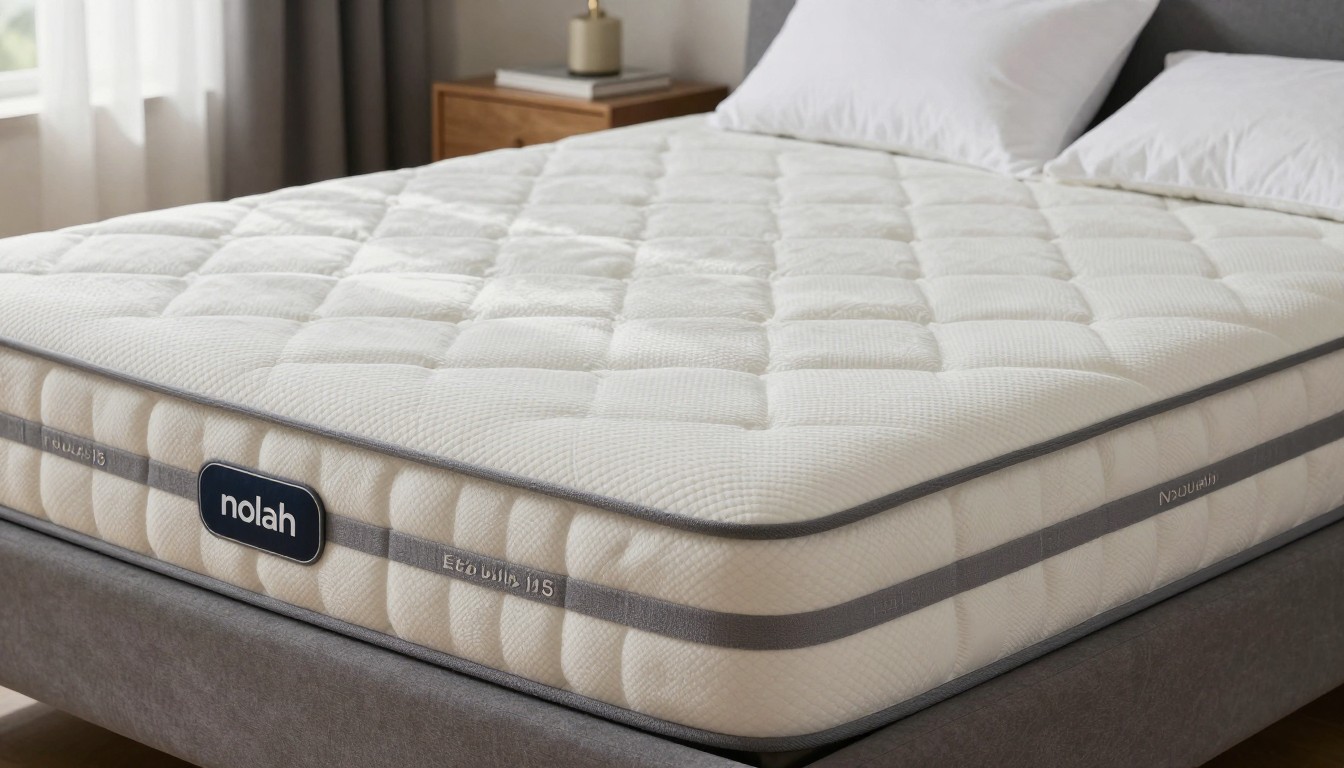
Nolah’s product materials describe an organic cotton cover, a quilted Euro-top-style section, graphite-infused AirFoam ICE, additional foam layers, HDMax Tri-Zone individually wrapped coils, and a plant-fiber foundation layer. That is a substantial hybrid recipe. It also gives me more useful information than the height in the product name alone.
My construction-first verdict is measured. The comfort stack should be the focus if you want noticeable cushioning, while the pocketed coil unit is the part responsible for the underlying support response. Those components have different jobs, and choosing the wrong firmness can keep the overall design from feeling right for you.
The Nut’s take: Don’t buy this mattress because it sounds substantial. Buy it only if the firmness choice, bed height, and foam-over-coil feel suit the way you actually sleep.
Construction: what is doing the real work
The named construction starts with a quilted, Euro-top-style comfort section. According to Nolah, the cover uses organic cotton and the upper build includes graphite-infused AirFoam ICE plus other foam layers. That arrangement puts softer materials between the sleeper and the support core, so the initial impression should come mostly from the selected comfort version rather than the coils alone.
Deeper in the mattress, Nolah identifies an HDMax Tri-Zone unit made with individually wrapped coils. Pocketing allows neighboring coils to react with more independence than a connected spring network. The zoned description also tells me the unit is designed with different support regions in mind, although a zoning label cannot predict how every body will interact with it.
Nolah also lists a plant-fiber foundation layer beneath the coil unit. That bottom layer is not the glamorous part of the design, but its role is straightforward: it gives the coil assembly a stable base within the mattress. The bed frame or external foundation still matters, so buyers should follow Nolah’s current support requirements rather than assuming the mattress can sit on any surface.
- What Nolah identifies: a quilted surface, graphite-infused foam, additional foam, zoned pocketed coils, and a plant-fiber base layer.
- What those names explain: the broad division between surface cushioning and structural support.
- What they do not settle: your final firmness preference, edge experience, or sleeping temperature.
I would describe the Evolution 15 as foam-forward at the surface and coil-supported underneath. That distinction matters. Someone seeking close contouring may care most about the upper foam response, while someone who dislikes sinking deeply may pay more attention to the firmer option and the transition into the coil unit.
The tall profile also affects the whole setup. More visible material does not automatically mean better durability or support. It can mean a more substantial comfort stack, but layer quality and how the parts work together are more informative than height by itself.
Firmness is the decision inside the decision
Plush, Luxury Firm, and Firm are the comfort choices Nolah lists for this model. Those names are categories, not universal measurements. A label that feels moderate to one sleeper may feel noticeably softer or firmer to someone with a different build, sleep position, pillow, or foundation.
For side sleeping, Plush is the logical place to begin if you like deeper surface cushioning around the shoulder and hip. Luxury Firm deserves consideration if you want some contouring without making softness the dominant sensation. I would treat both as starting points, not promises about pressure relief or alignment.
Back sleepers and people who change positions may find Luxury Firm easier to investigate because it sits between Nolah’s softer and firmer labels. Firm is the more direct route for shoppers who already know they dislike a deeply cushioned top. The useful question is not which label sounds safest, but how much upper-layer compression you enjoy before reaching the steadier response beneath it.
Firmness check: If your present mattress feels wrong, identify why before choosing. “Too hard at the shoulder” points in a different direction from “too slow to move on” or “too soft through the middle.”
People who place more load into the comfort layers should be especially careful with the softer choice. That does not make Plush unsuitable, but it means surface cushioning and deep support must be considered separately. A soft first impression can coexist with a strong coil core, yet the depth of compression still changes how easily you move and how close you feel to the support unit.
Combination sleepers should also think about response rather than firmness language alone. A more cushioned top can feel comfortable while resting in one position but less direct during a turn. A firmer version may make movement feel easier, although it can also provide less of the plush surface sensation some sleepers want.
Cooling materials make sense, but they are not a promise
Graphite-infused AirFoam ICE is the clearest temperature-focused material in Nolah’s description. The brand positions that foam for temperature management, while its organic cotton cover and pocketed coil core add breathable elements to the overall design. That is a more coherent approach than relying on a surface treatment alone.
The coil unit matters because it is not a solid foam block. Open space around springs can support airflow within the mattress, while the cover and upper foam determine what the sleeper encounters first. Even so, the construction can only influence one part of the sleep environment.
Bedding, a protector, room conditions, and how deeply you settle into the comfort layers can all change the temperature experience. A thick protector or heat-trapping comforter may reduce the practical benefit of breathable mattress materials. The softer option may also surround the body differently from the firmer option.
Cooling reality check: The material choices are relevant if you sleep warm, but they do not establish a measured cooling result. Judge the mattress together with the sheets, protector, and bedding you plan to use.
I would therefore call cooling a supporting reason to consider the Evolution 15, not the decisive reason. The graphite-infused foam and coil structure have a sensible design rationale. They cannot tell you exactly how the bed will feel in your room or under your bedding.
Motion response depends on more than pocketed coils
Nolah’s individually wrapped coil description is encouraging for localized response. Because the springs are not presented as one connected network, movement at one point does not have to engage the entire unit in the same way. The foam above the coils can further absorb some surface disturbance.
That does not justify claiming perfect motion isolation. A hybrid still contains responsive springs, and a forceful turn can move the cover and comfort layers even when the coils react independently. Bed-frame stability also affects what a partner feels across the mattress.
For couples, the firmness version may change the experience as much as the coil label. A softer comfort section can absorb some motion close to the surface, but deeper compression may create more noticeable body movement. A firmer surface may feel more immediate when either sleeper turns.
- Useful construction detail: Nolah specifies individually wrapped coils.
- Important variable: the amount of cushioning above those coils changes with the chosen feel.
- Practical check: make sure the frame is stable before blaming the mattress for transferred movement.
Edge support cannot be read from height alone
A tall sidewall may look substantial, but mattress height does not prove perimeter strength. Useful edge support comes from what happens around the border of the comfort layers and coil assembly when weight shifts toward the side. The construction details cited by Nolah identify a zoned coil system, but they do not give me enough evidence to promise a particular edge result.
This distinction matters if you sit at the side while dressing, sleep close to the perimeter, or share a mattress and use most of its width. Surface foam can compress before the coil unit takes more of the load, so the edge may feel softer initially than the deep support structure suggests.
The selected firmness should influence that impression. Plush is likely to present more surface give than Firm based on Nolah’s own category names, but those labels do not establish how much the perimeter compresses. I would avoid treating the model’s tall silhouette as a substitute for an edge specification.
Edge-use question: Decide whether you need the edge mainly for sleeping space, sitting, or easier entry. Those uses load the perimeter differently, so “good edge support” is not one universal sensation.
What the specifications do and do not say about durability
Durability is where a long material list can create false confidence. Nolah names the principal material types and its branded coil system, but those names alone do not reveal every variable I would want for a long-term projection. Foam density and coil gauge, for example, are more useful for detailed materials analysis than a tall profile by itself.
The quilted top will take repeated compression before the deeper layers do. That does not mean it will fail early, but it makes the surface a sensible place to watch for changes in feel. Rotating the mattress in accordance with Nolah’s care guidance, if permitted by the brand, can help distribute use more evenly.
The pocketed coil core gives the design a dedicated support structure rather than asking foam to perform every job. Still, a branded coil name does not establish tempering, wire characteristics, or long-term performance without further specification. I would rather acknowledge that limit than turn the word “hybrid” into a durability guarantee.
My durability standard: Height is visible, but material quality is what counts. The Evolution 15 has a credible layout; the disclosed layer names are not enough for me to predict an exact service life.
Foundation compatibility belongs in the durability discussion too. An unsuitable or flexing base can change how the mattress is supported and may affect policy coverage. Check the current Nolah instructions for allowable foundations, spacing, and adjustable-base use before setting up the bed.
Living with a notably tall mattress
The Evolution 15’s height affects more than appearance. It raises the sleep surface once the frame and foundation are included, changes the pocket depth required from fitted sheets, and can alter how easy it feels to get into bed. Those practical details deserve attention before the comfort discussion turns into a purchase.
Measure from the floor to the top of your existing mattress, then consider how a taller replacement would work with the same frame. A platform that already sits high can create an awkward final setup. A low frame may make the substantial profile feel more intentional.
Check sheet specifications rather than assuming anything labeled “deep pocket” will fit. Protectors and toppers also consume pocket depth. If you plan to add either, include that extra material when evaluating your bedding.
- Measure: the full bed setup, not only the mattress space inside the frame.
- Confirm: fitted-sheet and protector depth before ordering new bedding.
- Review: Nolah’s current foundation instructions and care terms.
A tall mattress can also make a prominent headboard look shorter and may cover more of its lower design. That is cosmetic, but it is still part of living with the product. The Evolution 15 is not the kind of mattress I would order first and measure for later.
Who should consider it, and who should pause
The clearest candidate is someone who wants a cushioned hybrid and already has a useful sense of preferred firmness. Nolah’s Plush, Luxury Firm, and Firm choices create meaningful separation at the shopping stage. That flexibility is valuable only if you use it deliberately.
Side sleepers drawn to a plusher contact feel have an obvious path to investigate, while back and combination sleepers can compare the middle and firmer directions. Shoppers who dislike an enveloping surface should not assume every version shares the same softness simply because the mattress has a quilted top.
I would pause if you want a low-profile setup, prefer the dense and spring-free response of an all-foam mattress, or feel uncertain about choosing among the comfort options. The model also deserves extra thought if your current sheets, frame, or foundation leave little room for a tall replacement.
- Strongest fit: shoppers seeking a substantial foam-over-coil design with selectable comfort.
- More cautious fit: shoppers relying on a firmness name without considering surface compression.
- Likely mismatch: anyone specifically seeking a thin mattress or a spring-free construction.
My verdict before considering an alternative
The Nolah Evolution 15 is a credible hybrid with a clear construction logic. Nolah places quilted and foam comfort materials over a zoned pocketed-coil unit, giving the surface and support core distinct roles. The selectable comfort options are more important to the verdict than the visual drama of the mattress’s height.
I would consider it if you want a cushioned hybrid and can choose among Nolah’s firmness labels with confidence. I would skip it if the height complicates your setup or if you expect cooling terminology to remove all uncertainty about overnight temperature.
My main reservation is not a defect claim. It is an evidence limit. The disclosed construction identifies the material categories, but it does not answer every density, coil, perimeter, or long-term wear question I would use for a more exact durability forecast.
Bottom line on Nolah: Choose the Evolution 15 for its particular combination of quilted cushioning, foam comfort layers, pocketed coils, and firmness choice. Don’t choose it merely because a taller mattress sounds more luxurious.
Optional luxury-hybrid comparison
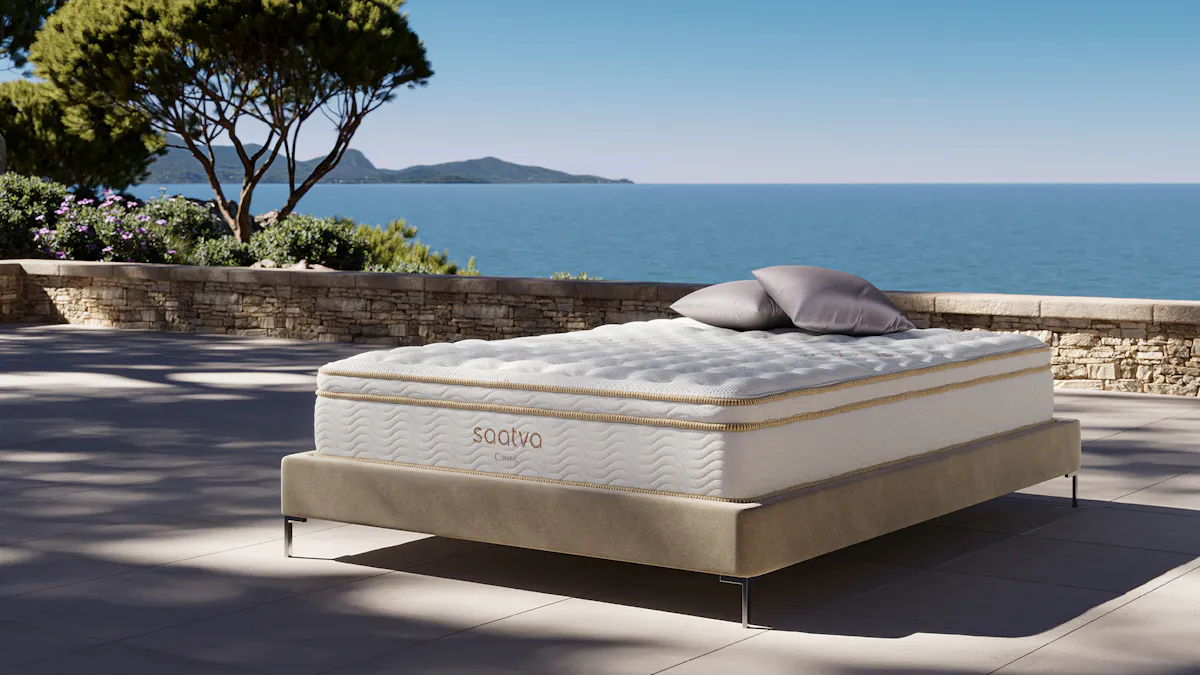
Only after deciding what you think of the Nolah build would I add Saatva Classic as an optional comparison. It belongs in the conversation for shoppers considering another luxury-hybrid direction, but the information here does not establish it as automatically better. Apply the same questions about surface feel, support construction, overall bed height, and current purchase terms.
Policy language and offers can change, so read the terms displayed at the time you shop rather than relying on an old summary. The first frozen comparison link is available here: check the optional alternative’s current details.
Keep the comparison disciplined: Start with the Nolah firmness and construction you actually want. An alternative’s policies should not distract from a mattress feel that is wrong for you.
Value, warranty terms, and the final buying check
Value should be judged using the price shown for your exact Nolah configuration, not a detached promotional figure. Confirm the selected size, firmness, included items, and checkout total together. That keeps a changing storefront from obscuring what you are actually buying.
Read the current trial, return, and warranty language before payment. Pay attention to return handling, required mattress support, stain exclusions, and the process for documenting a possible defect. For more detail on that process, see our guide to making a Nolah warranty claim.
Broader comparisons can help when the construction category is still unsettled. See our Nolah versus Saatva comparison for another hybrid-focused decision, or use our Nolah versus Tempur-Pedic guide if you are deciding between this type of hybrid and a denser foam direction.
Final checkout check: Make sure the product name, firmness, size, support setup, and written policies all match the decision you intended to make.
The alternative’s details can also be reviewed through the second preserved link: recheck the optional comparison before deciding. Treat that as context, not a reason to abandon the construction and firmness criteria established in this review.
ONE VERIFIED ALTERNATIVE
Not quite the right fit? The Saatva Classic is worth a look as an alternative. Check today’s price, sizing and return terms on the official product page before you order.
Saatva Classic
- 365-night home trial and lifetime warranty, per saatva.com
- Handcrafted in the USA, free white-glove delivery
- Flexible financing available
FAQ
Is the Nolah Evolution 15 a hybrid mattress?
Yes. Nolah describes it as a hybrid with foam comfort materials over HDMax Tri-Zone individually wrapped coils. The foam shapes the initial surface response, while the coil assembly serves as the principal support core.
How tall is the Nolah Evolution 15?
Nolah presents it as a notably tall-profile mattress. Because dimensions are important for sheets, frames, and total bed height, confirm the specification shown on Nolah’s current product page for the exact configuration you plan to order.
Which firmness should side sleepers consider?
Nolah lists Plush, Luxury Firm, and Firm. Plush is the natural starting point if you want more surface cushioning, while Luxury Firm may suit someone seeking a less enveloping compromise. Neither label can promise a particular result for every body shape or sleeping style.
Does the Nolah Evolution 15 use cooling materials?
According to Nolah, the construction includes graphite-infused AirFoam ICE, an organic cotton cover, and a pocketed-coil core. Those choices are designed with temperature management and airflow in mind, but bedding, room conditions, and firmness-related sink also influence how warm the bed feels.
Is the Nolah Evolution 15 worth considering?
It is worth considering if you want a tall, quilted hybrid and can make an informed choice among Nolah’s comfort options. Its strongest argument is the combination of selectable firmness, foam cushioning, and pocketed-coil support, not height or cooling language by itself.