
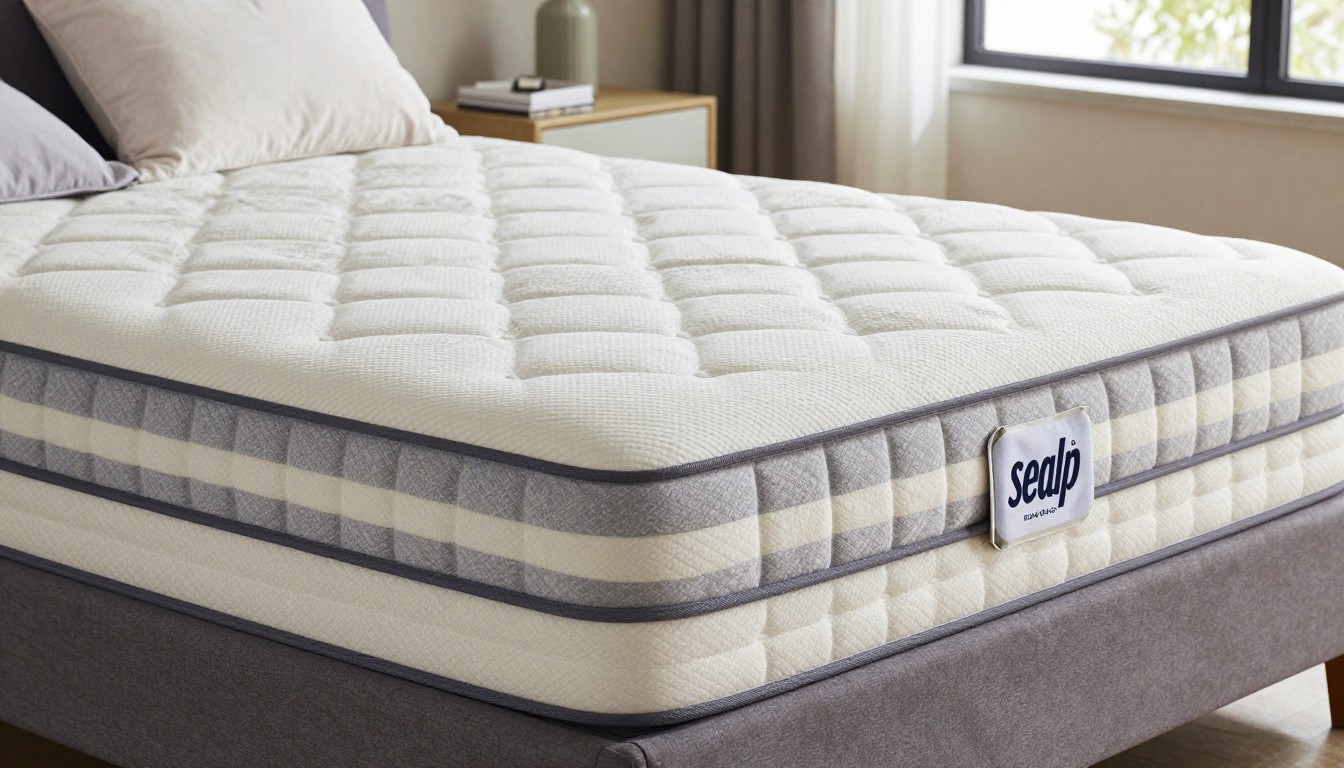
 by
by Quick answer: The Sealy Icon 12 Hybrid Mattress is a conditional buy for budget-focused sleepers who want medium foam-and-coil comfort. NapLab’s below-average overall result keeps it from being an easy recommendation.
- MattressFirm lists it as a bed-in-a-box model with SealyCool Gel Memory Foam.
- WarehouseRunner describes individually wrapped coils and a medium feel.
- NapLab listed the mattress at $600 and called its price lower than average.
Updated July 2026 · Reviewed for accuracy
The Sealy Icon 12 Hybrid Mattress pairs contouring foam with individually wrapped coils in a medium-feel, boxed design. Its strongest published result is motion control, while NapLab’s broader performance assessment raises real questions about the trade-offs behind the low price.
I see it as a focused value option. It makes the most sense if you want moderate cushioning, noticeable bounce and reduced partner disturbance without paying for a more thoroughly specified construction.
Verdict: Who should buy the Sealy Icon?
NapLab rated the Sealy Icon’s overall performance significantly below the average in its published review, but it also described the price as lower than average. That’s the core bargain. You’re accepting uneven performance in exchange for a lower entry price.
WarehouseRunner’s queen listing positions the medium feel for side and back sleepers. MattressFirm also says the SealyCool Gel Memory Foam spreads weight across the surface to create cushioning and pressure-relieving comfort. Those are retailer claims rather than a guarantee that every side or back sleeper will find the bed comfortable.
Couples have a clearer reason to consider it. NapLab reported less motion transfer than average, which supports its case for sleepers who are easily disturbed by a partner changing position. The same review found higher bounce and connected that responsiveness with a stronger sex score.
My buyer fit check
- Consider it if: You want a medium hybrid, value motion control or prefer some bounce beneath the foam.
- Approach carefully if: You need a distinctly firm or plush surface, documented cooling performance or detailed durability specifications.
- Skip it if: An above-average independent performance result matters more to you than a low purchase price.
This isn’t a blanket rejection. The Icon has a coherent use case, especially for a budget-focused couple who likes a responsive bed. I just wouldn’t treat the Sealy name or the hybrid label as proof that every part of its performance is equally strong.
Construction: What the listings actually establish
MattressFirm identifies SealyCool Gel Memory Foam as the principal comfort material and calls the Icon a bed-in-a-box mattress. WarehouseRunner’s king listing describes individually wrapped coils beneath foam layers. Together, those details establish a conventional hybrid blueprint: contouring material above independently moving springs.
The likely appeal of that pairing is balance. Foam can absorb and distribute pressure at the surface, while separate coils can react locally instead of moving as a single connected spring unit. I’d expect the coils to play a major role in the bounce NapLab recorded, but that connection is my construction-based interpretation, not a disclosed test result from Sealy.
The missing specifications matter just as much as the named materials. MattressFirm and the available retail listings don’t disclose foam density, coil gauge or coil count in the cited descriptions. Those are the details I use to judge whether a hybrid is built merely to feel comfortable at first or to retain its character over extended use.
Confirmed construction facts
- MattressFirm describes a boxed hybrid using SealyCool Gel Memory Foam.
- WarehouseRunner identifies individually wrapped coils and foam layers.
- WarehouseRunner’s queen listing reports that the foam carries CertiPUR-US certification.
Not established by the cited listings: foam density, coil gauge, coil count, detailed layer thicknesses or the firmness of individual layers.
WarehouseRunner says the CertiPUR-US certification addresses foam emissions, content and durability standards. That certification is useful material information, but it doesn’t tell us how much foam is present or how resistant the complete mattress will be to impressions.
If construction detail is central to your decision, compare the Icon’s disclosed materials with the information in my Sealy Posturepedic Plus Hybrid review. The point isn’t to assume the more elaborate model is automatically better. It’s to see whether another Sealy listing answers the specification questions the Icon leaves open.
Feel, pressure relief and sleeping positions
Costco and WarehouseRunner both list the Sealy Icon as a medium-feel hybrid. Medium is a broad retail description, but it tells us the design is meant to sit between deeply plush cushioning and a rigid, firm surface.
Side sleepers are the clearest stated audience. WarehouseRunner’s queen listing calls the model suitable for side sleepers, while MattressFirm says its gel memory foam distributes weight to provide cushioning and pressure relief. I’d read that as promising for someone who wants contouring without choosing an explicitly plush mattress, though there’s no pressure-map result in the cited evidence.
Back sleepers are also included in WarehouseRunner’s positioning. The combination of foam and responsive coils makes conceptual sense for that use because the surface can contour while the coil unit pushes back. Still, the listings don’t provide enough detail about foam depth or spring firmness to predict how the bed will feel across different body builds.
| Sleeper or priority | Published evidence | My read |
|---|---|---|
| Side sleeping | WarehouseRunner positions it for side sleepers; MattressFirm claims cushioning pressure relief. | A plausible fit for moderate contouring, but not proven suitable for every build. |
| Back sleeping | WarehouseRunner includes back sleepers in its stated audience. | Worth considering if you already know you like a medium hybrid feel. |
| Sensitive couples | NapLab reported less motion transfer than average. | One of the Icon’s better-supported use cases. |
| Responsive movement | NapLab recorded higher bounce. | Better suited to sleepers who dislike feeling stuck in slow-moving foam. |
| Strongly firm or plush preference | Retailers describe the mattress as medium. | Probably the wrong direction if you want either extreme. |
I’d be more cautious for stomach sleepers who already know they need an unmistakably firm, flat surface. The available retailers don’t market this as a firm model, and the cited descriptions don’t provide enough support data to extend the stated recommendation beyond side and back sleeping.
Feel remains personal even within a firmness category. “Medium” can narrow the field, but it can’t tell you how quickly the memory foam responds, how deeply it contours or whether the coil resistance matches your preference. Those unanswered details are another reason to treat this as a targeted option rather than a universal recommendation.
Motion, bounce, cooling and edge support
NapLab found less motion transfer than average while also recording higher bounce. Those results may sound contradictory, but they describe different behavior. A bed can dampen a partner’s movement across the surface while still responding energetically when pressure is applied directly.
That combination is useful for couples who don’t want a dead, slow surface. The motion result suggests fewer transmitted disturbances, while the bounce finding points to easier repositioning and livelier movement. NapLab’s stronger sex assessment was tied to that higher responsiveness.
Cooling is less settled. MattressFirm says the mattress contains SealyCool Gel Memory Foam, but the cited product description doesn’t provide a measured temperature result. Gel branding tells me the foam is intended to manage heat; it doesn’t prove that the complete mattress sleeps cool for every person.
Evidence strength by performance area
- Motion isolation: Supported by NapLab’s comparative result.
- Bounce: Supported by NapLab’s published assessment.
- Cooling: A gel-foam construction claim is available, but no cited cooling outcome is established.
- Edge support: The provided retailer descriptions and NapLab summary don’t establish a result.
I wouldn’t assign the Icon a strong or weak edge rating without evidence. That matters for anyone who sleeps close to the perimeter, sits on the edge frequently or wants the entire surface to feel usable. A hybrid construction alone doesn’t reveal how its perimeter is reinforced.
Shoppers prioritizing a softer Sealy feel can also read my Sealy Performance Hybrid Copper II Plush review. Use that comparison to clarify your preferred surface character, not as proof that one model will control motion or heat better without equivalent published results.
Price, delivery and long-term value
NapLab listed the Sealy Icon at $600 and characterized that price as lower than average. Treat the figure as specific to NapLab’s published review and confirm the live retailer price before making a decision.
A low price can compensate for modest performance, but only if the strengths align with your priorities. Here, the value case rests mainly on the medium hybrid format, below-average motion transfer and higher bounce reported by NapLab. The same source’s significantly below-average overall result prevents price alone from settling the decision.
Costco’s listing says packaging removal and haul-away of the old mattress and box spring are included. It also describes a California-specific delivery condition, so the practical service attached to an order may depend on the delivery location and selected retailer. Confirm those terms during checkout rather than assuming every seller handles delivery identically.
Value checkpoint
Buy for the attributes that are actually documented: medium feel, foam over individually wrapped coils, lower motion transfer and responsive bounce. Don’t pay based on assumptions about edge reinforcement, cooling or long-term durability that the cited descriptions don’t establish.
Long-term value is the hardest part to judge. Foam density and coil specifications are absent from the cited MattressFirm, Costco and WarehouseRunner descriptions, so I can’t make a responsible durability forecast from the material names alone. CertiPUR-US certification offers useful information about the foam standard, but it isn’t a lifespan estimate for the finished bed.
The cited listings also don’t establish consistent trial or warranty terms. Those policies can affect the real cost of a mattress that feels different at home than expected, so check the exact seller’s current terms before ordering. I wouldn’t transfer a policy from another Sealy model or retailer to this one.
Pros, cons and my final verdict
The Icon’s clearest positive is NapLab’s less-than-average motion transfer. Its clearest warning is the same reviewer’s significantly below-average overall performance finding. That tension defines the whole mattress better than its marketing labels do.
Pros
- Medium feel aimed at side and back sleepers, according to WarehouseRunner.
- Less motion transfer than average in NapLab’s assessment.
- Higher bounce for sleepers who prefer a responsive surface, per NapLab.
- Gel memory foam over individually wrapped coils, according to retail listings.
- Lower-than-average price positioning in NapLab’s review.
Cons
- Overall performance landed significantly below average in NapLab’s review.
- No foam density, coil gauge or coil count in the cited retail descriptions.
- No measured cooling result established by the available evidence.
- Edge performance remains unclear.
- A medium feel won’t satisfy shoppers seeking a pronounced firmness extreme.
My verdict: The Sealy Icon 12 Hybrid Mattress is worth considering for a price-conscious side or back sleeper who wants a responsive medium surface, particularly if partner motion is a major concern. I’d skip it if you want a thoroughly documented build, independently supported cooling or a strong overall performance result.
That verdict leaves room for personal priorities. The Icon doesn’t need to dominate every category to suit the right sleeper, but its low price shouldn’t erase the unanswered construction questions. For another Sealy-specific reference point, my Sealy Posturepedic Plus Hybrid High Point review can help you compare how different hybrid designs are presented before choosing.
ONE VERIFIED ALTERNATIVE
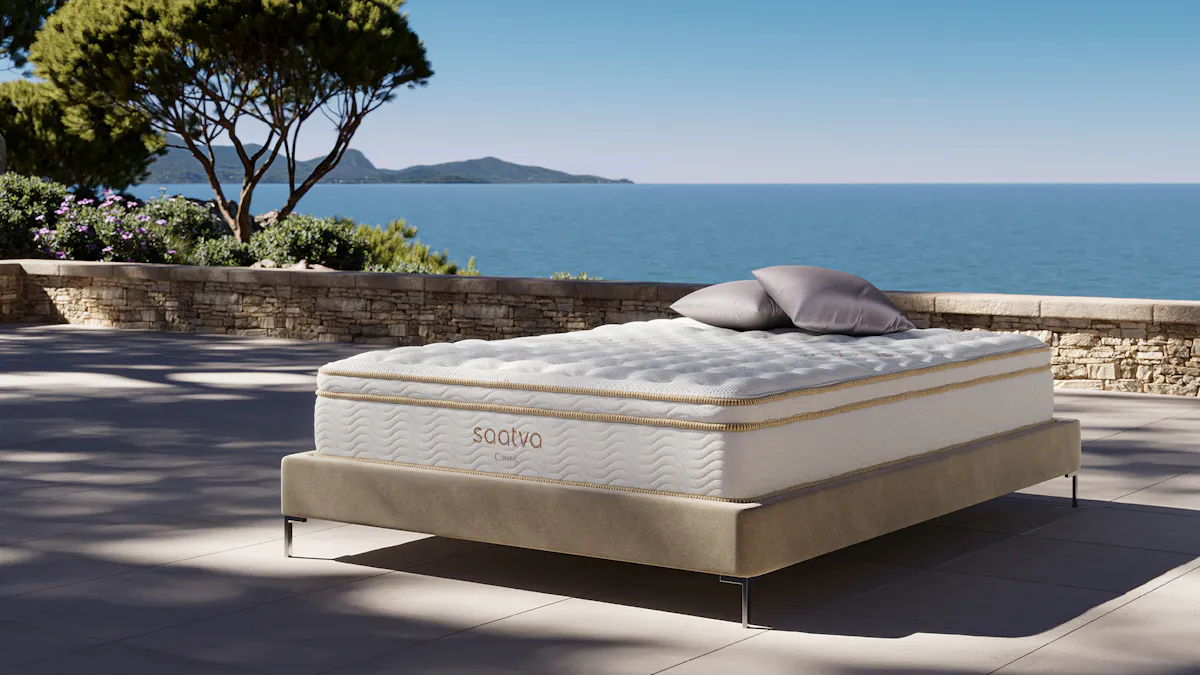
Not quite the right fit? The Saatva Classic is worth a look as an alternative. Check today’s price, sizing and return terms on the official product page before you order.
Saatva Classic
- 365-night home trial and lifetime warranty, per saatva.com
- Handcrafted in the USA, free white-glove delivery
- Flexible financing available
FAQ
Is the Sealy Icon 12 Hybrid Mattress firm or soft?
Costco and WarehouseRunner describe it as a medium-feel mattress. That places it between pronounced firmness extremes, but the cited listings don’t provide enough detail to predict exactly how soft the foam will feel to a particular sleeper.
Is the Sealy Icon suitable for side sleepers?
WarehouseRunner’s queen listing positions it for side sleepers, and MattressFirm says the gel memory foam provides cushioning and pressure-relieving comfort. I consider that a reasonable use case, though neither statement guarantees the right contouring depth for every person.
Does the Sealy Icon isolate motion well?
NapLab reported less motion transfer than average, making this one of the mattress’s better-supported strengths. That doesn’t mean all movement disappears, but it gives couples more useful evidence than the product description alone.
Does the gel memory foam make the mattress sleep cool?
MattressFirm identifies SealyCool Gel Memory Foam in the construction. The cited description doesn’t include a measured cooling result, so I wouldn’t translate the material name into a firm temperature claim.
Is the Sealy Icon worth its price?
NapLab listed it at $600, described the price as lower than average and found overall performance significantly below average. It can make sense if motion control, bounce and a medium hybrid feel are your priorities, but shoppers seeking stronger all-around evidence should compare carefully.