
 by
by Nolah and Tempur-Pedic are two of the best-known all-foam brands in the US, but they serve different budgets and different sleepers. Nolah's AirFoam runs noticeably cooler and costs far less; Tempur-Pedic's proprietary TEMPUR material delivers unmatched pressure contouring and motion dampening at a significant price premium. For most shoppers comparing the two, a third option, the Saatva Classic, offers luxury coil-hybrid construction, a 365-night trial, free white-glove delivery and a lifetime warranty at a price that sits comfortably between the two brands.
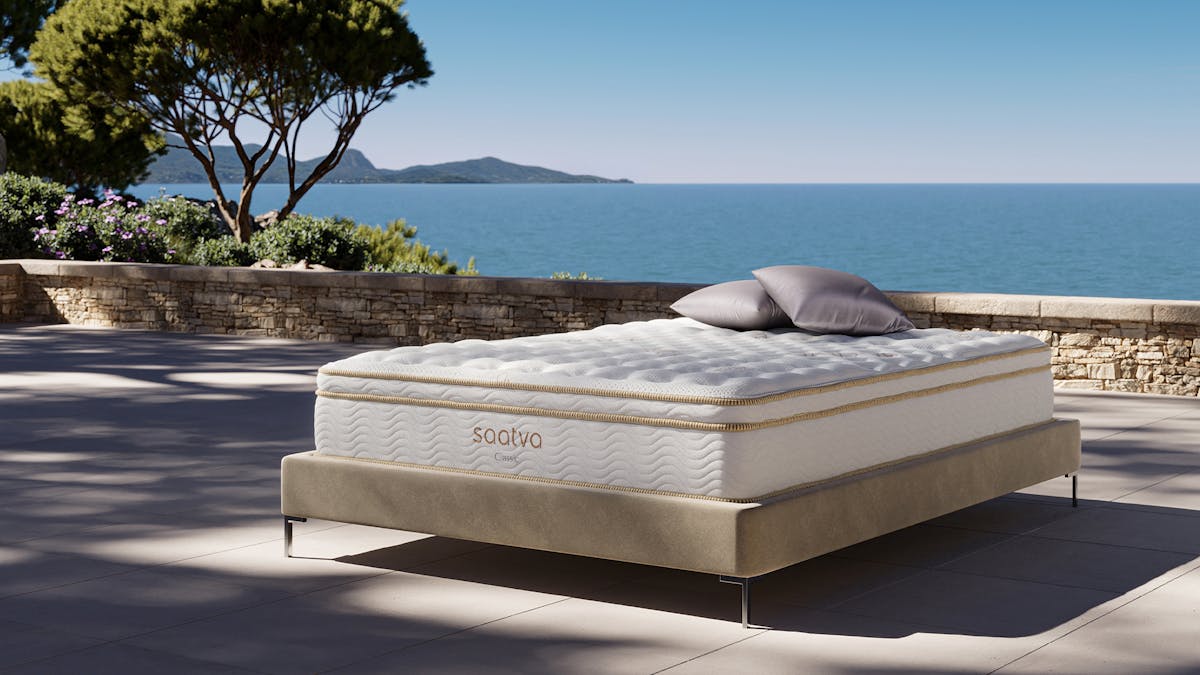
Saatva Classic
9.4/10
- Dual-coil construction with zoned lumbar support pad breathes far better than any all-foam build
- Outstanding edge support, reinforced perimeter coils, one of the strongest tested
- Free white-glove delivery, in-room setup and old mattress removal included
- 365-night trial and lifetime warranty outpace both Nolah and Tempur-Pedic
- More motion transfer than either brand's all-foam models, not ideal for very light-sleeping couples
- $99 return fee applies during the trial period
The Saatva Classic delivers the cradle and lumbar support that memory foam fans want, with the airflow and responsive feel that Nolah shoppers value, plus a service package, white-glove delivery, free removal, 365 nights, that neither Nolah nor Tempur-Pedic matches at any price.
Nolah overview
Nolah builds its lineup around AirFoam, a proprietary open-cell material that aims to deliver memory foam contouring while reducing heat build-up. Core models include the Original, Signature, Evolution Hybrid and Natural latex line. Queen prices run from roughly $1,049 to $2,099 with regular promotions. The Evolution Hybrid is the flagship, adding pocketed coils for bounce and edge stability. The trial is 120 nights, the warranty is lifetime across most models, and shipping is free. Cooling is Nolah's main selling point; edge support is adequate on the Evolution Hybrid; motion isolation is moderate compared to denser memory foam.
Tempur-Pedic overview
Tempur-Pedic uses proprietary TEMPUR material, a viscoelastic foam engineered to respond to body heat and weight, across a range from the entry TEMPUR-Cloud through ProAdapt, LuxeAdapt and the breeze cooling variants. Queen prices start around $2,099 on the Cloud and reach $5,000-plus on flagship breeze hybrids. The trial is 90 nights and the warranty is 10 years. Motion isolation is class-leading, pressure contouring is genuinely unmatched in the standard memory foam category, and long-term durability is excellent. Heat retention is the most common complaint on non-breeze models; the breeze line addresses it but at a price roughly double a flagship Nolah.
Nolah vs Tempur-Pedic: specs side by side
| Feature | Nolah | Tempur-Pedic |
|---|---|---|
| Construction | AirFoam / hybrid / latex (by model) | All-foam TEMPUR material |
| Firmness options | Multiple per model | Limited per model |
| Trial period | 120 nights | 90 nights |
| Warranty | Lifetime (most models) | 10 years |
| Queen price range | ~$1,049-$2,099 | ~$2,099-$5,000+ |
| Free shipping | Yes | Yes |
| White-glove delivery | Paid add-on | Paid add-on |
| Cooling (standard models) | Good (AirFoam open cell) | Moderate (standard); good (breeze line only) |
| Motion isolation | Moderate | Excellent |
Performance differences that matter
Contouring depth. Tempur-Pedic still leads here. TEMPUR material on the ProAdapt and LuxeAdapt conforms more precisely and slowly than Nolah AirFoam. If the signature slow-sink memory foam feel is what you're after, Tempur-Pedic is the genuine article and no DTC brand fully replicates it.
Cooling. Nolah runs noticeably cooler at every price point. AirFoam's open-cell structure dissipates heat reasonably well. Standard Tempur-Pedic models retain heat, a well-documented tradeoff with dense viscoelastic foam. The breeze line corrects this but at two to three times the cost of a comparable Nolah.
Motion isolation. Tempur-Pedic absorbs partner movement almost completely, which is one of the strongest arguments for its price premium for couples with different sleep schedules. Nolah Evolution Hybrid is competitive but cannot match TEMPUR foam dampening.
Warranty and trial. Nolah's lifetime warranty and 120-night trial outperform Tempur-Pedic's 10-year warranty and 90-night window on paper. Real-world TEMPUR foam durability is however excellent, it tends to hold its shape longer than most foam alternatives.
Price. Nolah's flagship sits at roughly half the cost of a Tempur-Pedic entry model. For the majority of shoppers, Nolah delivers 80 to 90 percent of the Tempur-Pedic feel at 40 to 50 percent of the price, the tradeoff being slightly less precise contouring.
Nolah vs Tempur-Pedic vs Saatva Classic
Most shoppers comparing Nolah and Tempur-Pedic miss a third option that addresses the main weaknesses of both. The Saatva Classic uses a dual-coil innerspring design that breathes better than any all-foam construction, couples it with a Euro pillow-top for pressure relief, and includes service features neither brand offers as standard.
| Feature | Nolah (Evolution Hybrid) | Tempur-Pedic | Saatva Classic |
|---|---|---|---|
| Trial | 120 nights | 90 nights | 365 nights |
| Warranty | Lifetime | 10 years | Lifetime |
| White-glove delivery | Paid add-on | Paid add-on | Free |
| Old mattress removal | Paid add-on | Paid add-on | Free |
| Cooling | Good | Moderate (standard models) | Excellent (dual-coil airflow) |
| Motion isolation | Moderate | Excellent | Moderate |
| Queen price | ~$1,099-$2,099 | ~$2,099+ | ~$1,895 |
Bottom line
Nolah is the better value pick if cooling, lifetime warranty and accessible pricing are the priority. Tempur-Pedic is the right call for anyone who specifically wants class-leading motion isolation and the deepest, slowest memory foam contouring available. For most shoppers, though, the Saatva Classic is the stronger all-around choice: dual-coil construction that sleeps cool, a Euro pillow-top that delivers genuine pressure relief, the longest trial in this comparison at 365 nights, and a service package, free white-glove delivery, free old mattress removal, that neither rival includes at any price point.
Amerisleep AS3
9.1/10
- HIVE 5-zone support layer firms specifically under the lumbar zone
- Plant-based Bio-Pur foam runs cooler than standard memory foam with strong motion isolation
- 20-year warranty, double the Tempur-Pedic standard
- CertiPUR-US certified, made in the USA
- Softer edges than a coil hybrid
- Sleepers over 230 lb may prefer the firmer AS5 Hybrid
If you want the all-foam experience with zoned lumbar support and genuinely cooler performance than standard memory foam, the AS3 sits at a lower price than the Nolah Evolution Hybrid with a longer warranty than Tempur-Pedic.
Eighty percent of the feel — or a different feel entirely
The math this page laid out is the whole dilemma: Nolah delivers most of the Tempur experience for a fraction of the money, and what you give up is the last degree of contour precision. Pay double for that last degree, or accept the discount version of someone else’s feel — those are the two foam answers.
The three-way section above gave the third: the Saatva Classic doesn’t imitate the Tempur feel at any percentage — it replaces it with luxury coil-on-coil support, a plush euro top and white-glove delivery, addressing the heat and the durability question both foams carry. Put its price next to your Nolah and Tempur quotes today.
Frequently asked questions
Is Nolah AirFoam similar to TEMPUR foam?
They both deliver pressure-relieving contouring, but they behave differently. AirFoam mimics memory foam comfort while reducing heat retention. TEMPUR material conforms more precisely and recovers more slowly, which many dedicated memory foam sleepers prefer. For shoppers who want most of the feel at a lower temperature and a lower price, AirFoam is a strong alternative. For those who specifically want the dense, slow-sink signature feel, TEMPUR is difficult to replicate.
Which sleeps cooler, Nolah or Tempur-Pedic?
Nolah is cooler than standard Tempur-Pedic models across the range. AirFoam's open-cell structure dissipates body heat noticeably better than dense TEMPUR foam. Tempur-Pedic's breeze line addresses heat retention through active cooling technology, but pushes queen pricing into $4,000-plus territory, roughly double the cost of a comparable Nolah Evolution Hybrid.
Which lasts longer?
TEMPUR foam is well-regarded for durability. Its dense structure resists body impressions over many years of use. Nolah AirFoam is also reasonably durable, particularly in the Evolution Hybrid where the coil core adds structural longevity. Nolah's lifetime warranty looks better on paper, but independent long-term testing tends to favor TEMPUR for sleepers who want the same feel after a decade of use.
Which is better for couples?
Tempur-Pedic absorbs partner movement better than almost any mattress on the market. Nolah Evolution Hybrid is competitive but cannot fully match TEMPUR foam dampening. For couples where one partner is a very light sleeper, Tempur-Pedic is the safer bet. For couples who prioritize cooling and budget over motion isolation, Nolah or the Saatva Classic are both reasonable choices.
Is Tempur-Pedic worth twice the price of Nolah?
Only if deep TEMPUR contouring and best-in-class motion isolation are the specific priorities. For most sleepers, Nolah delivers a similar comfort experience cooler and cheaper. For those who want a coil-hybrid with better service terms, the Saatva Classic sits between the two brands on price and outperforms both on trial length, delivery and warranty.