
 by
by Front Door Ideas With Glass & Sidelights for More Natural Light work best when the glass is planned with the whole entry. I once chose a full-lite door before considering the porch sightline, and the glare made the foyer feel exposed by noon. Now I match the panes, paint, and lighting first. The result is brighter, calmer, and more welcoming.
- Frame a door with side lights around a clear sightline
- Layer the Three-Height Light Stack for front entry doors with windows
- Paint the glass surround in a soft exterior white
- Swap clear panes for reeded privacy glass
- Build the Two-Wood Rule with front doors with windows on the side
- Anchor the light with a properly sized outdoor rug
- Hang lanterns above the glass instead of beside it
- Which front door with glass works when privacy matters?
- Mix the Three-Surface Welcome before you set a budget
- Style a rental-safe door with side lights
- Test the night view before you commit
1Frame a door with side lights around a clear sightline
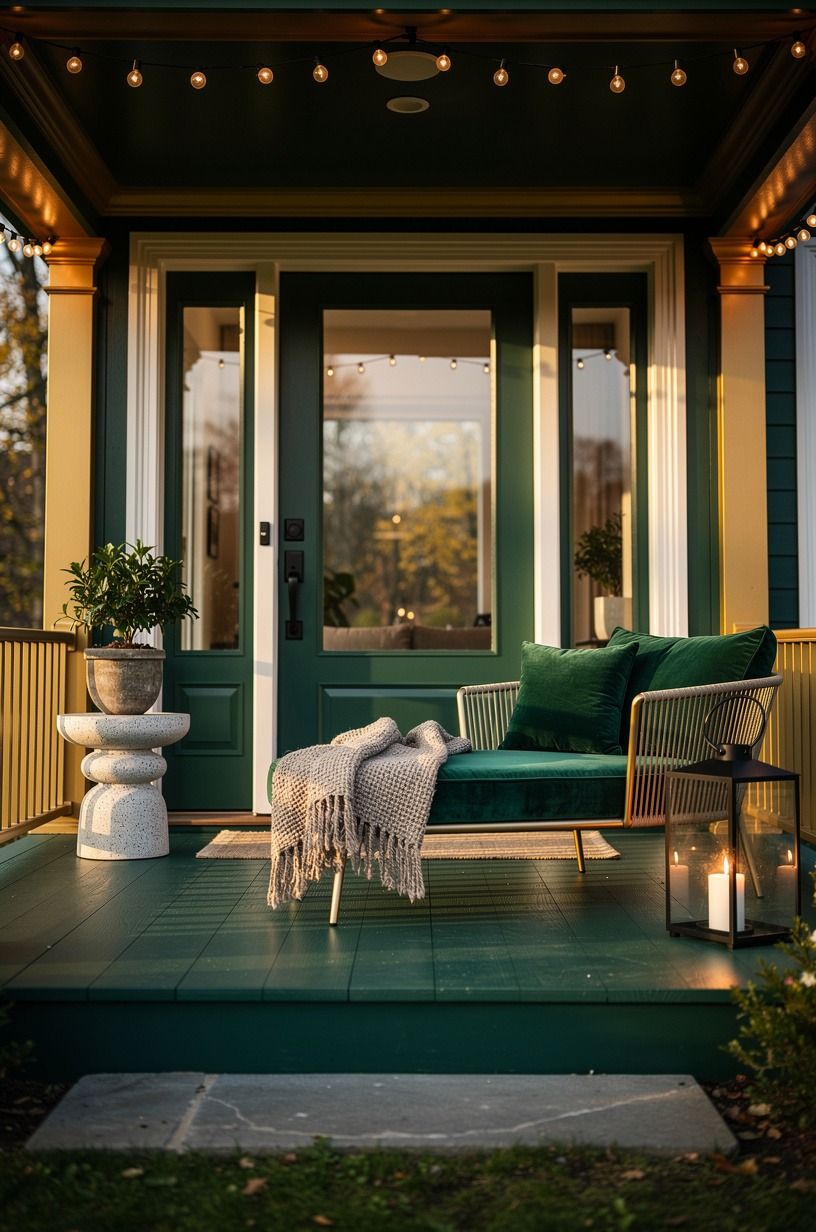
A door with side lights should make your entry feel open without putting the entire hallway on display. Start by looking from the sidewalk toward your foyer.
You’ll want the glass to catch daylight, but you don’t want visitors seeing every coat, shoe, and delivery box at once. A narrow clear glass sidelight can pull light across the floor while keeping the main door visually grounded.
I prefer a single full-height sidelight on the hinge side when the porch is narrow. It gives your eye somewhere to travel without making the entry look like a wall of glass.
If your home already has a wide porch, two matching sidelights create a more airy, symmetrical frame. The choice is yours, but I’d skip uneven decorative panels unless the architecture already has that rhythm.
Use Benjamin Moore White Dove OC-17 on the trim if your siding is warm gray or natural cedar. Add an emerald accent, warm cream textiles, and a small cushion in deep-pile mohair velvet if you want the entry to feel richer without becoming formal. For another front entry with windows, see these wooden front door ideas with warm natural character.
You’ll notice how much the frame matters.
Keep the threshold clear. A slim solid oak sill, one low planter, and a touch of gold hardware are enough to finish the view. Your entry needs breathing room more than it needs another object, and that restraint lets the daylight do its work.
2Layer the Three-Height Light Stack for front entry doors with windows
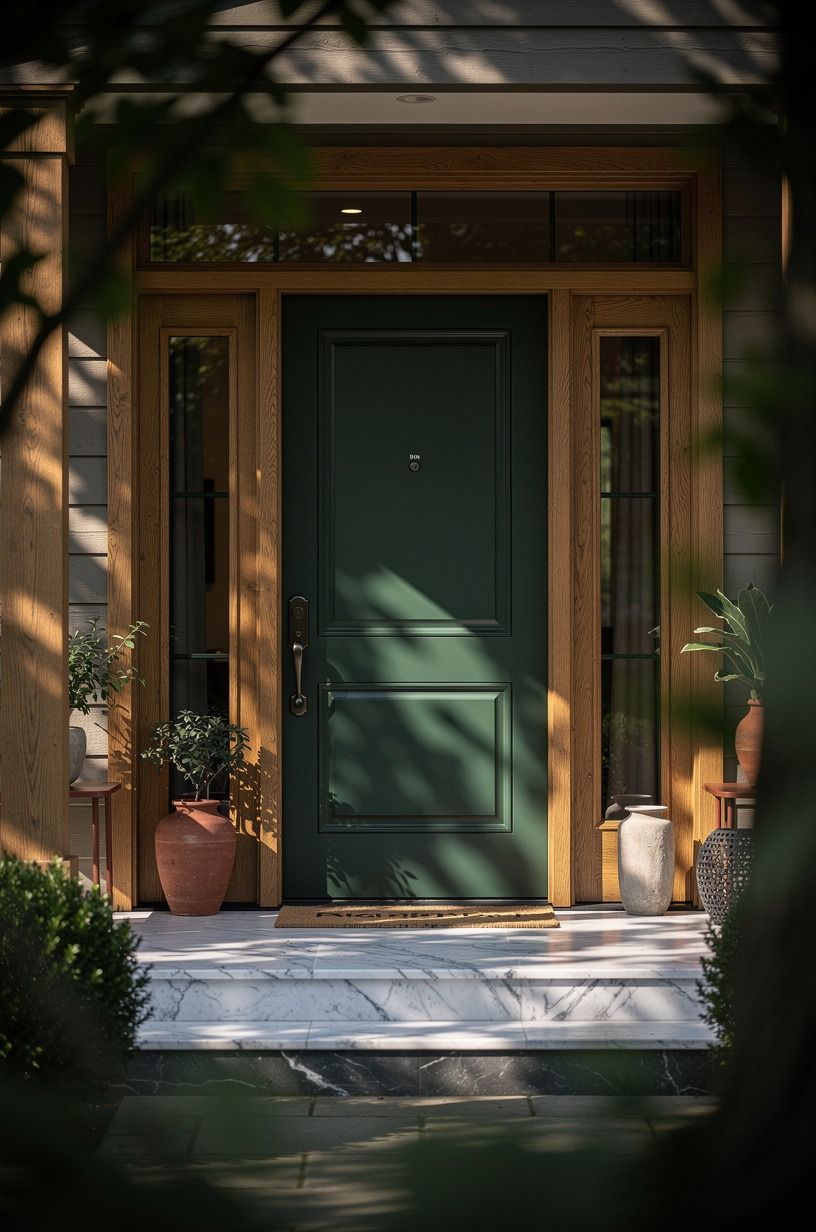
The Three-Height Light Stack is my favorite way to make front entry doors with windows feel intentional. It uses light at three levels: daylight through the glass, a wall or ceiling fixture above eye level, and a low glow near the threshold. Your eye reads the whole porch as one warm composition instead of noticing a lonely bulb over the door.
Begin with a reeded glass panel or clear upper pane that gathers daylight from the street. Then add a lantern high enough to clear the door swing.
At floor level, try a small rechargeable lamp inside a weather-safe lantern, or a low planter with pale foliage that catches the evening glow. A natural oak threshold beside a Carrara marble detail adds useful contrast.
But your bulb temperature matters. A cool white lamp can make natural daylight look gray, especially beside forest-green paint and rust-colored accents.
I’d choose a warm bulb and a dimmer where wiring allows it. The porch should feel inviting at dusk, not like a security checkpoint.
I tested this arrangement on a narrow entry, and the low light was the part that changed the mood. It softened the hard line of the threshold and made the glass feel more welcoming.
For a brighter overall strategy, pair it with these no-window living room ideas that fake natural light. You’ll get more from your glass when the rooms beyond it aren’t dark.
3Paint the glass surround in a soft exterior white
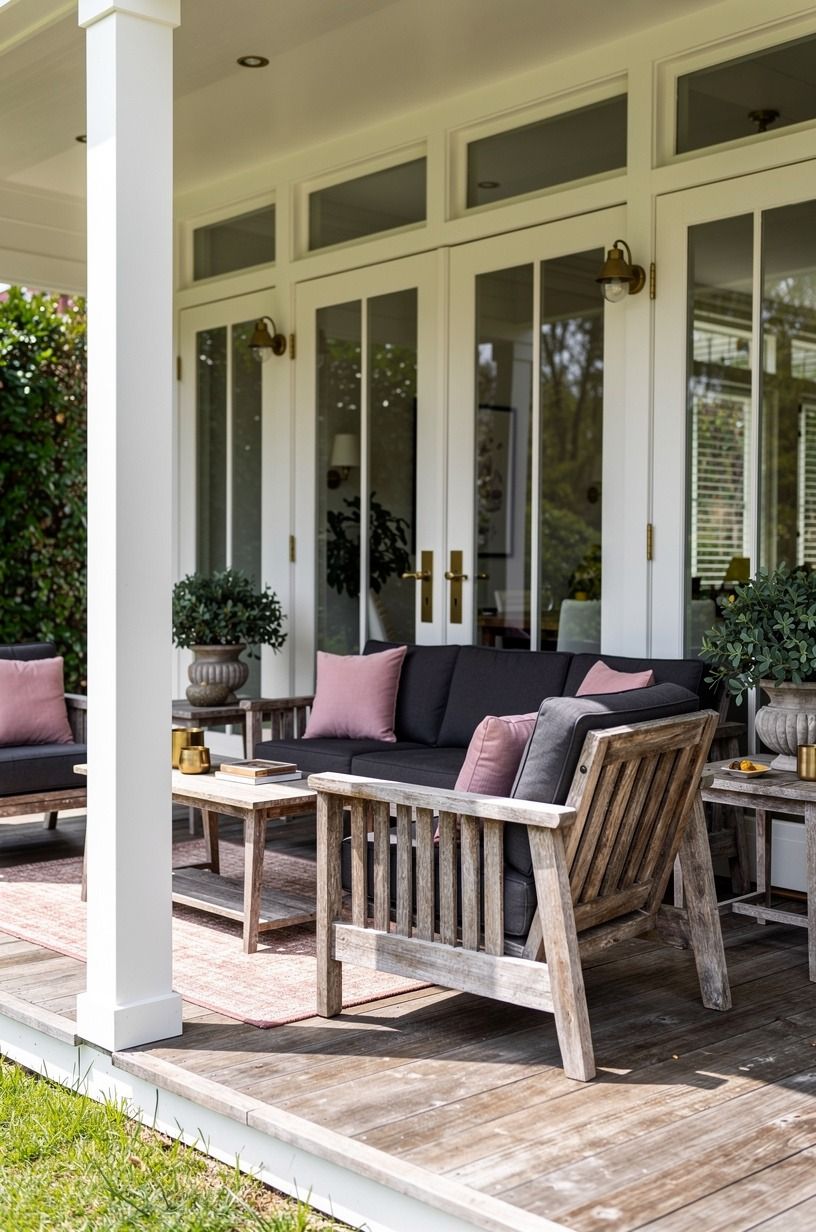
Paint can make a front door with glass look larger, lighter, or much more dramatic. I’d start with the trim and sidelights before choosing the door color. A continuous band of dusty rose around the panes feels softer than stark white, especially beside charcoal siding or a shaded porch.
Your glass will read brighter when the surrounding paint reflects daylight instead of absorbing it. That doesn’t mean your entry needs to be pale all over.
Dusty rose beside reclaimed weathered teak can feel relaxed and earthy, while charcoal siding with brass hardware feels sharper and more tailored. Test a board outdoors because the porch shade will change the color by afternoon.
And don’t paint every surface the same by default. If your siding is pale, use a darker casing to give the door some weight.
A muted charcoal surround works nicely with stone, red brick, and aged brass. You’ll get a quieter contrast than black, but it still gives your entry a point of view.
I’d skip glossy trim on a porch that gets strong sun. It shows every brush mark and throws hard reflections into your foyer. A satin finish is calmer, easier to live with, and still catches enough light to make the sidelights feel bright.
4Swap clear panes for reeded privacy glass
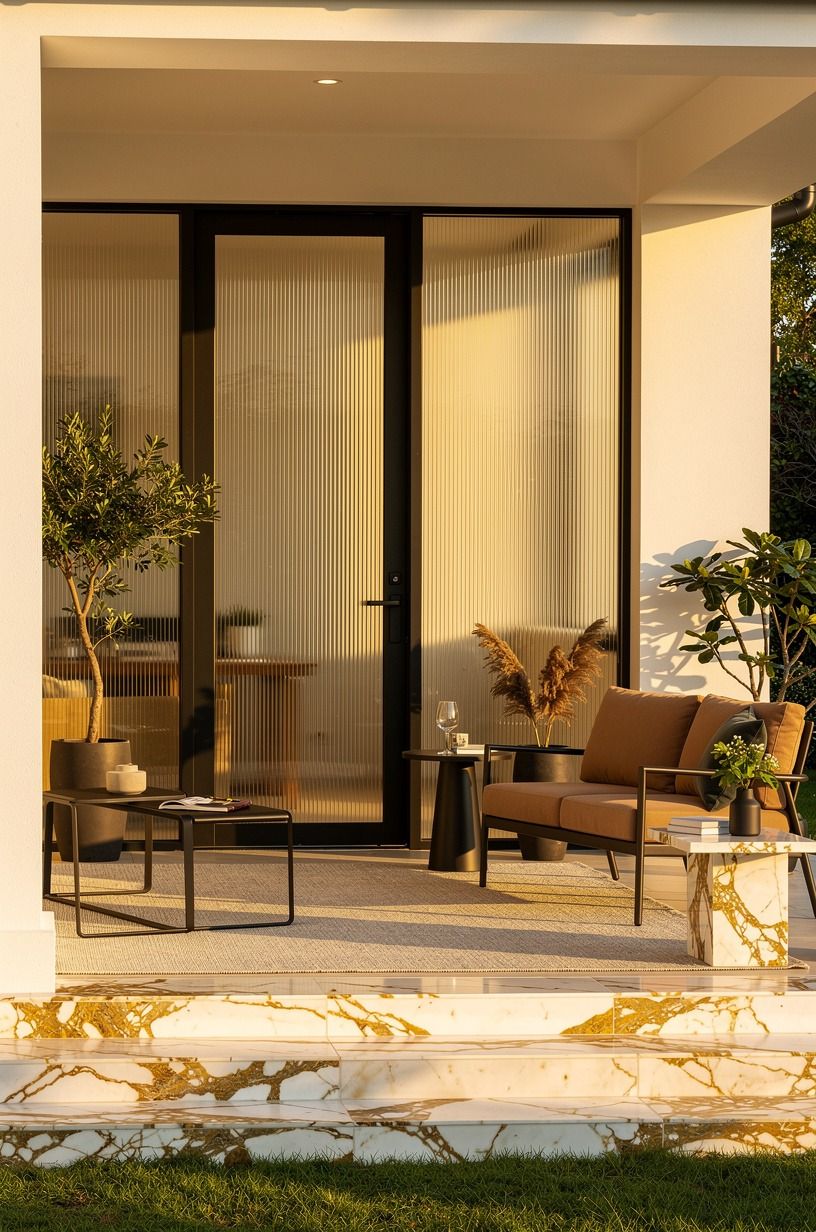
Clear glass gives you the most daylight, but reeded glass gives you a softer kind of openness. It blurs faces and coats while allowing bright vertical streaks to move across your floor. If you’re choosing a door with side lights for a close porch or busy sidewalk, this is the option I’d consider first.
The texture matters. Vertical reeded glass makes the entry feel taller, while heavily frosted glass can look flat and institutional.
You’ll still see shifting shadows when someone walks past, but your home won’t feel like a display window. A warm-white surround, camel textiles, and a slim black detail keep the material feeling warm instead of merely practical.
Use the same texture in the sidelights and the upper door pane if you want a calm, continuous frame. Or keep the main door clear and use reeding only at the sides for more privacy. Why let every pane compete when your eye only needs one clear place to land?
I’d pair this glass with matte black hardware and a small Calacatta marble threshold with gold veining if your home has warm wood or cream siding. For a stronger color direction, browse these yellow front door ideas for a sunny welcome. You’ll see how textured details keep bold paint from feeling loud.
5Build the Two-Wood Rule with front doors with windows on the side
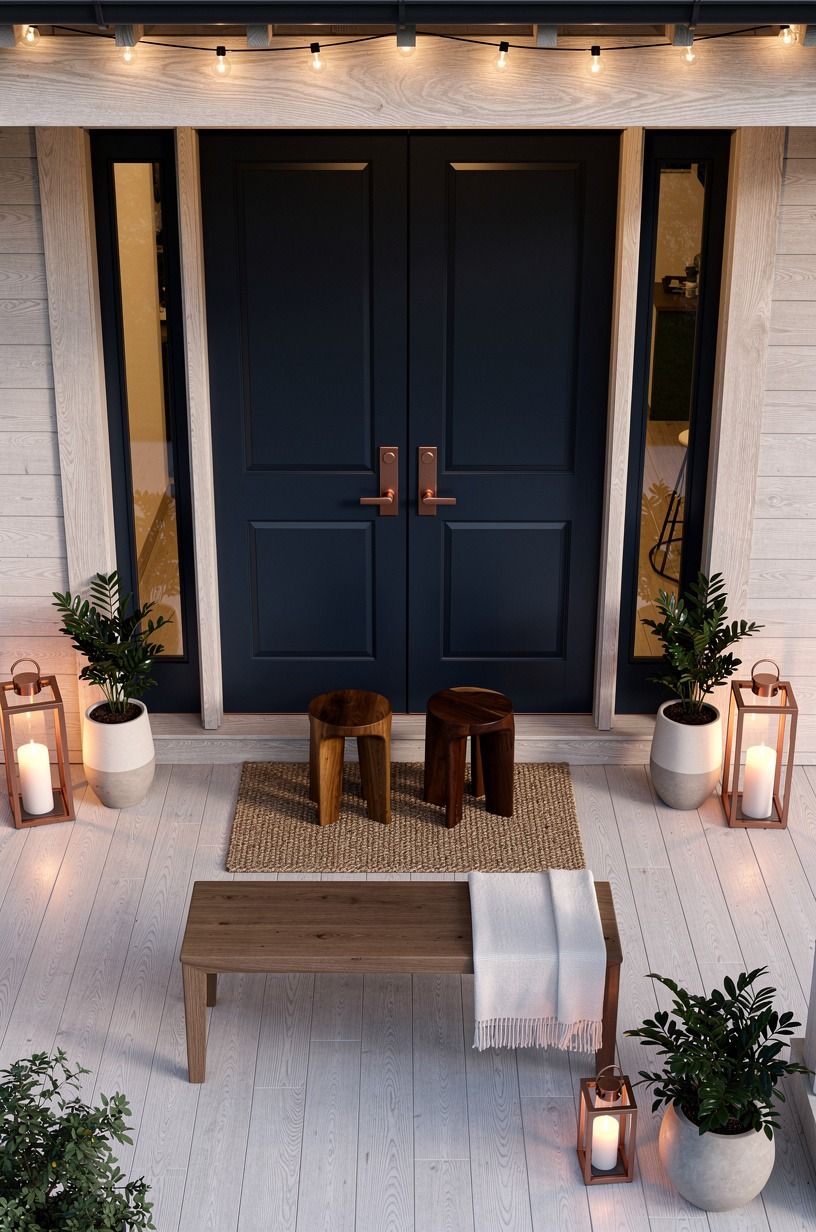
The Two-Wood Rule keeps an entry from becoming a collection of unrelated brown tones.
Use midnight blue on the door with ivory trim, then let cerused white oak carry the warmth through the threshold, bench, or porch ceiling. A small copper lantern adds enough shine without introducing another wood tone. The result feels layered, but still orderly.
6Anchor the light with a properly sized outdoor rug
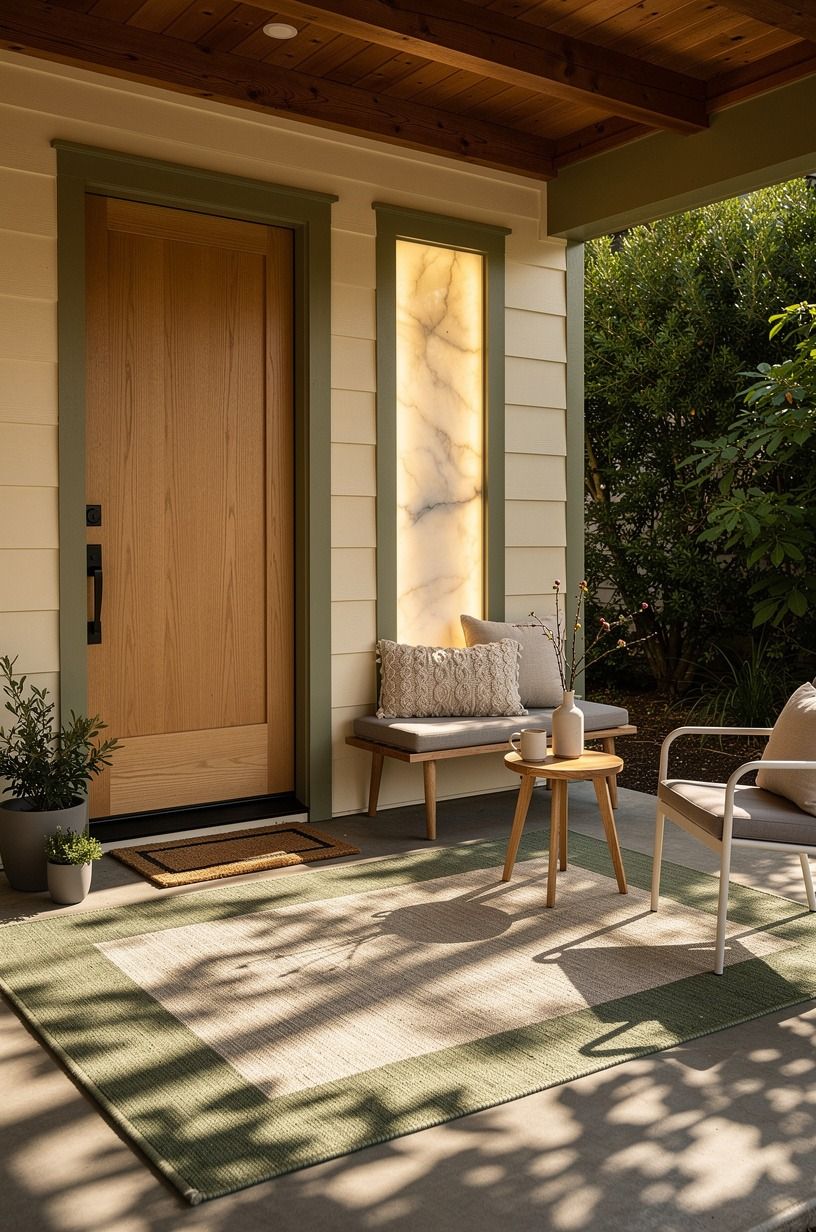
An outdoor rug won’t increase the sunlight, but it can make the natural light feel intentional by giving it a clear landing place. For a front door with glass, choose a flat weave in sage green and warm cream that begins under the door swing and extends toward the walkway. Natural wood nearby will keep the palette relaxed.
I like a restrained outdoor weave because it handles damp shoes and faded leaves without becoming precious. Look for a small check, washed stripe, or subtle geometric pattern. A giant high-contrast design can compete with the sidelights, especially if your glass already has muntins or reeding.
Place only the front legs of your seating on the rug if the porch allows it. That arrangement feels relaxed and keeps the walking route open. Your path should still provide at least 36 inches of clearance, so measure before buying anything.
You’ll be surprised how quickly a planter, chair, and rug can pinch a narrow porch.
And don’t choose a dark rug simply because it hides dirt. A warm cream or muted sage keeps the entry airy.
Add a small backlit translucent onyx accent near the seating if the porch needs a gentle evening glow. I’d skip a bright white rug unless you enjoy constant cleaning. It can look lovely, but your actual threshold will tell a different story.
7Hang lanterns above the glass instead of beside it
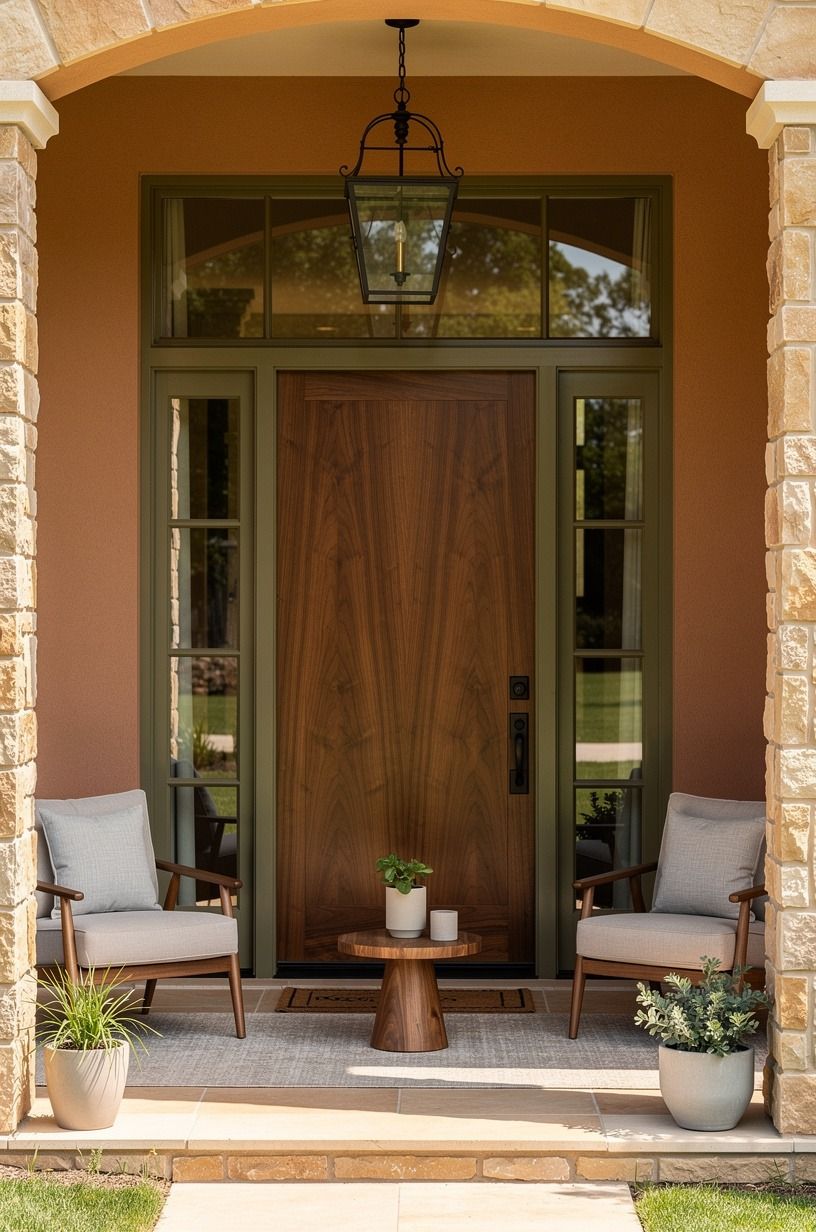
A lantern above the door reinforces the vertical shape of your entry and keeps the sidelights visually open. For front entry doors with windows, that placement also prevents wall fixtures from crowding the glass. You’ll get a stronger focal point without blocking the daylight you worked to bring inside.
Choose a fixture with enough scale to hold its own against the door. A terracotta-colored door, stone surround, and olive foliage create a softer welcome than a fully monochrome entry. If you have room for a book-matched walnut panel or bench, its grain will give the porch a natural focal point.
The shade should direct light down and outward, not straight into your eyes. Nobody wants to open the door under a tiny glare bomb. Keep the metal simple so the walnut and stone remain the memorable materials.
If your porch ceiling is low, use a compact flush mount rather than a hanging lantern. Your fixture should clear the door and leave room for a tall visitor. I’d rather see a simple, well-placed light than an oversized fixture that makes the whole porch feel cramped.
The evening test is worth doing. Stand across the street after dark and look at the glass, the handle, and the path.
Does your eye move naturally from the sidewalk to the door? If it doesn’t, adjust the bulb or shield before adding more decoration.
That little check can save you a second fixture.
8Which front door with glass works when privacy matters?
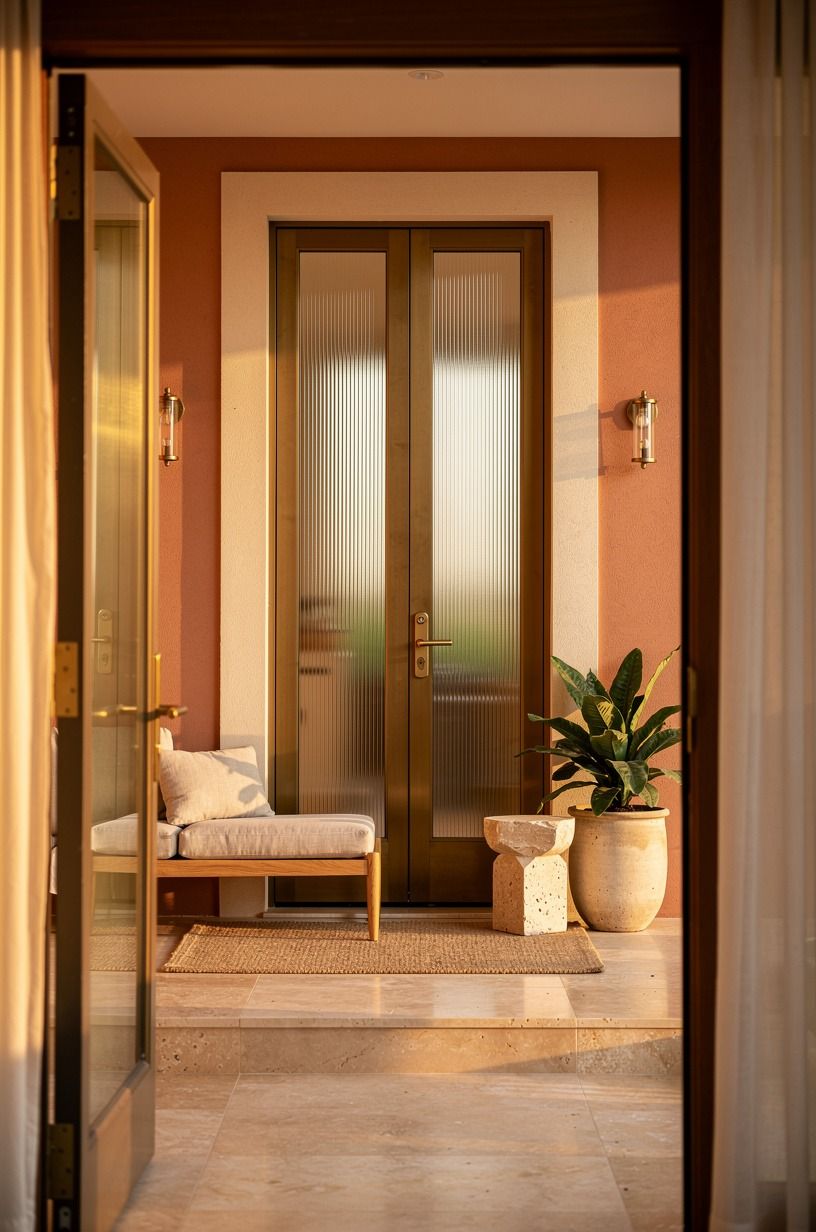
A half-lite door usually works better than a full-lite door when your porch faces a busy sidewalk. You’ll still receive daylight through the upper pane, but the solid lower section gives your entry a more sheltered feeling. If you’re choosing a front door with glass for a small house, that balance can feel calmer.
Use obscured half-lite glass when you want privacy without losing the shifting quality of daylight. A narrow horizontal texture feels more traditional, while vertical reeding makes the door appear taller. A clay-colored door, linen curtain, and warm travertine threshold can soften the practical choice.
I’d skip a full-lite door on a porch where the afternoon sun hits directly. The glare can make your foyer feel hotter and less comfortable, and sheer curtains may become necessary. A half-lite keeps the bright upper field while giving you a place for a seasonal wreath or a lower panel of color.
For a bold alternative, consider a door with aged brass hardware and simple glass. These red front door ideas for a lucky, bold welcome show how a strong color can carry the entry without extra accessories. You’ll want the rest of your porch to stay fairly restrained.
9Mix the Three-Surface Welcome before you set a budget
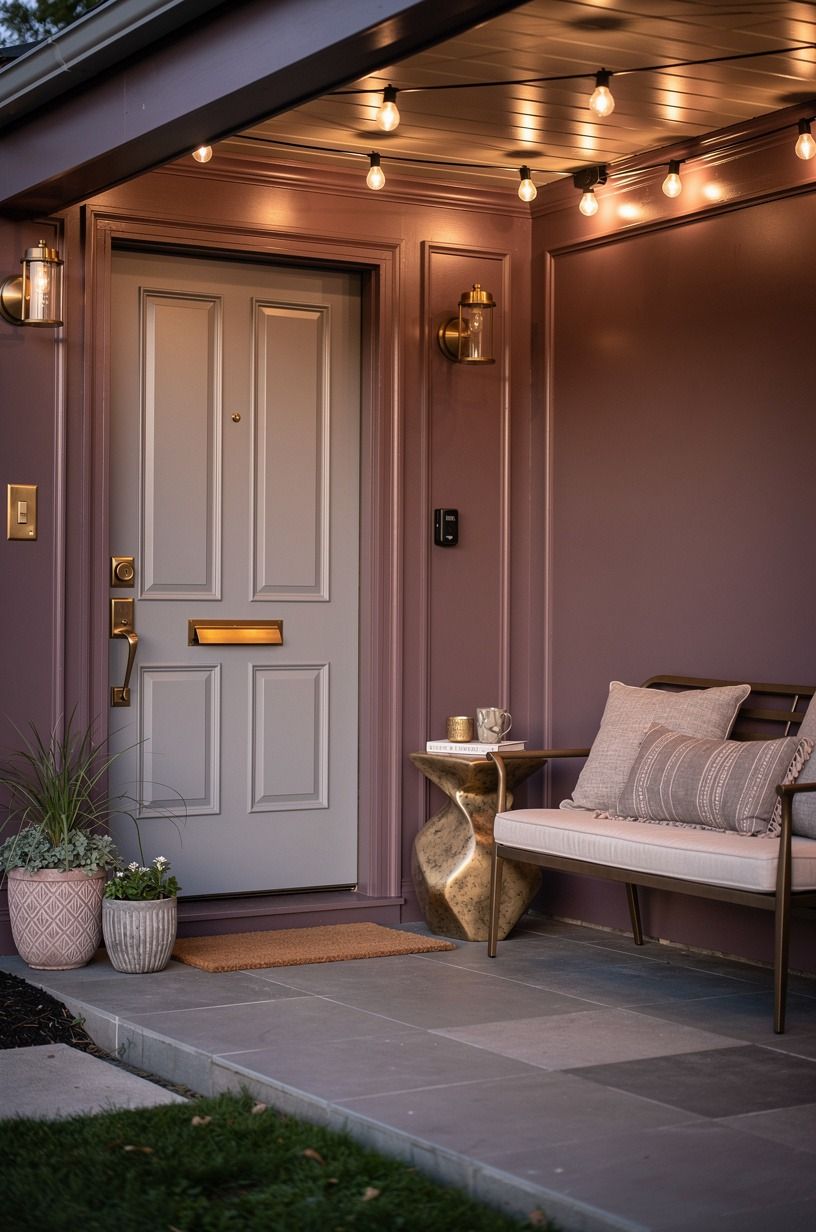
The Three-Surface Welcome uses one reflective surface, one soft surface, and one grounded surface. Your glass is the reflective layer.
The soft layer might be a cushion or rug, and the grounded layer could be brick, slate, or a painted wood door. This mix keeps natural light from making the porch feel cold.
Try a plum-painted door, a gray textured rug, and a small rose-gold light fixture. Add unlacquered brass hardware so the metal can develop a soft patina.
The result feels bright but lived-in. You don’t need a dozen accessories, and I’d resist adding them until you’ve lived with the entry through one full week of weather.
Here are typical US costs for a larger outdoor entry zone. These figures cover broader outdoor improvements, not only the door and sidelights:
Your door project may sit below those broader ranges if the frame and hardware are sound. Start with paint, lighting, and textiles before replacing the whole assembly. That order protects your budget and lets the existing glass show you what the porch needs.
10Style a rental-safe door with side lights
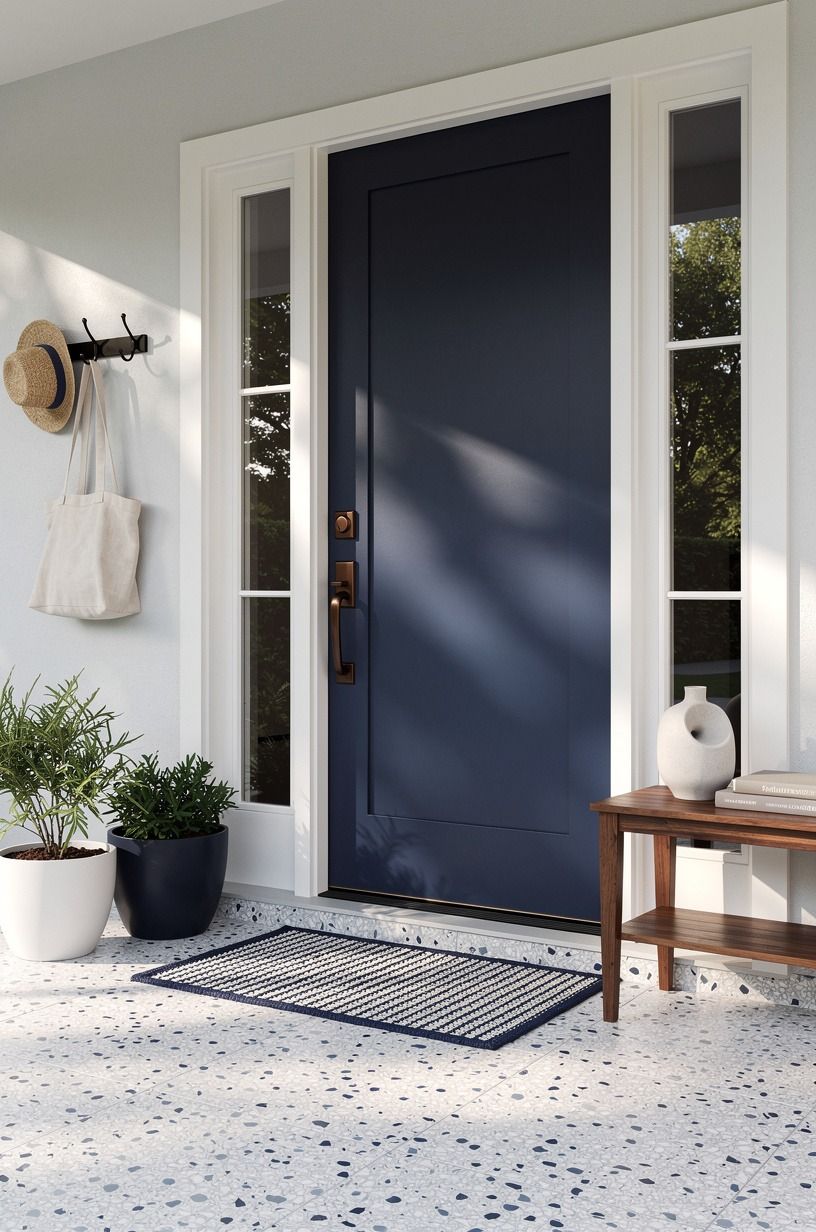
You can make a rental entry feel brighter without drilling into the frame or replacing the door.
Use removable navy film or a fabric panel with white trim, then bring in a freestanding walnut bench. If the entry already has an oversized-chip terrazzo surface, let it remain visible instead of covering it with too many accessories. These changes add warmth while staying easy to remove.
11Test the night view before you commit
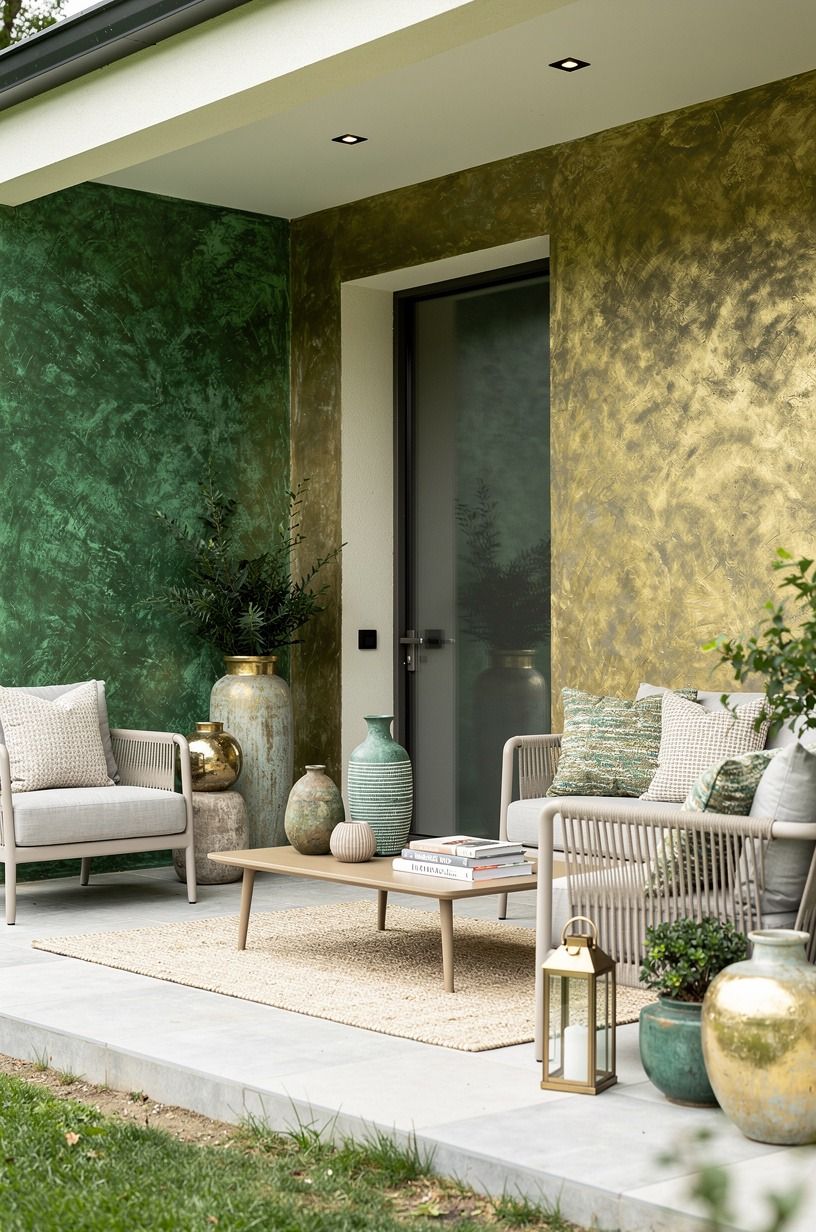
Natural light is only half the story. Before you choose front doors with windows on the side, test how the entry looks at night from the street, from the foyer, and from the room beyond. Your glass may look airy at noon but expose a cluttered hallway after sunset.
Tape a paper rectangle over the proposed glass area and live with it for a day. Then remove it at night and place a lamp several feet behind the door.
This simple test shows where your sightline goes and whether you’ll want a shade, reeded pane, or half-lite design. I’ve avoided more than one poor choice this way.
Look closely at the hardware, too. Gold lever hardware feels polished with emerald and cream, while a soft green entry beside hand-applied Venetian plaster feels warmer and more layered. You’ll want the metal to repeat somewhere else on the porch, but don’t turn every small piece into a matching set.
And if the entry still feels dim, inspect the room beyond the door. A dark runner or heavy console can absorb the daylight before it travels inside.
Swap in a pale runner, move the furniture back, and let the glass perform. The fix may be inside your home, not on the porch!
The Opinion I’d Give a Friend About Glass Entries
I’ve changed my mind about glass front doors. I used to think more glass automatically meant more light, and that sounds logical until you live with the glare, the privacy problem, and the strange view of your own hallway at night. Now I see the door as one part of a small light system.
The panes, frame, threshold, paint, and fixture all need to support one another.
If your porch is narrow, I’d spend money on the glass texture before a decorative accessory. Reeded or lightly obscured glass can make a daily difference, while another planter usually just creates something to move around.
If your porch is deep and shaded, I’d prioritize the clearest upper pane and a warm fixture. The best choice depends on what your entry already does poorly.
My own mistake was treating the front door as a standalone purchase. I chose the slab first, then tried to make the porch work around it.
That order left me with a bright door, a dark frame, and hardware that looked too shiny beside the brick. The repair was simple, but I would’ve rather spent that Saturday elsewhere.
You should also be honest about maintenance. Clear glass shows fingerprints.
Pale rugs show soil. Wood needs care.
None of that means you should avoid them, but you’ll enjoy the entry more if you choose materials that fit your habits. A lived-in porch can be polished, warm, and practical at once.
That combination is worth protecting!
What People Always Want to Know
What is the best Front Door Ideas With Glass & Sidelights for More Natural Light for a small front porch?
A half-lite door with one reeded sidelight is usually the best small-porch choice because it brings in soft daylight without making the entry feel exposed. An IKEA HEMNES bench can add storage if you still have at least 36 inches for walking.
Where can I buy Front Door Ideas With Glass & Sidelights for More Natural Light pieces on a budget?
Look at IKEA, Wayfair, and Target for budget-friendly entry pieces, then check Facebook Marketplace or a local thrift shop for benches and planters. I don’t use commission links here. The page is supported by display advertising, so you can shop wherever you prefer.
How much does a Front Door Ideas With Glass & Sidelights for More Natural Light makeover cost?
A small refresh can stay near the lower end of the $200-$900 budget range when you keep the existing door and focus on paint, lighting, textiles, and plants. A full outdoor entry renovation can move into the $1,500-$6,000 mid range.
Can I create a Front Door Ideas With Glass & Sidelights for More Natural Light on a budget?
Yes, and you can begin with free changes: clear the sightline, move bulky furniture, and clean the glass. Add a removable film, a simple outdoor rug, or warm lighting next. Your entry doesn’t need a full replacement to feel brighter!
Is a Front Door Ideas With Glass & Sidelights for More Natural Light worth it in a small space?
Yes, because glass can borrow daylight without using floor space. Choose a narrow sidelight, a pale frame, and furniture that stays outside the walking path. A compact entry benefits most from vertical light and clear circulation.
Is Front Door Ideas With Glass & Sidelights for More Natural Light a good idea for a rental?
Yes. Use peel-and-stick privacy film, a tension rod, a removable wreath hook, and a freestanding planter. Those swaps give your rental a more welcoming entry without drilling into the door, siding, or frame.
Where I’d Start First
If I had to pick one, I’d start with reeded glass in the sidelight. It brings in daylight while solving the privacy problem that makes many clear-glass entries uncomfortable. Pin reeded glass ideas for later and compare the texture from inside and outside before you buy.