
 by
by Amerisleep AS3
GREENGUARD Gold whole-product VOC certification, CertiPUR-US certified foam, partially plant-based Bio-Pur construction, and a silica-based fire barrier — no chemical FR agents, no loose fiberglass. Our top pick for a genuinely low-chemical mattress with third-party proof behind every claim.
"Non-toxic" is not a regulated term. What separates a genuinely low-chemical mattress from marketing language is third-party certification. Our top pick is the Amerisleep AS3: Bio-Pur partially plant-based foam, GREENGUARD Gold whole-product VOC certification, CertiPUR-US certified foam, and no loose fiberglass in the fire barrier. The Saatva Zenhaven is the best all-natural alternative if you want GOLS-certified Talalay latex and a GOTS-certified organic cotton and wool cover.
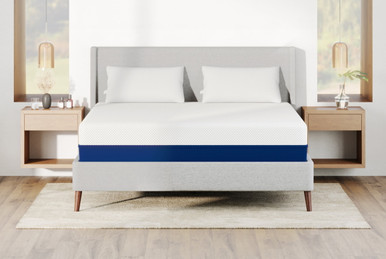
#1 Best Overall Non-Toxic Mattress
Amerisleep AS3
9.1/10
- GREENGUARD Gold certified for whole-product VOC emissions. It is the only standard that tests the mattress as a finished product at indoor air quality levels
- CertiPUR-US certified foam: independently tested for formaldehyde, heavy metals, ozone depleters, and PBDE flame retardants
- Bio-Pur foam partially replaces petroleum inputs with plant oils, which measurably lowers VOC production compared to standard memory foam
- Silica-based fire barrier replaces chemical FR treatments; no loose fiberglass in the construction
- Made in the USA, 100-night trial, 20-year split warranty
- Some off-gassing in the first 24 to 48 hours is normal and within GREENGUARD Gold limits
- Not a fully organic mattress. Bio-Pur is partially, not entirely, plant-based
- Softer edges than a coil hybrid; sleepers over 230 lb may prefer the AS5 Hybrid, Amerisleep’s softest model, whose pocketed-coil core adds deeper support
For buyers who want genuine third-party certification covering the whole product, not just the foam, the AS3 is the most defensible pick in the category. GREENGUARD Gold tests what you actually breathe; CertiPUR-US confirms what's not in the foam. Combined with a silica-based fire barrier, it covers the three main chemical risks in a conventional mattress.
What non-toxic certifications actually test
"Non-toxic" printed on a mattress tag means nothing. There is no federal definition, no third-party verification required to use the phrase. What matters is whether the mattress holds certificates that are searchable in a public database. Five certifications cover the most important chemical risks:
- GREENGUARD Gold: Tests the finished mattress as a whole product for VOC emissions at children's bedroom air quality thresholds. This is the most demanding VOC certification and covers what you actually breathe over a full night.
- CertiPUR-US: Tests foam for formaldehyde, heavy metals, ozone depleters, and PBDE flame retardants. Covers foam only, not the cover fabric, coils, or fire barrier. It is the minimum baseline that is necessary but not sufficient.
- OEKO-TEX Standard 100: Tests the finished product for 100-plus harmful substances including cover fabric, foam, and any additional materials. More comprehensive than CertiPUR-US for the whole mattress.
- GOLS (Global Organic Latex Standard): Certifies that latex content is at least 95 percent certified organic by weight. Latex-specific, but the most rigorous standard for natural latex mattresses.
- GOTS (Global Organic Textile Standard): Certifies organic content in textiles, most commonly the cotton or wool cover fabric. Covers farming through manufacturing processing.
Always verify the certificate number in the certifying body's public database, not just the logo on the brand website. GOTS and GOLS are searchable at global-standard.org. OEKO-TEX certificates are verifiable at oeko-tex.com. CertiPUR-US certified foams are listed at certipur.us/certified-foams.
The three main chemical risks in a conventional mattress
Most chemical concerns in conventional mattresses fall into three categories:
Foam VOCs: Standard petroleum polyurethane foam off-gasses volatile organic compounds during and after manufacturing. The smell that hits you when you open a boxed mattress is VOC off-gassing. Most dissipates within 48 to 72 hours, but the quantity and composition varies widely between formulations. Open-cell and partially plant-based foams like Bio-Pur produce lower VOC loads because plant oil inputs change the polymer chemistry at the material level.
Chemical flame retardants: US federal law (16 CFR Part 1633) requires all mattresses to pass open-flame resistance testing. Conventional mattresses historically used chemical FR treatments, some of which have been restricted due to health concerns. Non-toxic mattresses meet the same legal standard through alternative means: natural wool barriers (wool is inherently flame-resistant), silica fiber barriers, or Kevlar fabric. A wool or silica barrier performs to the same legal standard without chemical FR agents.
Fiberglass fire barriers: Some budget mattresses use a fiberglass sleeve inside the cover to meet flammability standards. When the outer cover is removed or damaged, glass fibers can escape and become difficult to remove from fabric, carpets, and skin. Well-certified mattresses from the brands covered here use alternative fire barriers. When in doubt, ask the manufacturer how their mattress meets 16 CFR 1633 before purchasing.
Best non-toxic mattresses for 2026
| Mattress | Type | Key certifications | Trial | Queen price |
|---|---|---|---|---|
| Amerisleep AS3 | All-foam (Bio-Pur) | GREENGUARD Gold + CertiPUR-US | 100 nights | $1,249 (queen) |
| Saatva Zenhaven | Natural Talalay latex | GOLS + GOTS + OEKO-TEX | 365 nights | ~$1,995 |
| PlushBeds Botanical Bliss | Natural Dunlop latex | GOLS + GOTS + OEKO-TEX + GreenGuard Gold | 100 nights | ~$1,999 |
| Saatva Classic | Innerspring hybrid | CertiPUR-US + OEKO-TEX organic cotton | 365 nights | $2,229 |
Saatva Zenhaven
8.7/10
- GOLS-certified Talalay latex: at least 95 percent certified organic latex by weight
- GOTS-certified organic cotton and wool cover, with farming and manufacturing both certified
- OEKO-TEX Standard 100 on the finished product tests the whole mattress, not just individual materials
- Flippable design: Plush side (~4/10) and Gentle Firm side (~6/10) in one mattress
- 365-night trial and lifetime warranty with free white-glove delivery
- Natural latex is more expensive; the Zenhaven costs roughly double the AS3
- Buoyant, responsive latex feel is very different from foam and not for buyers expecting memory foam contouring
- $99 return fee applies if you use the trial
If natural materials matter more than plant-based foam, the Zenhaven holds a more complete certification stack than any foam mattress can. GOLS on the latex, GOTS on the cover, OEKO-TEX on the finished product. It is the pick for buyers who want to minimize synthetic inputs throughout the construction.
How we evaluate non-toxic mattresses
We focus on three criteria. First, independent certification: does the brand hold certificates that are verifiable in a public database, with a certificate number, not just a logo? Second, transparency: does the brand disclose what fire barrier they use and how the mattress meets 16 CFR 1633? Third, material sourcing: can the brand explain what percentage of inputs are plant-based or organic, and is that claim verifiable?
We exclude mattresses that claim "natural" or "non-toxic" without a verifiable certificate number. We also exclude brands named in fiberglass-shedding consumer complaints, regardless of what their website claims about flame barrier construction.
Flame retardants: the chemical issue most guides miss
Most non-toxic mattress coverage focuses on foam certifications and ignores the fire barrier. That is the wrong emphasis. Chemical flame retardants were the source of the most significant health concerns in mattress manufacturing. Modern alternatives work by meeting the same flammability standard through physical rather than chemical means.
Wool barriers are the most common natural approach. Wool ignites at a much higher temperature than cotton or synthetic foam, and its protein structure forms a char that prevents flame spread. Silica fiber barriers work similarly. Both approaches pass 16 CFR 1633 without any chemical FR treatment. When you see GREENGUARD Gold certification, it means the VOC load from every layer, including the fire barrier, tested below the indoor air quality threshold.
For a non-toxic foam mattress backed by whole-product VOC certification, the Amerisleep AS3 is our top pick. For buyers who want the most complete organic-materials certification stack, the Saatva Zenhaven holds GOLS, GOTS, and OEKO-TEX together. Both avoid chemical flame-retardant agents in the fire barrier (silica-based on the AS3, natural wool on the Zenhaven).
Frequently asked questions
Is CertiPUR-US enough for a non-toxic mattress?
CertiPUR-US is a necessary baseline but not sufficient on its own. It covers foam only and does not test the finished mattress as a whole product. GREENGUARD Gold tests the complete mattress at indoor air quality VOC thresholds and is the more meaningful certification for what you actually breathe. OEKO-TEX Standard 100 tests all components including cover fabric and other materials.
What fire barrier replaces chemical flame retardants?
The most common alternatives are natural wool and silica fiber barriers. Wool is inherently flame-resistant due to its protein structure and ignition temperature. Both wool and silica barriers pass US federal flammability standards (16 CFR 1633) without chemical FR agents. Ask any mattress brand directly how their product meets the federal standard before purchasing if this is a priority.
Do non-toxic mattresses still off-gas?
Yes, some initial off-gassing is normal even with certified mattresses. GREENGUARD Gold certification means the emissions tested below the threshold for indoor air quality, not that there are zero VOCs. Airing out a new mattress for 24 to 48 hours before sleeping on it is standard practice regardless of certification status.
Is organic the same as non-toxic?
Not necessarily. Organic refers to how materials were grown and processed. Non-toxic refers to the chemical content of the finished product. A GOLS-certified organic latex mattress still needs a fire barrier, and that barrier could use chemical FR agents. The most thorough certifications cover both organic material content and finished product emissions. GREENGUARD Gold on the whole mattress plus GOLS or GOTS on the raw materials.
Amerisleep AS3
9.1/10
GREENGUARD Gold whole-product VOC certification, CertiPUR-US foam, partially plant-based Bio-Pur construction, silica-based fire barrier, with no chemical FR agents and no loose fiberglass. Medium 5/10 firmness, 100-night trial, 20-year split warranty.