
 by
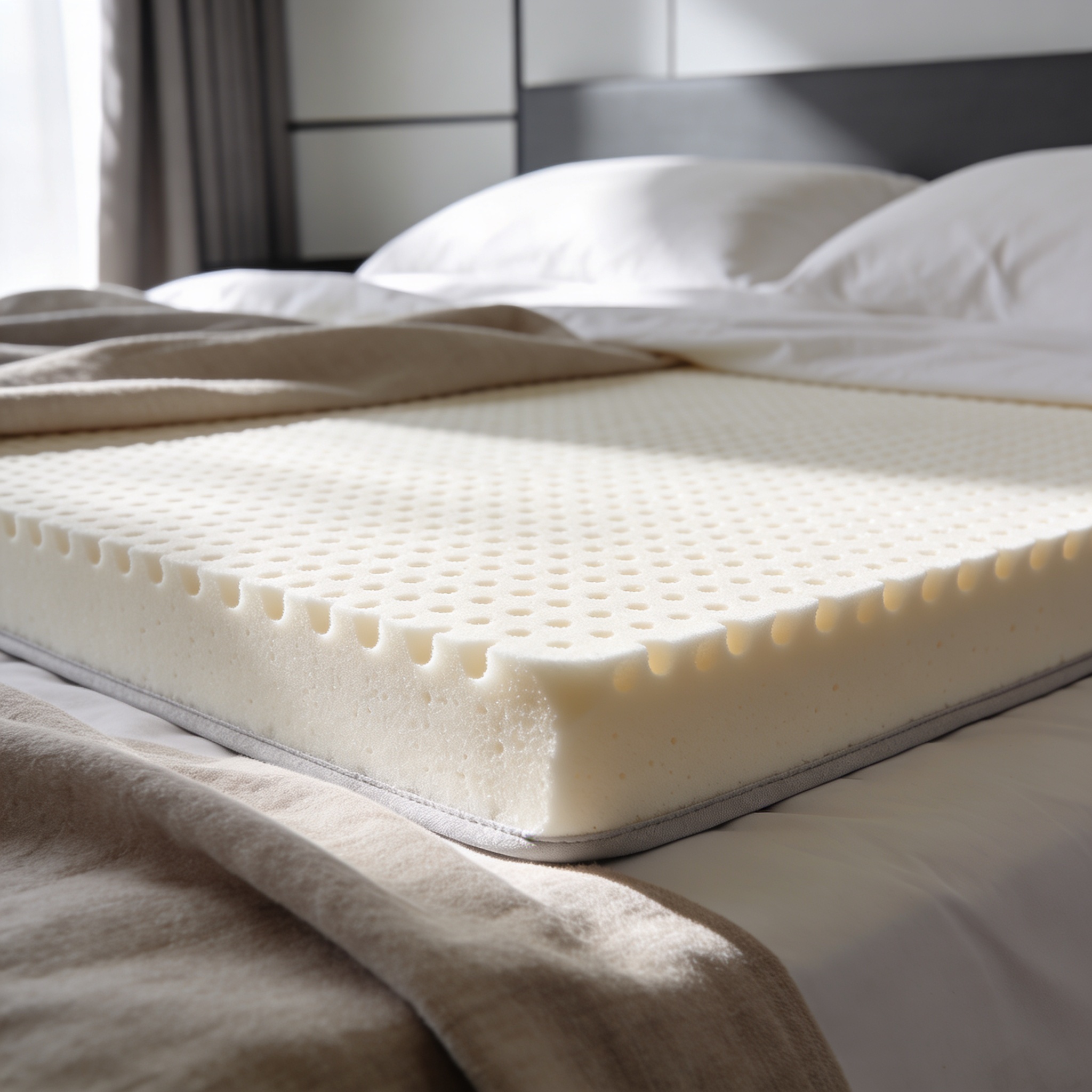
by The terms overlap but are not identical. Organic means certified ingredients (GOTS, GOLS), third-party verified. Natural means materials derived from nature, latex, wool, cotton, without necessarily holding a certification. For a mattress that is genuinely both, the PlushBeds Botanical Bliss is our top pick: GOLS-certified Dunlop latex, GOTS organic cotton and wool, 365-night trial, lifetime warranty.
PlushBeds Botanical Bliss
9.2/10
- GOLS-certified organic Dunlop latex, the strictest latex certification available
- GOTS-certified organic wool and cotton cover throughout
- GREENGUARD Gold certified, zero synthetic foam layers
- Exceptional pressure relief (10/10 tested) with 5.25″ latex comfort layer
- Excellent cooling: latex and organic wool wick heat naturally
- 365-night trial, lifetime warranty
- Premium price, $2,649 queen, well above the all-foam average
- Latex off-gassing can last up to 10 days (rubber smell, not chemical)
- Weak edge support, not built for perimeter sitting
For shoppers who need documented organic credentials top to bottom, the Botanical Bliss delivers every certification, GOLS, GOTS, GREENGUARD Gold, with no synthetic foam layers, no fiberglass, and pressure relief scores that match the best all-foam mattresses.
Organic vs natural: what the terms actually mean
Walk into any mattress showroom and you will hear both words used interchangeably. They are not the same, and the gap matters when you are spending over $2,000 on a mattress you plan to sleep on for a decade.
Organic is a certified claim. The two certifications that carry real weight are:
- GOLS (Global Organic Latex Standard): requires that at least 95% of the raw material be organic latex, with limits on processing chemicals and strict social standards for workers. Only whole-latex mattresses or latex layers can carry this certification, it is not granted to blended or Talalay latex unless the specific batch is certified.
- GOTS (Global Organic Textile Standard): applies to fibers, the cotton cover, the wool batting. Requires at least 70% organic fiber content and restricts all processing chemicals along the full supply chain.
Natural describes origin. Natural latex comes from rubber tree sap. Natural wool and cotton are not synthetically processed. But a mattress labeled "natural" carries no third-party verification. A mattress with 1 inch of natural Talalay latex over synthetic foam can call itself a natural mattress without lying.
The practical test: if a mattress does not list a GOLS or GOTS certification on its product page, the word "organic" in its marketing is unverified.
Organic latex: Dunlop vs Talalay
Both Dunlop and Talalay latex are derived from rubber tree sap. The difference is in the manufacturing process and what it means for organic certification:
- Dunlop: the original process, simpler and more compatible with organic certification (fewer additives). Most GOLS-certified latex is Dunlop. Denser, slightly firmer, more durable over time.
- Talalay: a more involved process that adds a vacuum and flash-freeze step, producing a more uniform, bouncier feel. Most Talalay latex on the market (Radium Foam, Latex International) is not GOLS-certified, though some certified batches exist. Saatva Latex Hybrid uses certified Talalay.
For a genuinely organic mattress, look for GOLS-certified Dunlop or explicitly certified Talalay from a documented supplier.
Saatva Latex Hybrid
8.9/10
- Zoned natural Talalay latex (5-zone, perforated) over pocketed recycled-steel coils
- GOTS-certified organic cotton and wool throughout the cover
- Excellent temperature regulation (8.5/10), cotton, wool, perforated latex, and open coil all promote airflow
- Strong edge support from reinforced perimeter coils
- Free white-glove delivery, in-room setup and debris removal included
- 365-night trial, lifetime warranty
- High motion transfer, bouncy Talalay over coils is not ideal for light-sleeping couples
- Only one firmness (Medium Firm 6/10), no soft or firm option
- $99 return fee during the trial window
The Saatva Latex Hybrid pairs certified organic materials with coil support for a firmer, bouncier feel than all-latex. White-glove delivery and a full-lifetime warranty make it the strongest natural-hybrid option for back and stomach sleepers who want organic credentials without the all-latex feel.
Certifications that actually matter
| Certification | What it covers | Who issues it |
|---|---|---|
| GOLS | Organic latex content, processing, labor | Control Union / IMO |
| GOTS | Organic cotton, wool, textile fibers | Control Union / CCPB |
| GREENGUARD Gold | Chemical emissions (VOCs), safety in enclosed spaces | UL Environment |
| OEKO-TEX Standard 100 | Harmful substance limits across entire product | OEKO-TEX |
| CertiPUR-US | Synthetic foam content and emissions only (no organic claim) | Alliance for Flexible Polyurethane Foam |
CertiPUR-US is meaningful for foam mattresses but does not confer "organic" status, it tests synthetic polyurethane foam for harmful substances. An organic mattress should carry GOLS and GOTS, not just CertiPUR-US.
Who should buy organic, and who can stop at natural
Organic (certified) makes sense if: you have chemical sensitivities, you are buying for a child, you are pregnant, or you have explicitly reacted to off-gassing from synthetic foam. The certified route eliminates ambiguity.
Natural (without full certification) can be enough if: you are primarily concerned about sleeping cool, want latex responsiveness, and are budget-constrained. The Birch by Helix, for example, carries GOLS and GREENGUARD Gold at $1,499 queen, below what a fully certified all-latex mattress costs.
Be skeptical of "natural foam": phrases like "natural memory foam," "plant-based memory foam," and "bio foam" describe synthetic polyurethane with a partial organic raw material substitution. This is not the same as a latex mattress. Amerisleep's Bio-Pur, for instance, is CertiPUR-US certified and partially plant-sourced, a genuine improvement over standard memory foam, but not an organic latex product.
Amerisleep AS3
8.7/10
- Bio-Pur foam is partially plant-derived with an open-cell structure for better breathability than standard memory foam
- CertiPUR-US certified, tested for heavy metals, ozone-depleting substances, and VOC emissions
- HIVE 5-zone support layer provides targeted pressure relief at shoulders and hips
- $600+ less than a full organic latex mattress; strong 100-night trial and 20-year warranty
- Not an organic mattress, Bio-Pur is synthetic foam with partial plant-based content, not GOLS/GOTS certified
- Softer edges than a coil hybrid
If full organic certification is not a requirement but you still want a low-emission, non-toxic foam without synthetic fiberglass, the AS3 is the most competitive all-foam option. For under $1,100, it delivers CertiPUR-US peace of mind, zoned support, and a 20-year warranty, at roughly half the price of a GOLS-certified latex mattress.
Organic and natural mattresses compared
| Mattress | Type | Key certifications | Firmness | Trial | Queen price |
|---|---|---|---|---|---|
| PlushBeds Botanical Bliss | All-latex | GOLS, GOTS, GREENGUARD Gold | Soft 4 or Medium-Firm 6 | 365 nights | $2,649 |
| Saatva Latex Hybrid | Latex hybrid | GOTS (cotton, wool), GOLS (Talalay) | Medium Firm 6 | 365 nights | ~$2,649 |
| Birch by Helix | Latex hybrid | GOLS, GREENGUARD Gold, eco-INSTITUT | Slightly Firm 7 | 120 nights | $1,499 |
| Amerisleep AS3 | All-foam (Bio-Pur) | CertiPUR-US (not GOLS/GOTS) | Medium 5 | 100 nights | From $1,049 |
How to read an organic mattress product page
Three questions cut through marketing quickly:
- Which layers are certified, and by what? A GOLS logo on the product page means the latex layer is certified, but check whether the certification number is listed, or just the logo. Legitimate certifiers (Control Union, IMO) publish public certificate databases.
- What is the fire barrier? Organic mattresses must still pass flame retardancy standards. The cleanest approach is a wool barrier (GOTS-certified wool acts as a natural flame barrier and is standard in genuinely organic mattresses). An unspecified "fire sock" in an otherwise organic mattress is a yellow flag.
- Does "natural" appear anywhere without a corresponding certification? If the answer is yes on a high-priced mattress, the rest of the claims deserve scrutiny.
Organic mattress pricing: what to expect
Certified organic latex is expensive. Rubber cultivation, GOLS processing, and the supply chain audits required for organic certification all add cost. A realistic price range for a genuinely organic queen mattress in 2026:
- $1,400 to $1,700: latex hybrids with organic layers but not all-organic construction (Birch, entry Saatva Latex Hybrid sizes)
- $2,500 to $3,500: fully certified all-latex mattresses (PlushBeds Botanical Bliss, Avocado Green Mattress)
- Under $1,200: non-latex "natural" or CertiPUR-US foam (Amerisleep AS3, Leesa Original), not organic, but lower-emission than conventional foam
If a mattress markets itself as "organic" at $900 queen, the certifications are almost certainly absent or limited to one component.
Organic = certified (GOLS + GOTS). Natural = materials origin, no certification required. For a fully certified pick, choose the PlushBeds Botanical Bliss. For a certified natural hybrid with coil support, the Saatva Latex Hybrid is the strongest option. For the best non-toxic foam under $1,100, the Amerisleep AS3 delivers CertiPUR-US credentials and a 20-year warranty at roughly half the organic latex price.
Frequently asked questions
Is an organic mattress better for health?
Not definitively. Certified organic mattresses eliminate ambiguity around synthetic chemicals and processing agents. For people with documented chemical sensitivities or VOC reactions, the additional assurance is meaningful. For the general population, a CertiPUR-US certified foam mattress already restricts the substances most associated with off-gassing concerns. The cleaner the certification stack, the less you need to rely on brand claims.
Do natural mattresses off-gas?
Latex mattresses have a characteristic rubber smell that can be noticeable for 5 to 10 days after unpacking. This is from volatile organic compounds in natural rubber and is not a health hazard, but it is more persistent than the odor from a synthetic foam mattress. GREENGUARD Gold certification sets limits on total VOC emissions and is the most direct way to verify low off-gassing on any mattress type.
What is the difference between GOLS and GOTS?
GOLS (Global Organic Latex Standard) applies specifically to latex, it certifies that the rubber material is organically grown and that processing meets specific standards. GOTS (Global Organic Textile Standard) applies to textile fibers: the cotton cover, the wool batting, any fabric component. A fully organic mattress needs both, GOLS for the latex core and GOTS for the cover materials.
Is Avocado mattress organic?
Yes. The Avocado Green Mattress carries GOLS (latex) and GOTS (cover) certifications, making it one of the most thoroughly certified mattresses widely available. We do not currently carry Avocado affiliate links, but it is a legitimate comparison point when evaluating PlushBeds and Saatva Latex Hybrid in this category.