
 by
by Quick answer: does it matter which side of the magnetic mattress topper goes down? Yes, orientation can matter, but there is no universal rule that the magnet-carrying face must point up or down. Put the face marked “mattress side,” “base,” or “bottom” against the mattress. The marked sleep or body side faces you. If the topper has no markings, use its backing, straps, seams, and care instructions to identify the bottom before relying on a magnet test.
- The sewn label or model-specific instruction is the strongest evidence of orientation.
- A grippy backing and corner straps usually belong against the mattress, but construction varies.
- A paperclip can locate magnets near the surface. It cannot tell you which face the manufacturer intended as the sleep side.
- Correct orientation may improve fit and feel, but it does not turn a thin magnetic pad into a pressure-relieving comfort topper.
My verdict on “does it matter which side of the magnetic mattress topper goes down?” is practical: follow the product markings first. If they are missing, place the obvious backing or attachment side down and the finished quilted side up. Do not assume that the face with the strongest magnetic pull must automatically face your body.
There are really two questions hiding here. One is which fabric face belongs against the mattress. The other is whether the internal magnets have a particular polarity or intended direction. Fabric construction can often answer the first question. Touching the surface with a steel object does not reliably answer the second.
The Nut’s rule: treat labels, arrows, and model instructions as decisive. Treat texture, straps, and magnetic attraction as clues. That distinction prevents a quick identification trick from becoming an unsupported setup rule.
Start with the orientation label, not the magnets
A tag that says “this side up,” “sleep side,” or “body side” settles the question. A tag marked “mattress side,” “base,” or “bottom” identifies the face that goes down. Check the perimeter seam, corners, zipper area, and packaging leaflet because the direction may not be printed in the center of the topper.
Manufacturers do not all build magnetic bedding the same way. A thin underlay may position its magnetic pieces close to one textile face. A padded model may place them between quilting and backing. Another design may use a removable cover whose zipper and non-slip panel determine orientation more clearly than the location of the magnets.
If the label is present but faded, search the model name or model code shown elsewhere on the care tag. Instructions for the exact model matter more than a generic diagram for magnetic toppers. Products that look similar from above can have different backing materials, attachment systems, and intended sleep surfaces.
- “Sleep side” or “body side”: face it upward.
- “Mattress side,” “base,” or “bottom”: face it downward.
- Corner straps: arrange them so they reach under the mattress without twisting.
- Non-slip coating: it usually meets the mattress or the layer directly beneath the pad.
- Reversible marking: follow the stated seasonal or comfort arrangement instead of applying a general magnet-side rule.
Important distinction: a paperclip test tells you where attraction is easiest to detect. It does not reveal magnet polarity, the internal layer diagram, or the maker’s intended direction.
Why the two faces may not be interchangeable
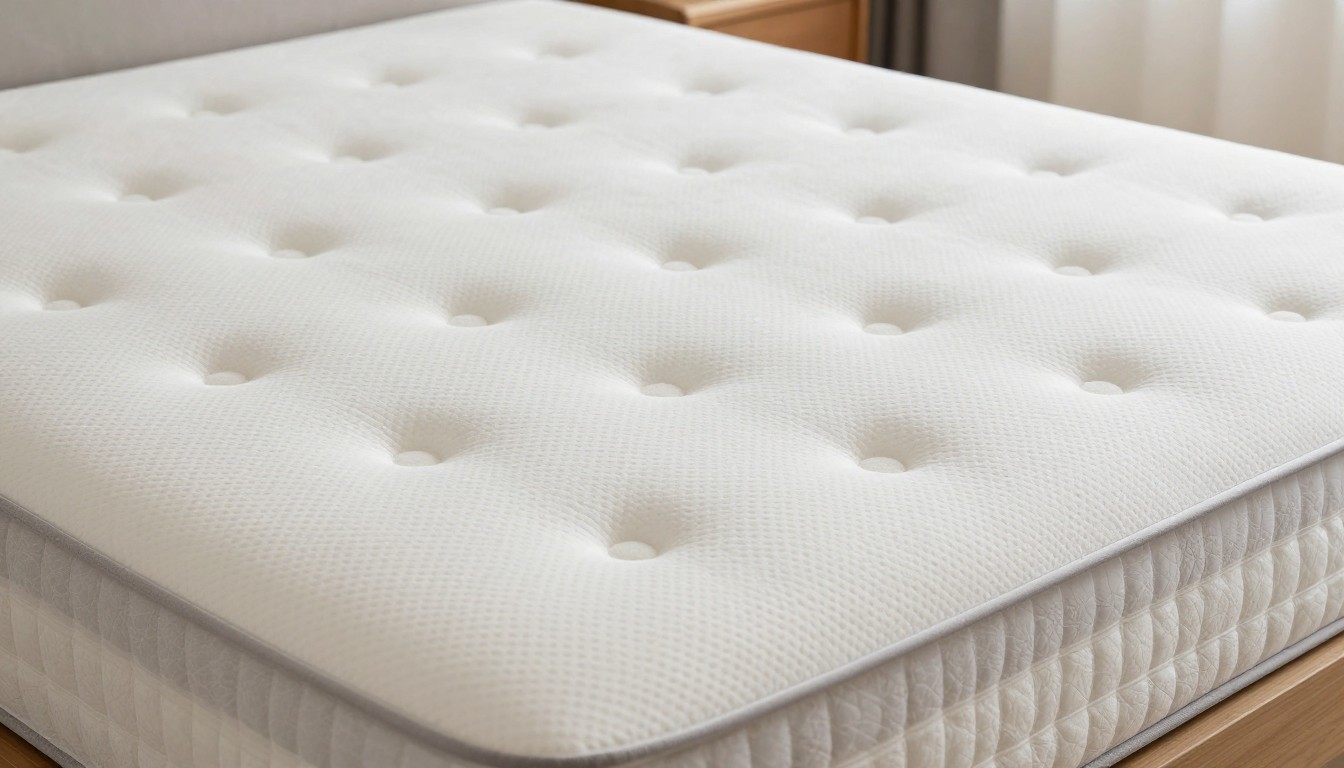
A stitched grid on one face and a smooth, grippy textile on the other is evidence of an asymmetric build. On a pad constructed this way, the stitched layer may hold magnetic pieces in pockets or channels while the opposite layer manages grip and protects the mattress. The two faces are doing different mechanical jobs.
Some magnetic toppers also contain batting or foam. That cushioning can sit above, below, or around the magnetic carrier depending on the design. Flipping such a topper may change which seams you feel, how securely the pad stays in place, and how its padding compresses. Those are construction effects, not proof of a health effect.
A plain slab of foam or latex can look more reversible, although its cover may still have a designated top and bottom. Convoluted foam, zoned cuts, ventilation channels, zippers, and grippy panels are all orientation clues. With any topper, I inspect the whole assembly rather than deciding from the core material alone.
| What you find | What it actually tells you | Best next move |
|---|---|---|
| Printed top or bottom label | The intended orientation | Follow the marking |
| Straps or non-slip backing | A likely mattress-facing surface | Check that it lies flat and the straps align |
| Strong attraction near one face | Magnets may sit nearer that surface | Use it as a clue, not a final instruction |
| Matching fabric on both faces | Orientation remains uncertain | Find the model instructions or contact the maker |
| Loose internal piece or damaged pocket | The topper may be damaged | Stop guessing and ask the manufacturer about safe use |
How to identify the bottom of an unmarked topper
A uniform backing is more useful than a row of firm spots when the label is missing. Start by laying the topper flat in bright light. Inspect both faces without bedding over them, then work through the physical clues in order.
- Look along every edge for a care tag, arrow, printed corner, zipper, or model code.
- Identify any rubberized texture, rough grip fabric, elastic skirt, or corner straps. These features normally engage the mattress side of the stack.
- Compare the quilting. A neatly finished or more comfortable textile is a better candidate for the sleep face than an exposed backing seam.
- Run your palm across both faces to locate firm internal pieces, uneven fill, or shifted components.
- If necessary, hold a small steel paperclip near each face. Use the response only to locate magnets nearer the surface.
- Check the manufacturer’s instructions before deciding that magnetic attraction outweighs the other construction clues.
Conflicting evidence is a reason to pause. For example, a grippy face might appear to contain magnets closer to the surface. That does not mean the grip belongs upward. The internal pieces can be close to the backing because the maker designed the entire pad to operate in that orientation.
Do not use force to investigate: opening a seam, bending a firm internal piece, or pulling at a pocket can damage the topper. Surface inspection and model instructions are enough for normal setup.
Where the magnetic topper belongs in the bed stack
The fitted sheet is normally the uppermost bedding layer discussed here. Beneath it, the magnetic topper should sit flat and follow its marked orientation. Any comfort topper usually belongs lower in the stack because its job is to alter the mattress feel across the whole sleep surface.
| Position from bottom to top | Layer | Setup point |
|---|---|---|
| Bottom | Mattress | The supporting surface must be reasonably level |
| Above the mattress | Comfort topper, if used | Place it flat and secure it before adding another pad |
| Near the sleep surface | Magnetic topper or underlay | Use the marked sleep and mattress faces |
| Top | Fitted sheet | Keep it smooth enough to avoid bunching the pad |
A mattress protector can complicate that order. Some protectors are intended to encase the mattress, while fitted protectors sit over other layers. Place yours according to its own instructions and the magnetic topper’s care guidance. If the protector causes the pad to slide or bunch, the stack needs adjustment.
A thick comfort topper placed above a thin magnetic underlay can hide the underlay’s texture and interfere with its straps or fitted skirt. If you want the cushioning of foam or latex as well as the magnetic pad, put the comfort layer closer to the mattress unless the maker specifies another arrangement.
A stable stack matters: every layer should lie flat, reach the mattress evenly, and remain inside the fitted sheet without curled corners. If the bed stack drifts apart, fix the movement before judging either topper’s feel.
Magnetic underlay or comfort topper: know the difference
A thin pad containing magnetic pieces cannot create the same deep contour as a substantial comfort layer. Dickwicks’ comparison of magnetic underlays and mattress toppers draws this basic distinction: the underlay is identified by its magnetic construction, while a conventional topper is selected to change the bed’s comfort.
That distinction matters if the mattress feels too firm or uneven. According to the National Council on Aging’s topper guidance, a topper can modify how a bed feels, but it does not replace a mattress that is already worn out. Flipping a magnetic pad cannot repair a weakened support core beneath it.
For pressure-sensitive side sleeping, material choice is the more direct question. Memory foam, latex, fiber, and feather constructions distribute load differently. Our guide to the best topper choices for side sleepers focuses on that comfort problem rather than magnetic orientation.
- Choose orientation to match construction: labels, backing, seams, and fasteners tell you how the pad is assembled.
- Choose a comfort material to change feel: foam response, latex resilience, and fill compression affect how the surface meets your body.
- Inspect the mattress before adding layers: a topper follows a deep dip instead of rebuilding the support underneath it.
Mistakes that make the setup harder to judge
A twisted corner strap is more informative than a vague sense that the magnets feel different. Before blaming the orientation, rule out the mechanical problems that can make any pad uncomfortable or unstable.
- Guessing from magnetic pull alone. A stronger response can show that a magnet is closer to the fabric, but it does not identify the intended sleep face.
- Ignoring the backing. Putting a non-slip base upward may expose a rougher surface and remove the feature intended to control movement.
- Twisting attachment straps. Straps should reach beneath the mattress cleanly rather than pulling one corner tighter than another.
- Burying the pad in a loose stack. Multiple unsecured layers can move independently and create ridges.
- Expecting structural repair. Neither orientation corrects a mattress support failure.
- Improvising the wash method. Heat, agitation, or chemicals that the care tag does not permit may harm fabric, backing, stitching, or internal components.
If the pad slides during the night, solve that as a separate fit issue. A properly sized fitted sheet, correctly positioned straps, or a compatible grip layer may help. I have covered more practical ways to hold a topper down for beds where shifting is the main problem.
Inspect the topper after laundering or storage. A new bulge, hard edge, torn pocket, or displaced internal piece is not an orientation puzzle. Follow the maker’s damage guidance rather than flipping the pad and continuing to use it without checking.
How to check your setup without guesswork
A bare, flat mattress gives you the clearest view of the topper’s shape and attachment points. Remove the bedding, then rebuild the stack deliberately.
- Lay the magnetic topper flat and center it on the mattress.
- Find the model label and identify any top, bottom, sleep-side, or mattress-side wording.
- Arrange the backing and attachment system so they engage the mattress as intended.
- Confirm that the quilting is smooth and no internal component appears loose.
- Add the remaining bedding in the order permitted by the product instructions.
- Pull the fitted sheet evenly over the corners without folding the topper underneath it.
- Press across the surface and correct any ridge, curl, or drifting edge before sleeping on it.
Keep the arrangement consistent while you judge basic comfort and stability. Reversing the topper repeatedly while also changing sheets, protectors, or comfort layers makes it difficult to identify which change caused a different feel.
A correctly assembled bed should look uneventful: the topper lies flat, the attachment points are relaxed, and the fitted sheet does not drag the corners upward. Visible tension is a setup clue you can act on.
What actually changes the feel of a mattress
Foam response and fill compression affect comfort more directly than the orientation of a thin magnetic carrier. Memory foam generally has a slower, contouring response. Latex feels quicker and more buoyant. Fiberfill creates surface softness but may compress with use, while down and feather need room to loft and regular redistribution.
| Topper material | Construction-driven feel | What I would inspect |
|---|---|---|
| Memory foam | Slow response and close contouring | Surface cuts, cover design, and whether the base grips |
| Latex | Faster response with more pushback | Perforations, zoning, and cover orientation |
| Down or feather | Plush surface with shifting fill | Baffle construction, fill distribution, and anchor straps |
| Fiberfill | Soft cushioning with variable compression | Quilting pattern, loft recovery, and care requirements |
| Magnetic underlay | Feel depends on quilting, padding, and internal pocket placement | Body-side marking, backing, and component security |
Down construction deserves separate treatment because fill migration and loft have little in common with a thin magnetic carrier. Our guide to down toppers explains the category, while the longer breakdown of how they hold up looks more closely at ownership tradeoffs.
Sleep Foundation’s topper guide also organizes its explanation around materials and designs before individual products. That order makes sense from a construction standpoint. First identify the feel problem, then select a material capable of changing it.
Cooling labels need context: graphite, gel, perforations, and breathable covers describe different design approaches. A single material label does not establish how warm the complete mattress, topper, protector, and sheet stack will feel.
FAQ
Will using the wrong side damage a magnetic mattress topper?
For anyone asking “does it matter which side of the magnetic mattress topper goes down?,” the immediate concern is usually fit and intended construction, not instant damage. A simple reversal may only expose the backing or compress quilting differently. Still, designs vary, so inspect the seams and internal pockets and follow the model’s instructions instead of assuming every topper tolerates either orientation.
How can I tell the magnet side from the padded side?
Feel for regularly spaced firm areas beneath the fabric, then compare both faces with a steel paperclip. The face with the easier response may place the magnets nearer the surface. That identifies location, not the correct sleep side. A label, grippy base, fitted skirt, zipper layout, or strap position gives better evidence of intended orientation.
Can I put a magnetic pad over a memory foam topper?
It can be placed above a comfort topper if both products allow that arrangement and the finished stack remains secure. Put the foam flat against the mattress, orient the magnetic pad according to its label, and check that the fitted sheet holds both without curling their edges. If either layer slides, resolve the fit before continuing.
Does a magnetic pad replace a comfort topper?
Not if the goal is a meaningful change in cushioning. Dickwicks distinguishes magnetic underlays from conventional toppers on that basis. Foam, latex, fiber, and feather constructions are selected for their material response, while a magnetic pad may be too thin to address a mattress that feels excessively firm or poorly cushioned.
Will a magnetic topper fix a sagging mattress?
No topper rebuilds a failed support core. The National Council on Aging’s topper guidance notes that a topper can change feel but does not replace a worn-out mattress. A magnetic pad may follow the existing dip, and flipping it cannot make the underlying support structure level again.
ONE OPTION WORTH COMPARING
Shopping as well as reading? Here is one current option worth comparing: the Saatva Graphite Topper. Check today’s price, sizing and return terms on the official product page before you order.
Saatva Graphite Topper
- Graphite-infused memory foam, per saatva.com
- 180-night trial
- Secure anchor bands, fits deep mattresses

My final verdict
Use the marked mattress or base face down and the marked sleep face up. If those markings are missing, inspect the backing, straps, seams, and model instructions before using magnetic pull as a clue. The strongest attraction near one surface does not, by itself, prove that surface belongs next to your body.
Once the orientation is settled, check that the topper lies flat and that the surrounding bedding does not drag it out of position. If your real complaint is firmness, pressure, warmth, or sagging, address the material or mattress construction responsible for that problem instead of expecting a flip to change what the pad was built to do.