
 by
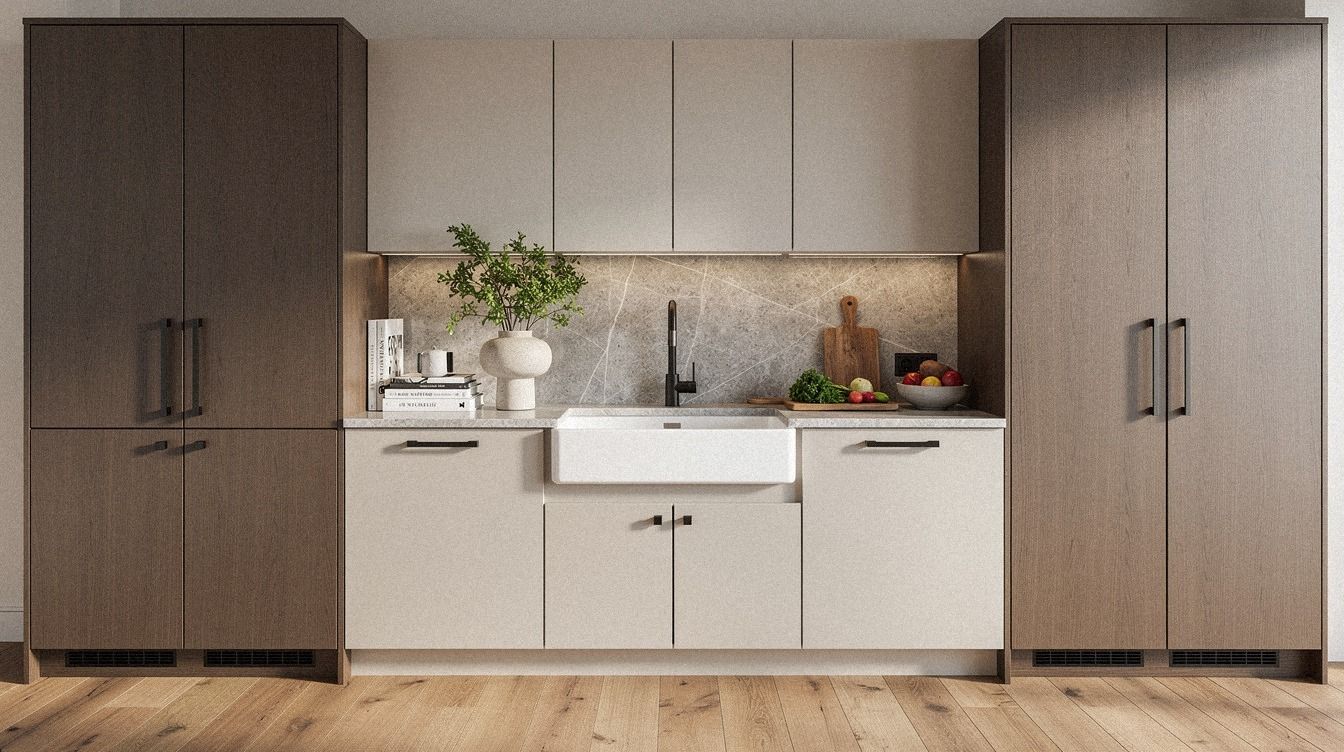
by Kitchen cabinet layout ideas to plan before you renovate matter more than most door styles or hardware swaps. I learned that the expensive way after squeezing a pretty island into a room that needed walking space first. Once you map the cabinets before you shop, your kitchen starts working harder for you, and that's a relief you feel the moment you step in.
Here's the thing: plan the movement first, finish the room second.
- Anchor the sink wall with full-height pantry towers
- Wrap the fridge in matching cabinet panels
- Why does centering the range between symmetric drawer banks work?
- Build a coffee cabinet beside the breakfast nook
- Run shallow uppers along the window wall
- Float a glass-front hutch over the counter
- Stack appliance garages at the cabinet corner
- Frame the island with deep drawer storage
- Curve the end cabinet into open display
- Bridge two cabinet walls with corner drawers
- Create a baking zone with vertical tray slots
- Line one wall with uninterrupted tall cabinets
- Tuck pullout spice towers beside the range
- Mix open cubbies against closed upper cabinets
- Drop a cabinet peninsula for extra prep space
- Why does paneling the hood into a cabinet-style focal point change everything?
- Zone the dishwasher with wide dish drawers
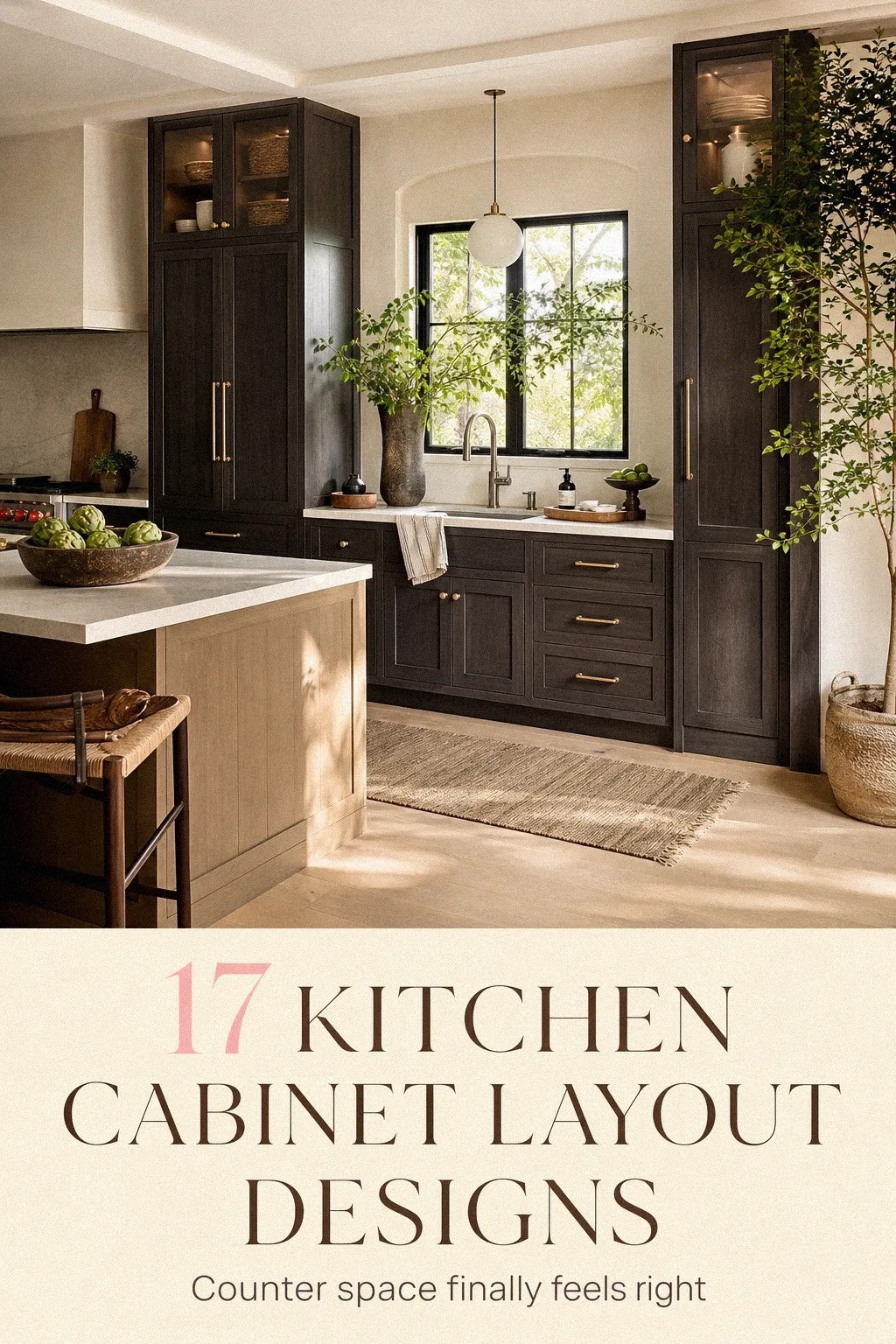
1Anchor the sink wall with full-height pantry towers
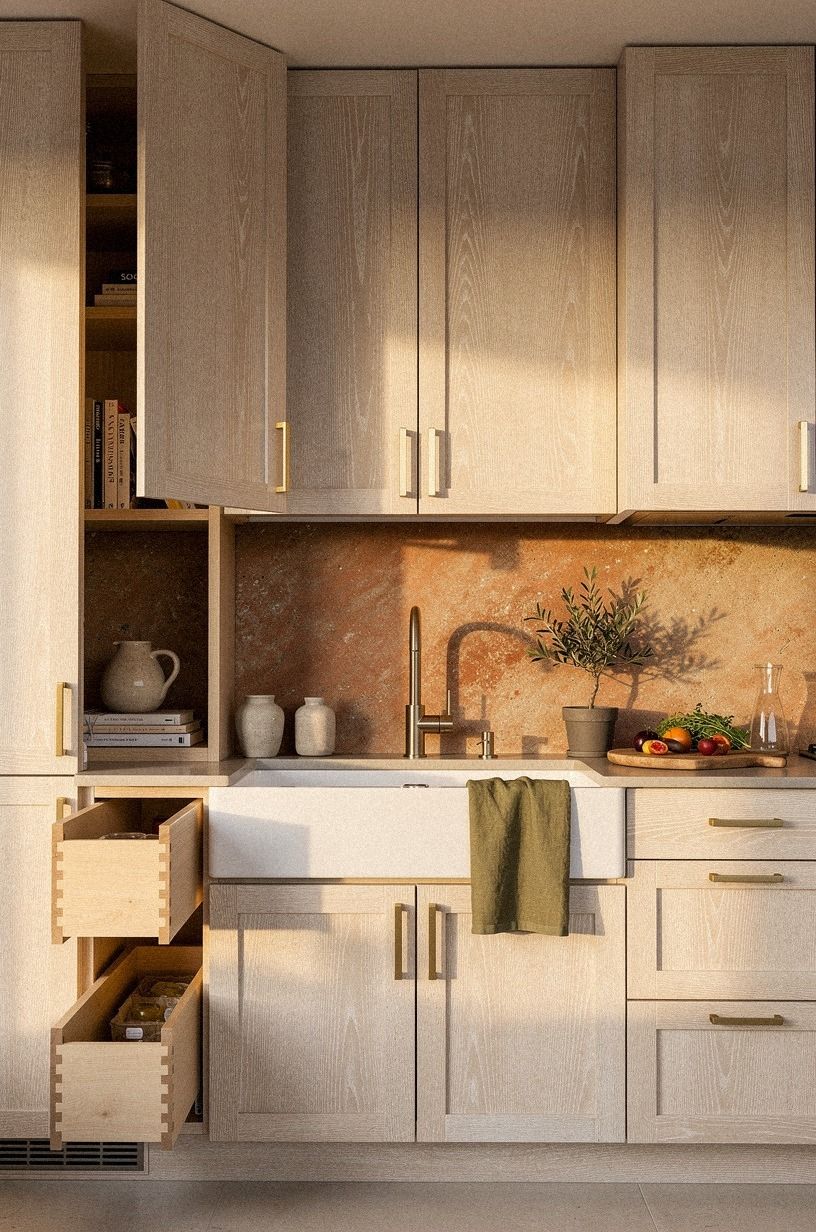
Start with the sink wall, because that's where your eye settles first and where your daily mess shows up fastest. When you frame the sink with cerused white oak cabinetry on both sides, the room stops feeling random and starts feeling intentional. I like this move most when you want the kitchen to read quiet, symmetrical, and a little expensive without piling on decorative extras.
Those tall towers also solve a boring problem you shouldn't ignore: overflow storage. One side can hold dry goods, the other can hide platters, paper towels, or the awkward mixer bowl you never know where to put.
If you're already leaning warm wood, this pairs beautifully with our oak kitchen cabinet ideas for a warm modern look. And if you're styling around a standard 36 in counter height, the tall ends make the lower run feel anchored instead of chopped up. Go tall here, it's the gentlest way to stretch a small room.
2Wrap the fridge in matching cabinet panels
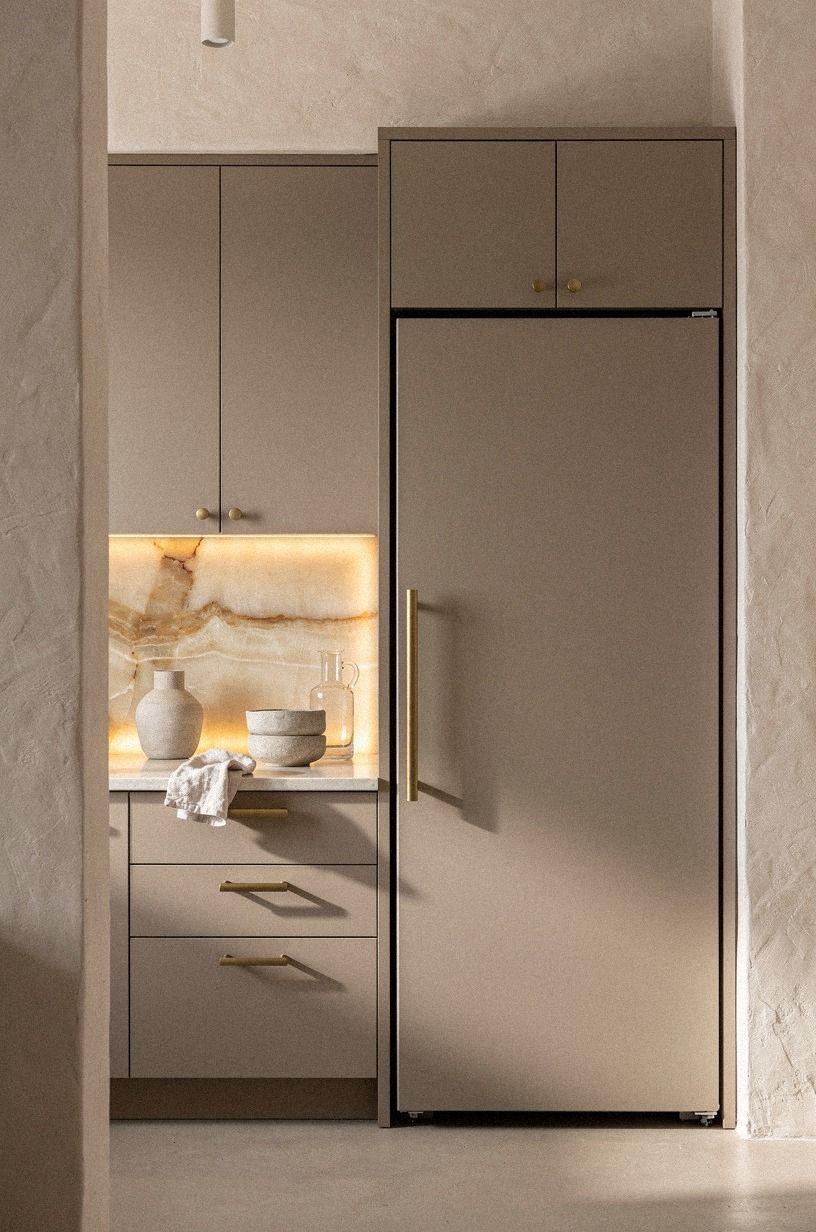
Panel the refrigerator so it disappears into the line of cabinets, especially if your kitchen opens straight into a living zone.
3Why does centering the range between symmetric drawer banks work?
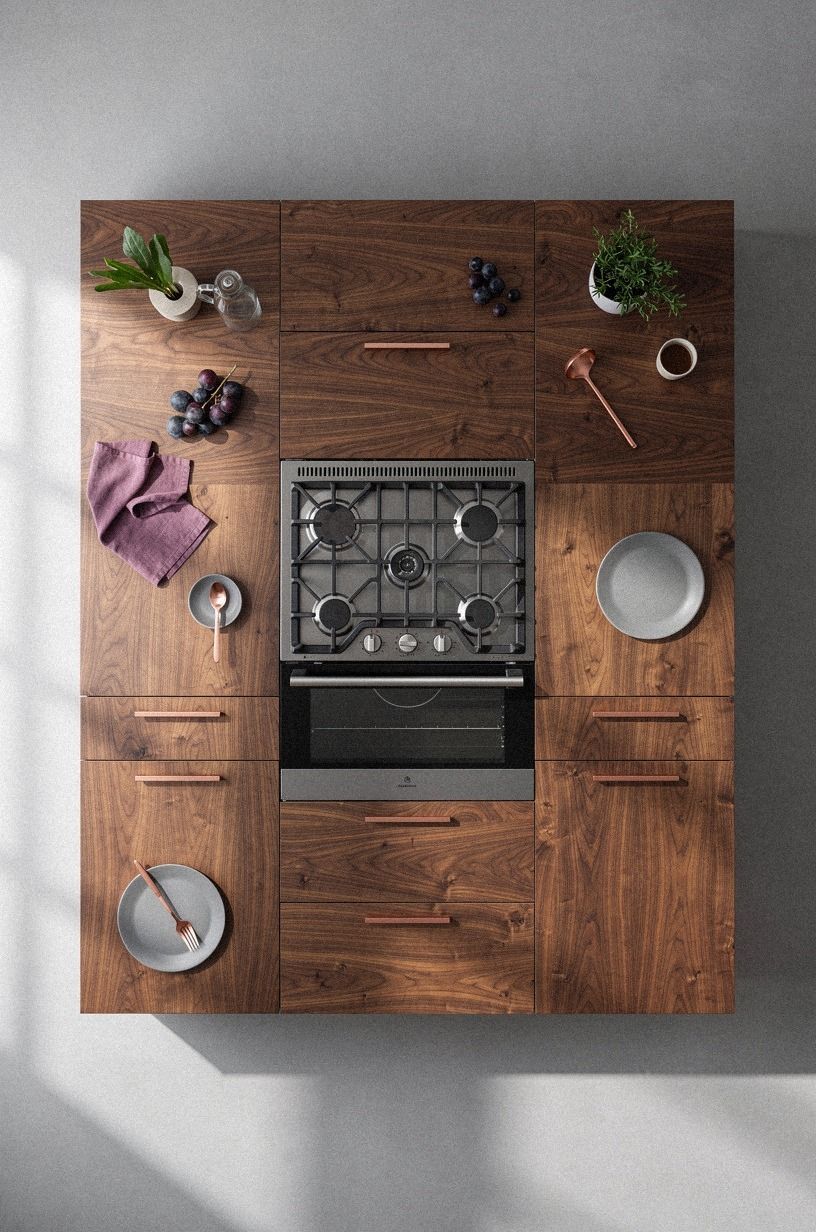
Center the range and let the drawer banks do the heavy lifting on both sides. From above, this is the plan that makes prep feel sane because spatulas, pots, oils, and towels all live within one pivot.
You don't need a huge kitchen design 2D file to see the logic. You just need balance.
I keep coming back to drawers over doors here because lower doors waste your patience. Deep drawers are easier on your back, easier on weeknight cooking, and easier to keep orderly when the room gets busy. But keep at least 42-48 in of clearance if an island faces this wall, or the whole setup starts feeling pinched fast.
If you want more storage-first examples, small kitchen cabinet ideas that maximize storage shows the same principle in tighter footprints. The relief is real, every single cook night, try it once and you'll never go back to deep doors again!
4Build a coffee cabinet beside the breakfast nook
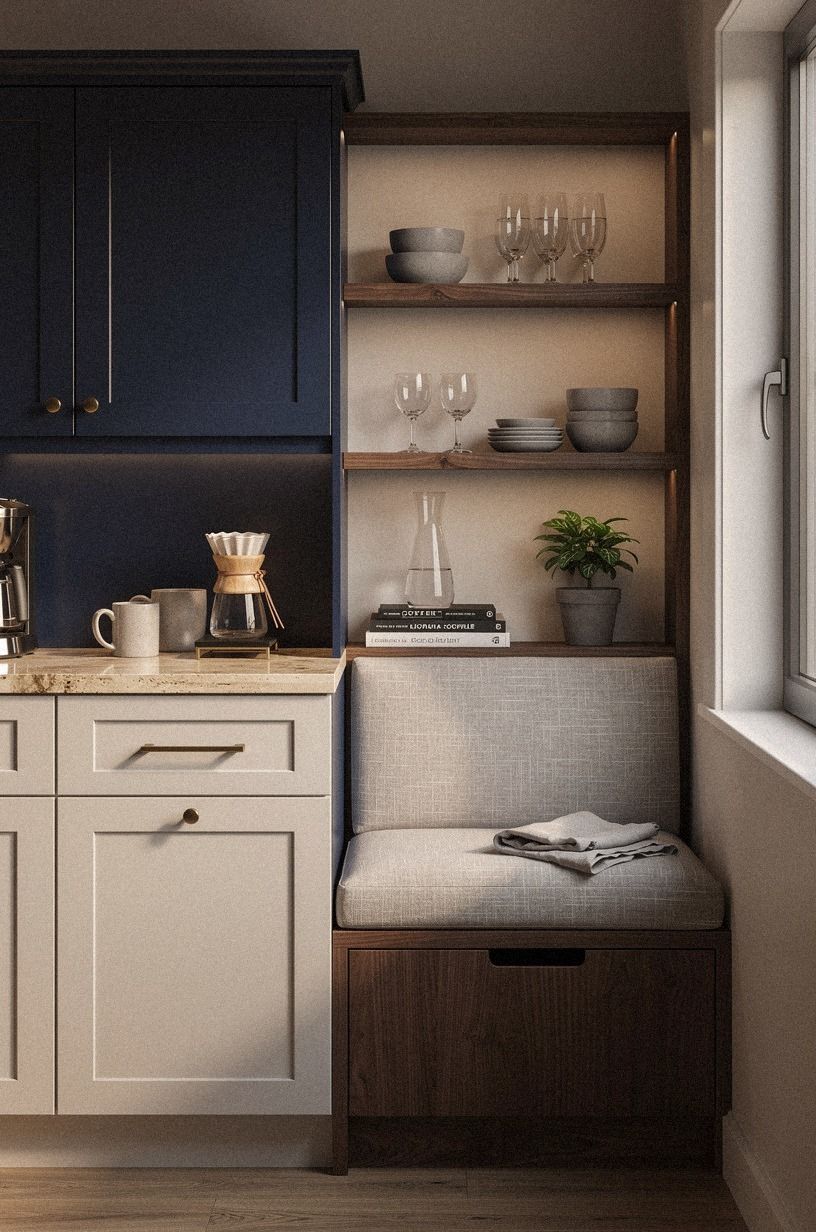
A coffee cabinet beside the breakfast nook keeps your morning routine out of the main prep lane.
5Run shallow uppers along the window wall
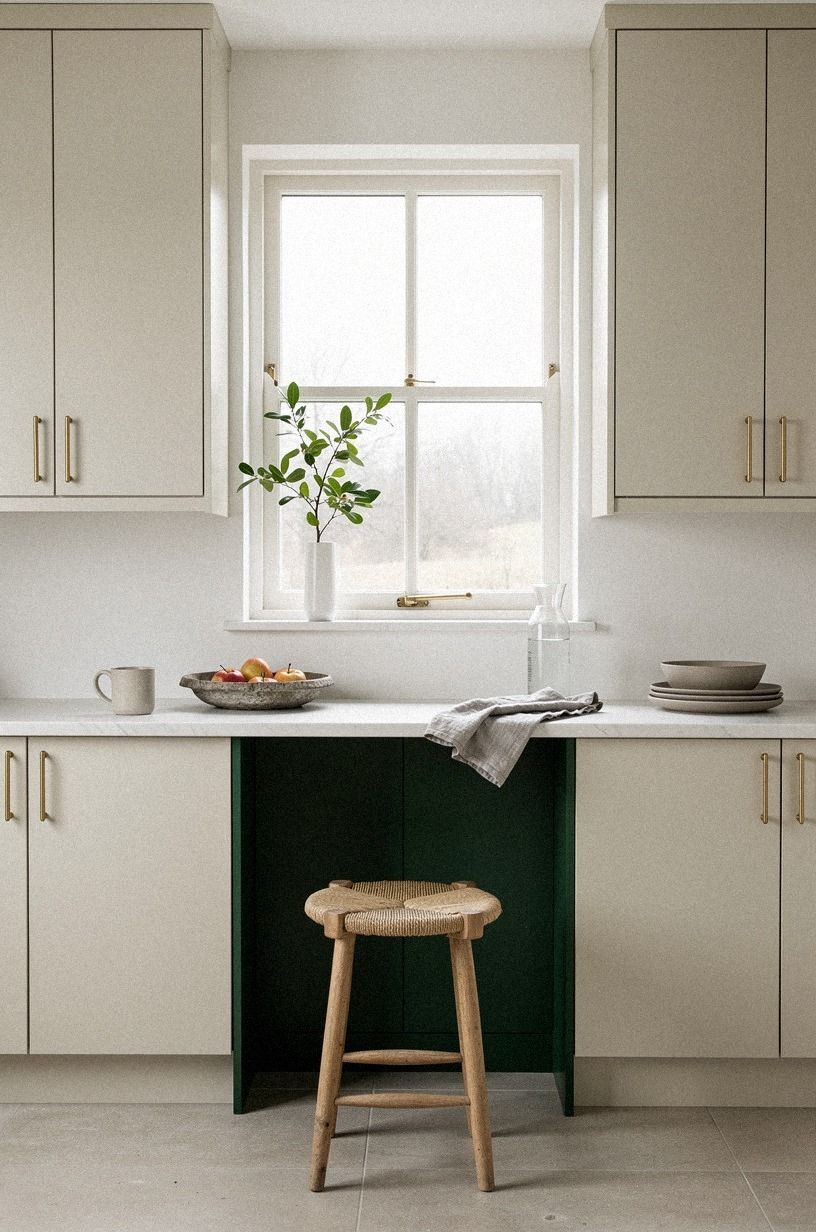
Use shallower upper cabinets on the window wall when you want storage without stealing the light. This is one of those kitchen ideas plan moves that looks subtle in photos and feels huge in real life. The wall breathes, the glass gets to matter, and your counter doesn't feel boxed in.
I like slim cream uppers with a small emerald zellige backsplash here because the reduced depth keeps the whole wall from turning heavy. Standard uppers often run 30-42 in tall, but not every window wall needs the tallest version. If the room faces north, I'd rather protect the daylight than squeeze in one more shelf.
And if you're still deciding between painted and wood runs, modern kitchen cabinet ideas for a sleek clean look helps you see what cleaner lines do for this kind of elevation. Trust me, the daylight wins, and the shelf height can be edited later!
6Float a glass-front hutch over the counter
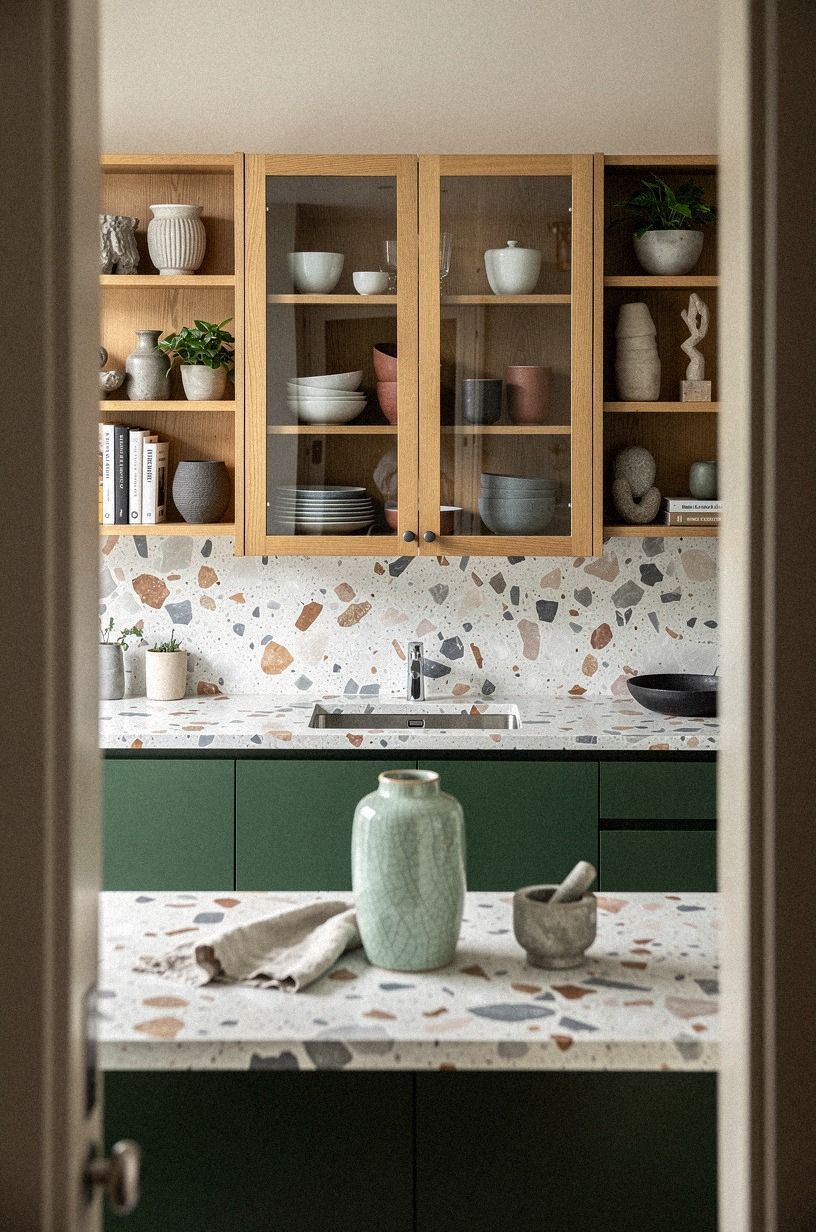
A glass-front hutch above the counter gives you display without turning the whole kitchen into open shelving chaos. You get a destination for dishes, vintage glasses, or the one pretty bowl you always move around. Through a doorway, it reads layered and soft instead of flat.
Keep the cabinet centered and let the oversized-chip terrazzo counter do some of the talking. I'd use terrazzo below and limit the hutch contents to everyday pieces so you aren't styling it from scratch every weekend.
Want the open-but-not-too-open version of this idea? kitchen tall cabinet ideas to use every vertical inch shows how enclosed height can still feel airy.
And please don't cram every mug in there. A little empty space is the luxurious move, the kind of restraint that makes a small kitchen feel like a finished room!
7Stack appliance garages at the cabinet corner
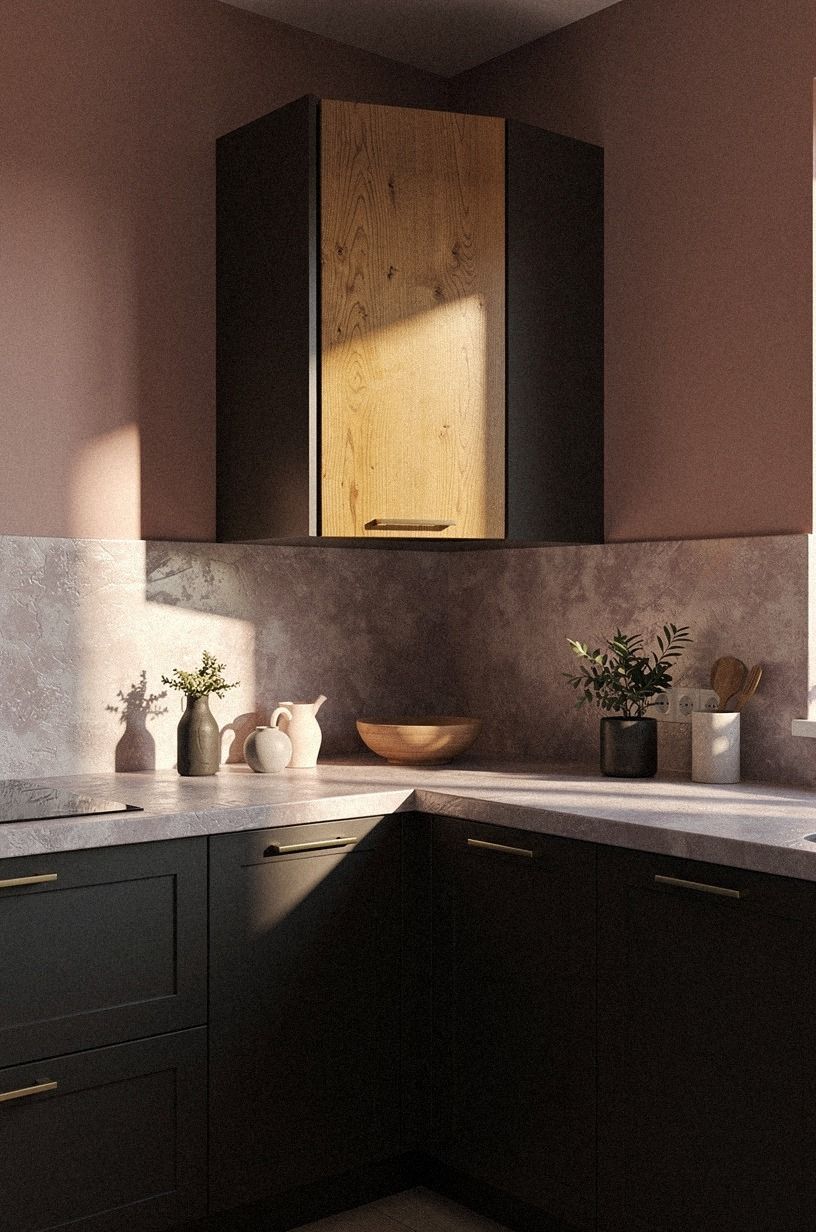
Corners get lazy layouts all the time, which is exactly why stacked appliance garages work so well there. Use the corner for the toaster, blender, and charger clutter you don't want living on the counter. Suddenly the long runs stay clean, and the room feels more elegant than it cost.
In charcoal cabinetry with dusty rose accents, I'd keep the appliance doors simple and let the contrast do the mood work. This is also where the first proprietary rule matters: call it the Three-Use Corner Rule.
If the corner can't hide, store, or stage something you touch every day, it's wasting prime layout kitchen design real estate. For more compact planning ideas, small outdoor kitchen ideas that maximize every inch is worth your time, and the same traffic triangle logic travels indoors with a soft-touch laminate floor.
8Frame the island with deep drawer storage
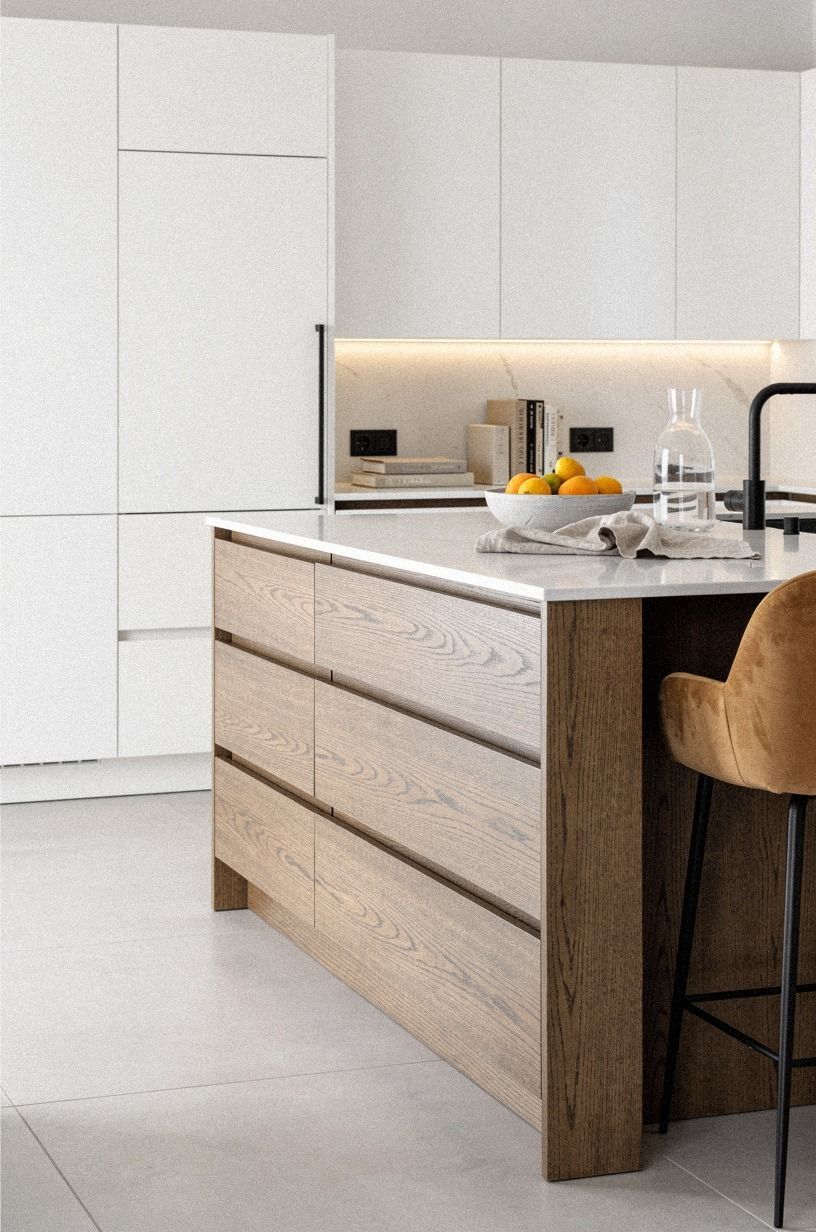
Give the island deep drawers instead of decorative panels if you care more about use than showroom posing. I know the paneled ends look polished, but your island should earn its footprint. Pots, mixing bowls, lunch containers, and serving pieces all fit better in drawers you can scan in one second.
This is extra important when the island sits off to one side with lots of open floor around it. The breathing room keeps the room elegant, while the drawers make it practical. Use Sherwin-Williams Evergreen Fog SW 9130 on nearby walls if you want the storage mass to feel softer.
And that pays off daily when the storage block feels quieter than its size. If you're comparing shape options, outdoor kitchen layout ideas l-shape-u-shape-more sounds outdoor, but the layout logic still helps you think through traffic.
9Curve the end cabinet into open display
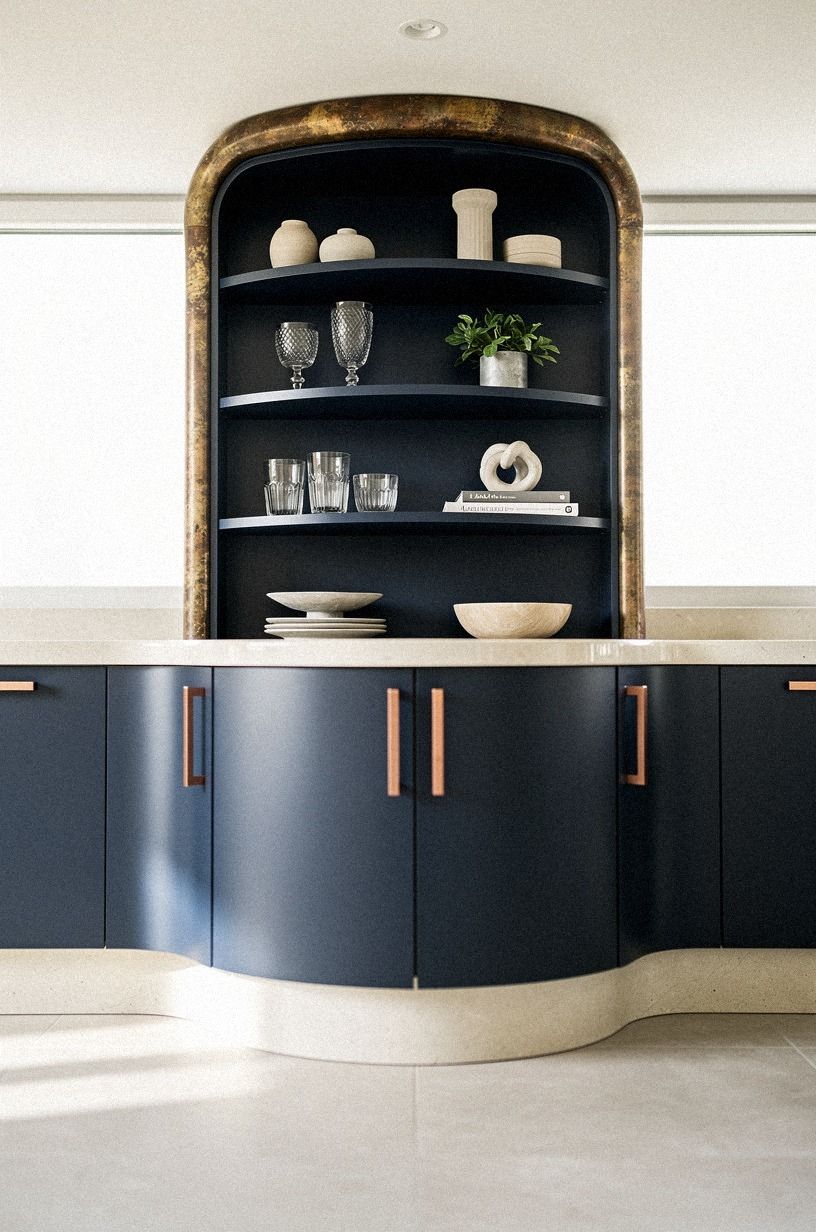
Round the exposed end cabinet into open display when you want the transition into the room to feel less abrupt. Straight corners can look blunt, especially in a darker kitchen. A curved navy end with rounded shelves pulls you in and gives the cabinetry a more custom, built-for-the-house look.
Use this for the pieces you touch or notice often: cookbooks, a stoneware bowl, a small lamp, one stack of linen napkins. That's enough. I wouldn't fill every curve with decor because then the shape stops being architectural and starts reading fussy.
If your palette leans moody, kitchen cabinet color ideas you'll still love in 10 years can help you pick a blue that won't feel tired in six months.
10Bridge two cabinet walls with corner drawers
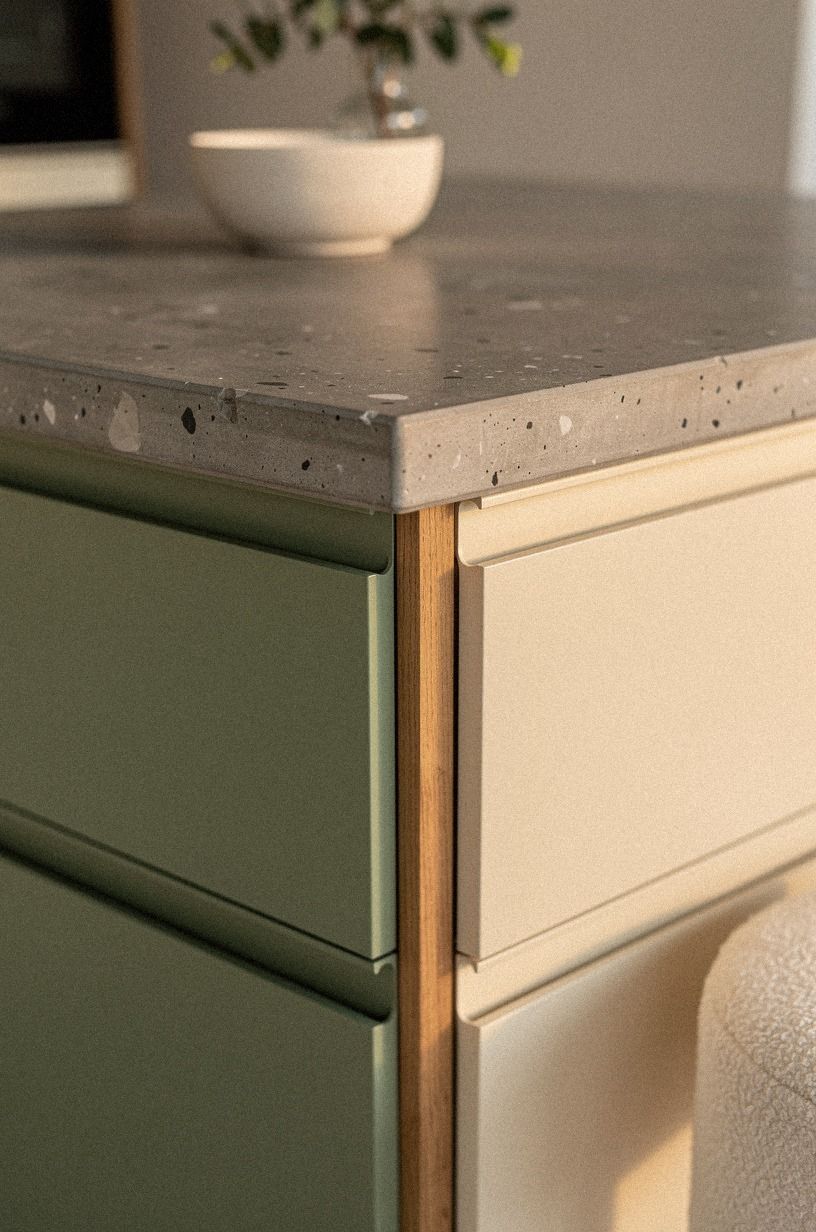
Choose corner drawers when two cabinet walls need to meet without dead space. This is one of the smartest kitchen design size choices you can make because the corner stays useful instead of becoming a cave for lost pans. And once you've used a good set, it's hard to go back.
I like this under a poured concrete countertop because the seam detail looks crisp and the drawers feel intentionally engineered. Here is my blunt opinion: blind-corner gadgets rarely age well.
Corner drawers do. If you're planning a room with multiple tall runs nearby, kitchen tall cabinet ideas to use every vertical inch pairs well with this move because it keeps the lower corner accessible while the height handles bulk storage. Smart over flashy every time.
11Create a baking zone with vertical tray slots
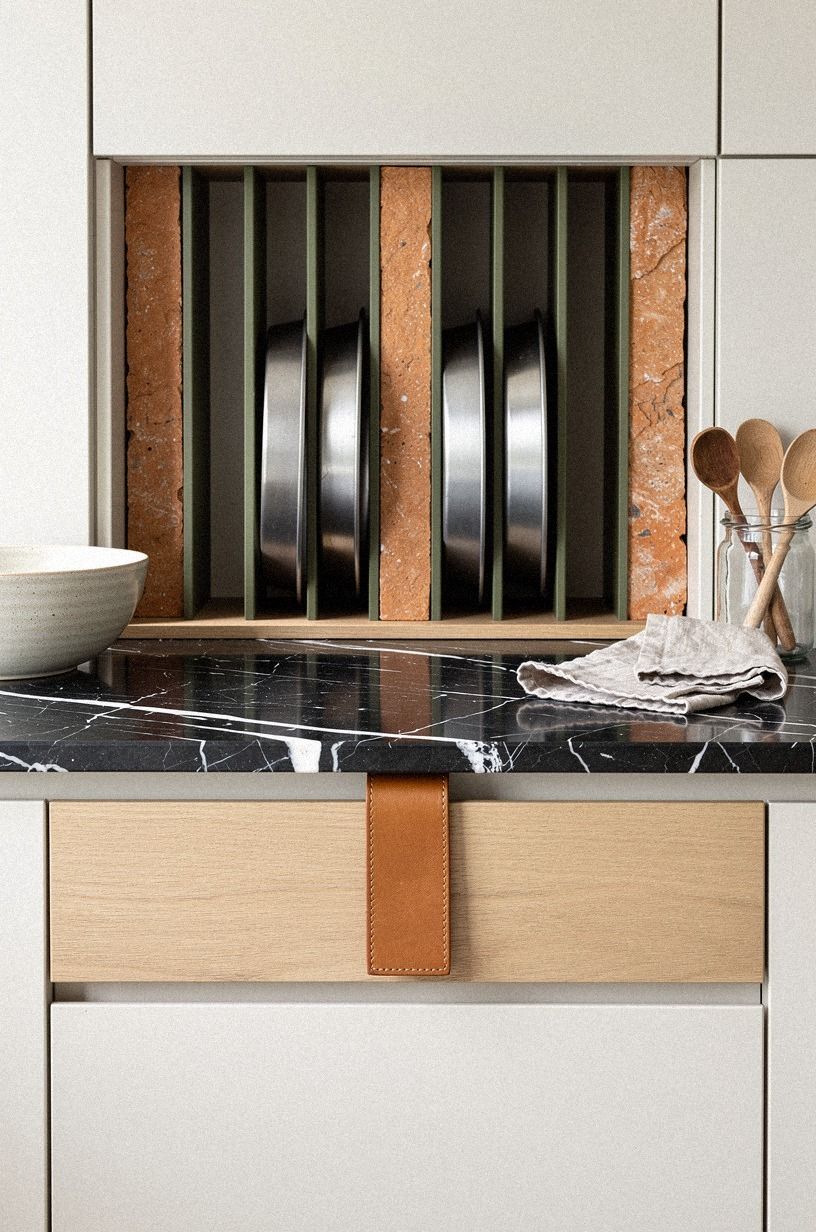
Set up a dedicated baking zone if you bake enough to resent hunting for sheet pans.
12Line one wall with uninterrupted tall cabinets
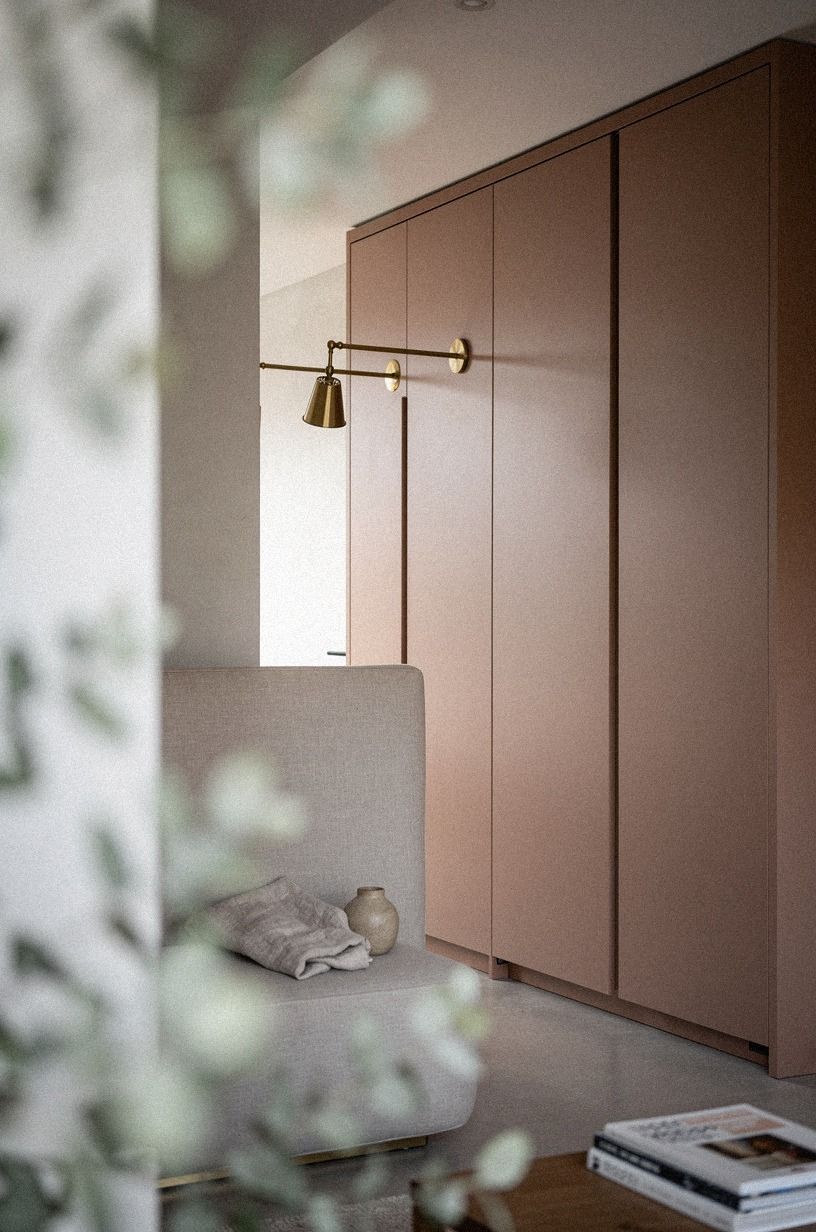
Run one full wall of tall cabinets when the room needs visual order more than more countertop. This is the move that makes an average renovation feel architect-led. The clay-toned doors stretch the eye up, the room looks calmer, and you stop peppering every wall with little storage interruptions.
I use this most in kitchens that have a separate window wall or island doing the lighter work. The second proprietary rule is the One-Wall Calm Rule: if one side can absorb pantry, fridge, broom storage, and overflow dishes, the rest of the room can breathe.
For more height-first inspiration, kitchen tall cabinet ideas to use every vertical inch is the obvious next click. But keep the handles restrained or the whole wall turns busy.
13Tuck pullout spice towers beside the range
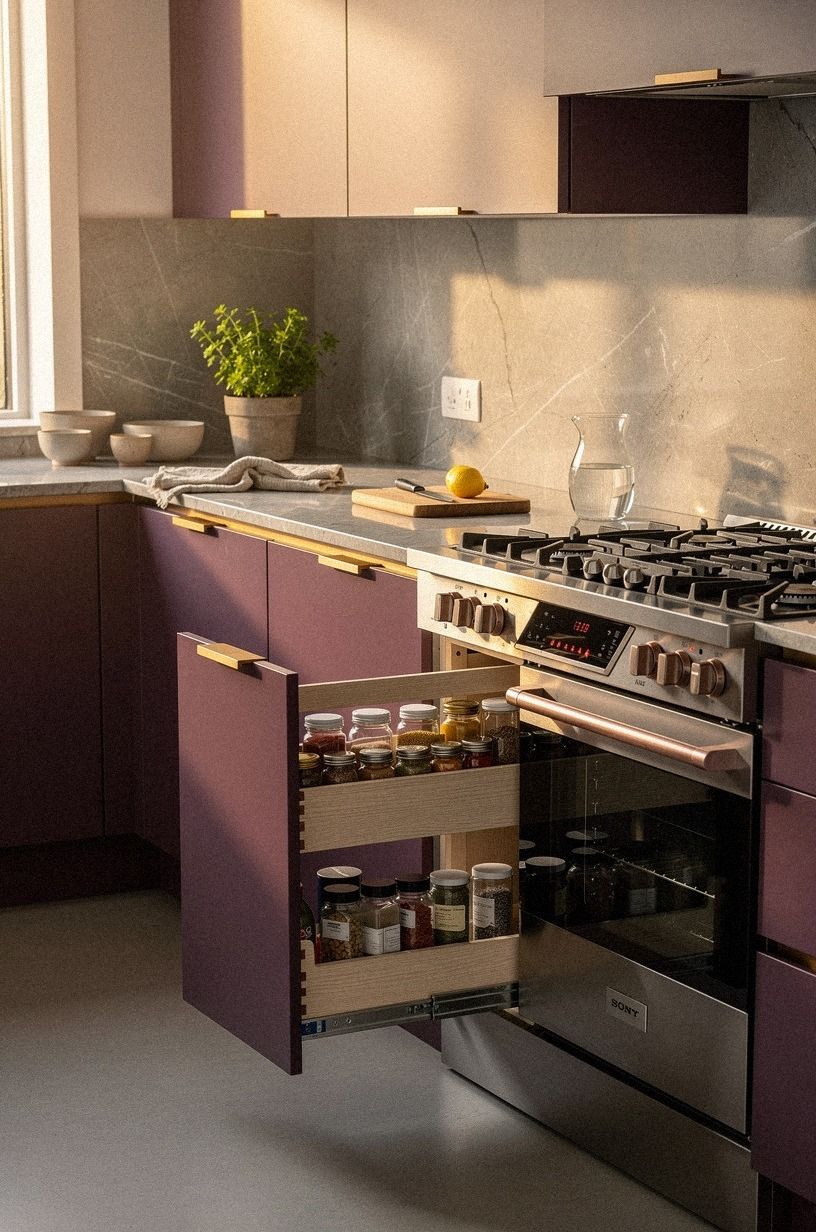
Slide narrow pullout spice towers right beside the range so your oils, salts, and spice jars live where you cook.
14Mix open cubbies against closed upper cabinets
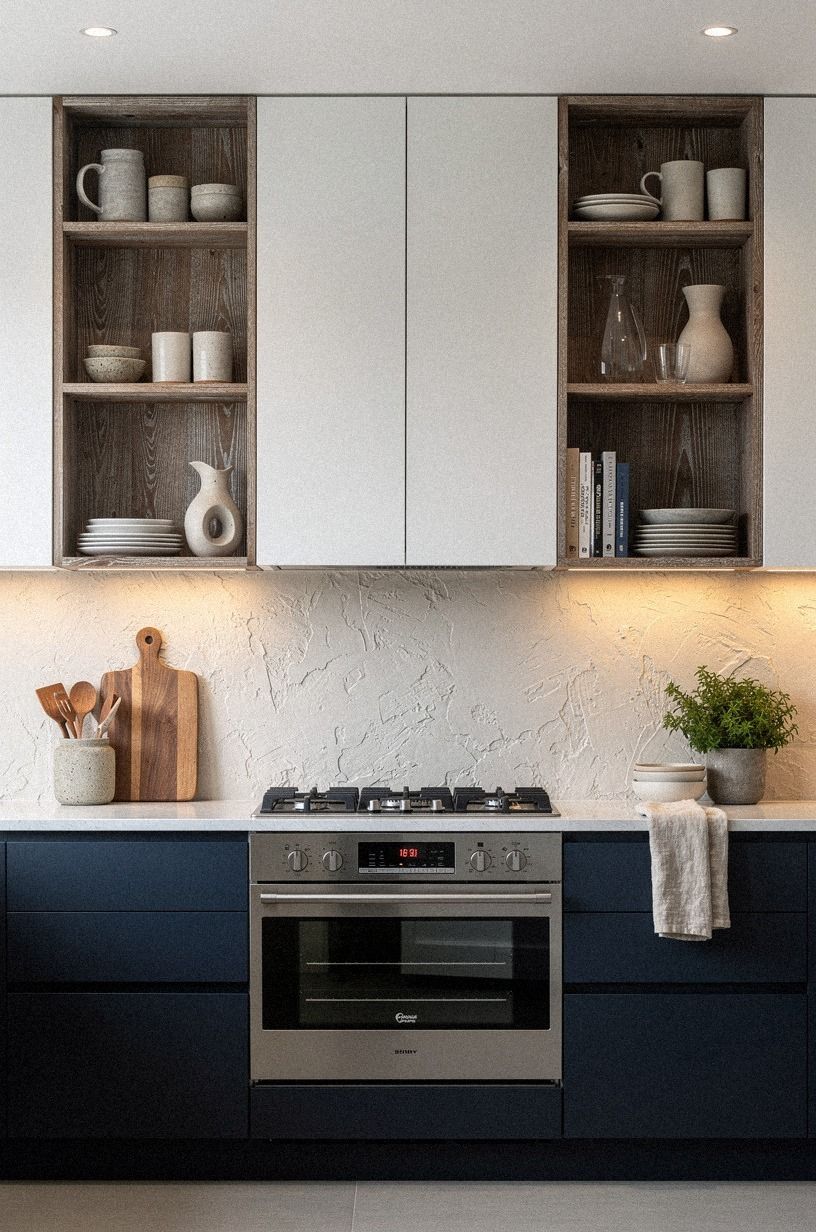
Mix open cubbies between closed uppers when you want personality without giving up hidden storage. The closed cabinets do the practical work. The cubbies keep the wall from feeling like one solid block.
In a navy and walnut composition, that middle rhythm can be what makes the whole elevation click against a honed marble counter, and the open layer reads intentional instead of cluttered.
This is where I'd use the Two-Wood Rule, the third proprietary concept worth keeping in your back pocket. If the walnut shelf tone echoes the floor or bench, and the painted uppers stay quiet, your mix feels deliberate instead of mismatched.
Need help deciding how much open storage is enough? kitchen pantry cabinet ideas for smart storage shows why even one exposed niche can be plenty.
15Drop a cabinet peninsula for extra prep space
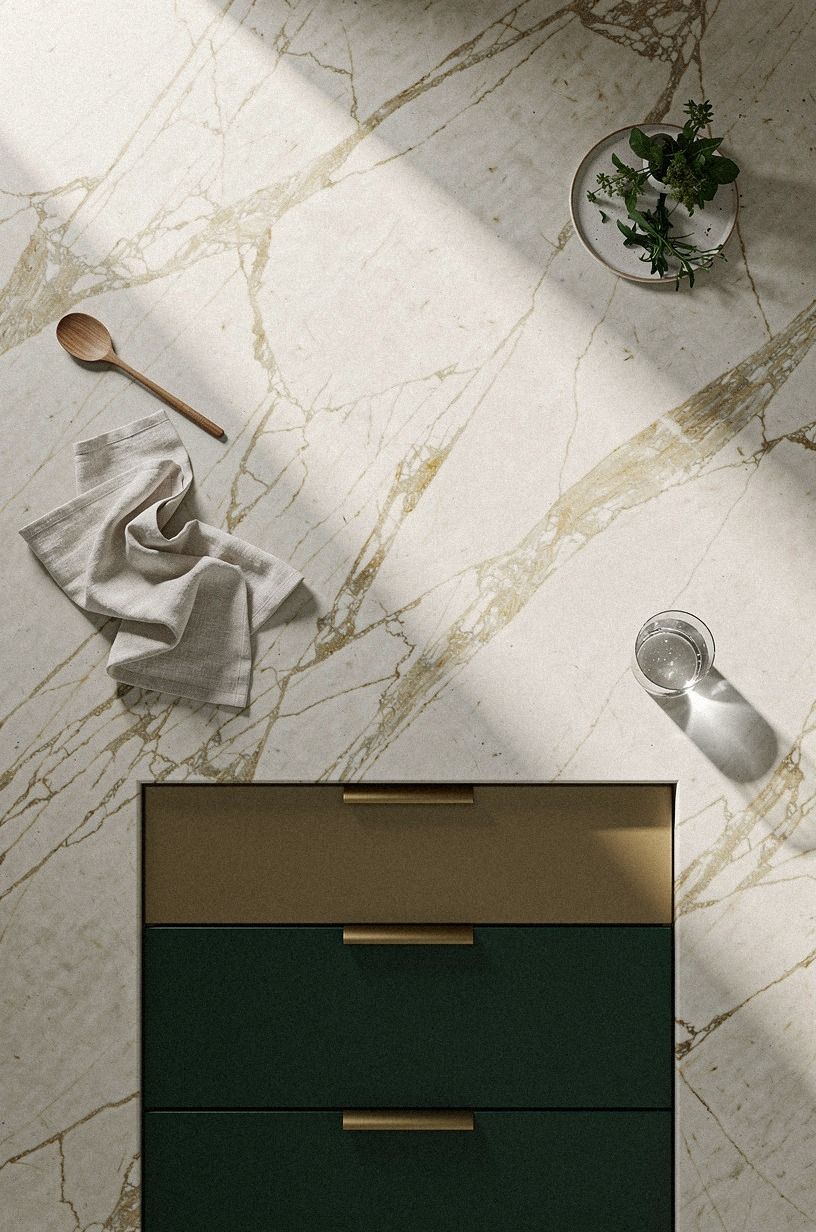
Add a small peninsula when an island won't fit but you still need landing space.
16Why does paneling the hood into a cabinet-style focal point change everything?
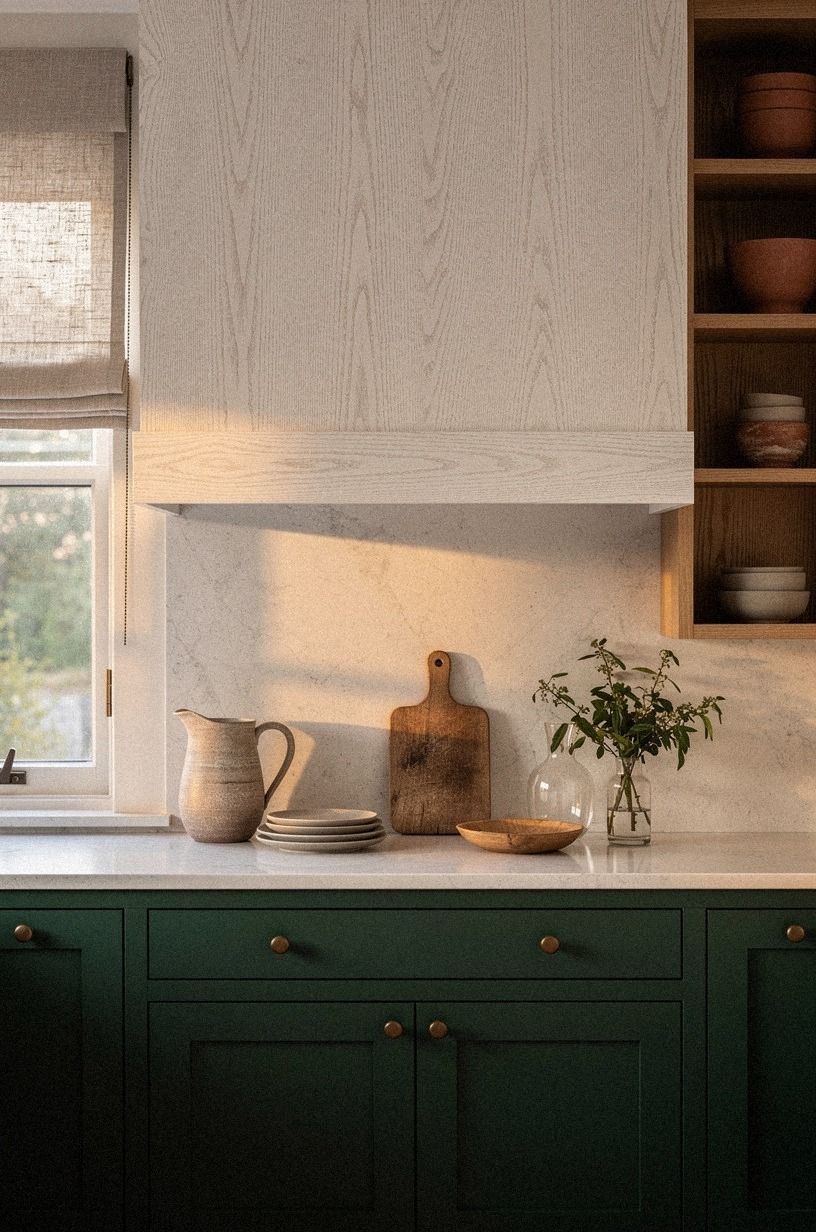
Make the hood look like part of the cabinetry when you want the cooking wall to feel finished, not pieced together. A paneled hood in cerused oak pulls your eye upward and gives the range a destination. That's the difference between a kitchen that feels collected and one that feels like parts from three stores.
I'd rather invest here than in ornate hardware, because the hood is what anchors the sightline, and the tall paneling reads sultry next to an unlacquered brass detail. Pair it with Farrow & Ball Studio Green No.93 on a nearby pantry or accent wall if you want the warm oak to read richer.
And if your whole plan is leaning classic, oak kitchen cabinet ideas for a warm modern look will keep you from drifting into builder-basic territory. Worth every dollar.
17Zone the dishwasher with wide dish drawers
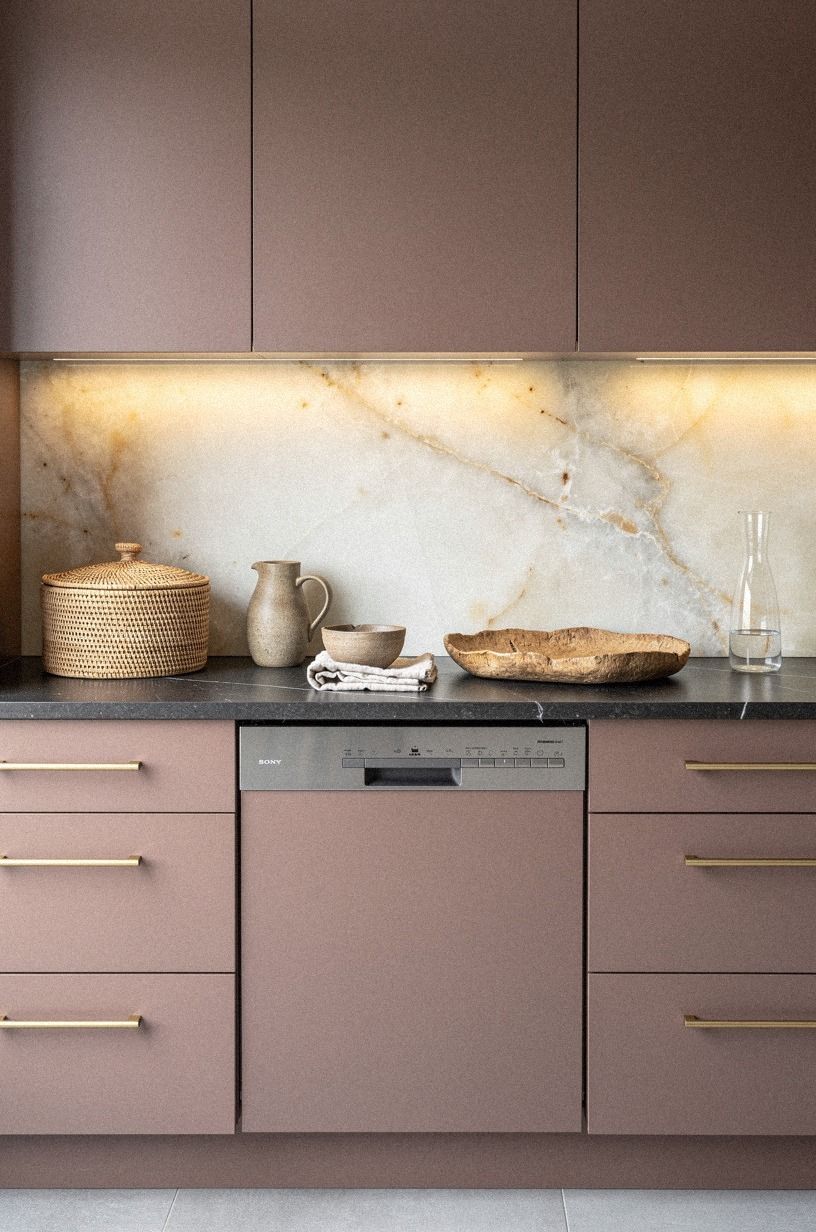
Put wide dish drawers next to the dishwasher so unloading takes one pivot instead of six steps.
The Three-Tier Budget Rule
If you're wondering what these layouts usually cost, the short answer is that planning is cheap and moving cabinets later is not. A cosmetic refresh can sit around $300-$1,500, while a fuller refresh lands much higher once fronts, lighting, and counters change. That's why I always sort layout decisions before finish decisions.
And that's where budget gets more honest.
But a few numbers help you choose where to spend. Quartz countertop usually runs $60-$120 per sq ft, laminate sits closer to $10-$40 per sq ft, and zellige often lands around $15-$35 per sq ft.
Spend on layout first, then surfaces. And you can repaint a door later. You can't magically widen a bad walkway.
The One Decision That Changes the Whole Renovation
If you asked me what separates a kitchen that still feels good five years later from one that starts annoying you by month three, it isn't the backsplash. It isn't the faucet finish either.
It's whether the layout respects your real routine. I learned that after planning one kitchen like a magazine spread and then living in it like a tired person making pasta on a Tuesday.
The island looked great. The fridge door clipped the traffic path, the dishwasher blocked the main drawer stack, and nobody had a clean place to set groceries when they came in.
Pretty, but exhausting, and you'd never sell a friend on it. That's the kind of tired a closet pantry can't fix!
Now I make myself answer a few dull questions before I let myself get excited about samples. Where do you unload bags?
Where do you stand when coffee is brewing? Which wall gets the best daylight, and should that be the prettiest elevation or the hardest-working one?
If you bake, your trays and mixer need a real zone. If you order takeout twice a week and mostly reheat, you probably don't need a giant statement range stealing budget from storage.
That's the honest part nobody loves hearing, but it's the part that saves you. Comfort over catalog every time!
I also think people overspend on finishes because finishes are easy to imagine. A slab of Calacatta Gold marble looks glamorous in a sample box, and a row of unlacquered brass pulls feels dreamy on the website.
A better aisle width doesn't. But the better aisle width is what changes your life.
Same with a paneled fridge, drawer storage beside the range, or a sink wall framed by tall pantry towers. Those are not flashy choices.
They're comfort choices. And comfort is what makes a kitchen feel rich and lived-in instead of cold and showy, polished but exhausting!
So before you pick hardware, pick your irritations. Fix the one you deal with daily.
Maybe that's bad prep space. Maybe it's no landing zone by the fridge.
Maybe it's upper cabinets that make the window wall feel cramped. Once that problem is solved, the style part gets easier, because you're decorating a room that already behaves. That's when the paint colors, the Benjamin Moore White Dove OC-17 trim, the walnut accents, and the soft unlacquered brass details start working with you instead of trying to distract from a flawed plan.
Style belongs to a room that already behaves, not the other way around.
But solve the movement problem first. Pretty comes after, and pretty is cheaper to fix than circulation.
The Questions I Get Asked Most
What is the best kitchen cabinet layout idea to plan before you renovate for a small kitchen?
The best pick for a small kitchen is usually shallow uppers on the window wall or a fridge wrapped in matching panels. Both save visual space while keeping storage useful.
If you need one smart add-on, an IKEA SEKTION planning run keeps the footprint disciplined without looking stripped down. Don't over-buy the box count.
Where can I buy kitchen cabinet layout pieces on a budget?
Start with IKEA, Target Threshold, and Wayfair for cabinet-adjacent pieces like lighting, stools, and shelf accessories. Facebook Marketplace is still the sleeper source for hutches and vintage pulls. You don't need everything new if the layout itself is doing the heavy work.
How much does a kitchen cabinet layout makeover cost?
A light makeover usually lands around $300 to $1,500, and a fuller refresh can run $3,000 to $12,000 before full cabinet replacement. Free helps too.
Reworking dish zones, clearing counters, and moving what lives near the range costs nothing, and you'll feel the payoff fast. Worth it on every tier.
Can I create a kitchen cabinet layout on a budget?
Yes, and you should start there first! Budget planning still changes the room when you repaint fronts, swap hardware, add peel-and-stick backsplash, and reorganize by zone. I'd spend the first dollars on drawer inserts or a better coffee cabinet setup before a trendier finish.
Is a kitchen cabinet layout worth it in a small space?
Yes, it's worth it because a small kitchen punishes bad planning faster. Tighter rooms reward smart zoning. Keep the dishwasher near dishes, keep spices by the range, and protect your 18 in backsplash gap so the uppers don't crowd the counter line.
Is a kitchen cabinet layout a good idea for a rental?
Yes, if you focus on reversible moves. Rentals benefit from layout thinking too. Peel-and-stick backsplash, removable shelf risers, tension-rod under-sink organization, and a freestanding hutch near the breakfast nook can mimic built-in logic without touching the landlord's cabinets.
The One-Zone-First Rule
If I had to pick one, I'd start with full-height pantry towers around the sink wall. They fix storage and sightlines at the same time, which is rare. Pin that move for later and then read kitchen tall cabinet ideas to use every vertical inch before you order anything.