
 by
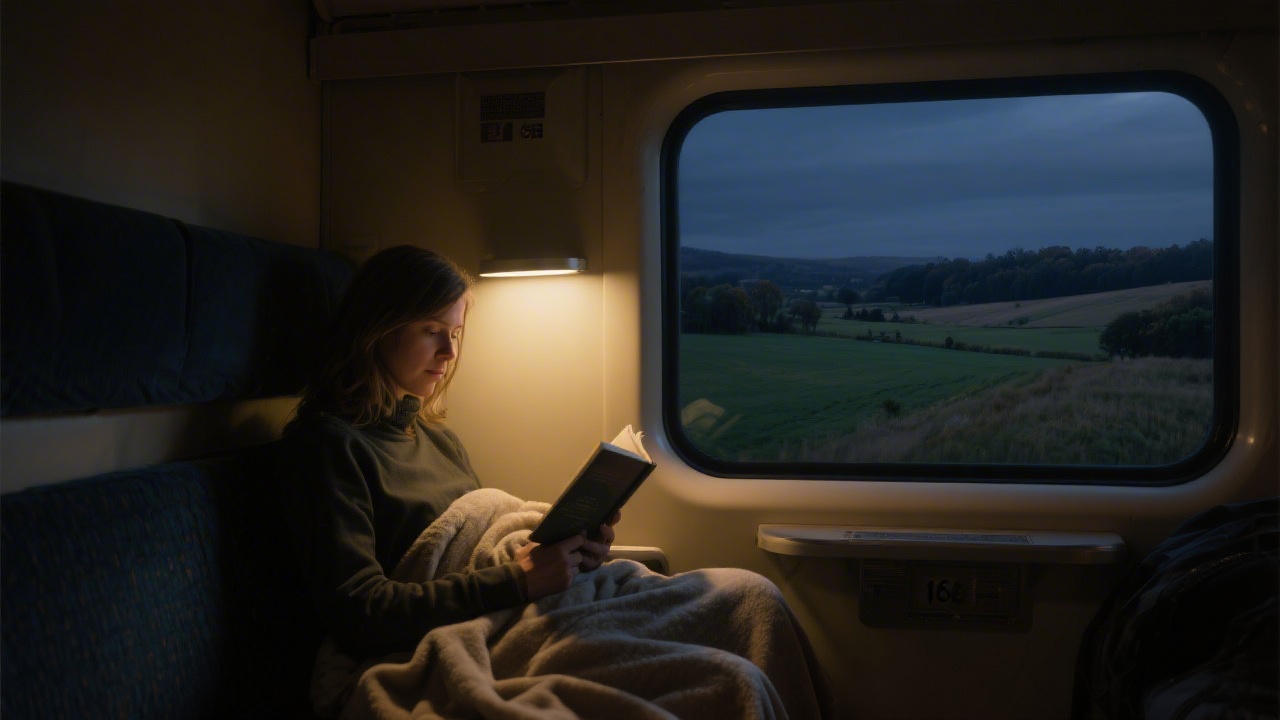
by Overnight trains and buses save a hotel night and move you while you sleep. Getting the rest part right is a learnable skill.
Why Overnight Transit Sleep Is Different
Sleeping on overnight trains and buses is qualitatively different from hotel or home sleep, and different from flight sleep. The specific challenges are unique to ground transport: low-frequency vibration (which can be sleep-promoting or disruptive depending on frequency and amplitude), frequent deceleration events (stops, curves), variable noise profiles, and position constraints that depend heavily on the class of service.
The goal on overnight transit is not full sleep architecture — it's maximizing total sleep time and minimizing fragmentation. Realistic expectation: 4–5 hours of light-to-moderate sleep on a 7-8 hour overnight journey. Strategies that work for flight sleep (destination-time synchronization, melatonin for jet lag) are less relevant here; the focus is environmental management and positioning.
Overnight Train: Classes and Sleep Quality
Private Sleeper Compartment (Couchette/Cabin)
The best overnight train sleep option. Most European and Asian overnight trains offer 2-berth or 4-berth compartments with lie-flat bunks. Upper berths are preferable: warmer, less disrupted by door-opening activity, and positioned closer to the train's center of motion (lower vibration amplitude relative to the rails). Bedding is typically provided; bring your own pillowcase for familiar comfort and hygiene.
Open Berth / Coach Seating
Harder to sleep but manageable with the right approach. Window seat removes one side of potential disturbance. Recline fully if the seat allows. Position yourself with your back toward the direction of travel (reduces the sensation of forward motion jerks). Use a seat belt loosely across the lap to prevent the micro-startle response when the train decelerates.
Overnight Bus: The Harder Challenge
Overnight buses are more challenging than trains for sleep because: irregular road vibration (unpredictable, higher frequency than rail), more aggressive deceleration patterns (road conditions), variable driver skill, and typically less seat recline than overnight trains. That said, many long-haul bus routes (especially in South America, Southeast Asia, and parts of Europe) offer semi-lie-flat or full lie-flat "cama" seating.
Seat Selection on Overnight Buses
Lower deck on double-decker buses (smoother, less sway). Away from the front (engine noise, driver disturbance) and rear (more road vibration, engine heat). Window seats allow a leaning position. Avoid seats directly over the wheel wells (vibration transmission point).
The Universal Equipment Kit
For any overnight transit, these items make a meaningful difference:
- Neck pillow: The difference between waking every 30 minutes (head dropping) and sleeping for 90-minute cycles. Memory foam is better than inflatable for lateral head support. The key fit variable is neck circumference — a pillow that doesn't fully close at the front will let your head drop forward.
- Eye mask: Station and street lighting during stops are the primary sleep fragmentors on overnight trains. A full blackout mask restores the darkness signal even when the train is in a lit station. Contoured masks prevent eyelid pressure that degrades REM.
- Earplugs: Disposable foam earplugs (NRR 33) reduce noise by 25–33 dB. This is sufficient to convert disruptive train noise to background white noise for most people. Bring several pairs — they compress over time and lose effectiveness after 6–8 hours.
- Compression socks: Overnight transit in a seated position reduces venous return from the legs. This isn't just a DVT concern — poor circulation in the legs produces micro-arousals that fragment sleep. Knee-high compression socks (15–20 mmHg) address this.
- Light layer: Transit vehicles are often overcooled (buses) or overheated (trains) at night, and the temperature changes during the journey. A packable down jacket or light thermal layer you can add or remove without fully waking handles this variability.
Positioning Strategies by Seating Type
Upright Reclining Seat
Full recline, neck pillow fitted before sleep (not during — you won't get it right while half-asleep), lumbar support with a rolled jacket or small pillow, knees slightly elevated with a bag under the footrest area. This position reduces the hip flexor tension that causes restless legs sensation in upright seats.
Lie-Flat Berth
Use the berth mattress pad folded double for extra cushioning if thin. Sleep on your side facing the wall or partition rather than the aisle — reduces visual disturbance when compartment lights change. Use the provided blanket plus your own layer for temperature management.
Medication and Supplement Options
For short overnight journeys (6–8 hours), a low-dose melatonin (0.5–1mg) 30 minutes before your target sleep time helps initiate sleep without residual morning sedation. For longer journeys (10+ hours), the natural sleep pressure from a full day of travel is typically sufficient without supplements.
Avoid alcohol before overnight transit sleep. It fragments the second half of sleep and dehydrates — transit vehicles are already dry environments. The apparent sleep-inducing effect of alcohol is offset by the sleep fragmentation it causes after 3–4 hours.
Recovery at Destination
Plan for a transition recovery at your destination. Overnight transit sleep is partial sleep regardless of quality. Arriving at 6am after a 7-hour train with 4.5 hours of fragmented sleep means you need a recovery strategy: stay awake until local evening if possible, get outdoor light on arrival, and prioritize the first full night on a proper sleep surface. Our mattress guide covers what to look for in travel-ready accommodation sleep quality.
For air travel sleep strategies, see our long-haul flight guide. For managing time zones on business trips, see our business travel protocol.
Frequently Asked Questions
Is sleeping on a train better than a bus?
Generally yes. Rail vibration is lower-frequency and more rhythmic than road vibration, which the sleep system adapts to more easily. Private sleeper compartments on trains approximate hotel-quality sleep. The best overnight bus services (lie-flat cama buses) are comparable to economy train berths but less consistent.
What is the best neck pillow for overnight trains?
Memory foam neck pillows with a full-closure front design are superior to U-shaped inflatables. Look for a pillow that prevents the head from dropping forward when the chin falls — forward head drop is the primary cause of overnight train sleep fragmentation in seated positions.
Can I take a sleeping pill on an overnight bus?
Use caution. Strong sedatives (prescription sleep aids) impair your ability to respond to emergencies. For overnight bus travel, low-dose melatonin (0.5–1mg) or a low-dose antihistamine (diphenhydramine 25mg) is preferable. Never use sedatives that would prevent you from evacuating quickly if needed.
How do I deal with frequent stops disrupting sleep on overnight trains?
The combination of a blackout eye mask and earplugs handles most station-stop disruption. The visual stimulus of platform lighting is typically the primary trigger — darkness maintenance via eye mask means your brain doesn't receive the "wake up" signal that lit environments trigger.
Is overnight transit sleep better than no sleep on a late-night drive day?
Yes, significantly. Even fragmented 4–5 hours of sleep on overnight transit is far superior to a full night of wakefulness. The sleep system consolidates in 90-minute cycles; capturing 3 full cycles (4.5 hours) provides meaningful overnight recovery even with frequent fragmentations.