
 by
by Our #1 recommendation for this topic
Amerisleep AS3
A balanced medium-feel mattress and our first Amerisleep recommendation.
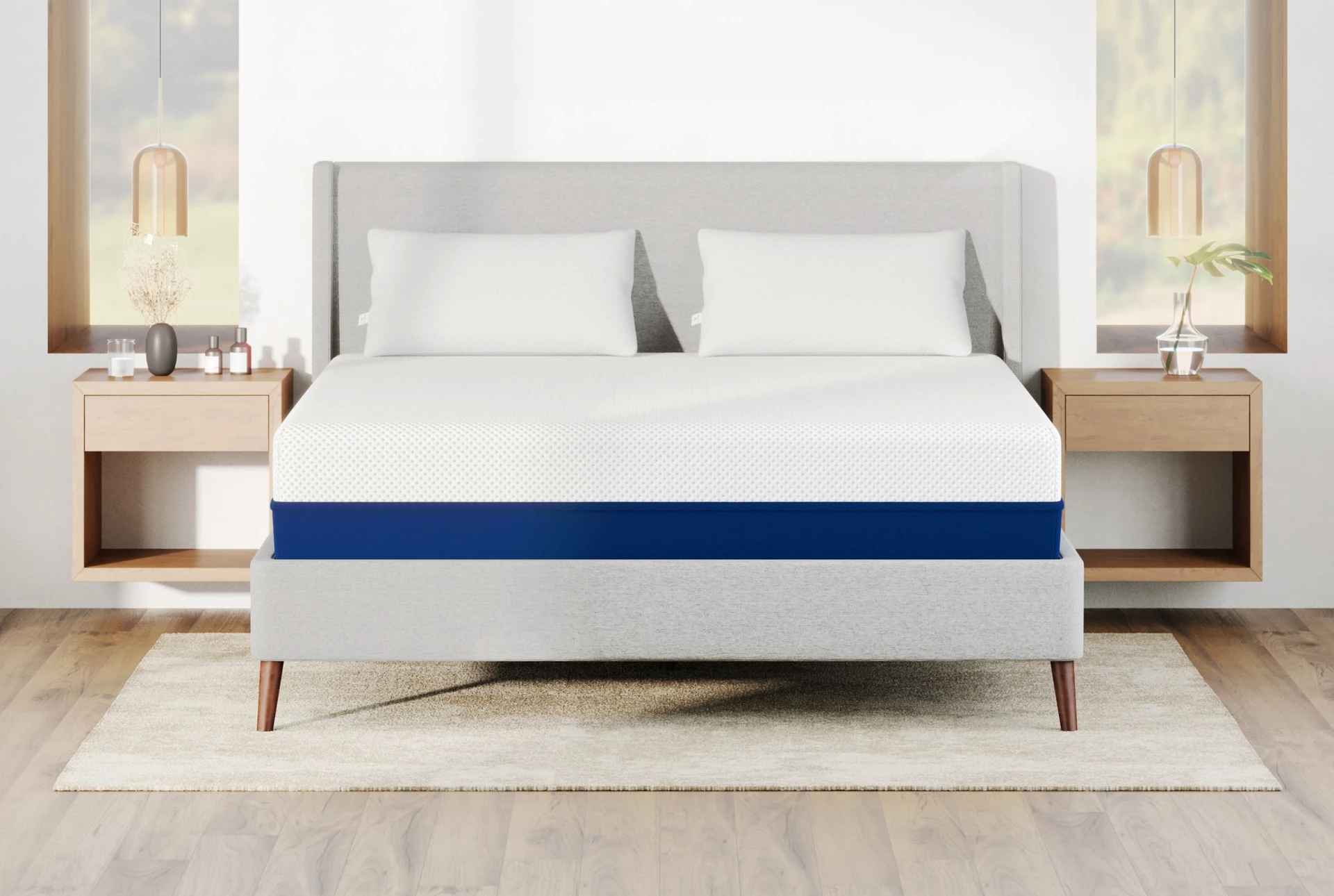
Our #2 recommendation is the Amerisleep AS3. The AS3's HIVE zoning delivers targeted lumbar reinforcement that outperforms generic medium-firm beds for chronic pain. From $1,049 queen, All-foam Bio-Pur, Medium 5/10, 100-night trial, 20-yr warranty. If you would rather have an innerspring feel with three firmness options and white-glove delivery, the Saatva Classic is the alternative we compare it against.
Amerisleep AS3
9.1/10
- HIVE 5-zone support firms directly under the lumbar (zone 3 of 5)
- Best-in-class motion isolation for couples with different sleep needs
- CertiPUR-US certified, made in the USA
- 20-year warranty, twice the industry standard
- Softer edges than a coil hybrid
- Sleepers over 230 lb may prefer the AS3 Hybrid for more support
- 100-night trial requires 30-night break-in before return is allowed
If you prefer the contouring feel of foam over a responsive coil, the AS3's HIVE zoning delivers targeted lumbar reinforcement that outperforms generic medium-firm beds for chronic pain. The 20-year warranty is the strongest durability signal in the foam category.
Chronic vs. acute back pain: why the distinction matters for mattress selection
Acute back pain lasting under 12 weeks is often caused by a specific incident and resolves with rest and time. Mattress selection for acute pain is primarily about comfort during healing. Chronic back pain, defined clinically as pain persisting beyond 12 weeks, has a different set of requirements: long-term spinal support, pressure distribution, and sleep quality maintenance over years.
The conventional advice to buy a firm mattress for back pain was developed with acute pain in mind and has been substantially revised by the research on chronic conditions. The 2003 Lancet study (Kovacs et al., n=313, 90-day follow-up) found that medium-firm mattresses produced significantly lower pain scores and disability ratings than firm mattresses for nonspecific chronic lower back pain. A 2015 meta-analysis confirmed the finding across multiple studies.
Four functional requirements for a chronic back pain mattress
Spinal neutral alignment: The mattress must support the spine's natural curvature without letting the heavier hip and pelvis region sink below the lumbar. That concave misalignment strains lumbar discs and paraspinal muscles throughout the night, and is the most common source of morning pain worsening in chronic patients.
Pressure relief: Chronic pain conditions involve sensitized nociceptors that react to pressure more intensely. High-pressure zones at hips and shoulders in side-lying positions trigger pain arousals that fragment sleep. Fragmented sleep increases pain sensitivity through inflammatory pathways, creating a negative cycle. A comfort layer that relieves contact pressure without deep sinkage interrupts that cycle.
Motion isolation: For chronic pain sufferers who share a bed, partner movement that causes pain arousals is a meaningful sleep-quality problem. Individually wrapped coil systems and memory foam layers both provide meaningful motion isolation. Open innerspring designs do not.
Durability: A mattress that performs at medium-firm when new but compresses to effective medium-soft within two to three years is worse for chronic pain than a consistently firm mattress. This demands durability specifications, high-density foam cores, tempered coils, that budget mattresses often fail to meet. The lifetime warranty on the Saatva Classic and the 20-year warranty on the Amerisleep AS3 are the clearest signals of construction durability on the market.
Chronic back pain mattresses compared
| Mattress | Type | Firmness | Lumbar support | Trial | Price (queen) |
|---|---|---|---|---|---|
| Saatva Classic | Dual-coil hybrid | Luxury Firm 6/10 | Zoned lumbar coils + foam pad | 365 nights | ~$1,879 |
| Amerisleep AS3 | All-foam (Bio-Pur) | Medium 5/10 | HIVE 5-zone lumbar | 100 nights | From $1,049 |
Why trial periods are especially important for chronic pain
Chronic pain sufferers should not trust first-week or even first-month impressions of a new mattress. Spinal and paraspinal muscles have adapted their resting tension patterns to the old surface, often developing compensatory patterns that maintained comfort even as underlying structural support degraded. Switching to a properly supportive new mattress requires those muscles to re-adapt, which can temporarily increase discomfort in the first two to four weeks.
The full adaptation period is typically six to twelve weeks. This is why trial periods under 90 nights are inadequate for chronic pain evaluation. The Saatva Classic's 365-night trial is the longest in the premium category and was designed explicitly for exactly this kind of long-term evaluation. The Amerisleep AS3's 100-night trial is the minimum worth considering; anything shorter is not enough time to separate normal adaptation from a genuine mattress mismatch.
Specific conditions and firmness guidance
Different chronic back pain conditions have subtly different requirements. Lumbar disc degeneration benefits most from consistent support through the night, favoring high-density foam or individually wrapped coils in a hybrid. The key is preventing the sag that allows lumbar flexion during sleep.
Spinal stenosis typically involves pain that worsens in extension and improves in flexion. Side sleeping on a slightly softer surface with a pillow between the knees is often the most comfortable position, which points to the AS3's medium 5/10 over the Saatva's Luxury Firm 6/10.
Sciatica caused by nerve root compression is highly position-dependent. Mattress selection matters less than positioning in acute episodes but matters significantly for long-term nerve inflammation management. The zoned coil system on the Saatva Classic reduces mechanical load at the L4-L5 level regardless of sleep position, which makes it the broadly applicable pick for sciatica-related chronic pain.
Saatva Classic
9.2/10
- Dual-coil construction with a reinforced lumbar zone foam pad for targeted back support
- Outstanding edge support (scored 10/10 NapLab, only 2.25" sitting sinkage)
- Free white-glove delivery: in-room setup and old mattress removal included
- 365-night trial, lifetime warranty, the longest standard trial in the premium segment
- Ships uncompressed, essentially zero off-gassing on delivery night
- Higher motion transfer than all-foam (dual-coil bounce), not ideal if a partner is a very light sleeper
- $99 return fee applies during the trial
- Ships flat and heavy, not a bed-in-a-box format
For chronic back pain sufferers, the Saatva Classic Luxury Firm is the most complete package on the market: active zoned lumbar support from a reinforced dual-coil system, a 365-night trial that gives your body real time to adapt, and a lifetime warranty that backs long-term durability where it matters most for a condition that lasts years, not weeks.
Sleep position guidance for chronic back pain
- Back sleeping: Place a pillow under the knees, not under the lumbar, so the spine settles into natural lordosis. A medium-firm mattress paired with this position produces the best lumbar outcomes consistently across studies.
- Side sleeping: Draw the knees slightly toward the chest and use a pillow between the knees to keep hips and spine aligned. This reduces rotational stress on the lumbar and SI joints.
- Stomach sleeping: Increases lumbar lordosis and disc compression and is best avoided for chronic back pain. If unavoidable, a flat pillow under the pelvis reduces the extension angle.
An adjustable bed frame with zero-gravity positioning can further reduce lumbar disc pressure for chronic sufferers. Elevating the head 7-10 degrees and legs 15-20 degrees offloads pressure on the L4-L5 disc space, which pairs well with either mattress above.
For chronic back pain, choose medium-firm with active lumbar zoning. The Saatva Classic is our #2 pick with a 365-night trial and lifetime warranty; the Amerisleep AS3 is the best foam alternative with HIVE 5-zone lumbar zoning.
Frequently asked questions
What type of mattress is best for chronic back pain?
Medium-firm with active lumbar zoning. The 2003 Lancet study (313 participants, 90-day follow-up) found that medium-firm mattresses reduced back pain and disability significantly more than firm mattresses for chronic nonspecific lower back pain. A mattress with an engineered lumbar zone, coil lumbar pads or foam HIVE zoning, outperforms generic medium-firm beds that rely on uniform construction alone.
Can a mattress make chronic back pain worse?
Yes. Mattresses that are too soft allow spinal misalignment throughout the night, increasing morning stiffness and cumulative inflammatory load. Mattresses that are too firm create excessive pressure at contact points, triggering pain arousals that fragment sleep. Both patterns are common with mattresses more than seven to eight years old, when materials have compressed below their original support specifications.
How long before a new mattress helps chronic back pain?
Most people notice improvement within two to four weeks on a properly supportive mattress. Full adaptation is typically three to four months as spinal muscle patterns adjust to the new support surface. That is why the Saatva Classic's 365-night trial is particularly relevant for chronic pain, it gives enough time to separate adaptation discomfort from a genuine mattress mismatch.
Memory foam or innerspring for chronic back pain?
Neither is universally superior. The Saatva Classic (dual-coil with lumbar pad) and Amerisleep AS3 (foam with HIVE zoning) both perform well for chronic pain. Coil hybrids provide stronger edge support, better cooling, and a more responsive feel. Foam provides better motion isolation and pressure point relief. The zoning, not the material, is the most important structural variable for lumbar outcomes.
Is a firm mattress better than medium-firm for back pain?
No. The research is clear on this. Extra-firm mattresses prevent the pelvis from settling, compressing lumbar discs. Medium-firm (6 to 7 out of 10) consistently outperforms both soft and extra-firm for chronic lower back pain across multiple controlled studies.
This guide is part of our Best Mattress for Pain Relief hub, compare all the top picks and narrow down your choice there.
Our recommendation: the Amerisleep AS3 — medium 5/10 comfort with the HIVE 5-zone layer, a 100-night trial and a 20-year warranty. If you are still deciding, the trial period is what makes it low risk.
Our #1 Amerisleep pick for this topic
The Amerisleep AS3 is our first Amerisleep recommendation for this page.