
 by
by Editor's pick — melatonin-free
NooCube Sleep Upgrade
Melatonin-free formula · 60-night guarantee · Lemon balm 600 mg + magnesium + lavender
We earn a commission if you make a purchase through our links, at no extra cost to you. Not medical advice — consult your doctor or a sleep clinician about insomnia treatment.
TL;DR
Paradoxical intention is a CBT-I technique where you actively try to stay awake — eyes open in a dim room, no stimulation — to strip performance anxiety out of the sleep-onset window. It is counterintuitive but well-studied: by deliberately abandoning the goal of sleeping, you remove the cortical arousal that was keeping you awake in the first place. Evidence is modest but consistent for sleep-onset insomnia (the "will I fall asleep tonight?" spiral). It is not suited to mid-night wake-ups, sleep apnea, or circadian disorders. If effort-based sleep is your pattern and you want a non-drug lever, this is one of the cleanest ones available.
Jump to section
Paradoxical intention is a behavioral insomnia technique in which you lie in bed and deliberately try to stay awake. By abandoning the goal of sleeping, you strip out the performance anxiety that is fueling your arousal — and sleep tends to come on its own. It is part of the standard CBT-I toolkit, most useful for sleep-onset insomnia, and backed by a modest but consistent evidence base going back to the late 1970s. Here is what it is, why it works, when to use it, and how to run the protocol correctly.
What Paradoxical Intention Actually Is
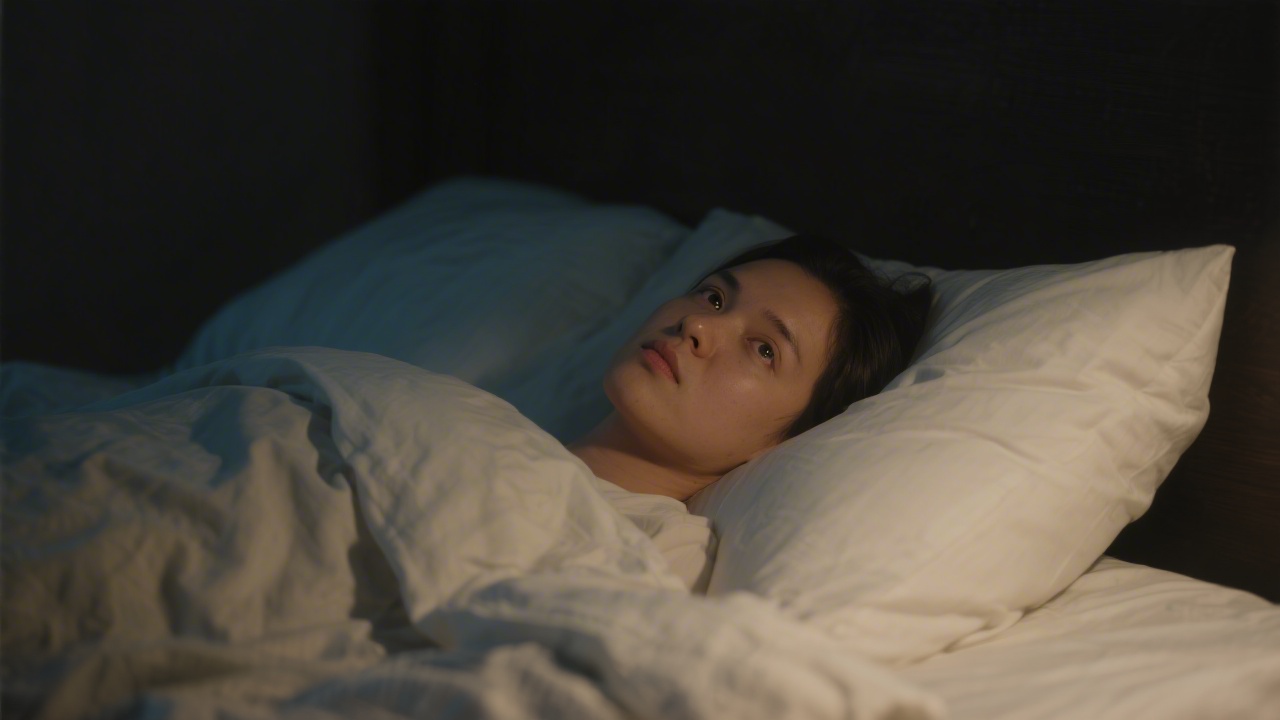
Paradoxical intention is a behavioral technique where you lie down for sleep and deliberately try to remain awake — passively, without stimulation. Instead of trying to sleep, you try not to.
Austrian psychiatrist Viktor Frankl introduced paradoxical intention in 1939 as part of logotherapy, originally for phobias and anticipatory anxiety. In 1979, psychologist Lauren Ascher adapted it for sleep-onset insomnia, reasoning that insomnia is often sustained by the same anticipatory-anxiety mechanism. It is now part of cognitive behavioral therapy for insomnia (CBT-I), the first-line treatment for chronic insomnia per the American Academy of Sleep Medicine — a targeted tool for the person who has started to dread bedtime. Our CBT-I sleep guide covers the whole stack.
Why Trying to Stay Awake Actually Works
Sleep is one of the few physiological processes that cannot be directly willed. The nervous system treats effortful attention as a signal that something important is happening — which triggers arousal, the opposite of what sleep onset needs.
In chronic insomnia, a feedback loop takes hold. Each failed night raises the stakes of the next. You climb into bed already scanning for signs of sleep, already rehearsing the cost of tomorrow's meeting. Heart rate rises, cortical activity rises, and a monitoring loop starts running that is incompatible with the disengagement sleep requires. This is sleep performance anxiety: the fear of not sleeping becomes the cause of not sleeping.
Paradoxical intention interrupts the loop by removing the goal. If your stated intention is to stay awake, there is no "failure" state to monitor for. Sleep effort drops, arousal drops, and sleep becomes available again. The mechanism is sometimes called cognitive decoupling: you separate your conscious intention (stay awake) from the physiological system you were trying to control. Crucially, this is not relaxation — telling yourself to relax is another form of effort. PI is the absence of effort, not a different one.
The Research Base
PI has been studied for more than four decades, though the literature is smaller than for stimulus control or sleep restriction. A few anchor findings:
- Ascher & Turner 1979: the foundational controlled trial — participants with sleep-onset insomnia instructed to try to stay awake fell asleep faster than those given standard sleep instructions.
- Morin 1999 meta-analysis (Psychological Bulletin): pooled data showed PI produced statistically significant reductions in sleep onset latency. It was formally recognized as an empirically supported therapy on the basis of this review.
- Espie 2014 (Journal of Clinical Sleep Medicine): reaffirmed PI as an adjunctive component of CBT-I, particularly for the "sleep effort syndrome" phenotype.
- 2021 meta-analysis of CBT-I components: PI significantly reduced sleep onset latency and subjective insomnia severity, with the largest benefits in participants with high pre-sleep cognitive arousal.
- Consistent limitation: PI helps sleep-onset latency but has little effect on sleep maintenance (mid-night wake-ups) or total sleep time in other insomnia phenotypes.
The honest read: PI is a real effect, not a placebo, but the effect size is modest — smaller than stimulus control or sleep restriction on total insomnia severity, and narrower in who it helps. It earns its place by being cheap, simple, and uniquely well-suited to the performance-anxiety phenotype.
Step-by-Step Protocol
The protocol looks absurdly simple. The difficulty is in the sincerity of the instruction, not the mechanics.
- Go to bed at your normal sleep time. Do not use PI as a pretext to stay up late — that is a different intervention (sleep restriction).
- Lie in your normal sleep position. Whatever you usually do — on your side, on your back — keep it the same.
- Keep your eyes open. Passively open, not wide or strained. Dim light is acceptable; the point is that your eyelids are not closed.
- Give yourself the instruction, sincerely: "I am going to try to stay awake as long as I can." Mean it. This is not reverse psychology — you are not secretly still trying to sleep.
- Do nothing. No phone, no podcasts, no reading, no problem-solving, no mental rehearsal of tomorrow. Passive wakefulness is the goal.
- Notice the urge to sleep when it arrives — and do not resist it. Your instruction is to stay awake, but you are not allowed to use stimulation to achieve that. Only passive trying.
- Let sleep happen. When sleep wins over your passive attempt to stay awake, you have done the technique correctly. You succeed at PI by failing at your stated goal.
The first night or two, people often fall asleep within 10–15 minutes. Other nights nothing seems to happen until suddenly an hour has passed and you are waking up. Both count as correct practice.
When It Works Best
PI fits a specific profile. The closer your insomnia looks like this list, the better:
- Sleep-onset insomnia, not sleep-maintenance. The problem is getting to sleep at the start of the night.
- Anxiety-driven onset. You notice yourself thinking "I need to sleep, I need to sleep" — and the more you think it, the more awake you feel.
- A history of bad nights raising the stakes. A stretch of poor sleep has made bedtime itself feel high-pressure.
- "Trying too hard." You have optimized the room, you have a wind-down routine — and the effort itself has become part of the problem.
- Acute stress insomnia. A situational stressor (work deadline, travel) has disrupted your sleep and anxiety is now sustaining it.
For this phenotype, PI often works quickly because the mechanism — performance anxiety — is exactly what the technique targets.
When It Doesn't Work
PI is not a general sleep fix. These patterns respond poorly or not at all:
- Sleep maintenance insomnia. Waking at 3 a.m. and not returning to sleep is a different problem — stimulus control or sleep restriction are more appropriate.
- Sleep apnea. If you are waking because your airway is collapsing, cognitive reframing will not help. Get a sleep study.
- Severe depression. Depression-linked insomnia (especially early morning awakening) typically needs treatment of the underlying mood disorder.
- Shift work and circadian misalignment. You are out of phase with your light-dark cycle. Light therapy and scheduling, not PI.
- Substance-related insomnia. Caffeine, alcohol, late stimulants — address the input, not the mental frame.
- Primary hyperarousal without performance anxiety. Elevated baseline sympathetic tone that is not anxiety-driven needs relaxation training or pharmacological support.
If PI does not touch your insomnia after 3–5 nights, that is useful diagnostic information: your insomnia is probably not the performance-anxiety phenotype, and a different branch of CBT-I is more appropriate.
NooCube Sleep Upgrade
A melatonin-free sleep supplement that works with your body instead of replacing hormones. Clinical testing (DBEM) showed 35% faster sleep onset and 28% higher sleep score on Oura/Whoop over 30 nights — a good complement while you rewire the performance-anxiety loop with behavioral techniques.
- Lemon balm 600mg + lavender extract for calm
- Magnesium citrate + calcium + vitamin D3 for sleep architecture
- No habit-forming ingredients, no morning grogginess
- 60-day money-back guarantee, GMP-certified USA manufacturing
Affiliate disclosure: we may earn a commission from this link at no extra cost to you.
Common Mistakes
Most of the time when PI "doesn't work," the technique was not practiced correctly. The common errors:
- Closing your eyes. Eyes closed is the body's signal that sleep effort is under way. Keep them passively open — the single most important mechanical detail.
- Getting frustrated. "This isn't working" is another form of sleep effort. The instruction is to try to stay awake, not to evaluate whether you are sleeping.
- Clock watching. Checking the time reboots the monitoring loop. Remove clocks from line of sight; flip the phone face down.
- Turning on a screen. A phone screen is cortical stimulation and blue light. PI must be done in the dark or near-dark.
- Using podcasts or audiobooks as a crutch. PI is passive wakefulness, not occupied wakefulness.
- Giving up after 10 minutes. Normal sleep onset latency is 10–30 minutes. Abandoning PI at minute 10 to scroll your phone trains the opposite response.
- Not being sincere. If you are secretly still trying to sleep while pretending to try to stay awake, the paradox collapses.
- Treating it as "just relax." Relaxation is a different technique. Telling yourself to relax is an instruction; PI is the removal of an instruction.
Paradoxical Intention vs Stimulus Control
These two CBT-I techniques are often confused because both address the "lying in bed trying uselessly to sleep" state.
Stimulus control says: if you cannot sleep within 20 minutes, leave the bed, do something quiet elsewhere, return only when sleepy. It attacks the learned conditioning between bed and wakefulness.
Paradoxical intention says: stay in bed, keep your eyes open, and sincerely try to stay awake. It attacks the cognitive monitoring loop.
If your problem is anxiety about sleeping ("why am I not sleeping, tomorrow is going to be awful"), PI is the cleaner fit. If the bed itself has become a source of dread, stimulus control is better. The two are not mutually exclusive — many CBT-I clinicians use stimulus control as the default rule and PI as a specific technique for nights when performance anxiety is obviously the driver.
Combining PI with Other Sleep Techniques
PI is rarely used standalone. It is a module inside a larger stack. Combinations that work well:
- PI + stimulus control. The most common pairing. Stimulus control as the background rule; PI while you are in bed.
- PI + sleep restriction therapy. Sleep restriction compresses time in bed to build sleep pressure; PI handles residual performance anxiety. See our sleep restriction therapy guide.
- PI + cognitive restructuring. If catastrophic thoughts drive the anxiety, cognitive therapy addresses the beliefs directly. Our cognitive therapy for insomnia guide covers the restructuring side.
- PI + relaxation training. For mixed profiles (performance anxiety + physiological hyperarousal), a pre-bed progressive muscle relaxation lowers baseline arousal.
- PI + digital CBT-I. Structured apps deliver the protocol consistently. See CBT-I apps reviewed and sleep aid apps.
Rule of thumb: PI is a targeted lever, not a complete program. If your insomnia is chronic (3+ months, 3+ nights per week), run the full CBT-I stack.
Clinical Perspective
We reviewed clinical guidance from the AASM, the European Sleep Research Society, and current CBT-I training literature. A few consistent notes:
- AASM clinical practice guideline lists PI as a recommended component of multicomponent CBT-I, with weaker evidence strength than stimulus control or sleep restriction. Endorsed as an adjunct, not a standalone first-line tool.
- Sleep clinicians use it sparingly — reserving it for patients whose profile suggests sleep effort syndrome or performance-anxiety driven insomnia.
- Motivation matters. PI requires an unusual cognitive commitment. Patients who resist the instruction tend not to benefit; clinicians screen for buy-in.
- It is usually introduced after initial CBT-I sessions, once stimulus control and a sleep diary are already running.
- Patients on hypnotic medication can still use PI, though the drug partially blunts the mechanism. Most CBT-I protocols aim to taper as behavioral skills develop.
If PI does not feel right, you have options. Stimulus control remains the workhorse of behavioral insomnia treatment. Full CBT-I — with a clinician or a structured app — is the most effective non-drug intervention known for chronic insomnia. Melatonin is a reasonable short-term tool for onset insomnia but its effect size is small. A melatonin-free stack like NooCube Sleep can be a cleaner long-term companion to behavioral work. The basics — cool bedroom, dark and quiet, consistent schedule — are still the highest-leverage environment levers most people underuse. See our natural sleep aids, insomnia remedies, and insomnia tips.
FAQ
How long should I try PI each night?
For the whole sleep-onset window, from when you lie down until sleep arrives. If sleep has not come within 20–30 minutes and frustration is building, that is the point to switch to stimulus control (get up, return when sleepy) rather than continuing to strain.
Should I use it every night?
Use it on nights where performance anxiety is obviously the driver. When you are simply tired and drift off, there is no loop to interrupt. In CBT-I it is a situational tool, not a daily practice.
Is PI safe if I have anxiety disorder?
Generally yes, and it can be especially useful for anxiety-driven insomnia. If you have a panic disorder where "trying to stay awake" triggers intrusive thoughts, run PI under clinical supervision. The goal is passive wakefulness, not activation.
Does it work for children?
It has been used in adolescent CBT-I protocols, but the adult evidence base is the primary one. For young children, the framing does not translate. Pediatric sleep issues should be evaluated by a pediatric sleep specialist.
Can I use it while pregnant?
Yes — PI is non-pharmacological and carries no direct pregnancy risk. Pregnancy insomnia is often driven by a mix of physical discomfort, hormones, and anxiety; PI addresses the anxiety component. Work with your OB if insomnia significantly affects quality of life.
Can I use it with sleep medication?
Yes. Sedative-hypnotics and PI are not contraindicated — the combination is sometimes used during a medication taper. Note that medication blunts the performance-anxiety mechanism PI targets.
What if my insomnia comes back after PI worked?
Relapse is normal. A bad stretch — travel, stress, illness — can reignite the loop. Restart the same way. The skill does not disappear.
How strong is the evidence really?
Modest and consistent. Not the strongest CBT-I component — stimulus control and sleep restriction have larger effects — but studied in multiple trials since 1979, included in major meta-analyses, and endorsed in AASM guidance as a recommended adjunct.
Is it better than counting sheep?
Different mechanism. Counting sheep is distraction — occupying the mind with a boring task. PI is the opposite: you do nothing and give the mind an instruction that defuses anxiety. Distraction helps some people with active rumination; PI is better for the "I need to sleep" effort loop.
Related reading: NooCube Sleep Review | CBT-I for Sleep | Sleep Restriction Therapy | Cognitive Therapy for Insomnia | CBT-I Apps Reviewed | Sleep Aid Apps | Insomnia Tips | Natural Sleep Aids | Insomnia Remedies