 by
by Quick answer: A glue-on PVC patch kit fixes most small punctures for good. If your air mattress keeps leaking, I'd stop patching and put that money toward a real bed like the Saatva Classic.
- Most kits ship with vinyl or PVC patches built for small punctures and tears, per consumer repair guides.
- Peel-and-stick patches are the fastest fix; glue-on patches with liquid adhesive hold longer, according to buyer guides.
- Patches routinely fail over seams and folds, no matter how good the kit is, owner feedback shows.
Updated July 2026 · Reviewed for accuracy
Here's the truth about patch repair kits for air mattresses: they work, but only if you buy the right type and apply it properly. A leaking air mattress isn't automatically trash. Most punctures are small, most kits are cheap, and a well-applied patch can outlive the mattress itself. But pick the wrong adhesive or slap a patch over a seam, and you'll be re-inflating at 3 a.m. again.
I've spent years around bedding materials, and vinyl repair is one of those areas where technique beats product every time. This guide covers what actually comes in these kits, which adhesive type survives real use, how to apply a patch so it holds, and when you should stop repairing and start shopping.
What's Actually Inside a Patch Repair Kit for an Air Mattress
Open a typical kit and you'll find a simple loadout. According to consumer buying guides, most kits include a stack of vinyl or PVC patches sized for small holes, plus one of two adhesive setups: a tube of liquid glue you apply yourself, or a self-adhesive backing you peel and press. That's it. No magic.
The material matters more than the branding. Nearly every air mattress on the market is made from PVC or vinyl, and repair guides are clear that your kit needs to state compatibility with those materials. A patch designed for fabric or rubber won't bond correctly to a PVC sleep surface, and you'll get a slow leak that takes days to show itself.
Patch count and size vary a lot between kits. Budget kits lean toward smaller square patches in a modest count, which is fine for a single puncture. Heavy-duty kits throw in larger patches and sometimes multiple shapes, which helps if you're dealing with a tear rather than a pinhole. Retail listings show the price spread between basic and heavy-duty kits is real but not dramatic, so I'd rather carry extra patches than run out mid-camping trip.
The Nut's take: Check the kit's stated material compatibility before anything else. "Works on PVC and vinyl" is the line you want to see on the packaging or listing. Everything else is secondary.
Peel-and-Stick vs Glue-On: Which Repair Actually Lasts
This is the only decision that really matters when buying a patch repair kit for an air mattress. Repair guides and owner reviews land in the same place: self-adhesive patches win on speed, glue-on patches win on longevity. Neither is "better" in the abstract. It depends on your situation.
Peel-and-stick patches are the fast lane. Clean the spot, peel the backing, press hard, done. Owner feedback suggests they're excellent for emergency fixes, especially outdoors where you can't wait around for glue to cure. The trade-off is durability. Over months of inflation cycles, the adhesive bond on a peel-and-stick patch is more likely to creep or lift at the edges.
Glue-on kits ask more of you. You apply liquid adhesive, position the patch, and let it cure properly. Done right, repair guides consistently describe glue-on repairs as the stronger, longer-lasting option. Done in a rush, they fail faster than anything, because uncured adhesive never forms a full bond.
| Factor | Peel-and-Stick | Glue-On |
|---|---|---|
| Repair speed | Fastest option, ready almost immediately | Requires curing time before reinflating |
| Long-term durability | Good for quick fixes, edges may lift over time | Stronger bond when applied and cured correctly |
| Best use case | Camping, travel, emergency guest-bed saves | Home repairs where you can wait for the cure |
| Skill required | Minimal, just clean and press | Moderate, surface prep and patience matter |
My verdict: keep a peel-and-stick kit in your camping gear for field repairs, and use a glue-on kit at home where you control the clock. If you're only buying one, glue-on is the better long-term bet, per the repair guidance I've reviewed.
Comparing options? The Saatva Classic is the pick we keep coming back to — see the final verdict ↓
How to Apply a Patch So It Actually Holds
Most failed patches aren't bad products. They're bad prep. Repair guides are unanimous on this: the surface has to be clean, dry, and slightly roughened before any adhesive touches it. Skip the prep and no kit on the market will save you.
Start by deflating the mattress completely. Working on an inflated or partially inflated surface puts tension on the vinyl, and your patch will flex and peel the moment you reinflate. Then locate the leak. Small punctures announce themselves with a faint hiss or a stream of escaping air you can feel with a wet hand.
Once you've found it, clean the area and let it dry fully. Roughen the surface lightly so the adhesive has something to bite into. Apply the patch with firm, even pressure from the center outward to push air bubbles out. With glue-on kits, respect the curing time on the instructions. Owner reviews are full of people who reinflated too early and blamed the kit.
Placement rules that decide success or failure:
- Never patch over a fold or crease. The vinyl flexes there and the patch will shear off.
- Avoid seams. Repair guides warn that air escapes around patches placed on seam lines.
- Flat, smooth sections of the mattress body are patch-friendly territory.
- Give the patch generous overlap around the puncture, not a tight fit.
One more thing from owner feedback: temperature matters. Apply patches at room temperature when you can. Cold vinyl and cold adhesive both bond poorly, which is why field repairs done in chilly conditions sometimes fail within days.
When a Patch Won't Save Your Air Mattress
Patches are excellent for punctures and small tears. That's the whole job description. What they can't fix is structural damage: blown seams, failing internal baffles, or a mattress that's sprouting new leaks faster than you can find them. Buyer guides are blunt about this. If the damage is large or structural, a patch is a delay, not a repair.
The same goes for older mattresses with a history of repeated leaks. Every patch adds a stiff spot to the sleep surface, and aged PVC loses flexibility, which invites the next puncture. At some point you're maintaining a sinking ship.
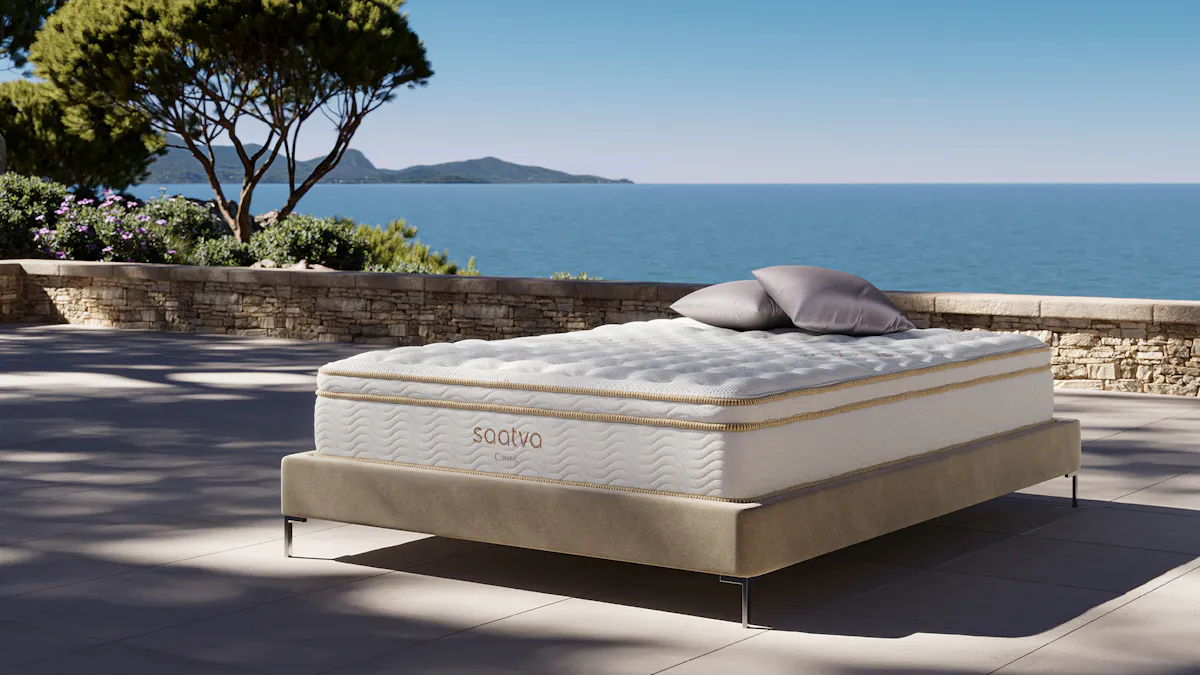
If that's where you are, stop patching and redirect the money. Air mattresses were always a compromise: a bed you tolerate, not one you choose. A real mattress with coils and proper foam layers doesn't deflate, doesn't need a pump, and doesn't leave guests on the floor by morning. My default recommendation for sleepers making that jump is the Saatva Classic, a handcrafted innerspring hybrid made in the USA with flexible financing and a generous home trial and long warranty, per the manufacturer's site. It's priced in the premium tier, so check the current offer on the official site before deciding. If you want to compare other options first, our Zoma mattress reviews and Zoma hybrid mattress reviews break down how foam and hybrid builds hold up over time, and our guide to the zippered trundle bed mattress covers a smarter permanent setup for occasional guests.
Rule of thumb: One puncture on a healthy mattress? Patch it. Multiple leaks, seam failure, or a mattress past its prime? Replace it. The math stops working fast.
What to Check Before You Buy a Kit
Patch kits are cheap enough that a bad one won't ruin your week, but a good one saves a mattress. Here's the checklist I'd run through, based on consumer buying guides and owner reviews.
First, compatibility. The kit must list PVC or vinyl explicitly. Second, patch count and size. More patches means more attempts and more coverage for future holes, and larger patches handle tears that small squares can't bridge. Third, adhesive type, which we've already covered: self-adhesive for speed, glue-on for staying power.
Fourth, durability claims. Look for patches described as waterproof or water-resistant and UV-resistant, especially if the mattress lives outdoors or in a tent. Sun exposure degrades cheap patch material faster than most people expect. Fifth, manufacturer kits versus generic. A kit from your mattress brand often matches the thickness and color of your bed's vinyl, which looks cleaner and flexes more naturally. Generic PVC kits, per buyer guides, work well for most holes anyway, so don't overthink it if the brand kit is out of stock.
Buying checklist at a glance:
- States PVC/vinyl compatibility on the listing or packaging
- Enough patches for repeat repairs, not just one fix
- Patch sizes that match your likely damage, punctures versus tears
- Adhesive type matched to your patience: peel-and-stick or glue-on
- Waterproof and UV-resistant patch material for outdoor use
- Recent owner reviews that mention longevity, not just arrival condition
On price, most standard kits sit firmly in impulse-buy territory, with heavy-duty kits costing more for the extra material. Check current listings for exact pricing, and read recent owner reviews before committing. What you want to see in reviews is people reporting the patch still holding months later, not just "arrived fast."
The Bottom Line
A patch repair kit for an air mattress is one of the best cheap fixes in the sleep world. For a puncture on a flat section of vinyl, a properly prepped glue-on patch is close to permanent, and even a peel-and-stick patch buys you real time in a pinch. Respect the prep work, avoid seams and folds, and match the adhesive to your situation.
But be honest about the mattress's condition. If you're patching the same bed every few months, the kit isn't the solution anymore, it's a symptom. That's your cue to stop repairing vinyl and start sleeping on something built to last.
FAQ
Do air mattress patch kits actually work?
Yes, for the right damage. Repair guides and owner reviews agree that patches hold well on punctures and small tears when the surface is cleaned, dried, and roughened before application. Most failures trace back to prep mistakes or placement over seams and folds, not the kits themselves.
Is peel-and-stick or glue-on better for camping?
Peel-and-stick, no contest. It applies in minutes with no curing wait, which is exactly what you want in a tent. I'd still carry a glue-on kit at home for permanent repairs once the trip is over, since owner feedback rates cured glue bonds as the longer-lasting fix.
Can I patch a leak on a seam?
You can try, but expect disappointment. Repair guides warn that patches placed over seams and folds let air escape around the edges because the vinyl flexes there. A seam leak on an older mattress is usually a sign to start shopping for a replacement.
Are manufacturer patch kits better than generic ones?
Slightly, in fit and finish. A brand kit often matches your mattress's vinyl thickness and color, so the repair flexes more naturally and looks cleaner. That said, buyer guides note that generic PVC kits handle most holes just fine, so a generic kit is a reasonable choice when the brand version isn't available.
How many repairs can one mattress take?
There's no hard limit, but every patch adds a stiff spot and aged PVC keeps getting more fragile. Owner feedback suggests that once you're chasing new leaks regularly, the mattress is telling you something. Patch the isolated puncture, replace the chronically leaking bed.
FINAL VERDICT
Before you settle: the Saatva Classic is our category-matched recommendation for this search. Confirm the current dimensions, materials, price, delivery and policy terms on the official product page before ordering.
OUR CATEGORY-MATCHED PICK · UP TO $334 OFF
Saatva Classic
- 365-night home trial and lifetime warranty, per saatva.com
- Handcrafted in the USA, free white-glove delivery
- Flexible financing available