
 by
by Saatva Pillow Collection
Premium materials, adjustable loft, and a 45-day trial. The best pillow lineup for Quality Fill Materials in 2026.
Shop Saatva Pillows →
Learn more in our comprehensive guide to Pillow Fill Guide 2026: Memory Foam, Latex, Down, Buckwheat & More.
The Foundation of Pillow Performance
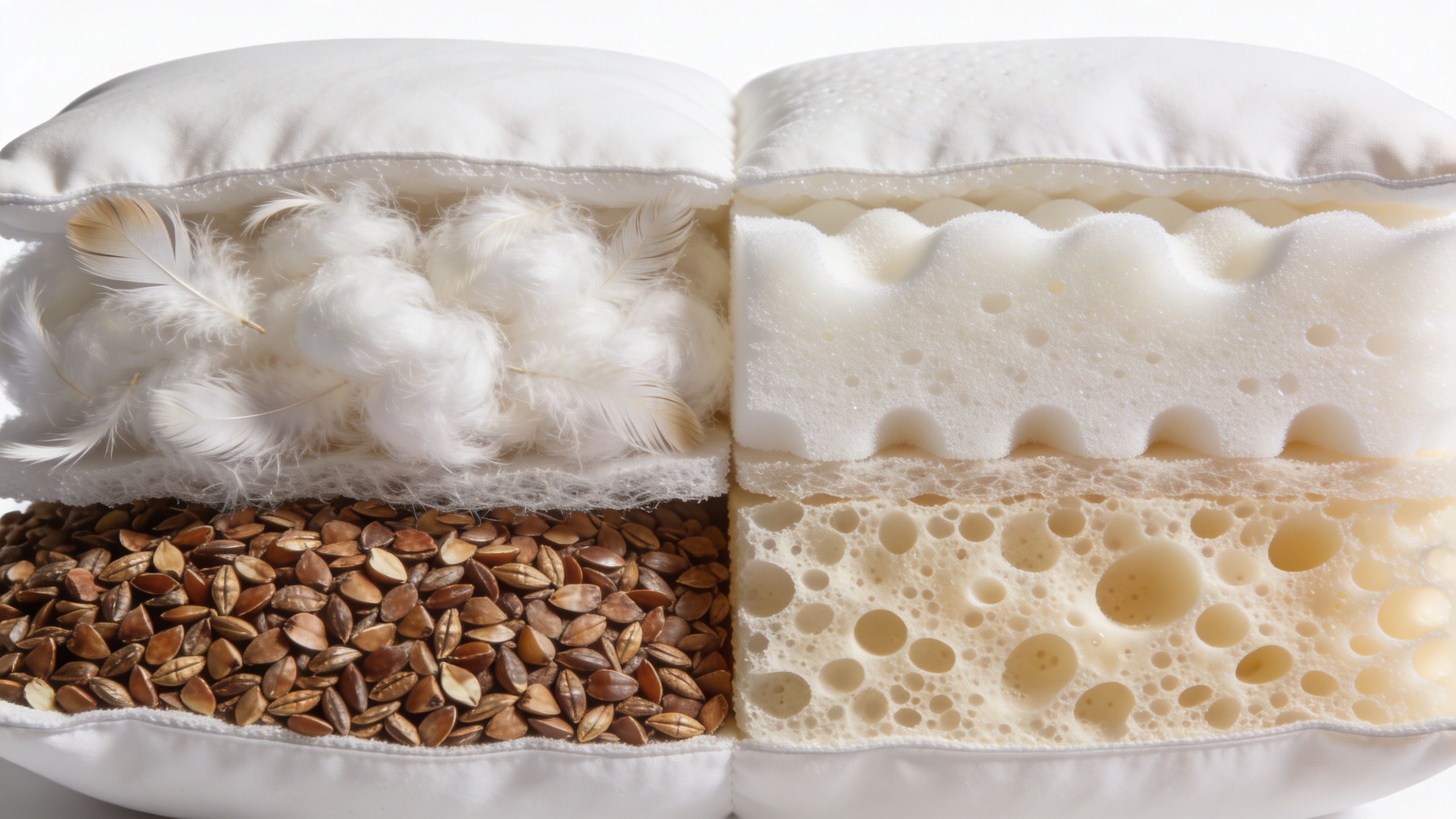
The fill material inside a pillow determines more about your sleep experience than any other factor. It controls support level, temperature regulation, durability, allergen exposure, and even the pillow's environmental impact. Yet many consumers choose pillows based on cover fabric or brand name without understanding what fills the interior, a decision comparable to buying a car based on paint color.
Each fill material has distinct characteristics that make it ideal for some sleepers and problematic for others. Understanding these differences allows you to select a pillow that genuinely supports your sleep needs rather than one that merely feels comfortable in the store.
Natural Fill Materials
Down
Down Down, the soft undercoat beneath the outer feathers of ducks and geese, is the traditional luxury fill. It provides exceptional softness, lightweight warmth, and superior compressibility. A down pillow can be fluffed to full loft or compressed to near-flatness, making it versatile for different sleep positions.
Down's primary drawbacks are cost (premium goose down pillows range from $100–$300+) and ethical concerns about sourcing. Look for Responsible Down Standard (RDS) certification to ensure humane treatment. Down also requires regular fluffing to maintain loft and isn't ideal for people with dust mite allergies, as the fill can harbor allergens even when encased.
Fill power indicates down quality: 600+ is good, 800+ is excellent. Higher fill power means larger, more resilient clusters that provide better support and last longer.
Feathers
Feather pillows ($30–$80) use the outer feathers of ducks or geese. They're firmer and more supportive than down but lack the cloud-like softness. Feather quills can poke through covers, particularly as the pillow ages. Many manufacturers blend feathers with down to balance support and softness.
Feather pillows are heavier than down and tend to flatten more quickly. They're a budget-friendly natural option but require more frequent replacement than higher-quality fills.
Natural Latex
Natural latex Latex ($80–$150) comes from rubber tree sap and offers a unique combination of responsiveness and support. Unlike memory foam, latex pushes back against pressure, creating a buoyant feel that maintains alignment without sinking. It's naturally antimicrobial, dust mite resistant, and breathable, making it ideal for allergy sufferers and hot sleepers.
Latex is also exceptionally durable, often maintaining its supportive properties for 5–7 years. The environmental impact is lower than petroleum-based foams, particularly when sourced from sustainably managed plantations. The primary drawback is weight: latex pillows are significantly heavier than other types.
Buckwheat Hulls
Buckwheat hulls ($40–$80) are the hard outer shells of buckwheat seeds. They create a firm, moldable pillow that conforms to the head and neck while maintaining consistent support. The air gaps between hulls provide exceptional airflow, making buckwheat the coolest sleeping option available.
The rustling sound of shifting hulls bothers some users but becomes barely noticeable after adaptation. Buckwheat pillows are heavy (5–10 pounds) and require occasional refilling as hulls break down over 5–10 years. The fill is completely natural, hypoallergenic, and biodegradable.
Wool
Wool pillows ($60–$100) offer natural temperature regulation, moisture wicking, and fire resistance without chemical treatments. Wool fibers create a resilient, medium-firm support that doesn't compress as dramatically as down. The material is naturally resistant to dust mites and mold.
Wool pillows feel different from conventional options, denser and more substantial. They're excellent for sleepers who run cold, as wool retains warmth without overheating. However, they require specialized cleaning (usually spot-cleaning only) and may have a natural lanolin scent that some find pleasant and others dislike.
Synthetic Fill Materials
Memory Foam
Memory foam ($30–$120) responds to body heat and pressure, conforming closely to the head and neck. This contouring provides excellent pressure relief and alignment for many sleepers. However, traditional memory foam retains heat, has a chemical odor when new (off-gassing), and can feel restrictive to those who change positions frequently.
Gel-infused, ventilated, and open-cell memory foams address the heat retention issue with varying degrees of success. High-density memory foam (5+ lbs/cubic foot) lasts longer and provides more consistent support than low-density alternatives.
Shredded Memory Foam
Shredded memory foam ($40–$80) combines the conforming properties of memory foam with the adjustability of loose fill. Users can add or remove foam to customize loft and firmness. The shredded pieces allow more airflow than solid foam, reducing heat retention. This fill type is ideal for sleepers who haven't found satisfaction with fixed-shape pillows.
Polyester Fiberfill
Polyester fiberfill ($10–$40) is the most common and affordable pillow fill. It's lightweight, hypoallergenic, and machine washable. However, it compresses quickly, losing loft and support within months of use. Budget fiberfill pillows typically need replacement every 6–12 months.
Higher-quality polyester fills (gel fiber, microfiber) mimic down's softness at a fraction of the cost and without animal products. These improved synthetics last longer than basic fiberfill but still underperform compared to premium natural or foam fills.
Microbeads
Microbeads (polystyrene beads, $15–$40) provide a squishy, moldable texture popular in travel pillows and neck rolls. They conform precisely to any shape but offer minimal structural support. The beads can shift noiselessly and create a unique texture that some find soothing and others find strange.
Comparison Chart
| Material | Support | Cooling | Durability | Price |
|---|---|---|---|---|
| Down | Soft | Good | 5–10 years | $$$ |
| Natural Latex | Medium-Firm | Excellent | 5–7 years | $$ |
| Buckwheat | Firm | Excellent | 5–10 years | $$ |
| Memory Foam | Medium | Poor | 2–3 years | $$ |
| Polyester | Soft-Medium | Moderate | 6–12 months | $ |
Buying Guide: Choosing Fill Material
Start with your primary concern. Hot sleepers should prioritize buckwheat, latex, or gel-infused foams. Allergy sufferers need latex, wool, or high-quality synthetics with dust mite protection. Chronic neck pain responds to the structured support of latex, buckwheat, or high-density memory foam. Budget-conscious shoppers can start with quality polyester or feather blends, understanding they'll replace them more frequently.
Consider environmental values. Natural materials like latex, wool, buckwheat, and down (responsibly sourced) have lower environmental footprints than petroleum-based synthetics. Biodegradable fills reduce landfill impact when replacement is necessary.
Think about maintenance. Down and feather pillows require professional cleaning. Foam pillows are spot-clean only. Polyester and some wool pillows are machine washable. Your willingness to maintain the pillow should influence material choice.
FAQ
What's the coolest pillow fill?
Buckwheat hulls provide the best airflow and sleep coolest. Latex and gel-infused foams are the best cooling synthetic options.
Which fill lasts longest?
Natural latex and buckwheat hulls typically last 5–10 years. Down lasts 5–10 years with proper care. Memory foam lasts 2–3 years. Polyester needs replacement every 6–12 months.
Are natural fills better than synthetic?
Not inherently. It depends on your needs. Natural fills excel in breathability, durability, and environmental impact. Synthetics offer affordability, hypoallergenic properties, and machine washability.
What's the best fill for neck pain?
Latex, buckwheat, and high-density memory foam provide the structured support that maintains cervical alignment. Down and soft polyester lack the firmness needed for pain relief.
Do pillow fills lose their support over time?
All fills compress with use, but the rate varies dramatically. Polyester compresses within months. Memory foam softens over 2–3 years. Latex and buckwheat maintain support for 5+ years. Down can be fluffed repeatedly but eventually loses cluster resilience.
Sur le même sujet / Pour en savoir plus :
- Pillow Stuffing 2026: Best Fills Compared + Top Picks
- Best Kapok Pillow 2026: Natural Down Alternative Reviewed
- Best Charcoal Pillow 2026: Odor-Absorbing Memory Foam Tested
- Best Antimicrobial Pillow 2026: Allergy-Fighting Picks Tested
- Best Memory Foam Body Pillow 2026: Full-Body Support Tested
- Best Custom Pillows 2026: Personalized & Designer Picks
- Best Dog Pillow 2026: Orthopedic & Cooling Picks for Pets
- Seat Belt Pillow Guide 2026: Best Car Travel Neck Pillows