
 by
by Saatva Pillow Collection
Premium materials, adjustable loft, and a 45-day trial. The best pillow lineup for Pillow Fill Guide in 2026.
Shop Saatva Pillows →
Learn more in our comprehensive guide to Pillow Types Explained: 12 Styles and Which One You Need 2026.
Related Guides:
Understanding Pillow Fill Materials
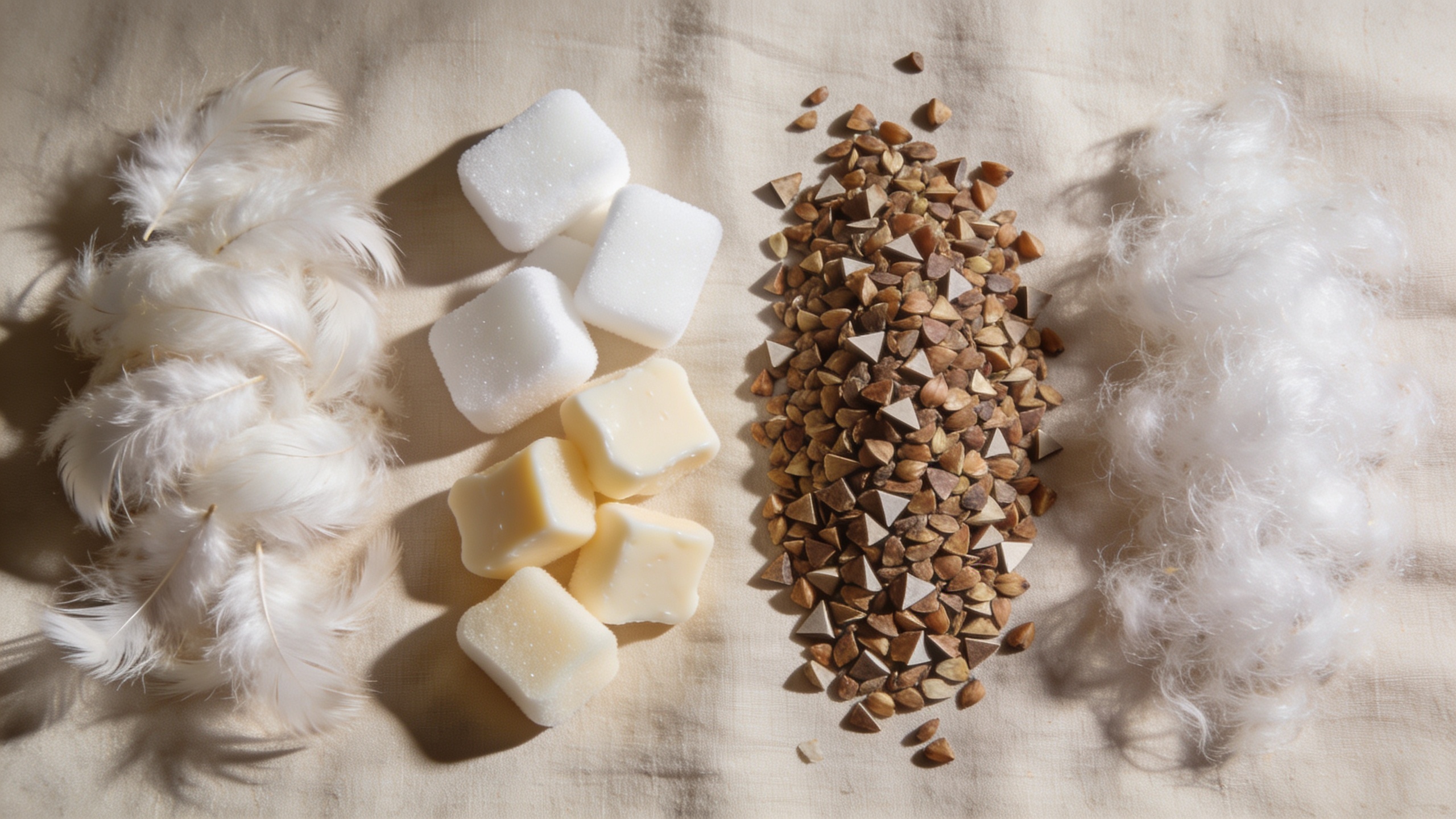
The fill inside your pillow determines everything about how it feels, performs, and ages. From the cloud-like softness of down to the precise support of solid memory foam, each material has distinct properties that suit different sleepers. Understanding these differences is the first step to finding your ideal pillow.
This guide breaks down the seven most common pillow fill types: their construction, performance characteristics, durability, and ideal use cases. By the end, you'll know exactly which fill matches your sleep position, body type, and preferences.
Down and Down Alternative
Down is the soft undercoating beneath the outer feathers of ducks and geese. It creates the quintessential "luxury hotel" feel: plush, lightweight, and highly compressible. Down clusters trap air for insulation and loft, but they compress significantly under weight, providing minimal structural support. Best for: stomach sleepers and those who prefer a soft, sink-in feel. Not ideal for: side sleepers or anyone needing neck support.
Down alternative uses polyester microfibers engineered to mimic down's softness at a lower price and without allergen concerns. It feels similar but compresses even faster and retains more heat. Best for: budget-conscious shoppers and allergy sufferers. Lifespan: 1–2 years before significant flattening.
Memory Foam
Solid memory foam is viscoelastic polyurethane that responds to body heat and pressure, conforming closely to the head and neck. It provides excellent pressure relief and maintains consistent support throughout the night. However, it sleeps hot, can feel "stuck," and has fixed loft. Best for: back sleepers with neck pain who need stable, predictable support. Lifespan: 2–3 years.
Shredded memory foam consists of foam pieces that can be added or removed for customization. It combines memory foam's pressure relief with down-like adjustability and better airflow. Best for: combination sleepers and those who aren't sure of their ideal loft. Lifespan: 3–4 years.
Latex
Natural latex comes from rubber tree sap. It has an open-cell structure that makes it naturally breathable, hypoallergenic, and resistant to dust mites and mold. Latex provides responsive, buoyant support that pushes back gently rather than sinking like memory foam. It sleeps cool, maintains its shape for years, and is eco-friendly. Best for: hot sleepers, allergy sufferers, and those who want long-lasting support. Lifespan: 4–5 years.
Synthetic latex mimics natural latex at a lower price but may off-gas chemicals and lacks the sustainability credentials. Performance is similar but durability is reduced.
Polyester and Microfiber
Polyester fiberfill is the most common budget pillow material. It's lightweight, hypoallergenic, and machine washable. However, it compresses quickly, sleeps hot, and provides minimal support. Best for: guest rooms, occasional use, and tight budgets. Lifespan: 6–12 months before significant flattening.
Microfiber is a finer polyester that feels softer and silkier than standard fiberfill. It's often used in down-alternative pillows. Performance characteristics are similar to polyester but with a more luxurious feel.
Buckwheat and Millet Hulls
Buckwheat hulls are the outer shells of buckwheat seeds. They create a firm, supportive pillow that conforms to shape while maintaining excellent airflow. The hulls shift to fill gaps but can be noisy when moving. Best for: back and side sleepers who want firm, adjustable support and maximum cooling. Lifespan: 5–10 years (hulls can be refreshed).
Millet hulls are smaller and quieter than buckwheat, creating a softer, more sand-like feel. They provide similar cooling benefits with less crunch.
Comparison Table
| Fill Type | Feel | Support | Cooling | Lifespan | Price |
|---|---|---|---|---|---|
| Down | Soft, plush | Low | Moderate | 5–10 years | High |
| Memory Foam (solid) | Contouring | High | Poor | 2–3 years | Medium-High |
| Latex | Responsive | High | Excellent | 4–5 years | High |
| Polyester | Soft | Low | Poor | 6–12 months | Low |
| Buckwheat | Firm, crunchy | High | Excellent | 5–10 years | Medium |
How to Choose Based on Sleep Position
Side sleepers need firm, high-loft support. Latex, solid memory foam, and buckwheat work best. Down and polyester compress too much.
Back sleepers need medium support with cervical contouring. Solid memory foam, latex, and shredded foam are ideal.
Stomach sleepers need soft, low-loft pillows. Down, down alternative, and thin shredded foam work well.
Combination sleepers benefit from adjustable fills. Shredded memory foam and buckwheat allow customization.
Care and Maintenance by Fill Type
- Down: Dry clean or machine wash on gentle with mild detergent. Dry thoroughly with tennis balls to restore loft.
- Memory foam: Never machine wash solid foam. Spot clean only. Shredded foam pillows can sometimes be washed whole. Check manufacturer instructions.
- Latex: Spot clean or hand wash. Air dry completely. Avoid direct sunlight.
- Polyester: Machine wash and dry frequently. Expect flattening within months.
- Buckwheat: Empty hulls into a bowl, wash the case, and refill. Hulls can be refreshed by airing in sunlight.
Hybrid and Innovative Fill Technologies
Modern pillow engineering has produced several hybrid fills that combine the benefits of multiple materials. Gel-infused memory foam incorporates cooling gel beads or layers to counteract heat retention. Phase-change material (PCM) covers absorb and release heat to maintain a consistent temperature. Copper-infused foam claims antimicrobial properties and enhanced cooling. Charcoal-infused foam aims at odor absorption. While these innovations offer genuine benefits, they typically add $20–$40 to the price. For hot sleepers, the cooling improvements are often worth the premium. For average sleepers, traditional latex or buckwheat provide comparable cooling at lower cost.
FAQ
Which pillow fill lasts the longest?
Buckwheat hulls and natural down last 5–10 years with proper care. Latex lasts 4–5 years. Memory foam lasts 2–3 years. Polyester flattens within 6–12 months.
What is the coolest sleeping pillow fill?
Buckwheat hulls and latex sleep coolest due to excellent airflow. Gel-infused memory foam feels initially cool but warms over time.
Are natural fills better than synthetic?
Natural fills (down, latex, buckwheat) generally last longer and sleep cooler but cost more. Synthetics (polyester, memory foam) are more affordable but have shorter lifespans.
Can I be allergic to pillow fills?
Yes, though true down allergies are rare (most reactions are to dust mites in poorly maintained down). Latex allergies affect approximately 1% of the population. Polyester and memory foam are generally hypoallergenic.
How often should I replace my pillow?
Replace polyester every 6–12 months, memory foam every 2–3 years, latex every 4–5 years, and down or buckwheat every 5–10 years. Replace sooner if you notice flattening, odors, or increased allergy symptoms.
Sur le même sujet / Pour en savoir plus :