
 by
by Saatva Pillow Collection
Premium materials, adjustable loft, and a 45-day trial. The best pillow lineup for Pillow Types in 2026.
Pillow Type Usage Statistics and Market Trends
The global pillow market was valued at $12.4 billion in 2023 and is projected to reach $16.8 billion by 2028, driven by increasing awareness of sleep quality's impact on health. Standard bed pillows remain the dominant category, accounting for approximately 68% of all pillow sales. However, specialty pillows are the fastest-growing segment, with wedge pillows and cervical pillows experiencing annual growth rates of 9% and 11% respectively, largely fueled by aging populations and rising diagnoses of sleep apnea and GERD.
Body pillows have seen a resurgence among younger consumers (ages 25–35), with sales up 14% year-over-year according to industry data. This trend correlates with increased social media discussion of "sleep ergonomics" and the popularity of pregnancy and side-sleeper positioning advice. Travel pillows represent a smaller but steady market, with memory foam U-shaped designs dominating over inflatable options due to superior neck support during long-haul flights.
Consumer preferences vary significantly by region. North American consumers prioritize adjustability and cooling features, European shoppers favor natural materials (down, latex, wool), and Asian markets show strong demand for compact, multi-functional designs that accommodate smaller living spaces.
Looking for a versatile pillow that covers multiple types? The Saatva Pillow functions as a standard bed pillow, adjustable support pillow, and cooling pillow all in one, with a removable shredded-latex core and breathable organic cotton cover. 45-night trial.
How to Choose the Right Pillow Type for Your Condition
Beyond sleep position, specific health conditions should guide pillow type selection. People with diagnosed obstructive sleep apnea often benefit from wedge pillows (to reduce AHI scores by up to 32%) or CPAP-compatible pillows with mask cutouts. Those with chronic neck pain should prioritize cervical or contour pillows that maintain the natural lordotic curve. Pregnant women in their second and third trimesters typically need body pillows or C-shaped pregnancy pillows to support the belly and reduce hip strain.
Post-surgical patients have unique requirements. After shoulder surgery, a wedge pillow that maintains 30–45 degree elevation prevents fluid accumulation and reduces pain. After spinal fusion, doctors typically recommend firm cervical pillows that prevent any neck rotation. Always follow your surgeon's specific recommendations, as the wrong pillow type can impede healing.
The Complete Guide to Pillow Types
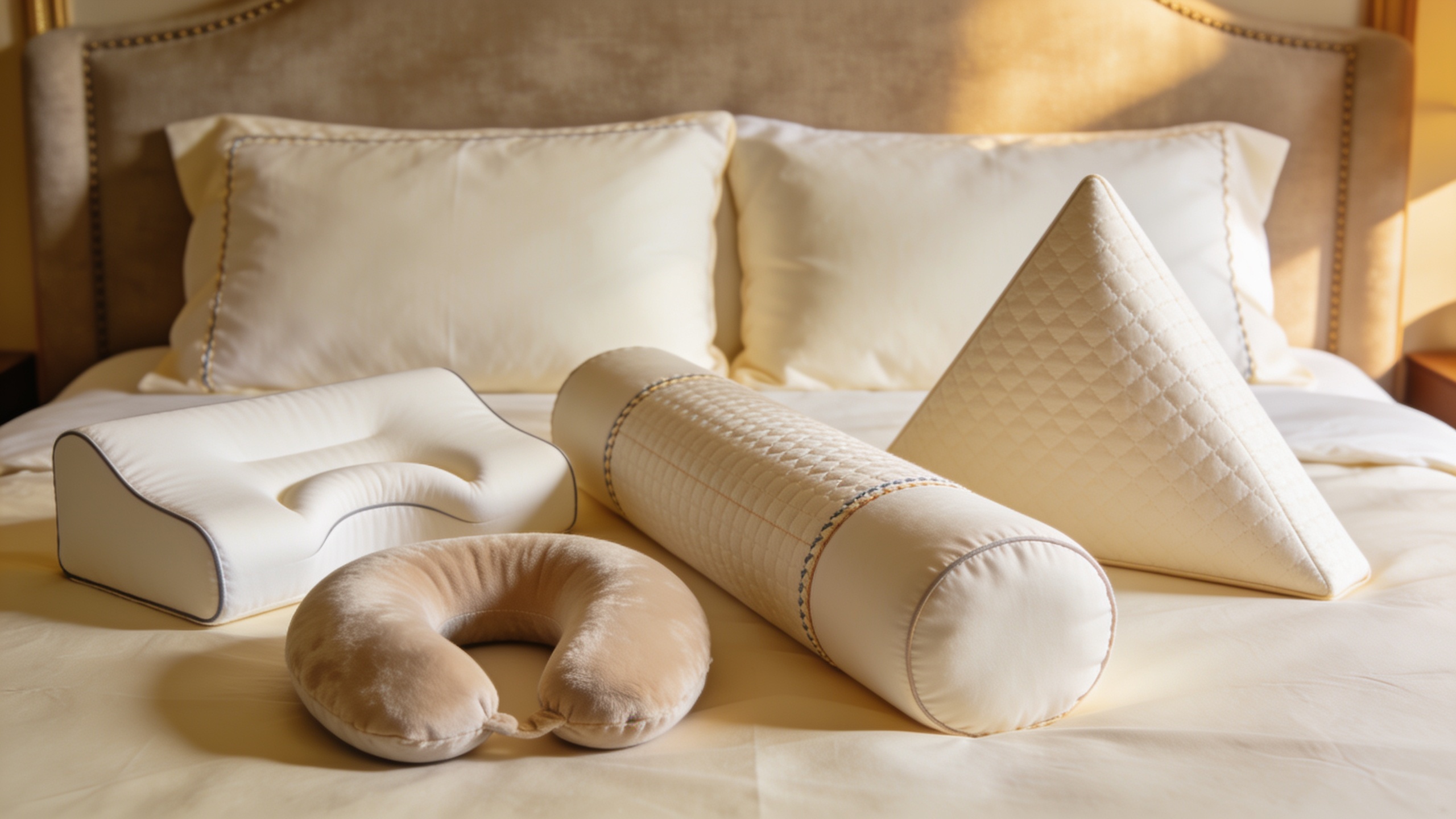
Pillows are categorized by their construction and intended use, not just their fill material. Understanding these categories helps you navigate the overwhelming pillow market and find exactly what you need. This guide covers the seven main pillow types, their designs, ideal users, and key considerations.
Standard Bed Pillows
These are the rectangular pillows that go under your head on a bed. They come in four sizes: standard (20 × 26 inches), super standard (20 × 28 inches), queen (20 × 30 inches), and king (20 × 36 inches). The size you choose depends on bed size and personal preference: larger pillows provide more surface area but require larger cases.
Within this category, construction varies widely: solid foam, shredded foam, down, down alternative, latex, and polyester. Standard bed pillows are the most versatile and commonly used type, suitable for all sleep positions depending on loft and firmness.
Contour and Cervical Pillows
Contour pillows have a curved design with a depression for the head and raised edges for neck support. They maintain the cervical spine's natural lordotic curve, preventing the neck from bending forward or backward during sleep. The Tempur-Pedic TEMPUR-Neck is the most famous example.
These pillows are clinically recommended for people with neck pain, herniated discs, pinched nerves, and cervical arthritis. They typically come in multiple sizes to match shoulder width. The firm feel takes 3–5 nights to adapt to but provides unmatched structural support.
Wedge Pillows
Wedge pillows are triangular cushions that elevate the head and torso. They're primarily used for medical conditions: acid reflux, sleep apnea, snoring, and post-surgical recovery. The elevation uses gravity to keep stomach contents down or airways open.
Heights range from 7 to 12 inches. Lower wedges (7 inches) suit mild reflux; higher wedges (10–12 inches) are needed for severe GERD or hiatal hernia. Wedge pillows can also be placed under the knees to reduce back pain or under the legs to improve circulation.
Body Pillows
Body pillows are oversized cushions (typically 20 × 54 inches) designed to support the entire body. They're popular during pregnancy, for side sleepers who need hip and knee support, and for people with chronic pain who benefit from full-body positioning.
Shapes vary: straight (rectangular), C-shaped, U-shaped, and J-shaped. Pregnant women often prefer C or U shapes that wrap around the body. Side sleepers benefit from straight body pillows placed between the knees. The fill is typically polyester, shredded foam, or down alternative.
Travel and Neck Pillows
Travel pillows are designed for upright sleeping in cars, planes, and trains. The most common design is the U-shape that wraps around the neck, preventing the head from falling forward. Memory foam versions provide the best support, while inflatable versions offer compact portability.
Some travel pillows use innovative designs: the Trtl Pillow uses a plastic internal frame for structured support, while the OstrichPillow creates a micro-environment for the entire head. For frequent travelers, a quality neck pillow is essential for arriving rested.
Decorative and Throw Pillows
Decorative pillows are for aesthetics, not sleep. They come in various shapes (square, lumbar, bolster) and are typically filled with polyester or down. While they shouldn't be used for sleeping, they add comfort and style to beds and couches.
Lumbar pillows provide lower back support when sitting up in bed reading. Bolster pillows (cylindrical) can be used under the knees or neck for targeted support, though dedicated orthopedic pillows usually perform better.
Specialty Medical Pillows
This category includes pillows designed for specific medical conditions:
- CPAP pillows: Feature cutouts for mask and hose accommodation
- Anti-snore pillows: Encourage side sleeping or elevate the head to open airways
- Cooling pillows: Use gel, phase-change materials, or ventilation to reduce heat
- Acupressure pillows: Covered in plastic spikes that stimulate pressure points
- Positional therapy pillows: Prevent back-sleeping for apnea patients
How to Choose the Right Pillow Type
| Type | Best For | Key Feature |
|---|---|---|
| Standard Bed Pillow | General sleep | Versatile, multiple fills |
| Contour/Cervical | Neck pain | Ergonomic curve support |
| Wedge | Reflux, apnea | Torso elevation |
| Body Pillow | Pregnancy, side sleepers | Full-body support |
| Travel Pillow | Upright sleeping | Neck support |
Pillow Size Guide
Standard pillows (20 × 26 inches) fit most sleepers and are the most economical choice. Queen pillows (20 × 30 inches) provide extra surface area for combination sleepers who change positions. King pillows (20 × 36 inches) suit wide-shouldered individuals and those who move significantly during sleep. Euro squares (26 × 26 inches) are primarily decorative but can serve as backrests when sitting up in bed. Body pillows (20 × 54 inches or longer) support the entire body during side sleeping or pregnancy. When choosing, consider both your bed size (king pillows look proportional on king beds but overwhelming on twins) and your sleeping habits.
When to Replace Each Pillow Type
Standard bed pillows should be replaced every 1–3 years depending on fill quality. Contour pillows last 2–3 years before foam degradation reduces support. Wedge pillows, typically made of dense foam, can last 5–7 years. Body pillows should be replaced when the fill clumps or loses loft, usually every 2–4 years. Travel pillows need replacement when the foam compresses permanently, typically after 1–2 years of regular use. Signs it's time: visible stains or odors, persistent neck pain upon waking, flat spots that don't recover, or increased allergy symptoms.
FAQ
What is the best pillow type for side sleepers?
Side sleepers benefit most from firm, high-loft standard pillows or body pillows for knee support. Contour pillows with adequate height also work well.
Can I use a wedge pillow for back pain?
Yes, placed under the knees, a wedge pillow reduces lumbar strain by flexing the hips. Elevating the head and torso can also reduce back pressure for some sleepers.
Are body pillows only for pregnancy?
No. While popular during pregnancy, body pillows benefit anyone who side-sleeps, has chronic pain, or simply enjoys the comfort of full-body support.
What's the difference between a contour and cervical pillow?
The terms are often used interchangeably. Both refer to ergonomically shaped pillows with a depression for the head and raised edges for neck support.
How do I know which pillow type is right for me?
Start with your primary sleep position and any medical conditions. Side sleepers need firm support; back sleepers need contouring; stomach sleepers need soft, thin pillows. Medical conditions like reflux or apnea may require wedge or positional pillows.