
 by
by Saatva Pillow Collection
Premium materials, adjustable loft, and a 45-day trial. The best pillow lineup for Drying in 2026.
Shop Saatva Pillows →
Learn more in our comprehensive guide to How to Wash Pillows: Step-by-Step Guide for Every Pillow Type.
Why Proper Drying Matters
A damp pillow is a breeding ground for mold, mildew, and dust mites, organisms that thrive in moist environments and trigger allergies, respiratory issues, and skin irritation. Memory foam that retains moisture degrades faster as water breaks down the cellular structure. Down that isn't dried thoroughly clumps permanently and develops musty odors. Polyester that stays wet can grow mildew inside the fill where you can't see it.
Proper drying isn't just about convenience, it's essential for health and pillow longevity. The method varies significantly by fill type, and using the wrong technique can ruin an expensive pillow.
How to Dry Different Pillow Types
Down and Feather Pillows
Down pillows can be machine dried, but they require patience and technique. The dense structure of down clusters traps moisture deep inside, making them deceptively difficult to dry completely. Use low heat, high temperatures damage the natural oils that keep down resilient and can scorch the cover.
Add two clean tennis balls or wool dryer balls to the dryer. The balls bounce around, breaking up clumps of wet down and allowing hot air to circulate. Expect 2-3 dryer cycles on low heat to dry completely. The pillow must feel completely dry to the touch with no clumping, damp down inside the pillow will mold.
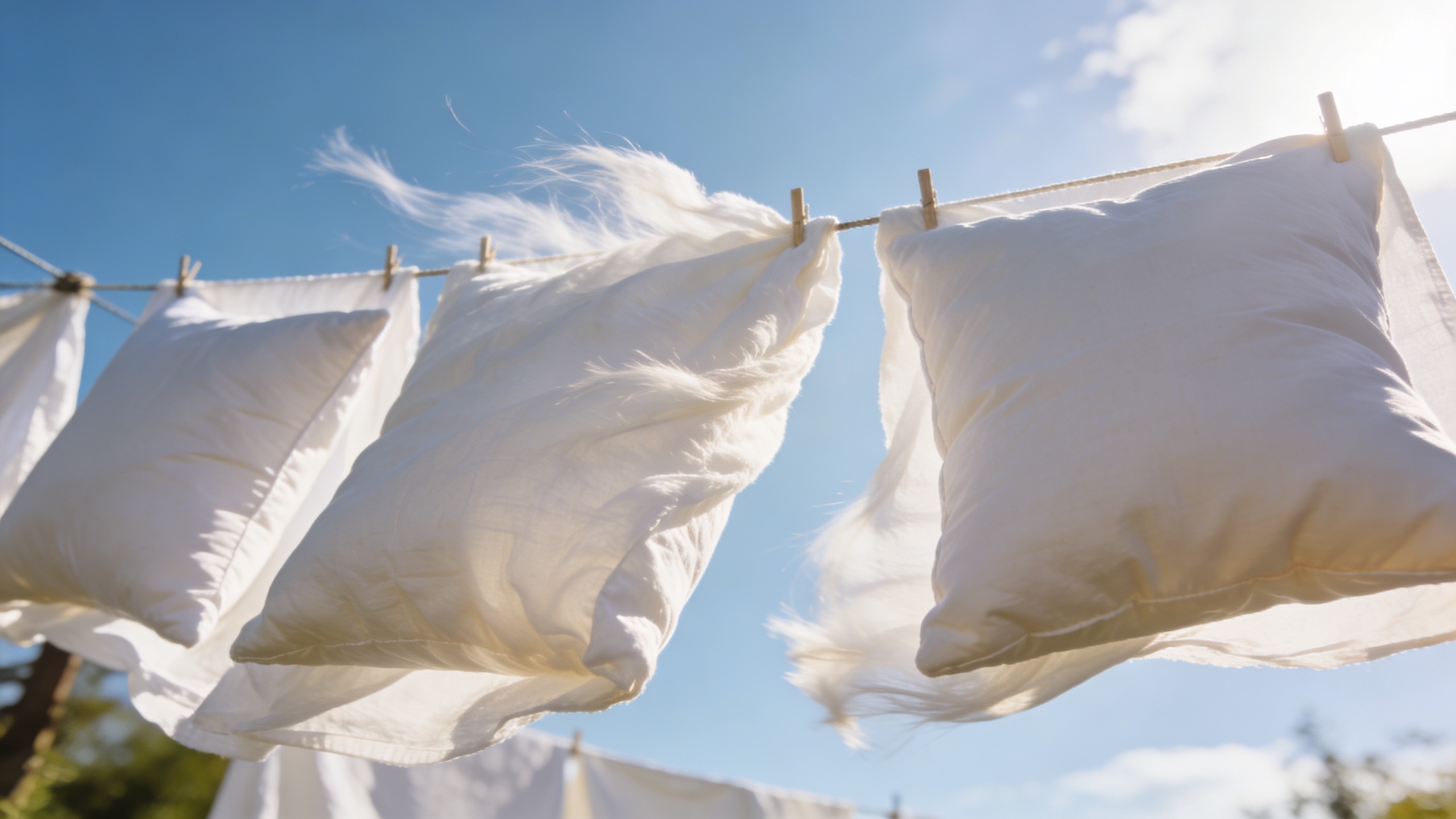
Between dryer cycles, remove the pillow and fluff it manually by shaking and kneading. This redistributes damp clumps and exposes wet areas to air. If weather permits, finish drying in direct sunlight, UV light kills bacteria and the fresh air eliminates odors.
Polyester and Down-Alternative Pillows
These are the easiest pillows to dry. Polyester doesn't absorb much water and dries quickly. Use medium heat with dryer balls for 45-60 minutes. The pillow should feel light and fluffy when completely dry, if it feels heavy or dense, it still contains moisture.
Because polyester is inexpensive, some people simply replace heavily soiled polyester pillows rather than washing and drying them. However, proper drying extends their short lifespan and maintains hygiene.
Memory Foam Pillows, Do NOT Machine Dry
Never put solid memory foam in a dryer. The heat degrades the foam's cellular structure, and tumbling can tear the material. Memory foam absorbs water like a sponge and releases it slowly.
To dry memory foam: gently press with a clean towel to remove surface moisture, then place the foam on a dry towel in a well-ventilated area. A fan speeds drying significantly. Expect 24-48 hours for complete drying. Flip the foam every few hours to expose both sides. Never use heat, hair dryers, radiators, and direct sunlight can warp and damage the foam.
Latex Pillows, Air Dry Only
Latex can be hand-washed but must air dry. Like memory foam, latex is damaged by heat and tumbling. After washing, gently squeeze (don't wring) to remove water, then lay flat on a towel in a ventilated area. A fan accelerates drying. Latex dries faster than memory foam, typically 12-24 hours, because it's less absorbent.
Buckwheat Pillows, Hull Separation Required
Never wash buckwheat hulls, they absorb water and will mold before drying. If the case needs washing, empty the hulls into a large bowl or container, wash and dry the case completely, then refill.
If hulls get wet (spill, humidity), spread them on a baking sheet in sunlight or under a fan. They dry relatively quickly due to their hard, non-porous surface. Replace hulls that show any darkening or odor.
Drying Speed Comparison
| Pillow Type | Drying Method | Time Required |
|---|---|---|
| Down/Feather | Low heat dryer + balls | 2-3 cycles (2-3 hours) |
| Polyester | Medium heat dryer | 45-60 minutes |
| Memory Foam | Air dry with fan | 24-48 hours |
| Latex | Air dry with fan | 12-24 hours |
| Buckwheat | Sun/air dry hulls separately | 4-8 hours |
Signs Your Pillow Is Still Damp Inside
Surface dryness is deceptive. The center of a thick pillow often retains moisture even when the exterior feels dry. Warning signs include: a cool sensation when you press into the center (dry fill feels uniformly warm), any clumping or dense spots in down or polyester, a musty odor that develops 24-48 hours after washing, and increased allergy symptoms upon waking. If you suspect residual moisture, return the pillow to the dryer for another cycle or place it in a sunny, ventilated area for several hours. A completely dry pillow feels light, fluffy, and uniformly warm throughout.
Tips for Faster Drying
- Use dryer balls: They separate fill and improve air circulation, cutting drying time by 30-40%
- Don't overload: Dry pillows individually or with only one other pillow. Overcrowding prevents proper tumbling
- Check between cycles: Feel the center of the pillow. If it's still damp, continue drying
- Use a moisture sensor: Modern dryers with moisture sensors prevent over-drying and energy waste
- Sun finish: Even after machine drying, 30 minutes in direct sunlight eliminates residual moisture and odors
FAQ
Can I put a pillow in the dryer?
Down, feather, and polyester pillows can be machine dried. Memory foam, latex, and buckwheat must air dry. Always check the care label.
How do I know if my pillow is completely dry?
Press into the center, it should feel uniformly warm and light. Any cool, heavy, or clumpy spots indicate remaining moisture. When in doubt, dry longer.
What happens if a pillow isn't dried properly?
Mold and mildew grow within 24-48 hours in damp conditions. You'll notice musty odors, dark spots, or increased allergy symptoms. A moldy pillow must be discarded.
Can I dry pillows in the sun?
Sun drying works well for down, polyester, and buckwheat cases. Avoid direct sunlight for memory foam and latex, UV and heat damage these materials.
Why does my pillow smell after washing?
Persistent odors after washing indicate incomplete drying or detergent residue. Rewash with less detergent and dry more thoroughly, or use a vinegar rinse to neutralize odors.
Sur le même sujet / Pour en savoir plus :
- How to Wash a Pillow: Complete Guide by Material Type 2026
- How to Wash a Pillow: Complete Guide by Type (2026)
- Can Memory Foam Pillows Be Washed? The Complete Care Guide 2026
- Can You Put Pillows in the Dryer? Safe Drying Guide by Fill Type
- How Often Should You Replace Your Pillow? Lifespan Guide 2026
- Why Does My Pillow Turn Yellow? Causes, Fixes & When to Replace (2026)
- Why Do Pillows Turn Yellow? Causes, Prevention & Cleaning Guide
- Pillow Storage Ideas 2026: How to Store Pillows Without Mold or Flattening