
 by
by 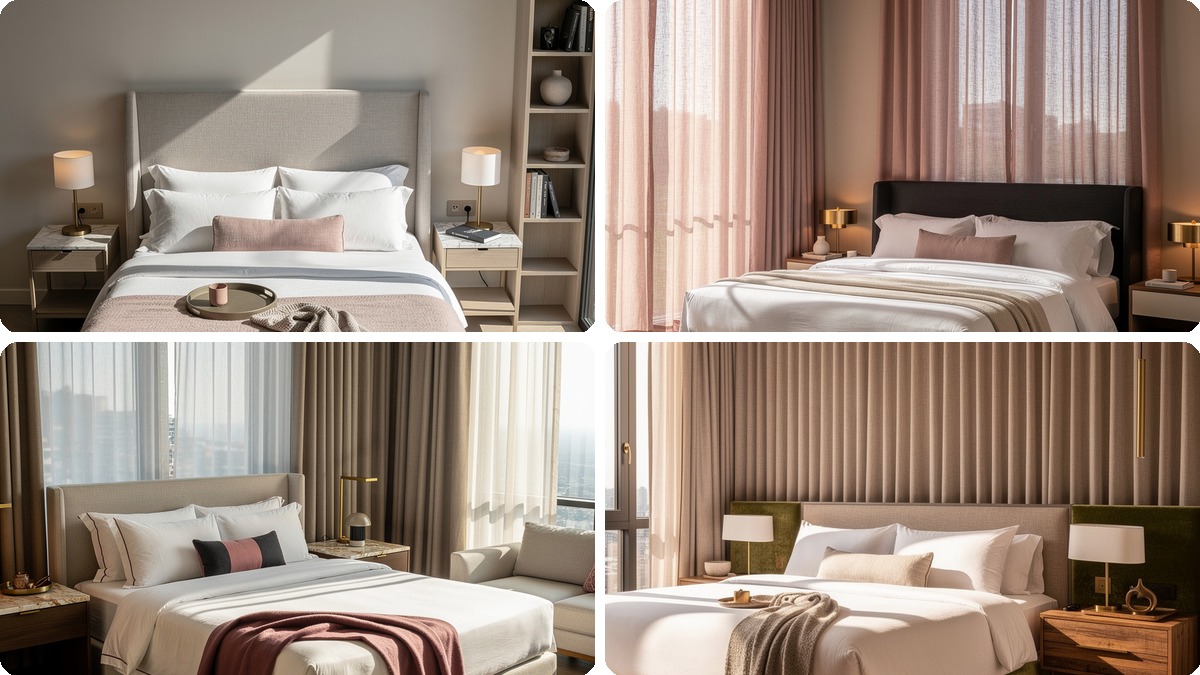
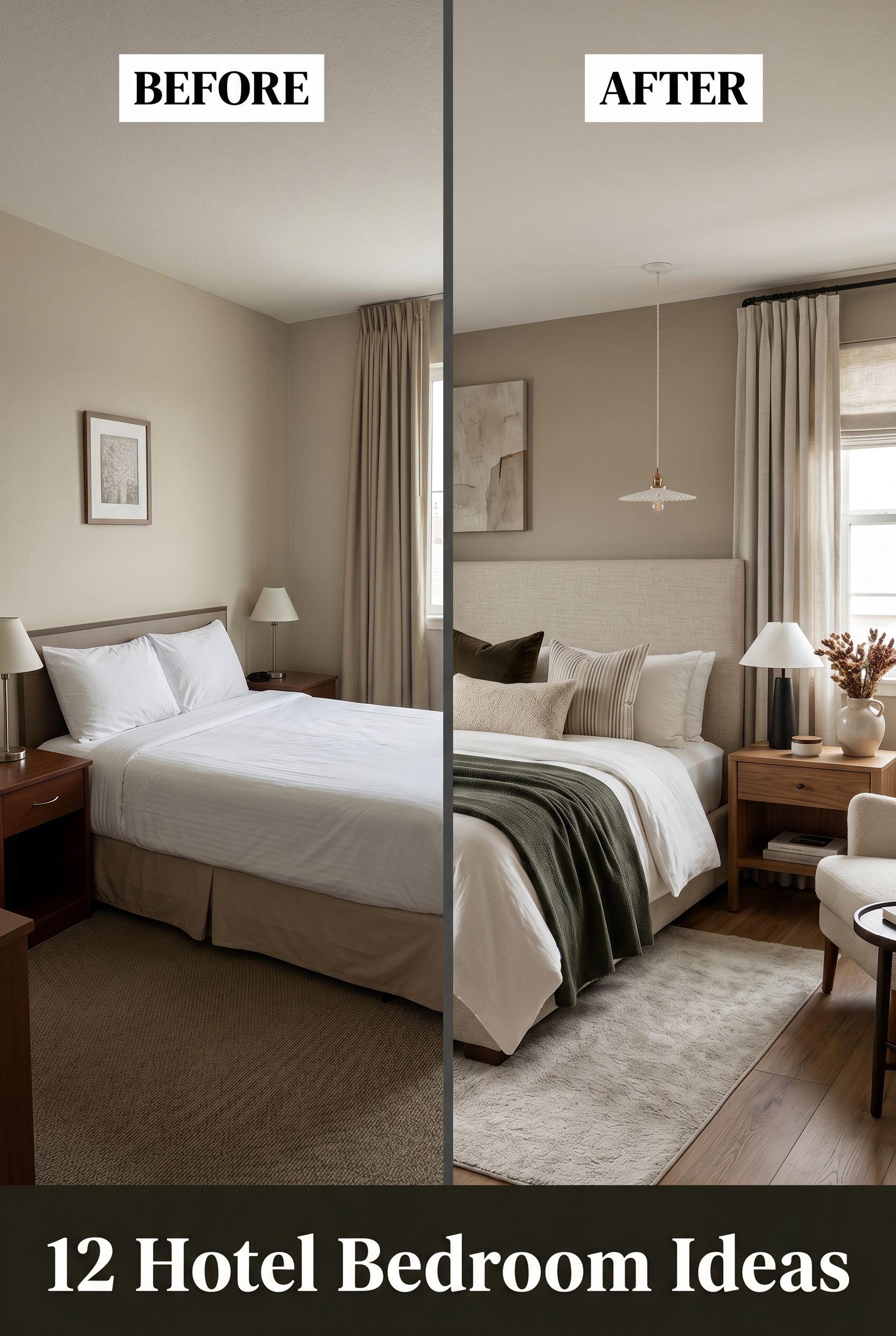
Hotel rooms get it right in ways your own bedroom never quite does. You walk in, drop the bag, and exhale. Something in the room tells your nervous system to stop. It's not the thread count, or not only that. It's the discipline: less clutter, more texture, light so warm it looks like candlelight, and a silence the eye can rest in. These 12 ideas pull that calm straight into your bedroom, no contractor, no demo, no renovation. If you're working with a smaller footprint, our small bedroom layout guide pairs well here.
Is a hotel bedroom worth recreating at home?
Yes, and the irony is that the hotel effect often costs less than whatever you're doing now. You're removing things as often as you're adding them.
The wins come from warm light, edited surfaces, and one or two weighted textures, none of which require a big spend. We've seen rooms flip from chaotic to genuinely calm for under $400.
The sequence matters.
Start with light and bed, not accessories. More on that sequence in our budget bedroom refresh guide.
Where most of the budget actually goes
The bedding layering system is where costs add up fast if you're not careful. Quality down-alternative duvet inserts, a decent Belgian linen duvet cover, and real cotton percale sheets together can run $300 to $600 if you buy everything at once.
The cheaper path: replace one layer at a time, starting with the duvet insert, which is the one piece most people underinvest in. A flat, lifeless duvet is what makes a bed look sad, not the cover on top of it.
The five-star upgrade that costs almost nothing
Light temperature. Swap every bulb in the room to a 2700K warm-white LED and the bedroom transforms before you touch another thing.
Most people are sleeping under 4000K daylight bulbs that make the room look like a break room. That single swap costs maybe twelve dollars and forty minutes.
Real talk: it does more than a new headboard, more than a throw pillow refresh, more than almost any other single change you can make in this room.
- Pull Every Lamp Down to Bed Height
- Make the Bed in Three Distinct Layers
- Strip the Nightstand to Three Objects
- Hang Curtains High and Wide, Not Frame-Width
- Choose One Dominant Neutral and Stay There
- Add a Bouclé or Upholstered Bench at the Foot
- Put a Single Large-Format Piece of Art Above the Bed
- Swap Every Metal Finish to Brushed Brass or Matte Black
- Add Texture to the Walls Without Painting
- Reduce Visible Storage to Near Zero
- Add a Low Scent That Reads as Clean
- Put a Soft Rug Where Your Feet Land First
1Pull Every Lamp Down to Bed Height
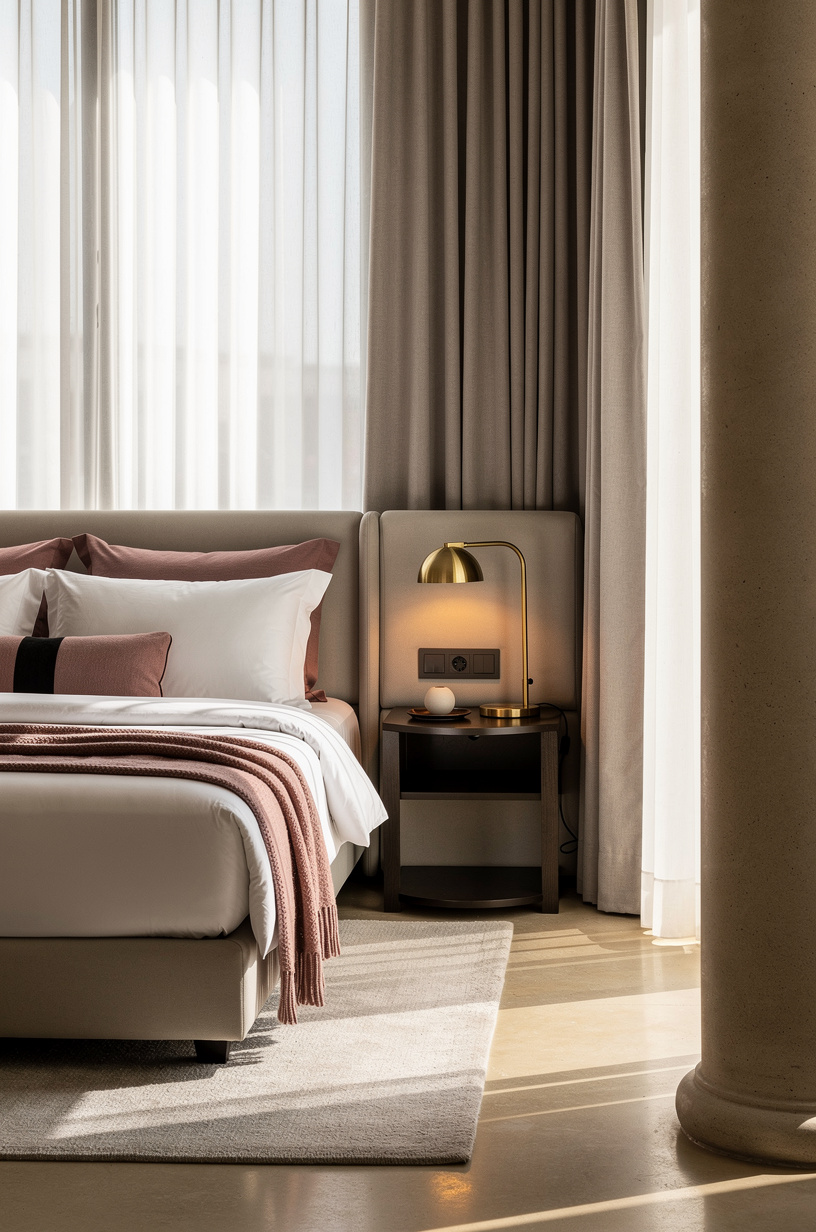
Hotels never use overhead light in the guest room after check-in. They know something most homeowners ignore: light at eye level or below reads as evening, and your brain reads evening as rest.
Get two warm-glow table lamps onto your nightstands. If your only outlet is on one side, add a cordless rechargeable lamp on the other.
The light should pool on the nightstand surface and not reach the ceiling. Low and warm.
Every time!
Great hotels double up on light sources so there's no dead corner, but none of those sources point down from overhead. Aim for that.
Even an inexpensive linen shade filters the bulb and softens the throw, which is most of the work.
Our bedroom lighting guide covers bulb temps and lamp placement in detail if you want the full breakdown.
2Make the Bed in Three Distinct Layers
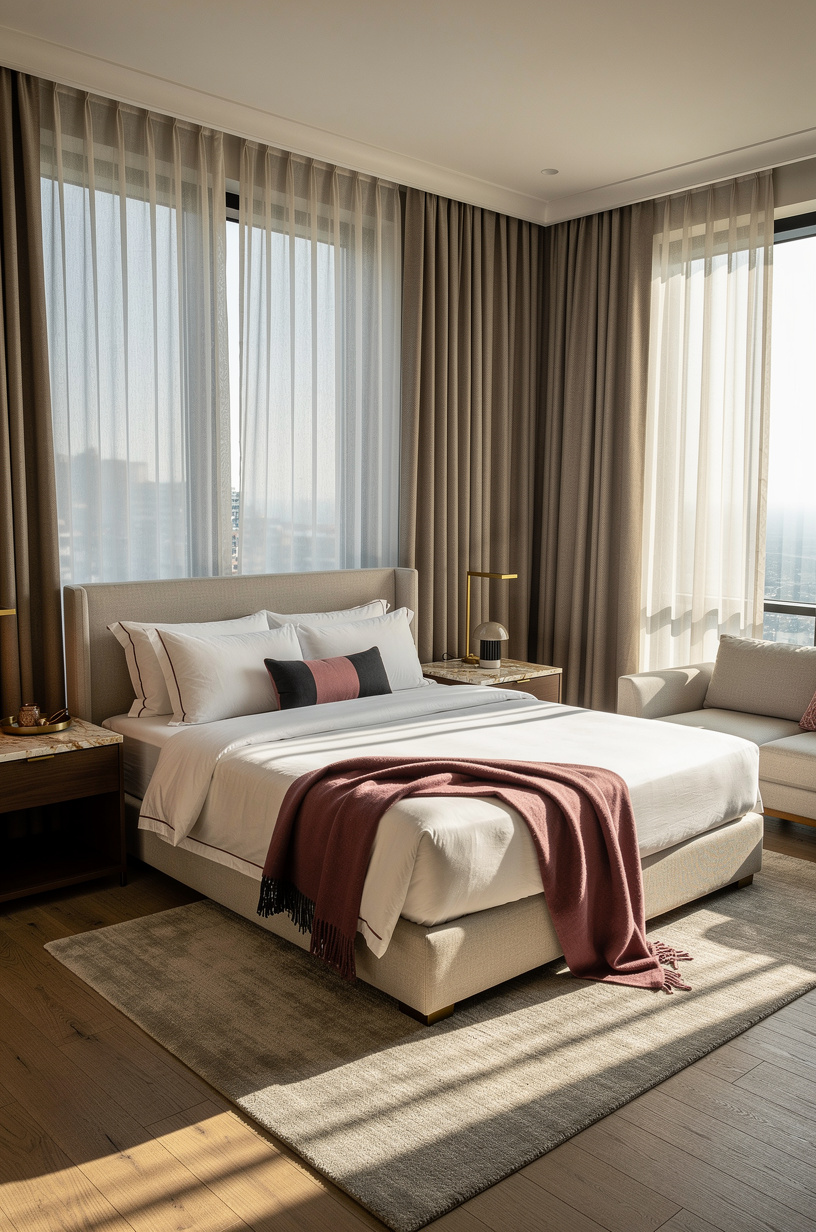
A bed that reads like a hotel bed has three separate layers you can see and feel.
A fitted cotton percale base sheet with some crispness to it.
A down-alternative duvet with real loft in a cover that falls straight.
A folded waffle-weave throw at the foot, not tossed, just folded.
That's it.
Your hand reads the contrast before your eye finishes.
The mistake most people make is buying a matching comforter set where everything is the same fabric and the same weight.
It looks flat because it is flat.
You don't need expensive brands to get there.
The discipline of three different textures does the work. For a deeper look at layering, our how to layer a bed guide walks through the exact folds hotels use.
3Strip the Nightstand to Three Objects
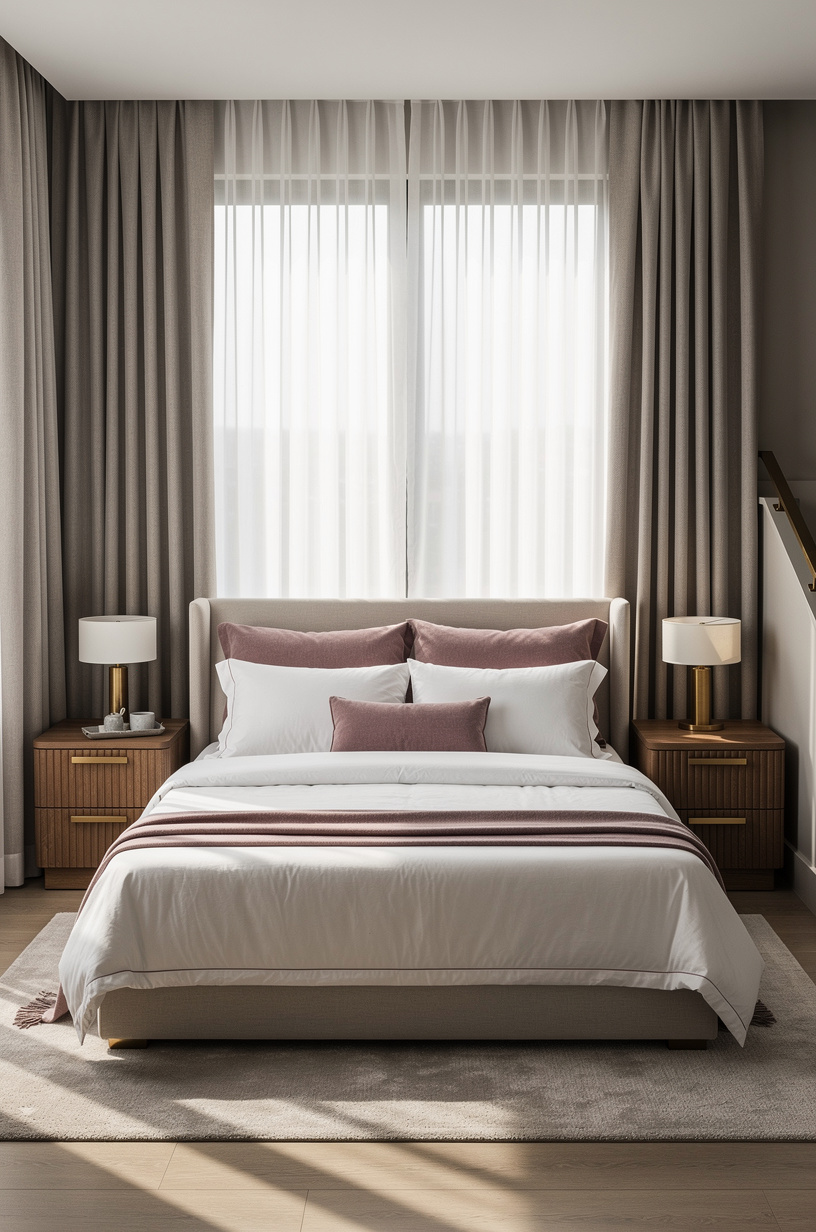
Hotel nightstands look calm because they're edited, not because they're expensive.
The formula is almost always the same: one warm lamp, one small object with weight (a ceramic, a smooth stone, a low succulent), and one item of function (a glass of water, a book). That's it.
Hide your charging cables behind the leg.
Move your hand lotion to a drawer.
Your eye reads three calm objects as intentional.
More than three and it starts reading as clutter, even if every individual thing is pretty.
This is genuinely the move I've seen work in every bedroom I've styled, and it costs nothing.
More on nightstand styling done right if you want the details.
4Hang Curtains High and Wide, Not Frame-Width
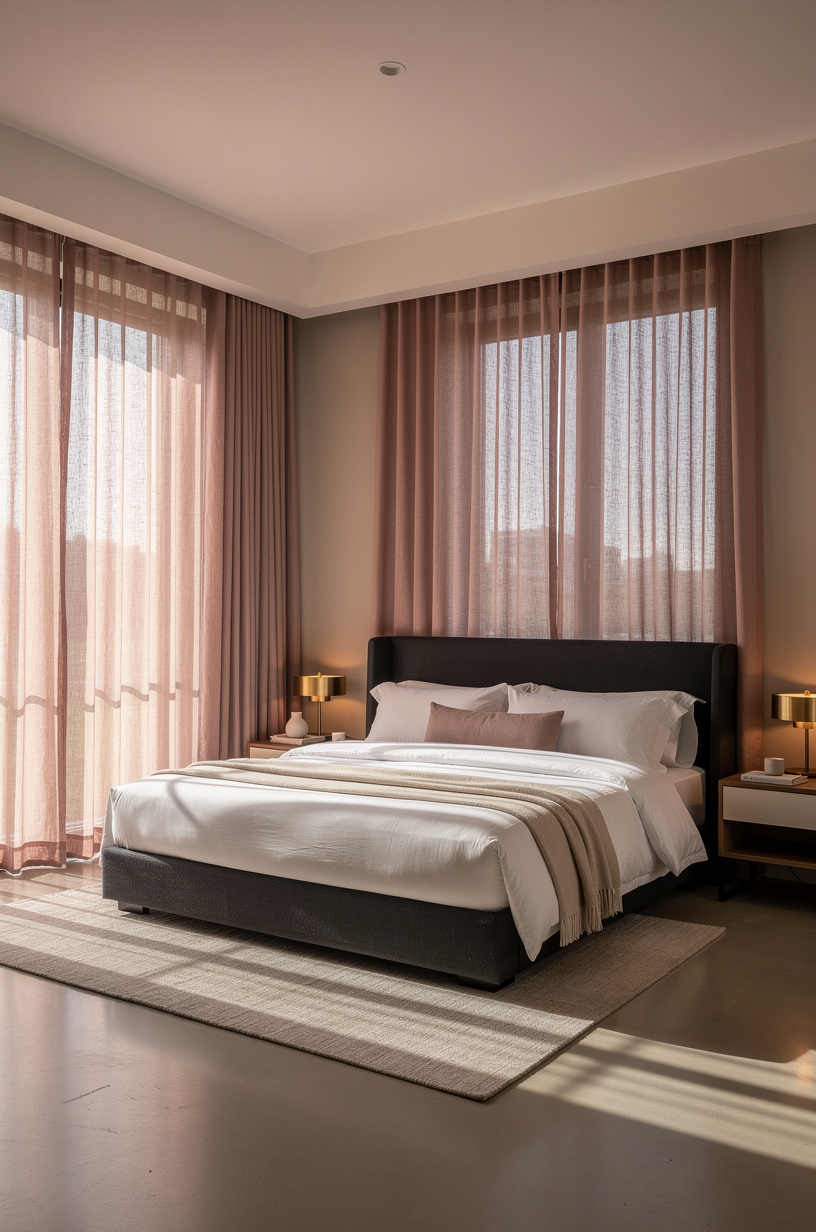
Most bedrooms hang curtains too low and too narrow, which makes the window look smaller than it actually is.
5Choose One Dominant Neutral and Stay There
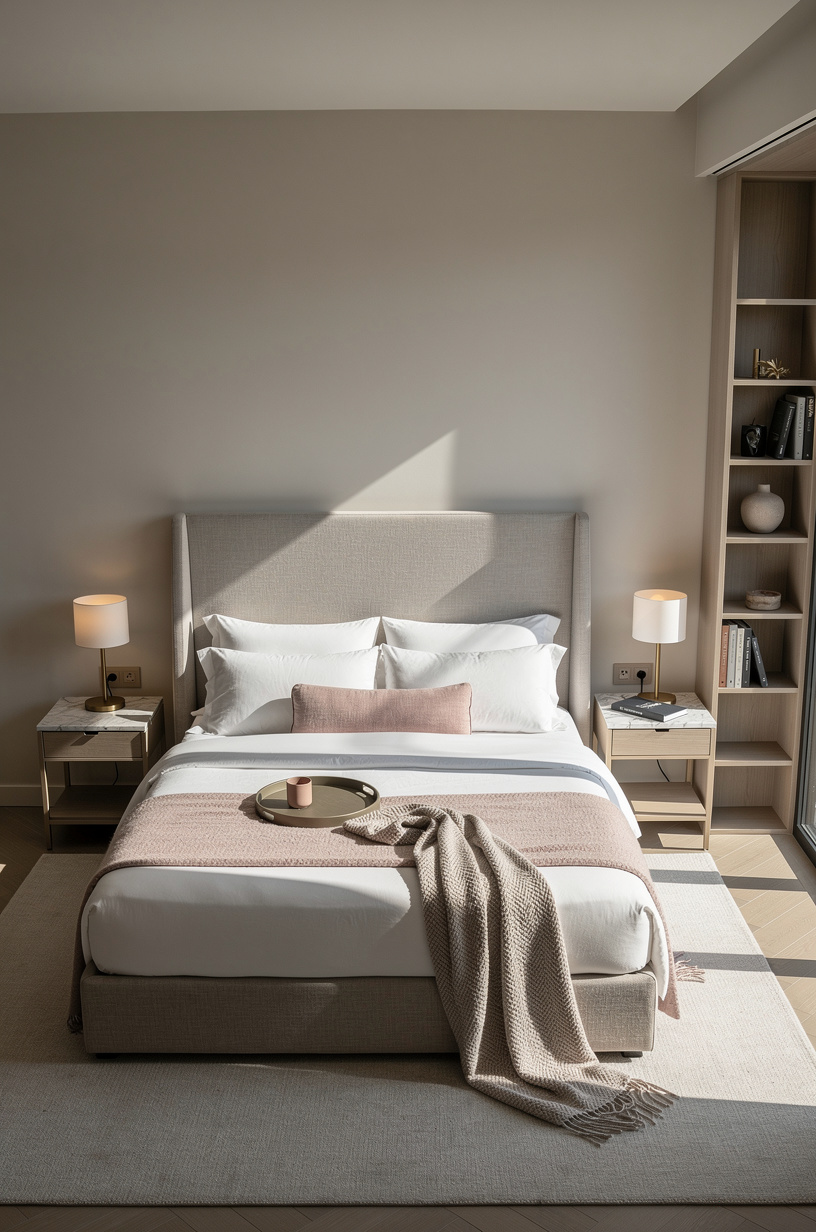
Hotel rooms feel visually calm and inviting because they commit.
One dominant neutral, usually a warm greige, a soft clay, or a stone white with warm undertones, and then everything within two or three values of it. No loud accent wall that fights the bedding.
No bright art that pulls the eye around the room instead of settling it.
Pick your dominant color and then filter every other decision through it.
Does this throw read within the family?
Does this lamp base stay in the same temperature?
The discipline of staying in one lane is what creates that exhale-on-entry feeling, and it's the part most renovations don't touch because it's not a physical change, it's an editorial one.
Check our calming bedroom paint colors list for warm neutrals that work here.
6Add a Bouclé or Upholstered Bench at the Foot
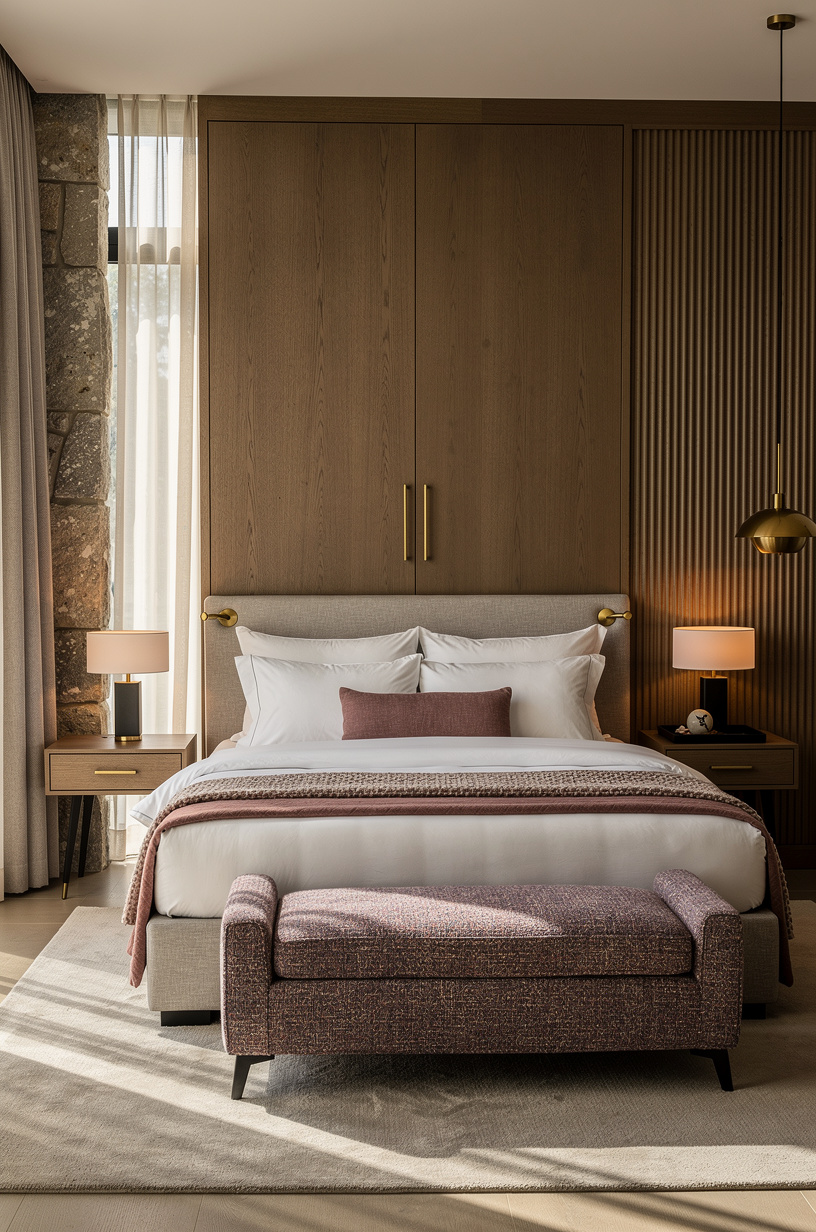
Hotels put a bench at the foot of the bed because it solves three problems simultaneously.
It gives you somewhere to drop a bag that isn't the floor.
It caps the bed so the eye has a landing place. And it adds a layer of texture that makes the whole setup look composed rather than just finished.
A bouclé bench in cream or warm oatmeal is the current sweet spot: textural, calm, reads expensive without being expensive. A slim upholstered bench in oatmeal linen works equally well and ages better than anything trendy.
The line it draws across the foot of the bed is the part that does the design work. Even a narrow one, thirty inches wide, changes the room completely.
Worth it, full stop!
7Put a Single Large-Format Piece of Art Above the Bed
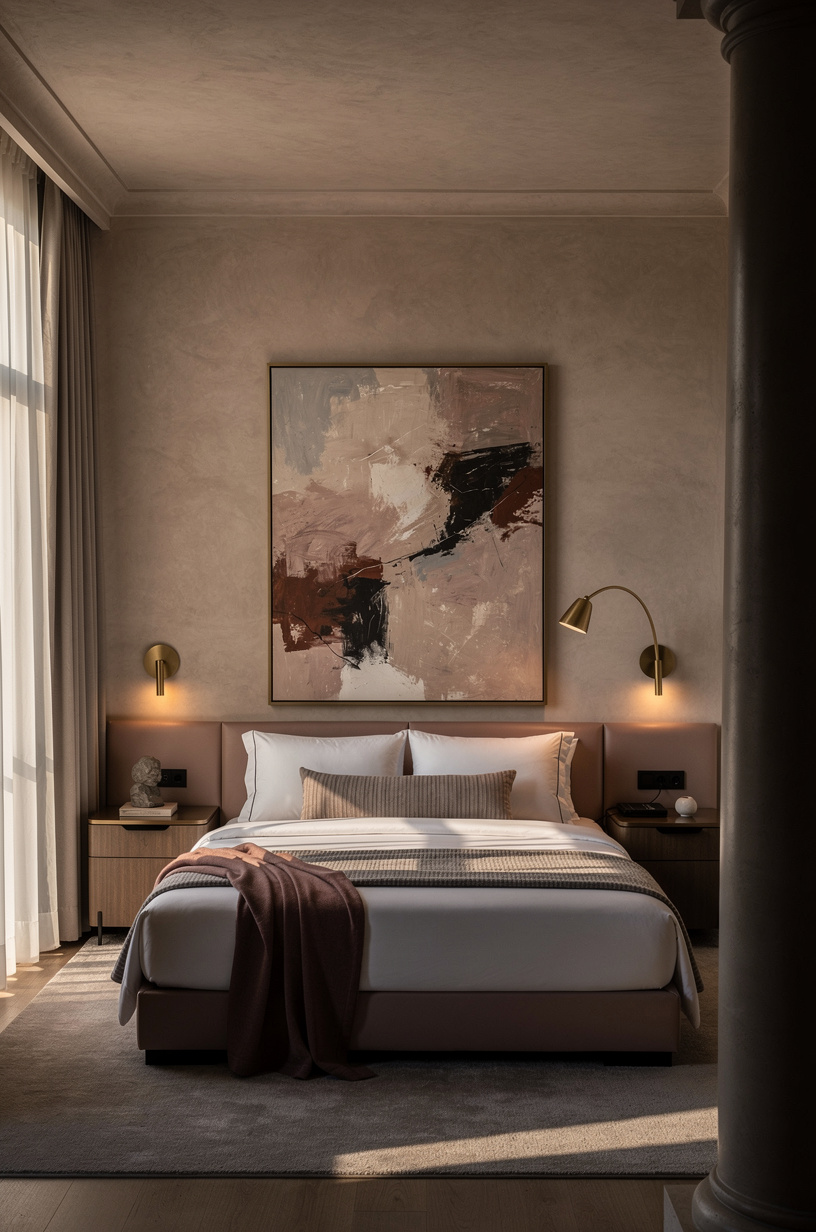
Small art above a bed always looks apologetic, like you weren't sure you were allowed to commit.
8Swap Every Metal Finish to Brushed Brass or Matte Black
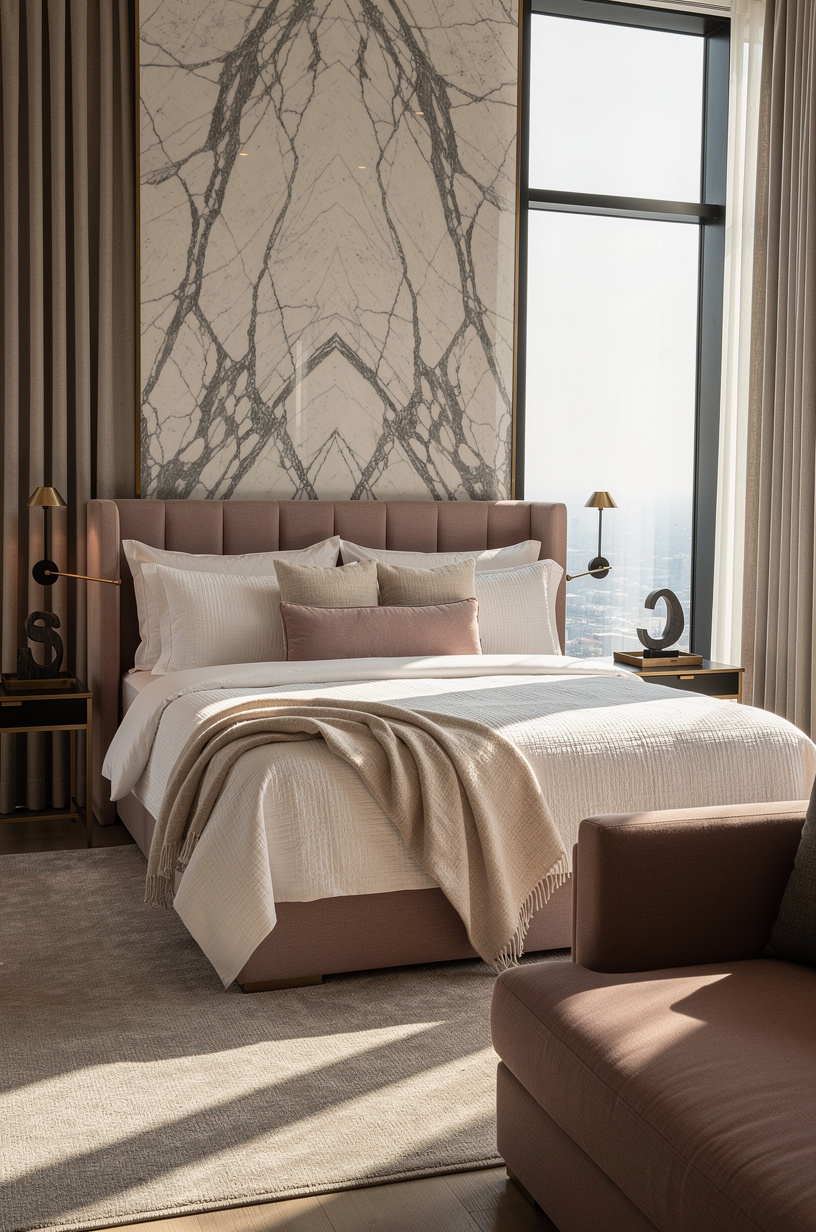
Chrome and polished nickel read cold.
Hotels that feel elevated have moved entirely to brushed brass, aged bronze, or matte black across every hardware touchpoint: lamp bases, drawer pulls, curtain rods, door handles. The warmth those finishes bring to a room is disproportionate to the cost of the change.
You don't have to swap everything at once.
Start with the lamp bases and the nightstand hardware.
A brushed brass lamp base with a linen shade is twelve minutes and under sixty dollars at most home stores, and it reads as a complete upgrade to the rest of the room.
Then the curtain hardware.
Then the drawer pulls if you're feeling it. Build toward one consistent metal family and the room will follow.
9Add Texture to the Walls Without Painting
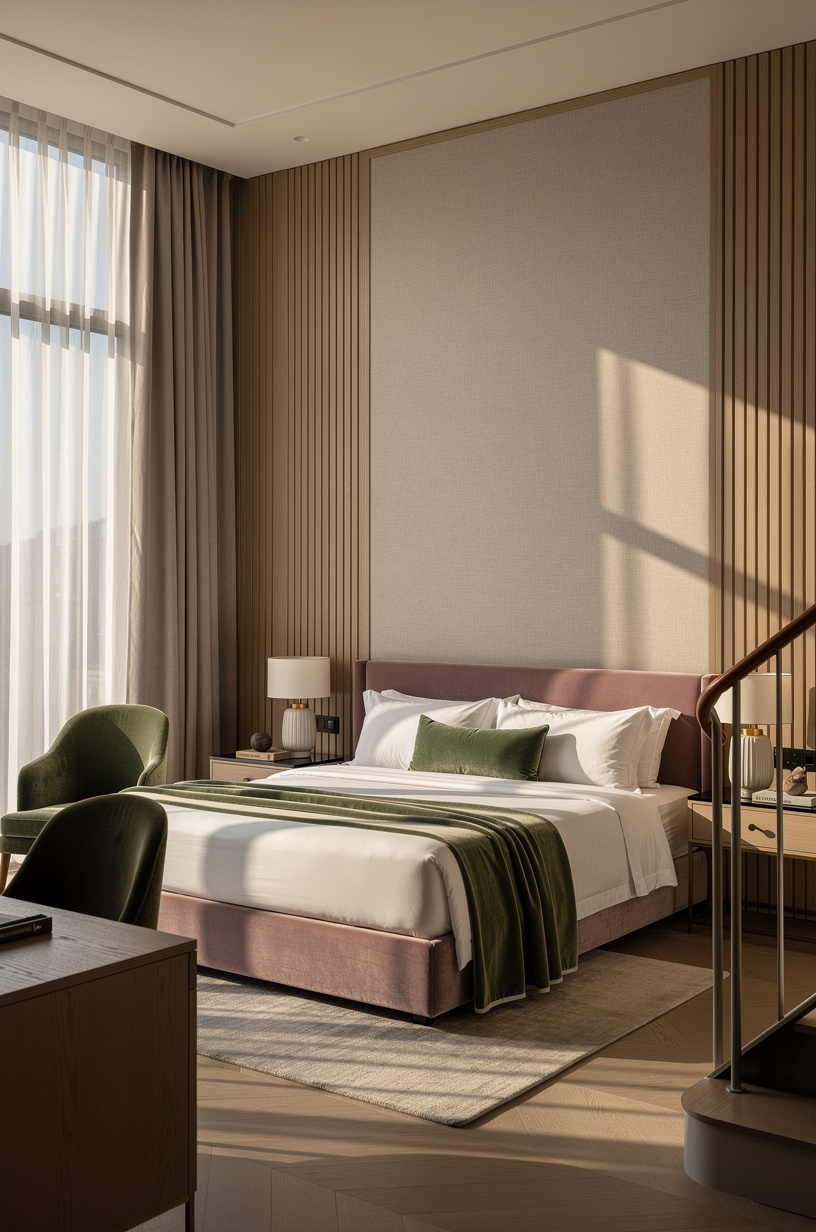
Paint is the obvious move, and it works. But grasscloth wallpaper, a limewash plaster finish, or even Roman shades in natural woven bamboo add texture to your vertical surfaces in a way flat paint can't.
Hotels use textured walls because they photograph beautifully and make your room feel handmade, like someone chose materials rather than just ordered a coat of paint.
Peel-and-stick grasscloth panels have gotten genuinely good in the last few years.
One accent wall behind the bed in a warm sisal texture or natural linen weave completely changes the room's feel, and you can take it down when you move. If you want the permanent version, our accent wall ideas guide covers limewash, Roman clay, and Venetian plaster in detail.
10Reduce Visible Storage to Near Zero
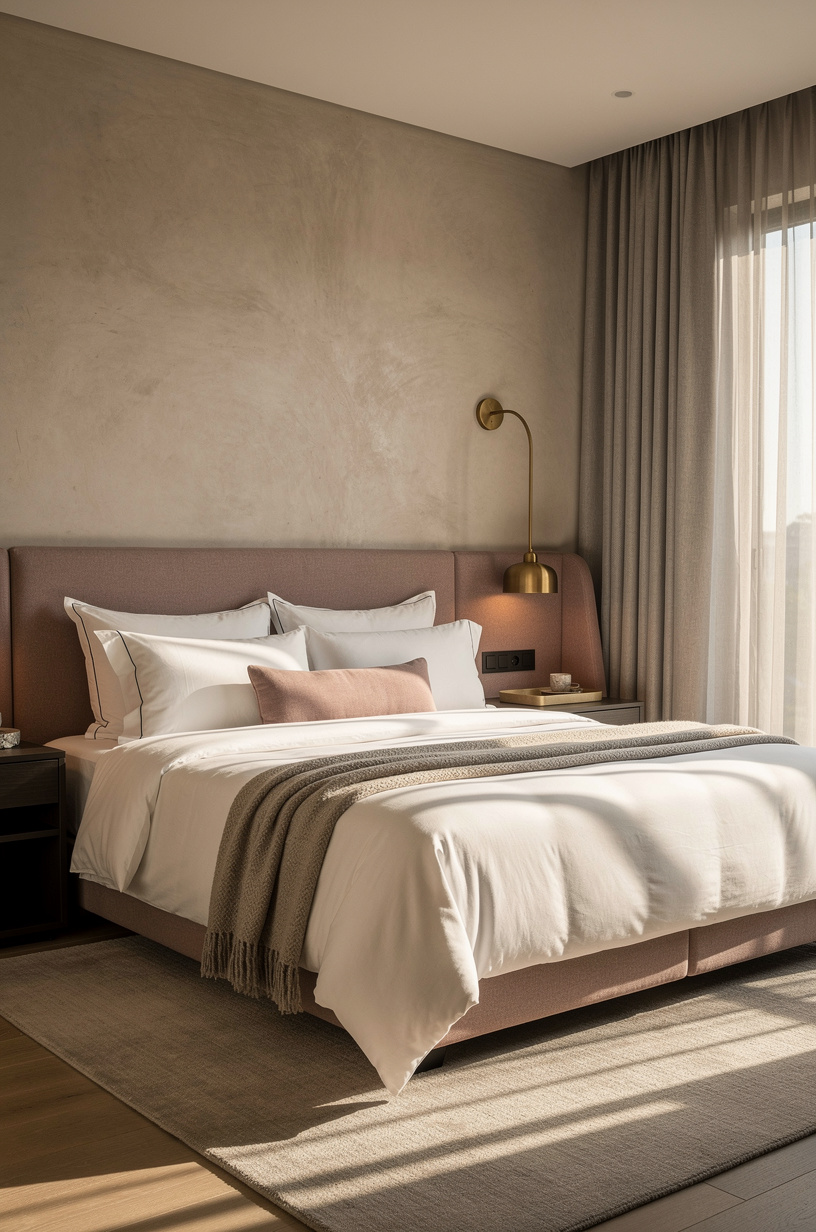
Hotel rooms feel calm partly because there's nowhere for stuff to pile up. Every surface is intentionally limited.
Most home bedrooms fail this because there are too many horizontal surfaces. A dresser top covered in items, an open shelving unit displaying everything you own, a bench stacked with throw pillows you've nowhere to put at night.
Edit your surfaces, not just the items on them. If a surface invites piling, either remove it or style it to a hard limit of three objects.
Your bedroom is genuinely the one room where less stuff isn't minimalism, it's function.
Your eye rests, you sleep better, and the space feels larger than its square footage. See our bedroom storage ideas for ways to hide what you need without losing the calm.
11Add a Low Scent That Reads as Clean
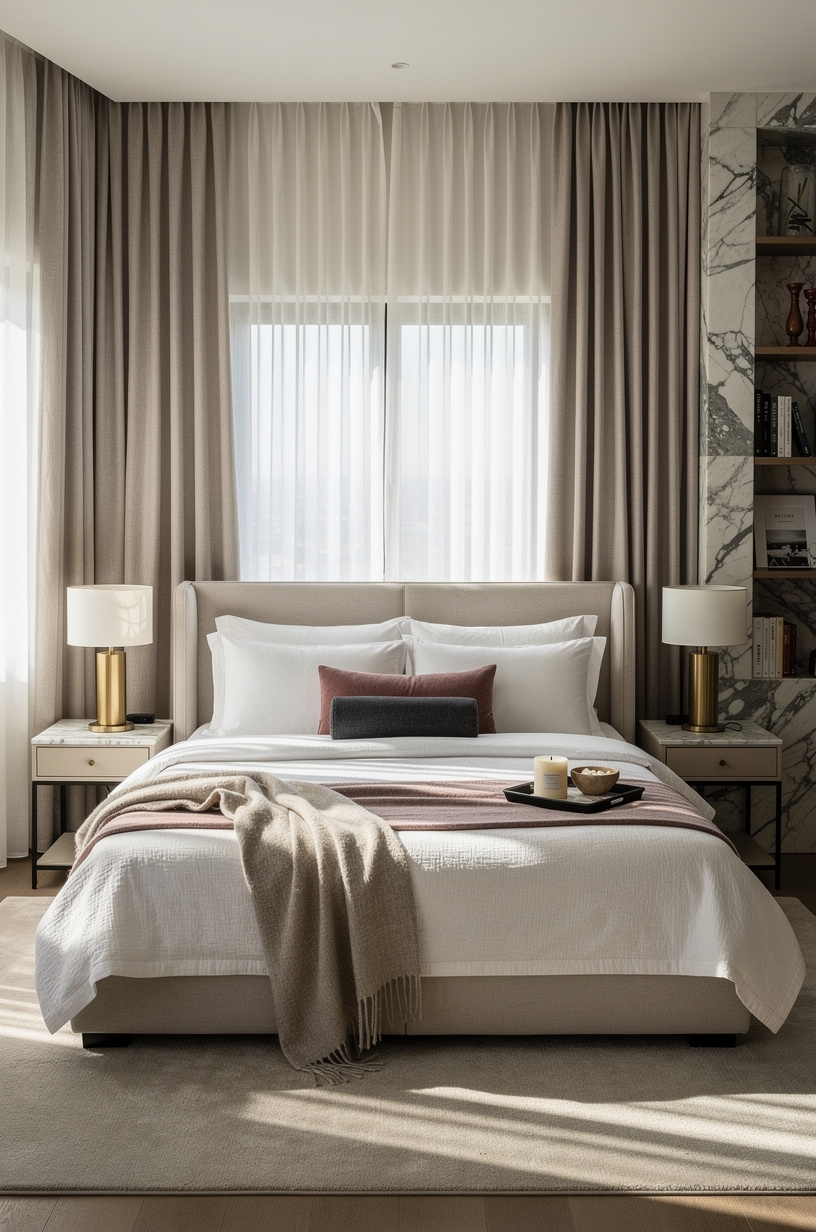
Scent is the detail that completes the hotel effect and that almost no one thinks about until they smell a good, serene hotel room and wonder what it is.
12Put a Soft Rug Where Your Feet Land First
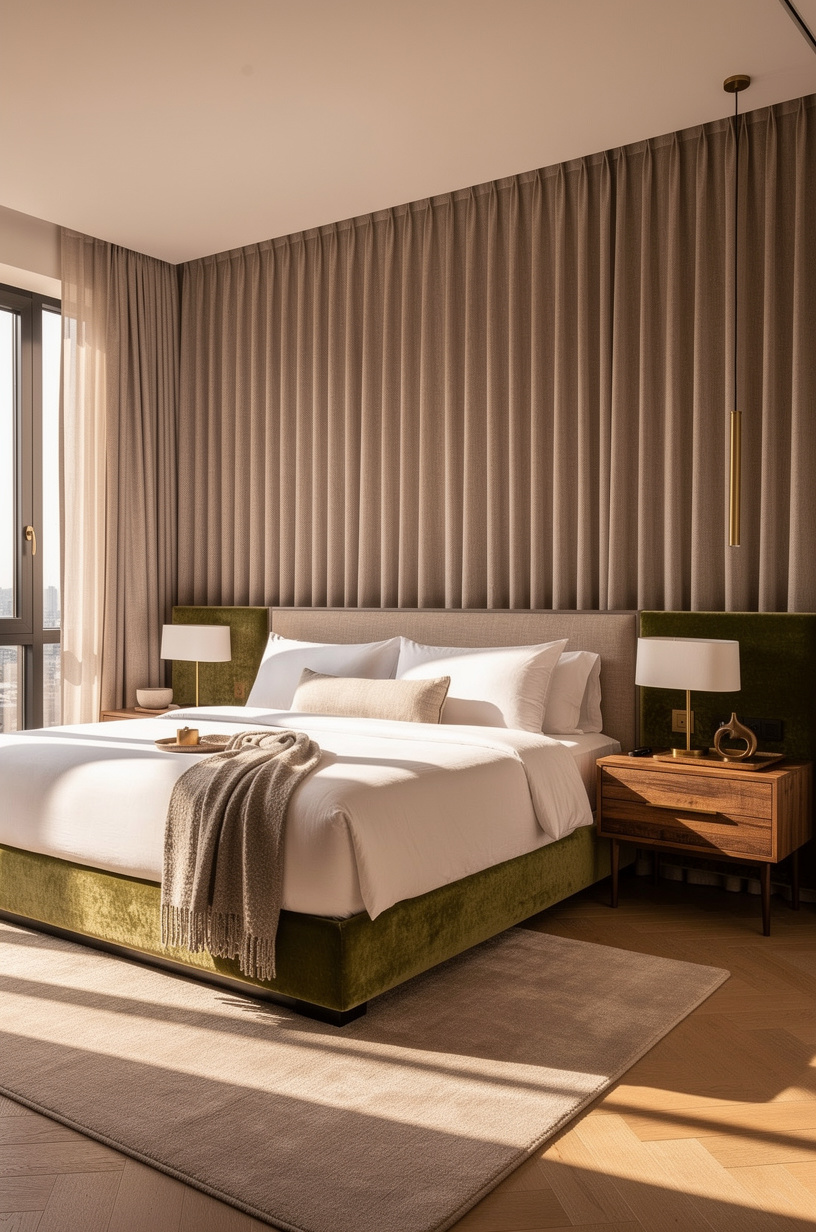
The first physical sensation of your morning comes from what your feet touch when you get out of bed. Hotels know this.
They put something soft right at your bedside, always.
A sheepskin, a bouclé runner, a chunky wool flatweave that extends two feet past the bed on both sides.
It's a small sensory investment with a surprisingly large morning impact.
The wool flatweave is the most practical: it cleans easily, ages well, doesn't shed, and works with almost any color palette. Go at least 8x10 if the room allows.
A rug too small for the bed is the single most common mistake I see in bedroom photos, and it's the easiest one to fix on a second purchase. Get the bigger one!
Why Hotels Get This Right and We Don't
I've styled a lot of bedrooms, and the single most honest thing I can tell you about why hotel rooms feel better than your own is this: hotels don't let sentiment interfere with the edit.
Your bedroom has the lamp your mother gave you that doesn't match anything.
It has the throw you bought in a different era when you thought you liked teal. It has the dresser that's too big for the room but "you can't get rid of it." Hotels start from function and work outward.
Every object earns its place by contributing to the specific atmosphere the room is meant to create. Nothing stays because it's always been there.
The other thing hotels do that we don't: they treat light temperature as a load-bearing decision, not an afterthought. I spent four years wondering why my bedroom looked wrong in photos and in person, and it was the bulbs.
I was running cool white LEDs at 5000K in a room I was trying to make feel like dusk. The moment I swapped to 2700K warm white across every fixture, the room finally looked like the room I'd been trying to make.
Honestly, the edit is harder than the shopping. Removing the lamp that doesn't work, putting the decorative throw in a basket instead of on the bed, deciding that the wall gets one large piece instead of six small ones.
These are decisions, not purchases.
And they're the ones that actually make the room feel like somewhere you'd pay to sleep.
If you're working through this room by room, our cozy home refresh checklist gives you the full sequence.
The discipline is the design.
That's the thing hotels have and most of us don't.
Frequently Asked Questions
How do I make my bedroom feel like a hotel without spending a lot? Start with the two free moves: strip the nightstands to three objects and swap the bulbs to 2700K warm white.
These cost nothing or almost nothing and change the room's feel faster than any purchase.
Add floor-length curtains hung high next.
Most people feel the shift in the first week.
What bedding do hotels really use? Most mid-to-high hotels use 300-400 thread count cotton percale sheets, a dense down-alternative duvet insert with high fill power, and a lightweight folded throw or blanket at the foot.
The white-on-white palette makes everything look clean and layered.
You can match this without spending hotel prices if you build the system one piece at a time.
What color makes a bedroom feel like a luxury hotel? Warm greige, soft stone white, and quiet clay are the three most common hotel neutrals.
All have warm undertones, none are stark.
They read calm rather than clinical.
Avoid cool grays and stark whites, which look sterile under bedroom lighting.
Pair with brushed brass or matte black hardware and the palette lands immediately.
Do I need blackout curtains for the hotel effect? They help enormously, but the placement matters more than the fabric.
Floor-to-ceiling blackout drapery hung high creates both the darkness and the sense of height and enclosure that good hotel rooms use.
A panel that barely covers the frame is worse than no curtain at all, regardless of how thick it is.
How do I get the hotel scent at home? Choose a single, clean base note: white cedar, linen, or cotton.
A reed diffuser in the corner of the room on low intensity, or a beeswax candle with cedarwood lit thirty minutes before bed.
Avoid anything too floral or synthetic.
The goal is a scent you notice when entering and stop noticing once you're settled, which means you've got it exactly right.
If I Had to Pick One Upgrade
If I had to pick one, I'd start with the bulbs.
Twelve dollars, forty minutes, and the room immediately reads warmer, calmer, and more intentional.
It's the change that makes every other change you make afterward look better than it would have.
Pin this list for your next weekend, and when you're ready to keep going, our bedroom refresh checklist maps the full sequence from light to layers to the final edit.