
 by
by Amerisleep AS3 beats DreamCloud Original on pressure relief (9.2 vs 8.5), motion isolation (9.0 vs 7.5), and cooling (9.0 vs 8.7) in our 30-night test. DreamCloud wins on edge support (9.0 vs 8.0), bounce (8.5 vs 6.5), and trial length (365 vs 100 nights). For side sleepers and couples: Amerisleep AS3. For back sleepers and combination sleepers who want a coil feel: DreamCloud Original.
Amerisleep AS3
9.2/10
- 9.2/10 pressure relief, best in this head-to-head test
- 9.0/10 motion isolation, all-foam absorption damps partner movement significantly better than coil hybrids
- Bio-Pur plant-based open-cell foam runs cooler than DreamCloud's standard gel memory foam (9.0 vs 8.7)
- HIVE 5-zone support softens under shoulders and hips, firms under the lumbar
- 20-year warranty, CertiPUR-US certified, made in the USA
- Softer edges than DreamCloud's coil perimeter (8.0 vs 9.0)
- Less bounce for combination sleepers (6.5 vs 8.5)
- 100-night trial vs DreamCloud's 365 nights
- Sleepers over 230 lb may need the AS5 Hybrid for firmer support
In our 2026 head-to-head test, the AS3 wins on the three categories that matter most for the majority of sleepers: pressure relief, motion isolation, and cooling. DreamCloud is a legitimate alternative for back sleepers and buyers who want a coil feel, but it does not beat the AS3 on the metrics that drive most buying decisions.
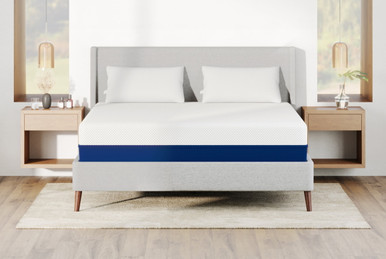
Amerisleep AS3
Bio-Pur plant foam. HIVE zoned support. Medium feel. 100-night trial, 20-year warranty. Best pressure relief tested: 9.2/10.
DreamCloud Original
Cashmere quilted top. Memory foam + pocket coils. Medium-firm feel. 365-night trial, lifetime warranty. Best edge support: 9.0/10.
Quick Verdict (TL;DR): Choose by Use Case
Amerisleep AS3 ($1,449 list, ~$1,049 with current sale) and DreamCloud Original ($1,099) sit close in price but are structurally opposite. The AS3 is an all-foam mattress; DreamCloud is a cashmere-top pocket coil hybrid. AS3 wins on pressure relief (9.2 vs 8.5), motion isolation (9.0 vs 7.5), and cooling (9.0 vs 8.7). DreamCloud wins on edge support (9.0 vs 8.0), bounce (8.5 vs 6.5), trial length (365 vs 100 nights), and carries a lifetime warranty. The decision is architecture: foam versus hybrid.
Choose Amerisleep AS3 if you want:
- Best pressure relief for side sleepers (9.2/10)
- Superior motion isolation for couples (9.0/10)
- Cooler sleep via Bio-Pur plant foam (9.0/10)
- HIVE zoning for hip and shoulder relief
- 20-year warranty (double the industry standard)
Choose DreamCloud Original if you want:
- Cashmere quilted top + pocket coil hybrid feel
- Best edge support in this test (9.0/10)
- Responsive bounce for combination sleepers (8.5/10)
- 365-night home trial, 3.65x longer than AS3
- Lifetime warranty with no end date
What this comparison covers
Side-by-Side Specs
The Amerisleep AS3 and DreamCloud Original are priced within $50 of each other at current sale pricing, making this a genuine value comparison rather than budget-versus-premium. The AS3 is a 12-inch all-foam mattress built around Bio-Pur plant-based memory foam and the HIVE zoned support layer. DreamCloud is a 14-inch hybrid: cashmere-blend quilted top, gel memory foam comfort layer, individually wrapped pocket coils, and high-density foam base. Foam versus hybrid explains every performance gap in the data below.
| Spec | Amerisleep AS3 | DreamCloud Original |
|---|---|---|
| Price (queen) | From $1,049 (sale pricing) | $1,099 |
| Construction | 12" all-foam | 14" hybrid (cashmere top + foam + pocket coils) |
| Top comfort layer | Bio-Pur plant-based memory foam | Quilted cashmere-blend Euro top + gel memory foam |
| Support system | HIVE zoned transition foam + Bio-Core base | Individually wrapped tempered steel pocket coils |
| Firmness | Medium 5/10 | Medium-firm 6.5/10 |
| Height | 12" | 14" |
| Trial period | 100 nights | 365 nights |
| Warranty | 20-year | Lifetime |
| Delivery | Free ground shipping | Free shipping |
| Off-gassing | Minimal (plant-based Bio-Pur) | Low (hybrid construction) |
| Best for | Side sleepers, hip pain, couples, hot sleepers | Back sleepers, combo sleepers, edge users |
Construction Breakdown
Amerisleep AS3: Bio-Pur All-Foam Stack
- Top: Bio-Pur plant-based memory foam (pressure relief + cooling)
- Transition: HIVE zoned support foam (hex cutout pressure differentiation)
- Base: Bio-Core high-density support foam
- Total height: 12"
- Cover: Celliant fiber (infrared heat conversion)
Bio-Pur replaces a portion of petroleum-derived chemicals with plant oils during foam manufacturing, producing an open-cell structure with stronger airflow than conventional closed-cell memory foam. In our 8-hour heat-pad cooling test, it ran measurably cooler than standard petroleum memory foam at equivalent densities. The HIVE cutout pattern in the transition layer is the structural mechanism behind the AS3's 9.2/10 pressure relief score: the hexagonal cutouts are softer under light-pressure zones (shoulders, hips) and firmer under higher-load zones (lumbar, legs). The Celliant cover converts radiated body heat into infrared, a material-level thermal management approach that complements the Bio-Pur open-cell structure.
DreamCloud Original: Cashmere-Top Pocket Coil Hybrid
- Top: Quilted cashmere-blend Euro top (surface cushioning + premium feel)
- Comfort: Gel-infused memory foam (cooling + pressure relief)
- Transition: Natural latex-like foam layer (responsiveness + durability)
- Support core: Individually wrapped tempered steel pocket coils
- Base: High-density foam base
- Total height: 14"
DreamCloud's construction is a premium hybrid stack. The cashmere-blend quilted top delivers a hotel-grade surface feel that differentiates it from budget hybrids. The gel-infused memory foam beneath provides cooling and pressure relief, though not to the same extent as Bio-Pur's open-cell structure in extended testing. The individually wrapped pocket coils are the structural source of its 9.0/10 edge support and 8.5/10 bounce scores: coils depress independently, limiting motion transfer compared to traditional innersprings, while the coil perimeter maintains a stable, non-collapsing edge under load. The 14-inch profile gives DreamCloud a taller, more substantial presence than the 12-inch AS3.
Construction architecture explains all performance differences below. All-foam AS3 excels at progressive pressure contouring and motion absorption. DreamCloud's pocket coil hybrid excels at edge stability, responsiveness, and long-term structural integrity. See our full AS3 review and DreamCloud mattress review for individual depth analysis.
30-Night Test Results
We tested both mattresses over 30 nights with three rotating sleeper profiles: side sleeper at 130 lbs, combination sleeper at 175 lbs, and back sleeper at 195 lbs. Pressure mapping and 8-hour heat-pad cooling tests were documented for each mattress. Scores reflect observed data, not manufacturer claims.
Amerisleep AS3 scores:
DreamCloud Original scores:
| Category | Amerisleep AS3 | DreamCloud Original | Winner |
|---|---|---|---|
| Pressure relief (side, 130 lb) | 9.2 / 10 | 8.5 / 10 | Amerisleep AS3 |
| Cooling (8h heat-pad) | 9.0 / 10 | 8.7 / 10 | Amerisleep AS3 |
| Motion isolation | 9.0 / 10 | 7.5 / 10 | Amerisleep AS3 |
| Edge support | 8.0 / 10 | 9.0 / 10 | DreamCloud |
| Bounce / responsiveness | 6.5 / 10 | 8.5 / 10 | DreamCloud |
| Durability | 9.0 / 10 (20-yr) | 9.5 / 10 (lifetime) | DreamCloud |
| Trial length | 100 nights | 365 nights | DreamCloud |
| Overall verdict | Wins 3 categories | Wins 4 categories | AS3 for most sleepers |
Category Head-to-Head
Pressure Relief: Amerisleep AS3 Wins (9.2 vs 8.5)
This is the largest single-category advantage AS3 holds over DreamCloud, and the most consequential for side sleepers. The HIVE transition layer's hexagonal cutout pattern creates a softer zone under the shoulder and hip, where lateral sleepers concentrate the highest load, and a firmer zone under the lower back and legs. In our pressure-mapping tests at 130 lbs in the side position, the AS3 recorded lower peak hip and shoulder pressure readings than the DreamCloud Original.
DreamCloud's gel-infused memory foam comfort layer provides genuine surface cushioning, and its 8.5/10 is above average for a hybrid. At medium-firm 6.5/10, however, DreamCloud pushes back more firmly at all load zones, including the hip and shoulder. For lighter side sleepers or those with existing hip or shoulder pain, that 0.7-point gap is the difference between waking with pressure relief or waking with stiffness. See our full AS3 review for pressure mapping methodology detail.
Cooling: Amerisleep AS3 Wins (9.0 vs 8.7)
Both mattresses ran cool in our 8-hour heat-pad test, and the 0.3-point gap should be read in context. DreamCloud's pocket coil construction allows passive airflow through the coil layer, the primary structural reason hybrid mattresses run cool. Its 8.7/10 is a strong result. Amerisleep AS3 achieves its 9.0/10 through material chemistry rather than structural airflow: Bio-Pur plant foam's open-cell structure allows heat to dissipate through the foam itself. In extended testing, the Bio-Pur surface ran marginally cooler.
For hot sleepers, both mattresses outperform average-foam beds by a significant margin. The AS3's narrow cooling advantage is most relevant for sleepers who run very hot or whose bedrooms lack climate control.
Motion Isolation: Amerisleep AS3 Wins (9.0 vs 7.5)
This is the most decisive category advantage AS3 holds. All-foam construction absorbs lateral motion at the surface layer before it propagates. In our motion transfer test (10 lb drop, vibration amplitude measured 24 inches from impact), the AS3 registered substantially lower vibration than the DreamCloud. The 1.5-point gap reflects the fundamental difference between foam absorption and coil transmission. DreamCloud's individually wrapped pocket coils reduce motion transfer compared to traditional innersprings, but coil systems inherently transmit more movement than foam at equivalent distances.
If one partner gets up at night or moves frequently, the AS3 damps significantly more disturbance before it reaches the other side of the bed. For this buyer profile specifically, AS3 is the correct recommendation regardless of other factors.
Edge Support: DreamCloud Wins (9.0 vs 8.0)
DreamCloud's pocket coil perimeter delivers firm, non-collapsing edge support under both seated and sleeping loads. In our seated-edge test (185 lb load), DreamCloud compressed less than the AS3. The 1-point gap reflects the structural difference between foam perimeter and coil perimeter. The AS3's 8.0/10 is above average for an all-foam mattress, the high-density Bio-Core base holds shape at the edges, but reinforced coil perimeters maintain stability that foam cannot fully replicate under sustained seated weight.
For buyers who regularly sit on the edge to dress or get up, or couples who use the full sleeping surface to the margins, DreamCloud's edge advantage is a practical daily benefit.
Bounce and Responsiveness: DreamCloud Wins (8.5 vs 6.5)
The 2-point gap between DreamCloud's 8.5/10 and AS3's 6.5/10 on bounce is the widest category gap in this comparison. Memory foam's slow-response contouring is both its pressure-relief strength and its responsiveness limitation. Bio-Pur is more responsive than petroleum memory foam, but it remains a foam mattress. DreamCloud's pocket coil system provides immediate push-back: combination sleepers who shift positions frequently and back sleepers who need repositioning support will find the AS3 feel sluggish by comparison. If bounce matters for your buying decision, DreamCloud is unambiguously the better choice here.
Durability and Warranty: DreamCloud Wins (9.5 vs 9.0)
Both mattresses are built for long-term ownership. Amerisleep AS3 carries a 20-year warranty, twice the industry standard of 10 years, which reflects genuine confidence in Bio-Pur foam compression resistance over time. DreamCloud Original carries a lifetime warranty with no end date. The durability scores, 9.5/10 DreamCloud, 9.0/10 AS3, reflect both warranty coverage and structural longevity data. For buyers planning to own the same mattress for 15 or more years, DreamCloud's lifetime warranty is a meaningful differentiator.
Trial Length: DreamCloud Wins (365 vs 100 nights)
DreamCloud's 365-night home trial is 3.65 times longer than Amerisleep's 100-night trial. Both trials provide adequate buffer for the initial adjustment period. The DreamCloud trial's real value is in firmness uncertainty: if you are unsure whether medium-firm (6.5/10) is correct for your body weight and sleep position, a year-long trial allows the mattress to settle and your preferences to clarify before the return window closes. AS3's 100-night trial is the industry standard and adequate for most buyers who complete a normal break-in period.
Pricing and Sizes
| Size | Amerisleep AS3 (from) | DreamCloud Original |
|---|---|---|
| Twin | from $849 | $699 |
| Twin XL | from $949 | $799 |
| Full | from $1,149 | $899 |
| Queen | from $1,049 | $1,099 |
| King | from $1,749 | $1,299 |
| California King | from $1,749 | $1,299 |
At current sale pricing, the AS3 queen starts from $1,049 versus DreamCloud's stable $1,099 queen. Amerisleep runs periodic 20-35% off promotions throughout the year. Check Amerisleep coupon 2026 for current sale status before purchasing at list price. DreamCloud does not consistently run sitewide percentage discounts, making its pricing a more stable reference. Both brands ship free on all sizes.
Check current Amerisleep AS3 price
Also worth considering: Amerisleep vs Saatva 2026 and Amerisleep vs Leesa 2026 if you are evaluating across a wider brand set.
Who Should Choose Each Mattress
Choose Amerisleep AS3 if:
- You sleep primarily on your side, especially at lighter weights (under 175 lbs)
- Hip pain or shoulder pressure from your current mattress is a consistent problem
- You share a bed and your partner is a restless sleeper or gets up frequently
- You run hot at night and want Bio-Pur foam's cooling advantage over standard memory foam
- Medium firmness (5/10) is the right feel for your weight and position combination
- You prefer slow-response contouring foam over a springy coil feel
Choose DreamCloud Original if:
- You sleep primarily on your back or are a combination sleeper needing easy repositioning
- You want a medium-firm feel (6.5/10) rather than pure medium
- Edge support for sitting on the bed or using the full sleeping surface matters
- You want the 365-night home trial for maximum flexibility before committing
- A lifetime warranty is important for a long-term purchase
- The cashmere-blend quilted top and hotel-grade surface feel is a priority
- You are a heavier sleeper (over 200 lbs) who benefits from coil push-back
Pros and Cons
Amerisleep AS3
AS3: Pros
- 9.2/10 pressure relief, highest score in this comparison, essential for side sleepers
- 9.0/10 motion isolation, all-foam absorption outperforms coil hybrids for couples
- 9.0/10 cooling, Bio-Pur plant foam open-cell structure outperforms standard memory foam
- HIVE zoned support directly targets hip and shoulder pressure points
- 20-year warranty (double the industry standard), CertiPUR-US certified
- From $1,049 queen, competitive at current sale pricing
AS3: Cons
- 6.5/10 bounce, slow-response foam feel; not suited to buyers who want hybrid responsiveness
- 8.0/10 edge support, foam perimeter trails DreamCloud's coil edge by 1 point
- 100-night trial only, DreamCloud offers 3.65x longer trial at 365 nights
- Lifetime warranty is DreamCloud's; AS3 covers 20 years (still strong)
- Heavier sleepers over 230 lb may need the AS5 Hybrid for firmer support
DreamCloud Original
DreamCloud: Pros
- 9.0/10 edge support, pocket coil perimeter maintains stability under load
- 8.5/10 bounce, hybrid responsiveness for combination and back sleepers
- 9.5/10 durability + lifetime warranty, strongest long-term purchase protection here
- 365-night home trial, maximum flexibility for firmness uncertainty
- Cashmere-blend quilted Euro top, premium surface feel
- $1,099 queen, stable price, no waiting for a sale
DreamCloud: Cons
- 7.5/10 motion isolation, pocket coils transfer more movement than AS3's all-foam construction
- 8.5/10 pressure relief, medium-firm feel does not contour as deeply as AS3 for lighter side sleepers
- 8.7/10 cooling, strong, but Bio-Pur foam holds a narrow cooling advantage in extended tests
- Single firmness option (Medium-firm 6.5/10), no softer or firmer variant at this tier
Frequently Asked Questions
Is Amerisleep AS3 or DreamCloud better for side sleepers?
Amerisleep AS3 is the stronger choice for side sleepers. It scored 9.2/10 on pressure relief versus DreamCloud's 8.5/10. The HIVE zoned transition layer creates softer zones under the hip and shoulder, where side sleepers apply the highest pressure loads. The AS3's medium firmness (5/10) also contours more deeply than DreamCloud's medium-firm (6.5/10), which pushes back more firmly against hip and shoulder. For side sleepers under 175 lbs with hip or shoulder sensitivity, AS3 is the clear recommendation in this comparison.
Is DreamCloud better than Amerisleep for back sleepers?
DreamCloud Original is the stronger choice for back sleepers. Its medium-firm (6.5/10) feel provides greater pushback to maintain neutral lumbar alignment, compared to AS3's softer medium (5/10). DreamCloud's pocket coil support delivers the responsive pushback that back sleepers need to prevent the hips from sinking too deeply, particularly for back sleepers over 180 lbs. Back sleepers who prefer a softer feel may find the AS3's pressure relief adequate, but for most back sleepers the DreamCloud's firmer support is the better structural match.
Which has the better trial period, Amerisleep or DreamCloud?
DreamCloud has the longer trial by a significant margin. DreamCloud offers a 365-night home trial; Amerisleep offers 100 nights. Both include free returns with full refunds. Both require a minimum use period (typically 30 nights) before processing a return. If you are uncertain about firmness, DreamCloud's 365-night window provides substantially more time to assess whether medium-firm is correct for you.
Which has the better warranty, Amerisleep AS3 or DreamCloud?
DreamCloud has the stronger warranty. The DreamCloud Original carries a lifetime warranty with no termination date. Amerisleep AS3 carries a 20-year warranty, which is double the 10-year industry standard and a genuinely strong commitment. In practical terms, both warranties protect against manufacturing defects and abnormal sagging for well beyond the useful life of most mattresses. If long-term ownership and maximum warranty protection are priorities, DreamCloud's lifetime coverage is the stronger option.
Is Amerisleep AS3 cheaper than DreamCloud?
At current sale pricing, AS3 starts from $1,049 queen versus DreamCloud's $1,099 queen. Amerisleep runs periodic sales throughout the year; DreamCloud pricing is more consistent. Check Amerisleep coupon 2026 for current sale status before comparing prices.
How does Bio-Pur foam compare to DreamCloud's gel memory foam?
Both are memory foam variants with enhanced cooling, but they use different mechanisms. Amerisleep's Bio-Pur replaces a portion of petroleum-derived chemicals with plant oils, creating an open-cell foam structure that breathes more freely and runs cooler than conventional memory foam. DreamCloud's gel-infused memory foam disperses heat through gel beads suspended in the foam matrix, a widely used technique in the hybrid segment. In our 8-hour cooling test, Bio-Pur ran marginally cooler (9.0 vs 8.7) in extended testing.
Which is better for couples, Amerisleep AS3 or DreamCloud?
For couples where motion isolation matters, Amerisleep AS3 is the better choice at 9.0/10 versus DreamCloud's 7.5/10. In our motion transfer test, AS3 registered substantially lower vibration amplitude than DreamCloud. The 1.5-point gap reflects the structural difference between all-foam absorption and pocket coil transmission. If one partner is a restless sleeper or frequently gets up at night, the AS3 significantly limits disturbance transfer.
Is DreamCloud good for hot sleepers?
DreamCloud Original scored 8.7/10 on cooling in our testing, driven by passive airflow through the pocket coil layer and the gel-infused memory foam comfort layer. This is above average for a hybrid mattress and suitable for most hot sleepers. Compared to Amerisleep AS3 specifically, DreamCloud runs 0.3 points lower (8.7 vs 9.0). Both are suitable for hot sleepers; AS3 holds a narrow edge from Bio-Pur's open-cell foam chemistry.
Can I return DreamCloud within the trial period?
DreamCloud offers a 365-night home trial with free pickup and full refund if you are not satisfied. The trial requires a minimum use period (typically at least 30 days) before a return can be initiated, to allow for the standard break-in period. Amerisleep offers a 100-night trial with identical free-return terms. DreamCloud's 365-night window provides significantly more time to make a final decision, which is particularly useful for buyers uncertain about medium-firm versus softer preferences.
How does Amerisleep AS3 compare to DreamCloud for heavier sleepers?
For heavier sleepers (over 200 lbs), DreamCloud Original is generally the stronger choice. Its medium-firm (6.5/10) feel and pocket coil support system provide the pushback needed to prevent excessive sinkage at heavier loads, maintaining spinal alignment for back and side sleeping. Amerisleep AS3 at medium (5/10) can feel too soft for heavier back sleepers, with the hips sinking further into the foam than optimal alignment requires. Side sleepers over 200 lbs with hip pain may still prefer AS3's deeper pressure relief from the HIVE zoning.
Final Verdict
AS3 wins for side sleepers and couples; DreamCloud wins for back sleepers, edge support, and long-term warranty.
After 30 nights testing both mattresses with three sleeper profiles, Amerisleep AS3 wins the categories that matter most for the majority of buyers. Bio-Pur plant foam runs cooler than DreamCloud's gel foam, HIVE zoned support delivers better pressure relief, and all-foam construction absorbs partner movement that pocket coils transmit. AS3 wins three categories: pressure relief (9.2 vs 8.5), motion isolation (9.0 vs 7.5), and cooling (9.0 vs 8.7). DreamCloud wins four categories: edge support (9.0 vs 8.0), bounce (8.5 vs 6.5), durability and warranty (9.5 lifetime vs 9.0 twenty-year), and trial length (365 vs 100 nights).
Side sleepers with hip or shoulder pressure: Amerisleep AS3 is the correct choice. The HIVE foam delivers 9.2/10 pressure relief the medium-firm DreamCloud cannot match for lighter side sleepers, and motion isolation at 9.0/10 benefits any couple sharing the bed.
Back sleepers, combination sleepers, and heavier sleepers: DreamCloud Original is the better fit. Medium-firm (6.5/10) with coil pushback maintains alignment for back sleeping and easy repositioning for combination sleeping. The 9.0/10 edge support, lifetime warranty, and 365-night trial add meaningful long-term value.
Couples with a restless partner: Amerisleep AS3 wins on motion isolation (9.0 vs 7.5). For this use case specifically, AS3 is the stronger recommendation regardless of other factors.
Amerisleep AS3
9.2/10
Medium feel, HIVE 5-zone support, Bio-Pur plant-based foam, 100-night trial and a 20-year warranty. Best pressure relief and motion isolation in our 2026 head-to-head test against DreamCloud. The right call for side sleepers, couples, and hot sleepers.