
 by
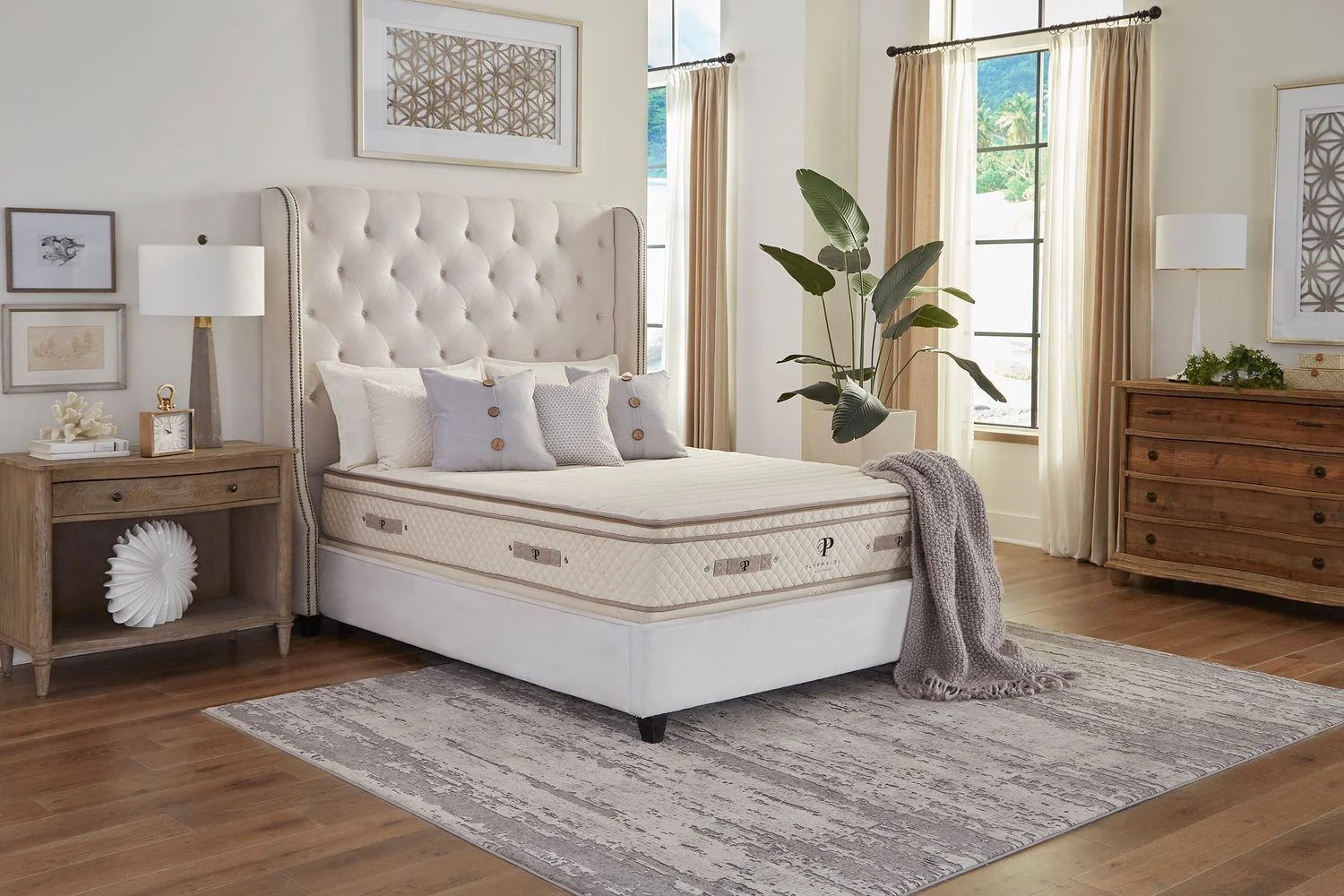
by PlushBeds Botanical Bliss beats Tempur-Pedic for most sleepers. It scores 9.15/10 versus the Cloud's 7.63/10 in independent lab testing, runs cooler (organic latex vs dense memory foam), recovers faster (no stuck-in-place feel), and backs its build quality with a lifetime warranty against Tempur-Pedic's 10 years. Tempur-Pedic's one genuine advantage is deep motion isolation for couples who need near-zero transfer. If that is your priority, the Cloud delivers. For everyone else, PlushBeds wins on comfort, durability, and value.
PlushBeds Botanical Bliss
9.2/10
- 9.0/10 cooling, organic latex, wool, and cotton breathe far better than dense memory foam
- Exceptional pressure relief (10/10) with a 5.25" comfort layer that eliminates pressure points in every position
- Fastest response time tested (0.2 seconds), no stuck-in-mud feel common to memory foam
- GOLS-certified organic latex, GOTS organic cotton/wool cover, GREENGUARD Gold, genuinely non-toxic
- Lifetime warranty and 365-night trial, both exceptional by industry standards
- Weak edge support (7.4/10), perimeter sinks more than average, reduces usable surface
- Strong latex smell for roughly 10 days after unboxing
- Premium price, $1,899 queen is 77% above the latex foam average
The Botanical Bliss scores higher than the Tempur-Pedic Cloud in nearly every independent category, comfort, cooling, pressure relief, response time, and policies. If you are comparing these two brands and do not specifically need deep memory-foam conformance, this is the clear call.
PlushBeds vs Tempur-Pedic: the core difference
These two brands are built on opposite philosophies. PlushBeds makes organic latex mattresses, bouncy, breathable, and durable by nature of the material. Tempur-Pedic makes proprietary memory foam mattresses engineered for deep, slow-response contouring. Neither approach is wrong, but they produce very different sleep experiences.
The PlushBeds Botanical Bliss uses GOLS-certified Dunlop latex stacked in multiple layers under an organic cotton and wool cover. The feel is responsive, you float on the surface rather than sinking into it. Latex recovers in 0.2 seconds; Tempur foam takes an average of 8 seconds. That recovery speed is the main practical difference most sleepers notice night to night.
The Tempur-Pedic Cloud is a 10-inch all-foam mattress built around proprietary TEMPUR material. It hugs your body closely and moves slowly, which excellent pressure relief and motion isolation but leaves some sleepers feeling trapped and runs warmer than average for an all-foam design.
Side-by-side specs
| Feature | PlushBeds Botanical Bliss | Tempur-Pedic Cloud |
|---|---|---|
| Material | Organic Dunlop latex (GOLS) | Proprietary TEMPUR memory foam |
| Height | 11 inches | 10 inches |
| Firmness options | Soft (4/10), Medium-Firm (6/10) | Medium-Firm (6/10) |
| Overall lab score | 9.15/10 (NapLab 2026) | 7.63/10 (NapLab 2026) |
| Pressure relief | 10/10 | 9.0/10 |
| Cooling | 9.0/10 | 8.0/10 |
| Motion isolation | 9.8/10 | 8.7/10 |
| Edge support | 7.4/10 | 7.4/10 |
| Response time | 0.2 seconds | 8 seconds (slowest tested) |
| Queen price | ~$1,899 | ~$1,999 |
| Trial period | 365 nights | 90 nights |
| Warranty | Lifetime | 10 years |
| Certifications | GOLS, GOTS, GREENGUARD Gold | CertiPUR-US (foam only), contains glass fiber in netting layer |
Cooling and temperature regulation
Organic latex is an open-cell structure. Air moves through it naturally, and the material does not absorb body heat the way dense polyurethane foam does. The Botanical Bliss earns a 9.0/10 cooling score from NapLab, the organic wool cover adds moisture wicking and the cotton breathes freely.
The Tempur-Pedic Cloud scores 8.0/10 for cooling. Dense memory foam retains heat by design, the slow-response TEMPUR material hugs your body and keeps warmth close to the surface. The Cloud's cover does include a moisture-wicking layer, which helps at the surface, but the underlying foam structure limits airflow through the mattress. If sleeping hot is a recurring problem, PlushBeds wins this category clearly.
Pressure relief and motion isolation
Both mattresses score well for pressure relief. The Botanical Bliss earns a perfect 10/10, its 5.25-inch comfort layer is thicker than the 4.33-inch average and eliminates measurable pressure points in every tested sleep position. The Tempur-Pedic Cloud earns 9.0/10, which is excellent, and its slow-recovery foam contours deeply around the shoulders and hips.
For motion isolation, the Cloud's traditional advantage over latex mattresses is largely absent here. The Botanical Bliss scores 9.8/10 (compared to the Cloud's 8.7/10) because the soft configuration and deep sinkage dampen the latex's usual resiliency. Couples will do well on either mattress; PlushBeds edges out Tempur-Pedic even on this metric.
Durability and warranty
Latex outlasts memory foam by several years under normal conditions. Natural Dunlop latex typically holds its support structure for 12 to 15 years or more. Tempur-Pedic's TEMPUR foam has an honest lifespan closer to 8 to 10 years before the support core softens noticeably.
PlushBeds backs the Botanical Bliss with a lifetime warranty, no fixed end date, and the company replaces defective materials. Tempur-Pedic offers a 10-year warranty with coverage that narrows significantly in years 3 through 10. The Tempur-Pedic Cloud also charges a $175 return fee during the trial; PlushBeds' 365-night trial has no equivalent penalty.
Who should choose which
Choose PlushBeds Botanical Bliss if you want organic materials, cooler sleep, a responsive feel that does not trap you, or a mattress you expect to keep for 12 to 15 years. The Botanical Bliss is also the better pick for hot sleepers, combination sleepers who switch positions at night, and anyone with chemical sensitivities who values GOLS and GOTS certification.
Choose Tempur-Pedic if you specifically love the classic slow-contouring memory foam feel and have slept on Tempur-Pedic before without heat complaints. The Cloud's deep hug is genuinely distinctive, and some sleepers prefer that enveloping quality over the more buoyant latex alternative. It is also made in the USA (Duffield, Virginia).
Neither mattress is the right call for strict stomach sleepers. Both use medium firmness options that allow hip sinkage, which can misalign the spine in the prone position. Stomach sleepers need a firmer surface.
Verdict
PlushBeds Botanical Bliss is the stronger mattress by independent lab measurement, and it is the pick for anyone comparing these two brands without a strong pre-existing preference for memory foam. Better cooling, longer trial, lifetime warranty, and a 9.15/10 overall score against the Cloud's 7.63/10 make the decision straightforward.
The Tempur-Pedic Cloud is not a bad mattress, its pressure relief is excellent and it is well-made. But at a comparable price point with a shorter trial, a 10-year warranty against a lifetime one, and inferior performance in most test categories, it is the harder sell.
PlushBeds Botanical Bliss
9.2/10
Organic Dunlop latex, 365-night trial, lifetime warranty, and a 9.15/10 lab score make this the clear winner over Tempur-Pedic for most sleepers.
The lab picked latex over memory foam — complete the shortlist
This page’s scoring left little room for debate: latex ran cooler, recovered faster and carried the longer warranty, leaving Tempur-Pedic one genuine card — near-zero motion transfer for the most sensitive couples. If that card doesn’t decide your household, the latex verdict stands.
Standing verdicts deserve a second quote. Saatva’s Zenhaven is the natural competitor to the Botanical Bliss: Talalay latex through and through, two firmness feels in one flippable build, white-glove delivery and a year-long trial. Put Zenhaven’s current price next to the PlushBeds number and let the two latex beds fight it out.
Frequently asked questions
Is PlushBeds better than Tempur-Pedic?
In independent lab testing (NapLab 2026), PlushBeds Botanical Bliss scores 9.15/10 versus 7.63/10 for the Tempur-Pedic Cloud. PlushBeds wins on cooling, response time, trial length, and warranty. Tempur-Pedic wins for sleepers who specifically want a slow-response memory foam hug, that feel is difficult to replicate in latex.
Does PlushBeds sleep cooler than Tempur-Pedic?
Yes. The Botanical Bliss scores 9.0/10 for cooling versus 8.0/10 for the Cloud. Organic latex is an open-cell material that does not trap body heat; Tempur-Pedic's dense foam design is known for retaining warmth, particularly during warmer months.
How long does PlushBeds last compared to Tempur-Pedic?
PlushBeds covers the Botanical Bliss with a lifetime warranty and natural Dunlop latex typically retains its structure for 12 to 15 years. Tempur-Pedic offers a 10-year warranty and TEMPUR foam generally begins to soften at 8 to 10 years of regular use.
Can you try PlushBeds before buying?
PlushBeds offers a 365-night trial, roughly four times longer than Tempur-Pedic's 90-night window. Tempur-Pedic also charges a $175 return fee within the trial period; PlushBeds does not charge a comparable return fee.
Is Tempur-Pedic worth the price over PlushBeds?
The Tempur-Pedic Cloud costs roughly $1,999 queen versus $1,899 for the PlushBeds Botanical Bliss. At similar prices, PlushBeds delivers better lab scores across most categories, a much longer trial, and a lifetime warranty. The main reason to pay for Tempur-Pedic is a specific preference for slow-response memory foam feel that latex cannot replicate.
Related: Saatva vs Tempur-Pedic 2026 — full breakdown with firmness guidance and current pricing.