
 by
by Quick verdict: The Birch Natural is a responsive latex-and-coil mattress aimed at shoppers who care about material certifications, airflow, and long-term resilience. I think it makes the most sense for back sleepers, combination sleepers, and people who dislike the slow sink of memory foam. Its main weakness is flexibility: Birch provides one primary feel, so lighter side sleepers may not get enough cushioning.
This Birch mattress review focuses on the parts that matter after the marketing language is stripped away: what is inside the mattress, how those materials should feel, where the construction is likely to hold up, and which sleepers may struggle with it.
Birch Natural mattress at a glance
| Specification | Birch Natural |
|---|---|
| Listed queen price | $1,499, as recorded in the original live article |
| Construction | Organic cotton cover, wool liner, perforated natural Talalay latex, pocketed coils, and a wool base, according to Birch |
| Latex layer | 2 inches, according to the manufacturer specifications cited in the original article |
| Coil unit | 8 inches, according to the manufacturer specifications cited in the original article |
| Total height | 11 inches, according to the manufacturer specifications cited in the original article |
| Published feel | Slightly firm, previously described as 7/10 in the original review |
| Material claims | GOTS, GOLS, GREENGUARD Gold, Fair Trade, and made in the USA, according to Birch |
| Trial | 120 nights, with a previously listed $99 return fee, according to the manufacturer policy cited in the original article |
| Warranty | Lifetime, according to the manufacturer policy cited in the original article |
| Delivery | Free standard shipping, without white-glove setup, according to the original article’s account of Birch policy |
Those specifications describe a fairly straightforward latex hybrid. The comfort system is thinner and more responsive than the deep foam stacks used in many boxed beds. That points to noticeable surface support, quick recovery when changing positions, and less of the enveloping sensation associated with memory foam.
My construction-based verdict
The Birch Natural has a sound material layout. Wool handles part of the fire-barrier and moisture-management job, perforated latex supplies resilient cushioning, and the pocketed coil core provides most of the structural support. Nothing about that recipe looks gimmicky.
The strongest reason to buy it is not simply that it is marketed as natural. Latex and coils are both breathable, mechanically resilient materials. Latex generally returns to shape faster than polyurethane comfort foam, while an open coil chamber gives heat and moisture more room to move than a solid foam core.
The trade-off is that this is not a plush, deeply contouring mattress. The 2-inch latex layer, according to the manufacturer specifications cited in the original article, does not leave much room for a lightweight sleeper to sink before meeting firmer resistance from the support system. That can be useful under the lumbar area, but less forgiving around a side sleeper’s shoulder and hip.
I would put Birch high on a shortlist for a buyer who wants a buoyant natural-material hybrid. I would not buy it solely because of broad words such as “eco” or “organic.” Check which certification applies to which component, and confirm the current trial and return language directly with the manufacturer before ordering.
Birch versus the Saatva Classic
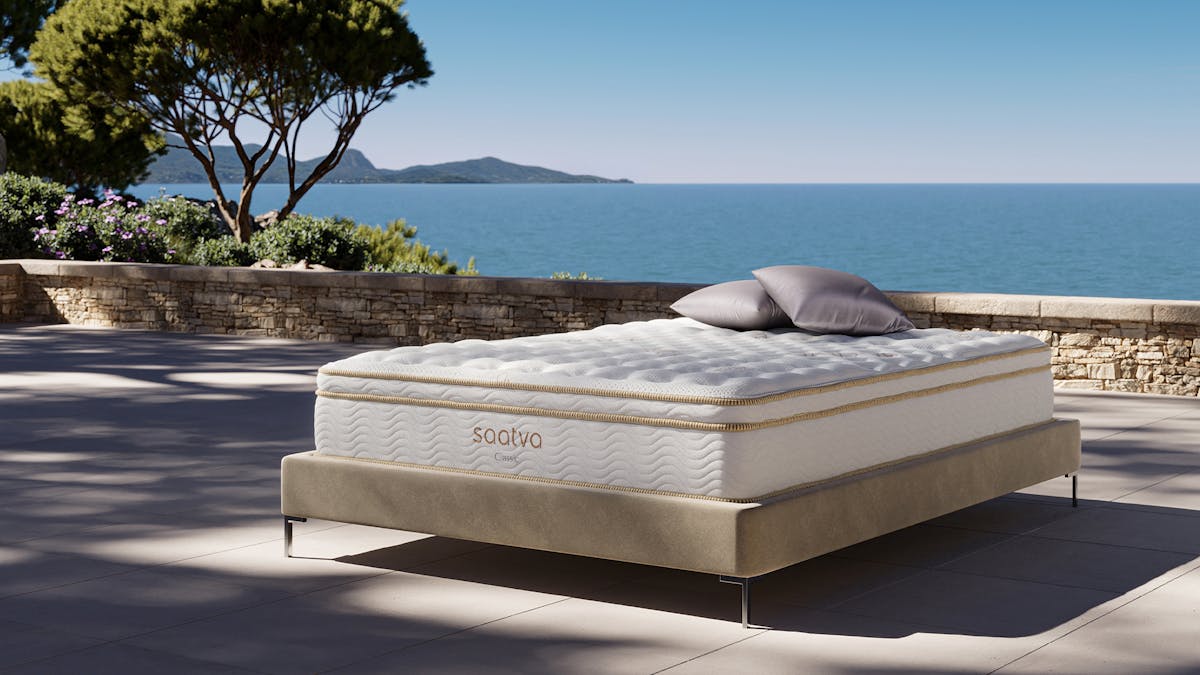
The alternative I would compare first is the Saatva Classic. It is not a direct material twin: Birch is a latex hybrid, while the Saatva Classic is a luxury innerspring. The useful comparison is purchase flexibility. According to the Saatva policies cited in the original article, the Saatva Classic comes in more firmness and height choices, with a 365-night home trial, a lifetime warranty, and white-glove delivery.
Birch remains the more logical choice if certified natural materials and a latex feel lead your decision. Saatva Classic becomes more attractive if you want to choose among three firmness levels and two heights, as listed by the manufacturer in the original article, or if in-room setup matters.
Save up to $600 on the Saatva Classic
“I spent ten years sleeping on a $250 mattress. I told myself it was fine. My back disagreed, every single morning.”
Read why our editor finally switched to Saatva
Birch Natural construction and materials
Here is how I read the Birch build from the cover down.
Organic cotton quilted cover
Birch identifies the cover as GOTS-certified organic cotton. Cotton does not make a mattress cool by itself, but it avoids putting a dense, slick synthetic panel directly against the sleeper. The quilting also helps keep the upper wool layer evenly distributed.
GOTS is relevant because it concerns textile processing, not merely the presence of some cotton in the finished cover. Even so, shoppers should treat certification as component-specific. A certified textile cover does not automatically certify every material deeper in the mattress.
Natural wool liner
The wool layer serves several practical functions. It contributes to the fire barrier, absorbs and releases moisture, and adds a small amount of surface cushioning. Wool is not a substitute for a thick pressure-relief layer, but it can make the top feel less stark than latex placed directly beneath a thin cover.
Birch presents this wool as an alternative to a conventional chemical flame-retardant treatment. Chemically sensitive buyers should still review the current law label and the manufacturer’s complete material disclosure, especially if they have a diagnosed allergy.
Perforated Talalay latex
The 2-inch latex layer, as specified by Birch in the original article, is the defining part of this mattress. Birch describes it as natural Talalay latex with GOLS certification. Talalay latex usually feels lively and evenly buoyant. It compresses under load but pushes back quickly, so it does not hold a body-shaped impression while the sleeper moves.
The perforations create continuous air channels through the comfort layer. This does not make the mattress actively refrigerated, but it gives body heat a less obstructed path than dense, closed-cell foam would provide.
The limited thickness matters just as much as the material. The listed 2-inch comfort layer produces a more support-forward feel than a deep latex cradle. Sleepers who want substantial shoulder immersion should pay close attention to that distinction.
Pocketed coil support core
The 8-inch pocketed coil unit listed by Birch supplies the mattress’s main resistance. Individually wrapped coils can respond more locally than an old-style interconnected spring system. They also leave open space through the middle of the bed, which helps ventilation.
Birch says the perimeter is reinforced. That design should improve stability near the sides, although no edge system completely prevents compression when someone sits in one concentrated spot. Latex above coils also makes the transition at the edge feel springier than a dense foam rail might.
Wool base
A lower wool layer completes the material stack and separates the spring unit from the bottom cover. It is not a major comfort component, but it fits the broader effort to limit synthetic padding inside the mattress.
How firm does the Birch mattress feel?
The original article placed Birch at 7/10, slightly firmer than the middle of the scale. Firmness numbers are subjective, but that description agrees with the construction. A relatively thin latex layer over coils is unlikely to create a soft, slow cradle.
The first sensation should be buoyancy rather than sink. Latex yields under the heavier parts of the body, then recovers promptly as weight shifts. Combination sleepers often value that behavior because turning takes less effort than it can on slow memory foam.
The same responsiveness can feel busy to someone who wants a motion-dampened surface. A figure of 14.91 inches of bounce, described as 56% above average, appeared in the previous article. Because that article did not name an independent testing source for the measurement, I would not treat the figure as verified buying evidence. The construction itself still supports the broader conclusion that Birch is a lively mattress.
Pressure relief by sleeping position
Back sleepers
Back sleepers are the clearest fit. The latex can cushion the pelvis without letting it settle deeply, while the coils carry most of the body weight. That balance should work especially well for people who prefer sleeping on the mattress rather than in it.
The original article highlighted sleepers in roughly the 140-220 lb range. Body shape and firmness preference can matter as much as scale weight, so I see that cited range as a starting point rather than a cutoff. A curvier sleeper may experience more pressure through the upper back or hips than a straighter-built sleeper at the same weight.
Side sleepers
Side sleeping exposes Birch’s main limitation. The shoulder and hip need enough depth to compress the comfort layer while the waist remains supported. With only 2 inches of latex, according to the listed construction, before the support core, lighter bodies may not engage enough of the material.
The prior article cautioned side sleepers under 130 lb and described the 130-180 lb range as more workable. That is a reasonable construction-based warning, not a manufacturer-defined cutoff. I would be most cautious if you are light, broad-shouldered, or already know that medium-firm mattresses cause pressure at the shoulder.
Stomach sleepers
Stomach sleepers generally need resistance under the midsection. Birch’s firmer, responsive surface may help keep the pelvis from dropping as far as it would on a plush foam mattress.
The original article raised a concern about hip sinkage above 170 lb. I would frame that cited threshold more carefully: suitability will depend on body distribution and how strongly the coil unit resists the pelvis. Heavier stomach sleepers should prioritize alignment and may need a mattress designed with firmer central support.
Combination sleepers
This is another strong category for Birch. Latex recovers quickly, and pocketed coils add pushback beneath it. Those materials should make rolling from back to side easier than it is in a deeply conforming memory-foam bed.
Combination sleepers who spend substantial time on their side still need to consider pressure relief. Mobility does not solve a comfort layer that is too shallow for the shoulder.
Cooling and temperature control
The Birch design has credible passive-cooling features. Cotton is breathable, wool can manage moisture, perforated latex permits airflow, and the coil unit leaves far more open volume than a solid foam core.
The earlier version of this review reported a peak surface temperature of 91.6F and a return to 86.8F within five minutes. It also claimed a difference of 1-2 degrees against a nearby foam-hybrid comparison. No named third-party test source accompanied those figures, so I cannot present them as independently substantiated measurements.
What I can say from the published specification is that Birch avoids several common heat traps. It does not rely on a thick memory-foam comfort stack, and its support core is not a solid foam block. That gives hot sleepers a sensible reason to consider it, without promising that every person will sleep cool.
Wool can also help the surface feel less clammy by moving moisture away from the body. That is different from merely adding a cooling gel to foam. Moisture management often matters as much as the initial temperature of the cover.
Motion isolation and bounce
Latex hybrids sit in an interesting middle ground. Pocketed coils reduce the amount of movement traveling through a connected spring network, but latex rebounds more energetically than slow-response foam. Expect less disturbance than from a traditional interconnected innerspring, but more surface activity than from a thick all-foam mattress.
The old article assigned Birch a motion score of 9.8/10, listed an acceleration range of 5.52 m/s2, and said motion dissipated in approximately 1.18 seconds. It also characterized the acceleration result as 37% below a category average of 8.79 m/s2. Since the source did not identify the testing organization or publish a reproducible method, those values should not be treated as verified performance claims.
For couples, the practical question is sensitivity. If one partner turns frequently but neither wakes easily, pocketed coils may isolate enough movement. If one partner is highly motion-sensitive, a slower all-foam surface will usually be the safer construction.
The responsiveness can be an advantage during sex and position changes. There is little reason to expect the stuck-in-foam feeling associated with deep memory foam, although the lively surface may take some adjustment for sleepers moving from a low-bounce bed.
Compare the Saatva Classic before choosing Birch
Edge support
The original article reported 4.50 inches of edge compression against a 4.04-inch category average. Those measurements were not tied to a named external source, load, or published protocol. I therefore view them as background from the prior page, not a result I can independently endorse.
From a construction standpoint, reinforced perimeter coils should make lying near the side more secure than it would be with uniform soft coils. Sitting will still concentrate substantial weight over a small area, so more compression in that position is normal.
Edge performance matters most for couples using the full width, people who sit on the bed while dressing, and sleepers with limited mobility. If that describes you, compare the return policy carefully because edge feel is difficult to judge from specifications alone.
Durability and long-term value
Durability is where Birch’s material choices become especially interesting. Latex usually resists permanent impressions better than low-density polyurethane foam. It flexes and rebounds without depending on a slow viscoelastic response, and the pocketed springs carry the deeper structural load.
The likely early wear points are the quilted surface, the wool immediately beneath it, and any heavily used edge area. Some initial compression of natural fiber batting is normal. That is not necessarily the same as a failing support core, although uneven impressions should be evaluated against the written warranty.
The prior page estimated 12-15 years of consistent support and compared that with 6-7 years for cheaper foam alternatives. Those figures were editorial projections, not a promise from Birch or an identified durability study. Actual service life depends on sleeper weight, foundation quality, rotation, humidity, and how often the bed is used.
I would still give Birch a favorable durability outlook based on the latex-and-coil architecture. I simply would not turn that outlook into a fixed lifespan. The lifetime warranty described in the original article is useful only to the extent that its exclusions, indentation threshold, ownership requirements, and remedy remain favorable in the current manufacturer terms.
Organic certifications explained
Birch’s certification story is a major part of its commercial appeal, but the acronyms deserve a closer reading.
- GOTS: Birch associates this textile standard with its organic cotton and wool components. Buyers should confirm the certificate scope and current validity through the certifier or manufacturer documentation.
- GOLS: Birch associates this standard with the natural latex layer. It concerns organic latex content and processing requirements rather than mattress comfort.
- GREENGUARD Gold: Birch identifies this emissions certification for the mattress. It concerns tested chemical emissions under the certification program, but it does not mean that a product contains no chemicals.
- Fair Trade: Birch presents this as a sourcing and production claim, not a mattress performance rating.
- Made in USA: Birch states that the mattress is made in the USA. That does not necessarily mean every raw material originated domestically.
No certification can tell you whether a mattress is firm enough, cool enough, or comfortable for your body. Certifications answer narrower material, sourcing, and emissions questions. That is valuable, but it belongs alongside, not above, the basic fit assessment.
Off-gassing and fire barrier
Birch uses wool in the fire-barrier area rather than highlighting a fiberglass sock. Its latex comfort layer also differs from conventional polyurethane memory foam, which can carry a stronger new-product odor after unboxing.
The old article described the mattress as having “zero off-gassing.” I would not use that as an absolute promise. Natural latex, wool, cotton, adhesives, packaging, and the shipping environment can all contribute some initial smell. The more defensible point is that Birch’s published material stack is designed to reduce reliance on the synthetic foams commonly associated with a pronounced boxed-mattress odor.
If you have chemical sensitivities, review the current ingredient disclosure and certification records rather than relying on a general label. Individual reactions can occur even to natural materials, including wool and latex.
Trial, returns, warranty, and delivery
The original article lists a 120-night trial, a lifetime warranty, free standard shipping, and a $99 return fee under the manufacturer policy it cited. These policy details can change, so confirm them on Birch’s current terms before purchase.
The listed $99 return fee is worth noticing. A home trial is not completely cost-free if returning the mattress carries a charge. Also check the minimum break-in requirement, pickup process, condition requirements, geographic exclusions, and what happens to promotional accessories.
Standard boxed delivery means the buyer handles movement and setup. The mattress has a listed height of 11 inches, and a latex hybrid can be awkward to move because latex and steel add weight. If stairs, narrow halls, or limited mobility are concerns, delivery format may be a deciding factor rather than a minor convenience.
The Saatva Classic comparison is relevant here because the original article lists free white-glove delivery, a 365-night trial, and a lifetime warranty for that mattress under Saatva’s cited policies. Birch should remain the choice for someone prioritizing its latex and certification profile, but Saatva offers a more service-heavy purchase experience.
Birch Natural pros and cons
What I like
- Transparent material stack: Cotton, wool, latex, and coils are easier to evaluate than a vague collection of branded foams.
- Responsive comfort: Talalay latex should make turning and getting out of bed easier than deeply conforming memory foam.
- Breathable architecture: Perforated latex and an open coil core give heat and moisture multiple paths out of the mattress.
- Promising durability: Latex is a sensible comfort material for buyers worried about early foam softening.
- Relevant certifications: Birch identifies standards for textiles, latex, and emissions rather than relying on one broad environmental slogan.
- Wool fire barrier: The use of wool will appeal to buyers avoiding a fiberglass-based barrier.
What gives me pause
- One principal firmness: There is less room to tailor the mattress to a lightweight side sleeper or someone wanting a plush surface.
- Shallow comfort depth: The listed 2-inch latex layer may not provide enough immersion for prominent shoulders and hips.
- Lively surface: Latex over coils can feel too springy for shoppers accustomed to slow memory foam.
- Return cost: The original article lists a $99 fee under the cited manufacturer policy, reducing the practical value of the listed 120-night trial.
- No white-glove service: The original article describes standard delivery that leaves setup to the buyer.
- Unverified legacy measurements: Several precise performance figures on the previous page lacked a named independent source.
Who should buy the Birch Natural?
- Back sleepers: The firmer latex surface and coil support should promote a level, buoyant position.
- Combination sleepers: Quick material recovery makes changing positions relatively easy.
- Hot sleepers: The breathable material layout is more convincing than a thick foam stack with a surface cooling treatment.
- Buyers avoiding deep memory-foam sink: Birch should feel lifted and responsive rather than slow and enveloping.
- Certification-focused shoppers: Birch provides more component-level information than many mattresses using vague natural language.
- Long-term buyers: Latex and coils form a credible durability-oriented construction, provided the mattress rests on a suitable foundation.
- Chemically sensitive shoppers: The wool barrier and emissions certification may be useful, though buyers with allergies should still verify every current material disclosure.
Who should consider another mattress?
- Lightweight side sleepers: The original review cautioned that people under 130 lb may not compress the surface enough to cushion the shoulder and hip.
- Fans of deep contouring: Birch does not mimic the slow hug of memory foam.
- Highly motion-sensitive couples: Pocketed coils help, but the latex surface remains responsive.
- Buyers needing setup assistance: The lack of white-glove delivery described in the original article can be a real obstacle with a heavy hybrid.
- Shoppers unsure about firmness: A mattress with selectable firmness options gives you more control before delivery.
- People who do not value certification: Part of the Birch price supports its natural-material and certification positioning, so a conventional hybrid may offer better value for that buyer.
Birch Natural versus Saatva Classic
| Decision point | Birch Natural | Saatva Classic |
|---|---|---|
| Basic design | Natural latex hybrid, according to Birch’s published construction | Luxury innerspring, according to Saatva’s published construction cited in the original article |
| Comfort character | Buoyant latex response | Traditional cushioned spring response |
| Firmness selection | One main feel, according to the original comparison | Three firmness levels, according to the manufacturer options cited in the original article |
| Height selection | 11 inches, according to Birch specifications cited in the original article | Two heights, according to the manufacturer options cited in the original article |
| Trial listed in the original article | 120 nights, according to the cited Birch policy | 365 nights, according to the cited Saatva policy |
| Delivery | Standard shipping, according to the original article’s account of Birch policy | Free white-glove delivery, according to the cited Saatva policy |
| Warranty listed | Lifetime, according to the cited Birch policy | Lifetime, according to the cited Saatva policy |
| Best reason to choose it | Latex, wool, and organic-material certifications | More feel choices and in-room setup |
This is not a claim that the Saatva Classic duplicates Birch. It does not. The Saatva is the practical alternative for a shopper who likes Birch’s quality tier but cares more about firmness choice, delivery service, and the longer listed trial than about having a latex comfort layer.
See the current Saatva Classic offer
Birch versus Avocado Green Mattress
Both mattresses target shoppers interested in latex, coils, and organic-material claims. The most important construction distinction in the original comparison is latex type. Birch uses Talalay latex, while the Avocado model discussed there uses Dunlop latex.
Talalay generally feels more buoyant and consistent across the layer. Dunlop is usually denser and can feel more grounded. Neither process is automatically better. The better fit depends on whether you prefer a livelier response or a denser pushback.
The prior article noted that Avocado offers a pillow-top version and listed a 365-night trial under the cited manufacturer policy, compared with Birch’s listed 120-night period. It also claimed superior cooling for Birch based on unnamed lab data. I would rely on the identifiable design differences and confirmed manufacturer policies, not that unsupported performance ranking.
Read the full Avocado Green Mattress review if those two constructions are on your shortlist.
Frequently asked questions
Is the Birch mattress GOTS and GOLS certified?
Birch states that GOTS applies to its organic textile components and that GOLS applies to its latex. The original article specifically associates GOTS with the cotton cover and wool, and GOLS with the natural Talalay latex. Certification scopes can change, so confirm the current certificate and the exact covered components before buying.
What firmness is the Birch Natural?
The previous review described it as 7/10, which falls on the slightly firm side. Birch has also used medium-firm language. I would expect a lifted, responsive feel because the manufacturer construction cited in the original article places 2 inches of latex over an 8-inch coil system. Lightweight side sleepers are the group most likely to find that arrangement too firm.
Does the Birch mattress sleep cool?
Its construction is well suited to passive temperature regulation. Perforated latex permits airflow, wool can manage moisture, and coils leave open space inside the bed. The old page included precise thermal readings, but it did not identify a third-party source, so those numbers should not be treated as independently verified.
Does Birch contain fiberglass?
The manufacturer’s construction description emphasizes a wool fire barrier rather than fiberglass. Confirm the current law label and written material disclosure for the exact model delivered to you, since product specifications may be revised.
Does the Birch mattress smell after unboxing?
A latex-and-wool mattress may have a natural or packaging-related odor when first opened. The prior article’s absolute “zero off-gassing” wording went too far. GREENGUARD Gold concerns tested emissions, but it does not mean every buyer will perceive no smell.
Is Birch suitable for side sleepers?
It can work for some side sleepers, particularly those who comfortably use firmer beds. The original review advises caution for shoppers under 130 lb or those with broad shoulders because the manufacturer-listed comfort layer is only 2 inches thick. A softer or deeper comfort system may distribute pressure more effectively.
Is Birch good for back pain?
No mattress can be assumed to resolve a medical condition. Birch’s firmer, responsive support may suit back sleepers who dislike sagging through the pelvis, but pain has many causes. If symptoms persist or worsen, seek advice from a qualified healthcare professional.
How much does the Birch Natural cost?
The original live article listed $1,499 for a queen and described that recorded price as $115 below its category average. Mattress prices and promotions change, so treat those figures as historical details from the page rather than permanent quotes.
What are the Birch trial and return terms?
The source article lists a 120-night trial and a $99 return fee under the manufacturer policy it cited. Confirm Birch’s current terms before purchasing, including any break-in period, pickup rules, exclusions, and refund conditions.
What warranty comes with Birch?
The original article lists a lifetime warranty according to the manufacturer policy it cited. Read the current written terms for coverage limits, indentation requirements, foundation rules, and available remedies. “Lifetime” describes the duration framework, not automatic coverage for every form of wear.
How durable is a Birch mattress?
Latex and pocketed coils give Birch a favorable material profile for long-term resilience. The old article projected 12-15 years, but that was an editorial estimate rather than a manufacturer promise or finding from an identified durability study. Sleeper weight, foundation support, moisture exposure, rotation, and usage all affect wear.
Is Birch better than an all-foam mattress?
It is better for a particular preference, not universally better. Birch offers faster response, stronger airflow potential, and a more buoyant surface. An all-foam mattress can provide deeper contouring and stronger motion damping for sleepers who value those traits.
How does Birch compare with the Saatva Classic?
Birch is the better match if natural latex, wool, and component certifications are the priority. Saatva Classic is the stronger alternative if you want three firmness choices, two heights, a 365-night trial, a lifetime warranty, and free white-glove delivery under the manufacturer terms cited by the original article.
How does Birch compare with Avocado?
Both compete in the organic latex-hybrid category. Birch uses Talalay latex, which usually feels more buoyant, while the Avocado construction discussed in the original article uses denser Dunlop latex. Avocado also offers a pillow-top configuration according to the original comparison. Trial policies and model specifications should be confirmed directly with each manufacturer.
Final verdict on the Birch Natural
I recommend the Birch Natural for shoppers who want a firm, breathable latex hybrid and care enough about certified materials to pay for them. The cotton, wool, Talalay latex, and coil construction is coherent. It should feel buoyant, easy to move on, and less heat-prone than a mattress built around thick memory foam.
I would hesitate if you are a lightweight side sleeper, want a plush hug, or need delivery staff to set up the bed. The single primary feel and manufacturer-listed 2-inch comfort layer leave less room for error than a mattress offered in several firmness choices.
The old review contained highly specific cooling, motion, bounce, and edge measurements without naming an independent source. I have retained that context where relevant, but I do not use those numbers as proof. The material construction is enough to support a positive verdict without pretending unsupported precision is certainty.
If Birch’s organic-material profile is the reason you are shopping, it remains the more direct choice. If you mainly want a supportive premium mattress with more firmness flexibility, compare the Saatva Classic before committing. According to the manufacturer details cited in the original article, its three firmness levels, two heights, 365-night trial, lifetime warranty, and white-glove delivery address several of Birch’s practical limitations.
For more material-focused comparisons, see Best organic mattresses 2026 and Best latex mattresses 2026.