
 by
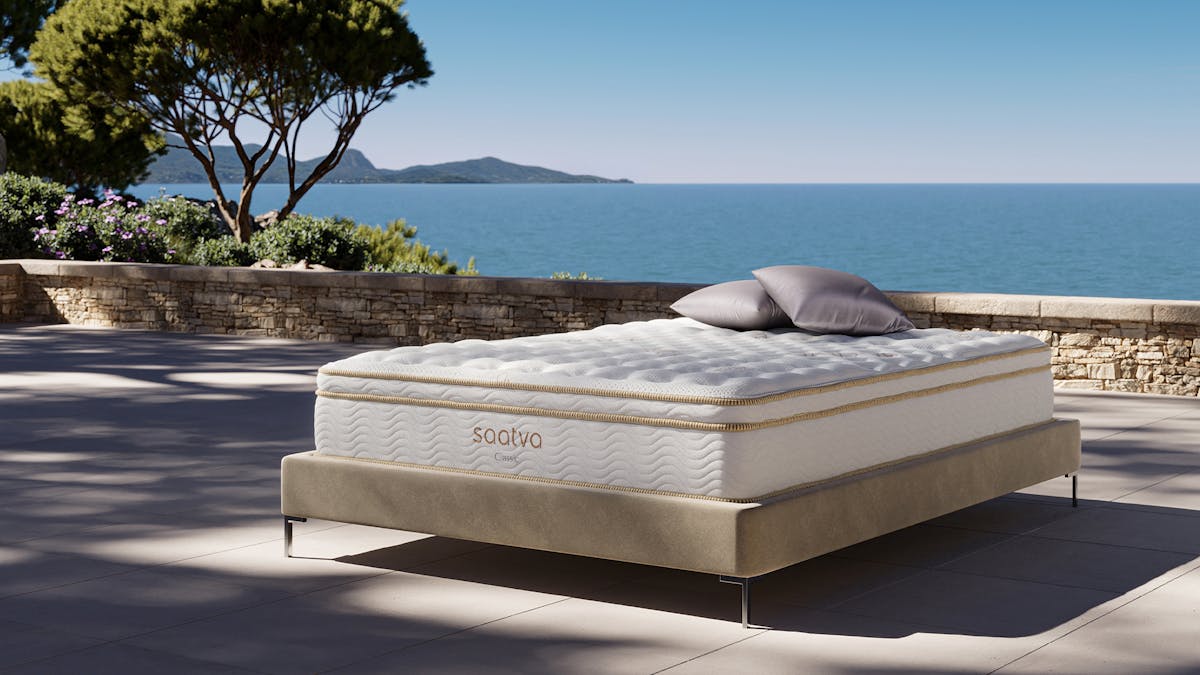
by PranaSleep uses natural Talalay latex for a buoyant, temperature-neutral feel, starting around $3,500 queen. Tempur-Pedic Cloud uses proprietary dense memory foam for deep contouring and exceptional motion isolation, starting at $1,999 queen. They are fundamentally different mattresses. PranaSleep wins on responsiveness and cooling; Tempur-Pedic Cloud wins on pressure relief and motion isolation. Neither is a partner brand, so our top pick for most shoppers is the Saatva Classic, which costs less than both, ships with free white-glove delivery, and carries a 365-night trial.
Saatva Classic
9.2/10
- Dual tempered-steel coil system with reinforced lumbar zone pad
- Organic cotton Euro-top and natural thistle flame barrier
- Free white-glove delivery: in-room setup and old-mattress removal
- 365-night home trial, lifetime warranty, $99 return fee only
- Three firmness options (Plush Soft, Luxury Firm, Firm) in one model
- Not compressed in a box, requires scheduled delivery window
- Heavier than foam beds, harder to reposition after setup
At a fraction of PranaSleep's price and with a far longer trial than Tempur-Pedic's 90 nights, the Saatva Classic is the strongest all-around option for shoppers cross-shopping premium mattress brands. The zoned lumbar coil system and hotel-luxury feel outperform both brands for most sleeping positions.
PranaSleep vs Tempur-Pedic: two different philosophies
PranaSleep and Tempur-Pedic share a premium price bracket, but the way they build their mattresses is about as different as it gets in the mattress world. PranaSleep is a latex-first brand. Its flagship Vinyasa line uses a Talalay latex core and comfort layer, which means a buoyant, springy feel that pushes back against your body rather than conforming around it. The latex construction also runs naturally cooler than memory foam and resists dust mites and mold.
Tempur-Pedic is the company that commercialized memory foam, and the Cloud is its most accessible model. The TEMPUR proprietary foam is denser and slower-responding than typical memory foam, which produces the deep-contouring, pressure-eliminating feel the brand is famous for. The tradeoff is heat retention and the "stuck" sensation that some sleepers dislike.
These are not two versions of the same thing at different price points. They are genuinely different sleep experiences built for different types of sleepers.
Specs at a glance
| Feature | PranaSleep Vinyasa | Tempur-Pedic Cloud |
|---|---|---|
| Core material | Talalay latex (Performance core) | TEMPUR proprietary foam |
| Comfort layer | Talalay latex comfort layer + UltraQuilt | TEMPUR comfort foam (~3 in.) |
| Profile | ~12 in. (varies by model) | 10 in. |
| Firmness options | Plush or Firm | Medium only |
| Feel | Responsive, buoyant, latex spring | Deep conforming, slow-response |
| Cooling | Good (open-cell latex + breathable cover) | Below average (dense foam traps heat) |
| Motion isolation | Moderate | Excellent |
| Edge support | Good (patented perimeter wrap) | Fair (foam compresses at edges) |
| Queen price | ~$3,500–$6,900 (Vinyasa line) | ~$1,999 MSRP (~$1,399 on sale) |
| Trial | Retailer-dependent (varies) | 90 nights |
| Warranty | 20 years | 10 years |
| Delivery | White-glove (via retail) | Bag delivery (box style) |
Construction detail
PranaSleep Vinyasa
The Vinyasa is built on a Performance Talalay Core, PranaSleep's proprietary blend of natural rubber processed using the Talalay method. Talalay latex is processed with a freeze-and-bake step that produces a consistent, open-cell structure with better airflow than Dunlop latex. Above the core sits a Talalay comfort layer and the UltraQuilt Layer, a breathable quilted surface that regulates temperature. The mattress perimeter uses a patented wrap for edge stability. The Vinyasa comes in Plush (for side sleepers and lighter-weight back sleepers) or Firm (for heavier back and stomach sleepers).
The latex construction means the Vinyasa responds immediately when you shift positions. There is no lag or stuck feeling. For combination sleepers who move frequently, this responsiveness is a real advantage over dense memory foam.
Tempur-Pedic Cloud
The Cloud is a 10-inch all-foam mattress built in two functional layers: approximately 3 inches of TEMPUR comfort foam over a 7-inch high-density support base. The 360-degree stretch-knit cover is moisture-wicking. The TEMPUR material is a viscoelastic foam with a denser molecular structure than standard memory foam, which gives it stronger pressure relief and better motion isolation, but also more heat retention and a slower pressure response.
There is only one firmness: medium. Tempur-Pedic rates it around 6.5 out of 10, which works well for side sleepers under 230 pounds and average-build back sleepers. Above that weight, the foam may compress more than ideal for spinal alignment.
Who wins by category
Cooling
PranaSleep. Talalay latex runs inherently cooler than any dense memory foam. The open-cell structure allows air to circulate through the core rather than trapping it. The Tempur-Pedic Cloud's TEMPUR foam is notoriously warm, particularly its all-foam version (the Breeze variants add cooling gel layers but cost significantly more).
Pressure relief
Tempur-Pedic. The slow-response TEMPUR foam produces deeper, more even pressure distribution than latex, which is why Tempur-Pedic is frequently recommended by physical therapists for hip and shoulder pain. The Cloud contours closely to the joints, reducing pressure across the full body contact zone.
Motion isolation
Tempur-Pedic. Memory foam absorbs movement rather than transferring it, and TEMPUR foam does this better than most. Latex, being responsive, transmits some movement across the mattress. Couples where one partner is a restless sleeper will prefer the Cloud.
Responsiveness and ease of movement
PranaSleep. Latex pushes back. If you tend to feel "stuck" in memory foam or have difficulty changing positions, the Vinyasa's latex core makes repositioning nearly effortless.
Durability and warranty
PranaSleep has a slight advantage here: 20-year warranty versus Tempur-Pedic's 10-year limited warranty. High-quality Talalay latex also tends to maintain its performance longer than even premium viscoelastic foams, which can develop body impressions over time.
Value
Tempur-Pedic Cloud, on price-per-feature. The Cloud queen is around $1,399 on promotion, versus $3,500 or more for the Vinyasa. Both are premium mattresses, but the price gap is significant enough to matter for most buyers. That said, neither brand's price-to-feature ratio matches the Saatva Classic, which delivers white-glove delivery, a 365-night trial, and a lifetime warranty at a lower cost than the Cloud MSRP.
Who each mattress suits
PranaSleep Vinyasa is the better pick if:
- You sleep hot and want a mattress that stays naturally cool through the night
- You are a combination sleeper who changes positions frequently and needs a responsive surface
- You have latex allergies to standard memory foam (not latex allergies, obviously)
- You want a long-term investment with a 20-year warranty and durable natural materials
- Budget is not the primary constraint
Tempur-Pedic Cloud is the better pick if:
- You are a dedicated side sleeper under 230 lb who prioritizes pressure relief at the hips and shoulders
- You sleep with a partner who moves frequently and you want maximum motion isolation
- You prefer the deep-contouring, slow-response feel over a buoyant latex surface
- You want a 90-night trial before committing
Price by size (queen as reference)
| Size | PranaSleep Vinyasa (approx.) | Tempur-Pedic Cloud (MSRP) |
|---|---|---|
| Twin | ~$3,200 | ~$1,699 |
| Twin XL | ~$3,500 | ~$1,699 |
| Full | ~$4,200 | ~$1,899 |
| Queen | ~$4,800–$6,900 | ~$1,999 |
| King | ~$6,900–$8,600 | ~$2,399 |
| Cal King | ~$6,900–$8,600 | ~$2,399 |
PranaSleep prices vary by retailer and configuration. Tempur-Pedic Cloud is often discounted 25–30% from MSRP through official promotions.
Verdict
If you are specifically choosing between PranaSleep and Tempur-Pedic Cloud, the decision comes down to feel. Latex buoyancy and cooling versus memory foam contouring and motion isolation. Both are genuinely premium products with real engineering behind them, and both have clear weaknesses. PranaSleep costs significantly more and offers a longer warranty. Tempur-Pedic offers a more accessible price point and the deepest motion isolation in the memory foam category.
For most buyers who are not committed to one of these two brands specifically, the Saatva Classic sits at a lower price than the Cloud's MSRP, ships with in-home white-glove setup, and carries a 365-night trial that is four times longer than Tempur-Pedic's. That combination is hard to beat at this price range.
PranaSleep for hot sleepers and combination sleepers who want latex responsiveness. Tempur-Pedic Cloud for side sleepers and couples who need motion isolation. Saatva Classic for most people looking for a premium hybrid with the best trial and delivery terms in this price bracket.
If Talalay convinced you, you don’t have to pay boutique for it
The philosophical split above is real: buoyant, temperature-neutral Talalay latex against Tempur’s deep, motion-killing sink. If you read the PranaSleep sections nodding — the push-back, the effortless repositioning, the latex longevity — then the material has already chosen you. The only problem left is the boutique price of entry.
Neither brand here is a partner; Saatva is, and its Zenhaven happens to solve exactly that problem: genuine Talalay latex, flippable dual firmness, organic cover, white-glove delivery and a year-long home trial — at a fraction of PranaSleep’s starting money. Check what the Zenhaven costs today before pricing the boutique option.
Frequently asked questions
Is PranaSleep worth the premium over Tempur-Pedic?
It depends on whether the specific advantages of Talalay latex, cooling, responsiveness, and a 20-year warranty, are things you will actually notice and value. If you sleep hot or dislike the stuck feeling of memory foam, PranaSleep is worth the price difference. If pressure relief and motion isolation are your primary needs, Tempur-Pedic delivers more of what you are paying for.
Does the Tempur-Pedic Cloud sleep hot?
Yes, the all-foam Cloud tends to sleep warm. Dense TEMPUR foam retains body heat more than latex or hybrid mattresses. If this is a concern, Tempur-Pedic's Breeze models add phase-change cooling layers, but they cost considerably more. Alternatively, a latex or coil-hybrid mattress will run cooler without the upcharge.
How long does PranaSleep latex last compared to Tempur-Pedic foam?
High-quality Talalay latex typically outlasts memory foam. Latex maintains its elasticity and support characteristics for longer, which is why PranaSleep offers a 20-year warranty versus Tempur-Pedic's 10-year term. In practice, both should last well beyond the warranty period with proper use and a supportive base.
Can I try a PranaSleep before buying?
PranaSleep is sold through independent retail stores rather than direct-to-consumer online. Trial and return terms depend entirely on the retailer. This is a meaningful limitation versus Tempur-Pedic's 90-night home trial or the Saatva Classic's 365-night trial. Confirm the trial policy before purchasing at any PranaSleep retailer.
Which is better for back pain: PranaSleep or Tempur-Pedic?
Neither is a clear winner for all back pain types. PranaSleep Firm provides good lumbar support for back sleepers who need a more rigid surface. Tempur-Pedic Cloud's contouring reduces pressure-point pain for side sleepers. For non-specific lower back pain, a zoned coil-hybrid like the Saatva Classic tends to outperform both because the dual-coil system adapts by body zone rather than delivering uniform firmness.