
 by
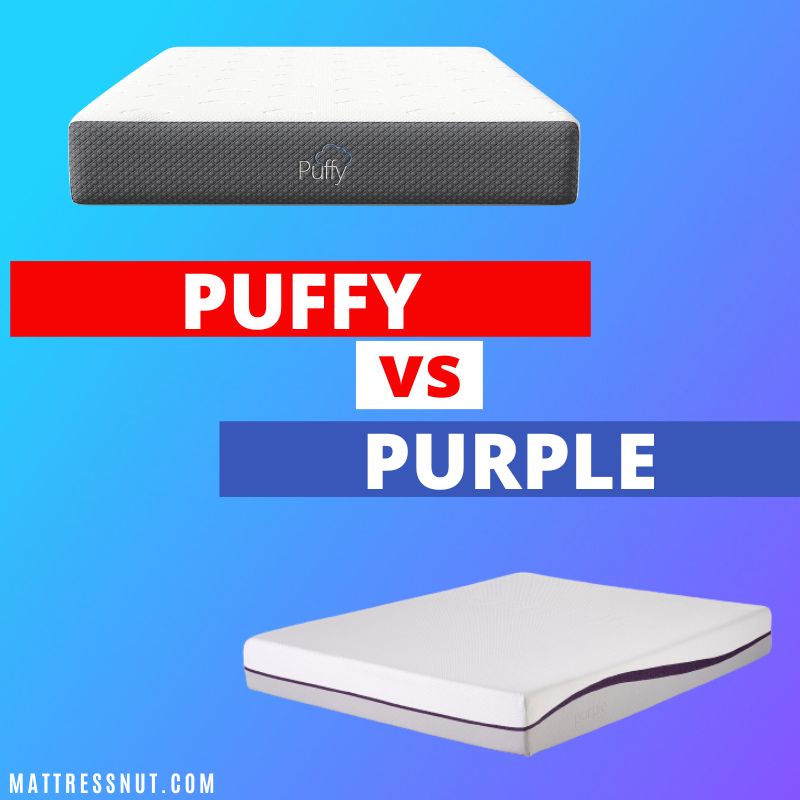
by Choosing between Puffy and Purple comes down to one fundamental question: do you want a mattress that wraps around you, or one that responds beneath you? These two brands represent genuinely different engineering philosophies — Puffy leans into the classic all-foam hug that millions of sleepers already trust, while Purple built its reputation on a polymer grid that challenges everything you thought you knew about pressure relief and temperature control.
Both are legitimate choices. Neither is universally better. But for your specific body type, sleep style, and temperature preferences, one is almost certainly the right call. This guide breaks down every meaningful category so you can make that call with confidence.
The data below reflects 2026 specs and pricing. Both brands update their line regularly, but the core construction philosophy at each entry level — foam layering at Puffy, GelFlex Grid at Purple — has remained consistent.
Quick Comparison: Puffy vs Purple at a Glance
| Category | Puffy Cloud | Purple Original |
|---|---|---|
| Queen Price | ~$1,249–$2,299 | ~$1,199–$1,499 |
| Construction | All-foam (4 layers) | GelFlex Grid + polyfoam |
| Height | 10 inches | 9.25 inches |
| Firmness | Medium (5/10) | Medium-Firm (6/10) |
| Cooling | 6/10 (gel-infused foam) | 8/10 (open grid airflow) |
| Motion Isolation | 8.5/10 — Excellent | 8/10 — Excellent |
| Pressure Relief | 8/10 | 8/10 |
| Edge Support | 6.5/10 | 6.5/10 |
| Sleep Trial | 365 nights | 100 nights |
| Warranty | Lifetime | 10 years |
Construction Deep-Dive: How Each Mattress Is Built
Puffy Cloud: Layered Foam Engineering
The Puffy Cloud is a 10-inch all-foam mattress with four distinct layers working in sequence. Starting from the top:
- Felted fiber top pad: A thin quilted layer that softens the initial surface feel and adds cushioning before you reach the foam layers beneath. It contributes to the plush first-touch sensation that Puffy is known for.
- 2-inch gel-infused memory foam: The primary contouring layer. It molds to your body's curves and distributes weight across a wider surface area, reducing localized pressure at contact points like shoulders and hips. The gel infusion offsets heat retention better than standard memory foam, though the effect is partial rather than transformative.
- 2-inch adaptive polyfoam: A transition layer that prevents excessive sink into the base. It adds responsiveness that pure memory foam lacks, helping you shift positions without fully sinking into the mattress. This is the layer that keeps the Puffy from feeling like quicksand.
- 6-inch high-density polyfoam base: The structural foundation. High-density foam at the base provides the mattress its durability and prevents perimeter collapse over time.
The cover is a polyester knit with cooling yarns woven in. It's soft on contact and helps at the surface level with temperature, though the underlying foam remains the thermal bottleneck for hot sleepers.
Puffy's lineup extends to the Puffy Lux (zoned support, additional foam layers, cooling cover upgrade) and the Puffy Royal (five-layer construction with cloud-weave cover). But the Cloud is the starting point and the model that most directly competes with Purple's Original at a comparable price range.
Purple: The GelFlex Grid
Purple's construction starts from an entirely different engineering premise. The defining layer is the GelFlex Grid — a hyper-elastic polymer molded into an open-cell grid pattern. This is not foam of any kind. It's a proprietary material that behaves in ways foam cannot replicate.
The grid columns flex and collapse under localized pressure, then spring back to their original height almost instantly. This creates pressure relief that contours to your body like foam but responds like latex. The critical mechanical difference: the grid sections directly under load collapse and cushion, while adjacent columns that are not bearing direct pressure remain upright and supportive. This gives you simultaneous cushioning and support from the same material layer — something foam achieves only imperfectly through density gradients and layering.
The Purple Original is a 9.25-inch mattress with three primary layers:
- GelFlex Grid comfort layer (approximately 2 inches of polymer grid) — the signature layer and primary performance driver
- Polyfoam transition layer — bridges the grid to the support core and moderates the overall feel
- High-density polyfoam support core — structural foundation
Purple's higher-end lines add progressively thicker grid layers (PurplePlus has a thicker grid section), coil systems (Restore Hybrid, Rejuvenate), and additional cushioning. The Rejuvenate collection adds DreamLayer technology for luxury cushioning on top of the grid. But the Original represents Purple's core technology in its most accessible form.
The open grid geometry is what makes Purple's thermal story so different from Puffy's. Air moves freely through the hundreds of grid openings. There is no closed-cell foam surface pressing against your body trapping heat — the structure is physically open to airflow in a way foam cannot be.
Feel and Firmness: What Sleeping on Each Actually Feels Like
Puffy Cloud Feel
Lying down on a Puffy Cloud, you'll feel the foam slowly conforming to your shape over the first few seconds. This is the classic memory foam experience: pressure points soften, the mattress molds to your curves, and you feel held rather than sitting on top of a surface. The medium firmness (5/10) sits right in the middle of the spectrum — soft enough for side sleepers to get hip and shoulder relief without bottoming out, firm enough that most back sleepers maintain reasonable spinal alignment.
The feel is familiar and comfortable. If you've slept on any modern foam mattress, the Puffy Cloud will not disorient you. It's a well-executed version of what the bed-in-a-box industry has refined over the last decade. There's a reassuring predictability to it.
The trade-off is mobility. Memory foam creates friction against position changes. When you shift at night, you feel resistance before the foam re-conforms to your new position. For sleepers who move a lot, this creates mild disruption and contributes to the "stuck" sensation some foam mattress owners report after months of use. It's rarely dramatic, but it's real.
Purple Feel
Purple's feel is genuinely unlike foam. The first time you lie on a Purple, the grid compresses at your contact points almost immediately — no slow conform, no gradual sink. The sensation is quick and different if you've only ever slept on foam. Some sleepers love it from the first night. Others need the recommended 21-night adaptation period before it feels natural.
Purple rates its Original at medium-firm (6/10). The grid columns that are not under direct pressure remain upright, giving the surface a slightly firmer, more supported feel than a medium foam mattress at the same rating would provide. You rest more on top of the mattress than inside it. Less enveloping than Puffy, more responsive.
Position changes are distinctly easier on Purple. The grid rebounds so quickly that shifting feels fluid. For combination sleepers who rotate throughout the night, this responsiveness is a genuine performance advantage rather than a marketing distinction.
Temperature Regulation: Where the Two Mattresses Diverge Most
This is the most decisive category in the comparison — and the one where your personal sleep temperature should drive the decision.
Puffy Cloud: 6/10 for temperature control. The gel infusion in the top foam layer does real work. It's measurably better than ungelled memory foam at managing surface temperature through the first portion of the night. But gel-infused foam has a fundamental limitation: the foam matrix itself has low air permeability. Heat moves slowly through closed foam cells. The gel absorbs body heat rather than dissipating it, which helps initially but reaches saturation during long contact periods. Extended sleep creates warmth buildup that gel can only partially mitigate.
Purple: 8/10 for temperature control. The open grid geometry addresses the ventilation problem at the material level. Air moves through the grid openings continuously throughout the night. Your body heat is not trapped against a foam surface — it disperses into the air channels in the grid structure. This is a structural solution that works regardless of how long you've been sleeping.
For hot sleepers, the two-point gap between these scores is not minor. If you wake up sweaty, push blankets off regularly, or run warm by nature, Purple's thermal advantage translates directly into better sleep quality — not just a specification on paper. Puffy's gel foam is adequate for average-temperature sleepers but won't solve a serious heat retention problem the way Purple's open grid does.
Average sleepers: either works. Hot sleepers: Purple is the clear answer.
Pressure Relief: Tied Score, Different Mechanics
Both mattresses earn an 8/10 for pressure relief in testing, but the path each takes to that score reveals important differences for specific body types.
Puffy's memory foam creates broad, even pressure distribution. As foam compresses around a contact point — a shoulder or hip — the load spreads across the surrounding foam surface. Memory foam's high conformability means it fills in the contours around bony protrusions rather than creating hard points. This is depth-based relief: the more you compress, the more material pushes back with distributed support.
Purple's GelFlex Grid achieves pressure relief through selective column mechanics. Grid sections directly under load flex and absorb force, while adjacent columns maintain their height and provide lateral support. The result is localized relief without broad compression — pressure points are cushioned without the surrounding body sinking toward the center. It's precision-based relief rather than depth-based.
For side sleepers under 230 pounds, where shoulder and hip pressure relief is most critical, both approaches perform at a high level. The difference becomes more relevant at higher body weights. Beyond 230 pounds, Purple's grid can begin to bottom out under sustained concentrated pressure, while Puffy's foam provides more consistent relief at higher weights simply through material depth. Heavier side sleepers — especially those over 250 pounds — may find Puffy more reliably effective than Purple's Original model.
Motion Isolation: Both Excellent, Puffy Holds a Small Edge
Motion isolation measures how well a mattress absorbs movement on one side before it can disturb a partner on the other. This is where all-foam mattresses, as a category, outperform innerspring and most hybrid designs.
Puffy: 8.5/10. Memory foam is the benchmark for motion isolation because it absorbs kinetic energy rather than transmitting it. When one partner shifts positions, the movement dissipates into the foam rather than traveling as surface vibration. Couples with different sleep schedules, or light sleepers who wake at movement, will find Puffy's isolation close to ideal for an all-foam product.
Purple: 8/10. The GelFlex Grid is responsive by design — it bounces back quickly, which creates slightly more motion transfer than dense memory foam. The difference is measurable but small in practice. Purple's grid isolates motion well, but the responsive quality that aids position changes also means minute vibrations can travel across the surface more readily than through foam.
For most couples, both are excellent. Only highly movement-sensitive sleepers will consistently notice Purple's modest disadvantage in this category.
Edge Support: An Equal Limitation for Both
Both Puffy and Purple score approximately 6.5/10 for edge support — adequate but not strong. This is an inherent limitation of all-foam construction without reinforced perimeter layers.
Without a firm foam perimeter rail or an encased coil system extending to the mattress edge, both mattresses compress noticeably when you sit on them or sleep near the perimeter. You won't roll off, but sitting on the edge to put on shoes or sleeping at the very margin of the mattress produces visible sinkage and a less-supported feel.
Purple's polymer grid may maintain slightly more structural integrity at the edge due to the material's inherent stiffness, but the difference is not substantial enough to separate the two meaningfully. If edge support is a priority — particularly for couples sharing a full or queen and needing every inch of sleeping surface — consider Purple's Restore Hybrid or Puffy's Lux with reinforced edges over the entry-level models reviewed here.
Pricing and Value in 2026
Puffy Pricing (Queen)
- Puffy Cloud: ~$1,249–$2,299 (sale pricing is frequent and substantial)
- Puffy Lux: Approximately $400–$500 premium over the Cloud, adds zoned support and upgraded cover
- Puffy Royal: Premium tier with five-layer construction and cloud-weave cover
Purple Pricing (Queen)
- Purple Original: ~$1,199–$1,499
- PurplePlus: ~$1,799–$1,899 (thicker grid layer, 11-inch profile)
- Restore Hybrid: ~$2,299–$2,399 (grid + pocketed coils, 11.5 inches)
- Restore Plus Hybrid: ~$3,299 (13 inches, medium-soft)
- Rejuvenate Collection: $4,999–$7,999 (ultra-premium, DreamLayer technology)
Value Breakdown
At the entry level, Puffy and Purple are priced comparably on a queen. The policy differences are where value calculations diverge most sharply.
Puffy's 365-night sleep trial is one of the longest in the industry. Purple's 100-night trial with a mandatory 21-night minimum break-in is close to the industry standard but materially shorter. Trial length matters because mattresses typically take 30–60 days to break in, and your body often needs additional time to fully adapt. A 100-night trial after a 21-night required break-in leaves you 79 usable decision nights. Puffy's 365-night window is a different proposition entirely.
Puffy's lifetime warranty has no expiration. Purple's 10-year warranty is standard and adequate for most buyers, but in a direct warranty comparison, Puffy holds the stronger position on paper.
Purple's higher-end models offer substantial real-world upgrades over the Original — particularly in grid thickness and hybrid construction — that justify their price premiums more concretely. If budget allows, Purple's Restore Hybrid or PurplePlus represents a more significant performance step than Puffy's Lux over the Cloud.
Sleep Position Verdicts
Side Sleepers
Both mattresses work well for side sleepers under 230 pounds. Puffy's medium foam provides deep shoulder and hip cushioning with full contouring. Purple's grid relieves pressure at contact points while maintaining support laterally. For side sleepers over 230 pounds, Puffy's foam depth provides more consistent relief as body weight increases. Winner: Puffy for heavier side sleepers and those who prefer deep cradling; Purple for lighter side sleepers who also move frequently.
Back Sleepers
Purple's medium-firm rating and grid mechanics give back sleepers more lumbar support than Puffy's softer medium. The grid's selective collapse keeps hips from sinking below spine-neutral while cushioning the lumbar curve. Puffy works for back sleepers under 230 pounds but may allow too much hip sinkage for heavier individuals. Winner: Purple.
Stomach Sleepers
Neither mattress is well-suited to stomach sleeping. Stomach sleepers need firmness to prevent the hips from dropping below spine alignment, and both Puffy (medium) and Purple Original (medium-firm) fall below the firm threshold that stomach sleeping requires. Purple's marginally firmer rating makes it slightly better, but neither is a strong recommendation for dedicated stomach sleepers. Winner: Purple, marginally — but both fall short for this position.
Combination Sleepers
Purple is the clear winner for sleepers who rotate positions through the night. The GelFlex Grid's instant rebound makes position changes natural and unresisted. Puffy's memory foam creates friction during repositioning that combination sleepers will feel repeatedly across a night of movement. Winner: Purple.
Hot Sleepers
Purple wins decisively. The open grid structure solves temperature regulation at the material level. If sleeping hot is your primary concern, Purple's thermal advantage is the most significant performance differentiator in this comparison. Puffy's gel foam helps at the margins but does not replicate what open airflow through the grid achieves. Winner: Purple, significantly.
Couples
Puffy's motion isolation edge makes it the better call for couples where one partner is a very light sleeper sensitive to movement. Purple is the better call for couples where one or both partners sleep warm. For couples who share both concerns, Purple's thermal performance typically matters more over the long term. Winner: Puffy for motion isolation priority; Purple for temperature priority.
Who Should Buy Puffy
- Side sleepers of all weights who want maximum cushioning and a traditional cradling feel at shoulders and hips
- Couples where motion isolation is the top priority and one partner is a very light sleeper
- Average-temperature sleepers who don't have significant heat retention issues at night
- Buyers who prioritize the trial window — 365 nights gives you a full year and all four seasons to evaluate the mattress
- Anyone who wants a lifetime warranty with no expiration date and long-term manufacturing coverage
- Sleepers new to foam mattresses who want a familiar, predictable, well-regarded experience without an adjustment period
- Heavier sleepers (230+ lbs) who need foam depth for consistent pressure relief that polymer grids cannot always provide at entry-level thickness
Who Should Buy Purple
- Hot sleepers — the GelFlex Grid's open airflow structurally prevents heat buildup in a way foam-based solutions cannot match
- Combination sleepers who move frequently throughout the night and need responsive rebound for easy position changes
- Back sleepers who want firmer lumbar support combined with cushioning at direct contact points
- Anyone who has tried foam mattresses and found them too hot, too "stuck," or too uniformly soft for their taste
- Sleepers open to a different feel who are willing to take the 21-night adaptation period in exchange for a materially different sleep surface
- Light to average weight sleepers (under 230 lbs) who will get optimal grid performance without the risk of bottoming out
- Couples where one partner sleeps hot and temperature management is a shared sleep quality concern
Our Top Mattress Pick
The Saatva Classic — white-glove delivery, 365-night trial, dual coil luxury construction.
Frequently Asked Questions
Is Puffy or Purple better for back pain?
For most back pain sufferers, Purple's GelFlex Grid offers a meaningful advantage: it simultaneously cushions pressure points and supports surrounding areas without uniform compression. The medium-firm rating also suits back sleepers, who generally benefit from firmer support than side sleepers. Puffy works well for back pain in lighter sleepers but may allow too much hip sinkage for heavier individuals. If your back pain is connected to sleeping hot — heat increases muscle tension and disrupts recovery sleep — Purple's cooling advantage adds a further functional benefit beyond comfort alone.
Which mattress sleeps cooler, Puffy or Purple?
Purple sleeps significantly cooler. The GelFlex Grid's open geometry allows continuous airflow through the mattress surface, preventing the heat accumulation that closed-cell foam creates. Puffy uses gel-infused memory foam, which performs better than standard foam on temperature but still retains warmth during extended contact. In independent testing, Purple scores 8/10 for temperature control versus Puffy's 6/10. For hot sleepers, this difference translates directly into better sleep quality across the night, not just during the first hour.
How long are the sleep trials for Puffy and Purple?
Puffy offers a 365-night sleep trial — one of the longest in the industry. Purple offers a 100-night trial with a mandatory 21-night break-in period before initiating a return request. The difference is significant: Puffy gives you a full year to assess the mattress across all seasons and temperature conditions, while Purple's 100 nights covers roughly three months. Both brands cover return shipping within their trial windows, but if trial length matters to your purchasing decision, Puffy holds a clear advantage.
Do Puffy or Purple mattresses work with adjustable bases?
Both mattresses are fully compatible with adjustable base frames. All-foam mattresses flex naturally without structural damage, making them well-suited for adjustable platforms. Purple's GelFlex Grid material is specifically engineered to flex and return to shape, so it handles adjustable base articulation without degradation to the grid structure. Whether you're using a flat platform, slatted frame, or powered adjustable base, either mattress accommodates the setup without compatibility issues.
Which is better for couples: Puffy or Purple?
The answer depends on which factor matters more to both partners. For motion isolation — preventing one partner's movement from waking the other — Puffy scores higher (8.5/10 vs. 8/10 for Purple). For temperature regulation when one or both partners sleep warm, Purple's open grid is the better long-term solution. If your household's shared sleep concern is a light sleeper disturbed by movement, choose Puffy. If the shared concern is sleeping hot, choose Purple. Both are excellent all-foam options for couples; the deciding factor is which concern is most pressing for your specific situation.