
 by
by Purple wins for hot sleepers, side sleepers, and combo sleepers thanks to its open GelFlex Grid, which delivers genuine airflow and pressure relief. Casper wins for back sleepers, stomach sleepers, and motion-sensitive couples with its zoned foam design. Neither brand is a partner, so our top recommendation for either use case is the Saatva Classic, a white-glove innerspring hybrid that outperforms both on edge support and durability.
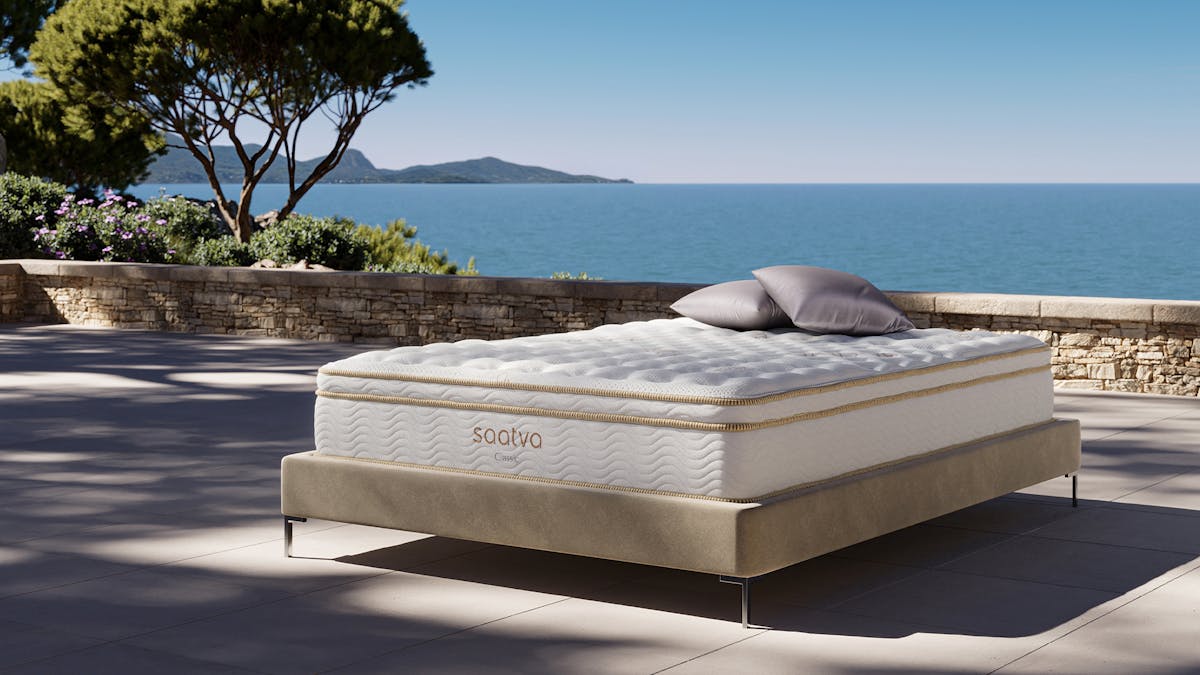
Saatva Classic
9.2/10
- Dual-coil construction with reinforced lumbar zone pad outperforms all-foam designs for spinal alignment
- Outstanding edge support: only 2.25" of sitting sinkage in lab testing
- Free white-glove delivery, setup, and old-mattress removal
- 365-night trial and lifetime warranty, far ahead of Purple (100 nights, 10 years) and Casper (100 nights, 10 years)
- Moderate motion isolation due to coil construction; not ideal for very light sleepers
- $99 return processing fee during the trial
If you are comparing Purple and Casper and want a mattress that improves on both brands' weak points, the Saatva Classic is the move. Its innerspring design sleeps cooler than Casper, its edge support is far better than Purple, and its 365-night trial removes the guesswork entirely.
Purple vs. Casper: quick comparison
Purple and Casper are two of the most recognized names in the online mattress market. Purple built its identity around a patented hyper-elastic polymer grid that handles pressure relief and cooling differently from any foam material. Casper built its identity around a layered foam system with ergonomic zoning that provides consistent, predictable support.
In 2026, both brands have expanded their lineups well beyond their original flagship models. The comparison below focuses on the entry-level models most shoppers actually purchase: the Purple (Original, 9.5 inches) and the Casper The One (formerly Casper Original, ~10 inches), which represent each brand's accessible price tier.
| Category | Purple (Original) | Casper The One |
|---|---|---|
| Price (Queen) | ~$1,199 | ~$1,095 |
| Construction | Specialty foam + GelFlex Grid | All-foam (4-layer zoned) |
| Height | 9.5 inches | ~10 inches |
| Firmness | Medium 5/10 | Medium 5/10 |
| Cooling | Excellent (10/10 NapLab) | Good (perforated foam) |
| Motion isolation | Outstanding (10/10 NapLab) | Very good |
| Edge support | Poor (5.1/10 NapLab) | Average |
| Trial period | 100 nights | 100 nights |
| Warranty | 10 years | 10 years |
Construction deep dive
The Purple GelFlex Grid
Purple's defining technology is a 2-inch layer of hyper-elastic polymer shaped into an open grid of columns. The grid operates on a pressure-dependent response: columns collapse under heavy contact points (shoulders, hips) while staying upright under lighter zones (lumbar, calves). Air circulates freely through the open channels, which is why Purple achieves a maximum surface temperature of 89.2 degrees Fahrenheit in NapLab testing, a perfect 10/10 cooling score.
The material has a unique feel: bouncy but not springy, conforming but without memory foam's slow recovery. Beneath the grid sit a 3.5-inch responsive poly foam comfort layer and a 4-inch high-density base. The grid has no foam in it, which is why Purple's cooling advantage is structural rather than just a gel infusion.
Casper's four-layer zoned foam system
Casper uses a four-layer all-foam design with a critical ergonomic feature: a zoned support layer that is firmer under the hips and softer under the shoulders. From top to bottom: a perforated AirScape foam comfort layer, a memory foam pressure-relief layer, the zoned support layer, and a dense base foam. The perforations help with airflow, but foam-based cooling is inherently limited compared to an open polymer grid.
The zoned support layer is Casper's best engineering decision. Back sleepers feel the lumbar zone kick in immediately. Casper scored 76/100 on edge support in lab testing versus Purple's 62/100, reflecting the more structured foam base.
Cooling performance
Purple is the clear winner here. The open-cell grid creates continuous airflow through the mattress; heat dissipates into the air rather than being retained by foam. NapLab measured Purple's max surface temperature at 89.2 degrees Fahrenheit, a cooling score no foam mattress can replicate at this price point.
Casper's AirScape perforated foam is a genuine improvement over standard memory foam, but the perforations only address surface-level heat dissipation. Sleepers who run hot consistently prefer Purple once they try both.
Motion isolation
NapLab measured Purple at 2.23 m/s squared of motion transfer, rating it 10/10 for motion isolation, which is higher than most expect given the grid's bouncy surface feel. The grid dampens movement more efficiently than its texture suggests. Casper's all-foam construction is also excellent at absorbing motion, particularly the memory foam layer. Both perform well for couples; the difference in this category is minor.
Edge support
Edge support is Purple's weakest category. NapLab measured 7.75 inches of compression when sitting on the edge, giving it a 5.1/10 score. This is a meaningful limitation for couples who want to use the full mattress surface, or for anyone with limited mobility who relies on a stable edge to get in and out of bed.
Casper's foam design provides average edge support, rated 76/100 by NapLab for the Dream Max, significantly better than Purple. If edge support matters to you, a hybrid mattress with reinforced perimeter coils, such as the Saatva Classic, is the right call.
Firmness and feel
Both mattresses are rated medium (around 5/10). The feel is quite different. Purple's grid collapses under pressure with no resistance, providing immediate conforming relief while the base layers keep you supported. The result is a medium feel that skews soft at the surface but firm at depth. Casper's foam has a brief memory-foam hug, then a firmer zoned base. Casper is more conventional; Purple is more technically distinctive.
Neither base model offers multiple firmness options. Both Purple and Casper have expanded lineups (Purple Restore Soft/Firm, Casper Dream, Casper Dream Max) that provide firmness variety at higher price points.
Winner by sleep position
Side sleepers
Winner: Purple. The GelFlex Grid collapses precisely at the shoulder and hip contact points while staying firm along the spine. This targeted pressure relief is what all-foam zoning attempts to approximate but cannot fully replicate.
Back sleepers
Slight Casper edge. Casper's zoned lumbar layer is firmer under the hips, which keeps the lower back from sinking out of alignment. Purple is comfortable on the back but lacks dedicated lumbar zoning in its original model.
Stomach sleepers
Slight Casper edge. Stomach sleepers need a firm base to prevent the hips from dropping below the spine line. Casper's firmer base foam handles this better. Purple may allow too much hip sink for average-weight stomach sleepers.
Combination sleepers
Winner: Purple. The grid's immediate response lets you shift positions without the sluggish repositioning you get from memory foam. If you move frequently during the night, Purple's responsiveness is an advantage.
2026 lineup note
Casper overhauled its lineup in 2024. The Casper Original is now the Casper The One (about $1,095 queen). The Nova Hybrid became the Dream and Dream Max; the Wave became the Snow Max; the Element line was discontinued. Older Casper model names in third-party reviews refer to beds no longer in Casper's active lineup.
Purple's current lineup includes the Original (2-inch grid, all-foam), the Restore hybrid series (11.5 inches, pocketed coils with GelFlex Grid), and the RestorePlus (13 inches, zoned coils, higher cooling tier). The Purple 3 and Purple 4 legacy models are still found at some retailers but are not Purple's main 2026 product.
Price comparison (2026)
| Model | Twin | Queen | King |
|---|---|---|---|
| Purple (Original) | ~$899 | ~$1,199 | ~$1,499 |
| Purple Restore Hybrid | ~$1,499 | ~$1,999 | ~$2,499 |
| Casper The One | ~$795 | ~$1,095 | ~$1,395 |
| Casper Dream Hybrid | ~$1,130 | ~$1,500 | ~$1,895 |
| Casper Dream Max | ~$1,900 | ~$2,500 | ~$2,995 |
Purple for hot sleepers, side sleepers, and combination sleepers. Casper for back sleepers, stomach sleepers, and couples who prioritize motion isolation. For edge support and trial length, the Saatva Classic outperforms both on a 365-night trial with lifetime warranty.
One feel per bed, unless you change brands
Purple's grid for the hot and pressure-sensitive, Casper's zoning for backs, stomachs and light-sleeping couples, the lanes above are fair, and neither brand pays us to say otherwise. But the lineup note buried the most practical fact on this page: at base price, both beds come in exactly one firmness, and buying variety from either means climbing into their pricier expanded lineups.
The Saatva Classic starts where those lineups end: a choice of firmness levels on one coil-on-coil platform, plush euro top, white-glove delivery, the top recommendation this page already made for either use case. Before you accept a single-feel bed, see what the Classic costs today.
Frequently asked questions
Is Purple or Casper better for side sleepers?
Purple is generally better for side sleepers. The GelFlex Grid collapses directly under the shoulder and hip without the gradual compression of foam, delivering more immediate pressure relief at the two points that matter most for side sleeping.
Which mattress sleeps cooler, Purple or Casper?
Purple sleeps significantly cooler. The open polymer grid allows continuous airflow through the mattress. Casper's perforated AirScape foam helps at the surface, but foam-based cooling is structurally limited. NapLab gave Purple a 10/10 cooling score; Casper scores well but does not match the grid's airflow advantage.
Does Purple or Casper have better motion isolation?
Both are strong. NapLab rated Purple at 10/10 for motion isolation (2.23 m/s squared transfer). Casper's all-foam construction is also excellent. The difference is minor for most couples.
What is the Purple GelFlex Grid made of?
The GelFlex Grid is a hyper-elastic polymer, formed into a grid of open columns. It is food-contact safe, free from toxic flame retardants, and contains no foam, gel beads, or springs. The open column structure is what creates its cooling and pressure-relief properties.
Which is better for back pain, Purple or Casper?
Both can work for back pain, but Casper's zoned lumbar layer gives it a slight edge for back sleepers specifically, by providing firmer support under the hips. Purple relieves pressure across the lumbar region without active zoning. Heavier sleepers with back pain often prefer Casper's more structured feel.
Do Purple and Casper offer free trials?
Yes. Both offer 100-night sleep trials with free shipping and free returns. The Saatva Classic offers 365 nights, which is more useful for genuinely assessing long-term comfort and body adaptation.
Which mattress has a better warranty, Purple or Casper?
Both offer 10-year limited warranties covering manufacturing defects and sagging beyond specified thresholds. Neither matches the Saatva Classic's lifetime warranty on workmanship and materials.