
 by
by
Editor's pick, melatonin-free
Sleep Lab Pick · Current Sale
Current Sale, Amerisleep's current sale runs sitewide. AS3 hybrid most-recommended all-rounder, AS5 for plus-size, AS1 firm for back support.
NooCube Sleep Upgrade
Melatonin-free formula · 60-night guarantee · Lemon balm 600 mg + magnesium + lavender
TL;DR
Mattress selection for specific conditions (back pain, side sleeping, couples, hot sleepers, seniors) depends on support zones, firmness, and pressure relief. Saatva Rx ($2,095) is designed specifically for chronic pain sleepers with lumbar zone support.
Jump to section
What Is REM Sleep?
REM (Rapid Eye Movement) sleep is the stage where most vivid dreaming occurs. During REM, your brain is nearly as active as when awake, it processes emotions, consolidates memories, and generates the creative connections that produce insight and problem-solving ability. Your eyes move rapidly beneath closed lids (hence the name), while your body is temporarily paralyzed to prevent acting out dreams.
Our top mattress recommendation
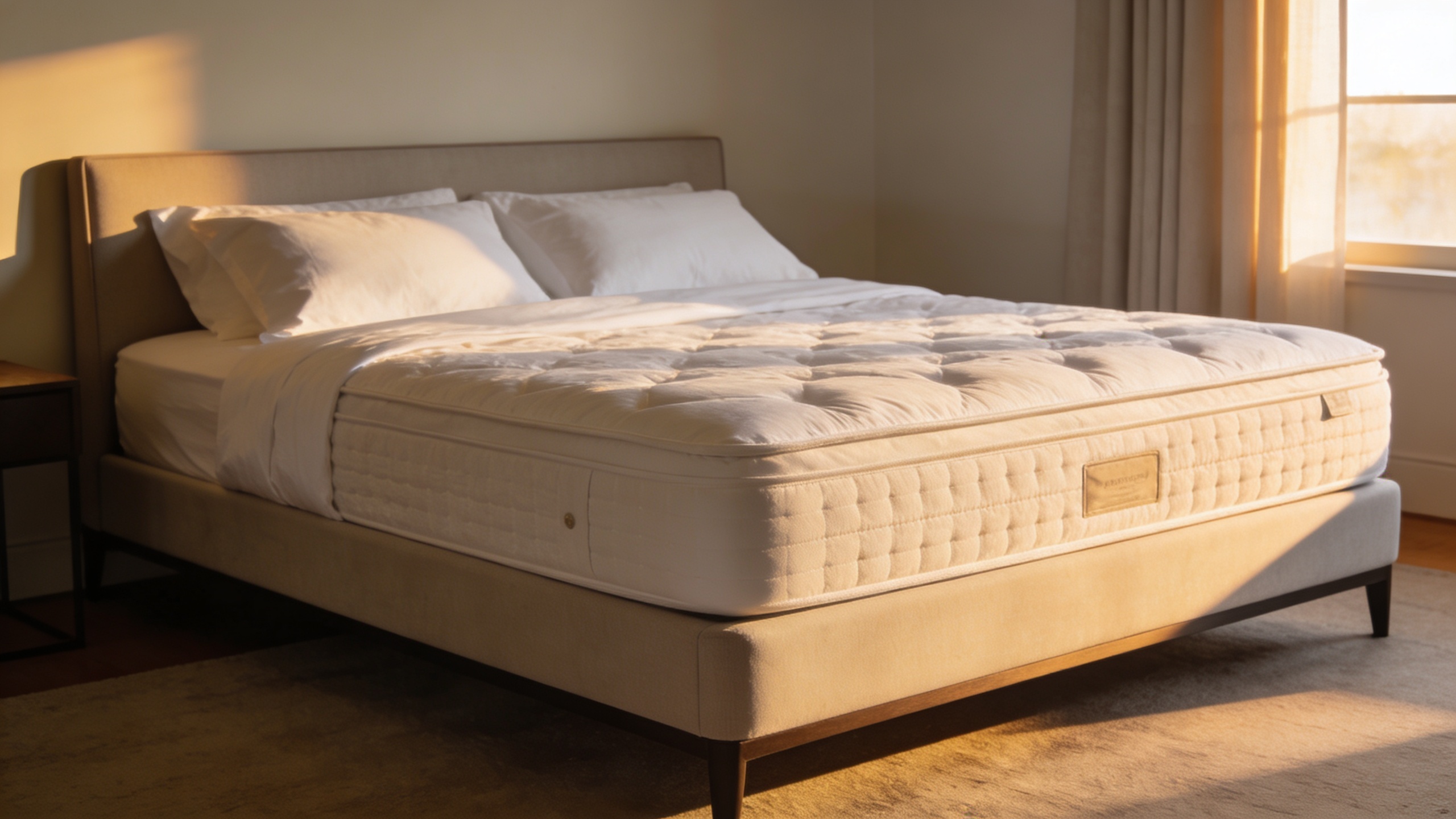
After testing dozens of mattresses, Saatva Classic remains the most versatile pick for most sleepers. Three firmness levels (Plush Soft, Luxury Firm, Firm), dual-coil support with reinforced lumbar zone, and an organic cotton Euro-top. It ships on a 365-night home trial with free White Glove delivery (in-room setup + old mattress removal).
Ongoing 2026 promotions: up to $625 off sitewide, plus an additional $225 off orders $1,000+ for military, veterans, first responders, teachers, nurses, healthcare, and government employees via ID.me. Lifetime warranty included.
REM is the final stage of each sleep cycle. A typical cycle runs: light sleep (N1) → deeper sleep (N2) → deep slow-wave sleep (N3) → REM, then repeats every 90 minutes. Early night cycles contain more N3 slow-wave sleep; cycles in the second half of the night contain progressively more REM. This distribution makes the last 2-3 hours of sleep disproportionately REM-rich.
What Happens During REM
- Memory consolidation: The hippocampus replays experiences from the day, transferring procedural and emotional memories to long-term storage
- Emotional processing: The brain processes emotional experiences with reduced norepinephrine (a stress-related neurochemical), allowing emotional memories to be integrated without the full emotional charge of the original experience
- Creative processing: Loose associative connections between distant concepts are formed, explaining why sleep is associated with creative insight ("sleep on it")
- Motor learning: Procedural motor memories (instrument playing, sports techniques) are consolidated during REM
REM by Age
| Age Group | % of Sleep as REM | Notes |
|---|---|---|
| Newborns | 50% | High REM supports rapid brain development |
| Toddlers | 30-40% | Decreasing as brain matures |
| Adults | 20-25% | ~90-120 minutes in 8-hour sleep |
| 65+ | 15-20% | REM decreases with age; sleep more fragmented |
REM Disruptors
Alcohol
Alcohol is the most common REM suppressant. It acts as a sedative initially, helping people fall asleep, but strongly suppresses REM in the first half of the night. As alcohol metabolizes in the second half of the night, there's a rebound with fragmented sleep and vivid dreams. Even 1-2 drinks several hours before bed reduces REM significantly.
Sleep Timing Inconsistency
REM sleep is timed by your circadian clock, it concentrates in the early morning hours regardless of when you went to sleep. Going to bed late consistently reduces total REM time because you're sleeping through fewer early-morning hours. Irregular sleep timing disrupts the circadian regulation of REM further.
Sleep Apnea
Obstructive sleep apnea causes repeated arousals throughout the night, fragmenting sleep architecture and significantly reducing REM time. Treating sleep apnea with CPAP restores normal sleep architecture and is often described as "life-changing" by people with significant apnea, they finally get the deep and REM sleep they've been missing.
Certain Medications
SSRIs, SNRIs, MAOIs, and some other antidepressants strongly suppress REM. This is a significant side effect that affects sleep quality despite increased total sleep time. Benzodiazepine sleeping pills reduce both N3 and REM. Always discuss sleep quality concerns with a prescribing physician before modifying medication.
How to Protect REM Sleep
- Protect your final sleep hours, don't cut sleep short; the last 2 hours are disproportionately REM
- Limit alcohol, especially within 3-4 hours of bedtime
- Keep consistent timing, same bedtime and wake time anchors your circadian REM distribution
- Treat sleep disorders, apnea, restless legs, and other disorders fragment sleep architecture
- Keep bedroom cool, REM sleep is temperature-sensitive; 65-68°F is optimal
- Address sleep anxiety, stress hormones delay and fragment REM
REM Rebound
When REM sleep is suppressed or reduced (by alcohol, medications, or sleep debt), the brain compensates with REM rebound, an increase in REM intensity and proportion when restriction ends. This is why people who quit alcohol often report vivid, intense dreams in the first weeks of sobriety. REM rebound is not fully compensatory; it recovers some but not all of the lost REM benefits.
FAQ
How much REM sleep do you need per night?
Adults need approximately 90-120 minutes of REM sleep per night, representing about 20-25% of total sleep time. REM sleep concentrates in the second half of the night, this is why cutting sleep short by even 1-2 hours disproportionately reduces REM compared to other sleep stages.
What happens if you don't get enough REM sleep?
REM sleep deprivation affects memory consolidation, emotional regulation, and learning. Specific effects include: difficulty forming new memories, increased emotional reactivity and irritability, impaired creative problem-solving, higher anxiety and depression risk, and difficulty processing emotionally difficult experiences.
What disrupts REM sleep most?
The biggest REM disruptors are: alcohol (strongly suppresses REM in the first half of the night), sleep deprivation, certain medications including antidepressants (SSRIs, SNRIs), cannabis, sleeping pills (benzodiazepines), sleep apnea, and inconsistent sleep timing that disrupts circadian regulation of REM.
Does your mattress affect REM sleep?
Indirectly but meaningfully. A mattress that causes discomfort can cause micro-arousals that fragment sleep architecture and reduce time in REM. Temperature regulation is particularly important: REM sleep is temperature-sensitive, and sleeping hot can suppress or fragment REM stages. A comfortable, cool sleeping surface supports the consolidated sleep that allows REM cycles to complete fully.