
 by
by Our Top Pick for Kids & Teens
The Saatva Classic Mattress is designed for growing bodies — with dual-sided firmness for different ages, organic cotton cover, and verified spinal support.
Room sharing is a reality for millions of families — whether out of housing necessity, infant safe-sleep recommendations, or preference. It is also one of the most common causes of chronic sleep disruption for both the parent and the child. With the right strategies, room sharing can work well without either occupant sacrificing sleep quality.
Room Sharing with a Baby (AAP Recommendations)
The American Academy of Pediatrics recommends room sharing (but not bed sharing) for infants during at least the first 6 months, preferably the first year. This is associated with a 50% reduction in SIDS risk. The guidance specifies:
- Infant sleeps on a separate, firm, flat surface (crib, bassinet, play yard)
- No soft bedding, pillows, or positioners in the infant's sleep space
- Parent's bed should be within arm's reach but the surfaces should not be touching
The practical challenge is that infant sleep schedules (waking every 2-3 hours in early months) are incompatible with the adult sleep needs of a parent returning to work. Strategies for managing this:
- Strategic noise masking: A white noise machine running continuously in the room masks parental movement and household noise that would otherwise rouse the infant, while also masking infant sounds that would prematurely wake the parent during normal infant sleep cycling.
- Bassinet placement: Position the bassinet adjacent to the parent's side of the bed rather than at the foot or across the room, reducing parental movement during nighttime feeds.
- Shift feeding: If two parents are present, alternating nighttime responsibility allows each to get a longer consolidated sleep block.
- Best Mattress Review 2026
- Saatva Mattress Review
- How to Get Kids to Sleep
- Kids Sleep Schedule by Age
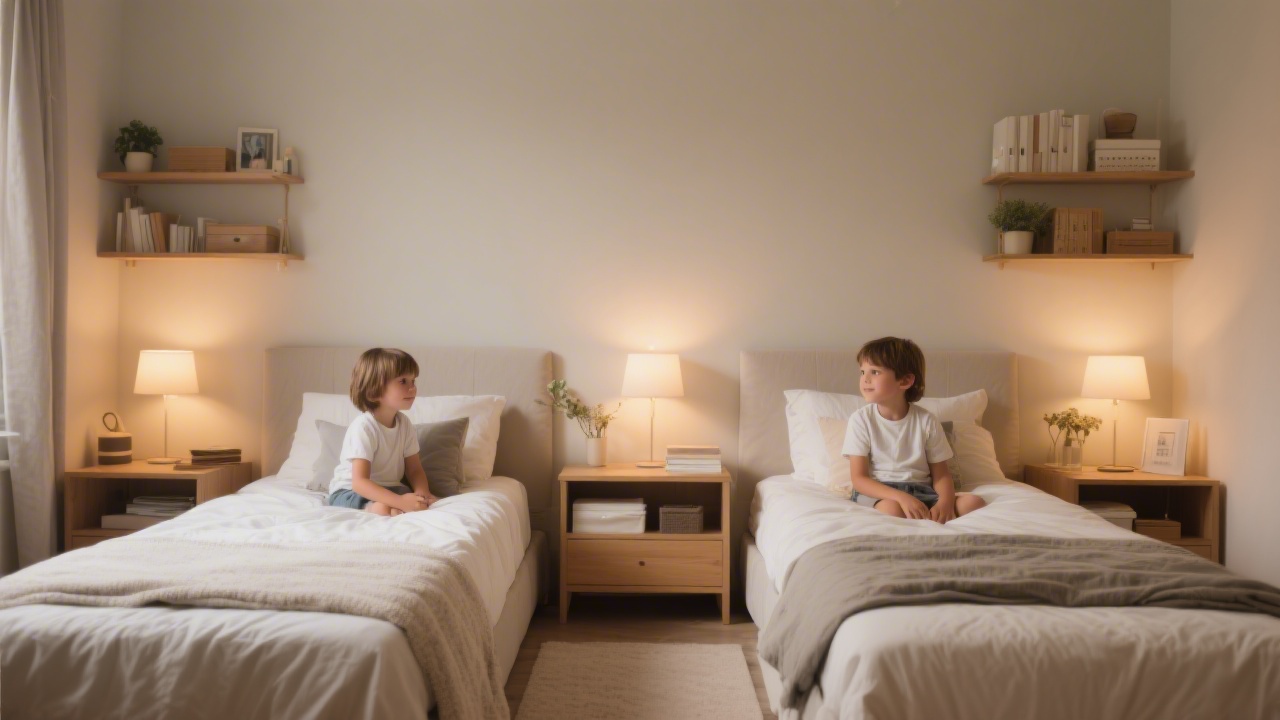
Sibling Room Sharing
Siblings sharing a room creates a different set of challenges: mismatched bedtimes, one child's noise waking the other, and social dynamics that extend bedtime. Strategies:
Staggered bedtimes
Put the younger or earlier-sleeping child down first while the older sibling is in another room. Once the younger child is settled (typically 20-30 minutes), the older sibling enters quietly. This prevents the stimulation of simultaneous bedtime competing for attention.
White noise as a divider
White noise between the beds creates an acoustic zone that reduces the chance of one child waking the other. Even modest noise masking — a box fan, a white noise machine set to medium volume — significantly reduces cross-waking.
Separate light zones
If one child needs a nightlight and the other sleeps better in darkness, use a directional nightlight that illuminates one side of the room. The light-sensitive child faces away from it. This small adjustment prevents the common situation where one child's nightlight disrupts the other's sleep onset.
Room Sharing with a Partner
Partner room sharing disrupts sleep primarily through snoring, different body temperature preferences, and schedule mismatches. Evidence-based interventions:
Mattress selection
Motion transfer is the primary mechanical issue in partner sleep. A mattress with poor motion isolation transmits every movement across the sleep surface. Pocketed coil mattresses with individually wrapped springs and memory foam or latex comfort layers significantly reduce motion transfer compared to traditional innerspring systems.
Sleep schedule mismatches
Partners with significantly different chronotypes (early bird vs. night owl) can minimize disruption through: using amber-tinted glasses in the hour before bed (preserves melatonin of the sleeping partner when lights come on); using a red-spectrum reading light rather than overhead lighting; and establishing consistent quiet hours after the earlier sleeper goes to bed.
Temperature conflicts
Individual temperature preferences differ by 2-4°F in most couples. A cooler room with a heavier blanket for the cold-running partner is more effective than a warmer room with a lighter blanket for the warm-running partner, since overheating is more disruptive to sleep quality than mild cool.
Managing Light in Shared Rooms
Light is the primary circadian signal. In shared rooms, uncontrolled light exposure creates misaligned circadian rhythms over time. Blackout curtains are the highest-value environmental investment for any shared sleep space, regardless of the occupants' ages.
Our Top Pick for Kids & Teens
The Saatva Classic Mattress is designed for growing bodies — with dual-sided firmness for different ages, organic cotton cover, and verified spinal support.
Frequently Asked Questions
Until what age should babies room share?
The American Academy of Pediatrics recommends room sharing for at least the first 6 months and ideally through the first year. Room sharing (with the infant in their own sleep surface, not the parent's bed) is associated with a 50% reduction in SIDS risk. After 6 months, the decision to continue or move the infant to their own room depends on family circumstances and infant sleep patterns.
Does room sharing with siblings cause sleep problems?
Room sharing siblings experience more frequent night waking than solo sleepers, primarily due to cross-arousal — one child's movements or sounds waking the other. With staggered bedtimes, white noise, and separate light zones, most siblings can sleep adequately in shared rooms. The main long-term risk is establishing a social dependency where one child cannot sleep without the other present.
What is the best type of mattress for couples with different sleep preferences?
A hybrid mattress with individually wrapped pocketed coils and a medium-firm feel addresses the most common couple sleep conflicts. Pocketed coils minimize motion transfer better than traditional innerspring. If temperature preferences differ significantly, a mattress with active cooling on one side or a dual-firmness construction addresses the remaining issues.
How do I stop my baby from waking me up with every movement?
White noise is the most effective tool for masking infant sleep cycle sounds that would otherwise rouse a light-sleeping parent. Set the white noise at consistent moderate volume (50-55 dB, roughly the sound of a shower) rather than loud or varying volume. This masks the small sounds of normal infant cycling without masking true waking cries that require response.
Can room sharing cause a baby to develop poor sleep habits?
Room sharing itself does not cause poor sleep habits. Specific parenting responses to nighttime sounds in a room-sharing situation can. Parents who respond to every sound (rather than waiting briefly to assess whether the infant is truly awake) are more likely to create unnecessary sleep associations. Using white noise reduces the likelihood of parents being alerted to every normal sleep cycle sound.