
 by
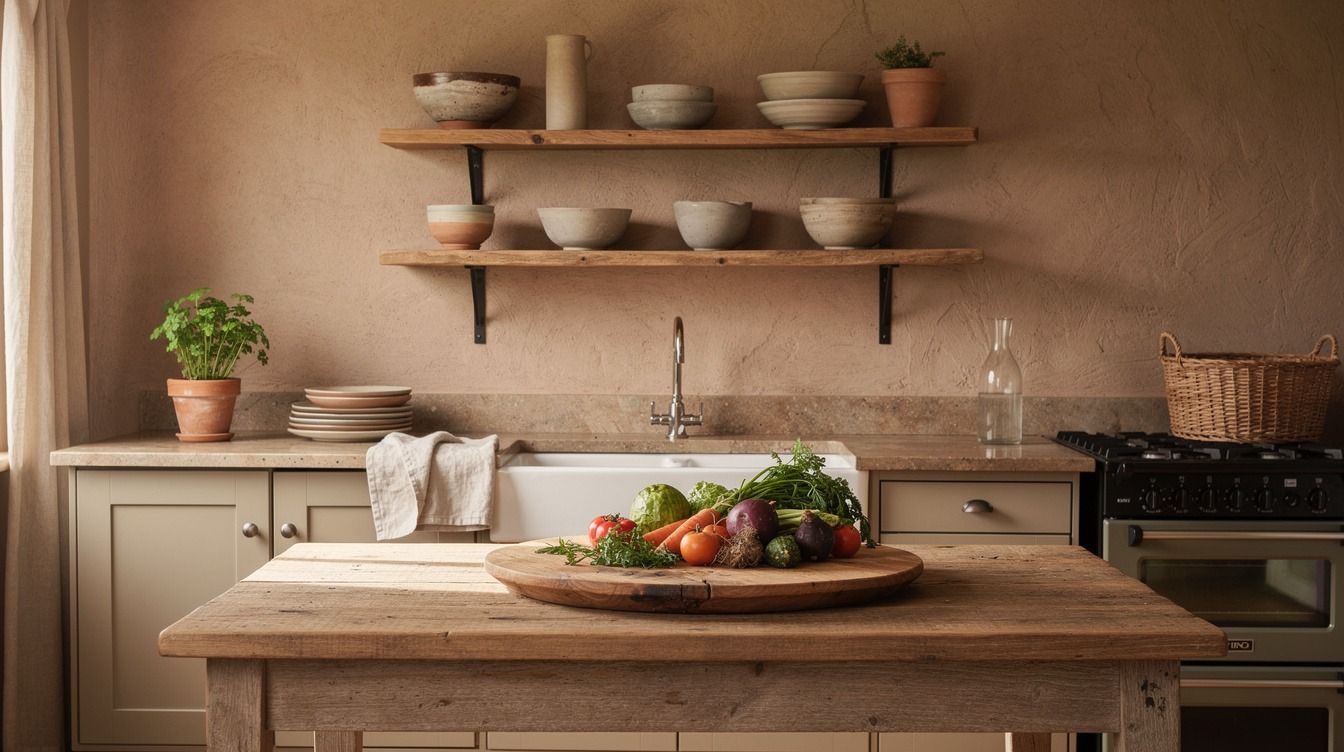
by Rustic cottage kitchen ideas work when you build warmth in layers, not when you buy a cart full of matching “farmhouse” decor. I've watched cold white kitchens turn inviting with paint, wood, and a few imperfect pieces. Start with the surfaces you touch every day. Then let the room earn its character.
- Start with a quiet, earthy wall color
- Anchor the room with the Two-Wood Rule
- Let painted cabinets carry the rustic country kitchen decor
- Measure your counters before you add anything
- Build the Three-Height Light Stack
- Hang shelves where your eye already pauses
- Mix handmade ceramics with everyday whiteware
- Choose zellige over glossy subway tile
- Can rustic small kitchens handle a real island?
- Bring in one old piece with a job to do
- Swap bright hardware for unlacquered brass
- Frame the sink with fabric instead of more cabinetry
- Layer a washable runner underfoot
- Use the Hearth-and-Pantry Principle for storage
- Add a table that invites someone to linger
- Choose a countertop by touch, not trend
- Keep the cost plan honest before you start
- Edit until the kitchen feels used, not crowded
1Start with a quiet, earthy wall color
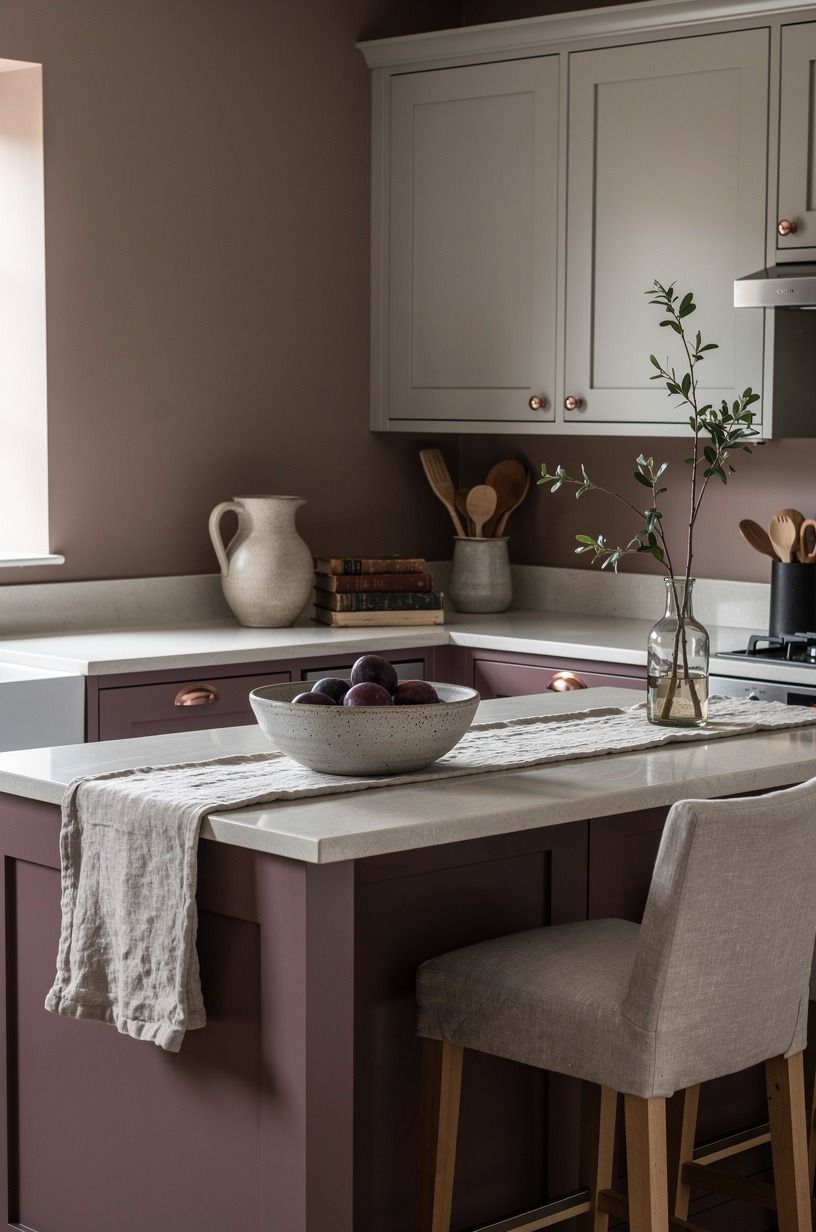
Paint is the fastest way to make your kitchen feel less borrowed from a builder showroom. Try a softened plum wall with grey cabinetry and rose-gold-toned details when you want warmth that still feels restrained. Washed Belgian linen at the window keeps the palette from feeling too formal.
You’ll get more depth if you keep the ceiling pale and let your eye land on the color below counter height. I’d skip bright greige here, because it makes terracotta, oak, and aged metal look oddly dusty. For more color direction, see these dark cottage kitchen ideas.
2Anchor the room with the Two-Wood Rule
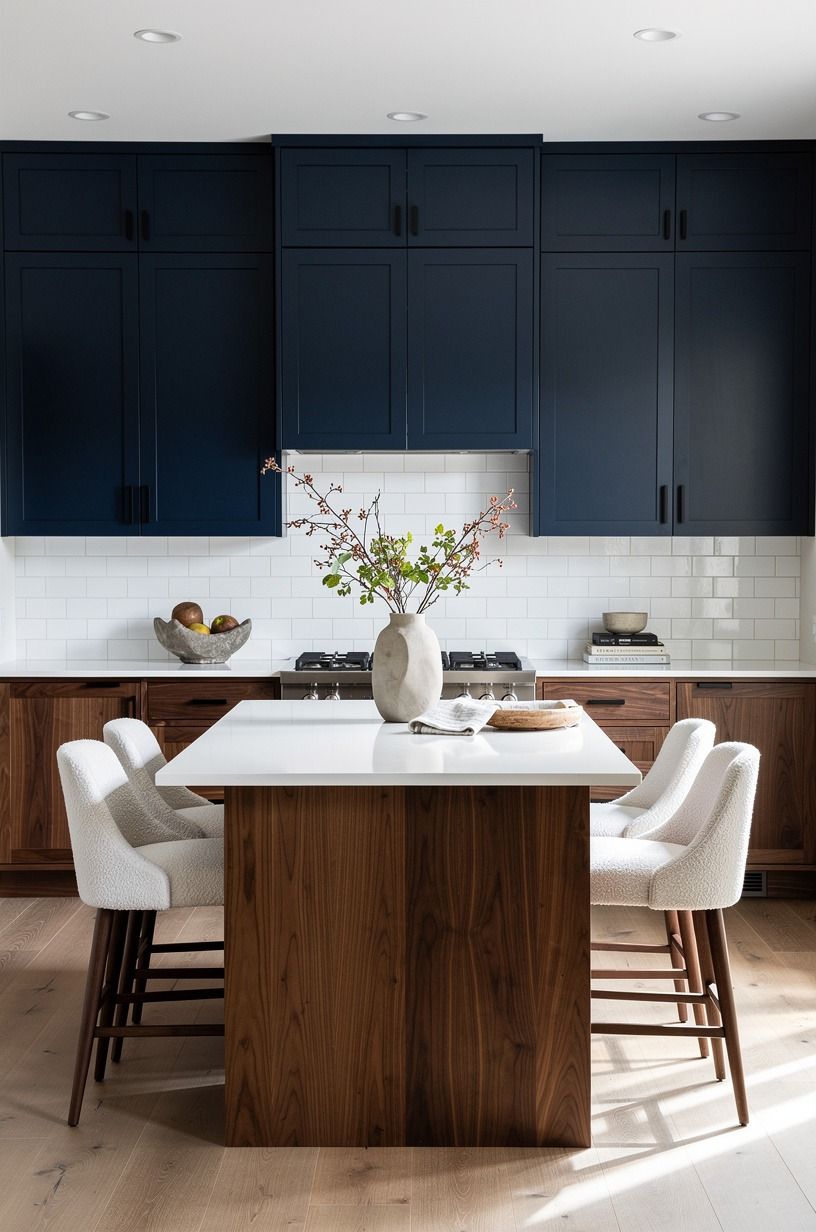
Choose two wood tones, then stop. A dark walnut shelf and a pale painted stool create enough contrast; adding walnut, pine, bamboo, and painted faux wood all at once makes your kitchen look like a clearance aisle.
Keep one wood pale and one wood weathered. You can use walnut for the permanent pieces and an organic bouclé seat for the things that soften the room. And yes, small kitchens can handle contrast.
They need it.
3Let painted cabinets carry the rustic country kitchen decor
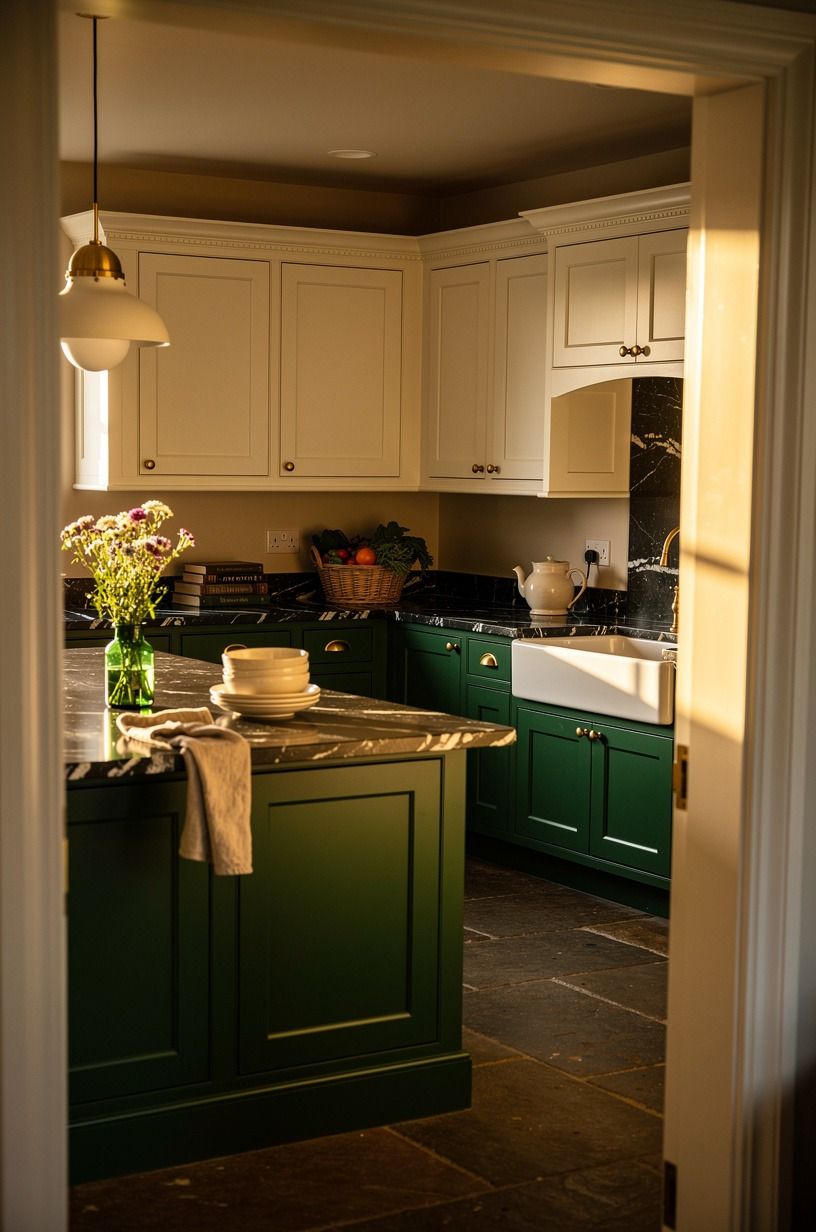
Repainting cabinet fronts gives you a much bigger visual shift than replacing every handle. A deep emerald green looks rich beside cream walls and a Nero Marquina marble counter, especially when brass details pick up its gold-toned warmth.
Use it on lowers or a pantry wall if you’re nervous. You don’t need every cabinet painted dark, and I wouldn’t do it in a kitchen with weak daylight.
Your upper cabinets should keep the room breathing. For a related look, borrow from these rustic farmhouse kitchen ideas.
4Measure your counters before you add anything
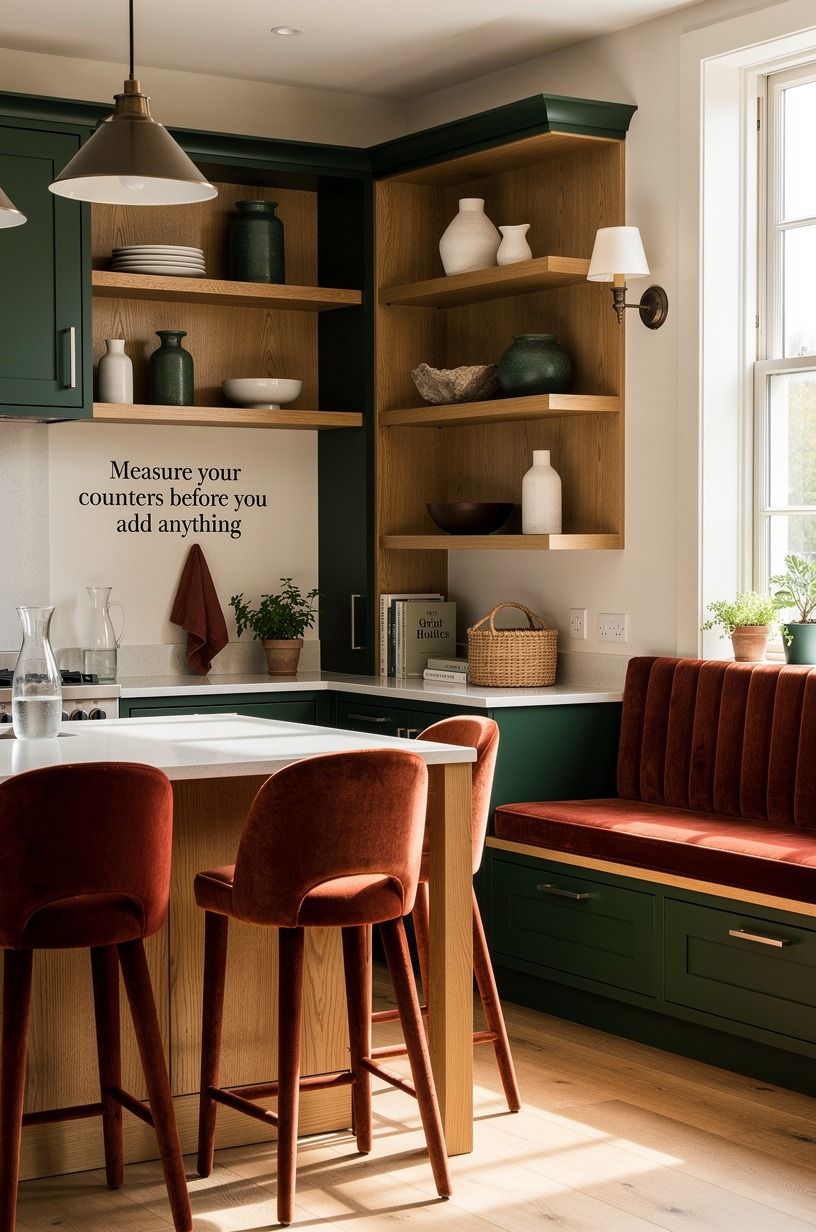
A standard counter sits at 36 in (91 cm) high, so your daily objects need to stay low enough that you can still work.
5Build the Three-Height Light Stack
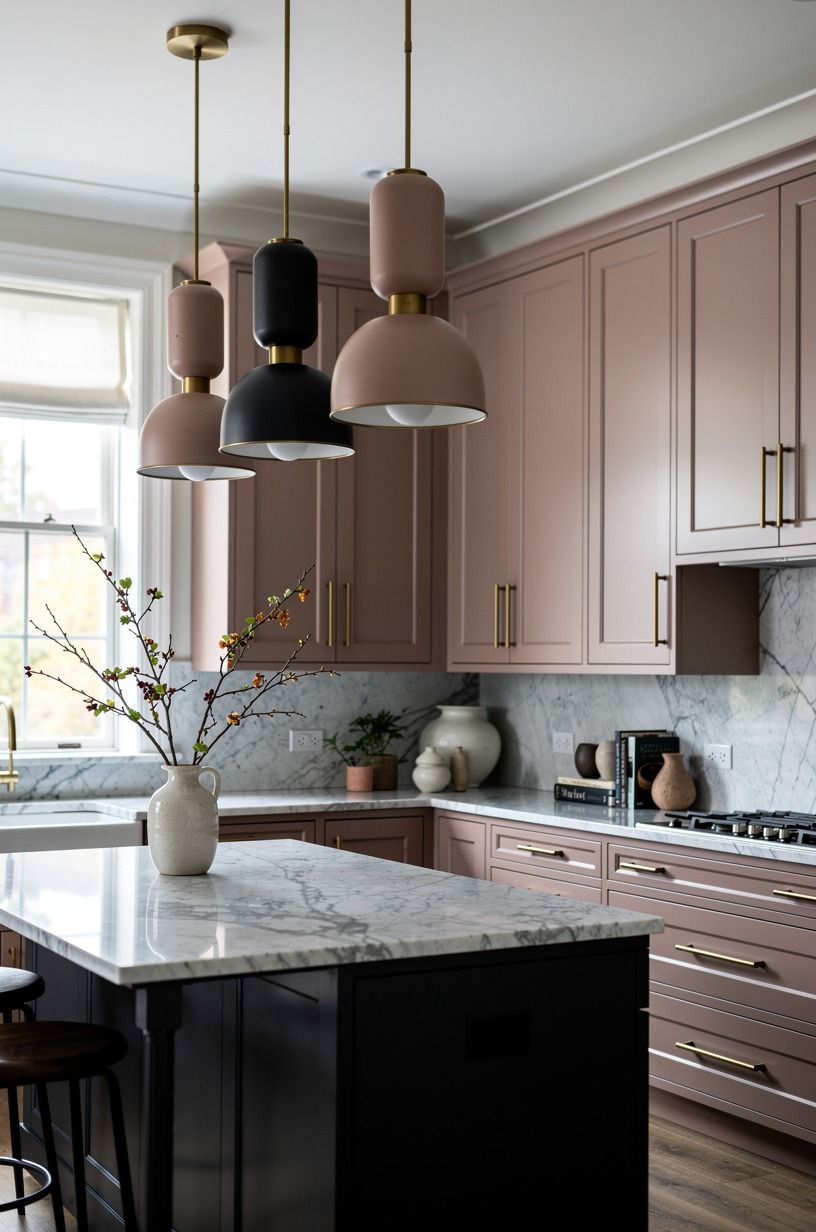
Your kitchen shouldn’t rely on one ceiling fixture, even if that fixture was expensive. Layer a pendant, a small lamp, and under-cabinet glow so you can choose the light that fits the moment.
Use brass picture lights over open shelves, then add a tiny lamp near the sink with a warm bulb. Dusty rose, charcoal, and a Carrara marble worktop make that softer light feel especially inviting after dinner. But keep the shades simple.
Pleated floral lampshades can tip costume-fast.
6Hang shelves where your eye already pauses
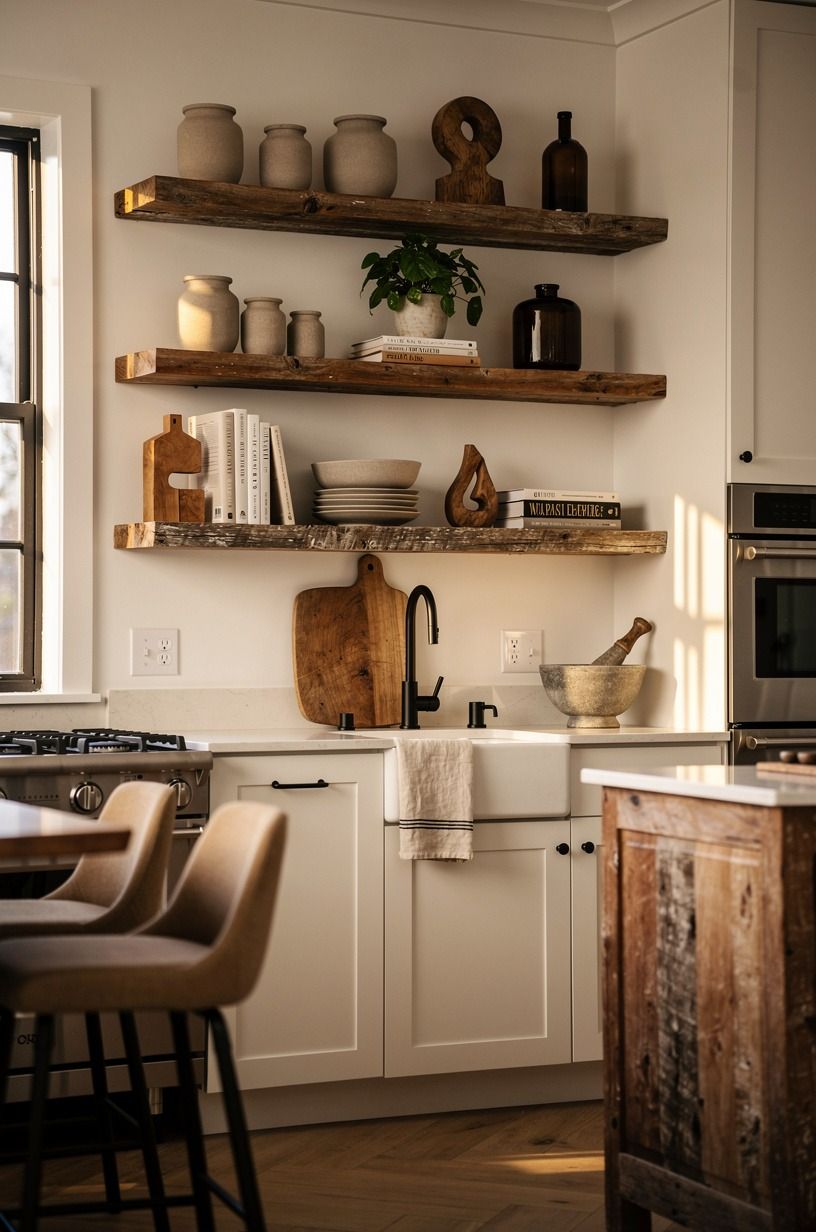
Open shelving works best on the wall you naturally face, not on every blank stretch of drywall. A shelf above a prep counter lets you keep plates, bowls, and jars close without turning your kitchen into a staged pantry.
Try reclaimed weathered teak brackets with a shelf deep enough for dinner plates. You’ll want the display to look used, so stack your everyday bowls rather than hunting down matching props.
I’d avoid glass shelves because the hard shine fights the handmade mood. These kitchen cabinet curtain ideas can soften the lower storage nearby.
7Mix handmade ceramics with everyday whiteware
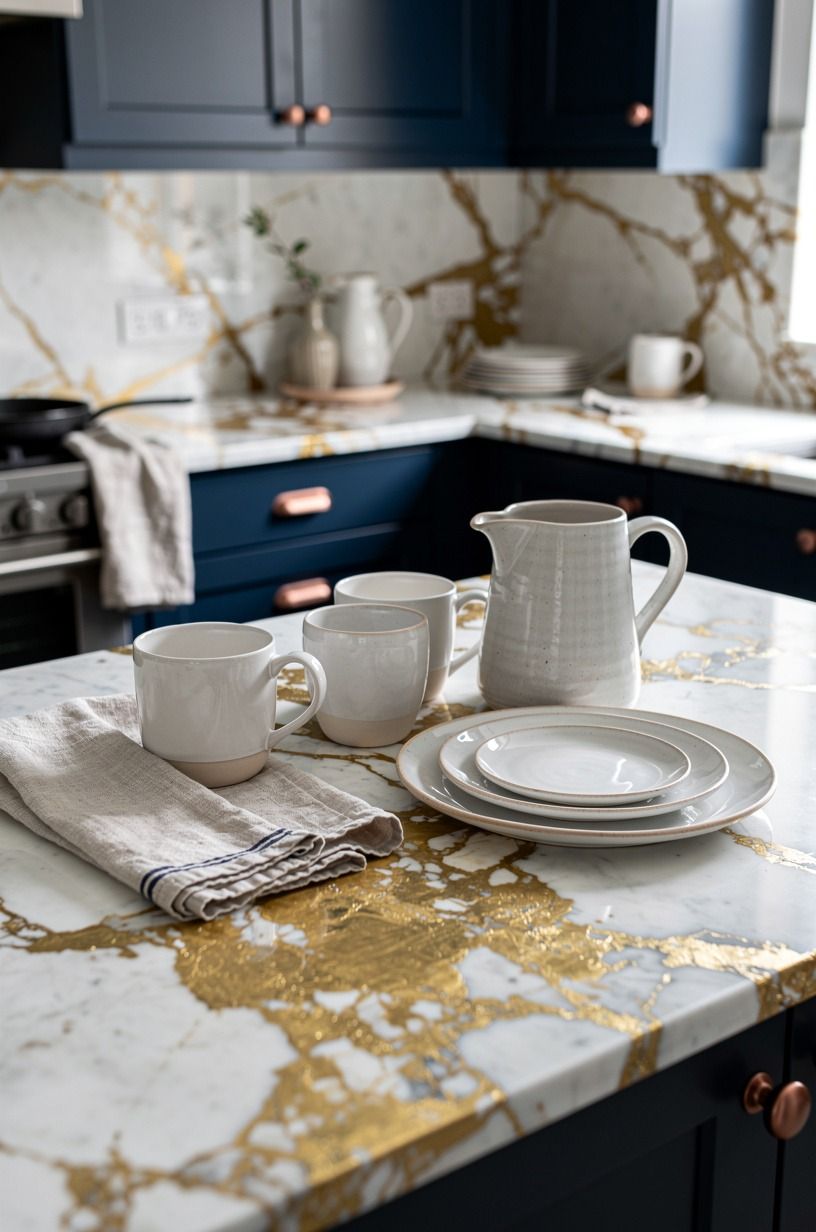
Your basic plates don’t need replacing. Put them beside two or three pieces with irregular edges, flecks in the glaze, or a soft brown rim, and suddenly the whole shelf feels more lived-in.
An ivory pitcher. A copper-rimmed bowl. One small midnight-blue jar holding wooden spoons beside Calacatta marble with fine gold veining.
You’re aiming for collected, not precious. And if every piece is handmade, it can start to feel like a gift shop, which isn’t the point.
8Choose zellige over glossy subway tile
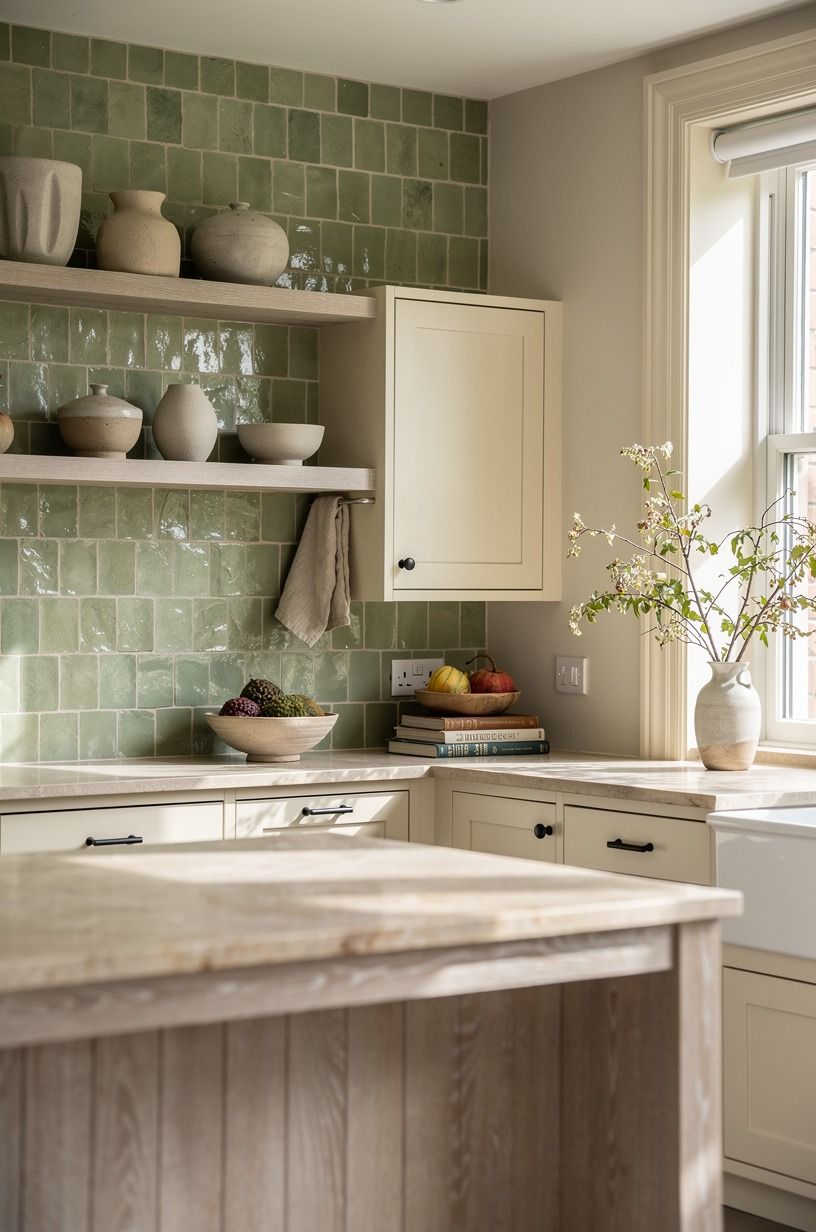
If you’re changing a backsplash, I’d choose hand-glazed sage zellige over perfectly smooth white subway tile. Zellige catches light in little uneven patches, so your wall changes from morning to evening instead of sitting flat behind the counter.
Leave the usual 18 in (46 cm) gap between counter and uppers clear for the tile field. Typical zellige runs $15-$35 per sq ft, and it’s worth seeing samples in your own light before committing. Cerused white oak keeps the sage, cream, and natural wood palette from feeling too sweet.
For more handmade tile inspiration, browse these zellige bathroom ideas.
9Can rustic small kitchens handle a real island?
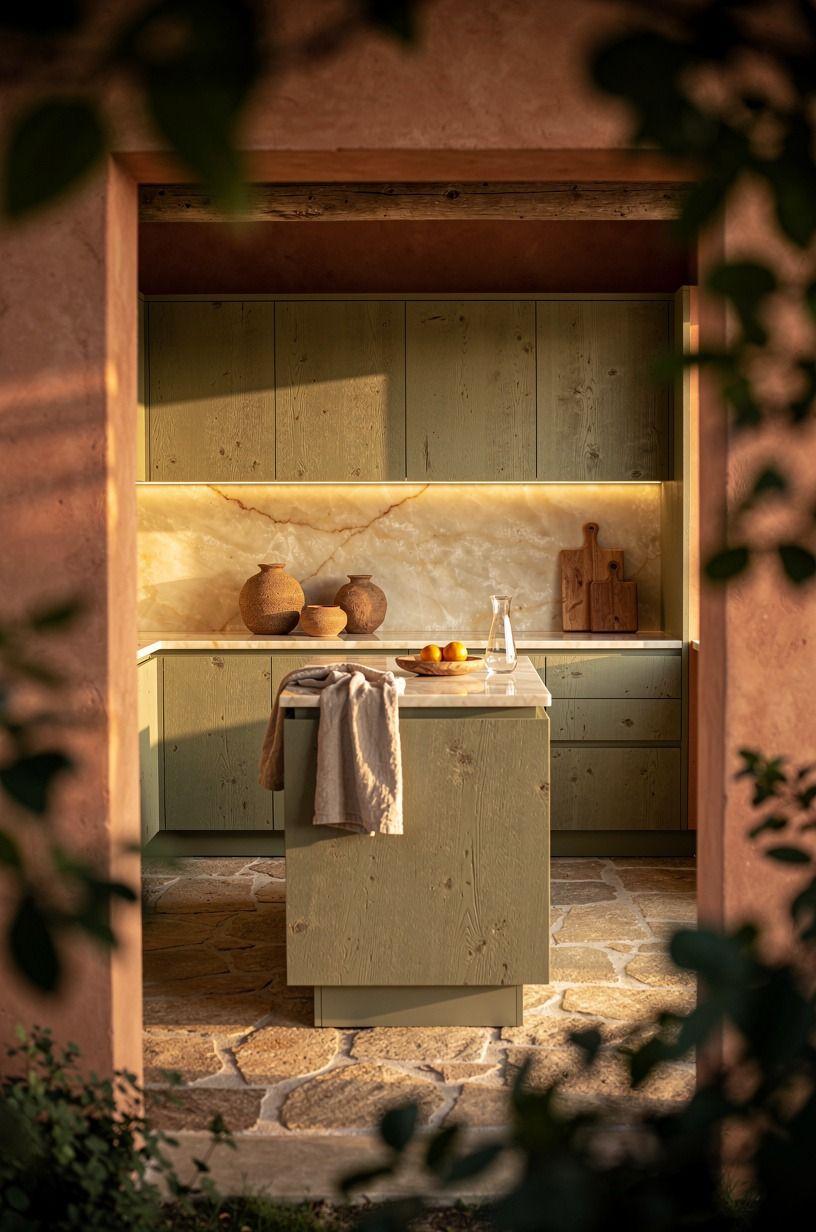
Yes, if you protect circulation first. You need 42-48 in (107-122 cm) of clearance around an island, so a narrow olive-painted table or stone-topped butcher block is smarter than forcing in a huge boxy unit.
Try an IKEA TORNVIKEN island only if your walkways can handle it. Otherwise, a small antique table with a translucent onyx surface gives you prep space and a place for a basket underneath. Why buy an island that turns every trip to the fridge into a sideways shuffle?
You’ll resent it by week two.
10Bring in one old piece with a job to do
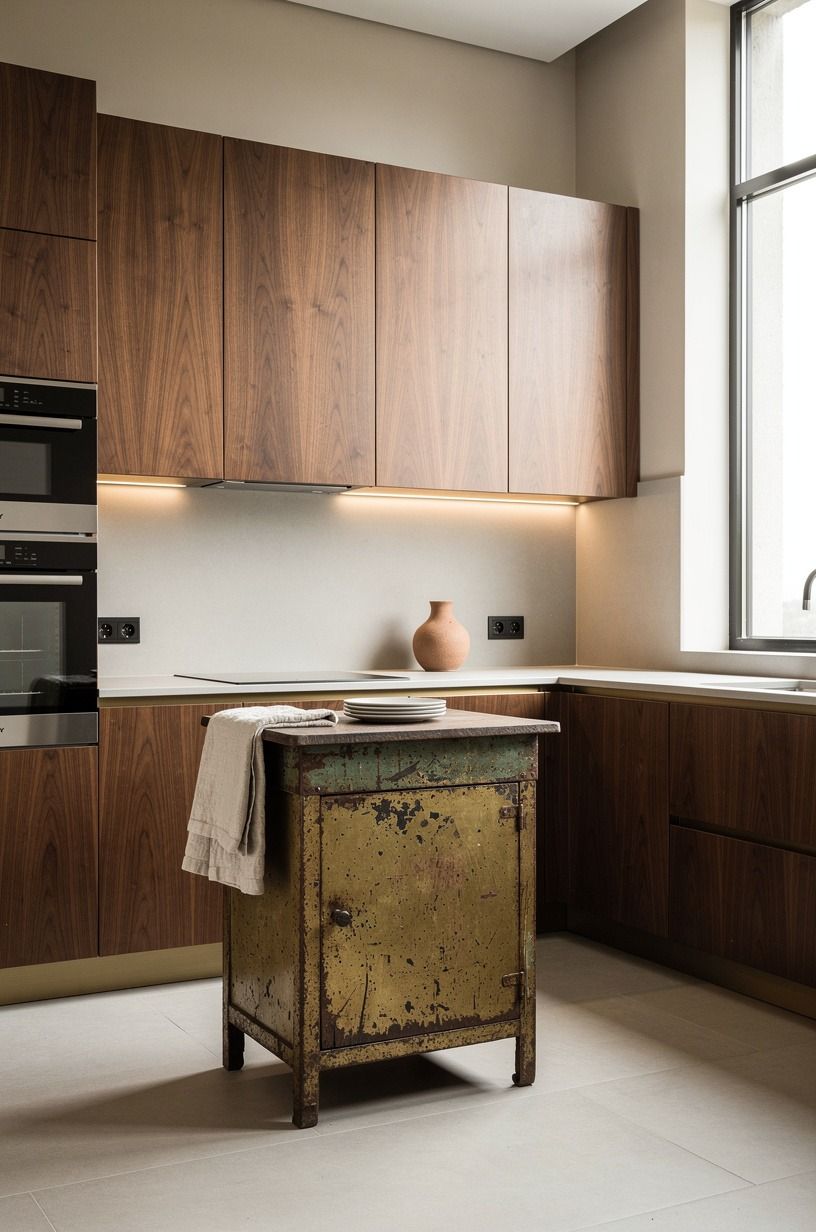
A rustic cottage kitchen needs at least one thing that wasn’t bought new for this room. Maybe it’s a worn stool, an old hutch, or a narrow wall cabinet with paint rubbed off the corners.
I love a book-matched walnut board leaned behind the sink because it adds grain without stealing counter space. But don’t buy a fragile antique just to make it decorative.
Your old piece should hold linens, hide recycling, or give you a perch while coffee brews. Function makes the history believable.
11Swap bright hardware for unlacquered brass
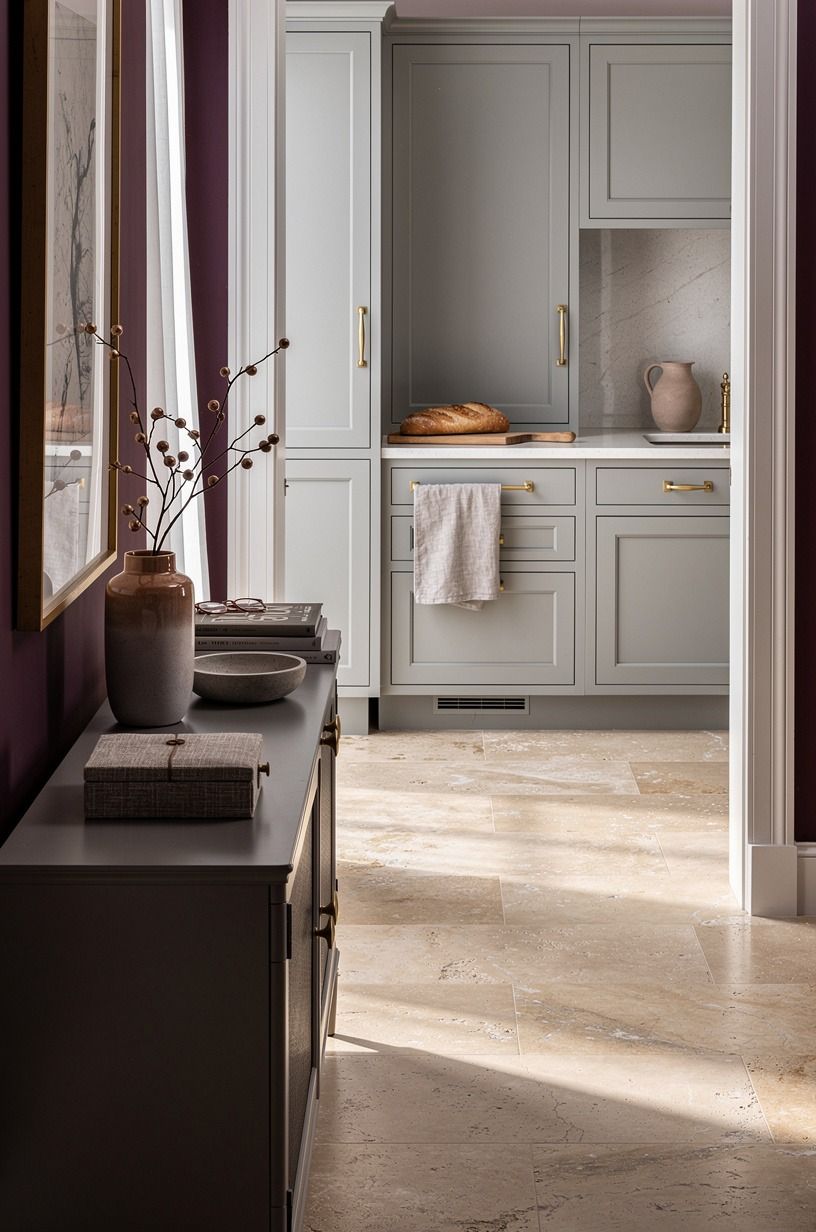
Cabinet hardware is small, but it’s close to your hands and your eyes, so cheap shiny finishes announce themselves immediately. Choose unlacquered brass cup pulls if you want a finish that dulls and deepens instead of staying mirror-bright.
The soft patina is the whole appeal. You don’t need to polish it, and you shouldn’t, unless you want every pull to look factory-new again. Against plum cabinets and warm travertine, brass gives your doors a gentle edge.
This one change feels oddly satisfying!
12Frame the sink with fabric instead of more cabinetry
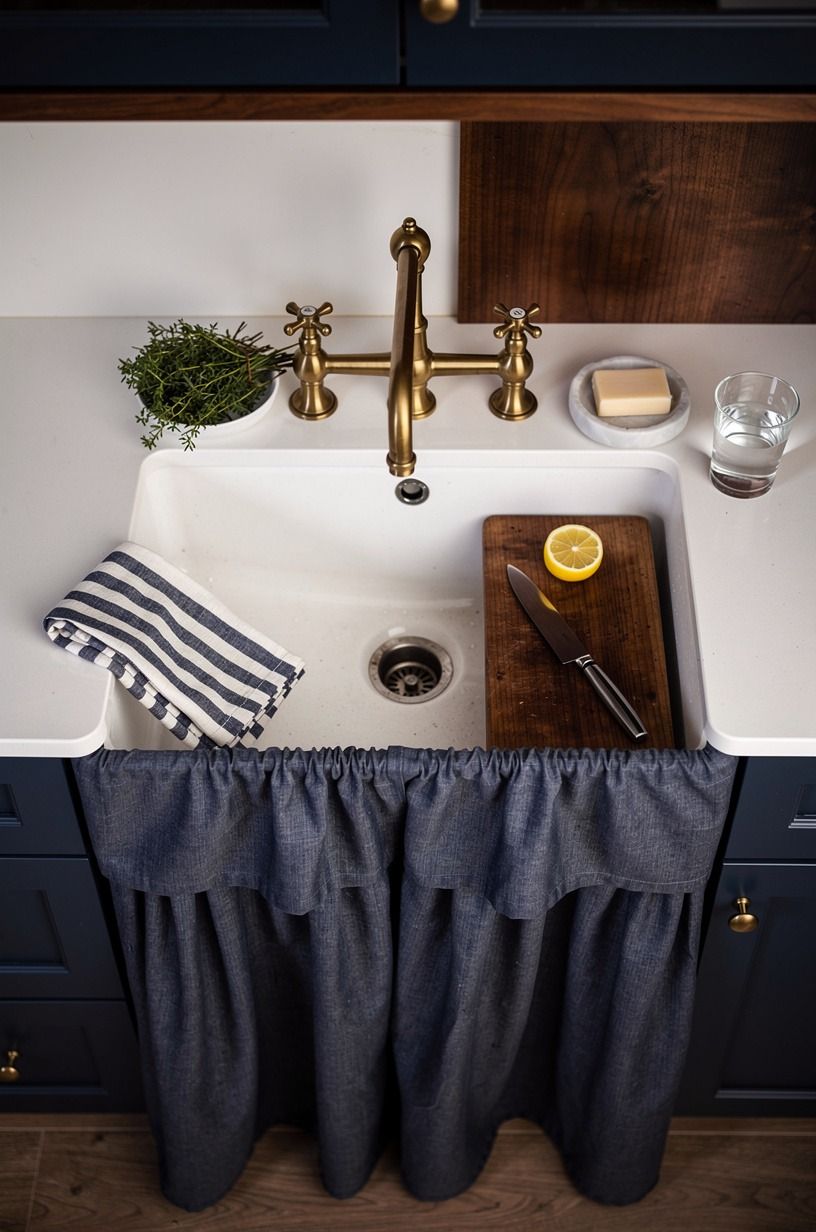
A sink skirt is one of the easiest rental-friendly moves in a cottage kitchen. Use an unlacquered brass tension rod under the counter, then hang linen in a small check, faded stripe, or plain oatmeal weave.
Your plumbing stays hidden, and the fabric softens all the hard cabinet lines. Keep the hem just above the floor so it doesn’t mop up splashes.
And wash it when needed, obviously. If you want more versions, these cabinet curtain ideas show where the fabric earns its keep.
13Layer a washable runner underfoot
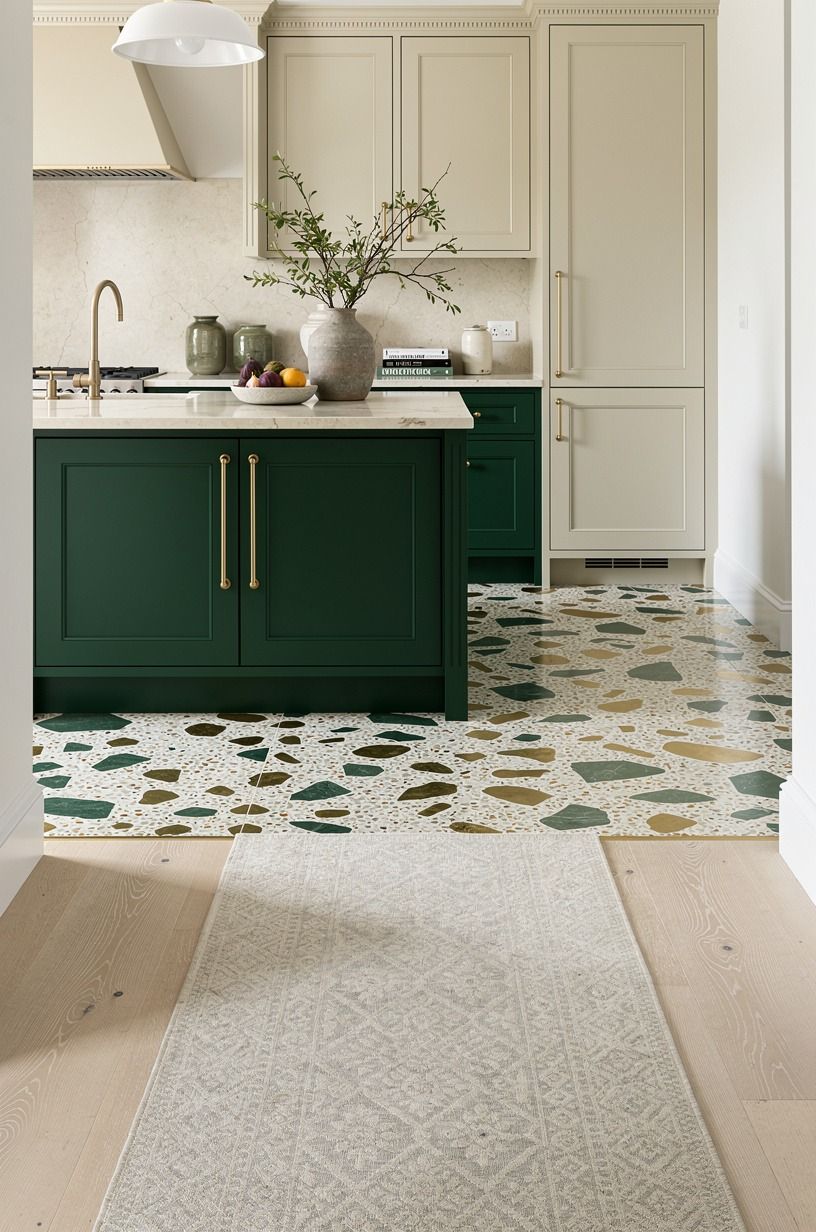
A runner makes the work zone feel grounded, especially in kitchens with plain tile or laminate floors.
14Use the Hearth-and-Pantry Principle for storage
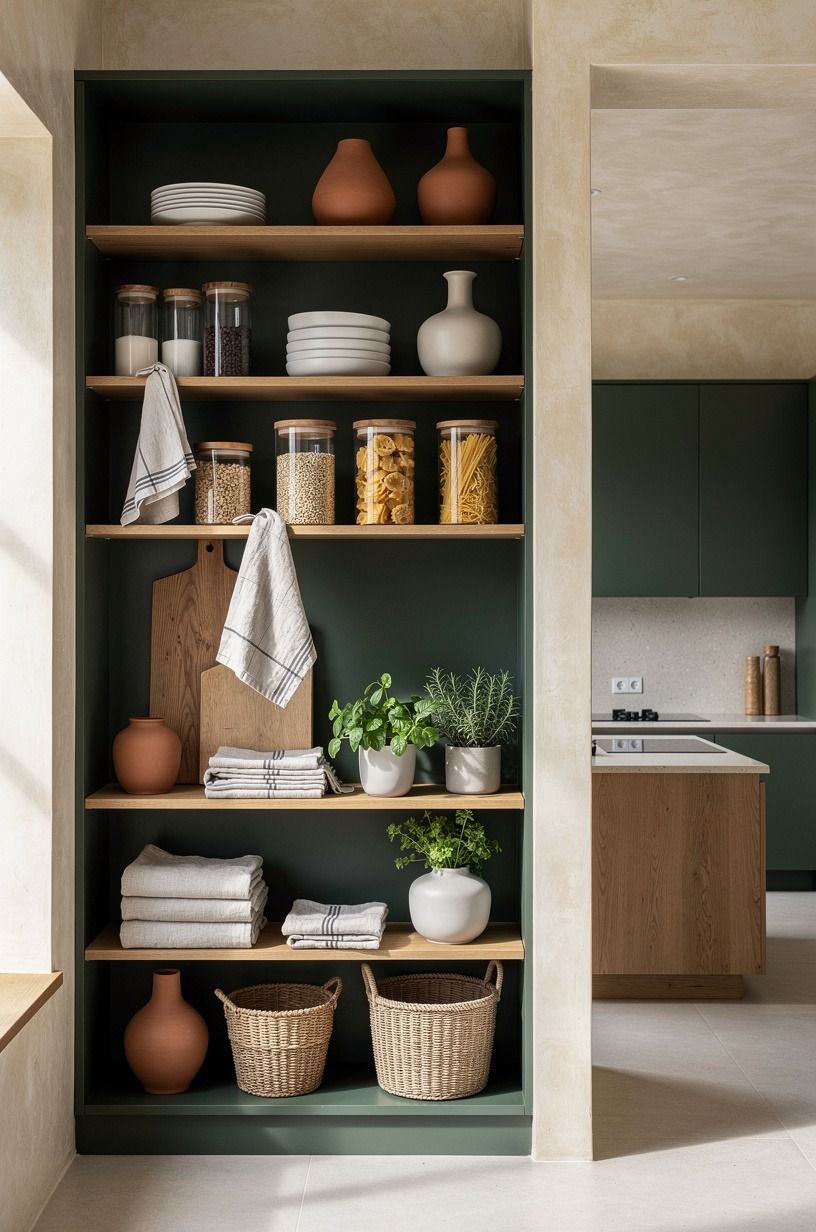
Put the warm-looking storage where people can see it, and hide the ugly useful stuff behind doors. This is the Hearth-and-Pantry Principle: flour jars, copper pans, and baskets can live out; blender bases and plastic bags shouldn’t.
Use painted shelves against hand-applied Venetian plaster for napkins or paper goods. You can keep labels handwritten and small, not giant farmhouse script. But don’t decant everything.
A few honest grocery packages make a kitchen feel active, and you don’t need another Sunday project.
15Add a table that invites someone to linger
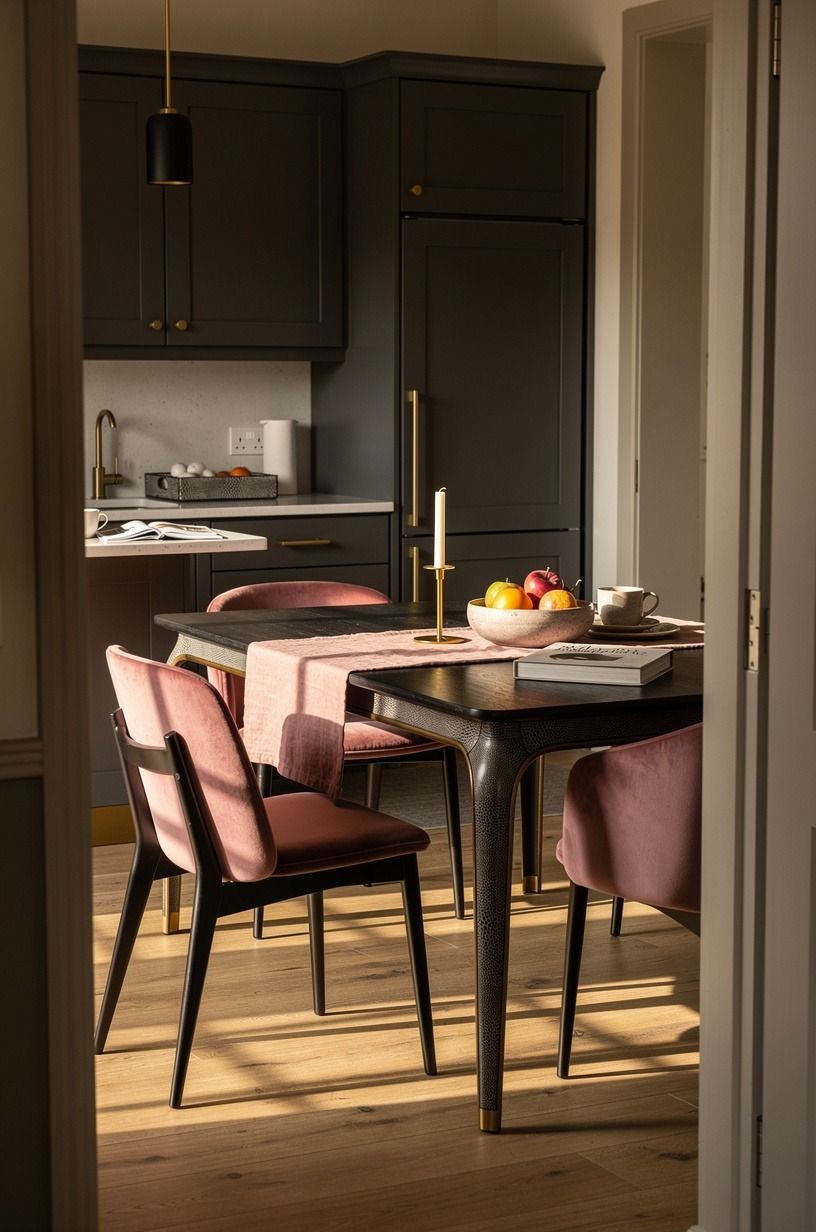
A cottage kitchen gets better when it has somewhere to sit besides a hard barstool. A small wood table, even one pushed against a wall, gives you a place to peel apples, answer emails, or have coffee while the oven warms.
Try a simple table with subtle shagreen accents and a charcoal chair, then add a seat cushion in dusty rose gingham. Your table doesn’t need to match the cabinets.
In fact, matching is usually the losing move because it makes the room feel purchased in one afternoon. Let the materials be a little different.
16Choose a countertop by touch, not trend
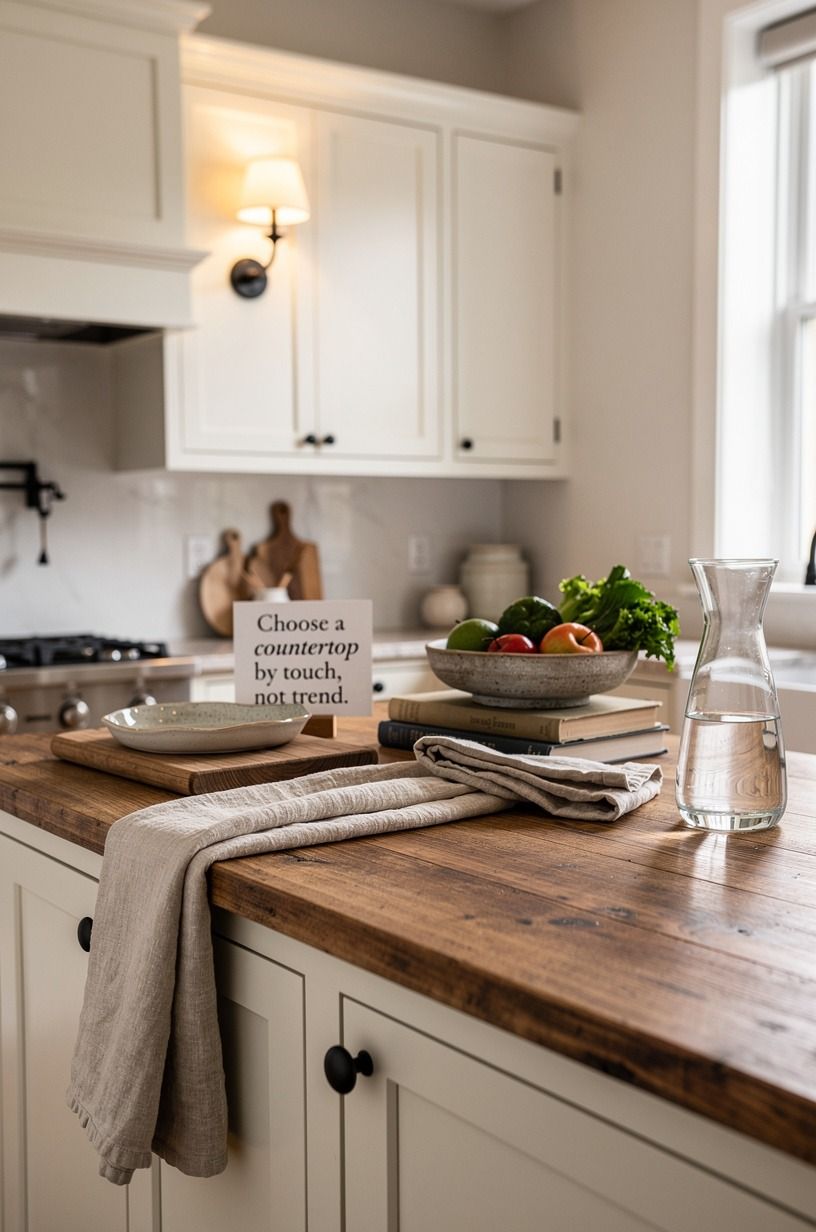
Countertops take the most physical wear, so your decision should start with how you cook and clean. Laminate typically runs $10-$40 per sq ft, while quartz is usually $60-$120 per sq ft, and neither choice is automatically more rustic.
A muted laminate with a soft stone pattern can look better than icy white quartz in a cottage kitchen. I’d skip heavily veined quartz if the rest of your room is humble, because it starts shouting over the wood and washed Belgian linen. A honed travertine-look laminate is softer, calmer, and easier on the budget.
17Keep the cost plan honest before you start
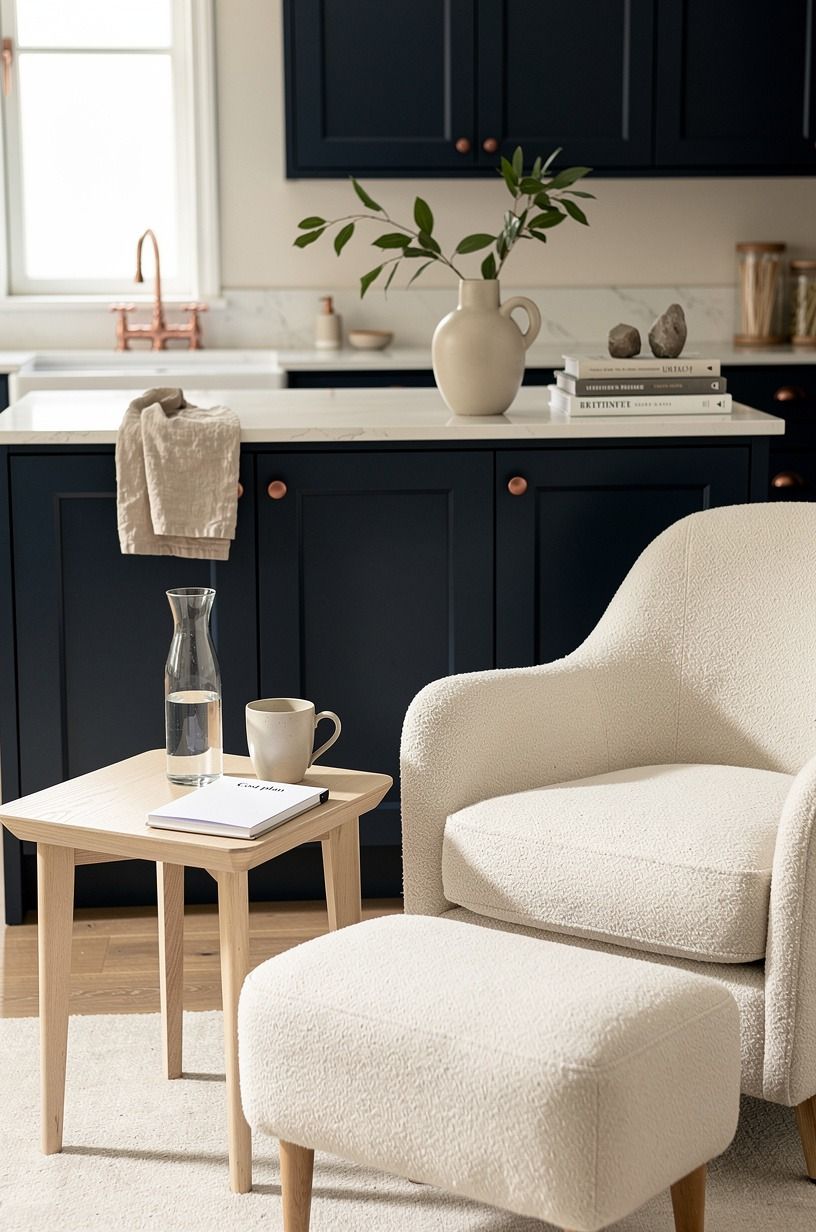
You can make a rustic cottage kitchen feel handmade without pretending every project is cheap. Use the cosmetic tier for paint and details, then save the bigger money for the surfaces you truly can’t live with.
If you’re spending $3,000-$12,000, put some of it into lighting and a faucet you’ll touch daily. Midnight blue, copper, ivory, and an organic bouclé seat can make even a modest refresh feel considered.
Don’t burn the whole budget on a dramatic backsplash before fixing the awkward parts. For outdoor cooking inspiration that uses the same warm materials, see these rustic outdoor kitchen ideas.
18Edit until the kitchen feels used, not crowded
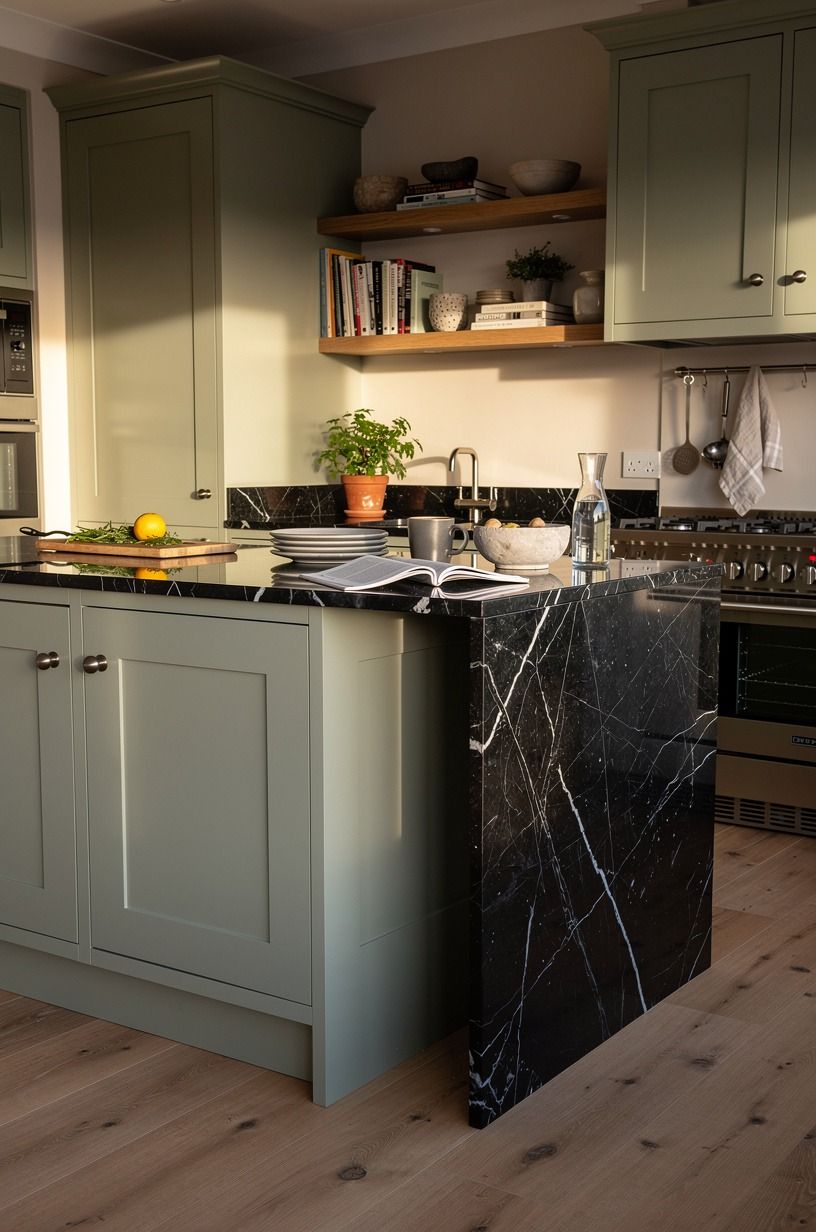
Take one pass through your finished kitchen and remove the pieces that don’t help you cook, sit, store, or smile. You’re not trying to fill every shelf. You’re trying to make your ordinary Tuesday morning feel softer.
Keep a Nero Marquina marble work surface clear enough to use, with one useful bowl of lemons nearby. Lose the fake bakery signs and five matching canisters. But leave a little room for life (mail, a mug, a grocery list).
That’s where the character shows up.
Why I Think Imperfection Matters More Than “Rustic” Style
I’ve gone back and forth on the word rustic because it gets used as a shortcut for too many things: distressed signs, fake barn doors, black-and-white labels, a pile of objects that look old but have never done a useful thing. That version feels tired to me.
It treats age as a costume. A good cottage kitchen feels different because the wear has a reason. The cutting board is scarred because you cook on it.
The brass has darkened because your hands keep opening the same drawer. The linen is wrinkled because you washed it and put it back up.
When I was younger, I thought a room had to look finished to feel good. I’d fuss with every open shelf until it looked like nobody lived there, then wonder why the result felt tense.
Now I think the better question is whether your kitchen makes daily work easier and nicer. Can you reach the salt without moving a ceramic rabbit?
Can your guest lean on the counter while you chop vegetables? Does the lamp by the sink make you want to stay for one more cup of tea?
That doesn’t mean ignoring proportion or budget. It means choosing the places where imperfection helps.
A wobbly flea-market table that can’t hold a bowl of soup is just annoying. A scratched pine table that seats three people comfortably is a keeper. I’d spend money on the things your body notices: workable clearance, quiet lighting, solid pulls, and a chair that doesn’t bite the backs of your legs.
The decorative layer comes after that.
And yes, the room can be a little messy. A little human. That’s the whole point.
The Questions I Get Asked Most
What is the best rustic cottage kitchen look for a small kitchen?
The best choice is painted lower cabinets with pale walls and open wood shelving. IKEA TORNVIKEN pieces give you useful storage without making your small kitchen feel boxed in. Keep your tallest objects at the back, and protect clear walking space.
Where can I buy rustic cottage kitchen pieces on a budget?
Start with IKEA HEMNES, Target Threshold, and Wayfair’s cottage-style storage lines. You can also find older stools, boards, and brass hardware through thrift stores or Facebook Marketplace. Your best budget buy is often one worn wood piece with a real use.
How much does a rustic cottage kitchen makeover cost?
A cosmetic rustic cottage kitchen makeover usually costs about $300-$1,500. Paint, pulls, a washable runner, and removable backsplash cover a lot of visual ground. Your free moves include editing counters, rearranging shelves, and repurposing bowls or baskets you own.
Can I create a rustic cottage kitchen on a budget?
Yes, and you don’t need new cabinets to do it. Benjamin Moore White Dove OC-17, secondhand wood, and a tension-rod sink skirt can change the mood for far less than a remodel. Paint the tired surface first, then layer useful texture.
Is a rustic cottage kitchen worth it in a small space?
Yes, because a small kitchen benefits from clear zones and warmer materials. Unlacquered brass hardware gives you character without taking any floor area. Use one narrow table or rolling cart, then keep the middle of your kitchen open.
Is a rustic cottage kitchen a good idea for a rental?
Yes, if you use reversible changes. Peel-and-stick backsplash panels, tension rods, removable hooks, and washable runners bring the look without risking your deposit. Skip permanent cabinet changes unless your landlord has approved them in writing.
Where I’d Start First
If I had to pick one step, I’d start with the wall color. You can’t layer warmth over a cold backdrop, because every wood board and brass pull will fight it. Pin your paint choice for later, then build the rest around that quiet, earthy base.