
 by
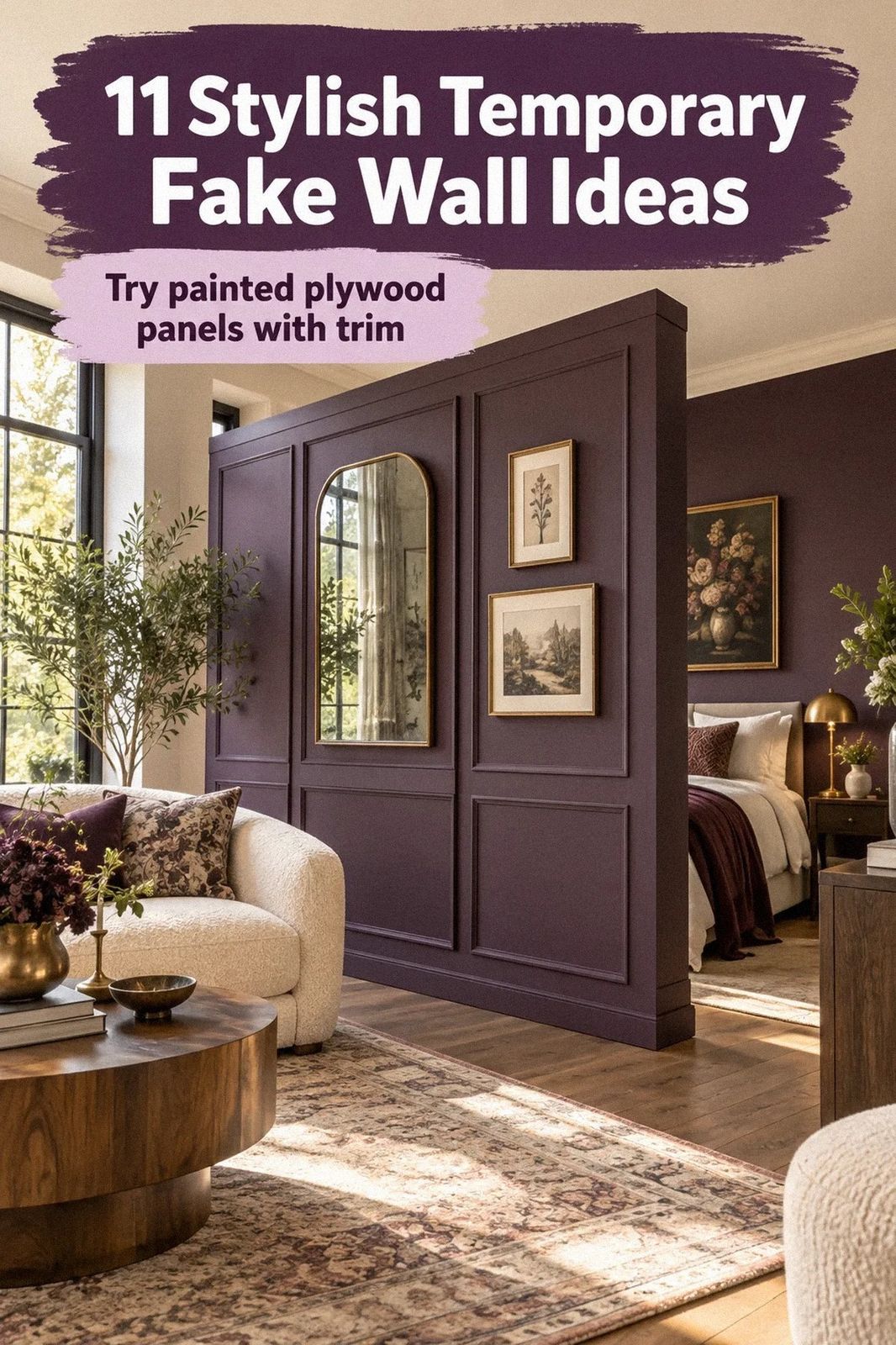
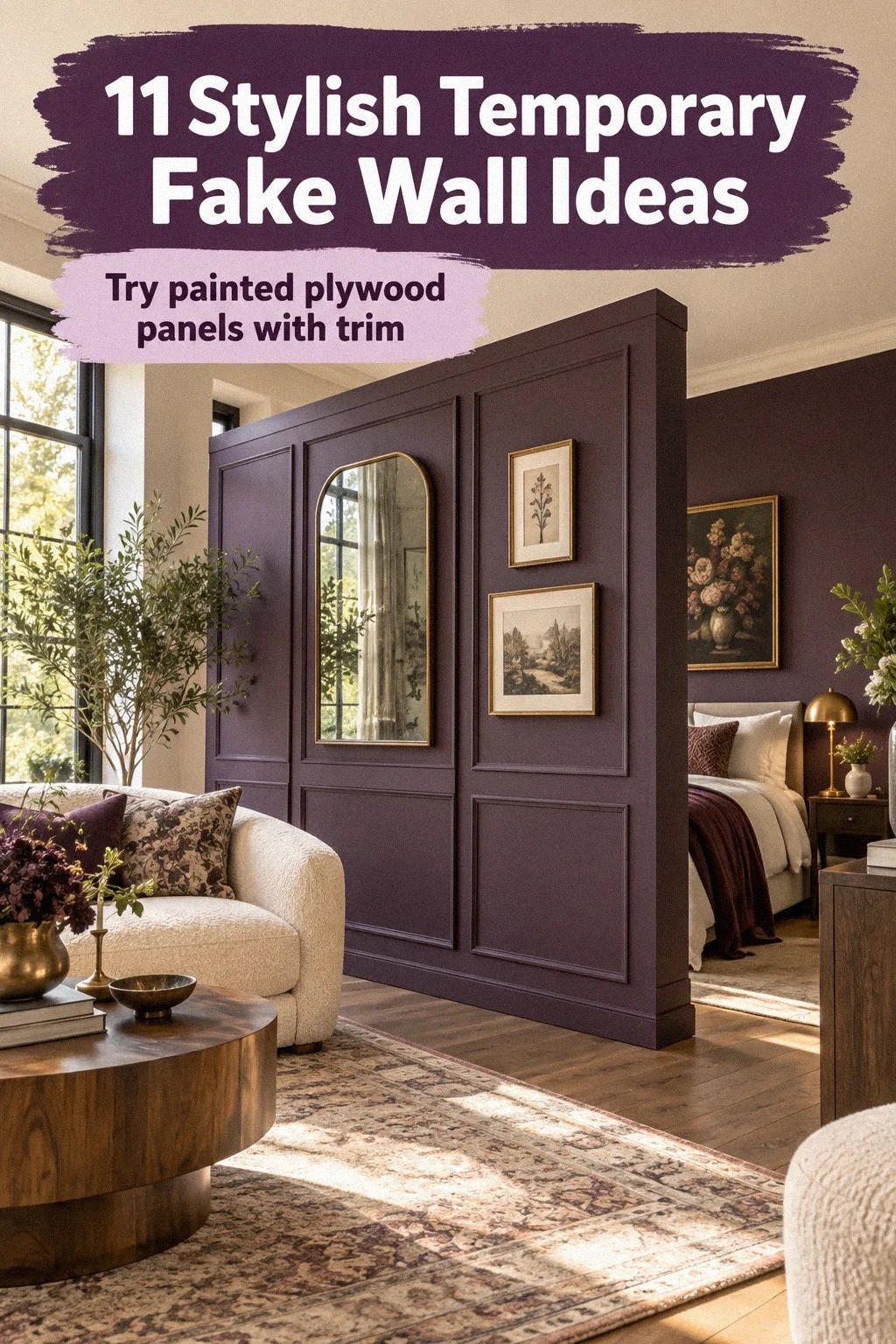
by Temporary fake wall ideas that leave no damage work best when the wall can stand on its own, breathe, and come apart cleanly. I once taped a lightweight panel straight to painted drywall, and the paint came off with it. Now I use freestanding frames, tension, and weight. Your rental can still feel warm, polished, and personal.
- Build the Freestanding Spine for Fake Walls Room Dividers
- Create a Tension-Rod Temporary Wall Divider
- Float Slatted Panels Over a Solid Partition
- Anchor a Bookcase Instead of a Solid Wall
- Frame a Green Screen with the Two-Wood Rule
- Hang a Fabric Panel for the Soft Boundary Method
- Can a Fabric Wall Feel Architectural?
- Swap Peel-and-Stick Panels over Solid Construction
Before You Build: Give the Wall a Job
A temporary wall should solve something specific. Maybe you need privacy around a bed, a visual boundary between work and rest, or storage that doesn’t dominate the room. When the purpose is clear, the design usually becomes calmer.
Start by measuring the walkway, ceiling height, window swing, and furniture depth. You’ll want at least 30 to 36 inches for a comfortable main passage. If the divider makes you turn sideways, it’s too ambitious for the room.
For more no-drill inspiration, browse these renter-friendly wall ideas for boring white bedroom walls. The best solutions feel intentional, not apologetic!
The Lease-Safe Material Test
Before committing to any system, test how it meets the room. A freestanding panel should have padded feet.
A tension rod should press against a solid surface with a protective rubber cap. A removable board should rest on its own base instead of relying on adhesive.
I’d also check the lease for language about paint, pressure marks, anchors, and ceiling contact. A wall can leave no holes and still leave scuffs. Put felt, cork, or clear protective discs between the structure and your floor.
- Build the Freestanding Spine for Fake Walls Room Dividers
- Create a Tension-Rod Temporary Wall Divider
- Float Slatted Panels Over a Solid Partition
- Anchor a Bookcase Instead of a Solid Wall
- Frame a Green Screen with the Two-Wood Rule
- Hang a Fabric Panel for the Soft Boundary Method
- Can a Fabric Wall Feel Architectural?
- Swap Peel-and-Stick Panels over Solid Construction
- Paint a Portable Backdrop with the Three-Coat Pause
- Frame a Foldable Art Wall over Faux Walls
- Layer the Three-Height Light Stack over a Temporary Wall
1Build the Freestanding Spine for Fake Walls Room Dividers
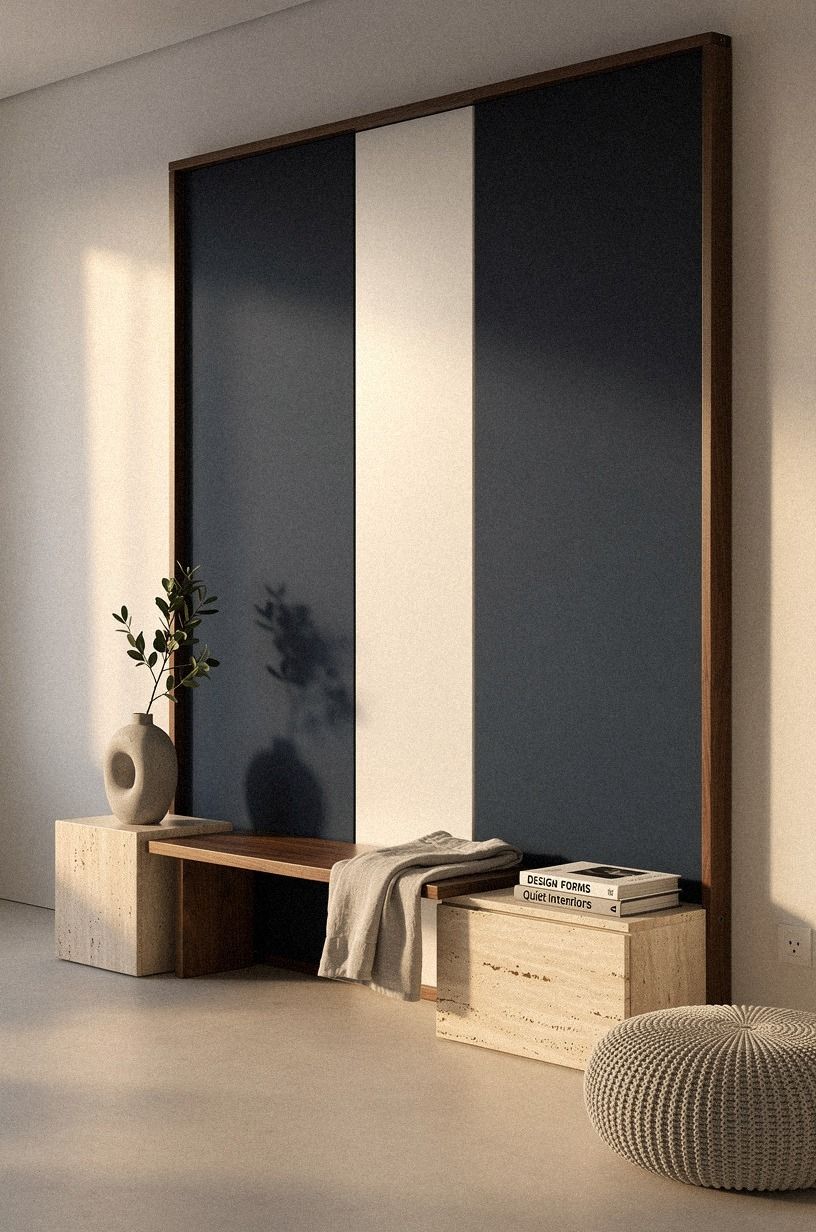
A freestanding timber frame gives you the presence of a wall without asking your lease for permission. Use 3/4-inch solid walnut rails or painted white framing, then let the base carry the weight. You’ll want the structure to sit flat, so check your floor before styling the room around it.
I like this idea for dividing a sleeping area from a living area because it creates an airy boundary without blocking every sightline. The wrong move is building a solid rectangle that makes your room feel narrow. Keep the upper section open, and your daylight can travel farther.
For a warm finish, pair warm travertine with Benjamin Moore White Dove OC-17 on the surrounding trim. The contrast feels calm and refined, especially if your sofa sits on the living-room side.
I wouldn’t use glossy paint here. It catches every lamp reflection and makes the wall look temporary in the least charming way.
Your frame can hold a slim console, a basket, or a small reading lamp. A linen curtain behind part of the frame can soften the structure without making it fussy. You can also borrow the restrained palette from these renter-friendly wall ideas for boring white bedroom walls.
Keep the base wider than the frame whenever possible. That small change makes the structure feel stable and architectural.
Add felt pads, not sticky plastic bumpers, where the feet meet the floor. Felt is easier to replace and less likely to bond with a delicate finish.
2Create a Tension-Rod Temporary Wall Divider
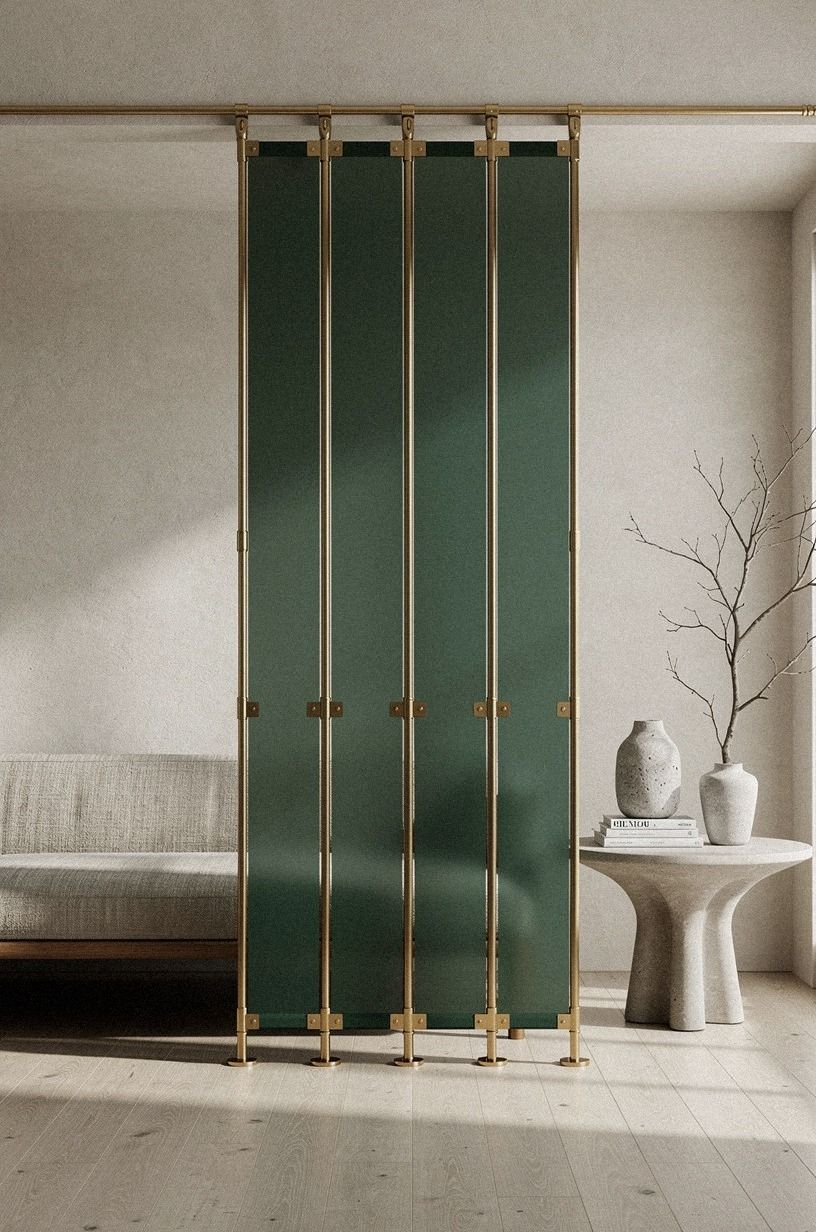
A floor-to-ceiling tension system is one of the easiest temporary partition wall ideas for renters because pressure does the holding.
3Float Slatted Panels Over a Solid Partition
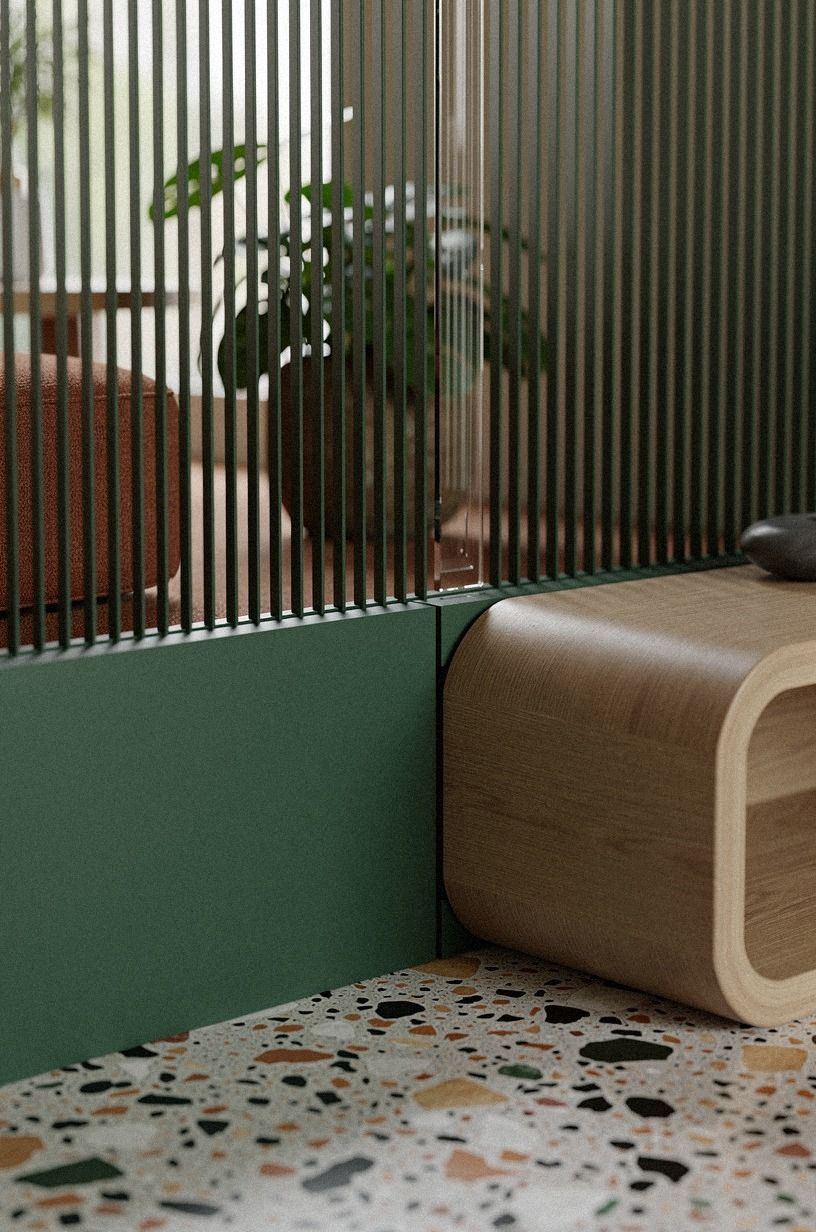
Slatted panels create privacy while keeping the room breathable. Use narrow strips of natural oak on a freestanding base, leaving consistent gaps so light can move through. You’ll hear the room soften slightly, too, because the wood breaks up the hard echo from bare walls and floors.
The important choice is spacing. Tight slats feel more architectural, while wider gaps keep the fake wall airy and relaxed.
I made the mistake of choosing a panel with almost no open space once. It looked elegant online, but in person it made the dining side feel boxed in.
Your furniture should support the rhythm instead of competing with it. A low IKEA KALLAX birch-effect unit can act as a weighted base, while an oversized-chip terrazzo surface adds a grounded, tactile note. Don’t stack tall objects in front of the slats, or you’ll lose the clean shadow pattern.
If you’re using a forest-green finish, repeat rust in one smaller object nearby, such as a side table or picture frame. Too many dark pieces will make the room feel severe. A pale rug, cream upholstery, or soft green plant can keep the result fresh.
For another surface with depth, see these Venetian plaster wall ideas for subtle depth filled texture. You don’t need both treatments in one room, but the same principle applies: texture gives your eye something to settle on.
4Anchor a Bookcase Instead of a Solid Wall
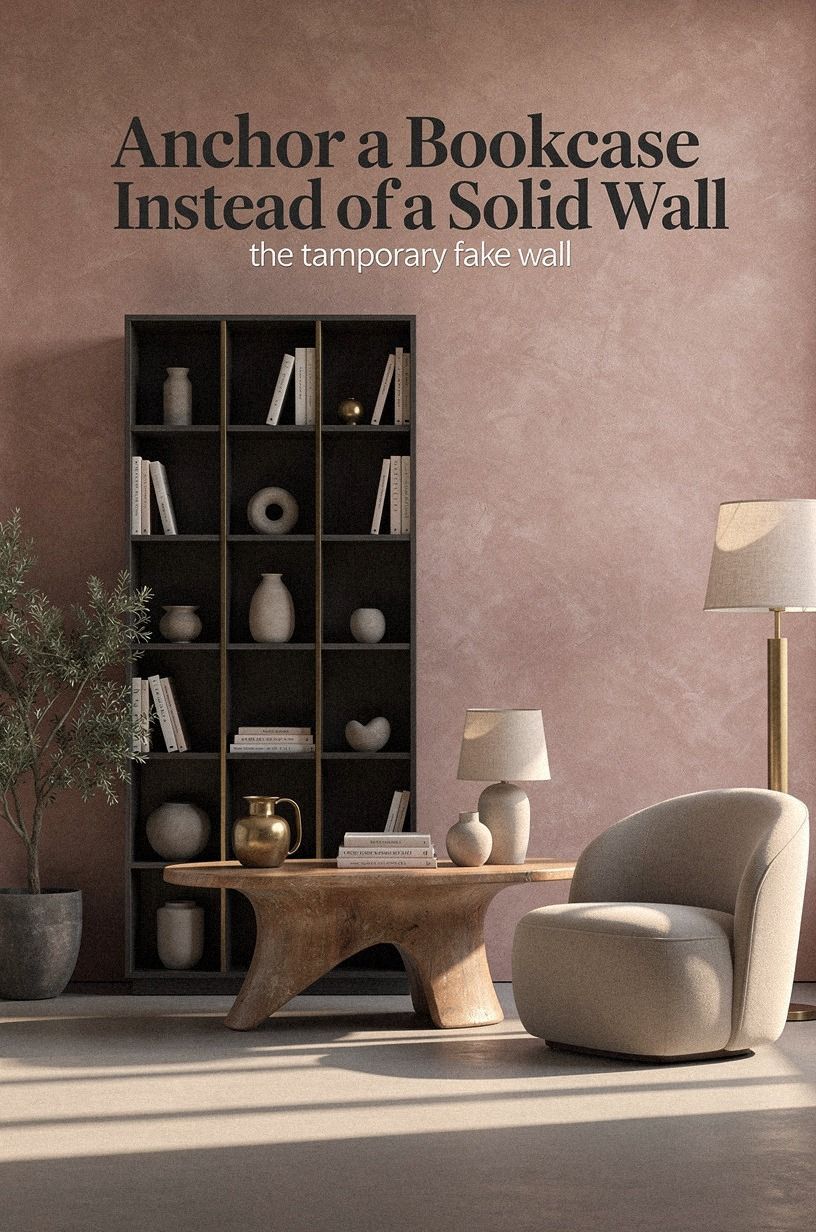
A low bookcase can divide your room while keeping your floor plan useful.
5Frame a Green Screen with the Two-Wood Rule
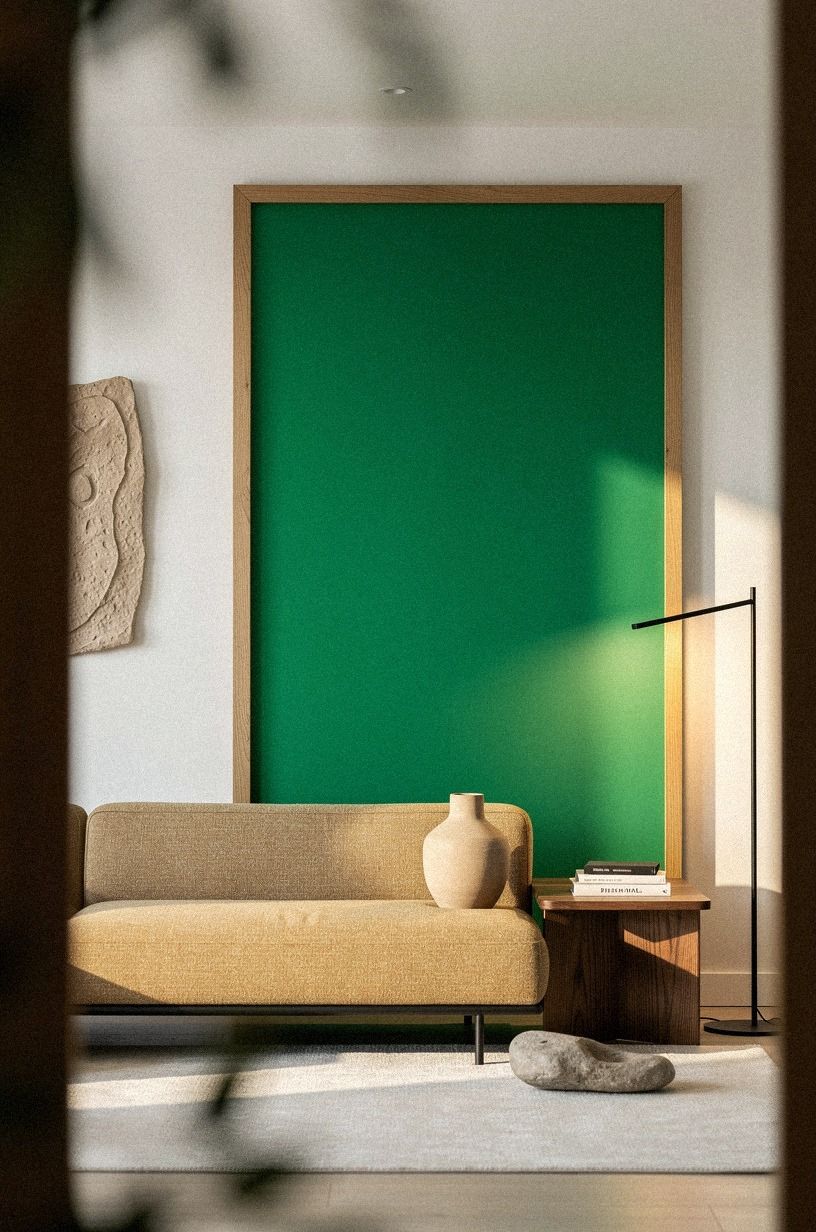
A plant wall can make a temporary boundary feel organic, but it needs structure or it becomes a pile of pots. Try a warm-white frame with camel planters and small black accents. Your eye will read the greenery as a composed screen instead of a collection of unrelated containers.
Choose plants with different leaf shapes, such as a tall rubber plant, trailing pothos, and a compact fern. A shagreen panel behind them adds texture without closing off the room. You’ll still see movement through the leaves, which keeps the partition soft and inviting.
I’d avoid artificial greenery with a plastic shine, especially beside a window. Real leaves catch changing light, and that small movement makes the room feel alive. If care is your concern, use three durable plants rather than twelve delicate ones you won’t keep happy.
The base needs to be stable because your plant wall will get bumped. A weighted bench or broad console works better than a narrow shelf. You can borrow more vertical planting ideas from these privacy fence ideas with plants for a lush living wall, then scale the concept down for your room.
Keep water away from painted floors and unfinished wood. Use saucers, waterproof trays, and a small towel during watering. A lush divider should feel refreshing, not like a maintenance emergency!
6Hang a Fabric Panel for the Soft Boundary Method
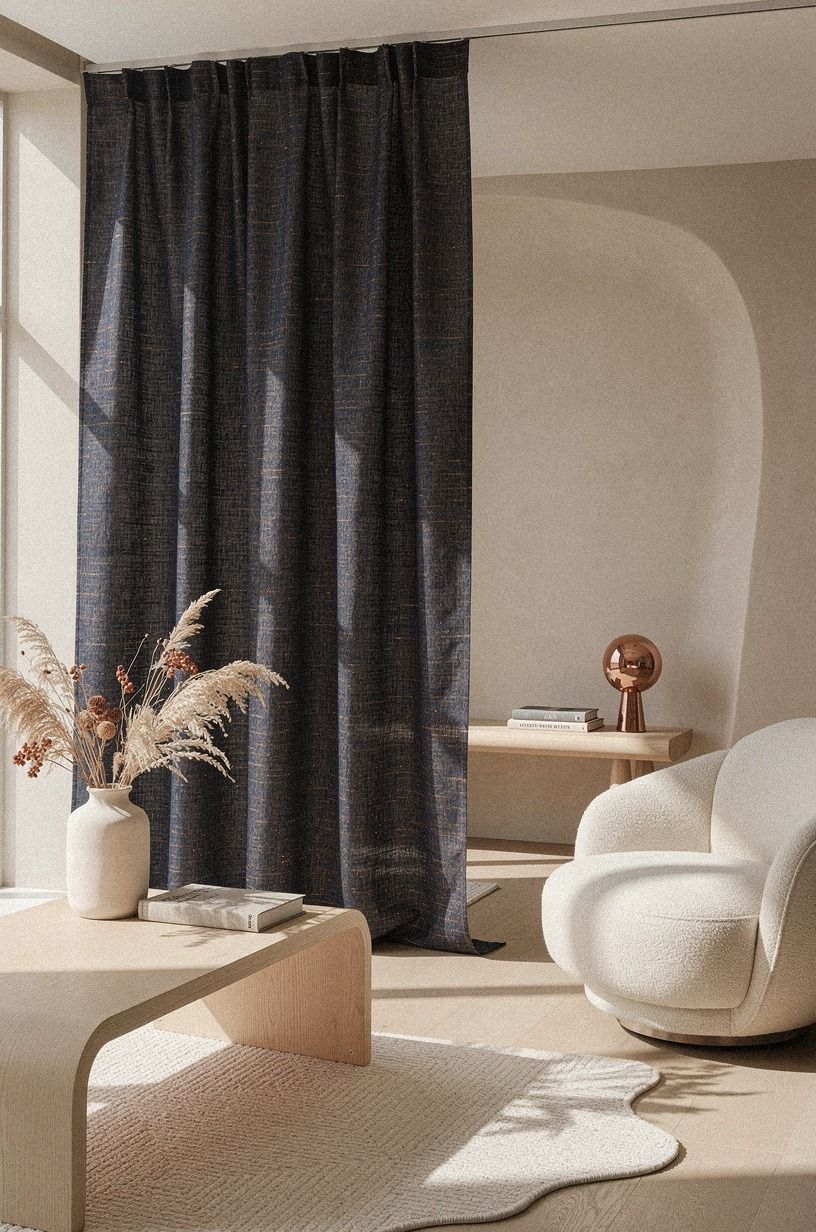
A large textile can act like a wall when it has enough visual weight.
7Can a Fabric Wall Feel Architectural?
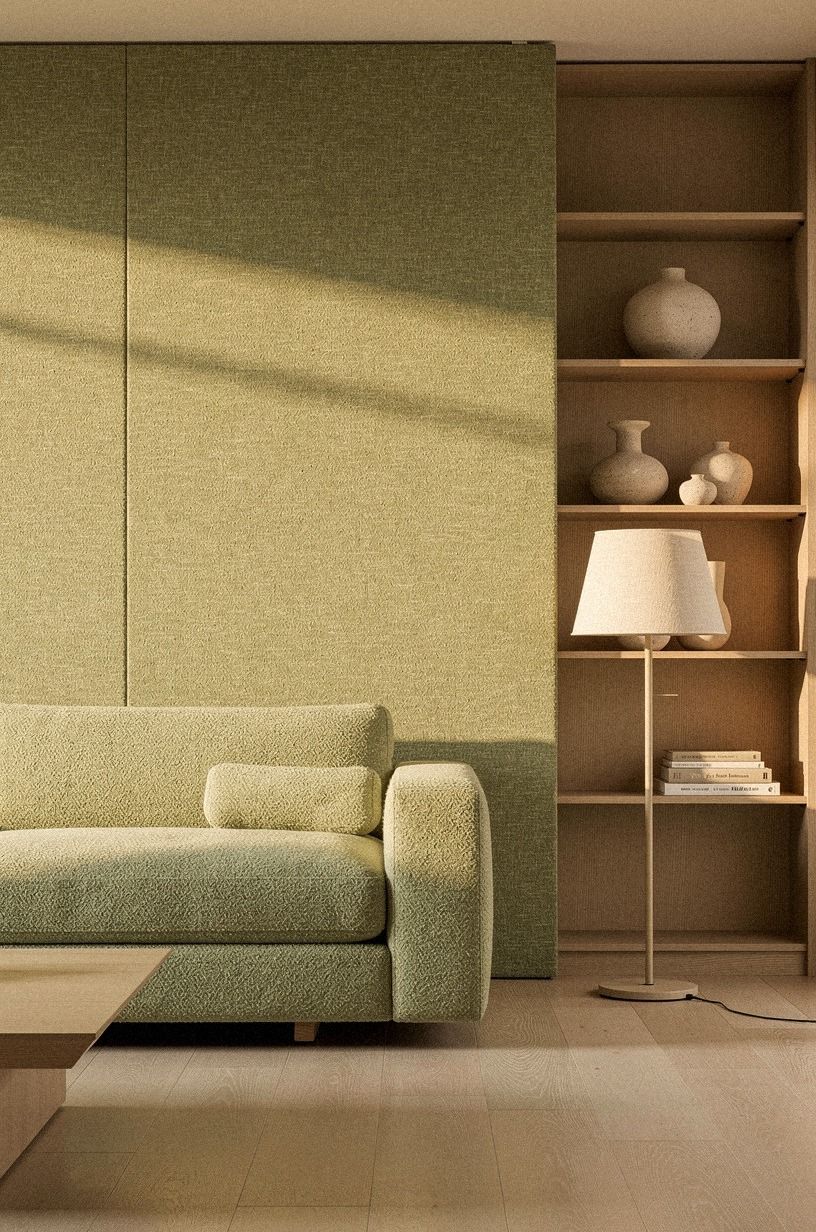
Yes, a fabric wall can feel architectural if you give it a measured outline. Build a simple rectangular frame, stretch sage organic bouclé across the center, and leave a slim border of natural wood visible around the edge. Your panel becomes closer to a room-sized artwork than a hanging blanket.
This is a strong choice behind a bed or sofa because the fabric absorbs some sound. You’ll notice the difference when the room stops feeling sharp and echoing. The surface also catches evening light in a way painted drywall can’t, especially beside a warm lamp.
Use a muted natural-wood frame with warm cream details nearby. I wouldn’t pair bouclé with ornate gold trim unless your room already has that language. Otherwise, the combination can feel theatrical instead of serene.
A West Elm style bench or low console can sit in front without hiding the panel. Keep the furniture lower than the center of the artwork so the fabric remains visible. If your room needs more layered wall interest, these renter-friendly gallery wall ideas show how varied scale can keep a large surface from feeling flat.
8Swap Peel-and-Stick Panels over Solid Construction
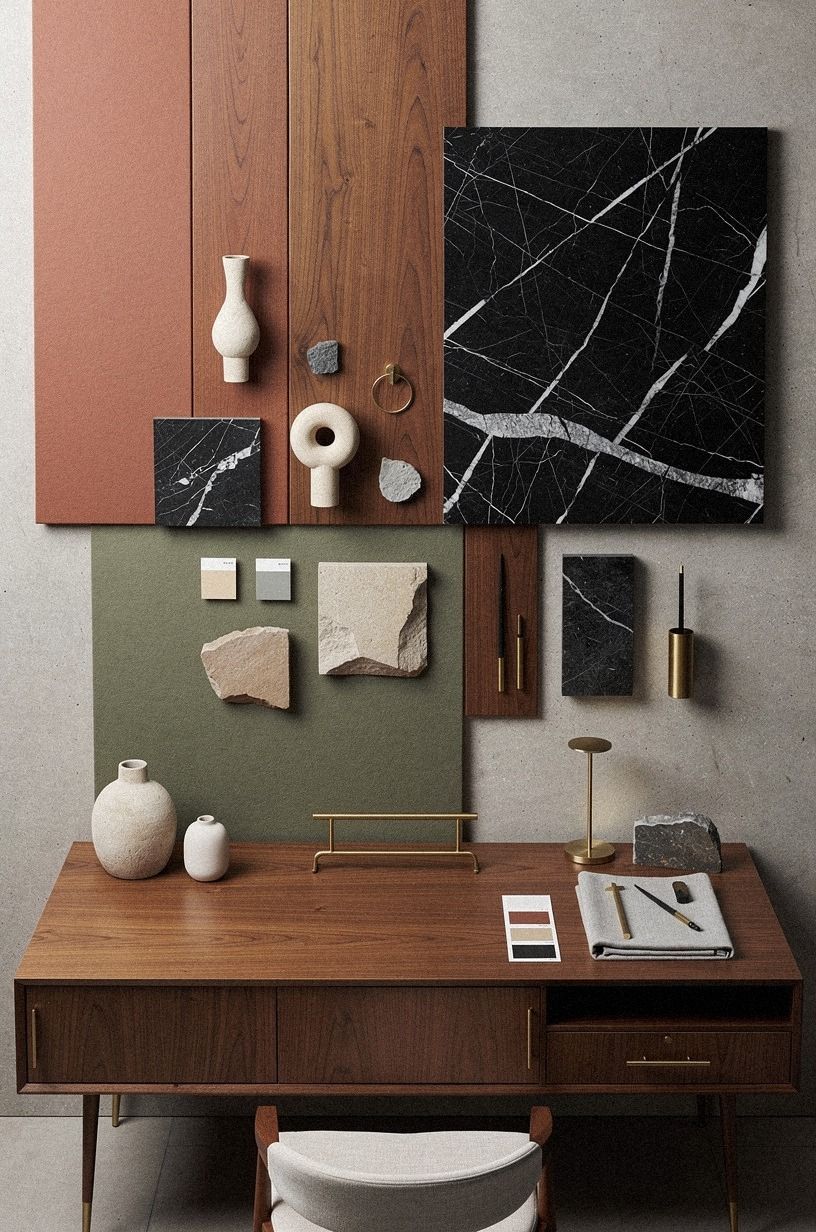
Peel-and-stick panels can make a temporary fake wall look finished without committing to masonry, paint, or tile. Apply them to a removable board first, then attach that board to a freestanding frame. Your rental wall stays untouched, and you can move the entire surface later.
For a kitchen or dining nook, Nero Marquina black marble with white veins brings pattern without grout dust. The surface should have a low sheen, because high gloss tends to reveal repeating prints. You’ll want to test one panel in daylight before covering the full board.
I’d skip faux brick in a small room unless the rest of your materials are simple. It can become visually loud fast. Stone, faded terracotta, and muted olive will feel more elegant against natural wood and woven baskets.
The board itself needs a clean, sealed surface. Raw plywood can absorb adhesive unevenly and make removal difficult. A primed MDF panel or smooth hardboard gives you a more reliable base.
You can find useful styling direction in these tile sticker ideas that fake a real tiled kitchen. Use the same restraint on your temporary partition: one strong pattern, two supporting textures, and enough empty space for your eye to rest.
9Paint a Portable Backdrop with the Three-Coat Pause
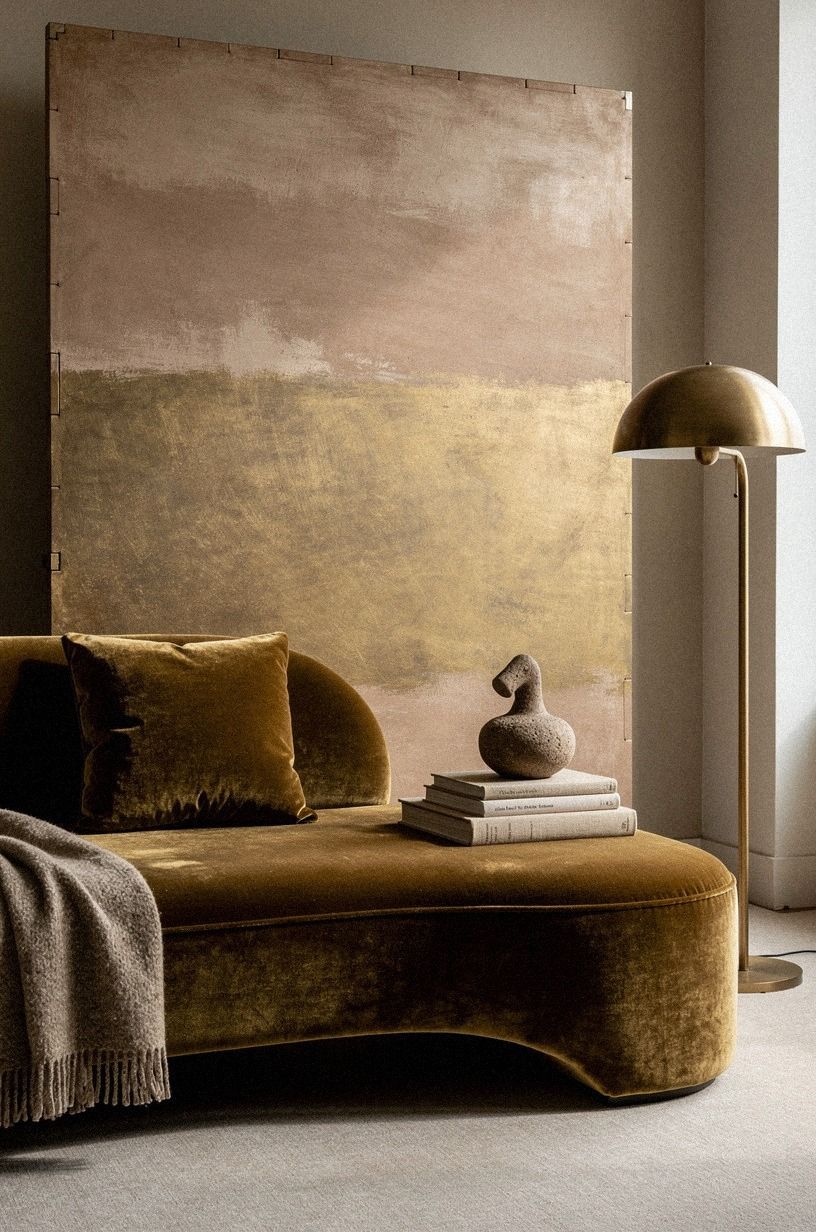
A removable board painted in a real wall color can give you the effect of a feature wall without changing your lease. The Three-Coat Pause means priming the board, painting the color, and waiting between coats instead of rushing the finish. Your patience shows in the final surface.
Use Farrow & Ball Red Earth No. 64 for a clay note, or choose Benjamin Moore Pale Oak OC-20 when you want a linen-like neutral. An aged-brass detail can bring gentle warmth to the board. You’ll want to test the sample beside your actual lighting first.
Typical US room budgets can vary widely, so use the supplied ranges as planning anchors rather than promises:
For a portable backdrop, keep the rest of your choices simple. A deep-pile mohair velvet cushion or a small linen chair can give the painted board enough contrast. These moody limewash bathroom ideas for dramatic depth filled wall show how layered color can feel rich without adding busy decoration.
Give the board time to cure before leaning it against anything. Fresh paint can transfer to flooring, fabric, and furniture even when it feels dry to your fingertips. Add a narrow rear brace so the board won’t bow over time.
10Frame a Foldable Art Wall over Faux Walls
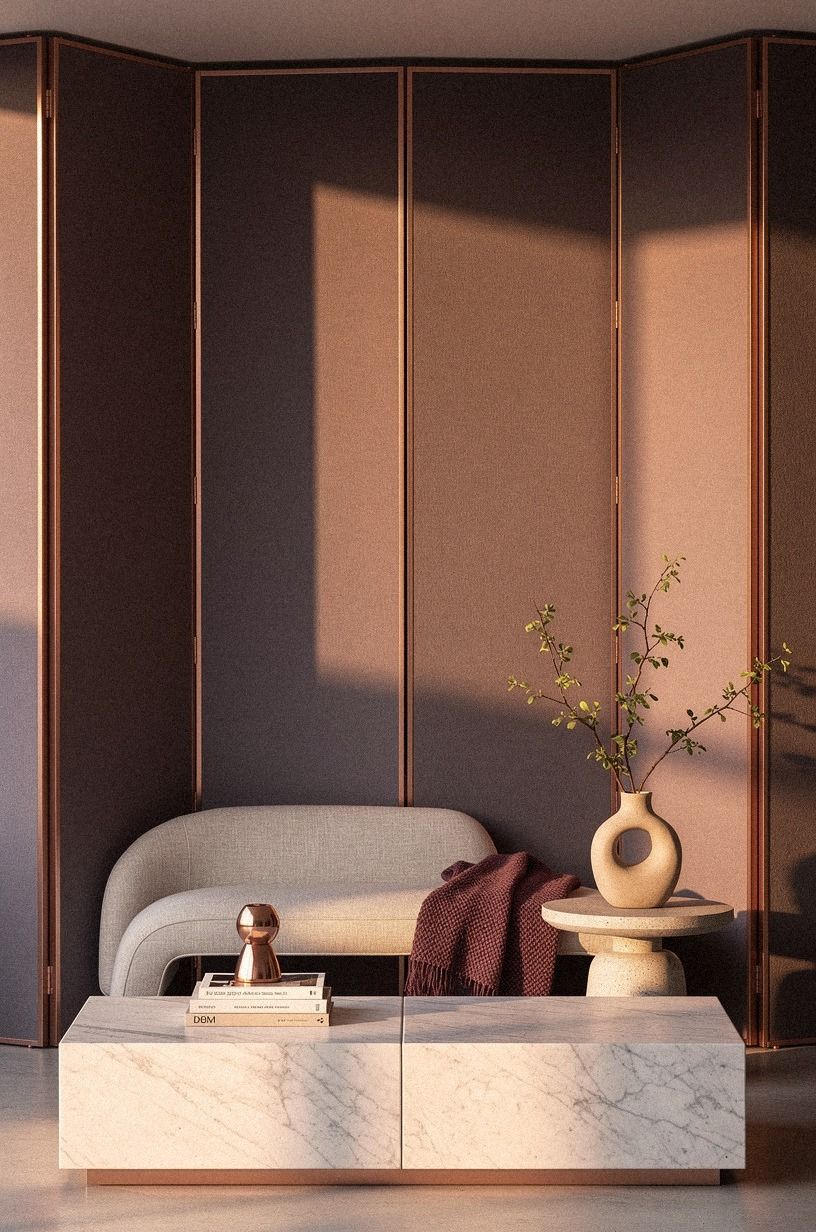
A folding screen is useful when your room needs privacy only sometimes. Choose three or four connected panels, then cover them with Carrara marble with subtle grey veining, rose-gold trim, or framed art. Your temporary wall divider can fold flat when guests arrive, which is a real advantage in a compact room.
I like using mismatched art in a controlled palette. Three prints in plum, grey, and rose gold feel collected, while three unrelated colors can make the screen look accidental. You’ll want the artwork centered around 57 to 60 inches from the floor when the screen is open.
A grey upholstered stool or a simple rose-gold side table can sit in front of the screen. Keep the furniture light enough to move, but stable enough that the screen doesn’t feel stranded. Don’t crowd the folding joints with baskets or lamps.
This idea works especially well for a home office, dressing corner, or guest sleeping area. For more ways to make a room feel layered without construction, visit these renter-friendly bedroom wall ideas. Your screen should solve a privacy problem first, then carry the decorative weight.
11Layer the Three-Height Light Stack over a Temporary Wall
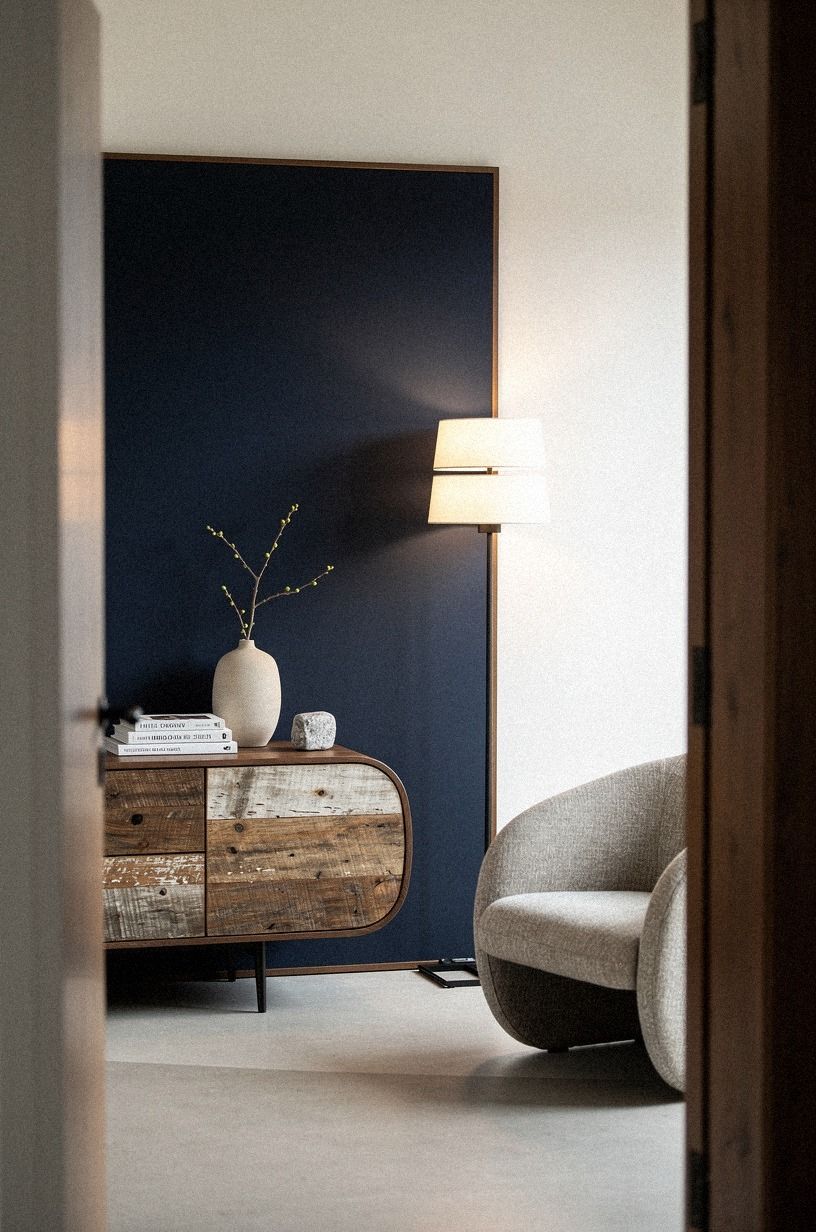
Lighting can make a temporary partition feel intentional after sunset. The Three-Height Light Stack uses an overhead source, a task light, and an ambient light at different levels. Your room will feel more dimensional, and the fake wall won’t disappear into a dark corner.
Place a floor lamp behind the divider, a small table lamp at waist height, and one ceiling fixture above the main seating area. Use warm bulbs and white shades that soften the glow. You’ll want the light to spill around the boundary rather than shine directly at it.
I’d skip a single bright overhead fixture. It flattens every texture and makes fabric, wood, and plants look dull. A reclaimed weathered teak lamp base can add warmth, while a white ceramic shade keeps the mood calming.
Your rug should be large enough that the furniture overlaps it, because that overlap visually anchors the partition. A wool rug can cost $400-$1,500, according to the supplied material ranges, while other room choices may shift your total. Start with the light placement, and your temporary wall will feel settled every evening!
Why a Temporary Wall Can Feel Permanent
A temporary wall feels permanent when it gives the room a clear relationship between zones. That doesn’t require heavy construction.
It requires a visible edge, a useful purpose, and enough material weight to catch light. I’ve seen a flimsy screen look more convincing than custom millwork because the screen was placed where the room needed a pause.
Your eye wants to understand why something is there. A curtain beside a bed says privacy.
A bookcase between a sofa and desk says storage plus separation. A painted board behind a dining table says focus.
If you’re adding a wall only because one side feels empty, you may end up with a decorative obstacle instead of a useful boundary.
I also think renters should stop apologizing for temporary choices. IKEA KALLAX, linen panels, and removable surfaces can be thoughtful when you combine them with restraint. The polished result usually comes from repeated materials, correct scale, and lighting that doesn’t leave the wall in shadow.
My own mistake was treating every empty corner as a storage problem. I added shelves, baskets, and hooks until the room felt busy.
Removing half of it made the temporary divider stronger. Your best version may need fewer objects, a clearer walkway, and one material that repeats across the room.
If the space still feels disconnected, revisit these renter-friendly wall ideas for boring white bedroom walls. A better relationship between color, texture, and furniture often solves more than another decorative layer.
Measure the Boundary Before Styling It
Tape the proposed footprint on the floor for one full day. Walk around it while carrying laundry, opening drawers, pulling out chairs, and moving between the door and the window. A plan that looks generous on paper can feel surprisingly tight in practice.
Check the sightlines from every seat. A divider should hide the area you want to conceal without blocking the room’s best view. If it interrupts a window, use slats, plants, or a translucent textile instead of a dense panel.
For rooms with awkward proportions, the principles behind these Venetian plaster wall ideas for subtle depth filled texture can help. Gentle variation is often more successful than a hard visual stop.
Make the Walkway Feel Generous
The most attractive fake wall is useless if everyone bumps into it. Keep door swings clear, leave space around electrical outlets, and avoid placing a narrow divider where people naturally cut across the room.
Rounded furniture can soften a tight route. A curved bouclé stool, oval table, or arched lamp echoes the gentle movement of a curtain or plant screen. These small choices make the arrangement feel gracious and comfortable.
A plant boundary can be particularly effective when the walkway needs visual softness. Use the planting rhythm from these privacy fence ideas with plants for a lush living wall without copying the scale. A rental room needs breathing space.
Keep the Finish Removable
When you’re ready to take the fake wall down, move slowly. Remove fabric before hardware, lift boards instead of dragging them, and inspect the floor under every foot. Save paint samples, spare felt pads, and assembly instructions in a labeled envelope.
If you’ve used removable adhesive on the board itself, warm it gently with a hair dryer and pull parallel to the surface. Don’t yank upward. The goal is to protect the removable component so you can reuse it in another room or another rental.
The Questions Worth Answering First
What is the best temporary fake wall idea for a small room?
A tension-rod curtain or narrow slatted screen is usually the best choice because it preserves light and floor space. Belgian flax linen adds privacy without heaviness, while an IKEA KALLAX divider gives you storage. Your room will feel calmer if the boundary stays visually open.
Where can I buy temporary fake wall pieces on a budget?
Look at IKEA, Target, Wayfair, Facebook Marketplace, and local thrift stores. Secondhand bookcases can provide the base, while fabric panels and lamps can be replaced later. You’ll often find better proportions by measuring your room first instead of shopping from memory.
These renter-friendly gallery wall ideas can also help you judge scale before buying art.
How much does a temporary fake wall makeover cost?
A temporary fake wall makeover can fit within the supplied budget range of $200-$800 when it uses paint, textiles, art, and organization. Free styling includes rearranging furniture, using fabric you already own, and repurposing a shelf. Your cost rises with accent furniture, lighting, and rugs.
Can I create a temporary fake wall on a budget?
Yes, you can start with a tension rod, a secondhand curtain, and a freestanding shelf. Removable materials keep the plan flexible, while a single painted board gives you color.
You’ll get more impact by improving the layout before buying decorative pieces. A restrained surface treatment, like the ones in these tile sticker ideas that fake a real tiled kitchen, can add character without a full renovation.
Is a temporary fake wall worth it in a small space?
Yes, if the wall solves a real problem such as privacy, work-life separation, or poor storage. Open shelving works well because it divides the room without cutting off light. Your best layout will leave a clear path around the divider and keep tall pieces away from windows.
Is a temporary fake wall a good idea for a rental?
Yes, especially when you use tension systems, freestanding frames, removable boards, and fabric. No-drill separation lets you change the room without leaving hardware behind. You’ll still want to test paint, adhesive, and pressure points in an unseen area before committing.
Where I’d Start First
If I had to pick one, I’d start with the freestanding slatted screen. It gives you privacy, daylight, and a strong vertical line without making the room feel sealed off.
Pin that idea for later, then measure your walkway before buying anything. The clearance will decide whether it works.
If your room needs more softness, choose the fabric version. If it needs storage, choose the bookcase.
If the space feels lifeless, choose plants. The right fake wall isn’t the most elaborate one.
It’s the one that makes daily life feel easier and the room feel more welcoming!