
 by
by 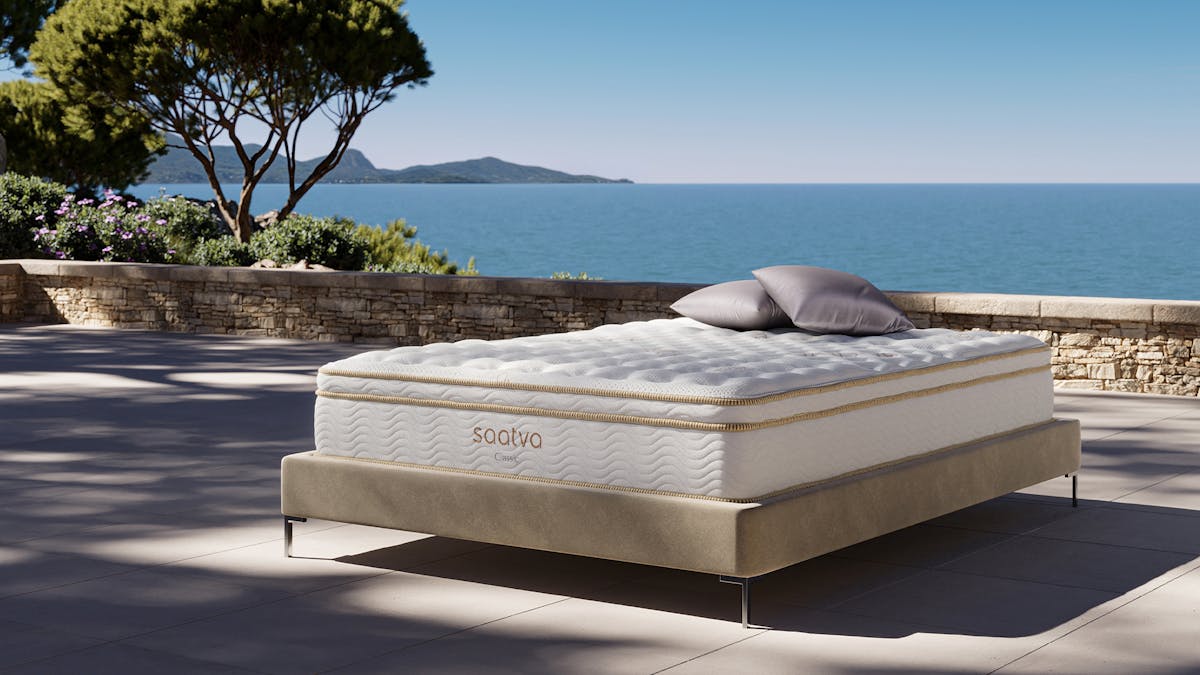
My verdict: Measure the bare RV bed platform before buying anything. RV mattress size names are loose labels, not dependable dimensions. A short queen is commonly 60 inches by 75 inches, but some manufacturers use 58 inches by 74 inches or 60 inches by 74 inches under the same name.
For most RV replacements, I favor an 8-inch to 10-inch foam mattress that weighs under 80 pounds at queen size. Foam is easier to maneuver through a camper, works better on hinged storage platforms, and has no coil unit that can loosen or squeak during travel.
Premium residential mattresses are usually a poor fit here. Home models from brands such as Saatva or Amerisleep commonly have 10-inch to 15-inch profiles and queen weights from 80 to 130 pounds, according to manufacturer specifications. That can create problems with slide-outs, overhead clearance, storage access, and platform weight limits.
Quick answer: Common RV mattress sizes include short queen, queen, king, short king, full, twin, and bunk. The familiar names can be misleading, so match the mattress to your measured platform rather than relying on the label printed in an RV brochure.
- All RV Mattress Sizes
- Short Queen: The Most Common RV Size
- Why Foam Beats Springs for RV Use
- Best RV Short Queen Mattresses
- Measuring for RV Mattress Replacement
- Back Home: The Real Bed Upgrade
- Frequently asked questions about this size
RV Mattress Sizes and Dimensions
RV sleeping platforms commonly appear in 7 configurations. Some match residential dimensions, while others are shorter or narrower. These are the size labels and measurements used in the original manufacturer and retailer listings covered by this guide:
| RV size name | Dimensions | Closest residential equivalent |
|---|---|---|
| RV Short Queen | 60 inches by 75 inches | Queen, but 5 inches shorter |
| RV Queen | 60 inches by 80 inches | Standard queen, exact match |
| RV King | 72 inches by 80 inches | King, but 4 inches narrower |
| RV Short King | 72 inches by 75 inches | King, but narrower and shorter |
| RV Full | 53 inches by 75 inches | Full, but 1 inch narrower |
| RV Twin | 38 inches by 75 inches | Standard twin, exact match |
| RV Bunk | 28 inches by 75 inches | No standard home equivalent |
A residential twin measures 38 inches by 75 inches, a twin XL measures 38 inches by 80 inches, and a full measures 54 inches by 75 inches. A standard queen measures 60 inches by 80 inches, a king measures 76 inches by 80 inches, and a California king measures 72 inches by 84 inches.
Those residential measurements matter because an RV queen or RV twin may be a true standard size. In that situation, you have a wider selection. An RV short queen, short king, full, or bunk usually needs a purpose-built or custom-cut mattress.
Do not assume that every mattress sold under an RV label follows this chart exactly. RV builders sometimes size the platform around cabinets, slide mechanisms, wheel wells, or access panels. The physical platform is the final authority.
Short Queen: The Common RV Starting Point
The short queen measures 60 inches by 75 inches in its common form. That makes it the same width as a residential queen but 5 inches shorter. Manufacturer floor plans frequently use it in Class A motorhomes, Class C slide-outs, and fifth-wheel front bedrooms.
The complication is that some manufacturers describe 58-inch by 74-inch and 60-inch by 74-inch beds as short queens. A mattress made to the common 60-inch by 75-inch specification may buckle against a wall or interfere with a slide if the platform is smaller.
Length is especially important for taller sleepers. The usual sizing guideline is to allow the tallest sleeper's height plus 6 inches. A 75-inch mattress may save floor space, but the tradeoff is less room at the foot of the bed.
Can a residential queen replace a short queen?
Usually not. A residential queen is 60 inches by 80 inches, so it adds 5 inches of length. That extra material can block a walkway, prevent a slide from closing, or fold against the wall. Compressing the mattress into the available space is also hard on foam edges and cover seams.
If the measured platform is a full 60 inches by 80 inches and has adequate surrounding clearance, a standard queen can fit. Confirm the platform rating and mattress weight before treating that as permission to install a thick residential model.
Profile and weight matter as much as length
A mattress can match the platform dimensions and still be wrong for the RV. Check whether added thickness blocks a window, reduces overhead room, or prevents an under-bed platform from lifting. Also consider whether you can bend and carry the mattress through the RV doorway.
For camper, van, marine, and most motorhome installations, my practical target is an 8-inch to 10-inch profile, an under-80-pound queen weight, and a flexible foam construction. By comparison, premium home mattresses commonly run 10 inches to 15 inches thick and weigh 80 to 130 pounds at queen size, based on brand specifications.
Why I Usually Choose Foam for an RV
Road travel repeatedly vibrates everything inside an RV. A steel coil unit contains mechanical components that can rub, shift, or develop noise. A foam mattress has no coil assembly, so it avoids that particular failure point.
- Vibration control: Foam absorbs movement instead of passing as much of it through a spring unit.
- Lower weight: The article's compared product specifications place foam mattresses around 30 to 50 percent below comparable spring alternatives.
- Fewer moving components: There are no coils to lose tension or begin rubbing during travel.
- Easier customization: A foam core can be cut for a non-standard platform, rounded corner, or other RV-specific shape.
- Platform flexibility: A thinner foam mattress is generally easier to lift when the bed platform covers storage.
Foam still has drawbacks. Memory foam can hold heat, especially in a compact sleeping area with limited airflow. Gel infusions are marketed to address that issue, but the foam density, cover, ventilation, and room temperature all affect the result.
Check the support surface as well. Closely spaced slats or a solid platform support foam more consistently than large gaps. If the platform is solid, inspect the underside periodically for trapped moisture. Enclosed RV interiors can make ventilation more important than it would be in a stationary bedroom.
When an RV hybrid can make sense
A hybrid may suit a full-time RV that remains parked for extended periods. Pocketed coils can give the edge more resistance when someone sits down or gets out in a tight bedroom.
The penalties are extra thickness, weight, and reduced flexibility. A 14-inch hybrid needs careful clearance checks, and it may be awkward on a lifting storage platform. I would not choose one merely because it feels more like a home mattress in a showroom.
RV Short Queen Mattresses Worth Comparing
This is a materials-based shortlist, not a claim that every model fits every rig. Confirm current dimensions, weight, availability, certification, and return terms with the manufacturer before ordering. Product specifications can change.
Innerspace Luxury Products RV Mattress
Best fit for: Shoppers who want a purpose-built RV size rather than altering a residential mattress.
Innerspace focuses on RV mattresses and lists common RV sizes as well as custom-dimension options. Its 10-inch gel memory foam short queen is compressed for shipping and has been listed at about 40 pounds. Those specifications are useful in an RV because the mattress must pass through a restricted doorway and remain manageable on the platform.
Verified owner reviews cited in the original article were favorable among Class A owners. I would still judge it by the actual foam specifications and return policy, not the word “luxury” in the product name.
Zinus Cooling Gel 10-Inch
Best fit for: A budget-minded buyer who needs foam cut to an unusual platform.
The original manufacturer offering covered here allowed custom sizing for roughly a $50 to $80 upcharge. Confirm that service directly before buying because custom-order policies can change and made-to-order mattresses may have different return conditions.
A 10-inch foam build avoids a coil unit and remains more adaptable than a thick hybrid. Before ordering, verify the finished dimensions rather than assuming that a standard Zinus short queen will match an irregular RV platform.
Brentwood Home Cypress Eucalyptus
Best fit for: Extended RV stays where the cover and foam certifications are purchasing priorities.
The short queen configuration described in the original listing used CertiPUR-US foam and Tencel fabric. Those are manufacturer-reported material details, not proof that the mattress will sleep cool in every RV.
For buyers concerned about an enclosed sleeping area, certification and odor policies are reasonable comparison points. Air the mattress according to the manufacturer's directions and maintain ventilation around the bed platform.
Classic Brands Gramercy 14-Inch Hybrid
Best fit for: A full-time RV that stays parked for long periods and has enough platform capacity and overhead clearance.
This is the least travel-friendly construction in the group because it uses pocketed coils and has a 14-inch profile. The benefit is stronger edge resistance, which can make entry and exit easier in a narrow RV bedroom.
Measure carefully before considering it. The mattress must clear cabinets and windows, allow storage access, and stay within the RV platform's stated weight limit. For frequent travel, I would generally favor a lighter foam option.
Other foam options to compare
Manufacturer specifications for Zinus, Linenspa, the 8-inch Tuft & Needle Original, the Nolah Original 10-inch, and DreamCloud Essential can provide useful comparison points. Availability in true RV dimensions is the deciding issue. A familiar brand name does not make a residential mattress suitable for a short platform.
How to Measure for an RV Replacement Mattress
- Remove the existing mattress completely.
- Measure the bare platform at its longest and widest points.
- Measure in more than one place if the walls or platform are not square.
- Note slide rails, storage drawers, cabinets, windows, and other obstacles around the mattress perimeter.
- Measure the clearance above the platform to establish the maximum usable thickness.
- Check whether the platform lifts and how mattress weight affects access to storage.
- Compare your measurements with the manufacturer's finished-size tolerance before ordering.
The old guidance sometimes suggests adding 0.5 inches to each platform measurement because foam can be trimmed. I would not do that automatically. An oversized mattress can bow against walls, obstruct a slide, or make fitted sheets harder to use. Order to the platform and manufacturer tolerances unless you have deliberately planned to trim an unglued foam core.
Measure the shape, not just the rectangle
Some RV beds have clipped or rounded corners. Others narrow near cabinets or wheel housings. Record each straight section and corner transition. If you are ordering a custom mattress, follow the maker's template requirements rather than sending only a length and width.
Also check the path into the bedroom. A compressed foam mattress is easier to maneuver than a rigid spring model, but the package still has to clear the entry door, hallway, and bedroom opening.
Check bedding before finalizing the size
Standard queen sheets may have excess fabric on a 60-inch by 75-inch short queen. Deep-pocket sheets can also fit poorly on an 8-inch mattress. Confirm the mattress dimensions and profile first, then select bedding designed for that combination.
Keep the Home-Bed Upgrade at Home
A premium residential hybrid can be a sensible upgrade for a stationary bedroom, but I would not present it as an RV solution. The materials, delivery method, profile, and weight are designed around a home foundation rather than a slide-out or hinged camper platform.
The Saatva Classic is the only home-bed alternative I would point to here. According to Saatva's published product policies represented in the original article, it offers multiple firmness choices, a Euro pillow top, zoned lumbar support, a 365-night trial, lifetime warranty, and white-glove delivery with old-mattress removal. The source also listed a starting price of $1,174 for Twin and described discounts through ID.me for military members, veterans, first responders, teachers, and seniors.
Those home-mattress benefits do not make the Saatva Classic RV-appropriate. Keep it on a suitable residential foundation and choose a lighter, lower-profile mattress for the vehicle.
For the construction details, see my full Saatva Classic review. Related comparisons include the Full Mattress Size Guide, Best Mattresses 2026, and Platform Bed Mattresses.
Frequently Asked Questions About RV Mattress Sizes
What size is an RV short queen mattress?
An RV short queen commonly measures 60 inches wide by 75 inches long. A standard residential queen measures 60 inches by 80 inches, making the common short queen 5 inches shorter. Some RV makers use 58-inch by 74-inch or 60-inch by 74-inch platforms under the same short-queen label, so measure before ordering.
What are the standard residential mattress dimensions?
Twin is 38 inches by 75 inches, Twin XL is 38 inches by 80 inches, Full is 54 inches by 75 inches, Queen is 60 inches by 80 inches, King is 76 inches by 80 inches, and California King is 72 inches by 84 inches.
Oversized specialty mattresses labeled Alaskan, Wyoming, or Texas can range from 80 inches by 98 inches up to 108 inches by 108 inches in the product listings summarized by the original guide. Those are residential specialty sizes, not practical substitutes for RV beds.
How do I choose the right RV mattress size?
Start with the bare-platform measurements, then consider the tallest sleeper, available width, overhead clearance, storage access, and the path through the RV door. The residential sizing rule of the tallest sleeper plus 6 inches can help assess length, but the RV's physical limits still decide what fits.
For two sleepers, the original sizing guidance used 30 inches per person as the minimum width. Treat that as a basic space check rather than a comfort guarantee. Couples, children, and pets can make a narrow RV bed feel crowded.
Can I use a regular mattress in an RV?
Yes, but only if the bare platform matches a standard size and can support the mattress. An RV queen at 60 inches by 80 inches and an RV twin at 38 inches by 75 inches may accept standard models. Short queen, RV king, short king, RV full, and bunk platforms usually need RV-specific dimensions.
Even with a dimensional match, check weight and thickness. A heavy home hybrid can overload a lifting mechanism or block a window, cabinet, or slide.
Is an RV king the same as a residential king?
No. The common RV king measures 72 inches by 80 inches. A residential king measures 76 inches by 80 inches, so the RV version is 4 inches narrower. An RV short king is smaller again at 72 inches by 75 inches.
What is the best mattress material for an RV?
I generally choose memory foam or conventional polyfoam. Foam is lighter than many spring alternatives, dampens vibration, and can be cut for unusual dimensions. Gel-infused foam is marketed to address memory foam's heat retention, although RV ventilation and room temperature still matter.
What is the thinnest comfortable RV mattress?
The original product guidance treated a 6-inch foam mattress as the lower comfort boundary for RV use. Many under-bed storage systems limit the practical profile to 8 inches to 10 inches, and 8-inch gel memory foam is a common configuration in owner purchasing patterns.
Thickness alone does not establish comfort. A thin mattress with weak base foam can bottom out, while a well-built 8-inch model may perform better than a soft 10-inch mattress with poor support. Compare layer construction and foam specifications where the manufacturer publishes them.
How do I measure for an RV replacement mattress?
Remove the old mattress and measure the platform's longest and widest points. Record irregular corners and anything that intrudes into the sleep surface. Measure vertical clearance and verify the platform's stated weight capacity. Actual measurements are more reliable than the size name in an RV brochure.
Can an RV foam mattress be trimmed?
An unglued foam core can often be cut, but the cover, fire barrier, internal adhesives, and warranty complicate the job. Ask the manufacturer before altering it. Cutting may damage the cover or void return and warranty protection.
Does Saatva make an RV mattress?
The Saatva Classic sizes listed in the original article are Twin, Twin XL, Full, Queen, King, California King, and Split King. Those are residential sizes, and the mattress is not an RV-focused recommendation. Its white-glove delivery service also addresses home installation rather than the fit constraints inside a camper.
What should full-time RV residents prioritize?
Start with platform fit, support, and durability. A parked RV may make a pocketed-coil hybrid more practical because travel vibration and lifting-platform weight matter less. If the vehicle moves frequently, a bend-friendly foam mattress remains my safer construction choice.
More Mattress Sizing Help
For related measurements and room-planning comparisons, use the sizes guide, queen vs king, twin vs full, and cal king vs king guides.