
 by
by An RV queen and a short queen are the same thing: a 60 x 75-inch mattress built for motorhome and fifth-wheel rear bedrooms. That is five inches shorter than a standard residential queen (60 x 80 inches). Neither name is official, and some manufacturers cut the platform to 60 x 74 inches, so the only reliable step before ordering is measuring your actual sleeping platform. A standard queen will not fit an RV queen frame without overhanging or blocking slide-out operation.
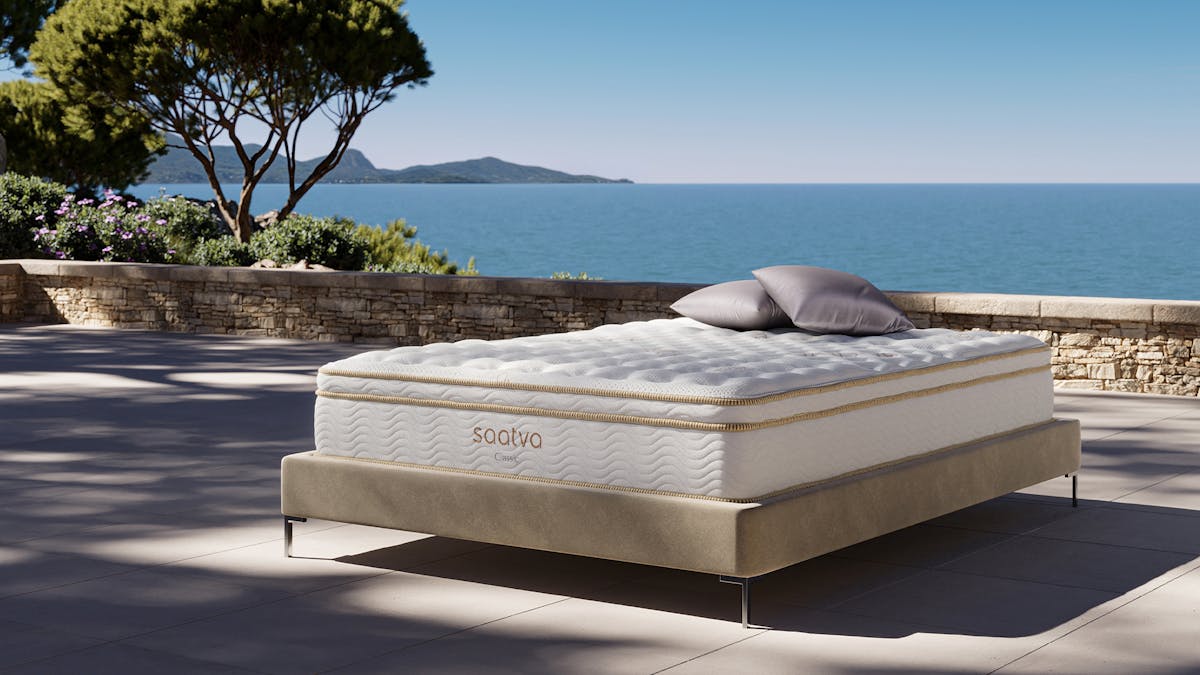
Saatva Classic
9.2/10
- Dual coil-on-coil construction with Euro pillow-top, available in all standard residential queen sizes
- Free white-glove delivery, setup, and old mattress removal
- 365-night trial, lifetime warranty, no break-in hassle
- Three firmness options (Plush Soft, Luxury Firm, Firm) to match your sleep style
- Delivered flat, not compressed in a box, which requires white-glove scheduling
- $99 return transport fee during the trial period
If you are moving from an RV to a home bed, or upgrading your home queen after settling for an RV-specific mattress too long, the Saatva Classic is the most complete standard-queen option: coil-on-coil support, hotel-grade Euro top, and a trial long enough to be sure.
RV Queen vs Short Queen: The Key Dimensions
Both terms describe the same mattress footprint in the vast majority of cases. The table below shows where each RV size stands relative to its residential counterpart, which is the number that actually matters when you are ordering a replacement.
| RV Size Name | Dimensions (W x L) | Standard Equivalent | Difference | Notes |
|---|---|---|---|---|
| RV Short Queen / RV Queen | 60" x 75" | Queen (60" x 80") | 5" shorter | Most common rear-bedroom size in Class A/C motorhomes and fifth wheels. Some platforms measure 60 x 74, so verify before ordering. |
| Standard Queen | 60" x 80" | Does not fit most RV queen frames. The 5-inch overhang creates a safety and comfort problem, and may block slide-out operation. | ||
| RV King | 72" x 80" | California King (72" x 84") | 4" shorter than Cal King; 4" narrower than standard King (76 x 80) | Found in larger Class A coaches. Not the same as a standard king or a California king. |
| RV Full / RV Double | 54" x 74" | Full/Double (54" x 75") | 1" shorter | Close to standard full but not identical. Common in older travel trailers. |
| RV Three-Quarter | 48" x 75" | No standard match | Narrower than a full, wider than a twin. Used in some vintage coaches and slide-out configurations. | |
| RV Bunk | 28"–30" x 75"–80" | Roughly twin-width | Varies | No true standard. Dimensions vary widely by brand and model year. Measure the platform, not the old mattress. |
| RV Twin | 28" x 75" | Twin (38" x 75") | 10" narrower | Used in bunk configurations. Narrower than a residential twin to fit side-by-side. |
The practical takeaway: A standard queen will not fit an RV queen frame. The five-inch length difference is enough to leave the mattress overhanging the platform or prevent the slide-out from closing during travel.
Why the Two Names Exist
The term "short queen" was coined by bedding retailers as a consumer-friendly label for a mattress sized for RV rear-bedroom platforms. RV manufacturers needed a queen-width sleeping surface (60 inches wide) to feel spacious, but a standard 80-inch length does not fit most motorhome floor plans without sacrificing cabinetry, bathroom access, or slide-out clearance.
The industry settled on 75 inches as a workable length. That gave rise to "short queen": a 60-inch-wide mattress shorter than the residential standard. Over time, RV manufacturers began calling this same footprint an "RV queen" on their spec sheets. Both names stuck, and today you will find them used interchangeably on manufacturer websites, in owner's manuals, and in mattress listings.
There is one exception worth knowing: a handful of manufacturers cut their RV rear-bedroom platform to 60 x 74 inches instead of 60 x 75. That one-inch difference matters when ordering a fitted mattress protector or sheets. Always measure your actual platform with a tape measure before ordering, and measure the platform itself rather than the old mattress, since older foam compresses at the edges over time.
Does a Standard Queen Fit an RV Queen Frame?
No. A standard residential queen (60 x 80 inches) is five inches longer than the typical RV queen platform (60 x 75 inches). In a fixed rear-bedroom layout, that extra length will hang off the end of the platform or press against the wall. In slide-out bedrooms, the overhang can physically block the slide from retracting when you close up the rig for travel.
A small number of RVs, particularly larger Class A coaches, are built with a full 60 x 80-inch platform. In those cases a standard queen does fit. Check your owner's manual or measure the platform before assuming your coach is one of them.
For more on queen sizing in a home context, see our queen vs. king size guide.
Sheets and Bedding for RV Short Queen Mattresses
This is where most RV owners run into friction. Standard queen sheets (fitted for 60 x 80 inches) will technically go onto a short queen mattress, but the extra fabric at the foot bunches and slips during the night. The better solution is sheets specifically labeled "short queen" or "RV queen," cut for a 60 x 75-inch footprint.
A few practical notes on RV bedding:
- Check the label explicitly for "short queen" or "60 x 75." Some listings say "queen" but mean residential queen.
- Mattress protectors matter more in an RV than at home because of humidity fluctuations and condensation risks. Look for a waterproof protector cut to 60 x 75.
- Jersey and knit fitted sheets tend to stay on corners better than stiff percale, which can pop off more easily on a shorter platform.
What to Look for in an RV Mattress
An RV mattress lives differently than a home mattress. It gets compressed, shifted, and bounced during travel, then needs to recover and deliver comfortable sleep at the campsite. A few factors carry more weight here than in a residential purchase.
Weight. Every pound matters in an RV because of gross vehicle weight ratings. A standard residential innerspring or hybrid queen can weigh 80 to 130 pounds. Most RV-specific mattresses stay under 60 to 70 pounds through all-foam construction or a thinner hybrid build.
Profile height. RV storage compartments, under-bed drawers, and bedroom slide mechanisms are designed with a specific mattress height in mind. Most RV platforms work best with a 6-to-10-inch profile. A 12-to-14-inch residential mattress may prevent drawers from opening or interfere with overhead cabinetry.
Flippable or reversible construction. RV mattresses tend to wear unevenly because the bed is often used as a sitting surface during the day. A double-sided mattress that can be rotated and flipped extends its usable life significantly.
Off-gassing potential. Enclosed spaces amplify the chemical smell that some foam mattresses release when new. Look for CertiPUR-US certified foams and allow extra time for off-gassing before first use, ideally with windows and roof vents open.
Moisture resistance. RVs can experience higher humidity than a climate-controlled home, particularly in humid climates or near water. A moisture-resistant cover or breathable open-cell foam construction holds up better over years of seasonal use.
For a full breakdown of current options, see our best RV mattress guide and our complete RV mattress sizes reference. For camper-specific recommendations, the best queen mattress for campers covers options sized to the short queen footprint.
Measure Your RV Platform Before You Order
Given the lack of standardization across RV manufacturers and model years, measuring your actual sleeping platform is the single most important step before placing an order.
- Remove the existing mattress completely and measure the bare platform: width, length, and depth (for thickness guidance).
- Measure in at least two spots along each dimension, because some RV platforms are not perfectly rectangular. Use the smallest measurement as your target size.
- If the platform has raised edges or a lip, measure the interior dimension (inside the lip), not the outer frame.
- Check whether the bedroom sits in a slide-out. If so, verify that a thicker mattress will not interfere with the slide mechanism when retracted for travel.
- Compare your measurements to the mattress listing specifications directly, not just the size name, before purchasing.
Some RV owners choose custom-cut foam mattresses precisely because their platform dimensions do not match any standard RV size. Custom foam is widely available and often costs less than a branded RV mattress while delivering a perfect fit. See our short queen mattress guide for more detail on sourcing options.
Frequently Asked Questions
Is an RV queen the same as a short queen?
In most cases, yes. Both terms describe a 60 x 75-inch mattress, the standard footprint for RV rear-bedroom platforms. Some manufacturers list slightly different dimensions (60 x 74, for example), so verify the exact spec before ordering.
Will a regular queen mattress fit an RV queen bed?
No. A standard residential queen is 60 x 80 inches, five inches longer than the typical RV queen platform (60 x 75 inches). The mattress will overhang the frame or press against the wall, creating discomfort and potentially blocking slide-out operation.
Why are RV mattresses shorter than home mattresses?
RV floor plans balance sleeping space, bathroom access, storage, and slide-out mechanics within a fixed overall vehicle length. Shortening the mattress by five inches allows manufacturers to fit a queen-width bed into the rear bedroom without sacrificing the rest of the floor plan.
Can I use standard queen sheets on a short queen mattress?
Technically yes, but the sheets will be loose and prone to slipping at the foot of the bed. For a better fit, buy sheets specifically labeled "short queen" or "RV queen" (60 x 75). These are widely available from RV bedding retailers online.
What is the difference between an RV king and a standard king?
An RV king typically measures 72 x 80 inches, four inches narrower than a standard king (76 x 80 inches) and four inches shorter than a California king (72 x 84 inches). It does not share dimensions with either residential king size.
How thick should an RV mattress be?
Most RV platforms are designed for a 6-to-10-inch mattress profile. Going thicker can block under-bed storage drawers and may interfere with slide-out mechanisms. Confirm the maximum clearance on your specific platform before selecting a mattress height.
Where can I find a short queen mattress?
RV-specific retailers, online mattress brands that offer non-standard sizing, and foam suppliers that cut to order are the main sources. Our RV mattress guide lists current top picks in the short queen format, with notes on weight, profile, and materials.