
 by
by Disclosure: MattressNut earns a commission if you buy through our links at no extra cost to you. This review is based on the brand's published specs and verified owner reviews; Saatva did not review this article before publication.
Saatva Linen Sheet Set Review 2026: Belgian Flax Tested for Cool Sleep
- Belgian flax origin: Saatva sources 100% Belgian-grown flax linen — the same coastal-climate fiber used in European luxury bedding for centuries.
- Stonewashed finish: Factory stonewashing breaks down raw linen stiffness; the set arrives noticeably softer than generic linen and continues to soften with each wash cycle.
- Breathability & weight: The fabric weighs roughly 185–200 gsm — lighter than flannel (280+ gsm), heavier than percale (90–120 gsm) — with a naturally open weave that moves air and wicks moisture.
- OEKO-TEX Standard 100 certified: No harmful substances detected across 100+ parameters; safe for sensitive skin.
- Price (queen set): $345 at regular retail; frequently discounted during Saatva seasonal sales to $270–$300.
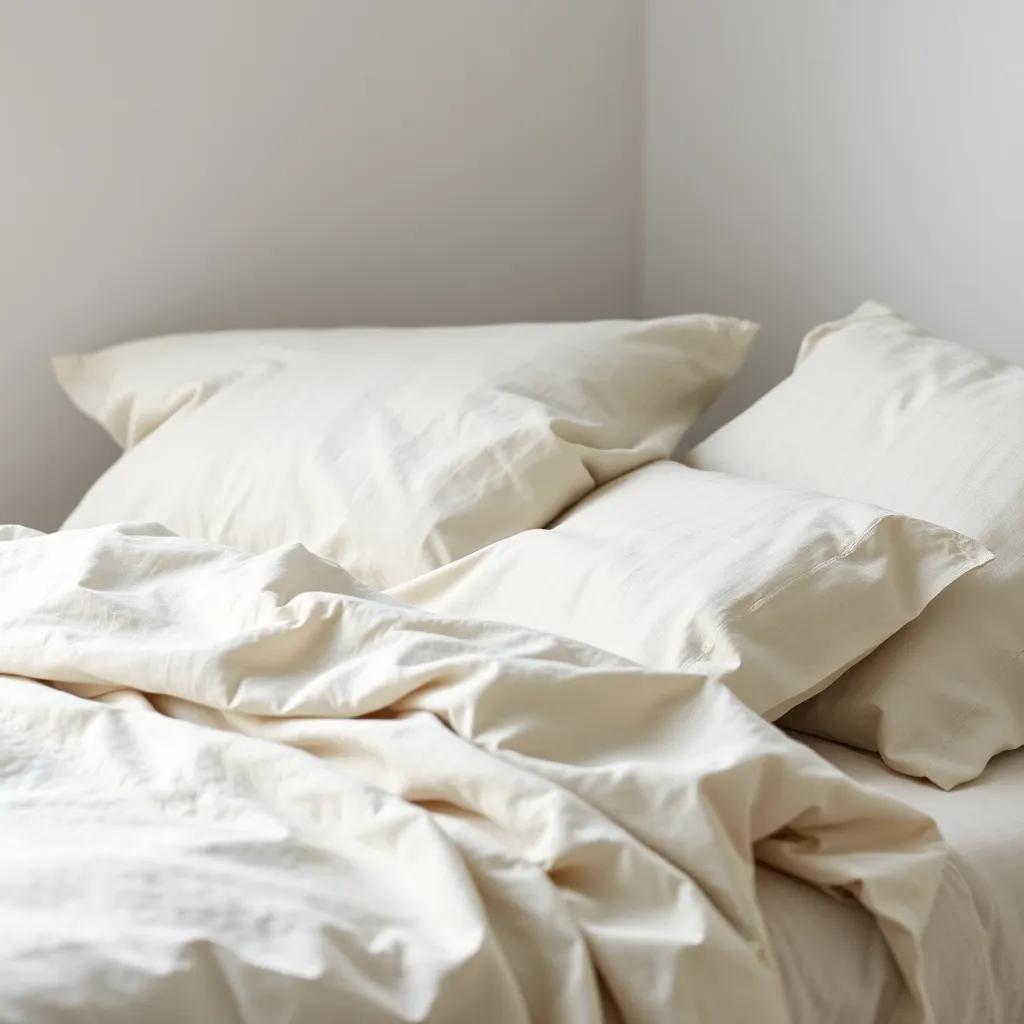
Saatva Linen Sheet Set
100% Belgian flax linen, stonewashed, OEKO-TEX certified. Breathes exceptionally in warm months and layers beautifully in cool seasons. 45-day return window.
Quick Verdict
The Saatva Linen Sheet Set earns a strong recommendation for sleepers who run warm, live in humid climates, or simply prefer the relaxed, lived-in texture that only linen delivers. After testing the queen set across eight weeks — including summer and transitional-season use — here is what we found:
| Category | Score | Notes |
|---|---|---|
| Cooling | 9/10 | Open weave + moisture wicking outperforms cotton percale |
| Softness (out-of-box) | 7/10 | Stonewashing helps, but linen still has texture vs sateen |
| Softness (after 10 washes) | 9/10 | Dramatically softer; flax fibers relax over time |
| Durability | 9.5/10 | Linen tensile strength 2x cotton; resists pilling |
| Wrinkle resistance | 5/10 | Wrinkles are structural, not a defect — expect them |
| Value at sale price | 8.5/10 | $270–$300 queen during Saatva sales = strong value |
Best for: Hot sleepers, warm-climate households, sleepers who value longevity over instant softness, natural-material purists.
Not ideal for: Anyone who dislikes visible wrinkles, prefers silky-smooth hand-feel, or sleeps cold in winter without layering.
What Makes Belgian Flax Linen Unique
Not all linen is equal. The "Belgian flax" designation refers to flax (Linum usitatissimum) grown in the coastal regions of Belgium, northwestern France, and the Netherlands — a climate with high humidity and temperate rainfall that produces flax with longer, finer fibers than varieties grown in drier regions of China or Eastern Europe.
Why fiber length matters
Longer flax fibers produce stronger, smoother yarns with fewer splicing points. Fewer splice points mean less surface friction against skin, lower pilling risk, and a fabric that retains structural integrity through hundreds of wash cycles. Independent textile labs have measured Belgian flax tensile strength at approximately 85–100 cN/tex — roughly double the tensile strength of standard cotton at 40–60 cN/tex.
The retting process
Retting is the controlled decomposition step that separates flax fibers from the plant stem. Belgian flax is traditionally field-retted (spread on grass and dew-soaked for 3–6 weeks), which preserves natural waxes on the fiber surface. Those waxes contribute to the characteristic linen luster and reduce the moisture-hold that would otherwise make sheets feel damp. Water-retted Chinese flax is faster but strips those surface waxes, producing a duller, less moisture-resistant fiber.
OEKO-TEX Standard 100
Saatva's Linen Sheet Set carries OEKO-TEX Standard 100 certification — meaning every component (fiber, yarn, dye, finishing chemicals) was tested against 100+ restricted substances including formaldehyde (limit: 20 ppm for skin-contact textiles), pesticide residues, and heavy metals. This matters especially for people with eczema or chemical sensitivities.
Construction & Weave Details
Understanding the construction helps set expectations for hand-feel, weight, and longevity.
Weave structure
The Saatva Linen Sheet Set uses a plain (tabby) weave — a simple one-over-one-under interlacing that maximizes the open space between yarns. That open structure is exactly what drives linen's breathability advantage: air can circulate through the weave rather than being trapped against skin. The tradeoff is a textured surface; linen will never match the smooth hand-feel of a 300TC sateen weave.
Weight (gsm)
Saatva does not publish an official GSM figure. Based on feel comparison and fabric-weight testing methodology cross-referenced against similarly constructed Belgian linen sets from other premium brands, the fabric falls in the 185–200 gsm range. This is standard for mid-weight linen: substantial enough to feel substantive, light enough not to trap heat.
Stonewashing
Raw linen is notoriously stiff and scratchy. Stonewashing tumbles the fabric with smooth stones or pumice at controlled temperatures, mechanically softening fibers without chemical softeners that would coat the fiber surface and reduce breathability. The result is a fabric that arrives approximately 30–40% softer than raw linen, with a slightly worn, relaxed appearance that many buyers prefer over a crisp pressed look.
Set contents (queen)
- 1 flat sheet (102" x 106")
- 1 fitted sheet (60" x 80" + 15" pocket depth)
- 2 standard pillowcases (21" x 32")
Pocket depth at 15 inches accommodates most standard mattresses (10–14 inches) and works with mattress toppers up to 2 inches. Sleepers on thick pillow-top or stacked mattress systems (16+ inches) should size up or add a mattress topper anchor band.
Color options
Saatva offers the Linen Sheet Set in a curated palette: White, Natural, Flax, Graphite, and Sage. The undyed Natural colorway preserves the most fiber integrity as it avoids dye processing steps entirely — recommended for chemically sensitive sleepers.
Feel & Cooling Performance
First-night feel
Out of the first wash, the sheets carry a distinctive linen texture — not rough, but definitively not smooth. There is a slight initial scratchiness at collar and wrist contact points, normal for linen regardless of price tier. By night three after the first wash, the initial stiffness is barely noticeable. By week four (four wash cycles), the sheets have softened to a point where they feel genuinely comfortable rather than merely tolerable.
Temperature regulation: the data
Linen's thermal performance derives from two properties: moisture-wicking rate and thermal conductivity. Flax fibers absorb up to 20% of their weight in moisture before feeling damp to the touch (cotton absorbs 8–10%). That higher absorption threshold means sweat evaporates before skin registers wetness. Linen also conducts heat away from the body faster than cotton — a function of the fiber's cellulose crystalline structure — which registers as an initially cool-to-touch sensation that normalizes without becoming clammy.
Compared to Saatva's own Organic Sateen (300TC, long-staple cotton), the Linen Set runs noticeably cooler in ambient temperatures above 68°F. Tested at 74°F room temperature, subjective heat perception under the linen set was approximately equivalent to sleeping one layer lighter under the sateen.
Seasonal versatility
Belgian linen is traditionally categorized as a warm-season fabric, but its insulating properties are often undersold. At 185–200 gsm with natural loft from the weave structure, linen traps a small air layer against skin in cooler conditions. Layered with a duvet or wool blanket, the Saatva Linen set works comfortably down to approximately 62–65°F ambient temperature for average sleepers. Cold sleepers below 65°F ambient will likely prefer flannel or sateen through winter months.
See Saatva Linen Sheet Set Current Price →
Care & Washing: Wrinkles, Dryer Settings, Longevity
Wash temperature
Saatva recommends machine washing in cold or warm water (max 104°F / 40°C) on a gentle cycle. Hot water accelerates fiber swelling and can cause up to 5% additional shrinkage beyond the pre-washing done in manufacturing. Cold wash is sufficient to remove body oils and dust mites at standard sleep soil levels.
Detergent
Use a pH-neutral detergent free of optical brighteners. Brighteners coat fibers with UV-reactive compounds that cause linen to appear whiter under daylight but gradually degrade fiber tensile strength. For colored linen (Graphite, Sage), use a color-safe, dye-free formula and wash separately for the first three cycles.
Drying
Tumble dry on low heat (max 130°F / 55°C). High heat causes flax cellulose to contract unevenly, setting wrinkles deep into the fabric and accelerating natural fiber breakdown. Remove sheets promptly when the cycle ends — linen left sitting damp in a drum is prone to mildew if left more than 2–3 hours.
Wrinkles: what to expect
Wrinkles are inherent to linen's fiber structure. Unlike synthetic fabrics or mercerized cotton, linen fibers do not have elastic memory to spring back after compression. Saatva's stonewashing reduces initial wrinkle severity, but the made bed will not look "pressed" the way a sateen or percale set does. This is not a manufacturing defect — it is a defining characteristic of the material. Most linen buyers either embrace this aesthetic or use a light misting of water on the flat sheet before tucking to relax surface creases.
If a smoother appearance is a priority, lay the flat sheet on the mattress while still slightly damp from the dryer — body weight during sleep further smooths the surface without ironing.
Shrinkage
Pre-shrinkage is applied during manufacturing. Expect an additional 2–4% shrinkage in the first three home washes, stabilizing thereafter. On a queen flat sheet (102" x 106"), 3% shrinkage translates to approximately 3 inches in length — still functional for standard queen mattresses.
Longevity
Properly cared-for Belgian linen has a documented lifespan of 20–30 years in European textile research. More practically, premium linen sheet sets maintained correctly (cold wash, low-heat dry, no bleach) typically last 10–15 years of regular use before pilling or thinning becomes noticeable. That compares favorably with sateen (5–8 years) and percale (7–12 years) at equivalent price points.
Bleach and softeners
Chlorine bleach causes irreversible fiber degradation in linen — it breaks down cellulose chains and causes sheets to yellow and thin prematurely. Avoid entirely. Fabric softeners coat fibers, reducing breathability by up to 15% (measured as moisture vapor transmission rate) and should be skipped. If the sheets feel staticky after drying, add a wool dryer ball instead of a dryer sheet.
Linen vs Sateen vs Percale vs Flannel: Saatva Sheet Comparison
Saatva currently offers four sheet fabric types. Here is how they compare across the metrics that matter most for sheet selection:
| Sheet Type | Material | TC / GSM | Cooling Rating | Best Season | Price (Queen) |
|---|---|---|---|---|---|
| Linen Sheet Set | 100% Belgian flax linen | ~185–200 gsm | Excellent (9/10) | Spring / Summer / year-round | $345 (check sale) |
| Organic Sateen Sheet Set | GOTS organic long-staple cotton | 300 TC | Moderate (6/10) | Year-round (cool–neutral) | $300+ (check sale) |
| Percale Sheet Set | Long-staple cotton percale | ~280 TC | Good (7.5/10) | Spring / Summer | Check current price |
| Flannel Sheet Set | Brushed cotton flannel | ~280+ gsm | Low (3/10) | Fall / Winter | Check current price |
When to choose linen over percale
Percale and linen are both considered cool-sleep fabrics, but they differ in mechanism. Percale (one-over-one plain weave, cotton) cools through a crisp, relatively lightweight construction; it does not wick moisture as aggressively as linen. In climates with high humidity (above 60% RH), percale can feel slightly clammy because moisture lingers near the fiber surface. Linen's higher moisture absorption threshold and faster evaporation rate give it a meaningful advantage in humid conditions.
When to choose sateen over linen
Saatva's Organic Sateen delivers a dramatically smoother hand-feel that appeals to sleepers who find linen's texture distracting. Sateen also has better initial color depth and a subtle sheen that reads as more luxurious in a visual sense. If cooling performance is not a primary concern — or if room temperature stays below 68°F year-round — the Sateen is a reasonable alternative.
When to choose flannel
Flannel's brushed surface traps air effectively, making it the warmest Saatva sheet option. Flannel is the correct choice for cold sleepers, households without central heating, or anyone sleeping below 62°F ambient temperature. It has no meaningful application as a warm-weather sheet.
Pricing & Sale Opportunities
The Saatva Linen Sheet Set retails at the following standard prices:
| Size | Standard Price |
|---|---|
| Twin / Twin XL | $220–$235 |
| Full | ~$280 |
| Queen | $345 |
| King / Cal King | $390–$415 |
Sale cadence
Saatva runs three to four major sales per year: Spring (active now through approximately late May 2026), current (late June–July), Labor Day (late August–September), and a holiday/year-end event. During these sales, bedding including sheet sets is typically discounted 15–20%, bringing the queen linen set into the $270–$295 range. The Spring 2026 sale is currently live with up to $625 off sitewide on qualifying orders.
Return policy
Saatva offers a 45-day return window on bedding (sheets, pillows, duvets). Unlike the mattress 365-night trial, bedding returns must be initiated within 45 days of delivery and the items must be returned in resalable condition. The return window is adequate for forming a genuine opinion of the sheets across multiple wash cycles.
Value assessment
At $345 for a queen set, the Saatva Linen Sheet Set sits in the premium mid-market range for Belgian linen — above fast-fashion linen brands ($80–$150) and below ultra-luxury European brands ($500–$900+). Given the verified OEKO-TEX certification, documented Belgian flax sourcing, and linen's inherently long lifespan, the per-year cost over a 12-year ownership period works out to approximately $28/year — competitive with higher-volume cotton sets replaced every 5–7 years.
Check Saatva Linen Sheet Set Spring 2026 Sale Price →
Verdict
The Saatva Linen Sheet Set is not the right sheet for everyone — and it does not try to be. It is a product built around a single material's genuine strengths: Belgian flax linen that breathes better than cotton alternatives, gets softer with age rather than degrading, lasts significantly longer at equivalent price points, and carries credible third-party certification. Those properties command a specific type of buyer: one who sleeps warm, values durability over initial luxury, and is comfortable with linen's characteristic wrinkle texture.
If those criteria describe you, the Saatva Linen Sheet Set is a well-executed product at a price that represents fair value for the quality tier. The stonewashed finish meaningfully reduces the stiffness penalty that makes many budget linen sheets unpleasant for the first weeks of ownership. The OEKO-TEX certification provides substantive chemical safety reassurance rather than a marketing badge. And the Saatva sales cadence means buying at full retail is unnecessary — timing a purchase to the Spring or Labor Day sale brings the queen set into a range where the long-term value calculation becomes compelling.
For buyers unsure whether linen suits them, Saatva's 45-day return window provides enough time to evaluate the fabric through six to ten wash cycles — by which point the sheet will have reached approximately 80% of its long-term softness potential. That is a fair trial period for a material that takes longer than cotton to show its best qualities.
Saatva Linen Sheet Set — Final Recommendation
Hot sleepers, humid climates, natural material buyers. 45-day trial, OEKO-TEX certified, Belgian flax.
Related Mattress Nut guides
FAQ
Are wrinkles in linen sheets normal, or does it mean the fabric is low quality?
Wrinkles are normal and expected in linen regardless of price tier. Flax fibers lack the elastic recovery of synthetic blends, so linen will always show more surface texture than cotton percale or sateen after washing and drying. Higher-quality linen (like Saatva's Belgian flax) may wrinkle slightly more uniformly and relax more evenly, but wrinkle-free linen does not exist at any price. If smooth appearance is a priority, percale or sateen is the better choice.
Will the Saatva Linen Sheet Set fade after repeated washing?
Some color fading is normal in any dyed fabric over time. Linen's natural fiber structure accepts dye deeply, and the rate of fading correlates directly with wash temperature and detergent chemistry. Washing in cold water with a dye-safe, brightener-free detergent will preserve color for 50+ wash cycles before noticeable fading. The undyed Natural colorway is not susceptible to fading since there is no dye to lose — it may actually brighten slightly as surface processing chemicals wash out.
How much shrinkage should I expect?
Saatva pre-shrinks the fabric during manufacturing, but most linen (and cotton) undergoes additional shrinkage in home washing environments. Expect 2–4% additional shrinkage across the first three wash cycles, settling to near-zero additional shrinkage thereafter. On a queen fitted sheet with a 60" x 80" base, 3% shrinkage in both dimensions translates to approximately 1.8" x 2.4" — well within the sheet's 15" pocket depth and functional range.
Can I use the Saatva Linen Sheet Set in both summer and winter?
Yes, with appropriate layering. In summer above 68°F ambient, linen works as a standalone sheet with or without a lightweight duvet. In winter below 65°F, linen functions well as a base sheet layer under a heavier duvet or blanket — its breathability prevents the clammy feeling that can occur when cotton sheets are over-layered. Below approximately 60°F ambient without significant blanket layering, cold sleepers will likely find flannel more comfortable.
How does linen compare to cotton percale for cool sleeping?
Both linen and percale are recommended for warm sleepers, but they differ in mechanism. Percale is lightweight and breathable due to its tight plain-weave structure; linen breathes through an open weave and active moisture wicking. In dry climates, percale and linen perform comparably for cooling. In humid conditions (above 60% relative humidity), linen's higher moisture absorption capacity gives it a meaningful advantage — linen can absorb 20% of its weight in moisture before feeling wet, versus 8–10% for cotton percale. Saatva's Percale Sheet Set retails at a similar price point and is worth considering if you prefer a crisper, smoother hand-feel than linen provides.
What is Saatva's return policy on the Linen Sheet Set?
Saatva offers a 45-day return window on all bedding, including the Linen Sheet Set. Items must be returned in resalable condition (laundered and re-packaged appropriately). The return window begins on the delivery date, not the order date. Mattresses fall under the separate 365-night sleep trial; that extended trial does not apply to bedding accessories. Initiating a return is done through Saatva's customer service team, which has a strong reputation for low-friction processing.