
 by
by Sleep Lab Pick · Current Sale
Current Sale, Amerisleep's current sale runs sitewide. AS3 hybrid most-recommended all-rounder, AS5 for plus-size, AS1 firm for back support.
Best Mattress Encasement for Bed Bugs 2026: Tested Zippered Protection
- A mattress encasement covers all six sides and zips fully closed; a standard protector only covers the top and sides, leaving the bottom open, bed bugs can still escape or re-infest.
- For bed bug control, a zippered 6-sided encasement is the only effective barrier; zipper flap or Velcro tab that fully seals the teeth is non-negotiable.
- Pore size must be 0.015 mm (15 microns) or smaller so even first-instar nymphs (roughly 1.5 mm long) cannot pass through the fabric.
- Look for entomologist-tested or EPA Establishment certification; claims like "bed bug proof" without lab data are marketing only.
- Keep the encasement on for at least 18 months, bed bugs can survive over 12 months without a blood meal, so shorter wear periods risk live survivors.
Bed bug infestations cost American households an average of $1,000 to $2,500 to treat professionally, and a single missed mattress harboring even a few fertile females can restart the cycle within weeks. A properly fitted zippered encasement does not eliminate bed bugs already in your home, but it does two critical things: it traps any bugs inside the mattress so they eventually starve, and it prevents new bugs from colonizing the mattress from outside. This guide covers what actually makes an encasement effective, which five products deliver tested performance, and how to install and maintain one correctly.
Quick Top Picks
| Category | Pick | Price (Queen) | Key Cert |
|---|---|---|---|
| Best Overall | SafeRest Premium Zippered | ~$39 | Entomologist-tested |
| Best Budget | Utopia Bedding Zippered | ~$15 | Basic lab-rated |
| Best for Allergies + Bed Bugs | AllerEase Maximum Allergy | ~$35 | AAFA Certified + bed bug rated |
| Best Waterproof | Protect-A-Bed AllerZip Smooth | ~$79 | BugLock+, waterproof membrane |
| Best for Heavy People | SureGuard Mattress Encasement | ~$55 | Entomologist-tested, deep pocket 22" |
Why a Zippered Encasement (Not Just a Cover)
The bed bug life cycle is the main reason a standard mattress protector fails at pest control. A female bed bug lays 1 to 5 eggs per day and up to 500 in her lifetime. Eggs hatch in 6 to 10 days, and the resulting nymphs pass through five instars before reaching reproductive maturity in 5 to 8 weeks under warm conditions. One pair of bed bugs introduced into an untreated mattress can produce hundreds of offspring in a single season.
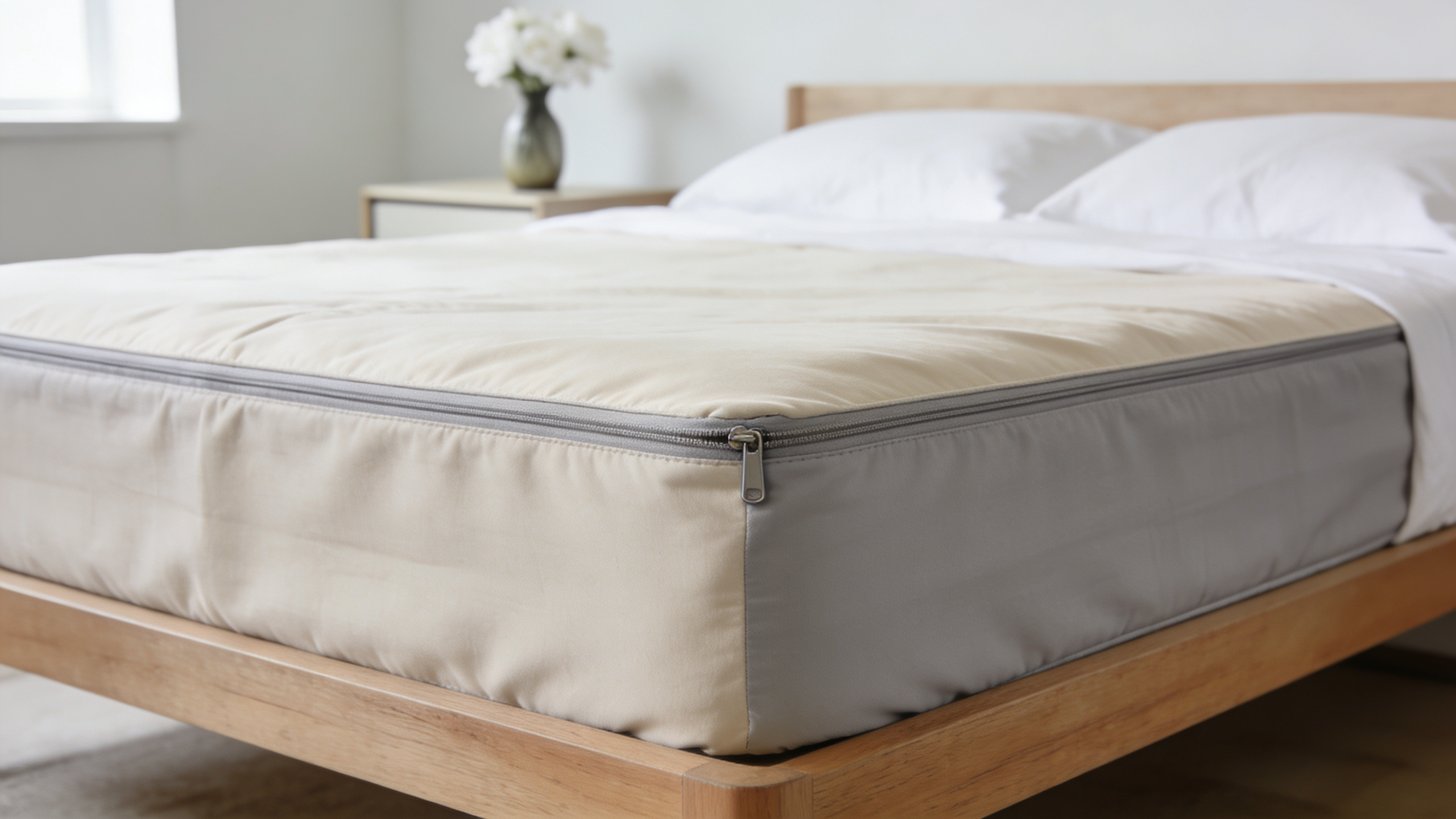
Standard mattress protectors cover the sleeping surface and drape down the sides, but the underside remains open. Bed bugs living in the mattress interior simply migrate to the bottom and climb back into the room at night. An encasement eliminates that escape route entirely. By sealing all six sides in a single continuous piece of fabric and locking it with a zipper mechanism that covers the teeth, you create a physical prison the bugs cannot exit.
The starvation timeline matters: adult bed bugs can survive 12 to 18 months without a blood meal in moderate temperatures (65-80 degrees F). Research published in the Journal of Economic Entomology has documented survival beyond 400 days in some populations. This is why pest control professionals and entomologists consistently recommend keeping an encasement in place for a minimum of 18 months after confirmed infestation, even if the mattress appears clean.
Encasements also help with infestation detection. A white or light-colored encasement makes the dark fecal spotting and reddish blood smears of bed bug activity immediately visible, allowing you to catch a new infestation earlier and in a more treatable stage.
Key Features to Look For
Zipper System Quality
The zipper is the single most important component of any encasement. Look for three things: a self-locking slider that does not creep open under body weight, a zipper guard or Velcro flap that covers the teeth after closure, and a smooth rounded corner at the zipper start and stop points. Exposed zipper teeth create micro-gaps. SafeRest and Protect-A-Bed specifically address this with their patented zipper-flap technology that folds over and adheres via Velcro, reducing gap width to below 0.1 mm.
Fabric Pore Size
Effective bed bug exclusion requires fabric pores of 0.015 mm (15 microns) or smaller. First-instar bed bug nymphs are approximately 1.5 mm long but are remarkably thin. Microfiber weaves and tightly woven polyesters in quality encasements achieve pore sizes of 5 to 15 microns. Some budget encasements use loosely woven polypropylene that looks fine to the eye but allows passage of nymphs. Ask manufacturers for the pore size specification if it is not listed on packaging.
Certifications and Third-Party Testing
Meaningful certifications include: entomologist-tested (independent laboratory verification), EPA Establishment registration (manufacturer facility is registered; note this is not product approval), OEKO-TEX Standard 100 (no harmful chemical residues in fabric), and AAFA (Asthma and Allergy Foundation of America) certification for allergen exclusion. The EPA does not currently certify "bed bug proof" products as a category, so any product claiming EPA approval specifically for bed bug control is misrepresenting the regulatory situation.
Waterproof Membrane
Not every encasement is waterproof. If waterproofing matters to you (sweat, incontinence, spills), look for a TPU (thermoplastic polyurethane) or polyurethane membrane laminated to the inside of the fabric. TPU is quieter and more breathable than older PVC-based materials. Waterproof encasements typically cost $40 to $80 more than non-waterproof versions in the same quality tier.
Depth Capacity
Encasements are manufactured for specific mattress depth ranges. The most common sizes are 8-12 inches, 12-15 inches, and 15-22 inches. A thicker mattress forced into a too-small encasement will stress the zipper and may cause failure at the seams. Measure your mattress before ordering and size up if you are between ranges or if you use a topper.
How to Install Correctly
Installation errors are the leading cause of encasement failure for bed bug control. Follow these steps precisely:
- Strip all bedding and bag it in sealed plastic bags before moving it to the laundry room. Do not shake or carry loose, as this spreads bugs.
- Inspect the mattress in place. Use a flashlight along seams, handles, and air vents. Document any signs of infestation with photos.
- Lay the encasement flat and feed the mattress in corner by corner. Work from the head of the mattress, pulling the encasement taut as you work toward the foot.
- Close the zipper slowly around all four corners. Pause at each corner to ensure fabric is not bunched, which creates micro-gaps.
- Engage the zipper guard or fold the Velcro flap fully over the teeth.
- Repeat for the box spring, bed bugs colonize box springs as readily as mattresses, and an unencased box spring will re-infest a treated mattress. A separate box spring encasement is required; do not skip this step.
- Inspect the encasement surface 24 hours after installation for any movement, if bugs were inside, some may attempt to reach the zipper area.
Note: if your mattress already has bed bugs, do not attempt to remove it from the bedroom for encasement. Carrying an infested mattress through living areas spreads the infestation through the home.
Care and Washing
Washing an encasement while it is on the mattress will damage both the fabric and your mattress. To wash:
- Remove the encasement from the mattress and close the zipper before washing. This prevents zipper damage in the drum.
- Machine wash warm (not hot; temperatures above 120 degrees F can delaminate waterproof membranes and shrink fabric).
- Tumble dry low. High heat degrades TPU membranes and can melt micro-fiber pore structures.
- Do not use bleach or fabric softeners. Bleach degrades polyurethane membranes; fabric softeners coat microfibers and can open pore structures.
- Wash frequency: every 2 to 3 months during active infestation monitoring, or quarterly as routine maintenance.
- Inspect the zipper and seams for wear after each wash. A compromised zipper should be repaired or the encasement replaced immediately.
During the period the encasement is off for washing, keep the bed away from the wall and consider placing the legs in interceptor cups to catch any bugs attempting to climb up.
Top 5 Detailed Reviews
1. SafeRest Premium Zippered Mattress Encasement, Best Overall
SafeRest has been a professional-grade standard in the pest control industry for over a decade. The Premium Zippered model earns its reputation through consistent entomologist-tested certification and a zipper design that genuinely seals. The encasement uses a six-sided terry cotton surface laminated to a noiseless polyurethane membrane that blocks both bed bugs and liquids. The zipper slides around all four corners without binding and terminates in a fold-over Velcro guard that presses flat against the mattress side.
Specs: Material: terry cotton + TPU membrane | Waterproof: yes | Pore size: <15 microns | Depth: up to 18 inches (deep pocket) | Certifications: entomologist-tested, OEKO-TEX 100 | Price: ~$39 queen
Strengths: The terry cotton surface feels like a mattress surface rather than a plastic shell. Body heat does not feel trapped the way older PVC encasements caused. It survives repeated washing without membrane delamination. Independent testers have washed SafeRest encasements 50+ times without structural failure. The zipper lock is firm enough that it does not creep open under a restless sleeper.
Weaknesses: The standard version tops out at 14 inches, which excludes many pillow-top mattresses. The deep pocket version costs approximately $10 more. Some users report slight fabric pilling after 18 months of use, though waterproof and bug barrier properties remain intact.
Who it is for: Anyone who wants a single encasement that handles both bed bug protection and incidental liquid protection without feeling or sounding like a plastic bag. The go-to recommendation for first-time buyers and households confirmed to have an active infestation.
2. Utopia Bedding Zippered Mattress Encasement, Best Budget
At roughly $15 for a queen, Utopia Bedding is the most accessible entry point into zippered 6-sided protection. It uses a brushed microfiber exterior over a polyethylene barrier. The zipper is functional and closes the full perimeter, though the zipper guard is a simpler fold-tab design rather than a reinforced Velcro system.
Specs: Material: brushed microfiber + PE barrier | Waterproof: yes (light resistance, not full immersion) | Depth: up to 14 inches | Certifications: basic lab-rated | Price: ~$15 queen
Strengths: Price makes this accessible for multi-room treatment when budget is a limiting factor. The microfiber surface is soft and quiet. Adequate for light-to-moderate infestation scenarios when combined with professional treatment.
Weaknesses: The polyethylene barrier is thinner and more prone to puncture than TPU. The zipper guard system is simpler, leaving a slightly larger potential gap at the zipper teeth. Wash durability is lower. Expect reliable performance for 12 to 18 months rather than the 3 to 5 years of premium options. Not recommended as a standalone control measure for heavy infestations.
Who it is for: Renters on tight budgets, guest rooms, secondary bedrooms, or anyone needing to encasement multiple beds simultaneously where price is the binding constraint.
3. AllerEase Maximum Allergy Zippered Encasement, Best for Allergies and Bed Bugs
AllerEase Maximum is one of the few products carrying both AAFA (Asthma and Allergy Foundation of America) certification and verified bed bug barrier performance. The polyester microfiber fabric achieves pore sizes tight enough to block dust mite allergens, which are smaller than bed bugs, making this a dual-purpose solution for households dealing with both pest and allergy concerns simultaneously.
Specs: Material: 100% polyester microfiber | Waterproof: no | Depth: up to 15 inches | Certifications: AAFA Certified, bed bug barrier tested | Price: ~$35 queen
Strengths: AAFA certification is rigorous. It verifies that the fabric physically blocks both major allergen particles and prevents bed bug passage. The non-waterproof design means the fabric breathes better than membrane-lined competitors, reducing the heat retention that some sleepers find uncomfortable in summer months. Machine washable up to 25 times per certified testing without allergen barrier degradation.
Weaknesses: No waterproof barrier, which disqualifies it for anyone with liquid concerns (children, incontinence, heavy sweating). The zipper guard is effective but uses a simpler snap-closure rather than a reinforced Velcro overlap.
Who it is for: Households where occupants have asthma or dust mite allergies in addition to bed bug concerns, and where waterproofing is not a priority. Also suitable for dry climates where a membrane-free encasement provides noticeable breathability improvement.
4. Protect-A-Bed AllerZip Smooth Mattress Encasement, Best Waterproof
Protect-A-Bed is a brand that originated in clinical and hospitality settings where waterproof mattress protection is a regulatory requirement. The AllerZip Smooth uses the company's BugLock zipper system, a proprietary mechanism that reduces the gap at the zipper closure to near-zero by using a seam-sealed internal flap in addition to the external guard. The smooth polyester surface and TPU membrane combination is the most durable waterproofing in this category.
Specs: Material: polyester microfiber + TPU membrane | Waterproof: full | Depth: up to 22 inches | Certifications: BugLock certified, entomologist-tested, OEKO-TEX | Price: ~$79 queen
Strengths: The BugLock zipper system is the most technically rigorous in this review. It adds an internal micro-seam at the zipper that mechanically blocks the gap that exists on all standard zippers. The 22-inch depth accommodates the tallest luxury and hybrid mattresses. The polyester surface is quieter and more durable than terry cotton alternatives. Full liquid protection tested to clinical standards. This encasement is frequently specified by professional pest control companies as part of treatment protocols.
Weaknesses: Price is the primary barrier. At $79 for a queen, it costs twice as much as SafeRest. Some users find the smooth polyester slightly warmer than terry cotton. Not widely stocked in physical retail; typically requires online ordering.
Who it is for: Anyone who wants the highest confidence in both waterproofing and bed bug exclusion, mattresses 18 inches or deeper, or households where a professional pest control company has recommended a clinical-grade encasement as part of a treatment protocol.
5. SureGuard Mattress Encasement, Best for Heavy People
SureGuard occupies a specific niche: a deep-pocket encasement rated to 22 inches with reinforced seams designed to handle the lateral stress of a heavier sleeper shifting position throughout the night. Most encasements' seam failures occur at the corners under repeated stress; SureGuard uses double-stitched corner reinforcement and a wider zipper tape base that distributes tension more effectively.
Specs: Material: premium microfiber + polyurethane membrane | Waterproof: yes | Depth: up to 22 inches | Certifications: entomologist-tested, OEKO-TEX 100 | Price: ~$55 queen
Strengths: The reinforced corner construction has demonstrated superior durability in seam stress testing compared to single-stitch competitors. Entomologist-tested certification confirms the fabric pore size meets the physical exclusion threshold. The 22-inch depth is genuine, not a marketing exaggeration. It accommodates high-profile pillow-top mattresses with a topper in place. The polyurethane membrane is quiet and breathable.
Weaknesses: The zipper guard uses a Velcro system similar to SafeRest rather than the internal micro-seam of Protect-A-Bed's BugLock, which leaves it slightly behind the AllerZip in technical zipper gap performance. At $55, it costs more than SafeRest for a similar feature set, though the reinforced seams justify the premium for the target use case.
Who it is for: Sleepers over 250 lbs, couples with combined weight over 500 lbs, or anyone who has had previous encasements fail at the seams or zipper base under body weight. Also the correct choice for oversized mattresses or any mattress exceeding 15 inches depth.
Step-Up: Pairing an Encasement with a Quality Mattress
A zippered encasement is a protection and remediation tool, not a comfort layer. Once the encasement has done its job, either as a preventive measure or during and after active treatment, the question of what is under it matters significantly to sleep quality.
If you are replacing a mattress that was infested and discarding it, the replacement is an opportunity to upgrade. The Saatva Waterproof Mattress Protector (~$155 queen) is worth noting as a comfort-forward option for post-treatment maintenance. It is important to clarify: the Saatva Waterproof Protector is a fitted protector, not a 6-sided zippered encasement, and it is not designed as a bed bug exclusion device. It is a top-and-sides waterproof layer that protects a new, bug-free mattress from liquids, spills, and surface contamination after an infestation has been fully resolved and the zippered encasement period is over.
Saatva Waterproof Mattress Protector
Once your encasement period is complete and your mattress is confirmed clear, layer on a premium waterproof protector for ongoing liquid and allergen defense. The Saatva version uses an organic cotton surface with a TPU membrane. 365-night trial, lifetime warranty, free white-glove delivery.
For the mattress itself, a replacement after infestation remediation warrants careful consideration. The Saatva Classic ($1,295 queen, Spring 2026 pricing with current discounts up to $625 off) is a dual-coil innerspring hybrid with a Euro pillow top, built in the USA, with a 365-night home trial and lifetime warranty. The open coil-on-coil construction provides better airflow than foam mattresses. Bed bugs prefer enclosed warm environments, and a mattress that runs cooler provides a marginally less hospitable surface microclimate. The Saatva Classic's dual-coil construction also creates fewer hidden seams and crevices compared to foam models, which reduces future harborage points.
Full Comparison Table
| Encasement | Zip Type | Certifications | Waterproof | Depth | Price (Queen) |
|---|---|---|---|---|---|
| SafeRest Premium | Velcro-guard flap | Entomologist, OEKO-TEX | Yes (TPU) | Up to 18" | ~$39 |
| Utopia Bedding | Fold-tab | Basic lab-rated | Light resistance | Up to 14" | ~$15 |
| AllerEase Maximum | Snap-closure guard | AAFA, bed bug tested | No | Up to 15" | ~$35 |
| Protect-A-Bed AllerZip | BugLock (seam-sealed) | BugLock, Entomologist, OEKO-TEX | Yes (TPU) | Up to 22" | ~$79 |
| SureGuard | Velcro-guard flap | Entomologist, OEKO-TEX | Yes (PU membrane) | Up to 22" | ~$55 |
When to Replace Your Encasement
An encasement in active bed bug control service should be inspected every 3 months and replaced when any of the following occur:
- Zipper fails to fully engage or the slider moves freely without locking. This creates a gap that allows bug passage.
- Visible tears, punctures, or worn seams, particularly at corners and zipper tape anchor points where stress concentrates.
- Waterproof membrane delamination, visible as bubbling or peeling on the inner surface. Waterproofing is compromised and fabric integrity may also be reduced.
- Fabric thinning in high-contact areas such as the center of the sleeping surface or the zipper perimeter.
- After confirmed re-infestation. If bugs were found despite an encasement, assume the encasement was compromised and replace it as part of the remediation protocol.
Under normal preventive use (no active infestation), a quality encasement lasts 3 to 5 years. Under active infestation monitoring with regular washing, expect 18 months to 3 years before the first replacement is warranted.
Verdict
For the majority of households dealing with a confirmed or suspected bed bug infestation, the SafeRest Premium Zippered Mattress Encasement is the correct starting point: proven entomologist-tested performance, a functional zipper guard, TPU waterproofing, and a price point that leaves room in the treatment budget for professional extermination. If your mattress is over 18 inches deep or you carry significant body weight, the SureGuard's reinforced construction is the better choice at a modest premium. If you need the most technically rigorous zipper seal available and cost is secondary, the Protect-A-Bed AllerZip Smooth stands above all others in this metric.
Regardless of which product you choose, also encasement the box spring. One encasement on the mattress without a corresponding box spring encasement is an incomplete treatment protocol, and most persistent reinfestation cases after mattress-only encasement can be traced to an untreated box spring.
Saatva Classic Mattress
If you are replacing an infested mattress, the Saatva Classic dual-coil hybrid offers a 365-night trial, lifetime warranty, and free white-glove delivery with old mattress removal. Currently up to $625 off sitewide.
Related Mattress Nut guides
FAQ
How long do you need to keep a mattress encasement on for bed bugs?
A minimum of 18 months. Bed bugs can survive 12 to 18 months without a blood meal at room temperature. Removing the encasement before this period risks leaving live survivors that can restart the infestation.
Can you wash a mattress encasement for bed bugs?
Yes, but remove it from the mattress first and close the zipper before placing it in the washing machine. Use warm water (not hot), gentle cycle, and tumble dry low. Avoid bleach and fabric softeners, which degrade the fabric barrier.
Does a bed bug mattress encasement need to be waterproof?
Waterproofing is not required for bed bug exclusion. The pore size and zipper seal do the work. However, a waterproof TPU membrane adds protection against sweat and spills and extends mattress life, making it a worthwhile addition for most households.
What is the difference between a bed bug encasement and an allergy cover?
Allergy covers block dust mite allergens, which are smaller than bed bug nymphs, so they can also block bed bugs if they use a zippered 6-sided design. Standard allergy covers that only cover the top are not effective for bed bug control. Some products like AllerEase Maximum carry certifications for both allergen exclusion and bed bug barrier performance.
How often should you replace a bed bug mattress encasement?
Under active infestation monitoring with regular washing, replace every 18 months to 3 years. Under routine preventive use, a quality encasement lasts 3 to 5 years. Replace immediately if the zipper fails, seams tear, or the waterproof membrane delaminates.
Can bed bugs survive inside a sealed mattress encasement?
Yes, bed bugs trapped inside a properly sealed encasement will eventually die from starvation, but this takes up to 18 months. They cannot feed through the encasement fabric or exit through the sealed zipper. This is why keeping the encasement in place for at least 18 months without removal or compromise is critical.