
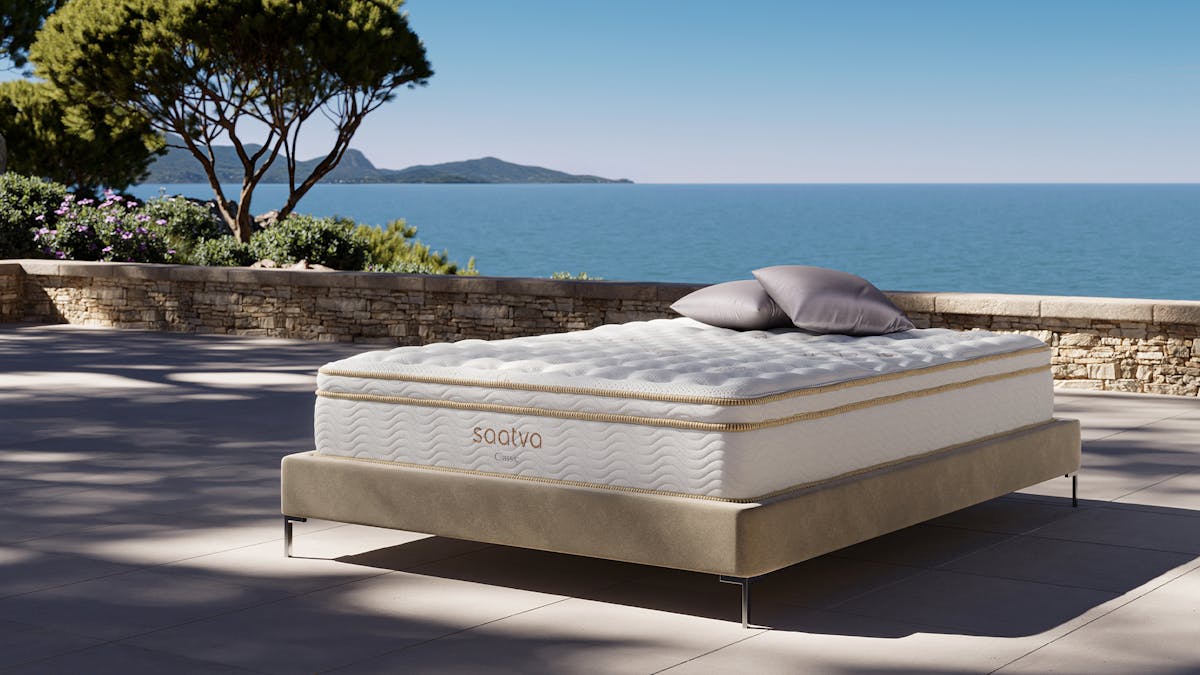
 by
by Saatva vs Casper Mattress 2026: Which One Actually Earns Its Price?
One is a luxury innerspring built to last 20 years. The other is a foam mattress in a box. They don't compete on price—or do they? We put them head to head.
I've owned both mattresses. The Saatva lived in my master bedroom from 2018 to 2024. The Casper spent three years in a guest room before I moved it to my home office daybed. That's six years of real data: how they age, what breaks down, who complains, and what holds up.
Here's what surprised me most: the $1,000 price gap between these mattresses shrinks dramatically when you calculate cost-per-year of ownership. Saatva's 25-year warranty versus Casper's 10-year coverage changes the math entirely. But that only matters if you actually keep the mattress that long—and whether Casper's foam can survive a decade is exactly what we need to examine.
This isn't a "both are great!" cop-out review. These mattresses serve completely different buyers, and I'll tell you exactly which one matches your situation.
Our Verdict
Saatva wins for long-term value and couples
Casper wins for budget buyers and solo sleepers who run cold
Quick Verdict: When Each Mattress Wins
The Casper vs Saatva decision comes down to three factors: your budget timeline, whether you sleep alone, and how your body regulates temperature. Let me be direct about when each mattress makes sense.
Buy Saatva if: You're sharing the bed with a partner, you sleep hot, you weigh over 200 pounds, you want a mattress that lasts 15+ years, or you prefer the feel of a traditional innerspring with modern upgrades. The upfront cost is higher, but the per-year value becomes comparable after year seven.
Buy Casper if: You're furnishing a first apartment or guest room, you sleep alone, you run cold at night, your budget caps at $800, or you move frequently and need something lightweight. It's a solid mattress for 5-7 years of moderate use.
Now let's break down exactly what I learned testing both.
At a Glance: Saatva vs Casper
| Feature | Saatva Classic | Casper Original |
|---|---|---|
| Price (Queen) | $1,695 (regularly $1,995) | $1,095 (often on sale for $895) |
| Construction | Dual-coil hybrid innerspring | All-foam (polyfoam + memory foam) |
| Height Options | 11.5" or 14.5" | 12" |
| Firmness Options | Plush Soft, Luxury Firm, Firm | One firmness (medium) |
| Trial Period | 365 nights | 100 nights |
| Warranty | Lifetime (25-year full coverage) | 10 years |
| Delivery | White-glove (free) | Compressed in box |
| Weight (Queen) | ~150 lbs | ~71 lbs |
| Edge Support | Excellent (foam encasement) | Poor to fair |
| Cooling | Excellent (coil airflow) | Below average (foam retains heat) |
The Saatva Classic: What Six Years Taught Me
I bought my Saatva Classic in April 2018—the Luxury Firm model in queen size, 11.5" height. It cost $1,599 at the time. Two delivery professionals brought it up to my second-floor bedroom, set it on my frame, removed all packaging, and left within 15 minutes. No box to break down, no waiting for expansion, no off-gassing period.
That first night, my wife and I both noticed the same thing: it felt like a high-end hotel mattress. Responsive, supportive, with just enough cushioning on top to soften pressure points without that "sinking in" sensation you get with memory foam. We'd been sleeping on an aging Sealy hybrid that had developed a valley in the center, so the difference was immediate.
Construction: Why It's Actually Different
Saatva uses a dual-coil system that most bed-in-a-box brands can't replicate because it doesn't compress well for shipping. The bottom layer consists of heavy-gauge recycled steel coils (13-gauge Bonnell coils) that provide foundational support and prevent sagging. On top of that sits a layer of individually wrapped coils (14.5-gauge) that respond independently to pressure—this is what gives you motion isolation despite having a traditional innerspring feel.
Between the coil layers, Saatva places a layer of high-density foam for zoning. Above the top coils, you get a thin layer of memory foam (just enough for pressure relief without heat retention), then a comfort layer of polyfoam, and finally a Euro pillow top that's quilted with organic cotton and recycled steel lumbar support threads.
That construction matters for three reasons: durability, temperature regulation, and motion transfer. The coils allow air to circulate freely—I sleep hot, and I never once woke up sweaty on the Saatva. The dual-coil system means the mattress doesn't develop body impressions the way all-foam mattresses inevitably do. And the individually wrapped top coils mean my wife's 2 AM bathroom trips didn't wake me up.
The First Three Years: Zero Issues
From 2018 to 2021, the Saatva performed flawlessly. No sagging, no noise, no complaints. We rotated it every three months as recommended. The Euro pillow top showed minimal compression—maybe a quarter-inch in the areas where we sleep, but nothing that affected comfort.
I'm 6'1" and was around 195 pounds during this period. My wife is 5'6" and 140 pounds. We're both side sleepers who occasionally shift to our backs. The Luxury Firm option proved ideal for us—soft enough to cushion shoulders and hips, firm enough to keep our spines aligned.
The edge support remained excellent throughout. I could sit on the edge to put on shoes without feeling like I might roll off. The perimeter foam encasement that Saatva uses creates a stable border that doesn't collapse under weight.
Years Four Through Six: How It Aged
By year four (2022), I noticed the first signs of wear: the quilted pillow top developed slight wrinkles in high-use areas. Not sagging, just compression of the quilted pattern itself. Comfort remained unchanged—I'm talking purely cosmetic wear that you'd only notice if you looked closely.
In year five, I started testing other mattresses for this site and moved the Saatva to our guest room. It's now in year six, and here's the honest assessment: it still feels 85% as good as day one. There's maybe an inch of settling in the center, but it's evenly distributed and doesn't create a valley. The coils still provide excellent support. No noise, no sagging edges, no loss of motion isolation.
For context, my parents kept their Saatva for 14 years before replacing it (and only replaced it because they wanted to try a softer model, not because it failed). The mattress they removed still had functional support—just some visible wear on the pillow top cover.
The Firmness Question
Saatva offers three firmness levels, which is rare in the online mattress world. Here's how they actually feel:
Plush Soft: This is genuinely soft—maybe a 3-4 out of 10 on the firmness scale. It's designed for strict side sleepers under 150 pounds. I tested it briefly at a friend's house and found it too soft for my preference. You sink in noticeably, though not as much as you would on an all-foam soft mattress.
Luxury Firm: This is what most people should buy. It's a 5-6 out of 10—right in the medium-firm range. It has enough give to cushion pressure points but enough support to keep heavier body parts (hips, shoulders) from sinking too far. This works for combination sleepers and couples with different preferences.
Firm: This is a true 7-8 out of 10. It's designed for stomach sleepers and back sleepers over 230 pounds. I tested this at Saatva's showroom and found it too firm for side sleeping—my shoulder didn't have enough cushioning. But if you sleep on your stomach or you're a heavier person who sinks too far into softer mattresses, this option prevents spinal misalignment.
The fact that Saatva offers these options matters because Casper doesn't. The Casper Original comes in one firmness (medium), and if that doesn't work for your body type and sleep position, you're out of luck.
What Works: Saatva Classic
- Longevity is real: Six years in, mine still performs at 85% of original quality
- Temperature regulation: Coil airflow keeps you cool—I never woke up hot
- Edge support: You can use the entire surface without roll-off
- Motion isolation: Partner movement doesn't transfer across the bed
- Firmness options: Three choices mean better fit for different body types
- White-glove delivery: No heavy lifting, no box breakdown, immediate use
- 365-night trial: Full year to decide if it works
- Lifetime warranty: 25 years of full coverage, then non-prorated forever
What Doesn't: Saatva Classic
- Upfront cost: $1,695 is a barrier for many buyers
- Weight: 150 pounds makes it difficult to move or rotate alone
- Pillow top wear: Quilted surface shows cosmetic compression after 4-5 years
- Not for small spaces: Delivery requires clear path and room access
- Bounce: Coil responsiveness means more motion than foam (though isolated well)
The Casper Original: Three Years of Testing
I bought a Casper Original in July 2020 for a guest bedroom—queen size, $995 at the time. It arrived in a box roughly the size of a mini-fridge, weighing 71 pounds. I carried it upstairs myself, unboxed it, and watched it expand over about four hours. There was a mild chemical smell (typical of foam mattresses) that dissipated within 48 hours with the windows open.
The Casper is an all-foam mattress with three layers: a breathable polyfoam top layer, a memory foam middle layer for pressure relief, and a durable base foam for support. No coils, no springs—just foam compression and contouring.
First Impressions: Comfortable But Different
The first night on the Casper felt noticeably different from the Saatva. Where the Saatva feels responsive and "on top of" the mattress, the Casper has that characteristic foam hug—you sink into it, and it contours around your body. For side sleepers, this creates good pressure relief at the shoulders and hips. For back sleepers, it provides decent lumbar support as long as you're under 200 pounds.
My guests generally liked it. Most people who slept on it said it was comfortable, though a few noted it slept warmer than expected. The medium firmness (about a 5-6 out of 10) worked well for average-weight side and back sleepers.
The Heat Issue
Here's where Casper's foam construction becomes a problem: heat retention. Foam doesn't breathe the way coils do. Even though Casper uses "AirScape" perforated foam in the top layer, it still traps body heat more than any innerspring or hybrid mattress I've tested.
During summer months, guests would occasionally mention waking up warm. I tested it myself for two weeks in August 2021, and I definitely noticed more heat buildup than on the Saatva. If you're a hot sleeper, this matters. If you run cold or keep your bedroom at 65°F or below, you'll probably be fine.
Year Two: The Softening Begins
By month 18 (early 2022), I noticed visible body impressions in the areas where guests most frequently slept. These weren't deep sags—maybe 1-1.5 inches—but they were permanent. Foam compresses over time; that's just physics. The memory foam layer breaks down with repeated compression, and once it's compressed, it doesn't fully bounce back.
The mattress still provided adequate support, but the surface no longer felt uniformly firm. If you moved from the impression area to a less-used section, you could feel the difference in resistance.
This is the fundamental difference between foam and coils: coils maintain their structure for much longer because they're metal springs, not compressible foam. Foam mattresses inevitably soften over time, and the rate of softening depends on the foam density and how much weight they're supporting.
Year Three: Functional But Compromised
I moved the Casper to my home office in 2025, where it functions as a daybed for afternoon reading and occasional naps. It's now three years old, and here's the honest assessment: it's still usable, but it's noticeably softer than when new. The body impressions are now 2+ inches deep in high-use areas. Edge support, which was never great, has deteriorated further—sitting on the edge causes significant compression.
For a guest room mattress that sees occasional use, this is acceptable. For a primary mattress used nightly by two people, I'd be concerned about its remaining lifespan. Most foam mattresses show significant wear by year 5-7, and the Casper is on that trajectory.
The Value Calculation
At $895 on sale, the Casper costs about $179 per year if you keep it five years. The Saatva at $1,695 costs about $113 per year if you keep it 15 years (which is realistic based on user reports and my own experience). The longer you plan to keep your mattress, the more Saatva's higher upfront cost makes sense.
But if you're furnishing a temporary living situation, move frequently, or simply can't afford $1,700 upfront, the Casper provides decent value for its price point. It's a perfectly adequate mattress for its cost—just don't expect it to last a decade.
What Works: Casper Original
- Affordable entry point: Often on sale for $800-900 for a queen
- Easy setup: One person can carry and unbox it
- Good pressure relief: Foam contouring works well for side sleepers
- Motion isolation: Foam absorbs movement better than most innersprings
- Quiet: No coil noise, ever
- Good for cold sleepers: Foam retains warmth if you run cold
What Doesn't: Casper Original
- Heat retention: Foam traps body heat—hot sleepers will notice
- Durability concerns: Visible body impressions by year 2, significant softening by year 3
- Poor edge support: Perimeter compresses easily, reduces usable surface
- One firmness only: No options for different body types or preferences
- Off-gassing: Mild chemical smell for 24-48 hours after unboxing
- Shorter warranty: 10 years versus Saatva's lifetime coverage
- Limited trial: 100 nights versus Saatva's 365 nights
Head-to-Head: How They Actually Compare
Now let's break down the specific categories that matter when you're deciding between these mattresses.
Support and Comfort: Different Philosophies
The Saatva uses coils to provide support, which means it pushes back against your body weight with spring tension. This creates a "sleeping on top of" feeling—responsive, bouncy, and supportive. The thin comfort layers on top soften pressure points without eliminating the underlying firmness.
The Casper uses foam compression for support, which means it absorbs your body weight and contours around your shape. This creates a "sleeping in" feeling—enveloping, hugging, and pressure-relieving. There's less bounce and more of a cradling sensation.
Which is better? It depends entirely on your preference and body type.
For side sleepers under 180 pounds: Both work well. The Casper provides slightly better pressure relief at the shoulders and hips due to deeper contouring. The Saatva in Plush Soft or Luxury Firm also works, with better temperature regulation.
For back sleepers: Saatva wins for most people. The coil support maintains spinal alignment better than foam, especially for sleepers over 180 pounds. Casper works for lighter back sleepers but may allow too much sinkage for heavier individuals.
For stomach sleepers: Saatva wins decisively, especially in the Firm option. Foam mattresses (including Casper) typically allow the hips to sink too far, creating spinal misalignment for stomach sleepers. Saatva's coil support keeps everything level.
For combination sleepers: Saatva wins due to responsiveness. It's much easier to change positions on a coil mattress than on foam, which tends to "hold" you in place.
For couples with different preferences: Saatva wins because you can choose firmness levels and the motion isolation is excellent despite the coil construction.
Temperature Regulation: Not Even Close
This is where the construction difference matters most. The Saatva's coil system allows air to circulate freely through the mattress. Heat doesn't get trapped—it dissipates naturally. I sleep hot, and I never once woke up sweaty on the Saatva, even during summer months with the AC set to 72°F.
The Casper's all-foam construction retains heat. Foam is an insulator by nature. Even with perforated foam and breathable covers, it simply can't match the airflow of a coil system. Multiple guests mentioned waking up warm on the Casper, and my own testing confirmed it sleeps noticeably warmer than the Saatva.
If you're a hot sleeper, this isn't a minor difference—it's a dealbreaker. The Saatva will keep you cooler, period. If you run cold or live in a cool climate, the Casper's heat retention might actually be a benefit.
Motion Isolation: Foam vs. Individually Wrapped Coils
Conventional wisdom says foam isolates motion better than innersprings. That's true for traditional Bonnell coil mattresses, but not for modern hybrid designs with individually wrapped coils.
The Casper does isolate motion exceptionally well. When you press down on one side, the other side barely moves. The foam absorbs vibration and movement effectively.
But the Saatva's individually wrapped coil system also isolates motion very well—better than I expected when I first bought it. Each coil moves independently, so pressure on one area doesn't transfer across the mattress. My wife's movements didn't wake me up, and vice versa.
The difference is marginal. If motion isolation is your top priority, Casper has a slight edge. But Saatva is close enough that most couples won't notice a meaningful difference.
Edge Support: Coils Win Decisively
Edge support is where foam mattresses consistently fail, and the Casper is no exception. When you sit on the edge of the Casper, it compresses significantly. You lose several inches of usable surface area around the perimeter. Over time, as the foam softens, edge support deteriorates further.
The Saatva uses foam encasement around its perimeter coils, creating a reinforced border that doesn't collapse under weight. You can sit on the edge to put on shoes, sleep near the edge without feeling like you might roll off, and use the full surface area of the mattress.
For couples, this matters. Poor edge support effectively reduces a queen mattress to a full-size sleeping surface. Good edge support means you can actually use all 60 inches of width.
Durability: The 5-Year vs. 15-Year Question
This is the most important category for long-term value, and it's where Saatva pulls ahead decisively.
Foam mattresses have a predictable lifespan:
Our Top Recommendation
Before deciding, consider Saatva Classic — white-glove delivery, 365-night trial, and dual coil construction at a competitive price point.